Peelaway Sheets for Group Homes: Benefits and Uses

Peelaway Sheets are disposable, multi-layered fitted sheets designed to simplify bedding changes in group homes. They address common challenges like infection risks, heavy laundry demands, and physical strain on caregivers. Each sheet has 5–7 layers that can be peeled off in under 60 seconds, revealing a clean surface without lifting mattresses or handling soiled linens. This reduces cross-contamination, saves time, and improves hygiene.
Key features include:
- Waterproof barrier to protect mattresses from spills and leaks.
- Soft, chemical-free material suitable for sensitive skin.
- Cost-effective with no need for laundering.
- Sizes range from Crib ($30.99) to King ($53.99), with bulk discounts and subscription options.
Peelaway Sheets improve efficiency for caregivers while ensuring a clean, comfortable environment for residents.
Common Bedding Problems in Group Homes
Infection Risks and Cross-Contamination
Traditional bedding can become a breeding ground for bacteria, fungi, and allergens if not changed every 7–10 days. In group homes, where residents share spaces and staff frequently move between rooms, the potential for spreading infections grows even more. Incontinence incidents add another layer of complexity - moisture can soak into mattresses, leading to permanent damage and unpleasant odors that standard linens can't always address. When bedding is reused or improperly laundered, the risk of cross-contamination increases significantly. These hygiene issues also create operational challenges, stretching already limited resources in group homes.
Time-Consuming Laundry Requirements
Laundry demands in group homes are overwhelming. To put it into perspective, U.S. healthcare facilities collectively spend about $37 billion annually on linens and laundering services [6]. Accidents like leaks or spills require immediate cleanup, pulling staff away from other essential caregiving tasks. For example, in 2023, a California group home faced an incident where staff had to interrupt critical care duties to address an urgent cleanup situation [7]. These disruptions highlight how traditional bedding can complicate day-to-day operations.
Physical Strain from Changing Sheets
Beyond hygiene and laundry concerns, changing traditional sheets is physically taxing for caregivers. The process often involves lifting heavy mattresses, bending repeatedly, and struggling with fitted sheets to secure corners [1]. For residents with limited mobility, caregivers must perform "occupied bed" changes, which require carefully rolling and repositioning the resident. This task typically requires two caregivers and can take up to 15 minutes per bed [5].
A 2024 case study illustrates the strain this can place on staff. In one group home, only two CNAs were on duty during a weekend shift. When an 80-year-old resident weighing 180 pounds experienced fecal leakage, one CNA had to handle the cleanup and laundry while the other prepared meals for four other residents. This left little room for error, and unfortunately, the resident fell during the process, hitting her head. Meanwhile, four other residents were left unattended [8].
"The CNAs are responsible for giving medications, helping five residents to dress and shower, preparing meals, feeding residents, cleaning up, and doing laundry."
These examples underline the operational challenges and safety risks tied to traditional bedding, making alternatives like PeelAways a practical solution for group homes.
How PeelAways Solve These Bedding Problems
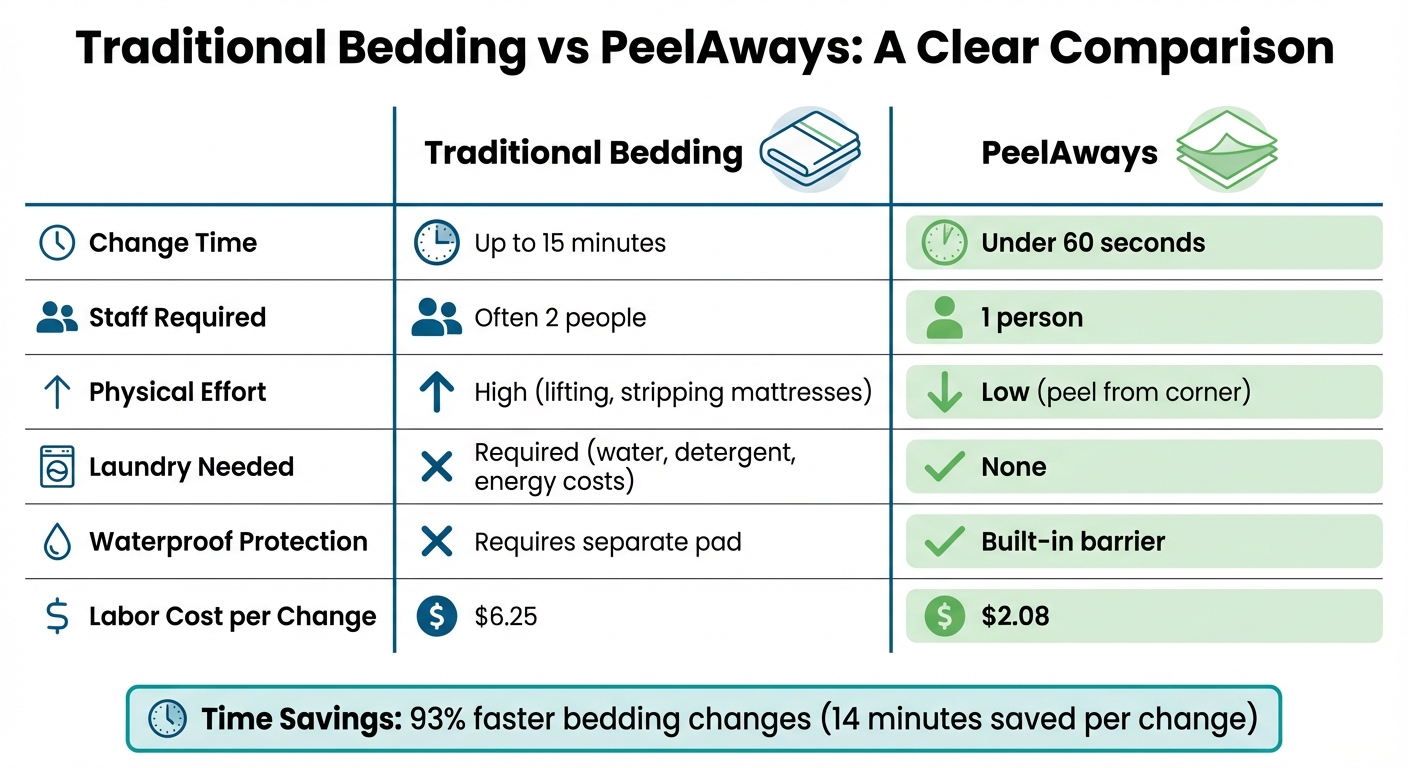
PeelAways vs Traditional Bedding: Time, Cost, and Efficiency Comparison
The Multi-Layer Peel-Away System
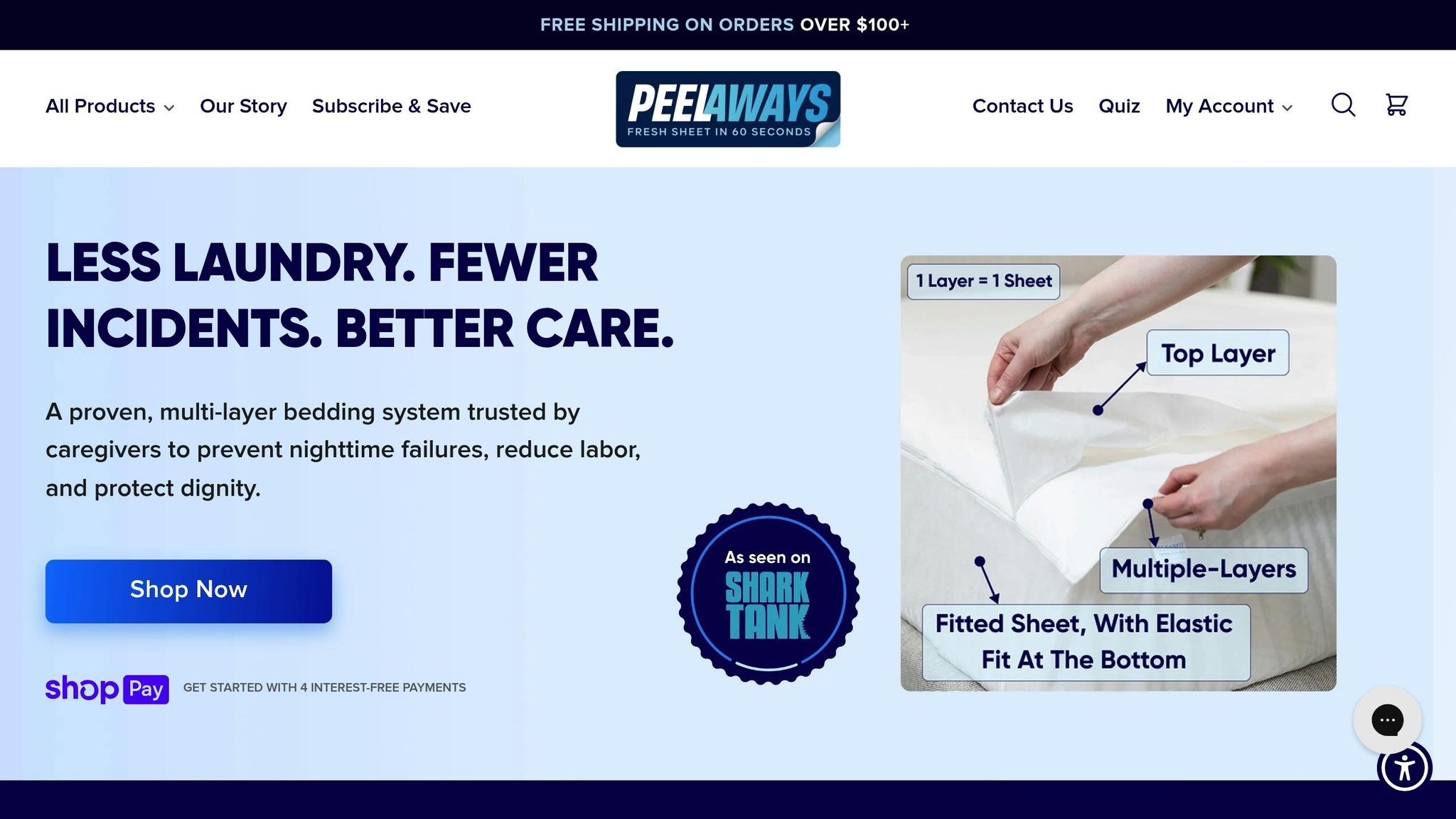
PeelAways use a patented multi-layer design with 5 to 7 layers per sheet, allowing caregivers to remove a soiled layer from one corner in less than 60 seconds [2].
This approach dramatically improves efficiency compared to traditional methods. Lou Leibhaber, former COO of Lehigh Valley Hospital and Health Network, highlights the difference:
"On average, it can take two nurses up to 15 minutes to change a sheet while the patient is in the bed. With PeelAways, it can take one nurse less than a minute and, most importantly, can increase patient comfort" [2].
The system eliminates the hassle of lifting heavy mattresses or dealing with fitted corners. Bedding changes can be done while residents remain in bed, reducing disruptions for those with limited mobility and streamlining caregivers' tasks. Along with its time-saving design, PeelAways prioritize safety and comfort through their advanced materials.
Waterproof and Chemical-Free Materials
Each layer includes a 100% waterproof barrier made with a breathable membrane. This design keeps liquids from reaching the mattress while allowing airflow to maintain a cool and dry sleeping environment [1].
The materials are free of chemicals like Vinyl, PVC, Phthalates, and fire retardants, making them safer for residents with sensitive skin or respiratory conditions - concerns that are especially common in group home settings [1]. These sheets are crafted from a soft blend of bamboo, rayon, and polyester, offering a non-clinical feel and are 32% softer than standard sheets [2].
Since soiled layers are peeled off and discarded immediately, there's no need to handle or transport heavily soiled linens. This reduces infection risks and minimizes cross-contamination. Combined with their high-quality materials, PeelAways simplify caregivers' daily routines while improving hygiene.
Reduced Time and Labor for Staff
PeelAways eliminate the need for laundering entirely. Maxwell Cohen, Founder, CEO, and President of Peel Away Labs, explains:
"Being a multilayered disposable sheet, there is no need to launder them" [2].
This feature removes the burden of handling and washing heavy, soiled linens. For group home staff managing various responsibilities, the ability for a single caregiver to change bedding in under a minute is a game-changer [2].
| Feature | Traditional Bedding | PeelAways |
|---|---|---|
| Change Time | Up to 15 minutes | Under 60 seconds |
| Staff Required | Often 2 people | 1 person |
| Physical Effort | High (lifting, stripping) | Low (peel from corner) |
| Laundry | Required | None |
| Waterproof Protection | Requires separate pad | Built-in barrier |
Main Benefits of PeelAways for Group Homes
Better Comfort and Dignity for Residents
PeelAways are designed with a breathable fabric that feels like traditional bedding, avoiding the noisy, uncomfortable plastic covers often used with waterproof protectors. Caregivers can remove soiled layers easily without needing to reposition residents, which helps maintain the dignity of those who are bedridden. The breathable membrane also ensures that skin stays cool and dry throughout the night, promoting greater comfort.
For some residents, the simple peel-away design can even encourage independence. As Ronda, a verified customer, shared:
"When he has an accident he now can take care of it himself and put a new top sheet on his bed. No more scrubbing, no more smell, and no more embarrassment."[3]
This combination of comfort and practicality creates a better environment for both residents and caregivers.
Better Hygiene and Infection Control
PeelAways not only enhance comfort but also improve hygiene. Their waterproof barrier prevents fluids from reaching the mattress or lower layers, ensuring that each bed stays clean and protected. When a layer is soiled, it can be peeled away quickly, revealing a fresh, clean surface underneath. This disposable design reduces the risk of cross-contamination by minimizing the need to handle or transport heavily soiled linens.
The sheets are free from harsh chemicals, making them a safer option for residents with sensitive skin or respiratory issues. With over 12,000 customers and a 4.61 out of 5-star rating, PeelAways are trusted in group homes for maintaining cleanliness and promoting healthier living conditions[1].
Cost-Effective Solution for High-Occupancy Facilities
PeelAways provide a practical way to cut costs in group homes by eliminating the need for laundry-related expenses like water, electricity, and detergent. Thanks to their multi-layer design, each product offers several fresh surfaces, extending its usability. Caregivers can change bedding in under a minute, saving valuable time for other essential tasks.
Bulk purchasing options and subscription discounts make PeelAways even more affordable. Facilities can save 5% on orders of three units and 10% on six units, while subscription plans offer a 15% discount. With sizes priced from $30.99 for a Crib to $53.99 for a King, group homes can find options that fit their needs and budgets, making PeelAways a smart choice for high-occupancy operations.
sbb-itb-45288fe
Using PeelAways in Group Homes: Sizes and Pricing
Common Use Cases in Group Homes
PeelAways offer a practical solution for managing incontinence care in group homes, where efficiency and hygiene are top priorities. Statistics show that daily incontinence affects 9% to 39% of women and 11% to 34% of men over 60, leading to challenges such as leaking and bedwetting[9]. With their 100% waterproof barrier, PeelAways allow staff to simply peel away a soiled layer, revealing a clean one underneath - no need to disrupt the resident.
For bedridden individuals, these sheets eliminate the need to lift or roll patients during bedding changes, reducing physical strain for caregivers. Brooklyn Shields, a caregiver, shared her experience:
"As a mom and a caregiver, these sheets have been a great addition to make my day easier. quicker bed changes and less laundry."
Each layer of PeelAways lasts 7 to 10 days if not soiled, making them ideal for busy group homes. The sheets can be secured by placing the tag at the mattress's head or foot, with sheet clips or straps used to keep the fitted corners in place. Available in various sizes, PeelAways are designed to meet the diverse needs of group home facilities.
Available Sizes and Prices
PeelAways come in seven sizes, accommodating a variety of bed types commonly used in group homes. The Twin XL size, for instance, is tailored for standard hospital beds with an 80-inch length. For high-use situations, the Cot and Twin XL sizes are available with 7 layers, offering added convenience and cost savings.
| Size | Dimensions | Layers | Price | Best For |
|---|---|---|---|---|
| Crib | 52" x 28" | 5 | $30.99 | Pediatric care beds |
| Cot | 75" x 30" | 7 | $34.99 | Narrow medical cots |
| Twin | 75" x 39" | 5 | $34.99 | Standard single beds |
| Twin XL | 80" x 39" | 5 or 7 | $34.99 or $41.99 | Hospital beds |
| Full | 75" x 54" | 5 | $43.99 | Double beds |
| Queen | 80" x 60" | 5 | $47.99 | Larger resident rooms |
| King | 80" x 78" | 5 | $53.99 | Couples' rooms |
For added savings, bulk orders qualify for free shipping on purchases over $100[1].
Conclusion
PeelAways sheets offer a practical solution that combines efficiency, hygiene, and comfort, making them an excellent choice for group homes. They significantly lighten staff workload while improving the comfort and care of residents.
Swapping out a PeelAways sheet takes less than 60 seconds and costs just $2.08 in labor, compared to $6.25 for traditional linens[10]. Each layer lasts 7 to 10 days if not soiled, and a single pack can provide up to 50 days of use[4]. This eliminates the need for laundry, cutting out expenses for water, detergent, and energy.
For residents dealing with incontinence or special needs, the sheets offer a 100% waterproof barrier paired with a soft bamboo-blend material. This combination helps preserve dignity while also protecting mattresses from damage. Caregivers have noted that the peel-away system makes bedding changes far easier and less time-consuming.
PeelAways come in sizes ranging from Crib to King, with options for 5 or 7 layers to suit different facility needs. Orders over $100 qualify for free shipping, and subscription plans provide a 15% discount for ongoing use[1].
FAQs
How do you dispose of used PeelAways layers safely?
To get rid of used PeelAways layers, just peel off the soiled layer to uncover a fresh, clean one beneath. Be sure to dispose of the used layer according to your local regulations for medical waste or regular trash disposal guidelines, especially if it's heavily soiled. This simple process keeps things hygienic, avoids cross-contamination, and eliminates the hassle of lifting mattresses or doing extra laundry.
How many packs does a group home need per month?
The number of Peelaway sheet packs you'll need each month largely depends on the size of your facility and how frequently the sheets are changed. For many group homes, maintaining hygiene and convenience means going through multiple packs every week. To avoid running out, many facilities opt for monthly subscriptions, ensuring they always have a consistent supply on hand.
Are PeelAways suitable for residents with pressure sores or fragile skin?
PeelAways work well for individuals with pressure sores or delicate skin. The moisture-wicking layers are designed to keep skin dry and minimize friction, helping to prevent bed sores and safeguard sensitive areas.
Comments
0



SAVE MONEY & WATER
Professionals & Institutions save a fortune on labor/laundry.

SUPERIOR COMFORT
The first thing our customers notice is how soft our sheets are.

100% WATERPROOF
Each layer is 100% Waterproof, perfect for spills and accidents

SAVE TIME
Change the sheet in under 1 minute without stripping the bed.

Leave a comment