
The Ultimate Guide to Waterproof Bedding for Adults and Children

It’s 2am. The sheets are soaked again. Your loved one is embarrassed, your back hurts, and you have to be up in four hours.
If this is your life right now, waterproof bedding is not about convenience. It is about keeping the bed dry, cutting laundry, and getting everyone back to sleep with less mess and less stress.
A 60-second bed change can replace a 15–20 minute full strip. If accidents happen often, the best waterproof bedding is the setup that protects the mattress, feels quiet enough to sleep on, and lets you change only what is wet. For many families, that means a mattress protector or disposable sheets for base coverage, bed pads for small leaks, or a layered system like PeelAways for the fastest overnight reset.
What matters most:
- Full-bed protection vs. one small protected area
- Change time: about 60 seconds vs. 15–20 minutes
- Laundry load: often 50–80% less
- Layers per set: 5–7 waterproof layers
- Sizes: crib to king
- Proof from buyers: 28,000+ reviews and 4.8 stars
| Option | Best for | Typical overnight change |
|---|---|---|
| Mattress protector | Base mattress defense | 10–15 minutes |
| Bed pad | One wet area | 1–2 minutes |
| PeelAways | Frequent overnight accidents | Under 60 seconds |
I know how long those middle-of-the-night changes feel, so here is the short version that helps most.
The Top 5 Best Waterproof Bed Sheets in 2026 - Must Watch Before Buying!
sbb-itb-45288fe
Why this problem is harder than people realize
A wet bed is never just a wet bed.
It is the laundry. The lifting. The mattress cleanup. The lost sleep. The shame the person in bed feels, even when you tell them it is okay.
That is why waterproof bedding matters. You are not only buying a barrier. You are buying back a little time, a little sleep, and a calmer way to get through the night.
For adults, this often shows up with incontinence, surgery recovery, illness, or heavy sweating.
For kids, it shows up with managing overnight accidents and potty training.
Same problem. Different details.
What to look for before buying
I would check these first:
- Fit: Measure mattress depth, not just twin, full, queen, or king
- Coverage: Full mattress or only one section
- Noise: Skip loud, plasticky surfaces if sleep is already fragile
- Heat: Breathable layers matter if the sleeper runs hot
- Change time: What feels fine at 2pm can feel brutal at 2am
- Cleanup: Wash, toss, or peel
- Cost over time: Reusable means more laundry; disposable means repeat orders
If the person in bed uses diapers or incontinence pads, I would pay even more attention to how fast the bedding resets after a leak.
Mattress protectors
A mattress protector sits under your regular fitted sheet.
Its job is simple: keep urine, sweat, or spills from reaching the mattress, similar to how waterproof mattress pads vs. disposable sheets function.
That works fine if accidents do not happen often.
But when the protector gets soaked, you usually need to remove the fitted sheet too, then remake the bed. That is where the 10–15 minute cleanup starts.
What I like:
- Full mattress coverage
- Good for long-term mattress care
- Many are washable
What wears you down:
- Full bed remake after a leak
- More laundry
- Some materials feel hot or noisy
Waterproof bed pads
Bed pads protect one part of the bed, not the whole thing.
They sit on top of the sheet, under the person who needs the help most.
This can save you when the leak is small and in one spot.
Reusable pads keep down repeat buying, while disposable vs. washable bed sheets comparisons often highlight how disposables skip the wash.
What I like:
- Fast swap
- Good for spot leaks
- Less bed stripping
What to watch:
- They can shift
- Coverage is limited
- They do not protect the full mattress unless used with another layer as part of your bedding solutions for incontinence care.
PeelAways
This is the one I wish I had found sooner.
PeelAways is a layered disposable fitted sheet system. Each set has 5–7 waterproof layers. When the top one gets wet, you peel it off and the next clean layer is already there.
That is the whole point.
Not theory. Not marketing talk. Just less work at 2am.
Instead of a 15–20 minute full bed change, you are often done in under 60 seconds.
That matters more than it sounds.
It can also cut laundry by 50–80%, which is a big deal if your washer is already running nonstop.
A few details worth knowing:
- Sizes run crib to king
- It has 28,000+ reviews and a 4.8-star rating
- You can buy it on peelaways.com/shop or the Amazon listing for PeelAways
- If you want setup help, I would read How PeelAways Works and Best Bedding for Incontinence Care
If you use diapers or incontinence pads, this is the kind of setup that can make nights feel less punishing.
Making aging and caregiving easier, one bed at a time.
Quick comparison
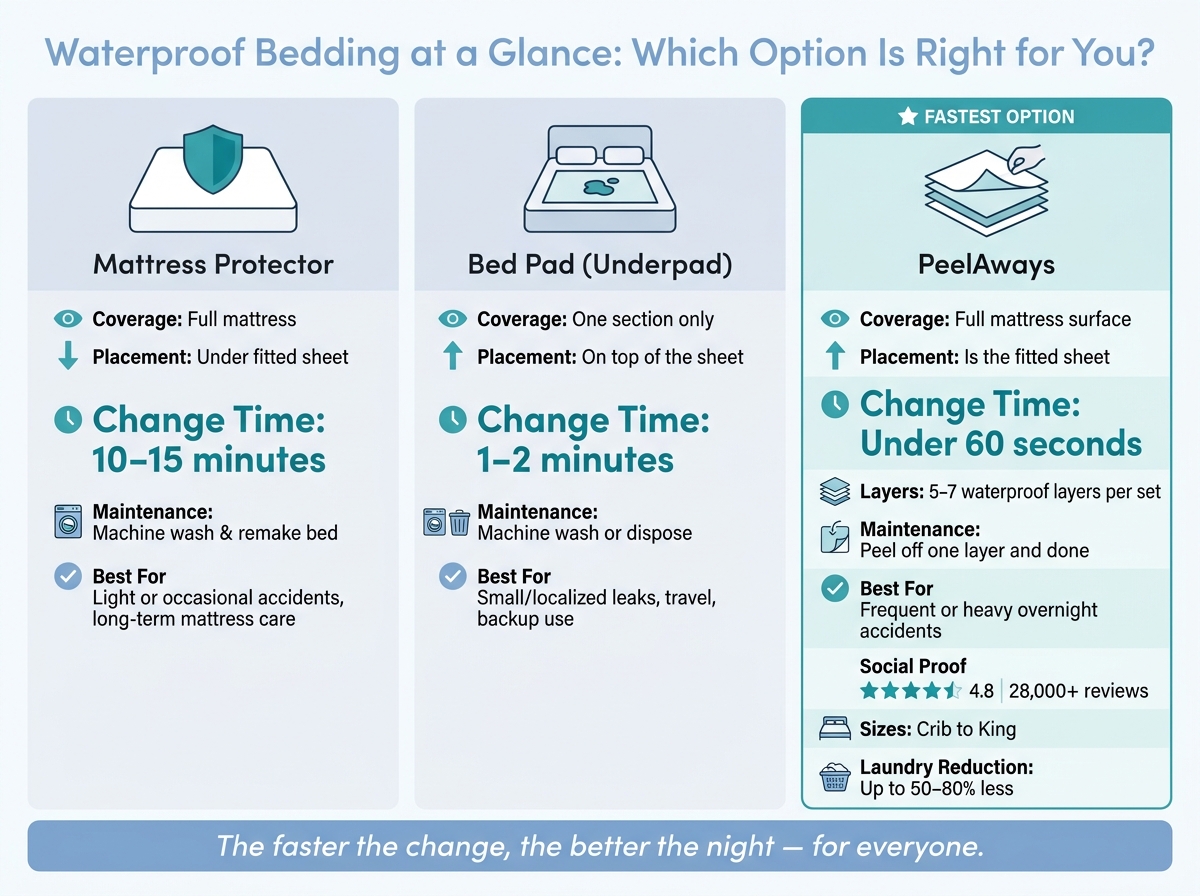
Waterproof Bedding Comparison: Mattress Protector vs. Bed Pad vs. PeelAways
| Option | Coverage | Cleanup | Good fit for |
|---|---|---|---|
| Mattress protector | Full mattress | Wash and remake bed | Light or occasional accidents |
| Bed pad | One section | Swap pad only | Small leaks, travel, backup use |
| PeelAways | Full sleep surface | Peel off one layer | Frequent accidents, nighttime incontinence care |
FAQ
What is the best waterproof bedding for adult incontinence?
If accidents happen often, I would choose a layered fitted system like PeelAways for the change speed and better bedwetting hygiene, plus base mattress protection. If leaks are rare, a washable mattress protector may be enough.
What is the best waterproof bedding for bedwetting kids?
You want soft, quiet bedding that does not feel like hospital gear. For frequent bedwetting, a layered option in twin or crib size can cut down on overnight stress and early-morning laundry. Establishing consistent bedwetting routines can also help manage these challenges.
Are disposable waterproof sheets worth the cost?
They can be. If you are changing wet bedding many nights a week, time and laundry add up fast. A product that turns a 15–20 minute job into a 60-second one may be worth the repeat cost.
Do bed pads replace a mattress protector?
No. Bed pads protect one area. A mattress protector guards the mattress itself. Many people need both unless they use a full fitted layered system.
How many layers does PeelAways have?
Each set has 5–7 waterproof layers, depending on the product.
Where can I buy PeelAways?
You can get it at peelaways.com/shop or on the Amazon listing for PeelAways. You can also read more on the PeelAways blog and this post on bedridden patient care tips.
Bottom line
If you are tired of stripping a wet bed in the dark, the right waterproof bedding is the one that cuts steps, protects the mattress, and keeps the person in bed feeling okay.
For light accidents, a mattress protector may do the job.
For small wet spots, a bed pad may be enough.
But for frequent overnight accidents, I would not overthink it. PeelAways stands out because it turns a long, draining cleanup into a 60-second reset, with 5–7 layers, crib-to-king sizing, 28,000+ reviews, and a 4.8-star rating.
Blog readers save 10% with code BLOGS10 at checkout. Available on peelaways.com and Amazon. Free shipping on orders over $100.
Waterproof Mattress Protectors, Bed Pads, and PeelAways Compared
It’s 2 a.m. again. The bed is wet, your loved one is upset, and you’re standing there half-awake trying to decide whether you need to change one layer, three layers, or the whole bed.
Once you know the main bedding types, the next question is simple: what changes fastest, covers enough of the bed, and fits your life right now? Most of the time, the choice comes down to full-bed protection, spot protection, or the fastest possible change.
Mattress Protectors vs. Waterproof Fitted Sheets
A mattress protector goes underneath your regular fitted sheet. Its job is to block moisture from reaching the mattress. A waterproof fitted sheet does both jobs at once: it’s the sleep surface and the moisture barrier in one layer.
That difference hits hard in the middle of the night.
If a mattress protector gets soaked, you usually have to remove the top sheet, pull off the protector, and remake the bed from scratch. That usually takes 10 to 15 minutes. A waterproof fitted sheet is less of a production, but it still has to come off and go straight into the wash.
Comfort matters too. Some older waterproof materials, especially PVC or vinyl, can feel hot and make that crinkly sound nobody wants to sleep on. Newer options use materials like Tencel or cornstarch-derived polyurethane, which are made to feel quieter and cooler for seniors with incontinence.
Reusable vs. Disposable Bed Pads: When to Use Each
Bed pads, often called underpads, protect one section of the bed instead of the whole thing. They sit on top of the sheet, right under the person who needs the help, so you can swap them without tearing apart the whole setup.
That’s the upside. The trade-off is coverage. A bed pad handles spot protection, not full mattress protection.
Reusable bed pads make sense if you have steady access to laundry and want to keep long-term costs down. Wash them, dry them, use them again.
Disposable bed pads make more sense when laundry just isn’t happening. Travel. Illness. A week when the washer is already running nonstop. In those moments, tossing one out can feel like mercy.
How PeelAways Works for 60-Second Bed Changes
PeelAways is a multi-layer disposable fitted sheet system. Each set comes with either 5 or 7 waterproof layers stacked together and fitted to the mattress like a regular sheet. When the top layer gets soiled, you peel it off and move on in under 60 seconds, with no full bed strip.
That speed is the part that gets people.
Not because it sounds nice on paper. Because when you’ve changed a full bed in the dark with a sore back, the gap between under 60 seconds and 15 to 20 minutes feels huge.
The layers are soft, breathable, and quiet. They’re also free from vinyl, PVC, phthalates, and fire retardants. Since each layer is single-use, there’s no putting a used layer back into rotation between accidents.
PeelAways comes in sizes from Crib, Cot, Twin XL, Full, Queen, and King. They’re also HSA/FSA eligible, which can help with cost when you’re dealing with chronic conditions.
If you want to look at them directly, you can check PeelAways on peelaways.com/shop or the Amazon listing for PeelAways. If you want more context from people living this every day, these are also worth reading: PeelAways blog and more articles on peelaways.com.
The easiest way to sort this out is to compare placement, coverage, upkeep, and how long each change takes.
| Feature | Mattress Protector | Bed Pad (Underpad) | PeelAways |
|---|---|---|---|
| Primary placement | Under the fitted sheet | On top of the sheet | Is the fitted sheet |
| Coverage | Full mattress (5 or 6 sides) | Localized area | Full mattress surface |
| Maintenance | Machine wash & dry | Machine wash or dispose | Peel and dispose |
| Change time | 10–15 minutes | 1–2 minutes | < 60 seconds |
| Best for | Long-term mattress care | Minor/localized leaks | Frequent/heavy accidents |
From here, the best choice depends on whether the need is incontinence, bedwetting, potty training, or recovery at home.
Best Waterproof Bedding for Elderly Incontinence, Bedwetting, Potty Training, and Recovery
It’s 3 a.m. again. The bed is wet, your loved one is upset, and you’re standing there half-awake knowing this is about to turn into a full sheet change when all you want is five more minutes of sleep.
The right setup depends on who needs care and how fast the bed has to be reset. An adult with incontinence needs full coverage and a change that feels calm, not humiliating. A child needs comfort and cleanup that doesn’t turn bedtime into a fight. Someone in recovery needs a surface that stays dry without a lot of lifting or turning.
Best Options for Elderly or Adult Incontinence at Home
For adults dealing with incontinence at home, two things matter most: full mattress coverage and how fast you can get back to bed. A soaked mattress protector that means stripping the whole bed at 3 a.m. is more than annoying. It wears you down physically, and it can make the person in bed feel awful too.
The good news is that waterproof bedding has come a long way. Newer materials are quieter and cooler than the old vinyl or PVC covers a lot of us remember. That matters on long nights, when every bit of comfort helps.
If accidents happen often, a layered setup can spare you from doing a full-bed change every time. PeelAways works like a stacked fitted sheet with 5-7 waterproof layers built in, so when the top layer gets soiled, you peel it away and there’s a clean, dry layer underneath. No laundry in the middle of the night. No lifting the mattress corners. No remaking the whole bed.
That’s the part that can feel like a lifeline when you’re tired to your bones. A bed reset in about 60 seconds instead of 15-20 minutes changes the whole night. It also cuts down on loads of laundry through the week, which means less strain on your back and less work piling up around the house.
If you’re looking at options, PeelAways is sold in sizes from crib to king, has 28,000+ reviews, and holds a 4.8-star rating. You can find it on peelaways.com/shop and on Amazon. If you want more detail on setup and fit, these guides help too: How PeelAways Works and Best Bedding for Incontinence Care.
Best Options for Children's Bedwetting and Potty Training
For kids, comfort matters just as much as cleanup. Maybe more. If the bedding crinkles, slides around, or looks like something from a hospital room, a child notices. And when a child feels embarrassed, bedtime can go sideways fast.
That’s why soft, quiet materials matter here. A waterproof layer shouldn’t announce itself every time your child rolls over. Breathable layers help too, since kids often sleep hot. When heat gets trapped under waterproof bedding, sleep gets restless, and everyone pays for it the next day.
For potty training, the Crib-A-Peel from PeelAways fits cribs and toddler beds. For older kids still dealing with bedwetting, the Twin size fits a standard bed. After an accident, you remove the top layer and the bed is ready again without dragging sheets to the washer before sunrise.
Sometimes that simple cleanup is what keeps the whole routine from feeling heavy. Less fuss. Less shame. Just handle it and move on.
Best Bedding for Post-Surgery or Limited Mobility Recovery
Recovery adds another layer to all this. When someone is healing or has limited mobility, the big issue isn’t only staying dry. It’s making changes without a lot of lifting, pulling, or repositioning.
That’s where fast-change bedding makes the most sense. If a waterproof setup bunches, slides, or traps heat, it can make recovery harder than it already is.
Breathability matters a lot here. Someone recovering from surgery may spend long stretches in bed, so heat control matters, and any waterproof layer that holds heat can make discomfort worse and increase the risk of skin irritation. Look for TPU or another breathable membrane, and skip anything that shifts around under the body.
For bedridden patients, the Twin XL option from PeelAways fits hospital-style and adjustable beds. It’s also HSA/FSA eligible, which can help with out-of-pocket costs during recovery.
How to Choose, Set Up, and Maintain Waterproof Bedding
It’s 2am. The bed is wet again, your loved one is half-awake and embarrassed, and you’re trying to change everything without fully waking them up. In that moment, the right waterproof bedding doesn’t feel like a small detail. It feels like the difference between a five-minute reset and a long, exhausting mess.
Once you know which format fits the job, this is what helps keep nights drier and changes faster. A good waterproof bedding setup fits well, lets air move, and comes off fast when you need it. When it’s set up the right way, you deal with fewer leaks, less laundry, and less overnight chaos.
What to Check Before Buying Waterproof Bedding
Before you buy anything, measure your mattress. Not just twin, full, queen, or king. Check the depth too. Waterproof protectors come in set pocket depths, from 6 inches for cribs up to 21 inches for thicker adult mattresses. If the protector is too shallow, it can pop off the corners. If it’s too deep, it can bunch up and slide around.
That may sound small, but when you’re changing a bed in the dark, small things matter.
After fit, look at the surface and backing. A breathable, PVC-free cover with a quiet top layer like terry or Tencel is usually easier to live with night after night. Nobody wants that stiff, crinkly sound every time the person in bed moves.
How to Set Up Waterproof Bedding to Reduce Leaks and Speed Up Changes
After fit and material, setup is what makes the whole thing work when real life hits.
Pull each layer flat and smooth before anyone gets into bed. Wrinkles in a waterproof layer can create pressure points that irritate skin. If you’ve ever seen someone get restless because one part of the bed feels “off,” you know how fast that can turn into a rough night.
Place the label at the head of the mattress so the sheet fits correctly. That one little step can save you from fighting the corners. If the corners still keep slipping, which happens a lot on thicker mattresses, sheet straps can help hold everything in place.
If you’re using a layered system, set it up so the next change is fast by streamlining incontinence care tasks. That’s the whole point. You want the bed ready before you need it, not while you’re standing there with wet sheets in your hands.
And this is where PeelAways can make a hard job much lighter. I didn’t find it as some polished sales pitch. I found it the way a lot of people do - while looking for ANYTHING that could stop the endless middle-of-the-night laundry. PeelAways uses 5–7 layers, comes in sizes from crib to king, and lets you remove one soiled layer in about 60 seconds instead of doing a full 15–20 minute bed change. If you use diapers or incontinence pads, it makes a lot of sense to look at it. It’s also sitting at 28,000+ reviews and a 4.8-star rating, which tells you plenty of tired families have put it to the test.
You can see it here: peelaways.com/shop
Or on Amazon here: PeelAways on Amazon
You may also want to read more from their blog:
- https://peelaways.com/blogs/news
- https://peelaways.com/blogs/news/bedridden-patient-care-tips
How to Keep Waterproof Bedding Clean, Safe, and Comfortable
Change wet bedding right away. That part matters. Leaving moisture against the skin can increase the risk of irritation and skin breakdown, especially for older adults or anyone who can’t shift position much on their own. Waterproof bedding protects the mattress, but it does not take the place of good skin cleanup after an accident.
For reusable protectors, follow the wash label exactly, skip cleaners that aren’t listed, and let them air-dry all the way before using them again. Every so often, do a simple water drop test. Put a small amount of water on the protector’s surface. If the water soaks in instead of beading up, the waterproof barrier has failed and it’s time to replace that item.
If you keep more than one reusable cover on hand, rotate them. Use the older ones first so the wear stays more even across the set.
Disposable systems skip the washing step altogether. You peel off the used layer and put on a clean one. When you’re tired and the clock says 2:17am, that kind of setup can feel like a gift.
The Simplest Waterproof Bedding Setup for Busy Caregivers
It’s 2 a.m. The bed is wet again, your eyes are burning, and the last thing you have in you is a full sheet change. In that moment, the best setup is the one you can handle half-asleep without turning the whole night upside down.
That usually means fewer steps, less laundry, and a bed that’s ready for the next accident before the current one is even dealt with. For most people doing this every night, the right choice comes down to two things: how often accidents happen, and how much time you honestly have.
When PeelAways Makes the Most Sense
If overnight accidents happen a lot, speed starts to matter more than almost anything else. That’s where PeelAways can make life easier.
PeelAways is a ready-to-peel layered sheet system that resets the bed in under 60 seconds. No stripping the mattress. No dragging wet linens to the washer in the middle of the night. If you’re dealing with more than one overnight change, that time savings can feel huge.
This is the kind of product many tired caregivers end up finding after they’ve had enough of the 15- to 20-minute routine. PeelAways comes in 5-7 layers, with sizes from crib to king, and it has 28,000+ reviews with a 4.8-star rating. If you use diapers or incontinence pads, it fits right into that routine.
You can find it on peelaways.com/shop or on Amazon. You may also want to read more on the PeelAways blog, like how layered bedding helps with overnight accidents and tips for making bed changes less exhausting.
Main Trade-Offs to Consider
The trade-off is pretty plain.
PeelAways gives you faster bed changes, but it also means more waste than reusable bedding and a repeat supply cost. If accidents only happen once in a while, a reusable mattress protector is often the better fit. But when accidents happen often, the time you save can matter more than the per-use cost.
That’s the heart of the decision: speed versus waste and cost.
Start With the Bedding Format That Fits Your Routine
A waterproof mattress protector is still the base layer for long-term mattress defense. Bed pads make sense when you only need coverage in one spot and don’t need to change the whole bed. PeelAways fits best when you want multiple ready-to-go layers that let you reset the bed in seconds, not minutes.
Caregiving is hard enough without wrestling wet bedding in the dark. The right waterproof bedding setup won’t fix every hard part of the night, but it can take away one of the most draining ones.
For frequent accidents, PeelAways multi-layer disposable sheets deliver the thing that matters most at 2 a.m.: a 60-second bed change that helps keep your loved one dry, comfortable, and dignified without a full linen overhaul.
Making aging and caregiving easier, one bed at a time.
Blog readers save 10% with code BLOGS10 at checkout. Available on peelaways.com and Amazon. Free shipping on orders over $100.
Comments
0



SAVE MONEY & WATER
Professionals & Institutions save a fortune on labor/laundry.

SUPERIOR COMFORT
The first thing our customers notice is how soft our sheets are.

100% WATERPROOF
Each layer is 100% Waterproof, perfect for spills and accidents

SAVE TIME
Change the sheet in under 1 minute without stripping the bed.

Leave a comment