7 Nursing Home Expenses You Can Cut Without Sacrificing Quality of Care

Nursing homes are expensive, with private rooms averaging $10,646 per month in 2024. But you can reduce costs without impacting care quality. Focus on smarter bedding, energy-efficient upgrades, better supply choices, and streamlined staffing. Key strategies include:
- PeelAways disposable sheets: Cut laundry costs by up to 80%.
- Premium incontinence supplies: Reduce waste and skin issues.
- Energy savings: LED lights and efficient HVAC systems lower utility bills.
These changes save money while maintaining resident comfort. Here's how to implement them effectively.
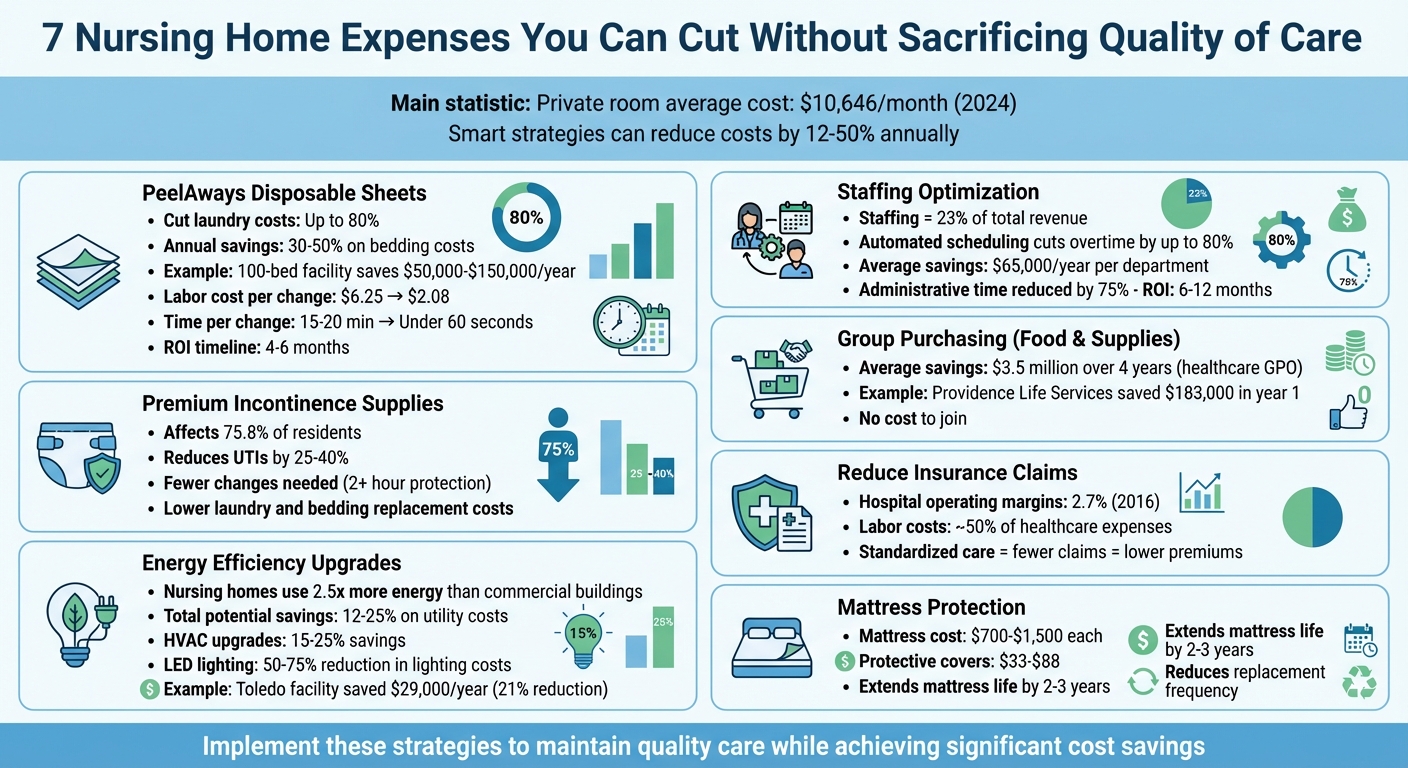
7 Cost-Cutting Strategies for Nursing Homes: Potential Savings Breakdown
1. Switch to PeelAways Multi-Layer Disposable Bed Sheets
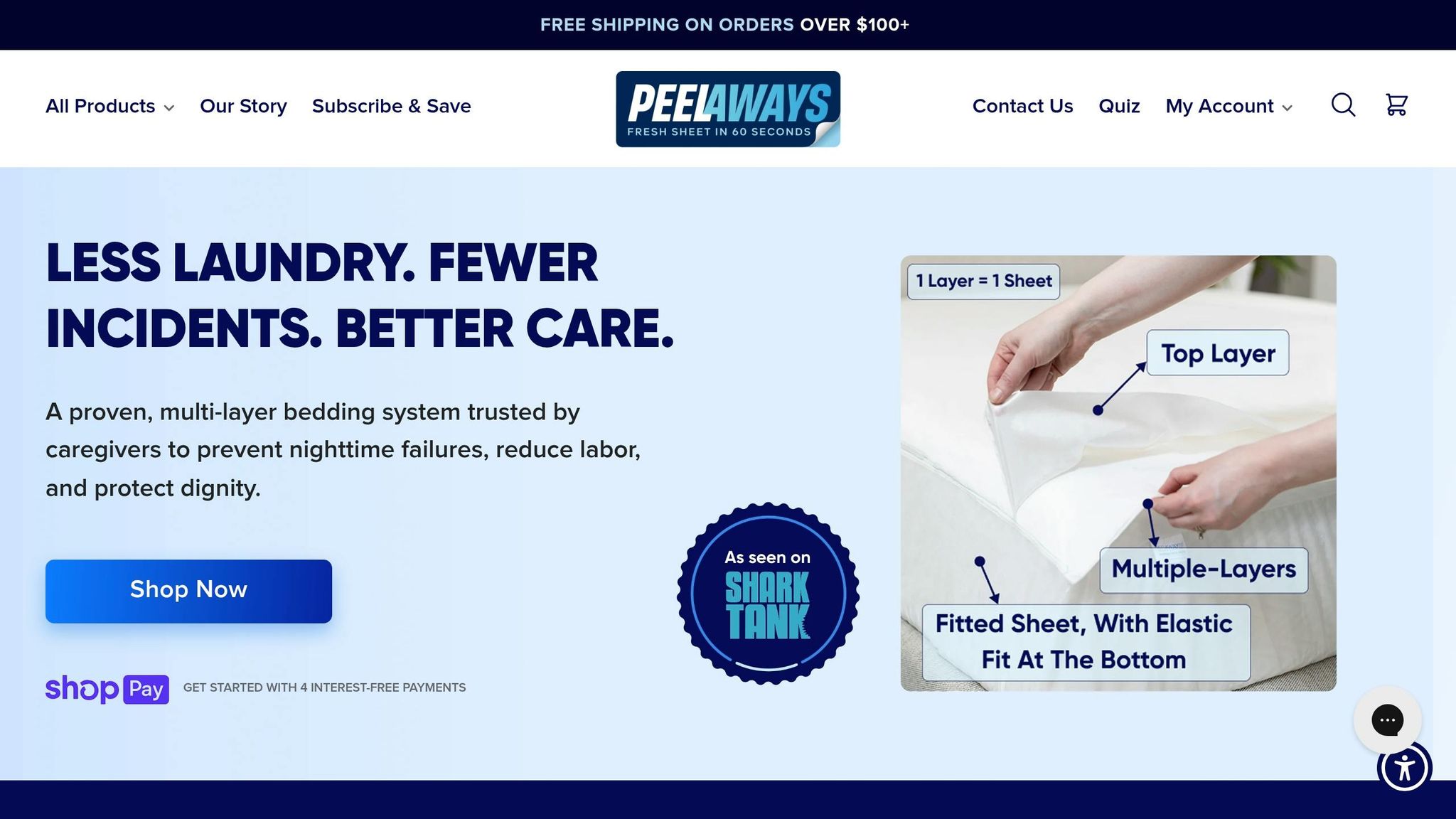
PeelAways Multi-Layer Disposable Bed Sheets feature a 5-7 layer design that allows you to simply peel off a soiled layer, revealing a fresh, waterproof surface underneath. This eliminates the need for washing sheets after every incident, cutting laundry by up to 80% while maintaining hygiene. Each layer is waterproof, breathable, and crafted from a soft bamboo-rayon-polyester blend, ensuring both mattress protection and resident comfort.
Cost Savings Potential
Switching to PeelAways can lead to 30-50% annual savings on bedding-related costs. For example, a 100-bed facility could save between $50,000 and $150,000 annually, reducing per-resident laundry costs from $20–$30 to just minimal labor expenses. Labor costs per sheet change also drop significantly - from $6.25 to $2.08. A 120-bed facility in the Midwest that adopted PeelAways in 2025 reported a 42% reduction in bedding costs ($92,000 annually) and cut linen changes by 65%.
The time savings are equally impressive. Traditional sheet changes take 15-20 minutes per incident, but with PeelAways, a layer can be removed and replaced in under 60 seconds. This allows staff to dedicate more time to resident care, a critical benefit during the staffing shortages of 2026.
Impact on Resident Comfort and Care
PeelAways improve resident comfort and dignity by enabling quick, discreet sheet changes that minimize disruption. The soft, breathable fabric wicks moisture away from the skin, reducing irritation. Facilities using PeelAways have reported 25-40% fewer urinary tract infections, thanks to the sterile, waterproof barrier that prevents cross-contamination. The same 120-bed facility saw an increase in resident satisfaction scores by 12%, with no rise in skin breakdown incidents - proving that cost efficiency doesn’t have to come at the expense of quality care.
Ease of Implementation
Introducing PeelAways is straightforward. Staff can learn the peel-and-replace method in just 15–30 minutes, with no additional equipment required. Initial setup involves purchasing sheet sets ($34.99-$41.99 per Twin XL bed) and arranging bulk orders. Most facilities start with a pilot program covering 10-20 beds over two weeks, then scale up to full implementation within a month. The sheets are compatible with standard nursing home mattresses, including Twin XL hospital beds, as well as sizes from Crib to King.
Long-Term Benefits
PeelAways offer benefits beyond immediate savings. Their waterproof layers extend mattress life by 2-3 years, preventing fluid damage and odor buildup, which delays the need for replacements that typically cost $500-$3,000 per unit. Facilities also report better staff retention, as reducing physically demanding laundry tasks lowers burnout and injury rates. Additionally, a 20–30% reduction in linen waste supports financial stability, especially with Medicaid reimbursement pressures on the horizon. Most facilities see a return on investment within 4-6 months.
Next, let’s look at how optimizing supply usage can further drive down costs.
sbb-itb-45288fe
2. Reduce Incontinence Supply Waste
Incontinence is a challenge for 75.8% of long-term nursing home residents. The secret to managing costs isn’t about opting for cheaper products - it’s about choosing the right ones. High-quality incontinence supplies with better absorbency and leak protection can actually save money. Why? They require fewer changes and reduce the need for extra expenses like laundry and bedding replacements. By investing in premium supplies, facilities can cut waste while also keeping additional costs under control.
Cost Savings Potential
Using low-quality incontinence products often ends up costing more. Poor absorbency means more frequent changes, which increases product usage and adds to labor costs as staff spend extra time on these tasks instead of focusing on resident care. As Marta Maleszewska, Ph.D., Seni Brand Expert, explains:
"Buying cheap means buying more. This rule of thumb applies to fast moving goods such as incontinence supplies."
The hidden costs don’t stop there. Products that don’t fit properly lead to leaks, which result in extra laundry and bedding changes. Supplies without side gathers or leak guards also contribute to soiled linens, driving up both material and labor costs. Plus, non-breathable materials can trap moisture against the skin, leading to conditions like incontinence-associated dermatitis and pressure ulcers - both of which require expensive medical care.
Impact on Resident Comfort and Care
High-quality incontinence products don’t just save money - they also enhance resident well-being. Products with superior absorbency can provide protection for over two hours, reducing the need for frequent changes. This allows residents to sleep through the night uninterrupted, cutting down on product usage and lowering the risk of falls during nighttime bathroom trips. Dr. Maleszewska emphasizes this point:
"Quality incontinence products perform better due to higher absorbency and improved construction using softer materials. They allow a full night's sleep without changes that benefits both the user and the caregiver."
Additional features like elastic waistbands and side gathers ensure a snug fit, preventing leaks and boosting residents’ confidence. Breathable materials also play a key role in skin health. The National Association for Continence (NAFC) advises against products with plastic outer layers, which can trap heat and moisture, leading to skin irritation and bacterial growth. Instead, vapor-permeable shells promote air circulation while keeping the skin dry and protected.
Ease of Implementation
Start by streamlining incontinence care tasks and auditing resident sizes to ensure a proper fit, as body sizes can fluctuate due to changes in liquid intake and excretion. Train staff to identify key product features such as high absorbency, breathable layers, side gathers, and elastic waistbands. Scheduled toileting programs can also help reduce accidents and cut down on the number of disposable products used.
Long-Term Benefits
Reducing incontinence supply waste doesn’t just lower product costs - it also frees up staff time to focus on other critical care tasks. Healthier skin means fewer cases of pressure ulcers and dermatitis, reducing the need for costly wound care treatments. The savings generated can be reinvested into areas like staffing or additional training, further improving the quality of care. By transitioning to premium products and fine-tuning usage protocols, facilities can create a cycle of efficiency and better resident outcomes, paving the way for even greater operational savings down the line.
3. Cut Utility and Energy Costs
Nursing homes consume 2.5 times more energy than the average commercial building, using approximately 75 kWh per square foot annually compared to just 15 kWh for standard spaces. This high energy demand translates to hefty utility bills, with healthcare facilities in the U.S. collectively spending over $8 billion annually on energy. However, by making targeted upgrades and adopting smarter energy procurement strategies, nursing homes can cut these costs by 12-25% while enhancing resident comfort and care.
Cost Savings Potential
Climate control is the largest energy expense in nursing homes, accounting for 30-45% of total energy usage. Upgrading to high-efficiency boilers and water heaters equipped with heat recovery systems can trim HVAC costs by 15-25%. LED lighting retrofits offer even greater savings, reducing lighting energy use by 50-75% with payback periods typically between 18 and 30 months.
A real-world example: In January 2026, a 13,000-square-foot nursing home in Toledo, Ohio, slashed its annual energy expenses by $29,000, dropping from $70,000 to $41,000. This was achieved through competitive energy procurement, better contract timing, and demand management, resulting in a 21% reduction in costs. The facility secured a new rate of 6.6¢/kWh, delivering immediate savings without any upfront investment.
Building automation systems (BAS) are another effective solution. These systems adjust HVAC and lighting based on occupancy and operational needs, typically saving 10-20% on total energy costs. Since peak demand charges can make up 30-50% of a facility's energy bill, shifting non-essential processes like laundry to off-peak hours can significantly reduce costs without requiring additional equipment. These savings free up funds that can be reinvested into improving resident care and comfort.
Impact on Resident Comfort and Care
Energy efficiency improvements not only save money but also enhance the quality of care. Building automation systems ensure consistent temperatures and better indoor air quality - critical for elderly residents, especially those with respiratory issues or weakened immune systems. As Ecosave highlights:
"An energy-efficient building has better air quality and more comfortable temperatures, which affect recovery times and overall satisfaction for patients".
Adding dimmers in resident rooms allows individuals to personalize their lighting, boosting satisfaction while minimizing energy waste. Additionally, the longer lifespans of LED bulbs and modern HVAC systems mean fewer maintenance disruptions, providing a more stable and stress-free environment for residents who thrive on routine.
Ease of Implementation
These energy-saving measures are relatively easy to implement and cause minimal disruption. Start with competitive energy procurement in deregulated markets, where shopping for energy suppliers instead of defaulting to utility rates can save 12-18%. Timing is key - secure contracts during "shoulder seasons" (April-May or September-October) when demand is lower for better rates. This approach requires no upfront costs and delivers immediate savings.
For physical upgrades, focus on high-traffic areas like lobbies, hallways, stairwells, and parking lots, where lights are used 24/7. LED retrofits in these spaces provide quick returns. Utility rebates, ranging from $0.50-$2.00 per watt reduced for lighting and $50-$200 per ton for HVAC equipment, can help offset upgrade expenses. Federal tax incentives under Section 179D offer up to $5.00 per square foot for energy-efficient building improvements.
Long-Term Benefits
The financial benefits of energy efficiency grow over time. LED lighting, which costs $1.50-$3.00 per square foot to install, generates annual savings of $0.50-$1.50 per square foot. Similarly, building automation systems, though requiring an initial investment of $2-$8 per square foot, pay for themselves within 3-7 years.
Beyond cost savings, these upgrades reduce your facility’s environmental footprint and can help earn LEED (Leadership in Energy and Environmental Design) certification. This not only creates a healthier environment for residents and staff but also positions your facility as a leader in sustainable care. By lowering utility costs, nursing homes can redirect funds toward essential care initiatives, ensuring high standards for resident wellbeing while maintaining financial stability.
4. Improve Staffing Efficiency
Staffing expenses make up a hefty 23% of a nursing home's total revenue, making it one of the most controllable costs. By adopting automated scheduling systems and smarter workforce management strategies, facilities can slash overtime costs by as much as 80% while maintaining - or even improving - the quality of care provided to residents. Matching qualified staff to specific resident needs is key to cutting overtime expenses. Think of it like energy efficiency: reducing waste while maintaining comfort. In this case, streamlined staffing achieves better care at lower costs.
Cost Savings Potential
Automated scheduling systems can eliminate the inefficiencies of manual shift management. Facilities using these platforms report average yearly savings of more than $65,000 per department, primarily by reducing unnecessary overtime. It’s worth noting that nurses working overtime are twice as likely to make medication errors, which can lead to costly complications and even liability claims.
These systems also save time. Smart scheduling can cut administrative tasks by 75%, allowing managers to focus more on improving care rather than managing spreadsheets. By monitoring overtime hours and costs on a weekly basis, facilities can address problems before they spiral. Automated systems can even set caps on overtime and flag early clock-ins or late clock-outs, helping facilities stick to their financial goals without requiring constant manual intervention.
Impact on Resident Comfort and Care
Optimized staffing doesn’t just save money - it also enhances resident care. Proper scheduling ensures the right nurse-to-patient ratios and matches staff qualifications to specific resident needs, which is essential for both safety and comfort. As SmartLinx explains:
"Excessive overtime is one of the biggest contributing factors to higher rates of pressure ulcers in patients".
By reducing unnecessary overtime, staff members arrive on shift more refreshed and alert, which allows them to provide better care. Predictable schedules also mean residents are more likely to see familiar caregivers consistently. This stability fosters stronger relationships between staff and residents, and residents benefit from continuity of care rather than dealing with exhausted workers or last-minute replacements.
Ease of Implementation
Modern scheduling platforms make adjusting shifts in real-time a breeze. Managers can quickly adapt to absences or changes in census numbers. These systems also integrate with payroll, reducing manual data entry errors and simplifying compliance with CMS and state-mandated nurse-to-patient ratios.
To get started, conduct a thorough needs assessment to determine the exact level of care each resident requires - like specific hours of assistance for daily activities. This ensures you’re not overstaffing while still meeting residents’ needs. Cross-training staff to handle multiple roles adds flexibility, reducing the reliance on a small group of employees for overtime coverage.
Long-Term Benefits
Most nursing facilities recoup their investment in staffing automation within 6 to 12 months. Integrating these systems with payroll can cut payroll processing costs by 30%, and automated compliance reporting can speed up regulatory tasks by as much as 50%.
Better scheduling also improves staff work-life balance, helping to combat burnout and reduce turnover - two major challenges in the industry. Automated scheduling has been shown to increase staff satisfaction by 35% and reduce shift gaps by 20%. Lower turnover means fewer recruitment and training expenses, while experienced staff deliver higher-quality care. This creates a positive cycle: satisfied employees provide better care, which improves the facility’s reputation and makes it easier to attract new talent. Over time, smarter scheduling not only cuts costs but also elevates the overall standard of care for residents.
5. Use Group Purchasing for Food and Kitchen Supplies
Optimizing how food and kitchen supplies are procured can lead to noticeable cost reductions for nursing homes. Group Purchasing Organizations (GPOs) are a great way to achieve this. These organizations use the collective buying power of their members to negotiate discounts that individual facilities likely couldn't secure on their own. By joining a GPO, nursing homes can cut food costs while maintaining - or even improving - the quality of meals served. GPOs also help by negotiating contracts with trusted suppliers and offering insights to avoid unexpected price hikes or budget issues.
Cost Savings Potential
The savings from group purchasing can be substantial. For example, one healthcare GPO reported an average annual savings of $3.5 million over a four-year period. Another success story comes from Providence Life Services, which saved $183,000 in its first year after adopting strategic procurement practices across its four senior living communities in September 2024.
These savings are achieved through discounts on a wide range of food products, from staples like dairy and baked goods to specialized dietary items. Brian Banks from Friendship Village Tempe highlighted the benefits of working with a GPO:
"Having LCS Group Purchasing as a partner has been invaluable to us. The information they regularly send out regarding market changes, price forecasts, and other pertinent information are great tools to help me manage my business".
Such cost reductions can free up resources for other operational needs, improving overall efficiency.
Impact on Resident Comfort and Care
Lower costs don’t mean compromising on quality. In fact, they enable facilities to purchase higher-quality ingredients without exceeding their budgets. GPOs work with both national and local suppliers, giving access to a variety of options, including gluten-free, vegetarian, and organic products. This is especially important as Baby Boomers entering nursing homes increasingly expect healthier, more diverse, and locally sourced dining options.
By partnering with approved vendors, facilities can ensure that ingredients meet high ethical and quality standards, even during supply chain disruptions. This reliability helps maintain consistency in meal quality, which is essential for resident satisfaction.
Ease of Implementation
Joining a GPO is simple and often comes at no cost to the nursing home. Organizations like LCS Group Purchasing, which supports over 2,100 senior living communities across the country, handle the heavy lifting - managing contract negotiations, sourcing vendors, and resolving service issues. Many GPOs also assign a dedicated account manager to guide you through the process.
To begin, facilities can request a savings assessment to identify areas of overspending. GPOs typically offer solutions for common food categories like dairy, bakery, and broadline services, which can save time and reduce administrative burdens. Jessica Morales from HumanGood shared her experience:
"We truly value our partnership... Their expertise has been invaluable - from navigating complex challenges to supporting us through major projects".
Long-Term Benefits
GPOs don’t just save money - they also provide stability. With regular price forecasts and market reports, they help facilities plan ahead and avoid surprises. Phil English, HGPII National Coordinator, emphasized this role:
"Our comprehensive survey shows that GPOs are reprising their historic role as advocates for health institutions of all sizes... drawing on institutional experience - and, increasingly, AI technology - to link providers with suppliers".
Additionally, GPOs save time by managing vendor relationships and contracts, allowing staff to focus more on resident care. This predictable cost structure supports continuous improvements in care quality, making GPOs a valuable partner in long-term operations.
6. Reduce Insurance Premiums and Claims
Cutting insurance costs is a smart way to trim overall expenses while keeping care quality intact. By improving care standards and streamlining documentation, facilities can reduce premiums and claims, creating a safer and more efficient environment.
When clinical processes are standardized, preventable incidents - like falls or infections - are less likely to occur. Fewer incidents mean fewer claims, which can lead to lower insurance premiums. On top of that, thorough and consistent documentation ensures claims are justified, reducing the chances of denial.
Cost Savings Potential
Insurance-related savings can make a big difference, especially in an industry where margins are tight. For instance, in 2016, hospital operating margins fell to 2.7%, while expenses climbed by 7.5% and revenues grew only 6.6%. One effective solution is implementing Clinical Documentation Improvement (CDI) programs. As the American Health Information Management Association (AHIMA) explains:
"Successful clinical documentation improvement (CDI) programs facilitate the accurate representation of a patient's clinical status that translates into coded data. Coded data is then translated into quality reporting, clinician report cards, reimbursement, public health data, and disease tracking and trending".
Impact on Resident Comfort and Care
Standardized care processes don’t just save money - they also improve patient outcomes. Reducing variability in care lowers risks of infections and other complications, while managing patient flow more effectively can cut down on hospital-acquired infections. With more insurers tying reimbursement to quality measures, facilities that demonstrate better care and fewer claims are more likely to secure favorable financial terms.
Ease of Implementation
Getting started doesn’t have to be complicated. Standardizing documentation, aligning physician incentives, and using data to monitor progress are all effective first steps. Cost management tools can help facilities understand the true cost of care and connect expenses to patient outcomes. Healthcare experts Bobbi Brown and John Hansmann highlight the importance of data-driven motivation:
"Show [clinicians] data that compares their performance to their peers with quality outcomes, and they will do everything in their power to end up at the top of the list".
By encouraging clinicians to focus on quality outcomes, risks and costs can be reduced even further.
Long-Term Benefits
The benefits of controlling insurance costs go beyond immediate savings. Effective strategies can stabilize finances and improve profitability over time. With labor accounting for nearly 50% of healthcare expenses, reducing claims tied to employee-related incidents can have a ripple effect on overall costs. As value-based care models gain traction - only 29% of medical payments were linked to alternative payment models in 2016 - facilities that proactively manage claims and quality will be better positioned for the future.
Implementing change control systems to monitor budgets and track improvements is another way to ensure long-term success. As Brown and Hansmann emphasize:
"The revenue side of the earnings equation has changed, so hospitals need to change the cost side as well".
7. Protect Mattresses to Extend Their Lifespan
Protecting mattresses is a practical and cost-effective way to reduce expenses in nursing homes without compromising on care quality. Mattresses can cost anywhere from $700 to $1,500, making premature replacements due to fluid damage, stains, or hygiene issues a significant financial burden. Using waterproof covers and protective barriers not only extends a mattress's lifespan but also supports infection control and enhances resident comfort.
Cost Savings Potential
When fluids penetrate a mattress, they cause irreparable damage, leading to mold, bacterial growth, and unpleasant odors. This often results in costly replacements. Waterproof encasements and protectors act as a complete barrier against urine, wound leakage, and spills, preventing contamination entirely.
Protective covers are available at a wide range of prices, from basic box spring encasements starting at $33.00 to specialized bed bug protective covers priced around $88.00. Even the higher-end options are far less expensive than replacing a mattress. Pairing a full zippered encasement with PeelAways multi-layer disposable sheets creates a robust two-layer defense. This not only protects the mattress but also reduces the time and effort required for bed changes, complementing other bedding-related cost-saving strategies.
Impact on Resident Comfort and Care
Modern mattress protectors are specifically designed for healthcare environments, offering both effective protection and enhanced comfort. Unlike older vinyl covers, newer options feature breathable polyurethane membranes that prevent heat buildup and eliminate the noisy crinkling that could disrupt sleep. Quilted covers provide additional comfort while maintaining waterproof reliability, which helps with pressure distribution and supports skin health.
Rifz Textiles highlights the dual benefits of these products:
"Engineered for infection control and patient comfort, these hospital mattress encasements... help guard against spills, stains, and allergens".
By keeping moisture out, these protectors also limit mold and mildew growth, which can otherwise trigger allergies or respiratory problems in sensitive residents.
Ease of Implementation
Introducing mattress protection measures is simple and requires minimal effort. Full zippered encasements offer complete coverage and are ideal for long-term use, while fitted waterproof pads can be easily removed and laundered. For beds frequently exposed to heavy incontinence, layering a fitted protector with PeelAways multi-layer sheets provides maximum protection and reduces the workload for staff.
Training staff to install these protectors takes only a few minutes. It's recommended to have at least two protectors per bed - one in use while the other is being cleaned. As one user, Dylan A., shared:
"I just bought my mattress new which was not cheap at all and I had a feeling bed bugs were going to make a return... now I'm just glad that my fight with them is in the upper bedding and not my mattress".
Long-Term Benefits
Over time, these protective measures lead to significant cost savings and improved care outcomes. Facilities that adopt mattress protection programs can maximize the lifespan of their mattresses, avoiding premature replacements caused by damage or hygiene issues. High-quality reusable protectors can endure over 300 washes, and when combined with disposable waterproof sheets, they provide immediate labor savings and long-term equipment preservation - all while maintaining top-tier care standards for residents.
Conclusion
Balancing nursing home expenses doesn't have to come at the expense of quality care. The strategies outlined in this article - from using PeelAways multi-layer disposable sheets to optimizing staffing and protecting mattresses - show that it's possible to manage costs effectively while ensuring residents receive the care they deserve. By prioritizing efficiency, reducing waste, following laundry hygiene best practices, and making thoughtful purchasing decisions, facilities can save money while preserving the dignity, comfort, and health of those they serve.
As Jessica Johnston, Senior Director for the Center for Economic Well-Being at NCOA, puts it:
"You're empowering yourself to take better control of your money and maintain your financial stability. And that can feel really good".
These actionable steps enable you to stretch budgets further without compromising critical services. Whether it’s negotiating better rates, setting up automated supply orders, or adopting energy-saving practices, every small improvement adds up. Together, these changes help protect financial resources while maintaining the high standards of care that residents depend on.
With private room costs averaging $10,646 per month, even small savings - like cutting laundry expenses by up to 80% or leveraging group purchasing - can make a big difference. These strategies not only ease financial pressures but also strengthen the commitment to compassionate, high-quality care.
As a special offer, PeelAways is giving blog readers an exclusive 10% discount - just use code BLOGS10 at checkout. This discount can be combined with subscriptions and bundle deals. You can purchase PeelAways on Amazon or directly at Peelaways.com.
FAQs
How do I pilot PeelAways in my facility?
To get started with PeelAways in your facility, reach out to them directly to set up a trial program that fits your specific needs. Begin by gradually incorporating their suggested methods for improving laundry and supply management. Make sure to train your staff on these new processes and keep track of the results. This approach allows you to assess the advantages of using PeelAways solutions while maintaining high standards of care.
Which incontinence product features cut waste the most?
Multi-layer disposable fitted sheets, such as PeelAways, offer a smart way to cut down on waste. They’re designed for quick changes - taking less than a minute - while completely removing the need for laundry. This not only saves time but also helps reduce labor costs, making them an efficient option for caregivers.
What’s the fastest way to lower energy bills with no upfront cost?
The fastest way to cut down on energy bills without spending a dime upfront is by tweaking everyday habits to use water and energy more wisely. Simple adjustments, like being mindful of how energy is used during daily activities, can result in noticeable savings - all without compromising on the quality of care.
Comments
0



SAVE MONEY & WATER
Professionals & Institutions save a fortune on labor/laundry.

SUPERIOR COMFORT
The first thing our customers notice is how soft our sheets are.

100% WATERPROOF
Each layer is 100% Waterproof, perfect for spills and accidents

SAVE TIME
Change the sheet in under 1 minute without stripping the bed.

Leave a comment