5 Steps to Monitor Infection Control Practices

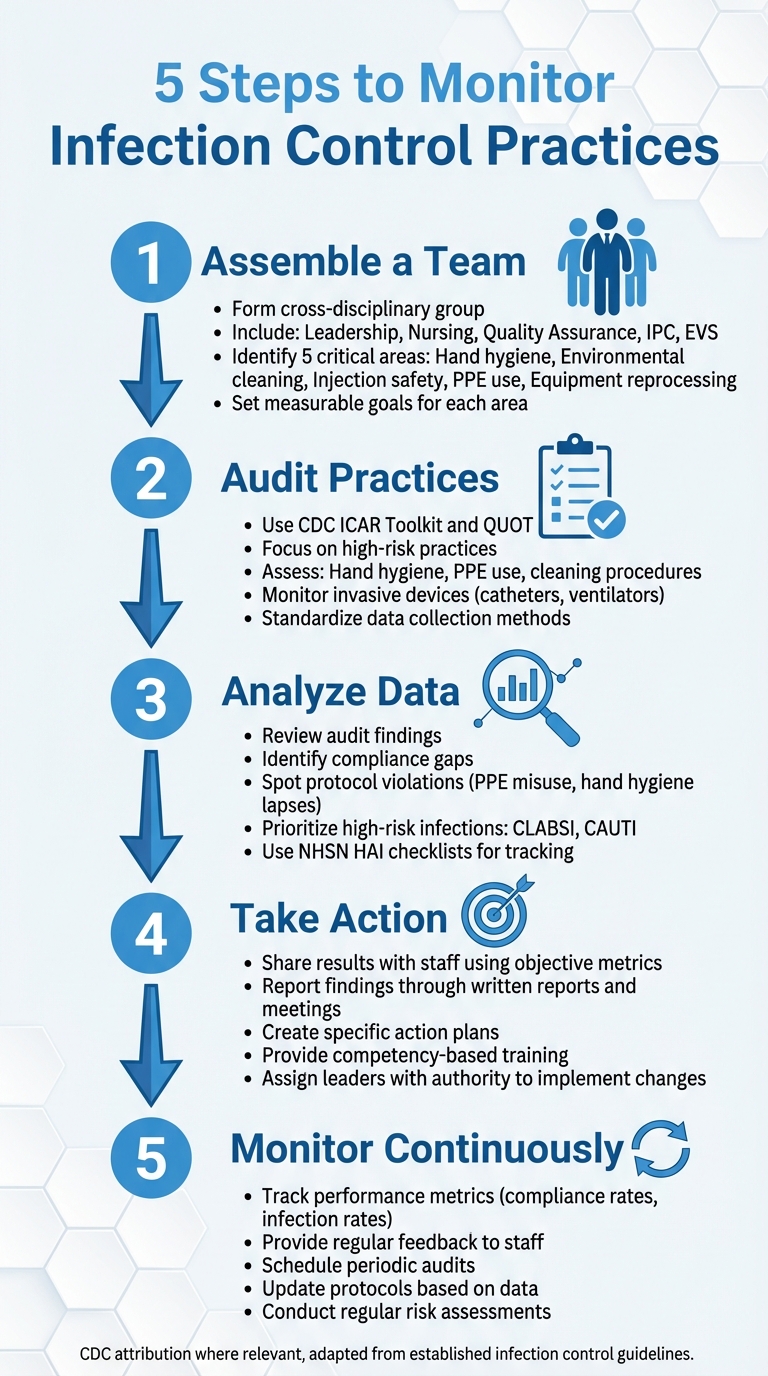
Infection control is non-negotiable in healthcare. Without consistent practices, preventable infections can spread quickly. Here's how to monitor and improve infection control in five key steps:
- Assemble a Team: Form a group with expertise in infection prevention, cleaning protocols, and quality assurance. Leadership support is critical to allocate necessary resources.
- Audit Practices: Use tools like CDC checklists to assess compliance in areas like hand hygiene, PPE use, and cleaning procedures.
- Analyze Data: Identify gaps in compliance by reviewing audit results. Focus on high-risk areas such as catheter care and barriers to hand hygiene.
- Take Action: Share findings with staff, provide training, and implement corrective measures to fix issues.
- Monitor Continuously: Regularly track performance metrics like infection rates and compliance scores. Update protocols as needed.
5 Steps to Monitor Infection Control Practices in Healthcare
Infection Control Assessment and Response Tools
sbb-itb-45288fe
Step 1: Create an Infection Control Team
Start by assembling a dedicated infection control team that includes professionals from various disciplines. This team should be led by at least one qualified specialist trained in infection prevention and control, with strong support from leadership at all levels. The CDC highlights the importance of leadership backing, stating, "To be successful, infection prevention programs require visible and tangible support from all levels of the healthcare facility's leadership" [1].
Bring together members from leadership, nursing, quality assurance, purchasing, facility management, infection prevention and control (IPC), and environmental services (EVS). Each member contributes expertise in areas like resource allocation, cleaning protocols, program management, and performance evaluation [3]. The governing body is ultimately responsible for ensuring adequate resources - both staff and materials - are available and for empowering managers to act promptly on identified risks [1].
Identify Which Practices to Monitor
The first step for your team is to determine which practices should be monitored. According to the CDC, five key areas are critical for infection prevention: hand hygiene, environmental cleaning and disinfection, injection and medication safety, proper use of personal protective equipment (PPE), and reprocessing reusable medical equipment [1]. These areas are the most common ways infections spread in healthcare settings.
Focus on practices where compliance is weakest. For instance, adherence to hand hygiene protocols can vary widely across facilities. Similarly, environmental cleaning requires close attention, particularly for high-touch surfaces and shared medical equipment, both during routine and terminal cleaning tasks [3].
Once you've identified the priority areas, the next step is to define measurable metrics to track progress and improve compliance.
Set Measurable Monitoring Goals
Using the identified priorities, establish clear, measurable objectives that track both compliance rates and infection prevention outcomes. The CDC advises that "Performance measures should be tailored to the care activities and the population served" [1].
Develop specific metrics for each focus area. For example:
- Hand hygiene: Measure adherence rates before and after patient interactions.
- Environmental cleaning: Assess cleanliness by checking the percentage of surfaces that meet established standards using tools like fluorescent markers or ATP assays [3].
- Occupational health: Track the percentage of staff with verified immunity to preventable diseases [5].
These metrics provide a baseline to evaluate progress and highlight areas needing additional training or resources. Regularly review and refine these goals to adapt to emerging challenges and ensure your monitoring efforts remain effective [3]. Ongoing assessment is key to sustaining improvement over time.
Step 2: Conduct Initial Audits to Identify Risk Areas
Once your metrics are set, it’s time to dig into the details with audits. These audits are essential for understanding where your protocols are succeeding and where there’s room for improvement. The CDC’s Infection Control Assessment and Response (ICAR) Toolkit is a great starting point. It provides a structured way to evaluate the overall strength of your infection control program and pinpoint specific areas that need attention. This step lays the groundwork for addressing compliance gaps as you move forward.
To streamline the process, use standardized tools like the CDC and the Association for Professionals in Infection Control and Epidemiology (APIC) Quick Observation Tools (QUOTs). These checklists are designed for quick, reliable assessments at specific locations. As the CDC puts it, "QUOTs are easy-to-use checklists for infection preventionists and/or healthcare professionals whose primary responsibilities are at specific assessment locations" [4]. They’re particularly helpful for gathering consistent data across departments without disrupting daily operations.
Customize your audits based on the setting - whether it’s an ICU, NICU, or ambulatory care facility. Each environment has unique risks, so tailoring your checklists ensures you’re addressing the most critical areas. Once tailored, shift your focus to identifying high-risk practices that require immediate attention.
Focus on High-Risk Practices
Start by zeroing in on practices that pose the greatest infection risks. High-touch surfaces near patients are often a good place to begin. Standard precautions - like hand hygiene, environmental cleaning, and safe injection practices - should form the backbone of your audit.
Pay special attention to invasive medical devices. This includes monitoring the necessity, insertion, and maintenance of items like vascular catheters, urinary catheters, ventilators, and surgical drains. Medication safety is another critical area - ensure aseptic techniques are being followed and that vials are being used correctly.
For equipment reprocessing, use separate checklists for "dirty" and "clean" zones to prevent cross-contamination. Evaluate high-level disinfection procedures for reusable instruments such as endoscopes and blood glucose meters. Don’t forget to assess the physical layout of your facility to confirm that "dirty" and "clean" areas are clearly separated.
Choose Data Collection Methods
To ensure accuracy, select tools that standardize data collection. Here are some examples:
| Data Collection Tool | Primary Use Case | Key Practices Monitored |
|---|---|---|
| QUOTs (Quick Observation Tools) | Rapid, point-of-care audits | Hand hygiene, PPE use, injection safety, laundry hygiene |
| Device-Associated Suites | High-risk clinical areas | Catheter insertion/maintenance, ventilator bedside care |
| Setting-Specific Guides | Baseline facility assessment | Sterilization, disinfection, outpatient-specific protocols |
| Environmental Cleaning Options | Housekeeping and hygiene audits | Surface disinfection, clean area maintenance |
Using pre-made CDC checklists can help maintain consistency across observers. Don’t overlook supply availability - staff compliance often drops when essential items like hand hygiene products or PPE aren’t readily accessible.
Finally, verify that transmission-based precautions are clearly posted and followed outside isolation rooms for contact and airborne infections. The CDC also offers an ICAR Web Application, which can help you track audit data digitally and monitor trends over time. These insights will be invaluable when it’s time to implement corrective actions in the next steps.
Step 3: Review Data to Find Compliance Problems
Once you've gathered audit data, the next step is to dig into the findings and identify compliance issues. The information collected in Step 2 serves as a foundation to uncover gaps between what policies say and how practices are actually carried out. Tools like the CDC's ICAR can help streamline this process by organizing data into categories such as Hand Hygiene, Environmental Services, and Transmission-Based Precautions. This makes it easier to spot which protocols are frequently overlooked or violated[2]. By comparing documented policies with real-world observations, you can pinpoint areas where additional training or resources might be needed. Using the National Healthcare Safety Network (NHSN) HAI checklists ensures infection trends are tracked accurately and consistently[6].
Spot Common Protocol Violations
Audits often highlight recurring issues with protocol adherence. For example, common problems include improper use of PPE, such as skipping gloves or reusing items meant for single use, and lapses in respiratory hygiene, especially in high-traffic areas. Environmental cleaning can also fall short when teams lack training on proper chemical use or fail to follow established procedures. Hand hygiene remains a persistent challenge, particularly when sanitizer dispensers are either empty or not conveniently located. Injection safety issues, like needle-stick injuries or improper handling of medications, further emphasize the need for both knowledge-based training and direct observation to ensure compliance[2]. Once frequent violations are addressed, attention should shift to preventing infections with the highest risks.
Address High-Risk Infection Types
Some infections require immediate action due to their severity and the potential to prevent them. For instance, complications from invasive devices can lead to Central Line-Associated Bloodstream Infections (CLABSIs) and Catheter-Associated Urinary Tract Infections (CAUTIs), both of which carry serious risks[1][4]. According to the CDC:
"Allocate sufficient human and material resources to infection prevention to ensure consistent and prompt action to remove or mitigate infection risks and stop transmission of infections"[1].
The TAP strategy can help prioritize units with the heaviest infection burdens[4]. Efforts should focus on high-risk environments like ICUs and NICUs, paying close attention to lapses in Transmission-Based Precautions for patients with confirmed or suspected infections. Conducting daily assessments to determine whether invasive devices are still medically necessary can significantly reduce infection risks by ensuring timely removal[1].
| Prioritization Criterion | High-Risk Examples | Immediate Action Required |
|---|---|---|
| Device-Associated Infections | CLABSI, CAUTI, Ventilator-Associated Events | Perform daily necessity assessments and review protocols |
| Transmission Risk Pathogens | MDROs, Norovirus, Respiratory infections | Strengthen precautions and verify isolation protocols |
| Basic Standards Violations | Hand hygiene, Injection safety, Environmental cleaning | Provide competency-based training and ensure supply availability |
This analysis lays the groundwork for the targeted corrective measures outlined in Step 4.
Step 4: Share Results and Fix Problems
After completing the audit in Step 3, the next step focuses on sharing the findings and addressing any issues. Sharing clear, actionable results is crucial for maintaining and improving infection control practices. Once compliance gaps are identified, communicate these findings to staff using objective metrics. These metrics help pinpoint where improvements are needed and provide a clear roadmap for corrective actions [7]. The CDC underscores the importance of this approach:
"OHS leaders improve the delivery and quality of occupational IPC services by... providing accountability for occupational IPC service delivery and quality [and] engaging in continuous quality improvement activities." [7]
Tailor reports to each department and involve key leaders to ensure effective follow-through [7].
Report Findings to Staff
Present audit results through written reports and discussions. Highlight key metrics like IPC training completion rates, vaccination coverage, and exposure incidents. Use trend analysis to monitor progress over time [7]. Regular meetings can help uncover obstacles, whether they stem from a lack of awareness or resource shortages. By setting smaller, achievable goals and standardizing reporting processes, communication across teams becomes more effective [7].
Once staff is informed, the next step is to create focused action plans.
Create Specific Action Plans
Turn the audit findings into clear, actionable steps to close the identified gaps [2]. These plans should include competency-based, role-specific training that addresses areas of noncompliance, such as preventing cross-contamination in bedding. Verification of improvements can be done through knowledge tests and direct observation [2]. Tools like the CDC's Quick Observation Tools (QUOTs) can help track and confirm progress [4]. Assign leaders with the necessary authority and resources to ensure these changes are implemented effectively [7].
Step 5: Keep Monitoring and Updating Practices
Maintaining effective infection control isn't a one-and-done task - it requires continuous monitoring to sustain progress and identify new risks as they arise [1]. This process of regular evaluation and adjustment builds on the groundwork laid in Steps 1–4.
A structured monitoring approach is key. Defining audit schedules and pinpointing critical areas for review ensures accountability and helps close potential gaps over time [3].
Track Performance with Numbers
Numbers tell the story of your program's success. Use process data (like hand hygiene compliance or cleaning scores) alongside outcome data (such as CLABSI or CAUTI rates) to measure performance [1][4].
Tailor these metrics to match your facility's specific needs and patient demographics [1]. For example, you might monitor how many staff members complete their annual training or track N-95 fit testing compliance [7]. The CDC highlights the importance of feedback in this process:
"Provide prompt, regular feedback on adherence and related outcomes to healthcare personnel and facility leadership" [1].
This feedback isn't just informative - it ensures that improvements are targeted where they're needed most.
Some metrics, like N-95 fit testing and competency checks, follow fixed schedules, such as annual updates or periodic reviews tied to job assignments [1][7]. Environmental cleaning audits should also occur regularly, covering both daily routines and terminal cleaning after patient discharge or transfer [3].
By consistently tracking performance data, you gain the insights needed to refine and improve your protocols.
Update Protocols as Needed
When performance data highlights weaknesses, it's time to act. Whether it's addressing audit findings or responding to new threats, protocols should be updated without delay [1][7]. Regular risk assessments can uncover vulnerabilities in specific departments or patient groups, guiding targeted changes [3][5].
Training should also reflect real-world needs. Align topics with recent exposure incidents or areas flagged by risk data [5]. And when updating protocols, make sure staff have the tools and support they need - adequate staffing, sufficient PPE, and enough time to follow procedures properly [1][7]. For environmental cleaning, establish clear Minimal Cleaning Times (MCT) for different room types to prevent rushed disinfection [3].
How PeelAways Improve Bedding Hygiene
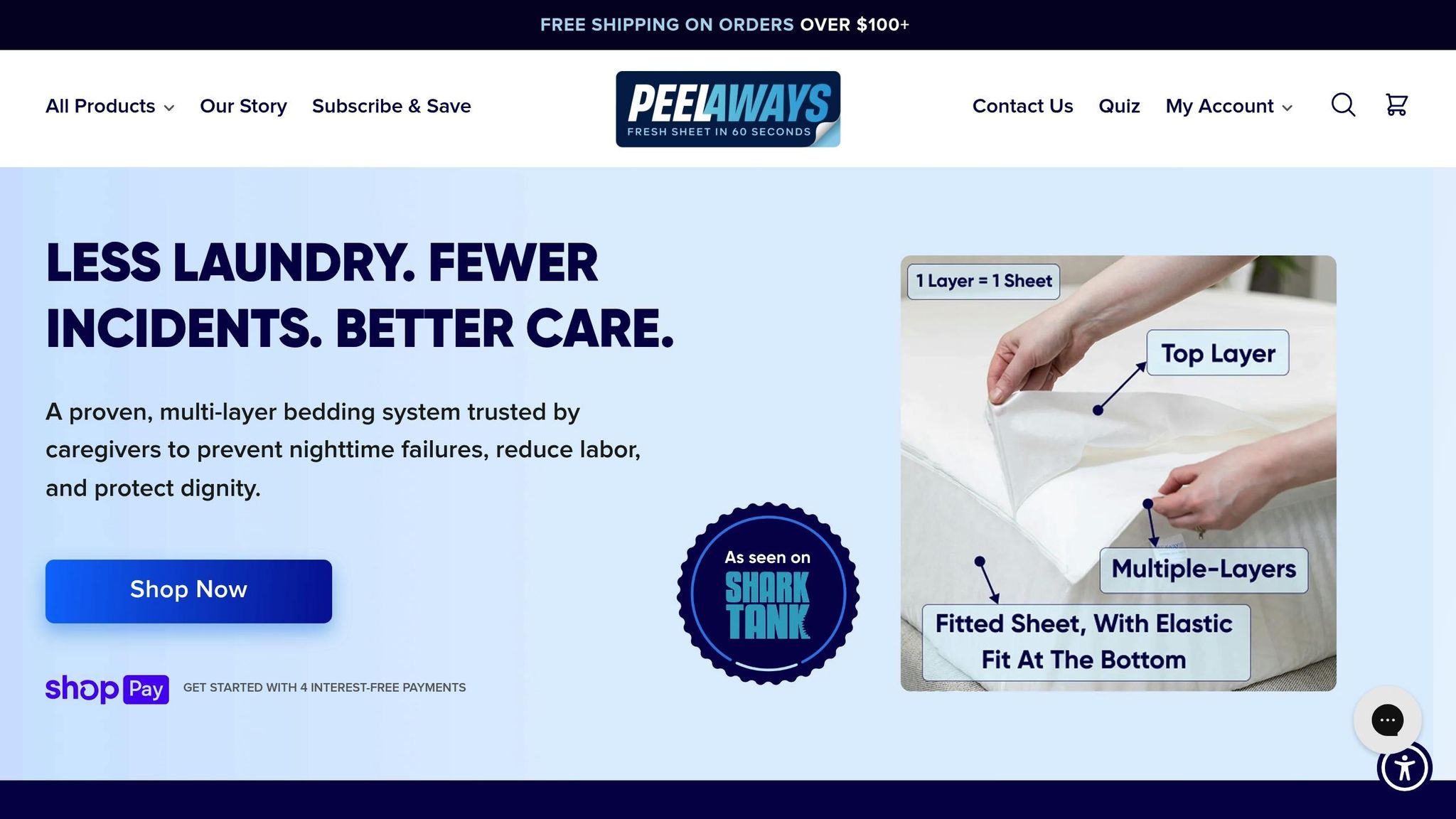
Maintaining clean bedding is a crucial part of infection control in healthcare and caregiving environments. Traditional bedding changes often involve lifting mattresses and handling soiled linens, which can increase the risk of cross-contamination. PeelAways disposable waterproof bed sheets simplify this process with their patented multi-layer design. By eliminating the need for laundry or mattress lifting, they make bedding hygiene easier and reduce exposure to harmful contaminants.
Each PeelAways fitted sheet is made up of 5 to 7 waterproof layers, stacked one on top of the other. When a layer becomes soiled, you simply peel it away to reveal a fresh, clean surface underneath. Each layer can last 7 to 10 days under normal use, providing up to 50 days of protection with a single sheet set.
Why PeelAways Help Control Infections
PeelAways are designed to minimize infection risks by cutting out the need for handling soiled linens. Their 100% waterproof barrier prevents fluids like wound exudate, blood, and incontinence from reaching the mattress, ensuring a cleaner environment. Disposing of each layer immediately after use further reduces the chance of cross-contamination during cleanup.
Switching from traditional hospital sheets to PeelAways saves both time and effort. Changing a typical hospital sheet while a patient is in bed usually requires two nurses and takes about 15 minutes. In contrast, a PeelAways sheet can be changed by a single nurse in less than a minute [8][9]. Lou Leibhaber, former COO of Lehigh Valley Hospital and Health Network, highlights the efficiency:
"The reduced time in changing these sheets can significantly increase the time hospital staff provides care to its patients. On average, it can take two nurses up to 15 minutes to change a sheet while the patient is in the bed. With Peelaways, it can take one nurse less than a minute." [8]
Made from a hypoallergenic blend of bamboo, rayon, and polyester, PeelAways sheets are soft and breathable, preventing heat buildup and irritation. They are also 32% softer than standard linens [8], ensuring patient comfort without compromising hygiene.
Adding PeelAways to Your Audit Process
Incorporating PeelAways into infection control audits provides clear, trackable checkpoints for bedding hygiene. Add a digital audit item to confirm that layers are peeled off according to protocol. These bedding hygiene checks can be seamlessly integrated into your existing environmental cleaning audits, which focus on cleaning high-risk areas regularly.
To maximize effectiveness, train staff on the proper corner-peeling technique to ensure the soiled layer is contained without contaminating the clean one beneath it. Include this skill in competency assessments and prioritize PeelAways in high-turnover units, surgical recovery areas, and for patients with incontinence to enhance infection control measures.
Finally, ensure proper disposal of used PeelAways layers by including them in your biomedical waste management plan. Use digital audit tools to attach photos during inspections, offering real-time proof of compliance with bedding hygiene protocols [10].
Conclusion
Keeping infection control on track requires ongoing effort and involvement from everyone in the organization. This guide broke it down into five key steps: assembling a dedicated team, performing initial audits, analyzing data, acting on findings, and sticking to consistent monitoring. According to the CDC, sticking to these practices is crucial for ensuring safe and high-quality care in all healthcare settings [1].
When staff actively participate in shaping policies and provide regular feedback, they become partners in promoting safety. Allocating time during regular shifts for infection control training and creating non-punitive reporting systems fosters openness and strengthens a safety-first culture [5]. These efforts show a clear commitment to making safety a shared priority.
Tools like PeelAways simplify bedding changes by eliminating the need to handle soiled linens, helping to minimize cross-contamination risks. Adding such practical tools to your workflow not only supports audit results but also makes it easier to stick to infection control protocols. These solutions create measurable checkpoints that streamline compliance.
Frequent audits paired with timely feedback ensure accountability and help drive long-term improvements. By tracking performance metrics, leadership can spot areas where goals are falling short and measure progress over time [7]. This data-focused strategy keeps your infection control program adaptable to new challenges and regulatory changes, ensuring the safety of both patients and staff.
FAQs
Which infection control practices should we audit first?
To kick things off, take a close look at hand hygiene compliance - it’s a key focus in the CDC’s guidelines. Start by observing how hand hygiene stations are being used and whether supplies are readily available and properly utilized. At the same time, assess the cleaning protocols for the environment, paying special attention to how high-touch surfaces are disinfected. These steps not only align with the CDC's core infection prevention recommendations but also help pinpoint any weak spots in your infection control practices.
How often should we run infection control audits?
Infection control audits play a crucial role in maintaining safety and quality in healthcare settings. These audits should be conducted on a regular basis to ensure both compliance with protocols and the effectiveness of infection prevention measures. While the exact frequency can vary depending on the facility and local guidelines, they are commonly performed monthly or quarterly.
By conducting these reviews consistently, healthcare teams can respond to evolving patient needs, environmental changes, or updates in services. This not only helps maintain high standards but also supports ongoing improvements in infection prevention practices.
What metrics best show improvement in infection control?
Key metrics to watch include how well staff comply with hygiene protocols, proper catheter care, and thorough surface disinfection. These are typically assessed through audits and direct monitoring. By tracking adherence over time, you can identify trends and improvements. For example, you might measure the percentage of staff consistently following hand hygiene standards or correctly applying dressing techniques. Regular audits play a crucial role in ensuring infection control practices continue to advance in healthcare environments.
Comments
0



SAVE MONEY & WATER
Professionals & Institutions save a fortune on labor/laundry.

SUPERIOR COMFORT
The first thing our customers notice is how soft our sheets are.
100% WATERPROOF
Each layer is 100% Waterproof, perfect for spills and accidents

SAVE TIME
Change the sheet in under 1 minute without stripping the bed.

Leave a comment