
Best Time-Saving Products for Overwhelmed Family Caregivers

"It's 2am. The sheets are soaked again. Your loved one is embarrassed, your back hurts, and you have to be up in four hours. If this feels all too familiar, you're not alone - and it doesn’t have to be this hard."
Caregiving is exhausting. Over 53 million Americans are in your shoes, juggling jobs, families, and the relentless demands of caregiving. Tasks like changing soaked bedding can steal hours of sleep and energy - but the right tools can save you time, effort, and sanity. Products like PeelAways multi-layer disposable sheets, waterproof mattress protectors, and no-rinse wipes are designed to make your nights easier and reduce laundry by up to 80%.
Here’s a quick look at the seven products every caregiver should know about:
- PeelAways Multi-Layer Disposable Sheets: 60-second bed changes. This is a game-changer, especially if you need to replace sheets on an occupied bed safely.
- Waterproof Mattress Protectors: Keep your mattress dry and clean.
- Disposable Underpads: Catch leaks and avoid full bedding changes.
- No-Rinse Wipes: Simplify hygiene without water.
- Bedside Organizers: Keep essentials within reach.
- Digital Tools: Track tasks, save time, and reduce stress.
- Adaptive Clothing: Make dressing faster and easier.
Every product here is about one thing: making caregiving a little less overwhelming. Let’s dive into how these tools can help you reclaim your time and energy.
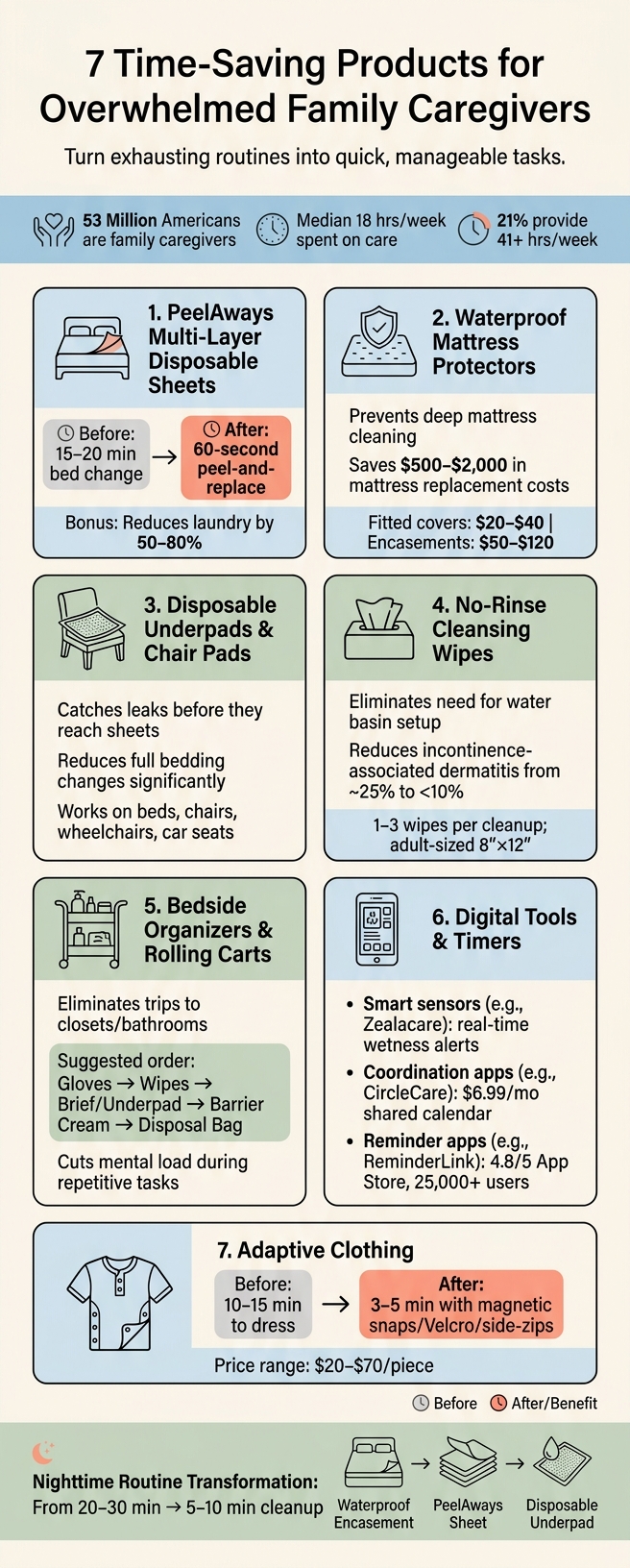
7 Time-Saving Caregiver Products: Time & Effort Saved at a Glance
Essential Tools To Stay Organized While Caring for Aging Parents
sbb-itb-45288fe
How Time-Saving Products Help Caregivers
Caregiving never lets up. The constant repetition of tasks can sap your energy before you even realize it. According to AARP's Caregiving in the U.S. 2020 report, family caregivers spend a median of 18 hours a week providing care, with 21% clocking in over 41 hours weekly. That’s like taking on a part-time - or even full-time - job, all while juggling your regular responsibilities. It’s no wonder exhaustion creeps in. This is where the right tools can make a world of difference.
Some of the most draining tasks include changing soiled bedding and managing incontinence. While each task might seem manageable on its own, the sheer frequency adds up fast. A single bed change can take 10–20 minutes, and when it happens multiple times a day, it eats away at your energy reserves.
That’s why products designed to tackle these repetitive chores are game-changers. They simplify routines by cutting down steps and speeding up cleanup. Take disposable layered bed sheets, for example. Instead of stripping the bed, repositioning your loved one, and remaking it from scratch, you simply peel off the top layer. No-rinse wipes eliminate the need for warm water basins. A rolling cart stocked with gloves, barrier cream, and spare pads keeps everything you need at arm’s length, especially during late-night emergencies. These tools turn time-consuming chores into quick, manageable fixes.
Beyond saving time, these products can improve the quality of care. Reducing the physical strain of tasks like bedding changes helps lower the risk of back injuries. It also minimizes disruptions, letting your loved one rest more comfortably. Having supplies within easy reach means faster, more effective cleanups, which helps preserve their dignity.
Every product mentioned here was selected with one goal in mind: to make caregiving easier. They reduce physical effort, speed up repetitive tasks, and require no special training to use. By simplifying your routine, these tools save time while ensuring care remains thorough and respectful - benefits you’ll see highlighted in the products ahead.
1. PeelAways Multi-Layer Disposable Bed Sheets

PeelAways makes bed changes a breeze - just 60 seconds, start to finish. Compare that to the 15–20 minutes it typically takes to tackle a nighttime accident, and you’ll see why caregivers managing incontinence find it such a game-changer.
These patented multi-layer disposable fitted sheets are designed to simplify life. Each set includes 5 to 7 soft, 100% waterproof layers that fit snugly over your mattress. When a layer gets soiled, you grab the corner tab, peel it off, roll it inward to trap the mess, and toss it. No heavy lifting. No fumbling with ill-fitting corners in the dark. No rushing to start a load of laundry. A clean layer is already in place, ready to go. This clever design doesn’t just save effort - it can completely change how you handle caregiving.
The laundry savings alone are huge. Caregivers dealing with frequent nighttime accidents often face 4–6 extra loads of bedding every week. PeelAways can cut that by as much as 50–80%, slashing laundry time and costs significantly.
But it’s not just about saving time. Traditional bed changes often mean bending, lifting, and reaching - movements that can strain your back and shoulders, especially if you’re an older caregiver or managing your own health issues. With PeelAways, one smooth peel replaces all that physical effort, making the process far less taxing.
And for your loved one? The benefits are just as meaningful. A quick, 60-second change means less time spent on soiled bedding, fewer disruptions to sleep, and a more dignified cleanup experience. The sheets are made from a soft bamboo/rayon blend that’s breathable, quiet, and hypoallergenic. They feel like regular sheets - not like something clinical - which helps maintain comfort and dignity. By easing both the practical and emotional challenges of caregiving, PeelAways lets you focus more on what truly matters: time with the people you care for.
PeelAways come in sizes ranging from Twin to King. Blog readers can save 10% with code BLOGS10 at checkout. Plus, there’s free shipping on orders over $100 and a 30-day money-back guarantee to ensure your satisfaction.
2. Waterproof Mattress Protectors and Bed Encasements
After discovering the time-saving ease of PeelAways, adding a waterproof mattress protector or pad to your setup can take both efficiency and care to the next level. These protectors, available as fitted covers or zippered encasements, act as a barrier against urine, sweat, and spills, keeping your mattress safe from messes. Instead of dealing with deep-cleaning a mattress after an accident, you can simply swap out the sheets and move on.
Without a protector, even one nighttime mishap can turn into a marathon of stripping the bed, scrubbing the mattress, and waiting for it to dry. That’s time you and your loved one could be using to rest. With a protector, cleanup is much simpler - remove the soiled sheets, wipe the surface if necessary, and put on fresh bedding. Your mattress stays clean and dry, and the risk of health issues from lingering moisture is minimized.
Moisture trapped in a mattress can lead to bacteria and mold growth, which is particularly concerning for older adults or those with compromised immune systems. Fully zippered encasements go a step further by sealing the entire mattress, protecting against allergens and dust mites that can aggravate respiratory conditions.
Budget-conscious caregivers will find fitted waterproof protectors for twin or full sizes ranging from $20 to $40, while premium zippered encasements for larger beds like queen or king typically cost between $50 and $120. This is a small price to pay compared to replacing a mattress, which can easily run from $500 to $2,000 or more.
For ultimate comfort, look for protectors made with a soft, quiet polyurethane membrane instead of noisy vinyl. This keeps the bed feeling like home, not a hospital. Prioritize options labeled as breathable, noiseless, and vinyl-free, and make sure they are machine washable and dryer-safe for convenience. Having two protectors per bed is a smart move - when one’s in the wash, the other is ready to go.
"They do not seep through to next liner and so much easier to use than changing sheets everyday for elderly." - Linda, Verified Customer
Pro tip: Use a waterproof protector as a permanent base layer under PeelAways. Since most spills are contained by the top layers, the protector will rarely need washing, saving you even more time.
3. Disposable Underpads and Chair Pads
Disposable underpads and chair pads are single-use, absorbent sheets designed to catch moisture on mattresses, chair cushions, or even car seats. They help caregivers avoid full bedding changes after accidents, saving precious time - especially when dealing with multiple incidents each day.
When most of the moisture is captured by an underpad, cleanup often becomes as simple as swapping out the pad. This can drastically cut down on how often full bedding needs to be washed.
These pads aren’t just for beds. They’re equally useful on recliners, sofas, wheelchairs, and car seats, making them a practical choice for outings or medical appointments. Chair pads are specifically designed for seating surfaces, with a non-slip backing to keep them securely in place during transfers or repositioning. For those spending long hours in recliners or lift chairs, chair pads protect the surface while eliminating the need for constant deep-cleaning.
Choosing the right pad depends on the situation. Lighter pads work well for minor leaks or daytime use, while pads with a superabsorbent polymer (SAP) core are better suited for overnight protection or heavy incontinence. These advanced pads lock in more fluid and help minimize odors. Regardless of the type, it’s important to replace wet or soiled pads quickly to protect the skin and reduce the risk of irritation or pressure injuries. Managing these physical needs is often tied to the emotional challenges of incontinence for both the caregiver and the loved one. These thoughtful choices help caregivers cut down on repetitive, time-intensive tasks.
Pro tip: Place a disposable underpad directly on top of the sheet, positioning it under the hips. In most cases, you’ll only need to replace the pad, keeping the sheet and mattress protector clean. Keep a stack handy in a bedside caddy for quick, hassle-free changes.
4. No-Rinse Cleansing Wipes and Perineal Care Products
When time is limited and routines feel overwhelming, no-rinse cleansing wipes offer a practical way to maintain personal hygiene. These wipes allow you to clean and protect the skin without needing a sink or bath setup, making bedside or chairside care much easier.
No-rinse wipes come pre-moistened and are designed to clean the skin effectively without requiring rinsing. Alongside these, perineal care products like gentle foams and barrier creams are formulated for sensitive skin. These products are typically free of alcohol and fragrances, helping to protect delicate adult skin from repeated moisture exposure - no rinsing or drying required.
Using these products creates a straightforward care routine: cleanse with a no-rinse perineal wipe or foam, then apply a barrier cream with zinc oxide or dimethicone. This simple process saves time and reduces physical strain while addressing incontinence-associated dermatitis (IAD). IAD, which affects 20%–50% of adults dealing with incontinence in care settings, can be significantly reduced with this approach, lowering its prevalence from about 25% to less than 10% in long-term care populations.
The benefits extend to caregivers as well. Traditional bathing often involves lifting, bending, or transferring, which can take a toll on your back and shoulders. No-rinse wipes allow most care to be done while your loved one stays comfortably in bed or a recliner. These wipes are adult-sized, typically 8″ × 12″ or larger, thick enough to handle cleanups without tearing, and pre-moistened so that 1–3 wipes are usually sufficient.
Beyond convenience, dignity is a key factor. A quick cleanup with wipes feels far less invasive than a full bathing routine. To make care even more efficient, keep a small bedside caddy stocked with essentials like wipes, perineal spray, disposable gloves, and barrier cream. This setup ensures everything you need is within arm’s reach, cutting down on unnecessary trips during cleanup.
Pro tip: For overnight incontinence, use 1–2 no-rinse perineal wipes to clean the area, then apply a thin layer of barrier cream before changing the brief or pad. This method minimizes nighttime disruptions, helping both you and your loved one get back to sleep faster.
5. Bedside Organizers and Rolling Carts for Incontinence Supplies
Having a well-organized bedside setup stocked with essentials like gloves, no-rinse wipes, briefs, barrier cream, and disposal bags can make a world of difference. It cuts down on extra trips to closets or bathrooms, saving time and reducing unnecessary movement during care routines.
If you're looking to take it a step further, think about adding a mobile storage option. A rolling cart placed on your dominant side can be a game-changer for holding backup supplies. These carts are easy to move between the bedroom and bathroom, and their shelves make organization a breeze. Try this setup: keep prep items like gloves and wipes on the top shelf, cleaning and protective supplies in the middle, and overflow stock on the bottom. To avoid tipping, store heavier items like large packs of briefs on the lowest shelf.
"Keep all care supplies - gloves, wipes, creams, and a bed protector sheet for the elderly - in one accessible place." - PeelAways
Following a checklist for streamlining incontinence care tasks and organizing your supplies in the order you use them can save even more time. Set up your cart or caddy so your hand naturally moves from one item to the next: gloves → wipes and cleaning solution → fresh brief and underpad → barrier cream → disposal bag. This simple flow not only speeds up the process but also reduces mental strain during repetitive care tasks. Managing these responsibilities is vital, as the emotional impact of incontinence on caregivers can be significant without proper systems in place. If multiple caregivers are involved, labeling each section - using color-coded tape or simple tags - can help ensure everything gets returned to its proper place.
Pro tip: Take just a minute each evening after dinner to check your supplies. A quick scan of gloves, wipes, briefs, underpads, and trash bags ensures your organizer is ready for the busiest care times. Keep a sealed backup pack on the bottom shelf to avoid scrambling during emergencies. It’s a small step that can save you big headaches later.
6. Digital Tools and Timers for Caregiving Routines
Managing caregiving tasks can feel like juggling a dozen spinning plates. Digital tools can ease that load by keeping track of schedules, sending reminders, and streamlining communication. These small but mighty helpers can turn chaotic days into ones that feel more manageable, giving caregivers a little breathing room.
Once your supplies are sorted - as we discussed earlier - the next step is making sure everything happens on time. That’s where digital tools shine. Instead of relying on memory or sticky notes, these tools send you timely alerts and updates, ensuring nothing slips through the cracks.
Smart sensors are a game-changer for incontinence care. Take Zealacare, for example. Their system uses a small sensor placed in a brief to send real-time wetness alerts to your phone. It tracks saturation levels and logs changes, so you only act when it’s necessary. No more setting alarms to check every two hours - this tool lets you respond when needed and frees up precious time. Caregivers often find it reduces disruptions to both sleep and daily routines.
"The alerts come in perfect... We are able to get to them right away so they aren't sitting in a dirty diaper long. The staff love it! It frees up so much time for us." - Bernadette Mata, Zealacare User
Coordination apps like CircleCare ($6.99/month or $59.99/year) simplify teamwork among family members. With a shared calendar, everyone stays on the same page about appointments, medications, and tasks. It even has an OCR scanning feature that lets you add medications to the schedule just by scanning the prescription label. If family miscommunication has ever caused tension, this app can smooth things out.
"My brother and I used to miscommunicate about Mom's care constantly. Now we both see the same calendar and the same med list. Way less friction." - Sofia R., Daughter
ReminderLink takes things a step further by sending automated reminders to your loved one while notifying you when the task is done. With over 25,000 active users and a 4.8/5 rating on the App Store, it’s a solid choice for caregivers who can’t always be physically present. For those who prefer a structured, physical option, the PeelAways Digital Caregiver Planner ($25.00) provides a formatted space to organize medications, appointments, and daily tasks all in one place.
| Tool Type | Example | Key Benefit |
|---|---|---|
| Smart Sensor | Zealacare | Real-time wetness alerts; eliminates manual checks |
| Coordination App | CircleCare | Shared calendar for the whole care team |
| Reminder App | ReminderLink | Two-way task confirmation; 4.8/5 App Store rating |
| Digital Planner | PeelAways Digital Caregiver Planner | Centralized medications, tasks, and appointments |
Finally, digital timers can help you align caregiving tasks with your energy levels. By organizing your day around when you’re most productive, you can get more done while avoiding burnout. And don’t forget to schedule those much-needed breaks - they’re just as important as the tasks themselves.
7. Adaptive Clothing for Easy Dressing
Adaptive clothing is a game-changer for caregivers, offering practical solutions to simplify one of the most time-consuming daily tasks: getting dressed. These garments come with features like magnetic snaps, Velcro, and side-zip openings, slashing dressing time from 10–15 minutes down to just 3–5 minutes. They not only save time but also reduce the physical strain of dressing someone, making the process smoother and less stressful.
Traditional clothing, with its buttons, zippers, and tight waistbands, often demands extra effort - lifting, adjusting, and maneuvering - that can be exhausting for both the caregiver and the person being dressed. Adaptive clothing eliminates these challenges. For example, tops with back or shoulder openings are perfect for individuals who are bed-bound, while side-zip pants make incontinence care much easier. These thoughtful designs allow caregivers to dress someone while they’re seated or lying down, minimizing physical effort.
Beyond practicality, adaptive clothing also respects the dignity of the wearer. Unlike hospital gowns, these garments are designed to look like regular clothing, helping individuals feel more like themselves. Overlapping panels provide full coverage during transfers, and features like magnetic closures or large zipper pulls even allow partial self-dressing for those with limited mobility, offering a sense of independence.
Cost-wise, adaptive clothing is surprisingly accessible. A small wardrobe - 2–3 pairs of pants, 3–5 tops, and 2–3 nightgowns - can meet daily needs without breaking the bank. Prices typically range from $20 to $70 per piece, with options available from retailers like Silverts, Tommy Hilfiger Adaptive, and Buck & Buck. Target also offers adaptive lines in the $20–$40 range, making these helpful garments more widely available. For anyone with limited fine motor skills, these closures make dressing faster, easier, and less frustrating.
Building a Faster Nighttime Caregiving Routine
Taking advantage of the time-saving products mentioned earlier, you can create a streamlined nighttime routine that makes caregiving less stressful. By using these tools effectively, you can cut cleanup time from 20–30 minutes to just 5–10 minutes, all while keeping your loved one comfortable and preserving their dignity. The secret? Preparation. When everything is set up ahead of time, a nighttime accident becomes a quick fix instead of a drawn-out ordeal. Here’s how to get ready for smoother nights.
Prep the bed and supplies before bedtime. Start by layering the mattress with bedding solutions for incontinence care like a waterproof encasement, a PeelAways multi-layer disposable sheet, and a disposable underpad positioned under the hips. Then, stock your bedside organizer with essentials: gloves, no-rinse wipes, perineal cleanser, barrier cream, a fresh underpad, and spare adaptive pajamas. This "layered" approach means you can remove a soiled sheet in seconds without having to strip the entire bed. With everything within arm’s reach, you’re ready to handle any nighttime mishap swiftly.
Stay calm and act quickly if an accident happens. Begin by putting on gloves and speaking to your loved one in a calm, reassuring tone. Adaptive clothing can make this easier - use features like snaps or zippers to avoid fully undressing them. Clean the affected area with no-rinse perineal wipes, wiping front to back, then pat dry and apply barrier cream to protect the skin. Remove the soiled layer, replace the underpad, and slide a fresh one into place. Once they’re redressed and repositioned, they can usually get back to sleep in under 10 minutes.
A predictable nightly routine also helps reduce agitation, especially for those with dementia. Instead of waiting for an incident, consider setting a vibrating phone alarm for toileting checks every 3–4 hours. Research shows that even one extra hour of uninterrupted sleep can noticeably improve a caregiver’s mood and daytime energy. These small, intentional steps not only make nights easier but also help protect your well-being and your loved one’s comfort over the long term.
Conclusion
Caregiving is tough, and when you're juggling incontinence care, constant bedding changes, and sleepless nights, the exhaustion can feel endless. While no product can take away the emotional and physical demands, the right tools can make daily tasks a little less overwhelming.
For caregivers, every saved minute matters. A waterproof mattress cover shields the bed, disposable underpads handle leaks instantly, and no-rinse wipes make hygiene quicker and gentler. Keep supplies within reach with a bedside organizer, simplify dressing with adaptive clothing, and use a simple phone alarm to stay on schedule. And at the heart of it all, PeelAways multi-layer disposable sheets transform a 15–20-minute bed change into a 60-second peel. No heavy lifting, no emergency laundry. When choosing supplies, many caregivers compare disposable and washable bed sheets to find the best balance of hygiene and convenience. This combination of efficiency and care helps protect dignity when it matters most. Together, these tools create a system that makes caregiving smoother from start to finish.
Take advantage of an exclusive 10% discount with code BLOGS10 at PeelAways.com or on Amazon. Free shipping is available on orders over $100.
FAQs
How many PeelAways layers should I use at night?
For nighttime use, it’s best to have 5 to 7 layers of PeelAways sheets on the bed. The exact number can vary based on the size of the bed and the level of incontinence care needed. You can adjust the layers to match your comfort and make changes easier when required.
What’s the best way to layer a mattress protector, PeelAways, and an underpad?
To set up your bed for maximum convenience and protection, start with a waterproof mattress protector as the first layer - this safeguards your mattress from any leaks. Next, add a PeelAways multi-layer disposable sheet. This layer allows for fast and hygienic changes when accidents happen. For extra absorbency, you can place an underpad on top of the PeelAways sheet. This combination keeps your bed protected, makes changes quick and easy, and ensures everything stays clean with minimal hassle.
Which digital reminders work best for overnight caregiving?
Digital tools can make the exhausting world of overnight caregiving a bit more manageable. AI assistants, caregiver planners, and text-based reminder systems are great examples. Tools with features like one-tap log entries for tracking care, medication safety checks to avoid errors, and even emotional support options can help you stay on top of everything while easing some of the stress.
Comments
0



SAVE MONEY & WATER
Professionals & Institutions save a fortune on labor/laundry.

SUPERIOR COMFORT
The first thing our customers notice is how soft our sheets are.

100% WATERPROOF
Each layer is 100% Waterproof, perfect for spills and accidents

SAVE TIME
Change the sheet in under 1 minute without stripping the bed.

Leave a comment