
The Hidden Cost of Caregiving: Laundry, Time, and Sleep

It’s 2 a.m. The sheets are soaked again. Your loved one is embarrassed, your back hurts, and you have to be up in four hours. You are not just washing bedding. You are paying in caregiver stress, lost sleep, and wear on your body.
A bed change that takes about 60 seconds instead of 15–20 minutes can cut a big part of that nightly drag. For many families, a layered sheet system like PeelAways means 50–80% less laundry, 5–7 waterproof layers per set, and a clean dry layer ready right under the one you remove. It comes in sizes crib to king, with 28,000+ reviews and a 4.8-star rating.
- You lose more than sheets when accidents happen at night
- Broken sleep hits harder than most people expect
- The right disposable vs. washable bedding setup can cut steps, laundry, and strain
- If you use diapers or incontinence pads, PeelAways is worth a look
| Quick comparison | Standard sheet change | PeelAways |
|---|---|---|
| Time to reset bed | 15–20 minutes | About 60 seconds |
| Laundry load | High | Much lower |
| Mattress protection | Depends on setup | 5–7 waterproof layers |
| Sizes | Varies | Crib to king |
I know how fast one wet bed can take over your whole night, so the first thing I look at is what steals the most time and sleep.
Caregivers, how many 2 a.m. sheet changes have you survived? 😩
If managing incontinence at night is part o f your routine, you know how difficult it is to change sheets on an occupied bed.
sbb-itb-45288fe
Why this problem hits harder than people think
People see the laundry.
They do not see the part where you are wide awake at 2:17 a.m., pulling corners off a mattress with a sore back.
They do not see how one accident turns into:
- wet pajamas
- wet sheets
- a rinse cycle
- a wash load
- a full remake of the bed using specialized incontinence bedding
- one more night of broken sleep
That is the hidden cost.
Not just detergent. Not just water. Not just money.
It is the stop-and-start sleep that leaves you foggy the next day. It is the strain in your shoulders. It is the quiet shame your loved one feels while you try to move fast and act like this is no big deal.
And if this happens more than once a night, the work stacks up fast.
What to look for before you buy
If you are trying to cut the nightly mess, I would look for four things first:
- Fast bed reset: You should be able to get the bed dry again in about a minute
- Built-in waterproof protection: Not just absorbent padding, but layers that keep the mattress dry
- A fitted design: Loose pads slide around. That creates more cleanup
- Low noise and soft feel: Night care is hard enough without a crinkly bed
I would also check whether it comes in your bed size and whether other buyers have had the same problem you are dealing with.
For more nighttime incontinence care tips, I’d start here:
- PeelAways shop
- PeelAways on Amazon
- PeelAways blog
- PeelAways main site
PeelAways
I found PeelAways the same way a lot of tired people do.
In the middle of the night. After one too many full bed changes.
It is a multi-layer disposable fitted sheet with 5–7 waterproof layers stacked together. When the top layer gets soiled, you peel it off and there is a clean dry layer under it.
That means:
- no full strip-down
- no hunting for clean sheets
- no remaking the whole bed at 2 a.m.
- no urgent laundry right then
The main draw is simple: about 60 seconds to get the bed ready again.
That is a big gap compared with the 15–20 minutes a plain bed change can take.
Other details that matter:
- sizes from crib to king
- soft top layer
- fitted shape that stays in place
- 28,000+ reviews
- 4.8 stars
If you use diapers or incontinence pads, this bedding for caregivers can take a lot of pressure off your night.
You can buy it on peelaways.com/shop or on Amazon.
Waterproof mattress protector plus regular sheets
This is one of the common bedding solutions for incontinence care many of us start with.
It can work for light accidents. But when the bed gets soaked, you still have to:
- strip the sheet
- check the protector
- wipe down moisture
- remake the bed
- deal with laundry
The mattress may stay safer than it would with no barrier at all, but the work is still there.
This setup often costs less up front, but the tradeoff is more labor in the middle of the night.
Reusable bed pads
Reusable pads can help with smaller leaks.
They are easy to place on top of sheets, and they can lower some washing if the mess stays contained. But they can also bunch, slide, or leave part of the bed exposed.
That makes them hard for restless sleepers. Frequent leaks and incontinence disrupt sleep patterns, making it difficult for both the caregiver and the patient to get quality rest.
And if the pad shifts, you may still end up changing the whole bed anyway.
Disposable underpads
Disposable underpads are simple and easy to keep by the bed.
They help with quick cleanup, but they often cover only one section of the bed. For a larger overnight accident, they may not protect enough area. You can still end up with wet fitted sheets or mattress moisture.
They also need replacing often, which adds to supply costs, making it harder to streamline your caregiving routine.
Comparison table
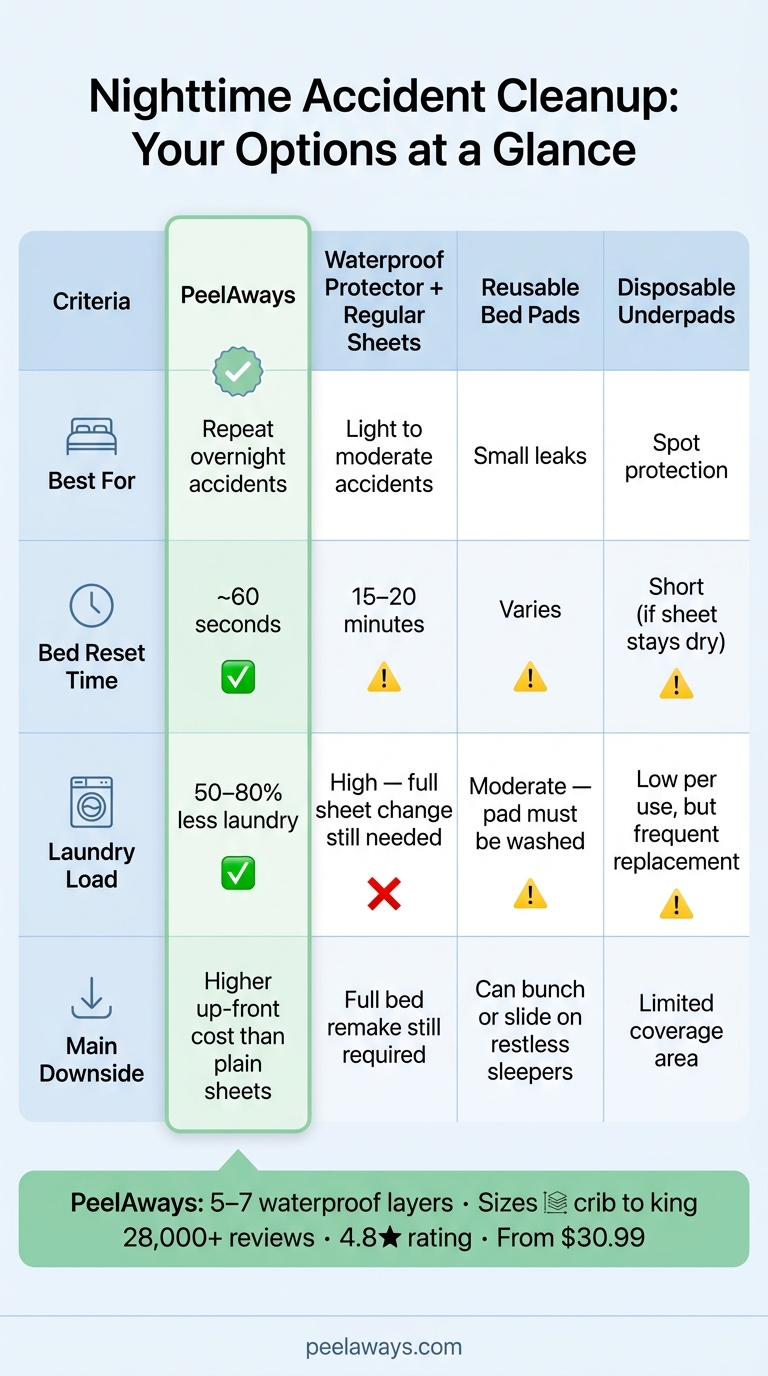
PeelAways vs. Traditional Bedding: Nighttime Accident Cleanup Compared
| Option | Best for | Main downside | Bed reset time |
|---|---|---|---|
| PeelAways | Repeat overnight accidents | Higher up-front cost than plain sheets | About 60 seconds |
| Waterproof protector + regular sheets | Light to moderate accidents | Full bed remake still needed | 15–20 minutes |
| Reusable bed pads | Small leaks | Can bunch or slide | Varies |
| Disposable underpads | Spot protection | Limited coverage | Short, if the sheet stays dry |
FAQ
Does PeelAways feel like sleeping on plastic?
No. The top surface is made to feel soft and quiet, closer to a plain sheet than a loud waterproof mattress pad.
How many layers come in one set?
Each set has 5–7 waterproof layers, depending on the product.
Is PeelAways only for older adults?
No. It can help anyone dealing with bedwetting, incontinence, post-surgery mess, or heavy overnight accidents. Managing these conditions often requires emotional support for caregivers and patients alike.
Will it fit my bed?
Yes. It comes in sizes from crib to king.
Can it cut laundry?
Yes. Many families report 50–80% less laundry because they are not washing full sheet sets after every accident.
Where can I buy it?
You can get it at peelaways.com/shop or on Amazon.
Bottom line
If your nights keep getting wrecked by wet sheets, the problem is not that you are doing a bad job.
The problem is the setup.
I would not call laundry the hardest part of incontinence care and hygiene. I would call it the part that keeps taking from you.
Time. Sleep. Patience. Your back.
That is why I keep coming back to PeelAways. It turns a long, exhausting bed change into one move and about 60 seconds. You get 5–7 layers, sizes crib to king, 28,000+ reviews, and a 4.8-star rating. Most of all, you get less chaos in the middle of the night.
Making aging and caregiving easier, one bed at a time.
Blog readers save 10% with code BLOGS10 at checkout. Available on peelaways.com and Amazon. Free shipping on orders over $100.
Why Incontinence Care Leads to Extra Laundry, Time Pressure, and Burnout
It’s 2 a.m. The bed is soaked again. Your eyes burn, your back hurts, and before you can even think about sleep, you’re stripping sheets in the dark.
Every nighttime accident means more laundry, more time, and less rest. One accident can turn into a full cleanup cycle: change clothes, strip the bed, rinse soiled linens by hand, start a wash, and remake the bed - and on some nights, that happens three to four times. That’s why faster bed changes matter so much at night.
The Hidden Household Costs of Elderly Incontinence and Accidents
Most people see the plain costs first: detergent, water, electricity, and worn-out sheets. But the stuff that sneaks up on you is often worse. Hot-water washes. Extra rinse cycles. Mattress damage. Many families also consider organic waterproof bedding to protect sensitive skin from harsh chemicals during these frequent accidents. The strain of pulling fitted sheets tight over a mattress when you’re half-awake at 3 a.m.
It adds up fast.
In care facilities, one old-school bed change is estimated to cost $15 to $25 each time when staff time, laundry work, linen wear, and utilities are included. At home, you may not write that number down on paper, but you feel it anyway. It shows up as broken sleep, sore muscles, and a next day that already starts behind.
If the waterproof bedding protection fails, the mattress can get damaged too. And that’s not a small problem when mattress replacement can cost far more than a few extra loads of laundry.
How Nighttime Cleanups Affect Caregiver Sleep and Next-Day Function
What wears you down isn’t just lost sleep. It’s broken sleep. The stop-and-start kind that leaves you foggy the next morning, even if you did get back into bed for a couple of hours.
For home caregivers, there’s usually no one else coming to take the next shift. Every nighttime cleanup is yours to handle alone.
Laundry becomes the breaking point because it starts with a soaked bed at 2 a.m. and turns into a chain reaction. Strip the layers. Deal with the wet linens. Start the wash. Remake the bed. Settle your loved one back in. Then try to fall asleep again like none of it happened.
That’s why the setup matters so much. If you can cut the cleanup down to a few simple moves, you’re not just saving time. You’re giving yourself a shot at getting back to bed before the whole night is gone.
What a Faster Bed-Change Setup Looks Like When Accidents Happen at Night
It’s 2 a.m. The bed is wet, the room is quiet, and you’re trying not to fully wake the person you love. Your eyes burn, your back aches, and all you want is to deal with it fast and get everyone back to sleep.
A faster bed-change setup cuts the steps between an accident and sleep. The goal is simple: protect the mattress, cut laundry, and skip a full sheet change.
How Waterproof Bedding Layers and Ready-to-Grab Supplies Cut Cleanup Time
A good setup starts with not having to think too hard in the moment. Keep a waterproof barrier on the mattress. Keep spare pajamas, wipes, and a small disposal bag right at the bedside. When an accident happens, you’re not hunting through drawers or walking room to room. You’re moving through a short, familiar routine and getting back to bed.
That’s what helps most in the middle of the night. Not more stuff. Just fewer steps.
How PeelAways Makes a Bed Change in About 60 Seconds
For caregivers, the point isn’t just a clean bed. It’s getting back to sleep sooner.
I found PeelAways because I was tired of the whole routine: strip the bed, wipe things down, find clean sheets, remake the mattress, start laundry, try to calm everyone back down. At 2 a.m., that 15 to 20 minutes feels endless.
PeelAways is a multi-layer disposable fitted sheet system with 5 to 7 waterproof layers stacked on the mattress. When the top layer is soiled, you peel it away and there’s a clean, dry layer underneath. No stripping the bed. No remaking it. No laundry right then.
That process takes in under 60 seconds, compared to the 15 to 20 minutes a regular bed change can take. And that time gap is no small thing when you’re half asleep and trying to keep someone comfortable.
The layers are made from soft, breathable fabric, so they feel close to a regular sheet. They’re quiet against the skin, which matters more than people think at night. They also fit like a standard fitted sheet, so they stay put instead of bunching or sliding around.
Each unsoiled layer is durable enough for 7 to 10 days of extended use. So you’re not peeling through layers night after night for no reason.
A few details worth knowing:
- 5 to 7 waterproof layers to protect the mattress
- In under 60 seconds to change for less overnight disruption
- Soft, breathable surface to keep the bed comfortable
- Fitted design so it stays in place overnight
That’s why so many tired families stick with it. You get fewer steps, less laundry, and less time fully awake in the middle of the night. PeelAways comes in sizes from crib to king, has 28,000+ reviews, and holds a 4.8-star rating. If you’re dealing with diapers or incontinence pads, it makes a hard part of caregiving a lot more bearable.
You can find it on peelaways.com/shop or on Amazon. For more help with night care and bed protection, see other articles on peelaways.com, including their blog posts on incontinence care and bedding tips.
Once cleanup gets shorter, the next step is cutting down how often accidents throw the whole night off.
How Caregivers Can Reduce Accidents, Shorten Cleanup, and Protect Dignity
It’s 2am. The bed is wet, the room is quiet, and you’re trying not to wake them all the way while you strip sheets with one hand and steady them with the other. You’re tired, they’re embarrassed, and every extra minute feels heavy.
Once cleanup gets faster, the next thing you want is fewer accidents in the first place. A steady nighttime routine can help cut down on bedwetting and incontinence accidents, and it can make cleanup much easier when they do happen.
Nighttime Routines That Help Prevent Bedwetting and Incontinence Accidents
A simple routine before bed can do a lot.
A bathroom trip right before sleep helps. If your loved one wakes during the night, a gentle prompt to use the bathroom can help too. Cutting back on late-evening fluids may also lower the odds of an overnight accident. Put together, these habits can mean fewer wake-ups and less laundry.
Scheduled bathroom reminders can be especially helpful for older adults dealing with memory loss or other cognitive changes. Instead of waiting until they feel urgency, you guide them to go on a set schedule. That small shift can stop accidents caused by bad timing.
It also helps to track patterns for 1–2 weeks. You may start to notice that accidents happen around the same times. Once you see the pattern, you can shape the routine around it.
And tone matters just as much as timing. A calm, matter-of-fact approach protects dignity. No shame. No big reaction. Just help.
How Organized Cleanup Stations and Skin-Care Steps Save Time
Even with a solid routine, accidents can still happen. That doesn’t mean you failed. It just means you need the setup ready.
A bedside kit keeps the response simple, quiet, and fast. When everything is within reach, you spend less time scrambling through drawers and more time getting the bed clean and your loved one settled again.
It helps to keep items like these nearby:
- Clean layers or bedding
- Wipes
- Gloves
- A change of clothing
- Barrier cream
Barrier cream matters because repeated moisture can wear skin down fast. A thin layer can help protect skin that gets exposed again and again overnight.
This is where products like PeelAways can make a hard night a little easier. I found them the way a lot of people do: in the middle of being worn out and desperate for something that would cut the work. They use 5–7 layers, come in sizes from crib to king, and let you peel away the soiled top layer instead of changing the whole bed. That can turn a 15–20 minute bed change into about 60 seconds. If you use diapers or incontinence pads, it’s worth a look. PeelAways has 28,000+ reviews, a 4.8-star rating, and they’re available on both peelaways.com/shop and Amazon.
If you want more tips around overnight care, you can also read other guides on PeelAways, like their blog articles on nighttime incontinence and bedding care at peelaways.com.
The goal isn’t perfection. It’s a faster cleanup that protects dignity and helps both of you get back to sleep.
Next Steps to Protect Caregiver Energy, Sleep, and Budget
It’s 2 a.m. again. The bed is wet, the room smells off, and you’re standing there half-awake, trying to fix everything without waking your loved one all the way up.
When laundry never catches up and nights keep disappearing, the bedding system needs to change. That is not a caregiver failure. It is a system problem. When cleanup costs more sleep than it saves, the bedding setup itself becomes the problem.
Signs It Is Time to Change Your Bedding System
A few signs make it pretty clear your current setup isn’t doing the job:
- Accidents happen more than once a night, and each one means stripping and remaking the bed
- Your back hurts from lifting the mattress or fighting fitted corners
- Odors stick around even with regular washing
- Reusable pads bunch up or slide during the night
- The mattress still shows damage, even with a protector
All of this leads to the same place: more laundry, more lost sleep, and more exhaustion the next day. At that point, the fastest fix is often a bed system made for repeat accidents.
Why PeelAways Is a Practical Next Step for Home Care and Facilities
This is where a layered bedding system can take a huge load off your night. PeelAways multi-layer disposable sheets were made around the moment that wears caregivers down most: the 2 a.m. bed strip. When the top layer is soiled, you peel it away from the corner and there’s a clean layer underneath. No stripping the whole bed. No rushing to do laundry right then. No full remake. A change takes under a minute, not the usual 15 to 20 minutes.
That time difference matters when you’re exhausted. It also helps spare your loved one the long, awkward middle-of-the-night cleanup.
The fabric is a soft, breathable bamboo-rayon-polyester blend. The bed feels quieter and more comfortable, which helps protect dignity overnight. PeelAways also comes with 5–7 layers, sizes from crib to king, and more than 28,000+ reviews with a 4.8-star rating.
Pricing starts at $30.99, and HSA/FSA eligibility can help with cost. You can find PeelAways at peelaways.com/shop and on Amazon. If you want more help with nighttime incontinence and bedding care, the PeelAways blog is a good place to start. You may also want to read other helpful posts on peelaways.com, especially if you’re trying to cut laundry and make overnight care less draining.
Making aging and caregiving easier, one bed at a time.
Comments
0



SAVE MONEY & WATER
Professionals & Institutions save a fortune on labor/laundry.

SUPERIOR COMFORT
The first thing our customers notice is how soft our sheets are.

100% WATERPROOF
Each layer is 100% Waterproof, perfect for spills and accidents

SAVE TIME
Change the sheet in under 1 minute without stripping the bed.

Leave a comment