
Disposable vs. Reusable Incontinence Bedding: The Real Cost Breakdown

It’s 2 a.m. The sheets are soaked again. Your loved one is embarrassed, your back hurts, and you have to be up in four hours. If that is your night right now, I know how heavy this can feel.
A full bed change can take 15–20 minutes. A layered sheet setup can cut that to about 60 seconds. If you are comparing disposable vs. reusable incontinence bedding, the short answer is this: reusable pads usually cost less over a year, but disposable and layered options often cost less in sleep, laundry, and physical strain. For frequent overnight leaks, the lowest shelf price is not always the lowest total cost.
- Disposable underpads: lower buy-in, but often $500–$1,000 per year
- Reusable pads: higher first cost, but often $60–$160 per year
- layered disposable sheets: fewer full bed changes, 50%–80% less laundry
- Best fit: depends on leak frequency, your laundry load, and how worn down you already are
| Option | Main cost pattern | Best for |
|---|---|---|
| Disposable underpads | Lower upfront, higher repeat spend | Short-term use, travel, backup |
| Reusable pads | Higher upfront, lower yearly spend | Light to steady leaks, home laundry setup |
| Multi-layer disposable sheets | Cost tied to layers used | Heavy overnight leaks, less cleanup time |
That is the plain answer. Now here is what I would look at before buying anything else for the bed. It is also helpful to understand how to choose bedding for incontinence care based on your specific needs.
Washable vs Disposable Bedpads
sbb-itb-45288fe
Why this problem costs more than it looks
The package price is only part of it.
The full cost also includes:
- Laundry
- Water and power
- Detergent
- Lost sleep
- Back strain
- Mattress risk
- Time spent changing the bed in the dark
That is why two products with very different price tags can feel flipped in real life.
A washable pad may save money across the year.
But if you are doing wet-sheet laundry at 2 a.m. three times a week, that cheap option starts to feel expensive in another way.
I learned that the hard way.
What to check before you buy
Before you buy, I would keep it simple and look at these top bedding solutions and five key factors:
- How often leaks happen
- How heavy they are
- How fast you need the bed dry again
- How much laundry you can keep up with
- Whether the product stays in place through the night
If leaks are light and predictable, washable pads can work fine.
If leaks are heavy, frequent, or all over the map, you need something that cuts cleanup fast and protects the mattress every single time.
That is where the difference shows up.
Disposable underpads
Disposable underpads are the option most people try first.
I get why.
They are easy to buy. They are easy to toss. And they do not add wash loads.
But they add up fast.
A pack can cost about $10–$30, and with nightly use, that can turn into $60–$120 a month. Over a year, many families land in the $500–$1,000 range.
They can also shift.
When that happens, the pad is still dry in one spot and the sheet is wet in another. That is the kind of thing that makes you want to cry from pure tiredness.
Best for: travel, guest beds, short-term use, or backup over a mattress protector.
Reusable bed pads and waterproof covers
Reusable pads look like the money-saver on paper.
A pad may cost about $30–$80, and many last 300–500 washes. A small rotation can cover a year for about $60–$160, depending on use and replacement.
That is the good part.
The harder part is the cycle around them:
- Strip the bed
- Start a wash
- Dry fully
- Put it back in rotation
- Hope you have another clean one ready tonight
If your home setup can handle that, reusables can work well.
If you are already behind on laundry, they can push you over the edge.
They also tend to feel softer and quieter, which can matter for older adults, kids, or anyone upset by crinkly bedding.
Best for: light to medium leaks, steady routines, and homes where laundry is not already out of control.
PeelAways multi-layer disposable sheets

This is the option I wish someone had told me about sooner.
PeelAways is not just a pad. It is a fitted sheet with 5–7 waterproof layers built in. When the top layer gets wet, you peel it off, and the next clean layer is already on the bed.
That is the whole point.
No full remake. No hunting for corners. No lifting the mattress at 2 a.m.
A bed change can drop from 15–20 minutes to about 60 seconds.
That matters more than it sounds like it should.
If you use diapers or incontinence pads and leaks still hit the bed, this setup makes a lot of sense. It can also cut laundry by about 50%–80%, which means fewer wash loads and less middle-of-the-night mess.
PeelAways comes in sizes crib to king, has 28,000+ reviews, and holds a 4.8-star rating.
I would look here first if your nights keep getting wrecked:
- PeelAways shop
- PeelAways on Amazon
- Waterproof mattress pads vs. disposable sheets
- Disposable vs. washable bed sheets comparison
The line that fits best is still the same: Making aging and caregiving easier, one bed at a time.
Quick comparison
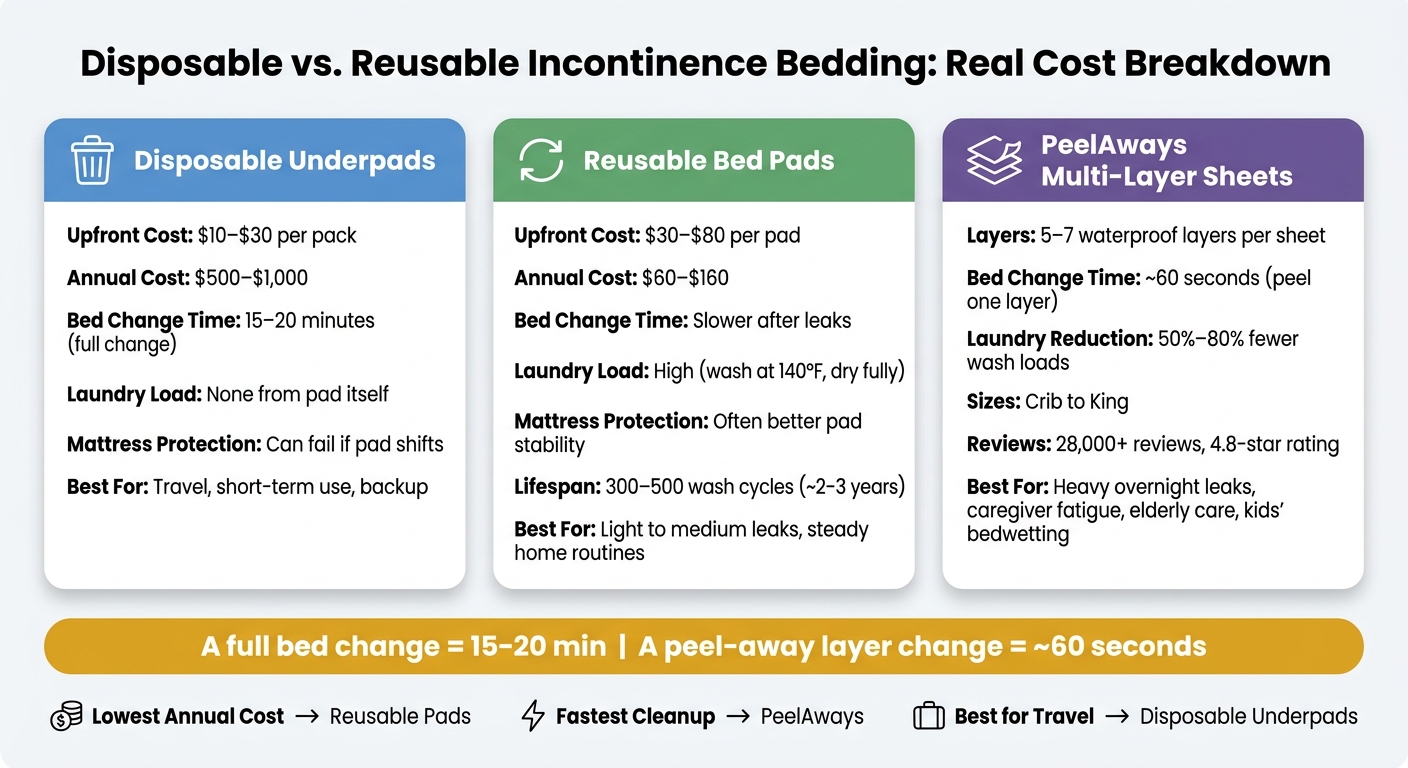
Disposable vs. Reusable Incontinence Bedding: Real Cost Comparison
| Option | Upfront cost | Yearly cost | Cleanup time | Laundry load | Mattress protection |
|---|---|---|---|---|---|
| Disposable underpads | $10–$30 per pack | $500–$1,000 | Fast if pad worked | None from the pad itself | Can fail if pad shifts |
| Reusable pads | $30–$80 per pad | $60–$160 | Slower after leaks | High | Often better pad stability |
| PeelAways vs. traditional waterproof sheets | Varies by set | Varies by layers used | About 60 seconds | Lower | Strong, full-sheet coverage |
FAQ
Is reusable incontinence bedding cheaper than disposable?
Usually, yes on yearly dollars. Reusable pads often cost less across the year than disposable underpads. But that does not count your time, sleep, and wash loads.
What is the fastest option for nighttime accidents?
Layered fitted sheets are the fastest. PeelAways can turn a full bed change into about 60 seconds because the clean layer is already underneath.
Are disposable underpads enough for heavy overnight leaks?
Sometimes. But for many people, no. Pads can shift or miss part of the leak. For heavy nights, a full fitted layer system or a mattress protector plus top layer setup is usually safer.
### What are the best nighttime incontinence care strategies for the elderly?
For frequent overnight leaks, I would lean toward disposable layered bedding or a layered sheet setup. It cuts bed-change time and lowers the physical work when you are already worn out.
What works best for bedwetting in kids?
For light accidents, washable pads can be fine. For heavy or frequent bedwetting, a fast peel-away layer can keep the room calmer and get your child back to sleep with less upset.
Bottom line
If you only compare shelf price, reusable bedding often wins.
If you compare money + laundry + sleep + cleanup time, the answer changes. Proper bedding disposal also plays a role in total hygiene management.
For light, predictable leaks, washable pads can be enough.
For heavy, frequent, or surprise overnight accidents, I would pick the option that cuts the total burden. For me, that means layered bedding like PeelAways: 5–7 waterproof layers, crib to king, 28,000+ reviews, 4.8 stars, and about 60 seconds instead of 15–20 minutes when the bed is wet again.
Blog readers save 10% with code BLOGS10 at checkout. Available on peelaways.com and Amazon. Free shipping on orders over $100.
Disposable vs. Reusable Incontinence Bedding: What Falls Into Each Category
It’s the middle of the night. The bed is wet, your loved one is upset, and you’re standing there half-awake trying to figure out the least painful next step. In that moment, the difference between disposable and reusable bedding feels a lot bigger than a product label.
Disposable bedding gets used once and thrown away. Reusable bedding gets washed and used again. That one difference affects cost, cleanup time, and how much work lands on you.
Disposable Incontinence Bedding: Bed Sheets, Pads, and Multi-Layer Options
The most common disposable option is the underpad. It’s a single-use absorbent pad that sits on top of the sheet. You can also find disposable fitted sheets, which work as a single-use sheet option.
Then there’s the more advanced version: the multi-layer disposable sheet. This type stacks 5 to 7 waterproof layers into one fitted sheet. When the top layer gets soiled, you peel it off and there’s a clean, dry layer underneath. If you’ve ever done a full bed change at 2 a.m., you already know why that matters.
One of the best-known examples is PeelAways multi-layer disposable sheets, a product many families find after getting worn down by laundry, mattress lifting, and broken sleep. They come in sizes from crib to king, carry a 4.8-star rating with 28,000+ reviews, and are built around one simple idea: Making aging and caregiving easier, one bed at a time.
If you want to compare buying options, you can also check PeelAways on Amazon and browse more help on the PeelAways blog at peelaways.com/shop, along with articles on peelaways.com that dig into overnight care routines and hygiene and bed protection choices.
Reusable Incontinence Bedding: Washable Bed Pads and Waterproof Covers
Reusable bedding includes washable bed pads, waterproof mattress protectors, and washable duvet or pillow covers. Washable bed pads can go on top of the sheet or under it, and they use a waterproof backing to help protect the mattress. Waterproof mattress protectors stay on the mattress under the sheet.
On paper, reusable options can look simple enough. Wash, dry, put them back on the bed. But life is rarely that neat, especially when leaks are frequent or hit without warning.
Most reusable pads last 300 to 500 wash cycles, which works out to about 2 to 3 years of daily use. Still, for frequent overnight accidents or hard-to-predict leaks, the wash-and-dry routine can turn into one more exhausting job on a list that already feels too long.
How PeelAways Makes a 60-Second Bed Change Possible
A standard bed change after a nighttime accident takes 15 to 20 minutes. That’s not just a number on a page. It means removing a soaked fitted sheet, lifting or shifting the mattress, hunting down clean bedding, and making the bed again while the person who had the accident waits, cold and uncomfortable.
PeelAways multi-layer disposable sheets cut that down to about 60 seconds. Each fitted sheet has 5 to 7 waterproof layers, so when the top layer is soiled, you peel it away and there’s a dry one right there underneath. It also helps reduce cross-contamination between layers.
That kind of speed changes the whole feel of the night. Less lifting. Less laundry. Less stress. Less time with your loved one sitting in discomfort while you wrestle with the bed.
If you use diapers or incontinence pads, PeelAways makes a lot of sense. It’s not just about the sheet. It’s about keeping some dignity in a moment that can feel hard for everyone involved.
You can find PeelAways at peelaways.com/shop, on Amazon, and in other blog resources on peelaways.com that walk through overnight cleanup, waterproof bedding, and mattress care.
With the product types clear, the next step is looking at what each one costs over a month, a year, and a full care routine.
The Real Cost Breakdown: Monthly and Annual Spending on Incontinence Bedding
It’s 2am. The bed is wet again, your loved one is mortified, and you’re standing there doing math in your head while you strip the sheets for the second time this week. The price tag on the package never tells the whole story.
Real cost comes from repurchases, laundry, utilities, and caregiver time. When you add those up over a year, the numbers look very different from the sticker price.
Upfront Price vs. Ongoing Costs: What Families and Facilities Actually Pay
Once product type is clear, the next question is what it costs to keep using it. This is where a lot of families get blindsided. The cheaper option at checkout can end up costing more month after month.
Reusable bedding costs more upfront but less over time, and frequent use shortens the payback period. Disposable bedding costs less to start but adds up fast with regular repurchasing. Families using disposable underpads can spend between $500 and $1,000 per year, while a rotation of reusable pads typically runs $60 to $160 annually, including periodic replacement.
A single pack of disposable underpads runs $10 to $30 and may last only one week with nightly use. That can turn into $60 to $120 per month. Reusable washable pads cost $30 to $80 per unit upfront, but a rotation of three to five pads can last 300 to 500 wash cycles, depending on use and laundering.
There’s also a middle ground many tired families don’t hear about soon enough: multi-layer disposable sheets. PeelAways is one of those products I wish I had found earlier. Instead of changing the whole bed, you peel off one layer and move on. Bed change time drops to about 60 seconds, not the 15 to 20 minutes a full sheet change can take. That matters when you’re half asleep and your back is already done for the day. PeelAways comes in 5 to 7 layers, sizes crib to king, and it has 28,000+ reviews with a 4.8-star rating. If you use diapers or incontinence pads, it’s worth a look at peelaways.com/shop or on Amazon. You can also read more on the PeelAways blog and another article on peelaways.com.
| Option | Upfront Cost | Est. Annual Cost | Replacement Frequency |
|---|---|---|---|
| Disposable underpads | $10–$30/pack | $500–$1,000 | Weekly |
| Reusable bed pads | $30–$80/pad | $60–$160 | Every 6–18 months |
| Multi-layer disposable sheets | per-sheet pricing | depends on layers used | Per layer used |
Laundry, Water, Electricity, and Detergent Costs Over Time
Product price is only part of the bill. Reusable bedding cuts waste, but laundry labor and utilities still add to the total. And let’s be honest: it’s not just the utility bill. It’s the load you start before work. It’s the dryer running again at bedtime. It’s one more thing on a list that already feels too long.
Reusable bedding adds washing at 140°F, drying, and detergent costs. That means more time, more handling, and more planning.
Multi-layer sheets can cut laundry loads by 50% to 80%, which lowers water, electricity, and detergent costs while reducing the amount of laundry work caregivers have to manage. That’s the part PeelAways gets right. You’re not dealing with a full wash cycle every time there’s an accident. You’re just removing a layer and keeping the night moving. Managing incontinence in elderly loved ones makes aging and caregiving easier, one bed at a time sounds simple, but when you’ve done midnight laundry, you know exactly why that matters.
Time, Sleep Disruption, and Physical Effort as Hidden Costs
This is the cost people miss most. Not because it’s small. Because it doesn’t show up on a receipt.
Fast-change systems cut cleanup to about a minute. A reusable system still means stripping the bed, washing at 140°F, and drying thoroughly before putting everything back into rotation. That extra work hits hardest in the middle of the night, when every lost minute feels heavier than it should.
You get more sleep and less physical strain. That time difference matters as much as the dollar difference.
If you want to see how PeelAways works in day-to-day life, start here: peelaways.com/shop. You can also check the Amazon listing and read more from the brand’s blog at peelaways.com.
Next: compare mattress protection, leak control, and comfort overnight.
Protection, Comfort, and Cleanup Speed: How Each Option Holds Up
It’s 3 a.m. again. The bed is wet, your loved one is upset, and you’re standing there half-awake, already thinking about the sheets, the mattress, and the load of laundry waiting for you. This is the moment when price stops being the main issue. What matters now is simple: did the bedding protect the bed, keep your loved one comfortable, and let you clean up fast?
Mattress Protection, Leak Control, and the Cost of Replacement
Reusable pads often stay in place better through the night, while disposable pads can slide or tear when someone turns or shifts in bed. And once that happens, the mattress is on the line.
That’s the part people don’t always talk about. It’s not just about how much liquid a pad can hold. It’s about whether it stays where you put it, shields the bed, and saves you from a full middle-of-the-night reset. Pads with gel cores can hold more by locking in moisture instead of letting it spread. That helps a lot during heavier accidents, but only if the pad doesn’t bunch up or move.
A lot of families stack their setup for a reason: a fitted waterproof mattress protector on the bed, then a pad on top based on what that night looks like. That lower layer gives you backup. PeelAways fits neatly into that kind of setup. Its waterproof backing runs through every layer, and each layer is a full fitted sheet, not a loose pad. So it stays put instead of drifting to one side when someone moves.
Here’s the plain-English version of how these choices hold up when you’re tired and need the bed dry now:
| Option | Mattress Security | Absorbency | Cleanup Speed | Best For |
|---|---|---|---|---|
| PeelAways multi-layer sheets | High | High | Fastest cleanup | Overnight accidents, caregiver fatigue |
| Disposable underpads | Lower if they shift | High | 30–60 seconds | Travel, short-term use |
| Washable underpads | High | Moderate to high | Requires laundry | Daily home care, sensitive skin |
That first row is why so many tired families end up sticking with PeelAways after trying other setups. You pull off one wet layer, and the next clean fitted layer is already there. No hunting for corners. No full bed remake. More like 60 seconds instead of 15–20 minutes with the old routine. It’s one of those things that sounds small until you’ve changed a soaked bed in the dark.
PeelAways is sold as a product, yes, but it often feels more like something another caregiver quietly hands you and says, here, this helped me keep going. It comes in 5-7 layers, in sizes from crib to king, and it has 28,000+ reviews with a 4.8-star rating. If you want to look at it, you can find it on peelaways.com/shop or on Amazon. For more help on nighttime care, you can also read other guides on peelaways.com, like their blog articles on bedwetting and overnight cleanup routines.
Comfort, Dignity, and Skin-Friendly Use Through the Night
A bed that feels like hospital gear can make a rough night feel even worse. That matters more than people think. For an older parent, a spouse, or a child, the sound of crinkly bedding or the look of a plastic pad can add embarrassment to a moment that already feels hard.
Reusable pads tend to feel softer and quieter. Disposable pads may keep the top drier, but the plastic backing can rub if the pad shifts. And if the person in bed is sensitive to sound, texture, or heat, that softer and quieter feel can make a rough night a little easier.
PeelAways does a nice job here because the bed still feels like a bed. The top stays soft and quiet, but there’s still a waterproof layer doing its job underneath. That matters for older adults who want dignity, and it matters for kids too. A child dealing with bedwetting already feels enough stress. A bed that looks and feels normal can take some of that sting out of bedtime.
That’s often what decides it in the end. Not just absorbency. Not just cost. It’s whether the setup helps you protect the mattress, cut down cleanup, and spare your loved one one more layer of discomfort in the middle of the night.
Which Incontinence Bedding Works Best for Elderly Care, Bedwetting, or Heavy Overnight Accidents?
It’s 2 a.m. The bed is wet again. You’re half awake, your loved one is embarrassed, and all you can think is, I cannot do another full sheet change right now.
The best choice depends on accident frequency, laundry load, and how much nighttime changes turn your whole house upside down.
Best Option for Elderly Incontinence and Caregiver Fatigue
For frequent overnight accidents in elderly care, disposable or multi-layer bedding is usually the more practical choice. Life-cycle data show reusables can cut waste, but laundry time and labor can still push total cost higher.
And that’s the part people miss.
On paper, washable products can seem like the cheaper path. In real life, when you’re changing a bed at 3 a.m., stripping wet layers, starting laundry, and trying not to fully wake the person in the bed, the math changes fast.
Repeated middle-of-the-night bed changes wear you down. A multi-layer sheet cuts cleanup to about a minute by letting you peel off one wet layer. No laundry. No mattress lifting. No fighting with fitted-sheet corners in the dark.
If you use diapers or incontinence pads and leaks still reach the bed, this kind of setup can make the night feel a little less brutal. That’s why so many families land on PeelAways after trying the usual pads and protectors first. They come in 5-7 layers, sizes from crib to king, and they’ve earned 28,000+ reviews with a 4.8-star rating. The whole idea is simple: keep the bed dry, keep the change quiet, and protect a little dignity in the process.
You can see them on PeelAways Shop and on Amazon.
Best Option for Kids' Bedwetting, Potty Training, and Special Needs
The same basic issue shows up with kids, but the emotional part hits differently.
For children, the best bedding depends on how heavy the wetting is and how much nighttime stress the child already carries. Washable pads work well for light wetting during potty training where accidents are occasional. They feel softer and quieter, which matters when a child is already nervous about bedtime.
But heavy wetting is a different story.
If accidents happen most nights, speed matters more. A full bed reset can wake a child all the way up, and then you’re not just dealing with wet sheets. You’re dealing with tears, shame, and a child who now dreads going back to sleep.
For sensory issues or mobility challenges, a quiet and fast change can make a huge difference. A setup that gets the bed dry in about a minute, without turning the room into a cleanup scene, keeps the disruption smaller.
The Crib-A-Peel fits cribs and toddler beds and uses soft, breathable layers. For older kids, there’s a Twin size option. Both let a parent peel off the wet layer quietly and quickly so the child can settle back down with less fuss.
If you want to read more about nighttime cleanup and bedding setups, these may help:
- https://peelaways.com/blogs/news
- https://peelaways.com/blogs/news/incontinence-bed-pads-vs-layered-bedding
Final Takeaway: Pick the Option With the Lowest Total Burden
Once you look at cost, cleanup time, and lost sleep, the answer usually gets simpler.
Use washable pads for predictable, light leaks. Use disposable or multi-layer bedding for heavy, frequent, or unpredictable nights. A lot of families end up using both: a washable mattress protector underneath, then multi-layer bedding on top for the rough nights.
When bed changes keep happening, the option with the lowest total burden is usually the one that lets you change the bed fast, keep the room calm, and get everyone back to sleep.
Comments
0



SAVE MONEY & WATER
Professionals & Institutions save a fortune on labor/laundry.

SUPERIOR COMFORT
The first thing our customers notice is how soft our sheets are.

100% WATERPROOF
Each layer is 100% Waterproof, perfect for spills and accidents

SAVE TIME
Change the sheet in under 1 minute without stripping the bed.

Leave a comment