
Best Incontinence Bedding for Post-Surgery Recovery at Home

Nobody tells you about the laundry. They prep you for the surgery, the recovery, the medications - but not the sheets. Not the 2 a.m. sheet changes.
If you need the best incontinence bedding for post-surgery recovery at home, start with a waterproof mattress protector, then add the top layer that matches the mess. For light leaks, underpads may be enough. For heavier leaks, wound drainage, or a person who cannot move much, I’d pick PeelAways because it gives you 5–7 waterproof layers, changes in about 60 seconds instead of 15–20 minutes, and can cut laundry by 50% to 80%. It also comes in sizes crib to king and has 28,000+ reviews with a 4.8-star rating.
At a glance:
- Waterproof mattress protector: base layer for the mattress
- Disposable underpads: best for small, spot leaks
- Waterproof mattress pads vs. disposable sheets: best when you want to toss the whole top layer
- PeelAways: best for heavy night messes, less lifting, and fewer loads of laundry
| Option | Best for | Main tradeoff |
|---|---|---|
| Mattress protector | Protecting the mattress | Does not absorb much on its own |
| Underpads | Small leak zones | Can shift at night |
| Disposable waterproof sheets | Full-bed top coverage | More trash and repeat cost |
| PeelAways | Heavy leaks, drainage, low movement | Higher upfront cost than a pad |
Here’s what I’d look at before I buy anything for recovery at home.
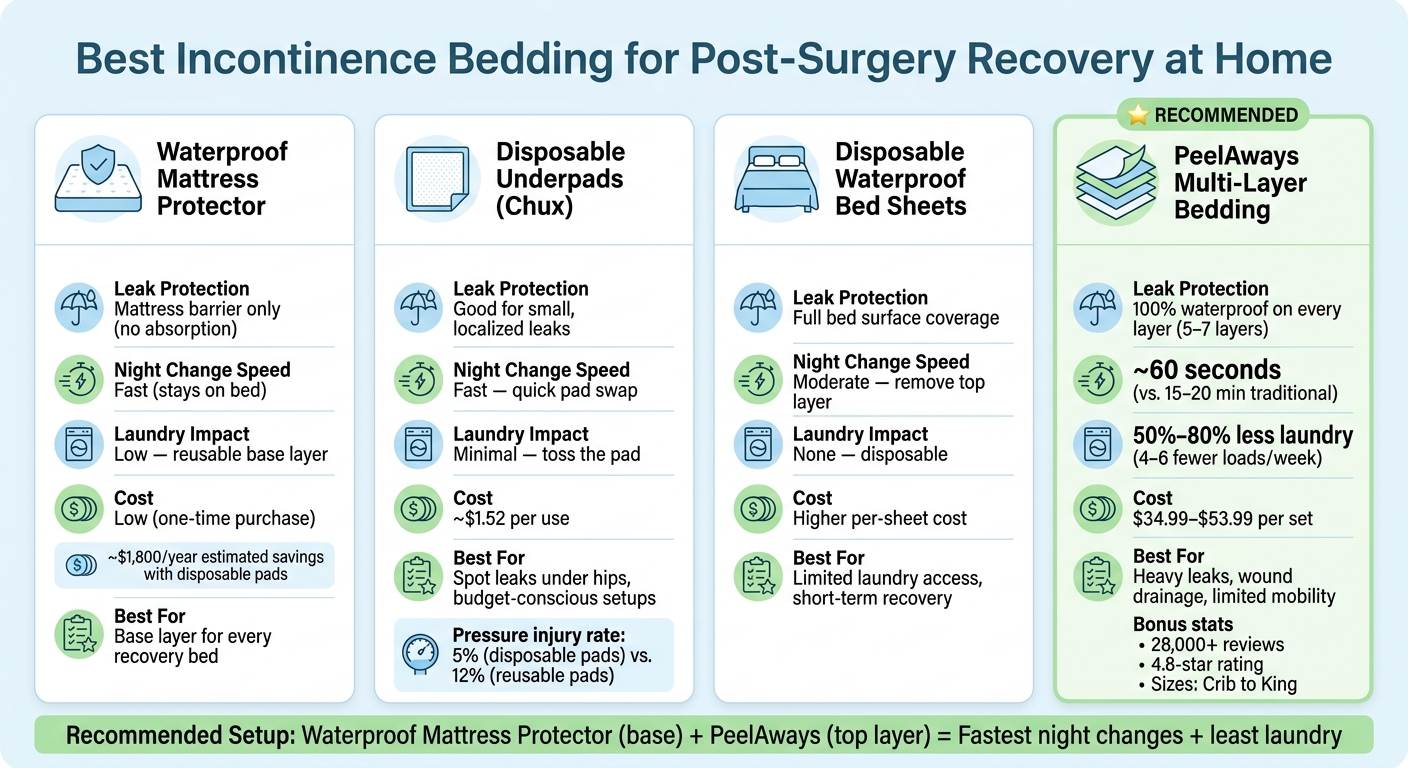
Best Incontinence Bedding for Post-Surgery Recovery: Quick Comparison Guide
Disposable Bed Sheet | Incontinence Bed Pad | Peelaways on QVC
sbb-itb-45288fe
Why this problem is harder than people realize
Post-surgery bedwetting is not just “a little leak.”
It can be:
- bladder leakage after anesthesia or pain meds
- trouble getting to the bathroom in time
- wound drainage
- sweat, blood, or fluid from drains
And the hard part is not only the mess.
It’s the lifting.
The sheet stripping.
The trying not to wake someone who is already hurting.
Wet bedding can also be rough on skin. When choosing bedding for incontinence care, prioritizing moisture-wicking materials is essential for recovery. In the article you shared, one study found pressure injury rates of 5% with disposable pads vs. 12% with reusable pads. That matters if your loved one is older, thin-skinned, or stuck in bed for long stretches.
What to look for before buying
When I’m worn out, I don’t want ten features.
I want four things:
- Waterproof protection: so the mattress does not get ruined (see our guide on how to keep beds dry)
- Fast night changes: because 2 a.m. is not the time for a full bed remake
- Less laundry: because the washer becomes its own job
- Soft surface: because plastic-feeling bedding can feel cold and embarrassing
If the person in bed is sore, weak, or cannot roll much, change speed matters most.
If the leaks are random but small, pads may be enough.
If you’re changing sheets more than once a night, I would skip patchwork fixes and go straight to a layered setup.
Waterproof mattress protectors
This is the base layer.
Not the whole fix.
But the part that saves your mattress.
The best waterproof mattress protectors blocks fluid from reaching the bed itself. Some clinical guidance in the source article puts the target at about 15–17 ounces (450–500 mL), about a full adult bladder.
What I like:
- protects the mattress from leaks and drainage
- stays on the bed during most changes
- cuts down on deep cleanup
What I don’t like:
- it does not solve the top-layer mess
- some vinyl styles are hot and noisy
If you buy one thing first, buy this.
Then put something easier to swap on top. Using multiple bedding solutions for incontinence care creates a layered system that simplifies cleanup.
Disposable underpads and bed pads
Underpads are the simple fix for small, contained leaks.
If the wet area stays mostly under the hips, a pad can save you from changing the whole bed. A 30" x 36" pad or larger usually gives better overnight coverage.
What works:
- fast swap and proper disposal
- low effort
- good for occasional accidents
What can go wrong:
- they can bunch up
- leaks can run past the edges
- they may not be enough for wound drainage or heavy overnight loss
The article also mentioned an estimated $1,800 per year in savings for disposable vs. washable bed sheets for incontinence care. Even in short recovery, that can mean less lifting and fewer late-night loads.
For spot leaks on a budget, this is the plain answer.
Disposable waterproof bed sheets
These make more sense when one pad is too small but you still want a throwaway top layer.
A disposable waterproof sheet covers much more of the bed surface. That helps if the person shifts in sleep or the leak spreads.
What I like:
- more coverage than a pad
- easier than washing a soaked full sheet
- useful for short recovery periods
What I don’t like:
- repeat cost adds up
- more trash
- comfort and dignity depend on the top fabric
If your laundry setup is bad - stairs, shared machines, no easy washer access - this option can take pressure off for a week or two.
PeelAways multi-layer bedding
This is the one I wish more people knew about sooner.
I’m not saying that as a marketer. I’m saying it like someone who has stood there in the dark deciding whether to fully wake a hurting person just to fix the bed.
PeelAways gives you 5–7 fitted waterproof layers in one set. When the top layer gets wet, you peel it off, and a dry one is already there underneath.
That means:
- about 60 seconds for a bed change
- not 15–20 minutes
- less rolling, lifting, and tugging
- less laundry - often 50% to 80% less
- sizes from crib to king
The source article also notes soft bamboo/rayon fabric, a quiet feel, and no vinyl or PVC feel. That matters when someone already feels exposed.
If you already use diapers or incontinence pads and still end up changing sheets, I’d go straight to this setup.
You can shop it on PeelAways.com or check the Amazon listing for PeelAways.
If you want more help with setup ideas, these reads can help too:
- PeelAways blog
- PeelAways shop page
Quick comparison
| Product | Leak control | Change time at night | Comfort | Best use |
|---|---|---|---|---|
| Waterproof mattress protector | Protects mattress only | Fast if top layers stay dry | Varies by fabric | Base layer for every bed |
| Disposable underpads | Good for small leaks | Fast | Varies | Spot leaks, under hips |
| Disposable waterproof sheets | Covers most of bed | Medium | Varies | Short-term full-bed cover |
| PeelAways | Full waterproof layered system | About 60 seconds | Soft, quiet | Heavy leaks, drainage, low mobility |
Beyond quick changes, maintaining a fresh environment is essential; preventing odors in incontinence bedding helps ensure long-term comfort during recovery.
FAQ
What is the best bedding for urinary leakage after surgery?
I’d start with a waterproof mattress protector. If leaks are small, add underpads. If leaks are heavier or the person cannot move much, PeelAways is the setup I’d choose.
Are disposable underpads enough after surgery?
Sometimes. They work best for spot leaks. If fluid goes past the pad or happens more than once a night, they may not be enough.
How do I protect a mattress from wound drainage?
Use a waterproof mattress protector under everything else. Then add either a disposable waterproof top sheet or a layered option like PeelAways.
What helps reduce laundry during recovery at home?
The source article says PeelAways can cut laundry by 50% to 80%. Disposable top layers also help because you throw away the soiled layer instead of washing full bedding.
Is PeelAways only for older adults?
No. If someone is home after surgery and dealing with leaks, drainage, or night accidents, it can help. It comes in sizes crib to king.
Bottom line
If you’re trying to get through post-surgery nights with less lifting, less washing, and less embarrassment, the best setup is usually simple:
Waterproof mattress protector underneath.
PeelAways on top.
That gives you mattress protection, fast layer changes, and much less work when the bed gets wet at 2 a.m.
I’d still use pads or briefs if needed. But if you’re already using them and the bed is still getting wet, this is the part that fixes the bigger problem.
PeelAways - Making aging and caregiving easier, one bed at a time.
Blog readers save 10% with code BLOGS10 at checkout. Available on peelaways.com and Amazon. Free shipping on orders over $100.
1. Waterproof Mattress Protectors
It’s 2am. The bed is wet, the room is quiet, and you’re trying to fix everything without fully waking the person you love. In that moment, the mattress protector isn’t some extra add-on. It’s the layer that saves the bed underneath and gives you one less mess to deal with.
A waterproof mattress protector is the base layer of a post-surgery recovery bed. It keeps fluids from soaking into the mattress while the absorbent layers on top deal with the mess.
Leak Protection
You’ll usually see three main styles: fitted-sheet protectors, zippered encasements, and flat vinyl covers.
Fitted-sheet protectors work well for light to moderate leaks. They cover the top and sides and don’t feel too hospital-like. Zippered encasements give the most all-around coverage. Flat vinyl covers are fully waterproof, but they’re often noisier and not as comfortable.
One clinical recommendation says a protector should hold about 15–17 ounces (450–500 mL) - about a full adult bladder.
And here’s the hard truth: if the protector doesn’t stop the liquid from reaching the mattress, the rest of the bed setup has to work even harder. What the protector doesn’t catch, the top layer needs to absorb.
Night Change Speed
This is where a protector earns its place.
Because it stays on the bed, you don’t have to strip everything off during a middle-of-the-night change. You remove the wet top layer, smooth the bed, and move on. That’s a whole lot easier than wrestling with corners, lifting a mattress, and starting from scratch when you’re half awake.
Laundry Reduction
When you have a protector in place, you’re washing the layers that got wet - not scrubbing the mattress or worrying about replacing it.
That cuts down on cleanup in a way that matters when you’re tired and already behind. If you can, keep two protectors in rotation so one is always clean and ready. It sounds small, but it saves a lot of stress.
Skin and Dignity
This part gets missed too often.
Modern protectors with soft fabric tops and breathable waterproof membranes can cut down on heat and sweat. That matters when someone has fragile skin after surgery. A loud, plastic-feeling cover can make the whole bed feel cold and medical. A quieter, fabric-faced protector feels more like a normal bed, which can help with sleep and improve nighttime incontinence care by sparing your loved one a little embarrassment.
The next layer matters most when you need a fast bed change with as little effort as possible.
2. Disposable Underpads and Bed Pads
It’s 2 a.m. again. The bed is damp, your loved one is half-asleep, and you’re trying not to pull on a sore body while you fix the mess in the dark.
Disposable underpads - often called chux pads - sit on top of the sheet and catch leaks before they soak the bed. When you pair one with a mattress protector, you get a throwaway top layer that’s much easier to deal with when leaks are random.
Leak Protection
For overnight use, look for pads marked heavy or overnight absorbency. Those are made for bigger leaks during sleep, which can be common in the first few weeks after surgery when you don’t always know what the night will bring.
Size matters too. A 30" x 36" pad or bigger gives you more coverage in the area most likely to get wet when the sleeper shifts around. A waterproof backing helps stop moisture from reaching the sheet, and a non-slip bottom helps the pad stay put instead of bunching up under them.
Night Change Speed
This is where underpads can make a rough night a little less rough.
If a leak happens, you usually don’t have to strip the bed. You can roll the wet pad inward, take it away, and slide down a clean one. That often takes just a couple of minutes, and you may not need to fully reposition the patient. When someone has a new incision or can’t move much, that small difference feels huge.
Keep a few clean pads close by. Not in a closet. Not across the house. Right near the bed, where you can grab one fast without turning on every light in the room.
If the wet area keeps spreading past the edges of the pad, the next type of bedding works better because it covers more of the bed at once.
Laundry Reduction
When the pad catches the leak, the sheet under it will often stay dry. That can save you from one more full bedding change, one more washer cycle, and one more load you have to lift when you’re already worn out.
One cost analysis of medical disposable pads estimated savings of about $1,800 per year compared with washing reusable pads and sheets again and again. Even during a recovery that lasts only a few weeks, cutting down on heavy laundry can help a lot, especially if your back is already giving you trouble or laundry access is a pain.
Skin and Dignity
Dry skin matters. More than people think.
A clinical study that compared disposable and reusable underpads in a hospital found a hospital-acquired pressure injury rate of 5% in the disposable pad group, compared with 12% in the reusable pad group (P = .02). At home, that matters even more because nighttime changes may be farther apart than they are in a hospital.
Pads that help with odor can make that in-between time more comfortable. And just as important, the pad stays out of sight under the patient. A fast, quiet change helps keep the moment low-key, so the focus stays on rest instead of the accident.
When leaks go past one pad or drainage is heavier, a full-bed disposable sheet can cut down on changes even more.
3. Disposable Waterproof Bed Sheets
It’s 2 a.m. again. The leak didn’t stay on the pad, and now half the bed is wet, your loved one is sore, and the last thing either of you wants is a full sheet change with a fresh incision in the mix.
That’s where a disposable waterproof sheet can help. When the mess spreads past one small spot, a full-sheet layer covers most or all of the sleep surface and gives you more room for error.
Leak Protection
A disposable waterproof sheet protects a much larger area than a pad. That matters when someone shifts around at night and the leak ends up somewhere the pad didn’t cover.
These sheets can help with:
- Light to moderate leakage
- Wound drainage
- Nighttime accidents
Some are just a barrier. Others have an absorbent top layer too. If you’re dealing with post-surgery recovery, check for true waterproof backing. Water-resistant fabric may sound close, but it can still let moisture through.
Night Change Speed
When someone needs as little movement as possible after surgery, a full-sheet swap can make a rough moment a little easier.
Because the sheet covers the whole bed, you can remove the soiled layer and put on a clean one without stripping everything down or moving the person much. That matters when even small shifts hurt. It also helps keep the whole change calmer and less disruptive.
Keep a clean replacement sheet within arm’s reach. In the middle of the night, that small bit of prep can save you a lot of scrambling.
Laundry Reduction
One thing I liked about this kind of setup? The dirty sheet comes off in one piece. You’re not wrestling with several wet layers while half asleep and already behind on rest.
That can cut cleanup time during the hardest part of recovery. The downside is pretty clear: you’ll keep buying replacements, and there’s more trash. For that reason, these usually make the most sense for short-term recovery rather than everyday long-term use.
Skin and Dignity
The top layer makes a big difference. A soft, cloth-like surface feels better than something slick and plastic-like, especially when a person is spending long hours in bed.
And comfort isn’t just about skin. It’s also about dignity. After surgery, the best setup is often the one that lets you handle accidents quietly, with less exposure and less fuss at the bedside. Less disruption. More rest. Less embarrassment for the person in the bed.
For heavier drainage, use the sheet over a mattress protector. If you want the fastest full-bed change, layered peel-away bedding goes a step further.
4. Multi-Layer Peel-Away Bedding (PeelAways)
It’s 2 a.m. again. The pad failed, the sheet is wet, and now you’re doing that half-awake math in your head: do I wake them fully, strip the bed, and start over? Or do I try to patch it and hope we both get a little more sleep?
That’s where a layered setup can change the whole night.
When a leak spreads past one pad or one sheet, you need more than a quick fix. PeelAways gives you 5 to 7 fitted waterproof layers in one system, so when one layer gets soiled, you peel it away and a clean, dry layer is already waiting underneath.
Leak Protection
Each layer is 100% waterproof, so fluid does not pass through to the layer below or down to the mattress.
"Each layer is 100% Waterproof, perfect for spills and accidents." - PeelAways
If you’re dealing with heavy wound drainage, it still makes sense to put PeelAways over a waterproof mattress protector for backup. That extra barrier can help on the rough nights.
Night Change Speed
This is the part that hits you in real life.
Peel-away bedding makes night changes very fast, often in under a minute. You don’t have to strip the whole bed. You don’t have to do a full reset. And you may not need to fully move the patient either. You peel the soiled layer inward and away, then smooth the clean layer into place right then and there.
That difference matters. Under a minute feels very different from 15 to 20 minutes when you’re exhausted and trying not to make a hard moment feel even harder.
Laundry Reduction
Laundry adds up fast. One wet bed can turn into a pile of sheets, pads, blankets, and mattress cover wash before sunrise.
Because the soiled layer is discarded, PeelAways can cut household laundry by 50% to 80%, which can mean about 4 to 6 fewer loads per week for families dealing with nighttime accidents. Since the layers underneath stay clean, you’re not washing parts of the bed that never got wet in the first place.
That’s less time in the laundry room. Less lifting. Less burnout.
Skin and Dignity
This part often gets overlooked, but it shouldn’t.
The fabric is soft, breathable bamboo/rayon. It’s quiet, hypoallergenic, and free of vinyl, PVC, phthalates, and added fire retardants. So it doesn’t have that loud, crinkly feel that can make a bed feel more like a hospital setup than a place to rest.
And the fast-change design helps limit how long someone stays on a wet surface. That can make cleanup feel more private, more calm, and less drawn out when your loved one is already feeling exposed.
Home sizes run from Twin to King, plus a Twin XL 7-layer option. Prices range from $34.99 to $53.99. If you use diapers or incontinence pads and still end up changing sheets in the middle of the night, this is the kind of thing you look at and think: where has this been the whole time?
Pros and Cons of Each Bedding Type
It’s 2am. The bed is wet again, your loved one is half-awake, and you’re doing that awful mental math: strip everything now, or try to patch it and pray till morning. In moments like this, the best bedding choice comes down to three things: protect the mattress, contain the leak, and cut down the work in the dark.
After the breakdown above, this quick side-by-side makes the choice easier. Match the bedding to the leak, the amount of movement your loved one can handle, and how much cleanup you can deal with overnight.
| Bedding Type | Protection | Night Change Effort | Comfort | Cost | Best Fit |
|---|---|---|---|---|---|
| Waterproof Mattress Protector | Mattress barrier; no absorption | Low for daily use; moderate when changing | Varies; breathable styles are quieter, vinyl runs warm and noisy | Low - one-time purchase, reusable | Base layer for most recovery setups |
| Disposable Underpads (Chux) | Absorbent; can shift | Low - quick pad swap | Variable; softer pads are more comfortable | About $1.52 per use | Spot leaks; localized protection under hips |
| Disposable Waterproof Bed Sheets | Full surface coverage | Moderate - top-layer removal needed | Fabric-like; breathability varies | Higher per-sheet cost; no laundry expense | Limited laundry access; intermittent accidents |
| PeelAways Multi-Layer Bedding | 100% waterproof on every layer; changes in under 1 minute | Very low - minimal patient movement | Soft, quiet, and hypoallergenic | About $34.99–$53.99 per set; reduces laundry | Heavy leakage; limited mobility; post-surgery |
Here’s the plain-English version.
A waterproof mattress protector is your starting point. It guards the mattress, but it won’t handle the mess on its own. You’ll usually want something absorbent on top.
Disposable underpads, often called Chux, work well for smaller, more contained leaks. If the problem stays mostly under the hips, they can save you from changing more than you need to.
Disposable waterproof bed sheets make sense when laundry is the bigger problem. If you don’t have easy washer access, or you just can’t face another load, they cover the full sleep surface and let you toss the mess.
Then there’s PeelAways Multi-Layer Bedding. This is the one that tends to make the hardest nights less brutal. If you’re dealing with heavy drainage, post-surgery leaks, or someone who can’t be rolled and repositioned much, the peel-away setup cuts stripping, laundry, and extra movement. One layer off, clean layer underneath. Done in under a minute.
If you use pads or briefs already, this kind of setup can take a lot of pressure off the rest of the bed. And honestly, off you too.
Which Bedding Setup Works Best for Your Recovery Situation
It’s the middle of the night. Something leaked, the bed is damp, and you’re standing there half-awake trying to figure out if you need to change everything or just one layer. When you’re already worn out, that choice matters.
No single setup fits every home. The best pick depends on recovery needs, not just the product itself. Leak amount, mobility, and how much overnight cleanup you can handle usually decide what works.
Every setup below assumes there’s a waterproof mattress protector underneath.
And here’s the part people don’t always see right away: the same bedding can work very differently depending on movement and drainage.
| Recovery Scenario | Recommended Bedding Setup | Why It Fits | Caregiver and Laundry Impact |
|---|---|---|---|
| Minor surgery, occasional leakage, good mobility | Waterproof mattress protector + disposable underpad under hips | Protects mattress; swap only the pad when needed | Low laundry; minimal overnight effort |
| Frequent nighttime accidents, early recovery | Waterproof mattress protector + PeelAways multi-layer bedding | Full-surface coverage with quick layer changes; no full bed remake | Reduces laundry; low nighttime burden |
| Limited mobility, patient cannot roll easily | Waterproof mattress protector + PeelAways multi-layer bedding | Fresh surface without stripping the bed or lifting the patient | Fastest change; supports comfort and dignity |
| Wound drainage or surgical site leakage | Waterproof mattress protector + PeelAways multi-layer bedding | Remove soiled layer without disturbing the rest of the bed | Hygienic; less laundry |
| Short-term recovery, laundry access limited | Disposable waterproof bed sheets + waterproof mattress protector | Full-bed disposable coverage with no laundry | Eliminates sheet laundry during recovery |
| Spot leaks only, budget-conscious | Waterproof mattress protector + disposable underpad | Targeted protection in the leak zone; economical | Low cost; easy cleanup |
Use the table above to match bedding to leak severity, mobility, and cleanup limits. If you’re stuck between two setups, go with the one that asks less of you at 2 a.m. That’s usually the setup that holds up best in real life.
Comments
0



SAVE MONEY & WATER
Professionals & Institutions save a fortune on labor/laundry.

SUPERIOR COMFORT
The first thing our customers notice is how soft our sheets are.

100% WATERPROOF
Each layer is 100% Waterproof, perfect for spills and accidents

SAVE TIME
Change the sheet in under 1 minute without stripping the bed.

Leave a comment