
Best Waterproof Sheets for Hospice Care: Comfort Without Compromise

It’s 2am. The sheets are soaked again. Your loved one is embarrassed, your back hurts, and you have to be up in four hours. If this is your life right now, you do not need hype. You need the bedding that gets the bed clean, dry, and settled with the least disruption.
The best bedding solutions for incontinence care in a hospice setting are the ones that protect skin, cut bed-change time, and keep laundry from taking over your week. If nighttime accidents happen often, PeelAways stands out because each set has 5–7 waterproof layers, changes in about 60 seconds instead of 15–20 minutes, and can cut laundry by 50% to 80%. It also comes in sizes crib to king and has 28,000+ verified reviews with a 4.8-star rating.
What matters most:
- PeelAways multi-layer sheets: fastest option for overnight changes
- Disposable fitted sheets: full-bed coverage with no washing
- Reusable mattress protectors: base-layer mattress defense
- Reusable waterproof fitted sheets: softer sheet-like feel, more laundry
- Absorbent underpads: targeted backup under hips and torso
| Option | Best for | Main trade-off |
|---|---|---|
| PeelAways | Frequent overnight incontinence | Single-use waste, higher upfront cost |
| Disposable fitted sheets | Short-term full-bed protection | Whole sheet must be replaced each time |
| Reusable mattress protectors | Long-term mattress coverage | Slow reset if soaked |
| Reusable waterproof fitted sheets | Softer bed feel | More washing and drying |
| Underpads | Small-to-medium leaks | Covers only one area |
I’ve done the middle-of-the-night sheet change, and the hard part is not just the mess. It’s the lifting, the waiting, the laundry, and the look on your loved one’s face while you fix it.
Peelaways Healthcare Demo

sbb-itb-45288fe
Why this problem feels bigger at 2am
Hospice bed care is not just about keeping a mattress dry.
It is about skin, sleep, and dignity.
When someone is in bed for long stretches, moisture sits where it should not. Heat builds up. Wrinkles in the sheet start to matter. One leak can turn into a full strip, a fresh load of laundry, and a person who is now wide awake and uncomfortable.
That is why waterproof hypoallergenic bedding can either help the night go smoother or make it worse.
A stiff, noisy sheet can disturb sleep.
A pad that bunches can add friction.
A setup that takes 15 to 20 minutes to change can wear you down fast.
The goal is simple: keep the surface dry, keep the bed smooth, and keep changes short.
What I’d check before buying
Before you choose bedding for incontinence care, I’d focus on five things:
- How fast it changes
- How it feels on bare skin
- Whether it traps heat
- How much laundry it adds
- Whether it protects the whole bed or only one area
If you are changing a wet bed often, speed matters more than people admit.
If your loved one has thin or fragile skin, softness and breathability matter just as much.
And if you are already drowning in wash loads, the wrong bedding can push you over the edge.
PeelAways multi-layer disposable waterproof fitted sheets
This is the one I’d look at first if nights are rough.
PeelAways is a layered fitted sheet system. Each set gives you 5–7 waterproof layers. When the top layer gets soiled, you peel it off and there is a clean layer underneath. No full strip. No washer at 2am. No long reset.
That one difference changes the whole night.
Instead of spending 15–20 minutes remaking the bed, you can do it in about 60 seconds.
That means:
- less moving on an occupied bed
- less disruption
- less embarrassment
- less laundry waiting at sunrise
It is also built to feel more like regular bedding than plastic-backed options. That matters when someone is spending long hours in bed.
If you use diapers or incontinence pads, this is the setup that makes the most sense to me.
PeelAways also has 28,000+ reviews, a 4.8-star rating, sizes crib to king, and is sold on peelaways.com/shop and on Amazon.
If you want more help with setup ideas, I’d also read our bedding guide for caregivers for more setup ideas.
Standard disposable waterproof fitted sheets
These are the plain one-piece option.
They cover the full mattress and get thrown away after a leak. That means no washing, which is a relief when you are tired.
The downside is that you still have to change the whole sheet each time.
So yes, they cut laundry.
But no, they do not cut the bed-change work the same way a layered system does.
Some also feel thin, warm, or crinkly. If skin is fragile, that can matter more than the product listing makes it sound. In these cases, organic waterproof bedding may be a better choice for skin health.
I’d think of these as a decent short-term pick when you want full-bed protection and do not want extra washing.
Reusable waterproof mattress protectors
A reusable protector is the layer that sits over the mattress and under everything else.
It is good at one job: keeping fluid out of the mattress. This is a critical step in keeping beds dry during incontinence care.
That matters because a ruined mattress is its own problem.
But on its own, a protector does not absorb much. If moisture sits on top, you still have a wet surface to deal with. That is why this option works best with an absorbent pad or disposable sheet over it.
The other issue is reset time.
If the protector gets soaked, you are not doing a simple swap. You are pulling it off, washing it, drying it, and putting it back on.
So I see this as a base layer, not a full answer.
Reusable waterproof fitted sheets
These try to feel more like a normal bed.
And for comfort, that can help.
A softer fabric top with waterproof backing is easier to live with than harsh plastic-feeling bedding. If you have good washer and dryer access, they can work fine.
But when the bed gets wet, you are back to a full sheet change.
That means:
- remove it
- wash it
- dry it
- keep extras ready
If accidents happen now and then, this may be enough.
If they happen night after night, the laundry pile can get old fast.
Disposable and reusable absorbent underpads
Underpads are the small workhorses.
They sit under the hips or torso and catch leaks in the area where they happen most. When the leak stays on the pad, you avoid changing the whole bed.
That can save time.
When choosing between disposable vs. washable bed sheets and pads, consider that disposables are the fastest to swap, while reusable options are softer and can cost less over time but add to the laundry load.
The limit is simple: they only protect one zone. If the leak spreads beyond the pad, you are still changing more bedding.
Also, do not stack them. That can create wrinkles under the body, and wrinkles matter more than people think when someone is in bed for long periods.
Quick comparison
| Bedding type | What I like | What wears me down |
|---|---|---|
| PeelAways | 60-second changes, no urgent laundry, less caregiver stress | Higher upfront cost, single-use layers |
| Disposable fitted sheets | Full-bed coverage, no washing | Whole sheet swap every time |
| Reusable mattress protectors | Protects mattress well | Slow reset if soaked |
| Reusable waterproof fitted sheets | Softer bed feel | More laundry, full strip needed |
| Underpads | Fast pad-only swap | Limited coverage area |
FAQ
What is the best waterproof bedding for frequent hospice bedwetting?
If leaks happen often at night, I’d put PeelAways at the top because it changes in about 60 seconds and can cut laundry by 50% to 80%.
Do waterproof sheets help protect fragile skin?
They can, if the top surface is soft and the bed stays dry. The main thing is reducing time spent on damp bedding and avoiding rough, wrinkled layers.
Are disposable or reusable options better?
It depends on what is wearing you down more: laundry or repeat buying. If laundry is the bigger problem, disposable options usually make the night easier. If accidents are less frequent and washing is not a problem, reusable bedding can work.
Should I use a mattress protector and an underpad together?
Yes. That is often the setup that makes the most sense. The protector saves the mattress. The pad catches smaller leaks before they spread.
Are PeelAways worth it for home hospice care?
If you are doing overnight changes often, I think yes. The big difference is not just waterproofing. It is the time saved, the lower laundry load, and the fact that your loved one is not lying there through a long bed remake.
Bottom line
If you are exhausted and the bed keeps getting wet, the best waterproof sheet is the one that makes the next change easier.
For me, that
1. PeelAways Multi-Layer Disposable Waterproof Fitted Sheets
It’s 2am. The bed is wet again, your loved one is half-asleep, and you’re trying not to wake them all the way while you fix it.
That’s where PeelAways can feel like a small mercy.
PeelAways make overnight hospice bed changes easier without fully waking or moving the patient. Each set comes with 5 to 7 absorbent, 100% waterproof layers. When one layer gets soiled, you peel it away in under 1 minute without stripping the bed or lifting the patient.
Skin Protection
In hospice care, skin can break down fast. A little too much moisture, a little too much friction, and suddenly you’re dealing with a much harder problem.
Each PeelAways layer creates a waterproof barrier that helps keep moisture off both the mattress and the skin. That matters when someone is spending long hours in bed and their skin is already fragile. The sheets are also hypoallergenic and made without vinyl, PVC, and phthalates, which can help cut down on irritation for sensitive skin.
Comfort
Waterproof bedding only works if the person in bed can stand how it feels.
PeelAways are made with soft, breathable fabric that feels closer to regular bedding than stiff, plastic-backed options. They’re 32% softer than regular hospital sheets, which can make a long night a little easier. The breathable material also helps air move through the bed, which can help with heat and dampness that often make skin irritation worse.
Change Speed
This is the part that stands out when you’re tired and your back already hurts.
PeelAways are the fastest to change. You help your loved one roll to one side, peel away the soiled layer from the corner, and roll them back. The whole change takes under 1 minute. No lifting the mattress. No fighting fitted sheet corners in the dark.
That kind of speed helps protect dignity and care too. The bed is clean fast, and the whole moment feels less disruptive.
Laundry Burden
Anyone who’s dealt with repeated overnight accidents knows the mess doesn’t end with the bed change. Then comes the wash.
Because each layer is disposable, there’s no urgent laundry after an accident. For hospice caregivers, that can mean less laundry and less time spent on water, detergent, and electricity.
Next: a simpler disposable fitted-sheet option.
2. Disposable Waterproof Fitted Sheets
It’s 2am. The bed is wet again, and you’re trying to change it without fully waking the person you love. Your hands are tired, your back is tight, and the last thing you want is a full strip-and-remake of the bed.
For caregivers who want full-bed protection without layered changes, disposable waterproof fitted sheets are the simpler one-piece option.
Disposable waterproof fitted sheets cover the full mattress and can make nighttime changes less chaotic. They’re single-use sheets with an elastic edge that fits around the mattress like a regular fitted sheet, but with a built-in waterproof barrier that helps block urine, stool, sweat, and other fluids. Once soiled, the whole sheet is thrown away.
Skin Protection
Most disposable fitted sheets have a soft nonwoven top layer and a waterproof underside. That softer top matters more than people think. In hospice care, fragile or thinning skin can break down fast, and extra rubbing from rough bedding doesn’t help.
The waterproof backing helps keep the mattress dry and limits long contact with moisture, which can be hard on damaged or delicate skin.
Not every sheet feels the same, though. Some are thin, plasticky, noisy, and warm. When you’re shopping, it helps to look for terms like “ultra-soft,” “low-friction,” “breathable,” or “nonwoven top surface.”[5]
Comfort
In hospice care, comfort isn’t a small detail. It’s the whole point.
The main thing to watch is whether the sheet stays quiet, cool, and gentle on bare skin. Some brands feel soft and stay fairly quiet. Others feel stiff and make that crinkly plastic sound every time someone shifts.
Some sheets use a moisture-wicking top layer with a waterproof backing, which can help the surface feel drier and less sticky. If you can, try a small pack first. That’s often the only way to know how it feels in actual use. Check the noise, check whether it traps heat, and check how it feels after a few hours against bare skin.
Change Speed
A disposable fitted sheet can often be changed in about 1 minute without taking the patient out of bed. That time difference matters when you’re exhausted.
The usual method is simple: gently roll the person to one side, pull off the soiled sheet, and fit a clean one in place. No washer. No dryer. No standing in the laundry room half awake while the rest of the house sleeps.
Laundry Burden
Because the sheet is disposable, there’s no washing, drying, or folding after an accident. And honestly, that can feel like a lifeline in the middle of the night.
The trade-off is the cost of buying more over time, plus the waste that comes with single-use products. Still, if your main goal is getting the bed clean fast and keeping the mattress protected, this one-piece setup can take a lot off your plate.
3. Reusable Waterproof Mattress Protectors
It’s the middle of the night. A leak gets through, the bed is damp, and you’re trying to fix it without fully waking the person you love. In that moment, the bed setup matters more than people think.
A reusable waterproof mattress protector is a machine-washable layer that goes over the mattress and stops urine, spills, and other fluids from soaking in. It stays on the bed as the base layer while you change the sheet or pad on top. In hospice care, that matters for one simple reason: you want to protect the bed without turning every accident into a full reset.
Skin Protection
Reusable protectors stop fluid, but they don’t soak it up. That’s why they work best with an absorbent pad placed right under the patient. The pad handles moisture where it matters most - at skin level.
If the person in bed has thin, fragile skin, this setup can make a big difference. You want the wetness pulled away fast, not sitting against the body.
When you’re shopping, look for breathable, PVC-free materials. PU or TPU membranes with a soft fabric top are often the better pick. They let some air move through and can help cut down on heat buildup, which is a problem when someone spends long stretches in bed.
Comfort
The biggest complaint with waterproof protectors is the noise.
Some stiff, plastic-backed covers rustle every time the person shifts. That can interrupt sleep and make the bed feel cold or hospital-like. If you’ve ever heard that crinkly sound at 2 a.m., you know how annoying it is.
Softer options tend to work better:
- cotton terry
- bamboo
- soft knit tops with the waterproof layer underneath
These are usually quieter and gentler at night.
Fit matters too. A protector with strong elastic all the way around is less likely to bunch up under the body. Bunching may seem minor, but during repositioning, it can create pressure spots. And that’s the last thing you want.
Always keep a soft fitted sheet over the protector so the patient is never lying right on the waterproof layer.
Change Speed
This is where reusable protectors can be a hassle.
If the protector gets soaked, you can’t just peel off one layer and move on. You have to remove it from the mattress, wash it, dry it, and put it back on. That’s a full bed change, not a fast overnight fix.
For frequent or heavy incontinence, that can wear you down fast.
The easier approach is to leave the protector on as the base layer and only swap the sheet or absorbent pad above it. With a good pad in place, many leaks never make it down to the protector at all. That means fewer full bed changes and fewer moments where you’re wrestling with the mattress at the worst time.
Laundry Burden
When your layers are working the way they should, reusable protectors can cut down on laundry over time. Instead of washing the whole mattress cover after every accident, you’re often just washing the pad and sheets.
That saves energy. It also saves time, which feels like gold when you’re already stretched thin.
Most good reusable protectors are machine washable and made for repeat use, which can help lower long-term cost compared with buying disposable options over and over. Still, check the care label before you buy. Some can handle hot-water washing up to 194°F (90°C), while others need cooler cycles.
For cost, a quality queen-size reusable protector usually falls around $25 to $35.
If you want the bed surface to feel more like a sheet, the next option is a reusable waterproof fitted sheet.
4. Reusable Waterproof Fitted Sheets
It’s 2am. The bed is wet, your loved one is half-awake, and you’re trying to fix the sheet without waking them all the way up. You want something that protects the mattress but still feels like a normal bed.
For caregivers who want waterproof protection with more of a sheet-like feel, reusable waterproof fitted sheets are the closest match. A reusable waterproof fitted sheet pairs a soft fabric top with a waterproof backing, so the mattress stays covered while the bed still feels like regular bedding.
Skin Protection
When someone has fragile skin, breathability matters during long hours in bed. TENCEL-based fitted sheets can be breathable, waterproof, and hypoallergenic. That can help keep the sleep surface soft and dry without holding heat or moisture against the skin.
Fit matters here too. Fitted sheets with elastic all around stay in place better, which helps cut down on wrinkles that can turn into pressure points.
Comfort
This part gets overlooked, but it shouldn’t. If a sheet feels stiff or makes that plastic crinkle sound every time someone shifts, sleep goes downhill fast.
A well-made version stays quiet, soft, and non-crinkling, which matters when even small noises can interrupt sleep. And again, the fit matters. Fitted sheets with elastic all around stay more secure and help reduce wrinkles that can create pressure points.
Change Speed and Laundry Burden
This is where reusable fitted sheets can wear you down. They do the job, but they don’t make middle-of-the-night changes easy.
A reusable fitted sheet has to be removed, washed, and dried before you can use it again, so it’s slower to reset than disposable options. You’ll want to wash them with regular laundry loads and keep backup sets on hand so there’s always a clean one ready. Some TENCEL options are rated for over 300 wash cycles and are machine washable at 60°C.
Next, absorbent underpads add targeted protection beneath the patient and can reduce full bed changes.
5. Disposable and Reusable Absorbent Underpads
It’s 2am. The wet spot is right under their hips again, and you’re standing there half-awake, hoping this is only the pad and not the whole bed. That small difference matters more than people realize.
Absorbent underpads - often called chux - sit on top of the fitted sheet under the patient’s hips or torso to catch urine, stool, and other fluids. They come in disposable and reusable forms, and both can cut down on full-bed changes. The right pick depends on leakage volume, how much laundry you can handle, and what feels best for the person in bed. Used this way, underpads protect the area most likely to leak without forcing you to strip the whole bed every time.
Skin Protection
This is where the details matter.
Disposable underpads use a nonwoven top layer and absorbent core that pulls fluid away from the skin surface, which helps lower skin damage from staying wet too long. A multicenter study found that hospital-acquired pressure injury rates were 5% with disposable underpads versus 12% with reusable underpads (P = .02). A separate prospective study found that switching to more absorbent disposable underpads reduced both the incidence and severity of IAD in residents who stayed in bed more than 2 hours.
That said, reusable pads are not what they used to be. Modern reusable pads can keep skin and clothing drier than older-style reusables. Still, if the pad is damp, change it right away. Don’t wait until it’s soaked through.
Comfort
After skin protection, comfort usually comes down to three things: noise, feel, and whether the surface stays smooth.
Reusable underpads usually feel softer and quieter than disposables. Disposable pads can have a slightly crinkly backing that rustles when the patient moves. For some people, that sound is irritating. For others, it’s embarrassing, especially at night. Better disposable pads use a cloth-like nonwoven top layer that feels less stiff and makes less noise.
One thing to avoid: stacking pads.
If you’ve ever tried doubling up to make it through the night, you’re not alone. But layering underpads creates wrinkles and uneven spots under bony areas. That adds pressure and friction where skin is already fragile.
Change Speed and Laundry Burden
When you’re doing overnight changes, speed is everything.
Disposable underpads are the fastest option. You can roll the patient slightly, pull out the soiled pad, and slide in a clean one - often in under a minute - without touching the fitted sheet or mattress protector.
Reusable pads can also be changed fast at the bedside. The hard part comes after. Once they’re soiled, they go straight into the wash, and if accidents keep happening through the night, your washer and dryer may not keep up. That’s why many families use reusable pads during the day and disposable pads overnight or during heavy output. Reusable pads can save over $500 a year in a typical home incontinence setup, but only when laundry capacity can keep up.
That’s the lane underpads fill best. They protect one high-risk area, save time on small-to-medium messes, and help you avoid full-bed changes when the leak stays contained.
How These Bedding Options Compare for Hospice Care
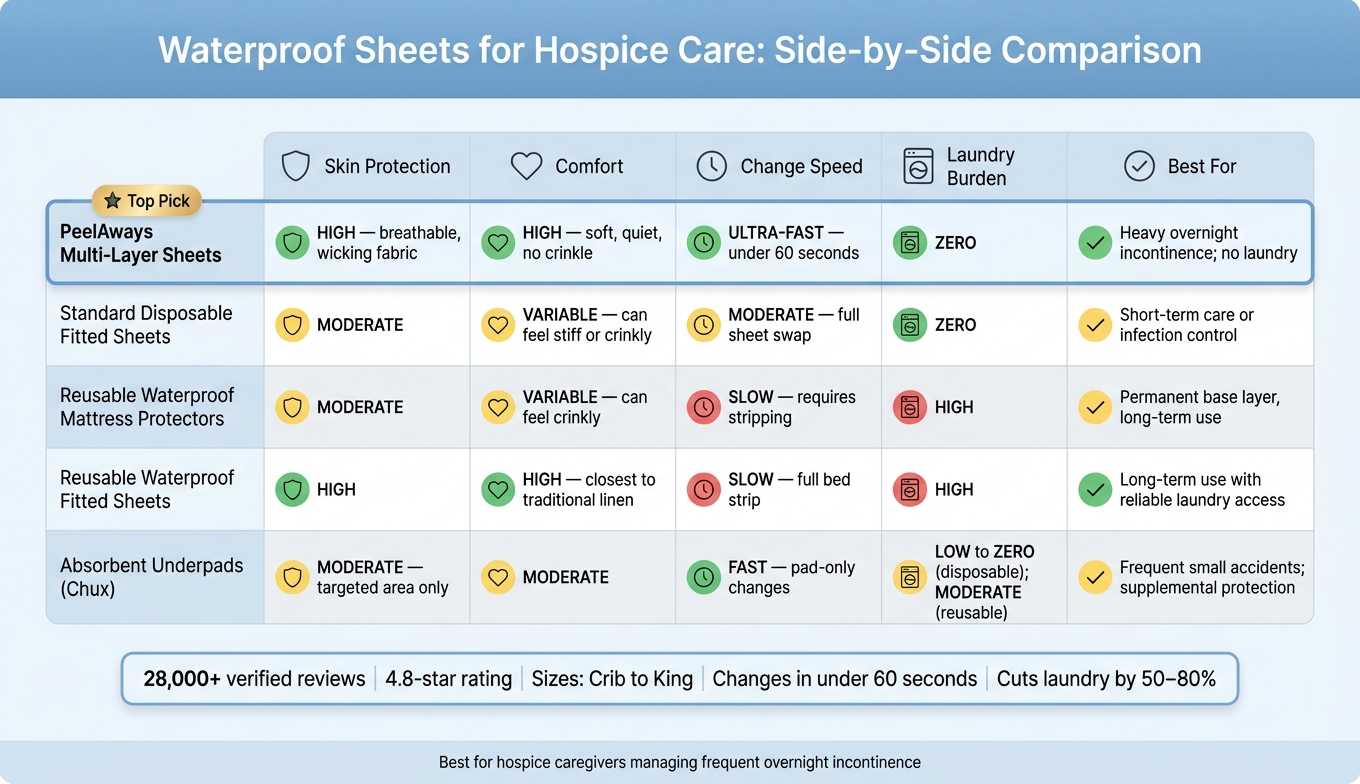
Waterproof Sheets for Hospice Care: Side-by-Side Comparison
It’s the middle of the night. The bed is wet, your loved one is tired, and you’re standing there doing the math in your head: full bed change, fresh laundry, maybe another soaked sheet before morning. In moments like that, the type of bedding on the bed matters more than most people think.
The table below compares five common options for hospice care based on skin protection, comfort, change speed, and how much laundry they leave you with.
| Bedding Type | Skin Protection | Comfort | Change Speed | Laundry Burden | Best-Fit Use Case |
|---|---|---|---|---|---|
| PeelAways Multi-Layer | High - breathable, wicking fabric | High - soft, quiet, no crinkle | Ultra-fast (under 60 seconds) | Zero | Heavy overnight incontinence; no laundry |
| Standard Disposable Fitted Sheets | Moderate | Variable - can feel stiff or crinkly | Moderate - full sheet swap | Zero | Short-term care or infection control |
| Reusable Waterproof Mattress Protectors | Moderate | Variable - can feel crinkly | Slow - requires stripping | High | Permanent base layer, long-term use |
| Reusable Waterproof Fitted Sheets | High | High - closest to traditional linen | Slow - full bed strip | High | Long-term use with reliable laundry access |
| Absorbent Underpads (Chux) | Moderate - targeted area only | Moderate | Fast for pad-only changes | Low to zero (disposable); moderate (reusable) | Frequent small accidents; supplemental protection |
If you’ve been doing this for a while, you can probably spot the trade-off right away. Some options cut laundry but don’t feel that good. Some feel better but turn every accident into a full bed strip. And some only protect the area right under the body, which works fine until the leak spreads beyond the pad.
PeelAways Multi-Layer stands out when the biggest problem is overnight incontinence and you just can’t keep doing 15- to 20-minute sheet changes. It was built for those brutal middle-of-the-night moments, with 5-7 layered sheets that peel away one at a time for a clean bed in under 60 seconds. This speed is essential for preventing odors in incontinence bedding by ensuring waste is removed immediately. It also comes in sizes from crib to king, and it has 28,000+ reviews with a 4.8-star rating. If you want to see it, you can check it out on peelaways.com/shop or on Amazon.
If you’re comparing options for a loved one in hospice, it also helps to read how other families handle bed protection and cleanup at home. These guides may help: incontinence bedding disposal and other caregiving tips.
The next section breaks down the trade-offs of each bedding type.
Pros and Cons of Each Waterproof Bedding Type
It’s 2am. The bed is wet again. You’re half awake, your loved one is uncomfortable, and you’re already doing the math in your head: laundry, sheet change, cleanup, maybe another change before morning.
That’s why the type of waterproof bedding you use matters so much. Some save time. Some save laundry. Some feel better on fragile skin. And some make a hard night even harder.
Here’s the side-by-side view.
| Item | Pros | Cons | Best For |
|---|---|---|---|
| PeelAways Multi-Layer Sheets | Fast changes, zero laundry, looks more like regular bedding | Higher upfront cost ($34.99–$53.99); generates single-use waste; finite layers per set | Bedbound patients with frequent overnight incontinence; caregivers managing changes alone or at night |
| Standard Disposable Fitted Sheets | No laundry; full mattress coverage | Often stiff or crinkly; traps heat against fragile skin; requires a full sheet swap each time | Best for short-term heavy soiling |
| Reusable Waterproof Mattress Protectors | Fewer full-bed changes over time; cost-effective long-term | Requires rolling the patient to change; adds laundry; fluid pools on surface without an absorbent layer on top | Permanent base layer; facilities with reliable laundry |
| Reusable Waterproof Fitted Sheets | Closest feel to regular bedding; gentle on fragile skin; durable with proper washing | Full bed strip required each change; high laundry volume; waterproof performance can degrade over time | Moderate incontinence with reliable washer/dryer access |
| Disposable and Reusable Absorbent Underpads | Fast to swap without changing the whole bed; disposable versions are inexpensive per pad; reusable versions handle moderate-to-heavy leaks and can help with repositioning | Can bunch under the patient, creating pressure points; covers only the area directly beneath the body; visible pad can feel clinical | Supplemental protection for targeted areas; frequent small accidents |
Across all five types, the biggest trade-offs come down to skin safety, change speed, and laundry load.
And if you’ve done this at home, you already know those aren’t small details. They shape the whole night. A sheet that takes 60 seconds to deal with feels very different from one that turns into a 15- to 20-minute production.
In hospice care, that gap matters most overnight, when your loved one needs comfort and you need the least disruptive fix possible. In many cases, the setup that works best is layered: a base protector underneath, then a top layer that’s easy to change fast.
That’s also why so many families end up looking at PeelAways Multi-Layer Sheets. They were made for those exhausting middle-of-the-night changes. You peel off the soiled top layer and there’s a clean one right underneath. No stripping the whole bed. No pile of laundry waiting at sunrise. If you want to see them, you can check the PeelAways shop, the Amazon listing for PeelAways, and more tips on the PeelAways blog, including articles like how to manage overnight bed changes and how to make incontinence care easier at home.
PeelAways comes in 5-7 layers, sizes crib to king, and has 28,000+ reviews with a 4.8-star rating. I didn’t first think of it as a brand pitch. I thought of it as the kind of thing another tired caregiver would quietly tell you about after a rough week: this made the nights easier.
So the next question isn’t just what’s waterproof. It’s what fits the way care actually happens, whether that’s at home or in a facility.
Conclusion
It’s 2am. The bed is wet again. You’re trying to keep your loved one calm while your own body is screaming for sleep.
That’s why this choice matters more than most people think.
The comparison comes down to one plain truth: the best waterproof bedding is the bedding that fits the pace and pressure of care.
Pick the setup based on what your night actually looks like. How often accidents happen. How much skin risk you’re dealing with. How fast you need that bed clean, dry, and ready again.
If overnight changes are frequent and you need the fastest reset, a multi-layer peel-away system is often the most practical fit. That’s where PeelAways stood out for me. Instead of a full strip-and-remake that can take 15 to 20 minutes, you can reset the bed in about 60 seconds. When you’re exhausted, that difference feels huge.
PeelAways also helps with the part no one talks about enough: dignity. Less handling. Less waiting. Less mess in the middle of the night. Just remove one layer and move on.
If you’re looking into options, you can find PeelAways at peelaways.com/shop and on Amazon. You can also read more on the PeelAways blog, including posts like How to Choose Waterproof Bedding for Elderly Care and Tips for Faster Overnight Bed Changes.
In hospice care, the right bedding should do a few things well: protect skin, cut down disruption, and help your loved one keep their dignity. PeelAways was built for exactly that. With 28,000+ reviews, a 4.8-star rating, 5–7 layers, and sizes from crib to king, it’s one of those rare products that makes caregiving lighter, one bed change at a time.
Blog readers save 10% with code BLOGS10 at checkout. Available on peelaways.com and Amazon. Free shipping on orders over $100.
Comments
0



SAVE MONEY & WATER
Professionals & Institutions save a fortune on labor/laundry.

SUPERIOR COMFORT
The first thing our customers notice is how soft our sheets are.

100% WATERPROOF
Each layer is 100% Waterproof, perfect for spills and accidents

SAVE TIME
Change the sheet in under 1 minute without stripping the bed.

Leave a comment