
Disposable Bed Sheets vs. Washable Underpads - Which Is Actually Better?

It’s 2am. The sheets are soaked again. Your loved one is embarrassed, your back hurts, and you have to be up in four hours.
A 60-second bed change can mean the difference between getting back to sleep and losing the rest of the night. If you need the short answer: disposable bed sheets are usually better for heavy leaks, post-surgery care, and less laundry, while washable underpads are better for lower long-term cost and lighter, more predictable wetness. If you use diapers or incontinence pads, a layered system like PeelAways can take a full bed change from 15–20 minutes down to about 60 seconds, with 50% to 80% less laundry.
- Pick disposable bed sheets if you need full-bed protection, less mess, and fast changes
- Pick washable underpads if leaks stay in one spot and you can keep up with washing
- Pick both if nights are hard but daytime leaks are lighter
- PeelAways includes 5–7 waterproof layers per set, comes in sizes crib to king, and has 28,000+ reviews with a 4.8-star rating
| Option | Best for | Main tradeoff |
|---|---|---|
| Disposable bed sheets | Heavy leaks, overnight accidents, post-surgery recovery | Higher repeat cost |
| Washable underpads | Light leaks, daytime use, lower long-term spend | More laundry and slower bed resets |
| PeelAways | Full-bed nighttime protection with fast peel-away changes | Single-use layers |
That’s the short version. Now here’s what I’d want to know before buying anything.
Washable vs Disposable Bedpads
sbb-itb-45288fe
Why this problem hits harder than people think
A wet bed is not just a wet bed.
It’s the smell.
The lifting.
The dark.
The way your loved one won’t meet your eyes.
And if it happens more than once a week, it starts to run your whole house.
That’s why this choice matters. You are not only buying bed protection. You are buying back time, sleep, and a little calm at the worst hour of the night.
For me, the biggest issue was never the leak itself. It was what came after. A full strip, a full remake, and a pile of laundry before sunrise. It helps to have a checklist for streamlining care tasks to manage the exhaustion.
What to check before you buy
Before you choose bedding for incontinence care, I’d look at five things:
- How much of the bed gets wet
- How often it happens
- How long cleanup takes
- How much laundry you can handle
- How much movement hurts the person in bed
If the leak spreads beyond one small area, an underpad can come up short.
If your loved one is sore, weak, or healing, a full sheet change can feel rough for both of you.
And if your washer is already running nonstop, adding soaked bedding can push you over the edge.
Disposable bed sheets
Disposable bed sheets make sense when the whole bed needs to be dry again fast.
That is the main point.
Instead of washing and remaking everything in the middle of the night, you remove the soiled layer and keep going. That’s why they fit heavy leaks and post-surgery care so well.
What stood out to me with PeelAways was that it did not feel like one more thing to figure out. It is a layered fitted sheet setup with 5–7 waterproof layers already on the bed. You peel off the top layer and there is another one underneath.
That means:
- about 60 seconds for a bed reset
- 50% to 80% less laundry
- less bending and lifting
- less stress for the person in bed
It also covers the whole mattress, not just one section.
If you want to see it, here are the main links:
- Shop PeelAways
- PeelAways on Amazon
- PeelAways blog
- More articles on PeelAways
I also like that it comes in sizes crib to king. That matters if you are dealing with a child, an adult twin, or a larger home bed.
Washable underpads
Washable underpads work best when leaks are smaller and land in the same area.
They cost more upfront than one disposable layer, but less over time if they last. Many are rated for up to 250 wash cycles. Some people also like the softer fabric feel.
That said, the weak point is not hard to spot once you have lived it.
You still have to:
- remove the pad
- deal with odor
- wash it
- dry it
- put a clean one back on
And if the leak goes past the edge, you are back to changing sheets anyway.
That is why washable underpads can work fine for lighter use, but get harder to live with when accidents are bigger or less predictable.
Comparison table
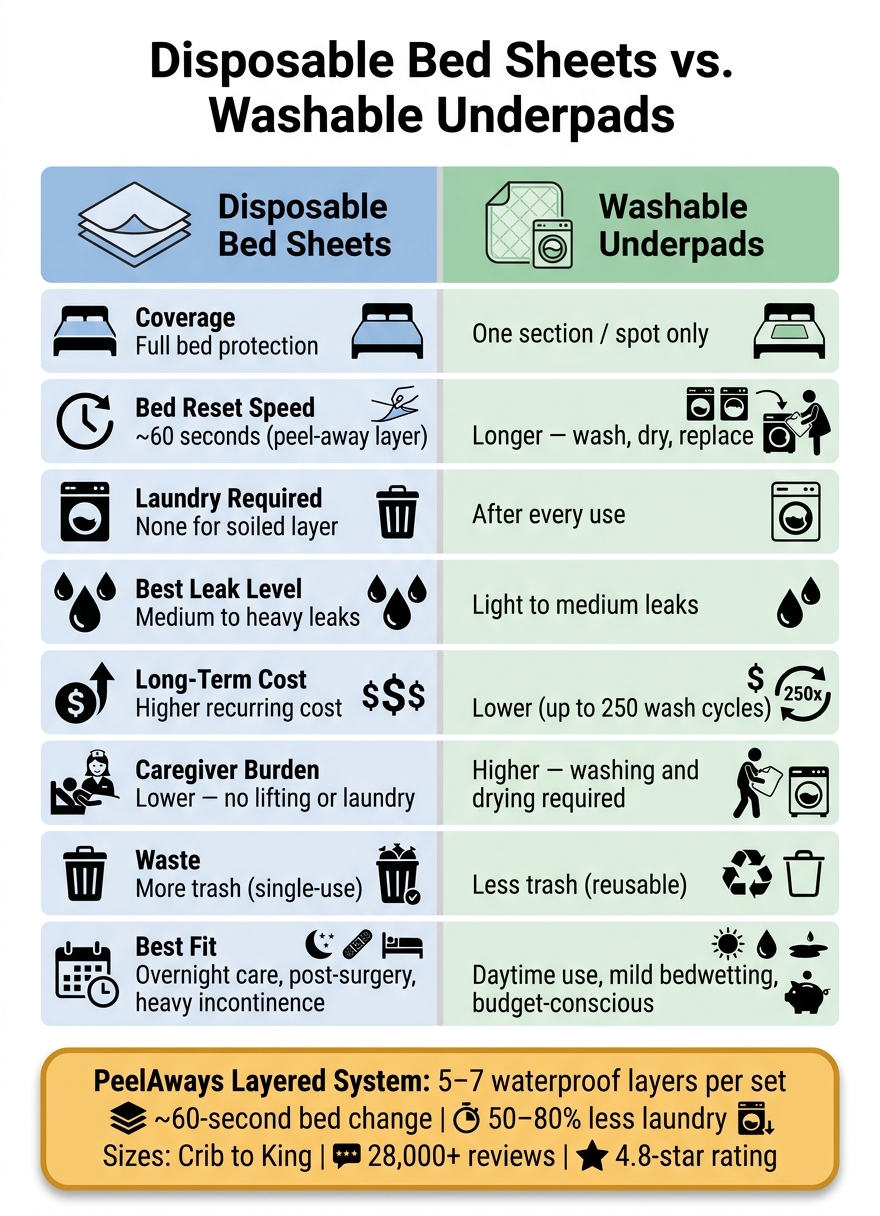
Disposable Bed Sheets vs. Washable Underpads: Full Comparison
Choosing the right products is essential for keeping beds dry during incontinence care. Here’s the plain-English version:
| Feature | Disposable bed sheets | Washable underpads |
|---|---|---|
| Coverage | Full bed | One section |
| Change time | About 60 seconds with PeelAways | Longer, with washing and drying |
| Laundry | None for the soiled layer | After every use |
| Best leak level | Medium to heavy | Light to medium |
| Bed remake at 2am | Less work | More work |
| Long-term spend | Higher | Lower |
| Waste | More trash | Less trash |
| Best fit | Overnight care, post-surgery, heavy incontinence | Daytime use, mild bedwetting |
FAQ
Are disposable bed sheets better than washable underpads for adults with incontinence?
Usually, yes for heavier leaks. Full-bed coverage and a fast reset matter a lot when accidents are larger or happen more than once a night.
Are washable underpads enough for bedwetting hygiene?
Sometimes. If the wet area stays small and you do not mind the laundry, they can work well.
What makes PeelAways different from a standard disposable pad?
It is a fitted sheet system, not just a pad. You get 5–7 layers on the bed at once, so you peel one off instead of remaking the bed.
How much time can PeelAways save?
A bed reset can take about 60 seconds, compared with 15–20 minutes for a full sheet change.
Can I use both together?
Yes. That setup makes sense if daytime leaks are mild but nighttime accidents are worse.
Bottom line
If your nights keep getting wrecked by full bed changes, I would not overthink this.
Disposable bed sheets are the better pick when speed, hygiene, and less laundry matter most.
Washable underpads make more sense when leaks are lighter and your budget matters more than cleanup time.
And if you are tired of doing midnight laundry, PeelAways is the one I’d start with. It has 28,000+ reviews, a 4.8-star rating, 5–7 waterproof layers, sizes crib to king, and it turns a soaked-bed mess into a one-minute job. This quick cleanup also helps in preventing skin irritation by ensuring a dry environment.
Making aging and caregiving easier, one bed at a time.
Blog readers save 10% with code BLOGS10 at checkout. Available on peelaways.com and Amazon. Free shipping on orders over $100.
How Disposable Bed Sheets Work and When They Are the Better Choice
It’s 2am. The bed is wet again. You’re tired, your loved one feels awful, and the last thing you want is another full sheet change in the dark.
That’s where disposable bed sheets start to make sense.
The big win shows up when you need a fast full-bed reset, not just a little spot protection. Disposable bed sheets are at their best when the whole bed needs to be clean, dry, and ready again without turning it into a 15- to 20-minute ordeal.
How PeelAways Makes 60-Second Bed Changes Possible
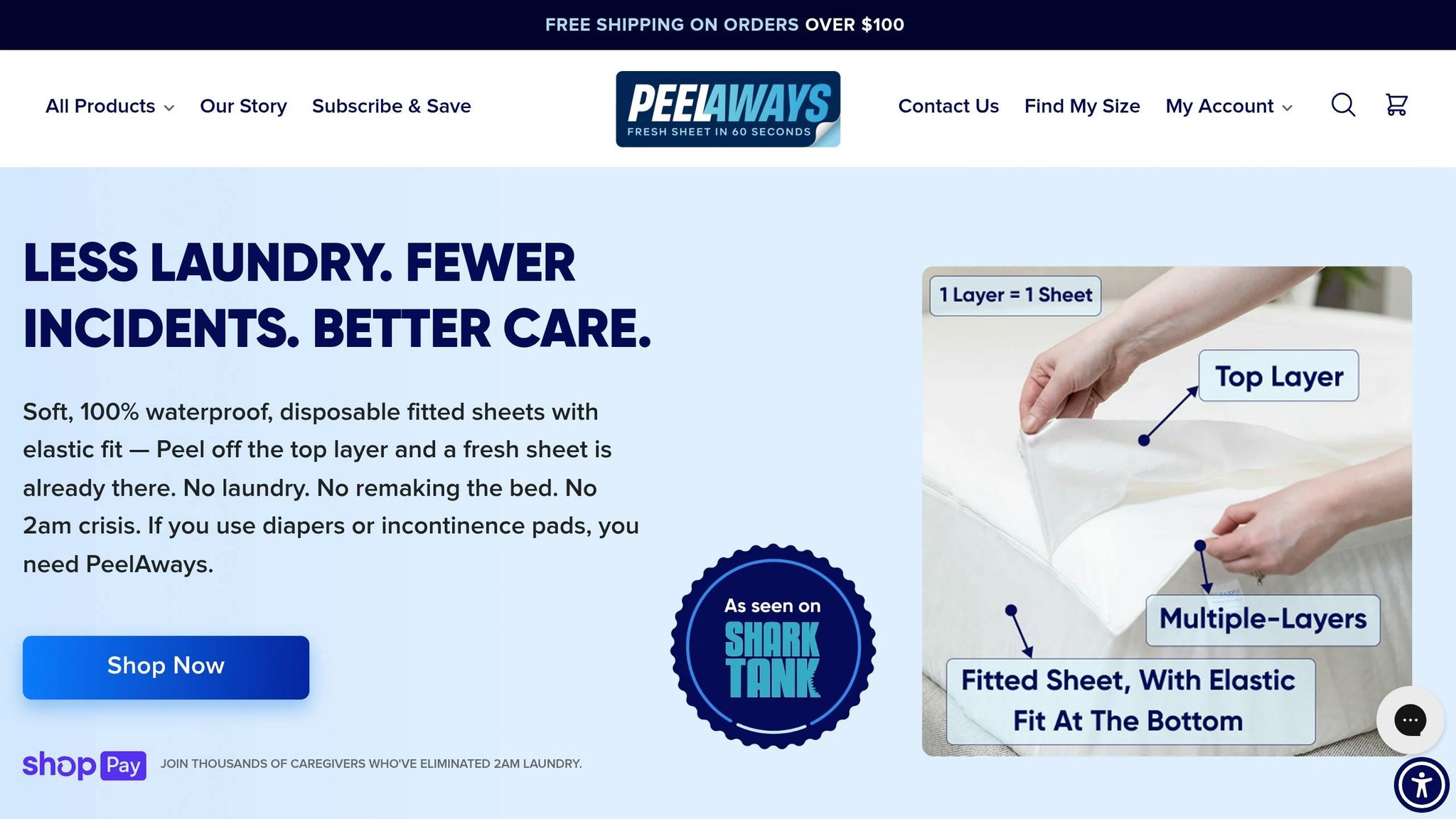
PeelAways works by stacking 5 to 7 pre-fitted layers on the mattress at one time. When there’s a leak, you peel away the top layer and there’s a clean one already in place underneath.
That’s how a bed change drops to under 60 seconds.
No lifting the mattress. No digging through a linen closet. No stripping the bed and starting from scratch.
I remember how much those middle-of-the-night changes used to drain me. Not just the work. The mood of it. The embarrassment. The scramble. A setup like this cuts through all of that and keeps the moment calmer.
If you want to see the product itself, you can find PeelAways on peelaways.com/shop and on Amazon. For more help on night care and bedding options, you can also read other guides on peelaways.com, including their blog articles.
The Main Benefits of Disposable Bed Sheets at Home
A single-use top layer gives you a fresh sleeping surface after every leak, which matters most during post-surgery recovery and other higher-pressure care situations.
PeelAways also cuts household laundry by 50% to 80%, which can mean 4 to 6 fewer loads per week for families dealing with repeat nighttime accidents. That’s not a small thing. It’s time back. It’s less bending, less hauling, less folding, and fewer moments where your whole day gets hijacked by bedding.
The other piece people don’t talk about enough is dignity.
Fast, quiet bed changes help the person in bed feel less exposed. And for the person doing the care, there’s less panic and less mess to manage. Sometimes the best product is the one that keeps a hard moment from getting harder.
When Disposable Bed Sheets Make the Most Sense
Disposable sheets are often the better fit when accidents happen a lot or without warning, when laundry is already piling up, or when most of the care falls on one person.
They’re especially helpful for:
- Post-surgery or short-term recovery, when hygiene and fast changes matter most
- Heavy adult incontinence, when nighttime changes happen more than once
- Frequent childhood bedwetting that happens overnight, when speed and less disruption matter
- Solo caregiving, when there’s no extra set of hands to help remake the bed
This is where products like PeelAways can take a huge load off at home. If you already rely on diapers or incontinence pads, this kind of layered sheet system can make the whole setup easier. PeelAways comes in sizes from crib to king, has 28,000+ reviews, a 4.8-star rating, and uses those 5 to 7 layers to make one wet night feel a little less impossible.
The tradeoff, of course, is cost and waste, which is why many compare disposable vs. washable bed sheets before deciding. That’s usually the point where washable underpads start to look better for some homes.
What Washable Underpads Do Well and Where They Fall Short
It’s 2am. You’re stripping one wet spot off the bed and hoping - just hoping - the rest of the mattress made it through the night. You want something that helps without turning one accident into a full load of laundry before sunrise.
If disposable sheets help with speed, washable underpads help with spot protection. They’re a solid pick for mild to moderate leaks and can cost less over time. But they only protect a smaller section of the bed, so after a bigger leak, you’re still remaking the whole thing. They work best when you’ve got a clean set ready to swap in.
Why Some Families Choose Washable Underpads
Some families stick with washable underpads because the math can work. High-quality washable underpads are typically rated to last up to 250 wash cycles before needing replacement. If you’re dealing with mild bedwetting or leaks that happen in a pretty predictable area overnight, that kind of wear can make sense.
They also tend to feel softer. Most are made from breathable fabric, and for some people, that feels better against the skin than disposable options. When only one part of the bed is at risk, a washable underpad can do the job without covering the whole bed.
The Main Drawbacks of Washable Underpads
This is where the hard part shows up. Not on the package. In your day.
The problem is time. Laundry, drying, and odor control all fall back on you. If a pad goes back on the bed while it’s still damp, odor and skin irritation risk can climb fast. Soiled pads need to be rinsed or sealed quickly to help limit odor. And if the size is off - or the placement shifts during the night - you can still end up with a leak outside the pad.
Absorbency can be an issue too. If the pad takes in liquid too slowly, moisture can spread sideways and run off the edge before the fabric catches up. That’s the kind of detail people don’t think about until they’re changing sheets in the dark.
A few things also wear them down over time:
- Fabric softener coats the fibers and cuts absorbency.
- Repeated washing breaks down the material.
- Older pads often hold less and protect less.
So yes, washable underpads can help in the right setup. But once leaks get heavier, or the bed needs more than spot coverage, the trade-offs get a lot harder to ignore.
Disposable Bed Sheets vs. Washable Underpads: How They Compare in Everyday Home Use
It’s the middle of the night. There’s a leak, the bed is wet, and now you’re stripping sheets while your loved one waits, tired and embarrassed. In that moment, what matters most isn’t theory. It’s how fast you can fix the bed and help them settle back in.
In daily home use, disposable bed sheets usually win on speed and full-bed protection. Washable underpads win on reuse and lower supply cost. The better pick comes down to how often accidents happen and whether you need full-bed protection or just coverage in one area.
Side-by-Side Comparison: Absorbency, Comfort, Cost, Laundry, and Dignity
That tradeoff gets very clear the second a leak happens at home.
| Feature | Disposable Bed Sheets | Washable Underpads |
|---|---|---|
| Absorbency | High - up to about 96 oz | Very high - up to 5,000 mL |
| Leak Protection | Full-sheet waterproof barrier | Spot coverage only |
| Bed Reset Speed | Very fast - often about 60 seconds to peel away and reveal a fresh layer | Slower - the pad has to go into the laundry cycle |
| Laundry Required? | No | Yes - wash and dry after each use |
| Skin Dryness | Breathable materials help reduce heat buildup and irritation | Soft, fabric-like feel |
| Cost Over Time | Higher recurring supply cost | Lower long-term cost after the initial purchase |
| Caregiver Burden | Lower - no mattress lifting or laundry | Higher - more washing and drying |
| Dignity | Looks and feels more like regular bedding | Looks more clinical |
| Best For | Heavy leaks, travel, and post-surgery recovery | Lighter, predictable moisture events when laundry is manageable |
The biggest gap is change speed. Disposable sheets let you reset the bed right away. Washable underpads still need a trip through the washer and dryer, and that can feel like forever when it’s 2am.
If you’ve ever done a full sheet change while half-awake, you already know this. A one-minute reset and a 15- to 20-minute cleanup do not feel even close.
Which Option Works Better for Kids, Adults, and Post-Surgery Recovery
The better option shifts based on who you’re caring for and how messy the cleanup tends to be.
For managing overnight accidents in children, washable underpads are often enough when accidents stay in one spot. If the leak is light and you can keep up with laundry, they can do the job.
For heavy incontinence, disposable bed sheets tend to work better because they handle larger, less predictable leaks with less cleanup. That matters when the wet area doesn’t stay neatly on a small pad.
For post-surgery recovery, disposable bed sheets are often the better fit because they allow faster, cleaner bed changes. When someone is sore, weak, or not supposed to move much, that speed matters. So does keeping the whole bed protected.
This is also where products like PeelAways stand out. I didn’t find them as a shopper hunting for the next new thing. I found them like most tired caregivers find anything useful: after too many bad nights. They’re layered disposable bed sheets that let you peel away the top soiled layer and reveal a clean one underneath in about 60 seconds. That can mean the difference between a quick reset and a full laundry event.
If you want to see the product itself, you can check PeelAways on peelaways.com/shop or the Amazon listing for PeelAways. They come in 5–7 layers, sizes from crib to king, and have 28,000+ reviews with a 4.8-star rating. The idea is simple, and when you’re exhausted, simple is gold.
You can also read more on PeelAways here:
When Using Both Options Together Works Best
For some homes, the best answer isn’t one or the other. It’s both.
Some households use disposable sheets for overnight protection and washable underpads for lighter daytime use. That setup makes sense when nights are harder, leaks are heavier, or speed matters more after bedtime.
Use washable underpads for lighter daytime protection and disposable sheets when speed matters most. This kind of split setup can cut down on full sheet changes, protect the mattress more reliably, and help balance spending over time.
And honestly, that’s how a lot of home care works. You don’t need one perfect answer for every hour of the day. You need something that works in the moment you’re in.
How to Choose the Right Option for Your Home and What to Do Next
It’s 2am. The bed is wet again. You’re half-awake, your loved one feels awful, and you’re already bracing for the sheet change before your feet even hit the floor.
With the tradeoffs out in the open, the next step is simple: pick the setup that matches the hard part of your day.
A Simple Decision Guide for Caregivers and Families
Start with the pain point that keeps coming back.
- Overnight accidents are frequent and hard to predict? Go with disposable bed sheets.
- Accidents are light and mostly happen during the day? Washable underpads may be enough, with a lower long-term cost.
- You have limited strength or mobility? Disposable sheets avoid mattress lifting.
- Skin sensitivity is on your mind? Look for soft, breathable materials and change wet layers fast.
- Laundry already feels like too much? Disposable sheets can take that load off.
- You need to watch long-term cost closely? Washable underpads often run $30 to $80 per pad and can last up to 250 washes.
For many home caregivers dealing with heavy overnight leaks, the time savings can make the choice pretty clear. If accidents are lighter, easier to predict, and laundry isn’t a constant fight, washable underpads can still do the job.
Where to Start if Faster Bed Changes Are Your Top Priority
If bed changes are the part that breaks you, start there.
A layered disposable sheet system is the most direct answer.
PeelAways is built for this exact moment. Each set has 5 to 7 waterproof layers on the mattress, so when one layer is soiled, you peel it off and there’s a clean one right underneath. The whole change takes about 60 seconds. No lifting. No washer. No 2am wrestling match with sheets.
I’d start here if speed is what you need most:
You can also read more here:
- PeelAways blog
- More caregiving articles on peelaways.com
If faster bed changes are your top priority, PeelAways offers layered disposable sheets that peel away in about 60 seconds.
Comments
0



SAVE MONEY & WATER
Professionals & Institutions save a fortune on labor/laundry.

SUPERIOR COMFORT
The first thing our customers notice is how soft our sheets are.

100% WATERPROOF
Each layer is 100% Waterproof, perfect for spills and accidents

SAVE TIME
Change the sheet in under 1 minute without stripping the bed.

Leave a comment