
Best Waterproof Sheets That Don't Feel Like a Trash Bag

It's 2 a.m. The sheets are soaked again. Your loved one is embarrassed, your back hurts, and you have to be up in four hours. If that is your night, you do not need hype. You need bedding that stays dry, feels normal, and does not turn one accident into a full laundry shift.
A 60-second bed change beats a 15–20 minute full sheet swap every time. If you want the best waterproof sheets that do not feel stiff, hot, or loud, the top pick from this group is PeelAways because it gives you 5–7 waterproof layers per set, cuts laundry by 50% to 80%, and still feels close to normal bedding. It also comes in sizes crib to king and has 28,000+ reviews with a 4.8-star rating.
Your best options are:
- PeelAways for the fastest middle-of-the-night reset
- Breathable fitted protectors for full mattress coverage
- Bamboo or cotton-terry protectors for a softer sleep surface
- Reusable bed pads for small, targeted leaks
- Waterproof flat-sheet layers for extra top-bed protection
- Hybrid setups for heavier overnight wetness
| Option | Best For | Main Tradeoff |
|---|---|---|
| PeelAways | Frequent accidents, less laundry | Higher repeat cost |
| Fitted protector | Daily mattress protection | Full wash after accidents |
| Bamboo/cotton-terry protector | Soft feel, less heat | Slower drying |
| Reusable bed pad | Targeted leaks | Can shift |
| Flat-sheet underlayer | Extra bedding protection | More layers to track |
| Hybrid setup | Heavy wetness | More setup |
I have done the dark-room sheet changes, and the best choice usually comes down to one thing: how much work you can still do at 2 a.m.
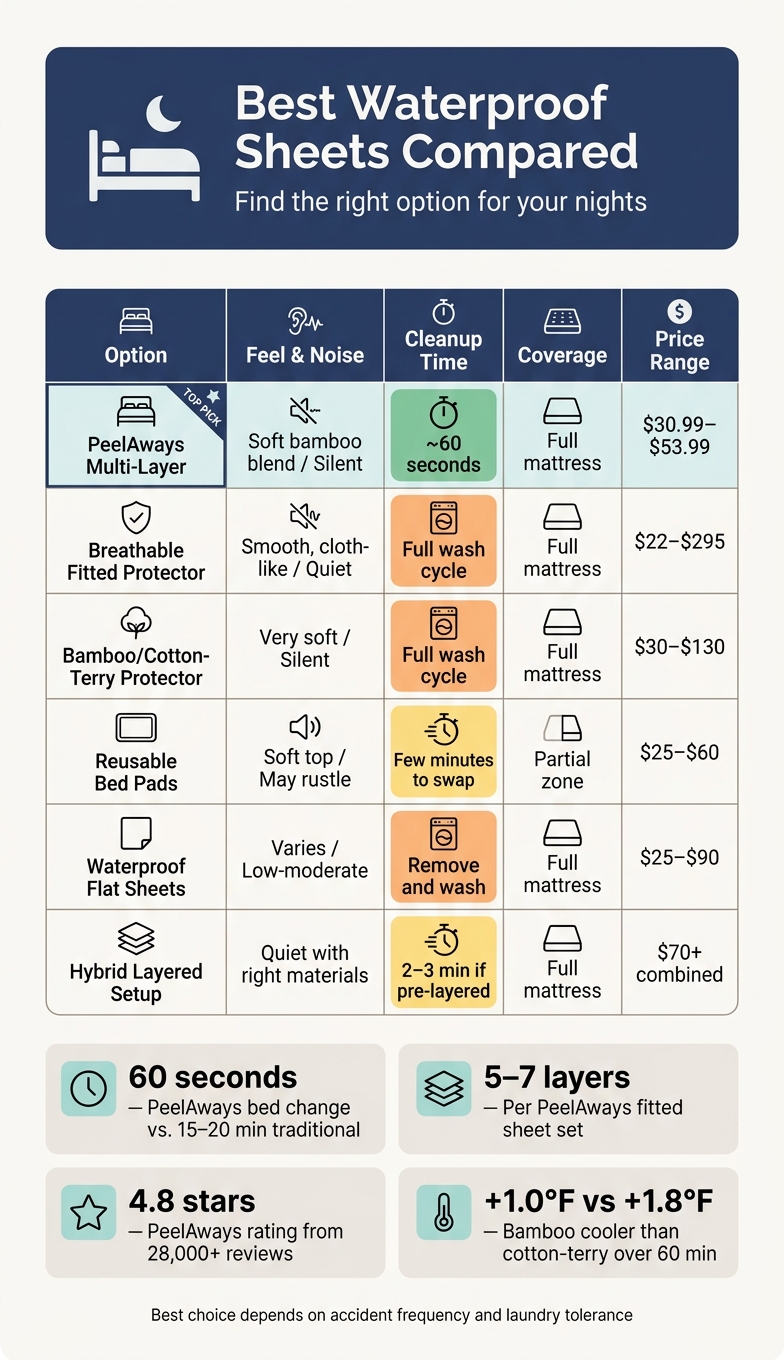
Best Waterproof Sheets Compared: Feel, Coverage & Cleanup Time
Why this problem feels bigger at night
Wet sheets are not just a mess.
They wake people up. They add shame. They turn a bed into work.
That is why the feel matters so much. If the bedding is loud, stiff, or sweaty, the whole room feels worse. You notice every rustle. The person in bed notices every layer. Sleep gets thin fast.
I look at this kind of product through one lens: what helps you fix the bed with the least disruption? Not what sounds fancy. Not what looks good in packaging. What helps when you are tired and trying to protect someone’s dignity.
What I look for before buying
I keep it simple.
I want four things:
- Soft fabric that does not feel plasticky
- Low noise when someone turns over
- Good leak control without soaking the mattress
- Less cleanup after an accident
After that, I look at heat. Waterproof layers can sleep warm. Some are better than others. Bamboo, Tencel, and soft knit tops usually feel better than cheap polyester or old vinyl-backed stuff.
And if accidents happen often, I care a lot about laundry. If you are already washing clothes, towels, and blankets, one less load matters.
PeelAways Multi-Layer Disposable Waterproof Fitted Sheets

This is the one I would put first for frequent overnight accidents.
Not because it is perfect. Because it removes the worst part.
Instead of stripping the whole bed, you peel off the wet layer and there is a clean one underneath. The article says a full sheet change can take 15–20 minutes the old way. PeelAways cuts that to under 60 seconds.
That is a huge difference at 2 a.m.
The feel also sounds better than most disposable bedding. It uses a bamboo/rayon/polyester blend, not stiff vinyl. The layers are waterproof, breathable, and made to stay quiet. If noise is one of your biggest complaints, that matters.
What stood out to me most:
- 5–7 layers per fitted sheet
- Full waterproof coverage
- Less lifting and less mattress wrestling
- Much less laundry
- Sizes crib to king
- Twin XL for many hospital beds
Price starts around $30.99 and goes up to $53.99 depending on size.
If you want to check sizes, go to peelaways.com/shop. You can also check the Amazon listing for PeelAways. For more help from people living this, I would also read other posts on the PeelAways site, like their incontinence care and bed-change blog content on peelaways.com.
If you already use diapers or incontinence pads, this is the add-on that makes the bed part easier.
Breathable waterproof fitted mattress protectors
This is the standard reusable choice.
You put it over the mattress like a fitted sheet. It gives full coverage. It stays in place better than loose pads. And it protects against leaks across the whole sleep surface.
The downside is simple: when there is an accident, you still have to wash it.
That means removal, a wash cycle, drying, and putting it back on. If wet nights are rare, that may be fine. If they happen most nights, that gets old fast.
The best versions use TPU backing, which is quieter than older plastic-backed covers. Fabric matters a lot here:
- Tencel feels smoother
- Jersey knit feels like a T-shirt
- Cotton terry feels more textured
Price can range from about $22 to nearly $295, depending on material.
I think of this as the steady daily layer. Good base protection. Not the fastest fix in the middle of the night.
Bamboo or cotton-terry waterproof protectors
If your top concern is comfort, this group makes sense.
Both are softer than old plastic-backed bedding. Both are usually quiet. Both use waterproof membranes without that loud crinkle many people hate.
The difference is mostly this:
- Bamboo tends to feel smoother and cooler
- Cotton terry tends to absorb more on top
The article cites testing that showed bamboo-derived surfaces ran cooler, with about +1.0°F over 60 minutes versus +1.8°F for cotton terry. That may not sound huge, but when someone already sleeps hot, it can matter.
The tradeoff is laundry and drying time. These still need washing after accidents. And thicker protectors can take longer to dry.
Typical prices:
- Cotton terry: about $30–$65
- Bamboo: about $70–$130
If you want the bed to feel more normal, this is one of the better reusable paths.
Reusable waterproof bed pads and mats
These sit on top of the sheet and protect one section of the bed.
That makes them good for:
- smaller leaks
- one wet zone
- fast pad swaps
- cutting down on full-bed changes
Good ones can hold up to 34 fl oz (1,000 mL), which is a lot. They are also cheaper up front than some full mattress systems, often around $25–$60.
The catch is coverage.
A pad only protects the area it covers. If it shifts, bunches up, or the wetness lands outside it, you may still have a mess underneath. That is why I like these better as part of a system than as the only layer.
Look for:
- non-slip backing
- side wings
- TPU backing
- a soft quilted top
Those details can make the difference between “this helped” and “this slid all over the bed.”
Waterproof flat sheets and underlayers
This option is more about layering than one single product.
A waterproof flat sheet can protect the top bedding, like a comforter or duvet. An underlayer or underpad can sit lower in the stack for fast removal. Used together, they can cut down on how much bedding gets soaked.
That can help if your worst problem is not just the mattress. It is also the blanket, top sheet, and everything else that ends up in the wash.
The downside is more pieces.
More layers can mean more heat, more shifting, and more to keep track of. Comfort depends a lot on the fabric. Vinyl-free materials are a better bet if you want less noise and less stiffness.
This setup can work well, but I would not call it the simplest.
Hybrid layered setups
This is the “build your own system” option.
Usually that means:
- mattress encasement
- fitted protector
- regular sheet
- absorbent pad
You can put the pad under the fitted sheet if you want the bed to look more normal, or on top if your top goal is a fast swap.
The upside is strong protection. The downside is more setup and more parts.
The article says a reset can take 2–3 minutes if the layers are already in place, but the first setup can take around 30 minutes. That sounds about right. Layered systems can work well, but they ask more from you.
If accidents are heavy and you need backup under backup, this approach makes sense.
Quick comparison
| Option | Feel | Cleanup | Coverage | Best fit |
|---|---|---|---|---|
| PeelAways | Soft, quiet | About 60 seconds | Full mattress | Frequent accidents |
| F |
sbb-itb-45288fe
1. PeelAways Multi-Layer Disposable Waterproof Fitted Sheets
It’s 2am. The bed is wet again, your eyes burn, and the last thing you want to do is wrestle with fitted sheets in the dark. When you’re tired and your loved one is half-awake and embarrassed, even a simple bed change can feel brutal.
That’s the problem PeelAways goes after. Instead of stripping and remaking a wet bed the old way - a job that can take 15 to 20 minutes - you peel off the wet layer and move on. Each fitted sheet comes with 5 to 7 waterproof peel-away layers. When one gets wet, you remove it in under 60 seconds without lifting the mattress or starting a load of laundry in the middle of the night. There’s already a clean, dry layer underneath, which helps a lot when you need to change the bed fast and keep the person in it as settled as possible.
If your loved one has limited mobility, this part matters even more. A caregiver can roll them to one side, tear the soiled layer down the other side, roll them back, and finish taking it off without fully stripping the bed.
Feel and Noise
Nobody wants bedding that feels like a crinkly tarp. PeelAways uses a soft blend of bamboo, rayon, and polyester, so it feels much closer to regular bedding than the plastic-backed stuff many of us have tried and hated. It’s also made to stay quiet. No loud rustling every time someone shifts in bed. It contains no vinyl, PVC, or phthalates.
"Peelaways are noiseless and provide a soft comfortable sleep space, without changing the feel of your mattress. You'll never even know these are not regular sheets." - PeelAways FAQ
Breathability and Heat Control
Heat can turn a hard night into an even harder one. PeelAways uses a breathable membrane that blocks liquid while still letting air move through the fabric, which helps cut down on heat buildup.
Leak Coverage and Absorbency
Each layer is waterproof, so if moisture isn’t caught until morning, the mattress underneath stays dry and protected. That alone can save you from a much bigger cleanup. A clean layer can remain on the bed for 7 to 10 days, which gives you some breathing room between full bed changes.
Cleanup and Laundry Burden
This is where PeelAways can feel like a lifeline. Less midnight laundry. Less lifting. Less dragging corners of a fitted sheet under a mattress while your back screams at you.
Pricing starts at $30.99 for crib size and goes up to $53.99 for king. Twin XL is $41.99, which fits many hospital beds. Subscriptions save 15%, and bundle orders save 5% to 10%.
If you want to look at sizes or buy directly, check peelaways.com/shop. You can also find PeelAways on Amazon. For more tips from people who’ve been in the thick of this, it also helps to read other guides on peelaways.com, like their blog articles on incontinence care and easier bed changes.
For beds that need protection without daily layer removal, the next option is a fitted waterproof protector that stays in place.
2. Breathable Waterproof Fitted Mattress Protectors
It’s the middle of the night. You strip the bed, try not to wake your loved one all the way, and realize the pad shifted again. Now the mattress is damp, your arms are tired, and you’re starting over.
If you want a reusable option that stays put all night, a breathable fitted protector is the next step up. It goes over the whole mattress like a regular fitted sheet, with a waterproof layer bonded underneath. It stays in place, covers the full sleep surface, and can go straight into the washing machine after an accident.
Feel and Noise
This is where a lot of people hesitate. No one wants the bed to feel like a crinkly hospital cot.
Modern TPU-backed protectors are much quieter than the older plastic-backed covers many of us remember. The better ones are close to silent. Lower-cost polyester-topped versions tend to make more noise and feel less soft.
The top fabric changes the whole experience:
- Tencel lyocell feels the most like normal bedding
- Jersey knit feels a bit like a T-shirt
- Cotton terry has a slight texture
That difference matters more than people think. When you’re helping someone who already feels exposed, a bed that still feels normal can help preserve some dignity.
Breathability and Heat Control
Any waterproof layer can trap a little warmth. That’s just part of the trade-off.
Still, some fabrics sleep cooler than others. Tencel and bamboo-derived tops usually feel cooler and drier than polyester or standard cotton terry. If your loved one gets warm at night, that can make a hard job a little easier.
Leak Coverage and Cleanup
The big upside here is full coverage. A fitted protector covers the whole mattress, so there’s no open edge where liquid can sneak through the sides or corners. That gives it a clear edge over loose pads, which can bunch up or slide during the night.
The catch? It doesn’t absorb much. A fitted protector keeps liquid off the mattress, but it doesn’t soak it up the way an absorbent pad does. For heavier accidents, it usually works best as a base layer with something absorbent on top.
This type makes sense when you want full-mattress protection and don’t mind washing the protector after accidents. To help the waterproof layer last, wash on low heat and skip bleach and fabric softener.
Price depends a lot on materials. Budget polyester options usually run about $22 to $35. Cotton terry protectors tend to fall around $40 to $65. Premium organic or Tencel versions can run $175 to $295.
If absorbency matters too, the next options add a softer top layer or extra padding.
3. Bamboo or Cotton-Terry Waterproof Mattress Protectors
It’s the middle of the night. The bed is wet again, and you’re stripping layers in the dark, trying not to fully wake the person you love. In that moment, the feel of the fabric matters more than people think - because if it’s loud, hot, or plasticky, everyone loses sleep.
Bamboo and cotton-terry are the two main picks if you want something soft, quiet, and closer to a normal bed. Both feel much better than old-school vinyl-backed protection. The difference comes down to comfort, heat, and how much liquid you need the surface to handle before the waterproof layer steps in.
Feel and Noise
Both materials use a TPU membrane instead of vinyl or PVC, so they’re almost silent. That alone can be a huge relief when every little crinkle seems to wake someone up.
Cotton-terry feels more familiar. It has that looped, towel-like texture and sits closer to a regular fitted sheet. Bamboo-derived fabric feels smoother and silkier, more like a nicer sheet set.
If a new protector feels stiff right out of the package, that’s not unusual. Washing it 1–3 times can soften the fabric and cut down on that new-product crinkle.
Breathability and Heat Control
If the person in bed sleeps hot, bamboo usually makes more sense.
In thermal testing, cotton-terry surfaces showed a temperature increase of +1.8°F over 60 minutes, while bamboo-derived surfaces stayed cooler at only +1.0°F. Bamboo also moves moisture away better and can help with odor control.
Cotton-terry still works well if you want a more familiar surface and a bit more absorbency right on top. But for heat and sweat, bamboo tends to feel easier to live with night after night.
Leak Coverage and Absorbency
This is where cotton-terry pulls ahead.
The looped surface grabs liquid fast, which helps stop pooling or runoff before the waterproof layer takes over. That can matter a lot during heavier accidents, when a few seconds can be the difference between a contained mess and a soaked mattress edge.
Bamboo protectors still do the job for moderate protection. Their strong points are softness, cooling, and moisture-wicking more than top-layer absorbency.
Cleanup and Laundry Burden
Here’s the hard part: both still need a full wash cycle after an accident.
That means warm wash, low dry, and no bleach or fabric softener. In both categories, better-made protectors are rated for 200+ wash cycles before the membrane starts to break down.
It also helps to keep 2–3 in rotation. One on the bed, one clean, one in the wash. That setup makes bad nights less chaotic.
Pricing
Cotton-terry is usually easier on the budget, often around $30 to $65 for a Queen size. Bamboo protectors usually land in the $70 to $130 range.
So if you want the lower-cost option and better top-surface absorbency, cotton-terry has the edge. If cooler sleep and a smoother feel matter more, bamboo is often worth the extra spend.
If overnight wetness is heavier and you need the bedding to absorb more before anything gets through, the next option adds that extra layer instead of relying on a waterproof barrier alone.
4. Reusable Waterproof Bed Pads and Mats
It’s 2am. You hear that small shift in the bed, then the sigh that tells you what happened before you even turn on the light. You do the mental math in a second: Do I need to strip everything, or can I fix this fast and get us both back to sleep?
When full-mattress coverage feels like more than you need, a reusable pad can make nights a little less brutal. It protects part of the bed, cuts down on full-bed laundry, and makes middle-of-the-night changes much faster because it sits on top of the fitted sheet. Good ones can hold up to 34 fl oz (1,000 mL) and last 300+ wash cycles before the waterproof layer starts to wear out.
Feel and Noise
This part matters more than people think.
If a pad feels stiff or sounds like a shower curtain, the person in bed notices. So do you. Premium pads usually use a TPU membrane instead of PVC or vinyl, which helps with that awful crinkle sound. Testing found they measured just 0–2 decibels above ambient sound, compared with 8–12 decibels for lower-cost PVC-backed pads.
The top layer matters too. Quilted cotton, bamboo-derived viscose, and soft polyester-cotton blends feel much more like normal bedding than plain plastic.
One catch: flat pads without grip backing can bunch up and slide around. That gets annoying fast. Non-slip backing or side wings that tuck under the mattress help keep the pad in place.
Breathability and Heat Control
A lot of waterproof bedding traps heat. And if your loved one already sleeps hot, that can turn one problem into two.
TPU membranes have tiny pores that let sweat vapor pass through while still blocking liquid. On top of that, bamboo or Tencel surfaces tend to sleep cooler than polyester. In thermal testing, polyester-topped models led to a surface temperature increase of +3.2°F over 60 minutes, while Tencel-topped models went up only +1.0°F.
If heat is already an issue, skip polyester-topped pads.
Leak Coverage and Absorbency
A good reusable pad can handle a heavy accident for at least two hours, and higher-capacity versions can absorb up to 34 fl oz (1,000 mL).
That said, these pads protect part of the bed, not the whole mattress. They work best when wetness stays in one area or when you use them in a layered setup. A pad on top with a fitted protector underneath gives you a backup layer for the nights that don’t go as planned.
Cleanup and Laundry Burden
This is where reusable pads earn their keep.
Because the pad sits on top of the sheet, you usually swap the pad instead of remaking the whole bed. That’s a big deal when you’re half-awake and your back is already mad at you.
Washing is pretty simple:
- Warm or cold wash
- Low-heat dry
- No fabric softeners or dryer sheets
Softeners leave a coating on the fabric and slowly damage both the waterproof membrane and the pad’s absorbency.
It also helps to keep 2–3 pads in rotation: one on the bed, one clean, and one in the wash.
Price usually starts around $25 for basic flat mats and goes up to about $60 for high-capacity reusable pads.
If you need absorbency plus more coverage underneath, the next option adds another layer under the pad.
5. Waterproof Flat Sheets and Underlayers
It’s 2 a.m. again. The top blanket is damp, the pad underneath is soaked, and you’re standing there half-asleep trying not to wake the person you love any more than you have to. This is where the right layers can save your back, your time, and a lot of laundry.
Waterproof flat sheets protect the duvet or comforter. Underlayers, sometimes called underpads, sit on top of the fitted sheet so you can make a fast swap in the middle of the night. On their own, each handles a different mess. Together, they can cut cleanup time and keep the bed from turning into a bulky pile of layers.
Feel and Noise
The biggest complaint is usually the sound.
That crinkly, plastic feel can make it hard for anyone to rest. If that’s what you’re trying to avoid, look for vinyl-free TPU, jersey, cotton terry, or quilted cotton. Those tend to feel softer and quieter against the skin.
If a new sheet feels stiff out of the package, don’t panic. A couple of washes - usually two or three - can loosen the fabric and make the waterproof layer feel less rigid.
Breathability and Heat Control
Heat matters more than people think.
Vinyl tends to trap warmth and make more noise. TPU-laminated cotton usually feels cooler and lets more air move through, which can make a big difference if the person in bed already sleeps hot or has skin that gets irritated easily.
Sometimes the issue isn’t just leaks. It’s sweating, tossing, and that sticky feeling that makes sleep harder than it already is.
Leak Coverage and Absorbency
If you want protection without adding a full mattress cover, this setup splits the job in a smart way.
Waterproof flat sheets protect the bedding on top, so your duvet or comforter stays dry and out of the wash. Underlayers handle the fast cleanup below. Their quilted top layer and absorbent core pull moisture away from the sleeper and keep it off the sheet underneath, which helps cut down on that pooling feeling you get with plain plastic-backed bedding.
That split can make a rough night feel a little less chaotic.
Cleanup and Laundry Burden
This is the part that matters when you’re exhausted.
Because underlayers sit on top of the bed, you can pull off the wet pad, put down a clean one, and get back to sleep without stripping the whole bed. Queen-size options often cost about $40 to $90 for waterproof flat sheets and $25 to $50 for underlayer pads.
That means less disruption for the person in bed. Less stress for you. And fewer full bedding changes when you can least deal with one.
When a single layer isn’t enough, these pieces tend to work best in a layered setup.
For heavier wetness, or when you’re trying to avoid full bed changes as often as possible, waterproof flat sheets and underlayers are often used together.
6. Hybrid Layered Bedding Setups
It’s 2am. The top layer is wet, the room is quiet except for that sinking feeling in your chest, and you’re doing tired math in your head about how much of the bed you have to change. When one layer isn’t enough, the answer usually isn’t to expect one product to do it all.
A hybrid bedding setup stacks protection in a way that still lets the bed feel like a bed. You combine a mattress encasement, fitted protector, fitted sheet, and absorbent pad so the mattress stays safe without turning sleep into something stiff, noisy, or sweaty.
Feel and Noise
This part matters more than people think. If the bed feels crinkly or plastic, your loved one notices. So do you.
TPU helps keep things quiet and flexible. Then the top fabric does a lot of the comfort work. Knit jersey, cotton-terry, bamboo, and microfiber tend to feel closer to normal bedding, which goes a long way when you’re trying to protect the bed without making it feel like a hospital setup.
Breathability and Heat Control
Heat can make a long night feel even longer. A breathable TPU membrane blocks liquid while still allowing air to move through. Tops made from cotton, bamboo, or microfiber can help the bed sleep cooler and feel less sticky.
That small difference matters at 3am, when even a little extra heat can make someone restless and uncomfortable.
Leak Coverage and Absorbency
A setup that works in real life usually starts with a full mattress encasement, then a fitted protector, then an absorbent pad. You can place the pad under the fitted sheet if you want the bed to look and feel more normal. Put it on top if speed matters more and you want a faster change.
That mix tends to work best when most nights are dry, but you still need a fast reset after an accident.
Cleanup and Laundry Burden
This is where layered setups can save your back. If the pad is already in place, a nighttime accident can turn into a 2- to 3-minute swap instead of stripping the whole bed.
The front-end setup takes about 30 minutes, so yes, there’s more to arrange at first. And reusable layers need the right wash care. Skip fabric softener. It can clog the waterproof membrane and make the layer work less well over time.
The tradeoff is pretty plain: more layers can mean better comfort and faster cleanup, but they also give you more pieces to keep track of.
How These Options Compare for Comfort and Daily Care
It’s 2am. The bed is wet again. You’re half awake, your loved one is upset, and in that moment you don’t care about product jargon - you care about comfort, dignity, and how fast you can fix the mess.
Once you look at each option side by side, the choice gets more personal. No single option does everything. It comes down to the tradeoff you can live with at home: quieter sleep, cooler bedding, full coverage, or less cleanup after an accident.
Feel and Noise
When someone is already sleeping lightly, even a little crinkle can feel like too much. That’s why feel and noise matter more than people think.
The quietest options are PeelAways and bamboo or cotton-terry protectors. They feel soft and stay silent. Reusable pads can have a slight rustle when they’re new, though that usually settles down after a wash or two.
| Option | Feel | Noise Level |
|---|---|---|
| PeelAways (Disposable Multi-Layer) | Soft bamboo/rayon blend | Silent |
| Breathable Waterproof Fitted Protectors | Smooth, cloth-like | Quiet (TPU-backed) |
| Bamboo/Cotton-Terry Protectors | Very soft, no crinkles | Silent |
| Reusable Bed Pads and Mats | Soft top layer | May rustle when new |
| Waterproof Flat Sheets/Underlayers | Varies by fabric | Low to moderate |
| Hybrid Layered Setups | Depends on top layer; quietest with bamboo or cotton-terry | Quiet with the right materials |
Breathability and Heat Control
Some bedding sleeps cool. Some turns the bed into a sauna by 3am.
TPU-backed protectors and bamboo-blend fabrics usually breathe better. Vinyl tends to trap heat. If your loved one already gets warm at night, that difference can make sleep a lot harder.
Comfort is one part of the story. The other part is what happens after a leak.
Leak Coverage and Absorbency
This is where the setup itself matters. Fitted options cover the full mattress, while pads only protect the area where you place them.
Hybrid setups can make resets faster when a pad is already in place. But there’s still washing after the fact, and that adds up fast when accidents keep happening.
| Option | Coverage Area | Absorbency | Mattress Protection |
|---|---|---|---|
| PeelAways (Disposable Multi-Layer) | Full mattress | Multi-layer moisture locking | Full waterproof barrier |
| Breathable Waterproof Fitted Protectors | Full mattress | Light to moderate | Full barrier |
| Bamboo/Cotton-Terry Protectors | Full mattress | Moderate | Full barrier |
| Reusable Bed Pads and Mats | Partial (targeted zone) | High in coverage area | Partial |
| Waterproof Flat Sheets/Underlayers | Full mattress | Varies by fabric and backing | Depends on material |
| Hybrid Layered Setups | Full mattress | Strong when layered well | Full barrier |
Cleanup and Laundry Burden
This is usually the breaking point. Not the leak itself - the cleanup after it.
For caregivers, speed matters almost as much as comfort. And this is where the biggest gap shows up. Disposable layers peel away in about 60 seconds. Reusable protectors and pads still have to come off, get washed, dried, and put back on. That can turn one accident into a whole extra chore cycle.
| Option | Cleanup Time | Laundry Required? |
|---|---|---|
| PeelAways (Disposable Multi-Layer) | About 60 seconds | No |
| Breathable Waterproof Fitted Protectors | Remove and wash | Yes |
| Bamboo/Cotton-Terry Protectors | Remove and wash | Yes |
| Reusable Bed Pads and Mats | A few minutes to swap | Yes |
| Waterproof Flat Sheets/Underlayers | Remove and wash | Yes |
| Hybrid Layered Setups | Quick reset if a pad is in place | Yes |
Pros and Cons of Each Option
It’s 2 a.m. and the bed is wet. You’re half-awake, your back already hurts, and all you want is the fastest path back to a dry bed.
Every option fixes a different part of the problem. Some save you from laundry. Some feel better to sleep on. Some give more coverage but add more steps when you’re already running on fumes.
Use this table like a quick gut-check.
| Option | Best For | Main Pros | Main Cons | Typical Price |
|---|---|---|---|---|
| PeelAways Multi-Layer Disposable Waterproof Fitted Sheets | Caregivers, frequent accidents, potty training | No laundry; 5–7 layers per set; soft, quiet feel; free from vinyl, PVC, and phthalates | Recurring cost; disposable waste | $30.99–$53.99 |
| Breathable Waterproof Fitted Protectors | Daily mattress protection, routine use | One-time purchase; full mattress coverage; feels like a regular sheet | Requires a full laundry cycle after every accident | $22–$295 |
| Bamboo or Cotton-Terry Waterproof Protectors | Hot sleepers, comfort-focused households | Very soft; naturally cooling; absorbent top layer | Bulky; slow to dry | $30–$130 |
| Reusable Bed Pads and Mats | Targeted protection, smaller leaks | Easy to swap; durable; lower upfront cost | Can shift during sleep; covers only one area of the bed | $25–$60 |
| Waterproof Flat Sheets and Underlayers | Protecting duvets and top bedding | Shields blankets and top bedding from leaks | Can feel heavy; less breathable than fitted options | $25–$90 |
| Hybrid Layered Setups | Heavy incontinence, maximum protection | Redundant layers; maximum protection | Highest cost; most steps to manage | $70+ combined |
The big tradeoff comes down to this: laundry or repeat buying.
If you’re dealing with frequent overnight accidents, PeelAways can take a brutal 15–20 minute sheet change and cut it down to about 60 seconds. That’s the part that hit me hardest when I first found them. Not because it sounded flashy, but because at 2 a.m., those lost minutes feel huge.
If comfort is your top concern, bamboo or cotton-terry protectors may feel nicer at first. If full-bed coverage matters most, fitted protectors do that job well. And if you only need help with small leaks in one spot, reusable bed pads can be enough.
So the choice usually lands here: faster cleanup, softer sleep surface, or more coverage. The hard part is knowing which one matters most in your house, on your bed, and on your worst nights.
Conclusion
It’s 2am. The bed is wet again. You’re stripping sheets with one hand, trying not to wake your loved one all the way, and wondering how many more loads of laundry you can take this week.
After looking at comfort, cleanup, and coverage, the choice usually comes down to two things: how often the accidents happen and how much laundry you can handle.
If this is happening most nights, PeelAways makes the hardest part easier. You get 5-7 layers, a 60-second bed change, and bedding that still feels like normal bedding. That’s why it stands out for frequent overnight accidents and fast cleanup. It also comes in sizes crib to king, has a 4.8-star rating, and 28,000+ reviews. If you already use diapers or incontinence pads, it makes a lot of sense to add PeelAways to the bed too.
If accidents only happen once in a while and you want daily mattress protection, a breathable waterproof fitted protector can do the job. For small, targeted leaks, a reusable bed pad can keep cleanup simple.
I came to PeelAways the way a lot of people do: tired, behind on laundry, and desperate for one thing to get easier. It’s one of those rare products that takes a miserable part of caregiving and cuts it down to something you can handle.
Shop PeelAways for bedding that feels normal and makes cleanup faster. You can also browse the full collection at peelaways.com/shop, check the Amazon listing for PeelAways, and read more on the PeelAways blog.
"Making aging and caregiving easier, one bed at a time"
Blog readers save 10% with code BLOGS10 at checkout. Available on peelaways.com and Amazon. Free shipping on orders over $100.
FAQs
How do I choose the right waterproof bedding setup for my situation?
Choose based on four things: how often the accidents happen, how much your loved one can move, how much laundry you can handle, and the bed size.
If nights are rough and accidents happen often, or the person in bed has limited mobility, PeelAways can make a hard job much easier. They’re multi-layer disposable fitted sheets, so when one layer gets soiled, you just peel it off. Bed change: about 60 seconds.
If accidents only happen once in a while, or you’re trying to keep long-term costs lower, washable waterproof mattress protectors are a solid option. They take more cleanup after the fact, but for some homes, that tradeoff makes sense.
What materials feel coolest and quietest at night?
Look for bamboo, rayon, and polyester blends. When you're already up in the middle of the night, the last thing you need is bedding that feels hot, stiff, or sticky. These fabrics help spread body heat out, so the bed can feel cooler than old-school vinyl or rubber protectors.
They also tend to breathe better and feel more like normal bedding. That matters more than people think. Softer fabric is easier to sleep on, and a quiet protector means no crinkly sound every time your loved one shifts in bed.
How many waterproof layers should I keep on hand?
Each PeelAways sheet set comes with 5 to 7 waterproof layers.
That matters more than it might sound at first. When you're already tired, knowing you have several clean layers ready to go can take a little pressure off.
The top layers are disposable, so it's smart to keep extra sets nearby for those accidents that seem to happen at the worst time. If a layer stays clean, it can last 7 to 10 days. If your loved one has more frequent incontinence, you'll likely need to peel and replace layers more often.
Comments
0



SAVE MONEY & WATER
Professionals & Institutions save a fortune on labor/laundry.

SUPERIOR COMFORT
The first thing our customers notice is how soft our sheets are.

100% WATERPROOF
Each layer is 100% Waterproof, perfect for spills and accidents

SAVE TIME
Change the sheet in under 1 minute without stripping the bed.

Leave a comment