
Bedding Setup Checklist for Home Health Aides

It’s 2am. The sheets are soaked again. Your client is half-awake, embarrassed, and you’re trying to fix the bed without turning one accident into a full room reset. Managing these moments requires both the right gear and a solid plan for incontinence care.
A good bedding setup checklist gives you a dry, protected bed that is easier to change at 2am. I look for four things: skin protection, less laundry, fewer full bed remakes, and a setup I can reset in about 60 seconds instead of 15–20 minutes. That’s why many tired families end up with PeelAways: 5–7 waterproof layers per set, sizes crib to king, 28,000+ reviews, and a 4.8-star rating.
What matters most:
- Waterproof base layer to protect the mattress
- Absorbent pad placed under the hips
- Smooth, wrinkle-free surface to cut skin rubbing
- Bedside supplies ready before an accident happens
- A sheet system that can cut laundry by 50–80%
| What to check | Why it matters |
|---|---|
| Waterproof protection | Keeps leaks off the mattress |
| Layer count | More ready-to-go layers means fewer full changes |
| Change time | 60 seconds beats 15–20 minutes at night |
| Bed size range | You need the right fit, from crib to king |
| Reviews | 28,000+ ratings tells you people are using it at home |
Here’s the short version: the right setup helps you move fast, keep the person covered, and cut down the mess before it spreads.
Layering Incontinence Pads Works Best - Here's How!
sbb-itb-45288fe
Why this is harder than people think
People picture “changing sheets.”
They don’t picture doing it in the dark.
With someone who can’t roll well.
Or someone who wakes up scared, cold, or ashamed.
That’s the part that wears you down.
A bad setup means more wet-through, more lifting, and more laundry. It can also mean more skin trouble if moisture sits too long or if sheets bunch under the hips and lower back.
If you’re dealing with incontinence and its emotional challenges, bed rest, or recovery after surgery, this is not just about comfort. It’s about keeping the bed dry, the skin clean, and the room calm enough to get back to sleep.
What to look for before buying
Before I choose bedding for incontinence care, I keep the list simple.
Look for:
- A waterproof barrier
- Soft top surface
- Flat fit without bunching
- Fast removal when soiled
- Sizes that match the mattress
- Low laundry burden
If you already use briefs or incontinence pads, the bed still needs backup. That’s where many setups fail.
The person may be protected.
The mattress is not.
And when the bed gets wet, you still end up doing a full change.
I also want something I can keep stocked without turning a closet into a linen room.
PeelAways

This is the product I wish I had found earlier.
PeelAways is a multi-layer disposable fitted sheet. It goes on like a fitted sheet, but each set has 5–7 waterproof layers built in. When the top layer gets soiled, you peel it off and the next clean layer is already there.
That matters at 2am.
Instead of stripping the bed and remaking it, you can reset the sleep surface in about 60 seconds. A full linen change often takes 15–20 minutes, especially when the person is hard to move.
What stood out to me:
- Less laundry
- Less lifting
- Less disruption
- Better dignity during bed changes
It also comes in sizes from crib to king, which helps if you’re setting up anything from a hospital bed to a standard queen.
If you want to check current options, here’s the PeelAways shop and the Amazon listing for PeelAways.
And if you want more help with setup ideas, these articles are worth reading:
- Ultimate Guide to Bedding for Caregivers
- How to change a bed fast
Waterproof mattress protectors
A mattress protector is your base layer.
It should fit the mattress well and stay flat. If it shifts or wrinkles, you’ll fight the bed every time you turn someone or smooth the pad back into place.
I look for:
- Waterproof backing (similar to waterproof mattress pads vs. disposable sheets comparisons)
- Soft top feel
- Quiet material
- Deep enough pockets for the mattress
This layer does the hidden work. If the top layers fail, the mattress still has a chance.
Absorbent underpads
Underpads do one job: they catch the leak where it happens most.
Place one under the hips and lower back area.
Not too high.
Not too low.
For light leaks, one pad may be enough.
For heavy wetting or drainage, you may need a higher-absorbency pad on top of the fitted layer.
The main problem with loose pads is movement. They slide. They bunch. They can leave ridges under thin skin. So if you use them, smooth them every time.
Standard fitted sheets
Plain fitted sheets are fine for basic bedding.
They are not enough for repeat incontinence care.
Once they’re wet, the whole bed often has to be changed. That means more work, more wake-up time, and more strain on the person in the bed.
If accidents are rare, this may be fine.
If they happen often, it gets old fast.
Quick comparison
| Option | Best for | Main issue |
|---|---|---|
| PeelAways | Repeat nighttime accidents, bed rest, post-op care | May still need an extra pad for heavy output |
| Waterproof mattress protector | Mattress backup layer | Not enough by itself |
| Absorbent underpads | Targeted leak control | Can shift or bunch |
| Standard fitted sheets | Beds without frequent leaks | Full remake once wet |
FAQ
What should be in a bedding setup checklist for home health aides?
I keep these items at the bedside: gloves, wipes, barrier cream, 2–3 underpads, one full clean sheet set, disposal bags, a lined laundry bag, and mattress protection already on the bed. Following a laundry hygiene guide ensures safety for both the aide and the patient.
What is the best bed layering order?
Start with a waterproof mattress protector. Then add the fitted layer. Then place an absorbent pad under the hips. Keep top bedding light so you can fold it back fast.
How often should I check the bed?
At the start of the shift, after any wetting episode, and before leaving the bedside. Do a hand check for damp spots and smooth out wrinkles every time.
Are disposable layered sheets worth it?
If you are doing repeat bed changes, yes. The time difference and caregiver stress matter. 60 seconds instead of 15–20 minutes adds up fast, especially overnight.
Can PeelAways cut laundry?
Yes. Many families use it to cut laundry by about 50–80%, because you are not washing full sheet sets after every incident.
Bottom line
If you’re doing sheet changes in the middle of the night, the bed setup matters more than most people think.
You need:
- waterproof protection
- absorbency in the right spot
- fewer wrinkles
- supplies within reach
- a way to change the bed without a full remake
That’s why I keep coming back to PeelAways. It’s not fancy. It just solves a miserable problem: 5–7 waterproof layers, a 60-second change, less laundry, and less disruption for the person in the bed. With 28,000+ reviews, a 4.8-star rating, and sizes from crib to king, it’s easy to see why people stick with it.
If this is your life right now, start here:
- Shop PeelAways
- PeelAways on Amazon
- PeelAways blog
- How to change a bed fast
Making aging and caregiving easier, one bed at a time
Blog readers save 10% with code BLOGS10 at checkout. Available on peelaways.com and Amazon. Free shipping on orders over $100.
Supplies to Include on a Home Health Aide Bedding Setup Checklist
It’s 2am. The bed is wet, your client is upset, and you’re trying to move fast without making the moment feel worse than it already does. That’s why streamlining incontinence care tasks with a bedding setup checklist matters so much. When the right supplies are already in the room, you can handle the mess, protect the skin, and keep the whole thing calmer.
A complete bedding supply list covers three areas: mattress protection, bedside hygiene items, and laundry or waste storage. Staging these supplies means you can deal with a nighttime accident without leaving the client alone or digging through drawers in the dark. Start with the items that protect the mattress, the skin, and the room.
Mattress protector, fitted layers, and absorbent pads
Start with a waterproof mattress protector that matches the bed size. U.S. standard sizes are Twin (38"×75"), Twin XL (38"×80"), Full (54"×75"), Queen (60"×80"), and King (76"×80"). A close fit helps stop bunching. That matters more than people think, because wrinkles under a client can rub against skin that’s already fragile.
Then add the fitted layer over the protector. If accidents happen often, a multi-layer setup like PeelAways can make a rough night much easier. I like it for one simple reason: when one layer gets soiled, you peel it away and the next dry layer is already there. No full bed remake. No 15- to 20-minute ordeal. Just a fresh surface in about a minute. That can be the difference between a stressful cleanup and a quick reset.
For moderate to heavy leaks, place an absorbent pad across the mid-body area, from about the shoulders to mid-thigh. Tuck the edges only slightly under the mattress so it stays flat without making pressure points.
Once the bed is protected, keep the cleanup items close.
Comfort and hygiene supplies to keep at the bedside
Keep everything you need within arm’s reach. If you have to leave a partly undressed client alone just to grab gloves or wipes, the situation gets harder fast. It’s a safety issue, and it can feel embarrassing for the person in bed.
A bedside caddy or labeled drawer should hold:
- A soft top sheet
- A lightweight blanket
- 1–2 spare pillowcases
- Disposable nitrile or vinyl gloves that are non-powdered
- Fragrance-free, alcohol-free wipes for cleansing
- A barrier cream with zinc oxide or dimethicone
- Hand sanitizer
The point isn’t just speed. It’s helping the client stay covered, warm, and respected while you work.
Laundry storage and waste setup for faster cleanups
This part gets overlooked, but it saves time when things get messy. Keep soiled linens in a lined hamper. Put disposables in a covered trash can. Store clean linens in a separate closed bin or drawer.
That separation keeps the room easier to manage and cuts down on those frantic moments where you’re holding dirty sheets and trying to figure out where they go.
If you’re setting up a room from scratch, it also helps to keep products in one place. You can find PeelAways at peelaways.com/shop or on Amazon. For more tips on bed protection and easier bed changes, it also helps to read other guides on PeelAways, like articles on peelaways.com about nighttime cleanup routines and layered bedding setups.
With supplies staged, the next checklist covers bed layering for fast changes.
How to Layer a Bed for Fast Changes, Hygiene, and Dignity
It’s 2 a.m. The bed is wet again. You’re trying to keep your loved one dry, calm, and covered while moving fast enough to stop the mess from spreading.
The setup matters more than most people think. When the bed is layered the right way, leaks stay contained and changes take less time: mattress protector, fitted layer, absorbent pad, and smooth top bedding.
Step-by-step bed layering checklist for home care
Before you start, get everything to the bedside: mattress protector, fitted sheet or disposable fitted sheet, absorbent pad, light top bedding, gloves, wipes, and spare linens. When everything is within reach, the change goes smoother and your loved one stays covered.
1. Waterproof mattress protector
Fit it snugly over the mattress and smooth it from the center out to the corners. A tight, wrinkle-free fit helps cut down on friction and pressure on areas that take the most strain, like the sacrum and hips.
2. Fitted sheet or multi-layer disposable sheet
Pull each corner into place and smooth the surface with your hand. If you’re using PeelAways, place the tag at the head of the bed and pre-rip the top corners so removal is faster when you need it. PeelAways is a multi-layer waterproof disposable fitted sheet made to reveal a fresh layer in less than 60 seconds.
3. Absorbent pad
Center it under the hips, from mid-back to mid-thigh. Keep it flat and secure so it doesn’t bunch up or leave a ridge under the person in bed.
4. Top bedding
Use a light top sheet and blanket so you can fold them back fast during checks.
If leaks are heavy and happen often, add a second absorbent layer.
Once the bed is set up, the next step is figuring out which arrangement fits the person’s leak level and daily routine.
How to do occupied bed changes while protecting comfort and dignity
When the person can’t get out of bed, talk through each step before you do it. Then work one side at a time. That helps keep them covered, cuts down on full wake-ups, and limits how long skin is exposed.
Keep them covered the whole time. Fold the blanket down only as far as needed, and use a light sheet for modesty. Roll soiled linens inward toward the person’s back to keep moisture contained. After the clean sheet and pad are set on the open side, gently turn the person onto that side, remove the rolled linens, and smooth the clean layers across the mattress.
Don’t pull by the arms or legs. If you have a draw sheet, use it. Slide instead of drag to help protect thin, fragile skin. Before you step away, check for redness or pressure marks at the bedside.
For more on bed protection and cleanup setups, see PeelAways shop, the PeelAways Amazon listing, and other guides on how disposable bed sheets help with incontinence care and bedridden care tips from PeelAways.
How PeelAways makes 60-second bed changes possible
Sometimes the hardest part isn’t the leak. It’s knowing you’re about to spend the next 15 to 20 minutes changing the whole bed while your loved one waits, cold and embarrassed.
That’s why PeelAways stood out to me. It’s a patented multi-layer waterproof disposable fitted sheet that goes on like a fitted sheet, with the tag at the head of the bed and the corners secured. When one layer gets soiled, you pull down a top corner and peel along the seams to reveal a clean layer underneath. A full change can be done in less than 60 seconds.
That’s a huge difference from a standard linen change, which can take 15 to 20 minutes, especially when the person is hard to reposition. In the middle of the night, that kind of time gap matters. It helps keep the person covered and the room calmer.
If you’re already using diapers or incontinence pads, this setup makes a lot of sense. PeelAways comes in 5–7 layers, sizes from crib to king, and has 28,000+ reviews with a 4.8-star rating. The whole point is simple: Making aging and caregiving easier, one bed at a time.
Bedding Setup Options That Work Best for Home Health Aides
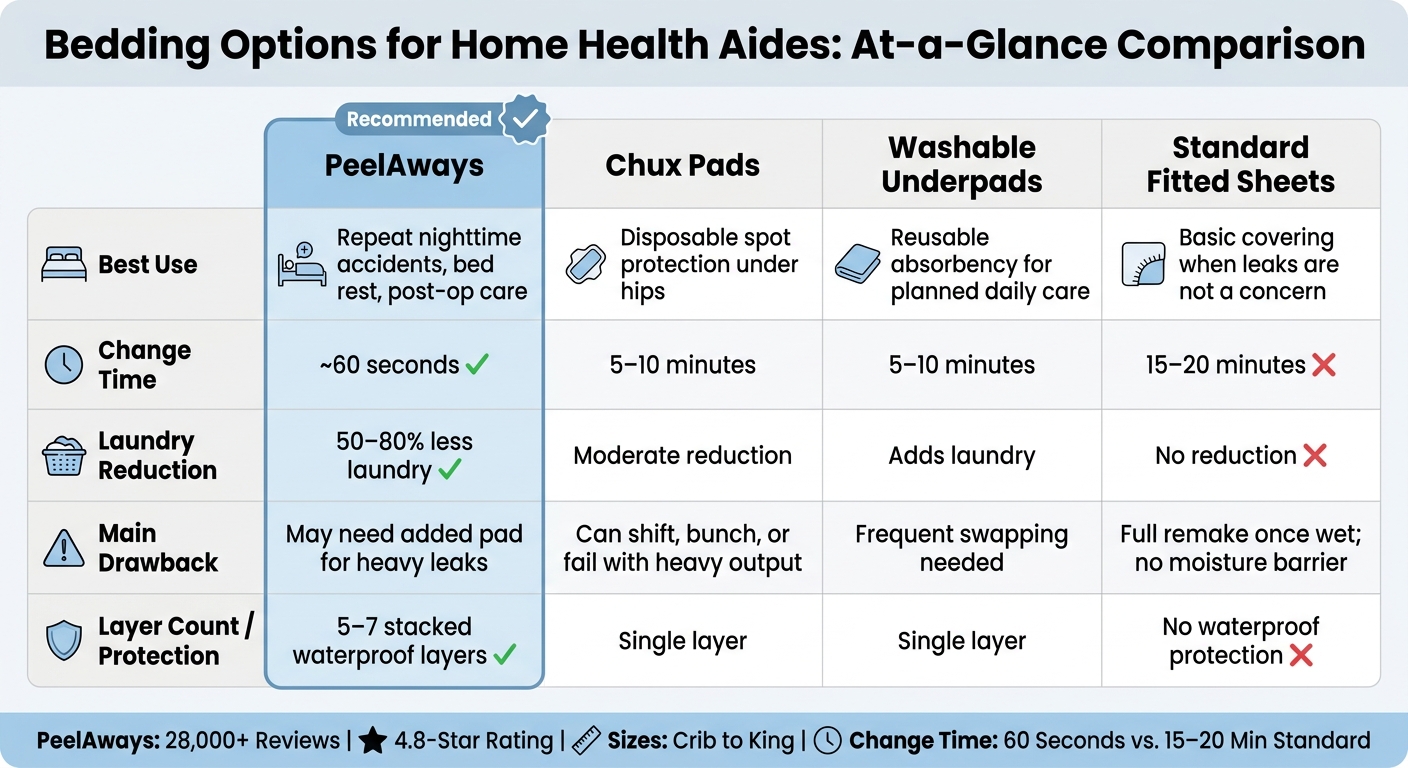
Home Health Aide Bedding Options Compared: Speed, Absorbency & Laundry Impact
It’s 2 a.m. again. The bed is wet, your client is half-awake, and you’re trying to change everything without turning it into a 20-minute production. In moments like that, the setup matters more than people think.
Once you've followed a checklist for setting up a recovery bed, the next call is simple: how much absorbency does this person actually need? Match the bed to leak frequency, drainage, and repositioning needs. The goal is the fewest layers needed for a dry bed and fast changes.
This section narrows that layered setup to the right absorbency level for the client’s leak pattern.
Comparison table: PeelAways vs. chux pads vs. washable underpads vs. standard fitted sheets
Start with the standard layer order: waterproof mattress protector, PeelAways, and an absorbent underpad at the hips. Then adjust only if the leak pattern says you need more.
PeelAways handles the fitted layer with 5 to 7 stacked waterproof layers. That means when the top layer is soiled, you can peel it away and keep going without lifting the mattress or remaking the whole bed. That alone can turn a stressful change into something you can finish in about 60 seconds instead of 15 to 20 minutes.
Use a full bed change only when moisture gets past the absorbent layer.
| Option | Best use | Main drawback | How it fits into the setup |
|---|---|---|---|
| PeelAways | Fast bed changes for repeat wetting or overnight care | May still need added absorbency for heavy leaks | Works as the fitted layer with stacked waterproof protection |
| Chux pads | Disposable spot protection under hips | Can shift, bunch, or fail with heavier output | Good as added absorbency on top of the fitted layer |
| Washable underpads | Reusable absorbency for planned daily care | Adds laundry and may need swapping often | Works over the fitted layer for targeted protection |
| Standard fitted sheets | Basic bed covering when leaks are not a concern | Slow to change once soiled; no built-in moisture barrier | Not enough on their own for frequent incontinence care |
If you use diapers or incontinence pads, this kind of setup matters even more. The bed still needs a system that protects the mattress, cuts down laundry, and keeps the person in bed from feeling exposed.
You can find PeelAways on peelaways.com/shop or on Amazon. It helps to see how other families are using them too, especially if you’re still figuring out what works in your home. These guides may help:
- https://peelaways.com/blogs/news
- https://peelaways.com/blogs/news/how-to-change-a-bed-fast
When to add extra absorbency for heavy leaks or bedwetting
Use the lightest setup that keeps the bed dry. Then step up only when the bed shows repeated wet-through.
If your client has multiple wet episodes overnight, takes diuretics, or is coming home after surgery with uneven drainage, one fitted layer may not cut it. In that case, place a higher-absorbency underpad directly under the hips on top of the fitted layer. That gives you extra protection right where it’s needed most.
Add more absorbency when:
- Moisture reaches the mattress protector
- Skin starts to redden
- Pads are saturated by morning
Choose underpads with a soft quilted top layer instead of a plastic-backed feel. More breathable materials can help cut skin irritation and make it easier for the client to sleep through small adjustments.
If wet-through keeps reaching the mattress protector, switch to a more absorbent pad before the next shift.
What Home Health Aides Should Check Every Day Before Leaving the Bedside
It’s the end of a long shift.
You’re tired, your client is finally settled, and the room looks calm again.
But one missed damp spot or one empty pack of wipes can turn the next hour into a mess fast.
Once the bed is layered, a quick daily check keeps the setup clean, dry, and ready. A daily bed check catches dampness, wrinkles, shifting pads, and low supplies before bigger problems start.
Run the same check at shift start and after any incident.
Start-of-Shift and After-Incident Bedding Check Checklist
- Hand check for dampness. Run your hand across the top sheet and fitted layer. Pay close attention to the hips, lower back, and buttocks. If anything feels cool or damp, change that layer right away.
- Odor and stain check. Look for odor and visible stains before the client says they're uncomfortable. If the sheets look clean but you smell urine, moisture may have reached a lower layer. Check each layer in order: top sheet, absorbent pad, fitted layer, then mattress protector.
- Wrinkle and pad alignment check. Wrinkles can rub the skin and add pressure. Smooth the top layer and fix any pad that has shifted. It should sit centered under the hips with no bunching or folded edges.
-
Supplies check. Make sure these items are close by:
- one full clean sheet set
- two to three underpads
- a sleeve of gloves
- a full pack of wipes
- barrier cream
- disposal bags
- a lined laundry bag
If a PeelAways layer was peeled during the shift, check how many layers are left and make sure a replacement set is ready. Keep the bedside stocked so the next incident can be handled without leaving the client alone.
Conclusion: Build a Bed Setup That Saves Time and Protects Dignity
This work is hard.
And the small details matter more than most people think.
A smooth, dry, well-stocked bed helps protect a client’s skin, cut down discomfort, and make your shift easier to get through. A short daily check helps keep the bed ready, the room calmer, and cleanup faster.
When the bed is layered the right way - waterproof mattress protector, fitted layers, and absorbent pads - one incident doesn’t have to mean stripping the whole bed. That’s where PeelAways can make life a lot easier. I found them the same way a lot of people do: in the middle of too many sheet changes, too much laundry, and not enough sleep.
PeelAways uses 5 to 7 stacked waterproof fitted layers, so one peel gives you a fresh surface in about 60 seconds without lifting or fully repositioning the client. That’s a big shift from the usual 15 to 20 minutes a full bed change can take. It means less laundry, less disruption, and less stress in the room.
If you’re dealing with diapers or incontinence pads, PeelAways is worth a look. They come in sizes from crib to king, have 28,000+ reviews, and hold a 4.8-star rating. You can find them on peelaways.com/shop or on Amazon. For more help with setup and cleanup, see other articles on PeelAways like how to layer a bed for incontinence and tips for faster bed changes.
Making aging and caregiving easier, one bed at a time
Blog readers save 10% with code BLOGS10 at checkout. Available on peelaways.com and Amazon. Free shipping on orders over $100.
Comments
0



SAVE MONEY & WATER
Professionals & Institutions save a fortune on labor/laundry.

SUPERIOR COMFORT
The first thing our customers notice is how soft our sheets are.

100% WATERPROOF
Each layer is 100% Waterproof, perfect for spills and accidents

SAVE TIME
Change the sheet in under 1 minute without stripping the bed.

Leave a comment