
Washable vs. Disposable Bed Pads: Key Differences

When choosing between washable and disposable bed pads, your decision largely depends on cost, convenience, and usage needs:
- Washable Bed Pads: Reusable, durable, and cost-effective over time. They can absorb up to 5,000 ml, last through 250 washes, and are ideal for regular use. However, they require frequent laundering and access to laundry facilities.
- Disposable Bed Pads: Single-use, easy to manage, and great for travel or emergencies. They hold up to 3,000 ml and are lightweight, but recurring purchases can add up, and they generate more waste.
Quick Takeaway: Washable pads save money long-term and reduce waste, while disposable pads offer unmatched convenience for short-term or on-the-go needs. Many caregivers combine both for flexibility.
Quick Comparison:
| Feature | Washable Bed Pads | Disposable Bed Pads |
|---|---|---|
| Initial Cost | ~$25 per pad | ~$8 per pack |
| Long-Term Cost | Low (lasts 250 uses) | High (recurring purchases) |
| Absorbency | Up to 5,000 ml | Up to 3,000 ml |
| Maintenance | Requires laundering | None |
| Portability | Bulkier | Lightweight, compact |
| Waste | Minimal | Significant |
Choose based on your budget, care requirements, and daily routine.
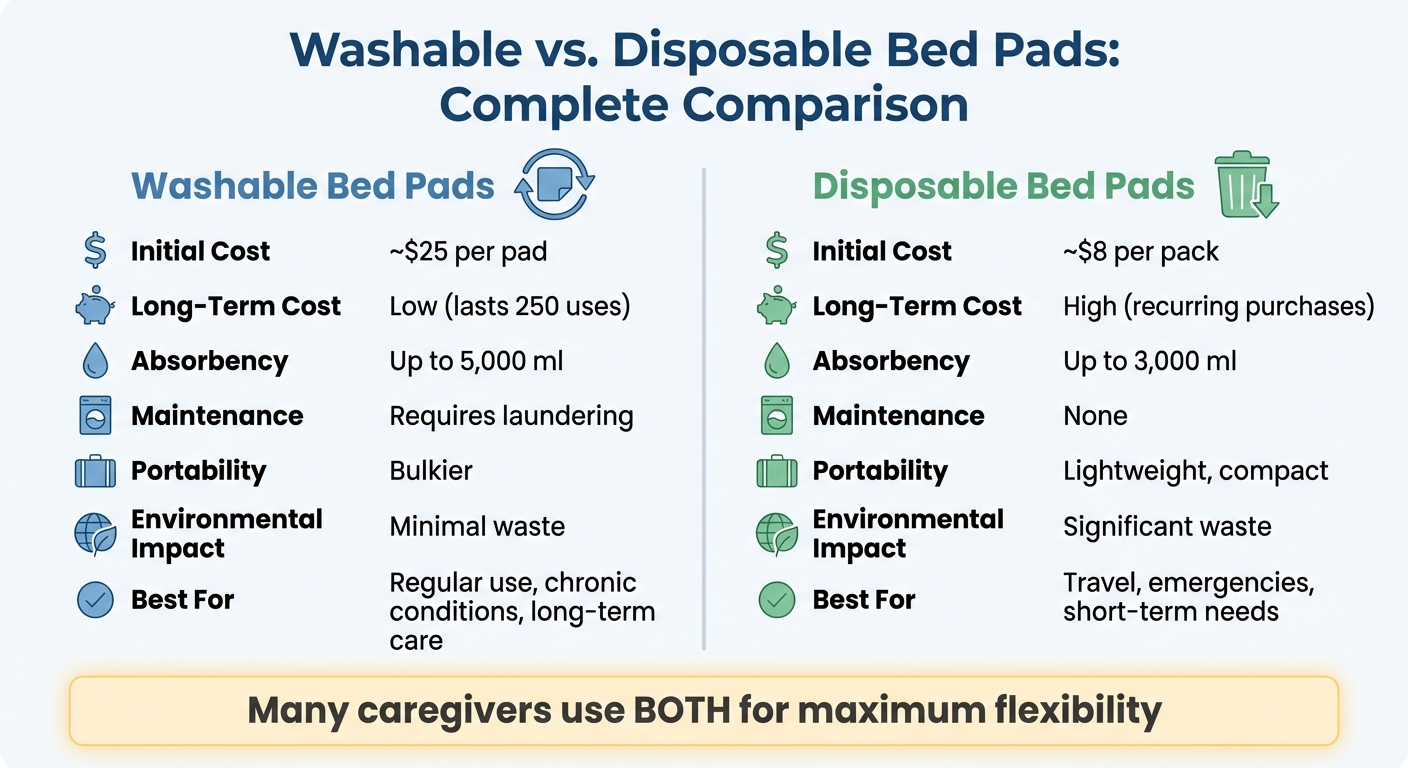
Washable vs Disposable Bed Pads Comparison Chart
Washable vs Disposable Bedpads
What Are Disposable Bed Pads?
Disposable bed pads are single-use, absorbent sheets designed to protect mattresses, chairs, and other surfaces from liquid damage. Once used, they are simply thrown away, making them a convenient option for immediate cleanup and protection.
These pads are built with a three-layer system that works efficiently to manage moisture. The top layer, made from a non-woven cotton blend, quickly absorbs liquids. Underneath, the absorbent core - consisting of plant fiber fluff and super-absorbent polymer (SAP) beads - locks in moisture by turning it into a gel. Finally, the bottom layer, typically made of plastic or vinyl, acts as a leak-proof barrier, keeping surfaces dry.
"The liquid is absorbed into the core of the bed pad and converted to gel due to the polymer beads and cotton fluff inside." - San Pablo Commercial [2]
Disposable bed pads come in various sizes to suit different needs. Smaller options, like 17 x 24 inches, are perfect for chairs, while larger ones, up to 40 x 57 inches, can cover an entire mattress. Some higher-end pads even absorb liquids up to three times faster than standard versions [1].
These pads aren’t just for incontinence care - they have a range of uses. Hospitals rely on them for post-surgery recovery, parents use them during potty training, and pet owners often use them as training pads. For those dealing with severe incontinence, layering multiple pads or using tuckable styles (measuring 27 x 70 inches) can provide extra coverage and peace of mind.
What Are Washable Bed Pads?
Washable bed pads are reusable fabric protectors designed to shield mattresses, chairs, and wheelchairs from incontinence-related damage. Unlike disposable options, these pads can be washed and reused for months - or even years - making them a practical choice for long-term use. Their thoughtful construction ensures effective moisture management and comfort.
These pads typically feature a three-to-five-layer design. The top layer is quilted for softness and comfort, while the middle layer wicks away moisture. Beneath that, a waterproof barrier ensures no liquid seeps through. Many designs also include non-slip backings and fabric wings to keep the pad securely in place, offering convenience and preventing movement during use. Some models can absorb up to 5,000 ml (1.3 gallons) of liquid, thanks to the rayon content in the soaker layer.
Built for durability, washable bed pads are made to withstand machine washing at temperatures as high as 194°F (90°C). Many also come with antibacterial finishes to help control odors, while the quilted surface reduces friction, making them gentle on sensitive skin.
Prices for washable bed pads vary depending on their quality and features. For instance, budget-friendly options like SleepDri™ Budget Underpads start at $12.90, while premium choices such as the Salk HaloShield® Odor Control Underpad range from $29.45 to $66.00 [5].
Key Differences Between Washable and Disposable Bed Pads
Deciding between washable and disposable bed pads means weighing their pros and cons across several factors. Whether you're managing chronic incontinence, caring for a loved one, or need a travel-friendly option, the right choice depends on your situation.
| Factor | Disposable Bed Pads | Washable Bed Pads |
|---|---|---|
| Initial Cost | Low (around $8 per pack) | High (about $25 per pad) |
| Long-Term Cost | High (recurring purchases) | Low (one-time purchase lasting up to 250 uses) |
| Maintenance | None – discard after use | Requires regular washing (adds water and energy costs) |
| Absorbency | Up to 3,000 ml (heavy-duty options) | Up to 5,000 ml (about 1.3 gallons) |
| Environmental Impact | Significant landfill waste | Less waste, though laundering uses water and energy |
| Portability | Lightweight and compact | Bulkier, needs access to laundry facilities |
| Caregiver Effort | Minimal – quick and easy changes | Higher – involves washing and drying cycles |
| Best For | Travel, short-term care, infrequent leaks | Chronic conditions, heavy daily use, long-term care |
Cost: Upfront vs. Long-Term Expenses
When it comes to cost, the choice between disposable and washable pads depends on whether you're considering short-term affordability or long-term savings.
Disposable pads are budget-friendly upfront, costing around $7.99 for a small pack, making them an easy choice for occasional leaks or short-term use. Washable pads, on the other hand, require a higher initial investment - starting at about $24.99 per pad. However, their longevity can make them far more economical in the long run. High-quality options, like the Champion XD, can endure up to 250 wash cycles. For those needing multiple pads nightly, the recurring expense of disposables adds up quickly, while washable pads save money over time. Multi-layer disposable options, such as PeelAways (priced between $30.99 and $53.99 depending on size), offer a middle ground by featuring 5 to 7 layers, with each layer lasting 7 to 10 days if not soiled.
Convenience and Maintenance
Convenience often plays a big role in choosing the right bed pad.
Disposable pads are the ultimate in ease. Once soiled, they can be tossed out, making them perfect for travel, hospital stays, or situations where laundry access is limited. Multi-layer disposable sheets, like PeelAways, make changes even faster - caregivers can replace a layer in under a minute without disturbing the user, reducing both physical effort and time.
Washable pads, while cost-effective over time, require more effort. They must be laundered at high temperatures (up to 194°F/90°C) to ensure proper hygiene, which can be labor-intensive, especially with frequent accidents. As Jean F., a Verified NorthShore Buyer, shared:
"I bought 4 so I can cycle them in and out and never have an urgent need to do laundry."
To maintain their effectiveness, avoid fabric softeners, which can reduce absorbency. Tumble dry on medium heat, but don't overdry, as it may damage the waterproof layer. Many caregivers find a hybrid approach works best - using washable pads at home while keeping disposables on hand for travel or emergencies.
Environmental Impact
If sustainability matters to you, washable pads are a clear winner when it comes to reducing waste.
A single washable pad can replace hundreds of disposable ones over its lifespan, significantly cutting down on landfill waste. On the flip side, disposable pads generate waste with every use. However, keep in mind that washable pads require water and energy for regular laundering. Your choice will depend on how you balance environmental priorities with the practicalities of care and convenience.
Absorbency and Durability
Absorbency is a critical factor when choosing a bed pad, and washable options generally excel in this area.
High-quality washable pads can hold up to 5,000 ml of liquid and remain effective through hundreds of wash cycles. Disposables, while convenient, are designed for single use. That said, multi-layer disposable options like PeelAways extend their usefulness, with each layer lasting up to 10 days if unsoiled.
Comfort and Skin Health
Comfort and skin protection are also important considerations, especially for long-term use.
Washable pads often feature quilted top layers that are soft, reduce friction, and wick moisture away from the skin, keeping it dry and irritation-free. Disposable pads have also come a long way in terms of comfort. Many now use breathable backsheets and soft materials like bamboo, rayon, and polyester blends to provide a balance of comfort and waterproofing. This thoughtful design helps protect sensitive skin, ensuring users remain comfortable even during extended use.
sbb-itb-45288fe
Choosing the Right Bed Pad for Your Needs
When it comes to selecting a bed pad, it’s all about balancing cost, convenience, and environmental considerations to suit your situation. If nighttime leaks are a daily occurrence, washable pads can be a practical and budget-friendly solution. On the other hand, for occasional accidents, disposable pads offer a hassle-free option that doesn’t add to your laundry load.
The severity of incontinence also plays a key role in your decision. For heavy incontinence, high-capacity pads are essential, as previously discussed in the context of absorbency levels. In situations where immediate changes are necessary - like during emergencies or when laundry access is limited - disposables provide a quick and easy fix.
Many caregivers find that combining both types of pads works best for a variety of needs. Washable pads can be used at home to save money over time, while disposable pads are ideal for travel, emergencies, or when keeping up with laundry isn’t feasible.
Another option to consider is multi-layer designs like PeelAways. These pads allow you to peel off a soiled layer in less than a minute, without the need to lift the mattress or disturb the person in bed, making them incredibly convenient [3].
Ultimately, your choice should reflect your usage patterns, budget, and environmental priorities. Washable pads are a more sustainable option, helping to reduce landfill waste. If reducing caregiver strain is a priority, disposables ease the burden of constant laundering. There’s no universal solution - the best choice depends on your unique needs and daily circumstances.
Conclusion
Washable pads stand out for their long-term cost savings and reduced waste, thanks to their reusable nature. On the other hand, disposable pads offer unparalleled ease of use, making them perfect for situations where quick cleanup is essential.
Washable options are a budget-friendly and eco-conscious choice, but they do require regular washing and access to laundry facilities. Disposable pads, while incredibly convenient - especially for travel, hospital stays, or when laundry isn't an option - can become a recurring expense over time.
For those seeking a middle ground, multi-layer disposable sheets like PeelAways provide a smart alternative. These sheets let you remove a soiled layer in under a minute without disturbing the mattress or patient, offering a blend of convenience and practicality [3].
Ultimately, the right choice depends on your daily routine, financial considerations, and environmental goals. Many families find that a combination works best - using washable pads for everyday care and keeping disposables handy for emergencies or travel. There's no universal answer; it’s all about what works for your unique situation.
For more tips and advice on selecting care solutions, check out the related articles below.
Related Articles
Looking for more information on bed pad solutions? Check out these articles:
The Benefits of Multi-Layer Disposable Bed Sheets
Discover how PeelAways' innovative multi-layer sheets simplify caregiving. With a patented peel-away design, an impressive 4.61/5 rating from over 12,000 customers, and layers offering 7–10 days of protection, these sheets keep skin cool and dry while making cleanup a breeze [3].
Learn more about multi-layer disposable bed sheets
How to Choose the Best Bed Pad for Elderly Care
This comprehensive guide breaks down everything you need to know about selecting the right bed pad for elderly care. From absorbency and waterproofing to comfort and ease of use, find out how to make the best choice for your needs.
Read the guide on choosing bed pads for elderly care
Eco-Friendly Bedding Solutions for Caregivers
Looking for sustainable options? Learn how eco-friendly bedding solutions can reduce up to 15 laundry loads per week while conserving water and energy - even when using disposables [4]. This article also covers chemical-free materials, responsible disposal methods, and hybrid approaches that pair washable pads with disposables for emergencies.
Explore eco-friendly bedding solutions
FAQs
What should I consider when choosing between washable and disposable bed pads?
When choosing between washable and disposable bed pads, it's important to weigh the following factors:
- Hygiene and simplicity: Disposable bed pads are designed for single use, which helps minimize the risk of cross-contamination and eliminates the hassle of laundering. On the other hand, washable pads need to be thoroughly cleaned after each use. This can be time-consuming, and if not washed properly, odors or bacteria might linger.
- Convenience and time-saving: Disposable options, such as Peelaways with their multi-layer peel-away design, are incredibly easy to replace and require no laundry effort. This makes them a great choice for caregivers with busy schedules or for use during travel. Washable pads, however, demand regular washing and drying, which can add to your daily workload.
- Cost and usage frequency: Disposable pads come with a higher cost per use but save you from additional laundry expenses. Washable pads, while requiring an upfront investment, also bring ongoing costs for washing. If leaks occur frequently or are heavy, disposable pads might provide better overall protection and value.
By considering these aspects - hygiene, convenience, cost, and how often you’ll need the pads - you can determine which type aligns better with your needs and lifestyle.
Do washable bed pads save money in the long run?
Yes, washable bed pads can offer substantial savings over time. Although a set of washable pads typically costs between $20 and $80 upfront, their reusability significantly lowers the cost per use compared to disposable alternatives. On the other hand, disposable pads, priced around $30.99 to $53.99 per set, need to be replaced after each use, which can quickly add up to a much higher total expense.
Even when you consider the added costs of laundry detergent and utilities, washable pads remain a more cost-effective solution for managing occasional or mild incontinence. Their durability and ability to be reused make them a smart, budget-conscious choice for many households.
What are the environmental impacts of washable and disposable bed pads?
Disposable bed pads add significantly to landfill waste because they are thrown away after just one use. Their production also depends heavily on plastic-based materials, which require continuous extraction of resources. In contrast, washable bed pads generate much less waste since they can be reused multiple times, cutting down on the amount of material that ends up in landfills.
That said, the environmental impact of washable pads largely hinges on how they are washed. Laundering them involves water, energy for heating, and detergents, which can offset some of their waste-reduction benefits. However, when washed thoughtfully and efficiently, reusable pads typically leave a smaller environmental footprint compared to their disposable counterparts. The reduced waste and lower resource consumption generally outweigh the energy and water used in laundering. Disposable pads lead to more waste, whereas washable pads demand mindful use to keep their environmental impact low.
Comments
0



SAVE MONEY & WATER
Professionals & Institutions save a fortune on labor/laundry.

SUPERIOR COMFORT
The first thing our customers notice is how soft our sheets are.

100% WATERPROOF
Each layer is 100% Waterproof, perfect for spills and accidents

SAVE TIME
Change the sheet in under 1 minute without stripping the bed.

Leave a comment