
Checklist for Choosing Senior-Friendly Cooling Sheets

Overheating during sleep disrupts rest and can harm seniors' health. Cooling sheets help by regulating body temperature, protecting sensitive skin, and improving comfort. Here's a quick guide to selecting the best options:
Key Features to Look For:
- Breathable Materials: Opt for cotton, bamboo, linen, or Tencel. Avoid polyester and microfiber, which trap heat.
- Thread Count: Stick to 200–400 for a balance of airflow and softness.
- Cooling Technology: Look for phase-change materials (PCM) or moisture-wicking fabrics for consistent temperature control.
- Hypoallergenic Properties: Choose organic, chemical-free fabrics to avoid skin irritation.
- Ease of Use: Deep pockets, reinforced corners, and lightweight fabrics simplify bed-making and care.
- Budget and Size: Affordable options start at $30, while luxury sets can exceed $500. Measure mattress depth for a proper fit.
Disposable Solutions for Incontinence:
Products like PeelAways offer multi-layer, waterproof sheets that simplify nighttime changes, reduce laundry, and maintain a cool, dry surface.
By focusing on breathable fabrics, cooling features, and ease of care, you can ensure better sleep and comfort for seniors.
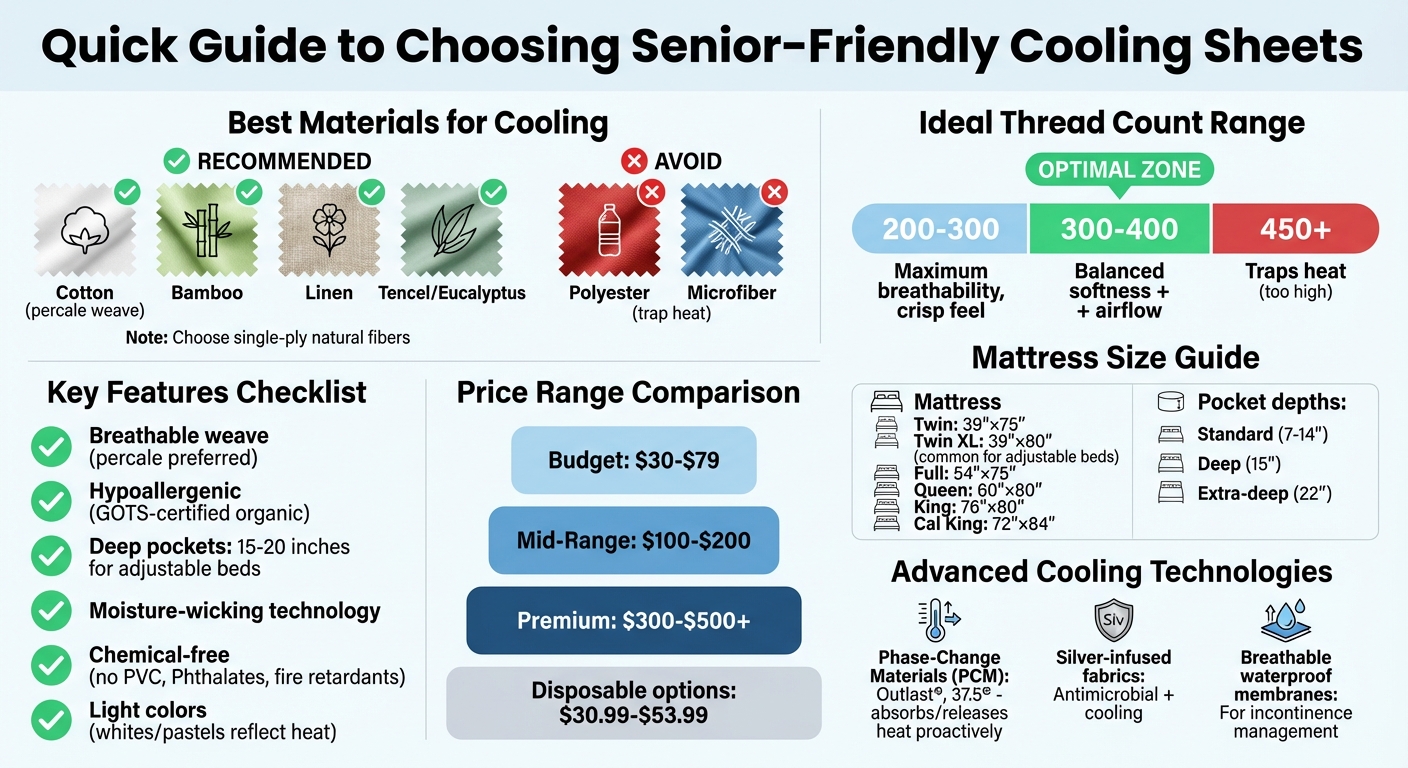
Senior-Friendly Cooling Sheets Selection Guide: Materials, Thread Count, and Features Comparison
Best Cooling Sheets of The Year - Our Top 5 Picks!
Step 1: Check Material Breathability and Skin Safety
When choosing cooling sheets for seniors, the first priority is selecting fabrics that allow proper airflow and are gentle on sensitive skin. Natural fibers - like cotton, linen, bamboo, and eucalyptus (Tencel) - excel at promoting ventilation and wicking away moisture, unlike polyester and microfiber, which tend to trap heat and create an uncomfortable, sticky surface [7].
Review Breathable Fabrics
A percale weave is often regarded as the best option for cooling. Its one-over, one-under pattern ensures excellent airflow [7]. For seniors prone to overheating, percale-weave cotton provides a crisp, consistently cool feel. Stick to thread counts between 200 and 400, as higher counts (above 600) can compromise breathability by trapping heat [16, 17].
Bamboo is another standout, absorbing more moisture than cotton, while linen is highly effective at managing moisture as well. Both are excellent choices for seniors dealing with night sweats or hormonal fluctuations [16, 17].
Daniel Noyed, Senior Product Editor, highlights the importance of pairing breathable sheets with a cooling mattress:
"You can have a breathable mattress with all the cooling technology in the world, but it won't help much if you're sleeping in heat-trapping sheets."
– Daniel Noyed, Senior Product Editor [8]
Avoid sheets made from 100% polyester or microfiber. These synthetic materials act as insulators, creating a humid and uncomfortable environment that can disrupt sleep [7]. Stick to single-ply natural fibers, as multi-ply threads can reduce airflow [7].
Once you’ve identified breathable options, it’s essential to ensure the fabrics are hypoallergenic and safe for aging skin.
Check for Hypoallergenic Properties
In addition to breathability, the fabric should be gentle and non-irritating. Look for GOTS-certified organic cotton or linen to avoid exposure to chemical pesticides and harsh dyes [8]. Both linen and silk are naturally hypoallergenic, making them great options for seniors with allergies or respiratory sensitivities [15, 17].
For those managing incontinence, check that any waterproof layers are free from Vinyl, PVC, Phthalates, and fire retardants, as these chemicals can irritate sensitive skin and cause unpleasant odors [9, 6]. Bamboo and Tencel are particularly beneficial, as they offer antibacterial properties that prevent bacterial growth, reducing the risk of skin irritation caused by trapped moisture [16, 18].
Sarah Silverman, Psy.D., a Holistic Sleep Wellness Consultant, emphasizes the role of breathable materials in improving sleep:
"Regulating your core body temperature during the night can make a huge difference in your overall sleep quality, so breathable materials are optimal to promote cooler temperatures."
– Sarah Silverman, Psy.D., Holistic Sleep Wellness Consultant [8]
Choose light-colored sheets, such as whites or pastels, as they reflect heat and often require fewer dyes, minimizing potential skin irritants [7]. Long-staple cotton, like Egyptian or Supima, is another excellent option. Its smoother fibers resist pilling and scratching, ensuring comfort and maintaining skin-friendly qualities even after multiple washes [15, 17].
Step 2: Review Cooling Technology
After choosing breathable and hypoallergenic fabrics, the next step is to assess cooling technology to ensure consistent temperature regulation. For seniors dealing with night sweats or trouble maintaining a comfortable body temperature, the right cooling system can make a world of difference. This step focuses on technologies designed to actively manage body heat.
Consider Phase-Change Materials
Phase-change materials (PCM) are a standout option for seniors who experience fluctuating temperatures. Unlike moisture-wicking fabrics that only kick in after sweating starts, PCM technologies - like Outlast® and 37.5® - work by absorbing and releasing heat to keep body temperature steady before overheating occurs [1, 20]. This proactive solution helps prevent the cycle of sweating followed by uncomfortable temperature swings.
Silver-infused fabrics are another option worth exploring. These sheets incorporate natural silver, which not only offers cooling benefits but also provides antimicrobial properties that may enhance overall sleep quality [6].
Evaluate Cooling Performance
Once you've confirmed the fabric is breathable and safe, the sheet's cooling performance becomes a key consideration. It’s important to ensure that the cooling effect is built into the fiber structure itself, rather than relying on temporary chemical treatments that can wear off over time [8].
Pay attention to the weave type as well. Percale weaves promote better airflow, while sateen weaves may retain heat [2, 18].
For seniors managing both overheating and incontinence, disposable options with breathable membranes are a practical choice. PeelAways, for instance, uses advanced waterproof membranes that block liquids while allowing air to circulate. This design keeps the bed cool and dry without the heat buildup often caused by traditional vinyl or plastic protectors. With over 12,000 customer reviews and a 4.61/5 rating, PeelAways is frequently praised for its breathability and its ability to avoid the sticky, uncomfortable feel associated with standard waterproof layers [9, 6].
Step 3: Prioritize Comfort and Ease of Use
After ensuring the fabric's quality and cooling capabilities, the next step is to focus on comfort and ease of use. Senior bedding should not only help regulate temperature but also make daily care tasks simpler and less physically demanding.
Ensure Compatibility with Adjustable Beds
If you're working with adjustable or hospital beds, it's essential to choose sheets designed to stay securely in place. Look for options with deep pockets (15–20 inches) and reinforced elastic corners. Standard sheets often slip off when the bed's position changes, which can be both frustrating and unsafe.
Experts recommend sheets with strong corner reinforcements to prevent them from coming loose. For split adjustable beds, Twin XL fitted sheets are a practical choice. Steer clear of slippery fabrics like silk or satin, as they can cause seniors to slide when the bed is inclined. If slipping remains an issue, sheet clips or straps can provide extra security [4]. Once the fit is sorted, you can focus on materials that make upkeep easier.
Choose Durable and Low-Maintenance Materials
For caregivers seeking convenience, disposable multi-layer sheets like PeelAways are a game changer. These sheets allow you to peel away a soiled layer in seconds, eliminating the need for heavy mattress lifting. This not only saves time but also helps maintain hygiene and supports temperature and skin health management [4]. Brooklyn Shields, a caregiver, shared her experience:
"As a mom and a caregiver, these sheets have been a great addition to make my day easier. Quicker bed changes and less laundry." – Brooklyn Shields, Caregiver [4]
If you prefer reusable sheets, lightweight fabrics like percale or linen are easier to handle than heavier options like flannel or high-thread-count sateen. Look for sheets that are machine washable in cold water and safe for tumble drying on low heat, cutting down on special care requirements. Sheets with directional labels (indicating "long" and "short" sides) can also simplify bed-making, reducing unnecessary lifting and guesswork [8].
sbb-itb-45288fe
Step 4: Select Size, Thread Count, and Budget
Once you’ve chosen breathable materials, the next step is to focus on size, thread count, and budget.
Select the Correct Size
Getting the right size is crucial for a proper fit and comfort. Standard sheet sizes include Twin (39"x75"), Twin XL (39"x80"), Full (54"x75"), Queen (60"x80"), King (76"x80"), and Cal King (72"x84") [9]. For adjustable beds, particularly in senior care, Twin XL is a common choice. If you’re dealing with split configurations, like a Split King for couples with different adjustable needs, you’ll need two Twin XL fitted sheets [9, 22].
Don’t forget to measure your mattress, including any toppers, to ensure the sheets match the pocket depth. Standard sheets fit mattresses with depths of 7–14 inches, while deep-pocket sheets accommodate about 15 inches, and extra-deep sheets go up to 22 inches [9]. Marc Werner, founder of GhostBed, highlights the importance of this feature:
"For cooling sheets, it is most important to get a well-made deep pocketed fitted sheet with a full elastic band that will keep the fitted sheet securely on the mattress even when moving as with an adjustable bed base." – Marc Werner, Founder of GhostBed [9]
Once you’ve nailed down the size, you can shift your attention to thread count.
Find the Right Thread Count
Thread count plays a significant role, but it’s not all about higher numbers. For cooling sheets, the sweet spot is between 200 and 400 threads. This range strikes the right balance between breathability and comfort [2]. A thread count of 200–300 delivers crisp airflow, while 300–400 adds a touch of softness without compromising ventilation - perfect for seniors with sensitive skin. On the other hand, thread counts exceeding 450 can trap heat, making the sheets less effective for cooling [10].
"For cooling sheets, a thread count between 200 and 400 is ideal – it balances softness, durability and breathability." – Naturepedic [2]
Compare Pricing and Value
Cooling sheets come in a wide price range, starting at $30 and climbing to over $500 for luxury sets [9, 18]. Disposable options, like those from PeelAways, cost between $30.99 and $53.99 and can be a budget-friendly choice, especially when considering the reduced care and maintenance they require [9, 6].
For traditional cooling sheets, pricing generally falls into three categories:
- Budget options: $36–$79
- Mid-range sets: $100–$200
- Premium luxury sheets: $300–$500+ [18, 20]
Luxury sheets often use high-quality materials like Egyptian cotton or long-staple fibers, which hold up better over time. When shopping for these, look for "single-ply" yarns on the label. This ensures the thread count is accurate and the fabric remains breathable, even after multiple washes [1].
Using Disposable Cooling Solutions Like PeelAways

For seniors dealing with incontinence, disposable sheets provide a practical and convenient bedding solution. PeelAways offers a unique combination of waterproof protection and breathable comfort, making it easier to manage nighttime accidents without compromising air circulation. This thoughtful design simplifies nighttime changes, addressing key challenges in senior care.
PeelAways Features
PeelAways stands out with its patented multi-layer design, offering 5 to 7 layers depending on the sheet size. When a layer becomes soiled, you simply peel it away to reveal a fresh, clean sheet underneath - no need to lift the mattress [4].
The sheets feature a breathable, waterproof membrane that blocks liquids while allowing airflow, ensuring the surface remains cool and dry [3][4]. Made from a soft blend of bamboo, rayon, and polyester fibers, each layer provides excellent absorption and comfort [4]. Importantly, they are free from Vinyl, PVC, Phthalates, and fire retardants, making them a safer option for seniors with sensitive skin or respiratory concerns [3][4]. This thoughtful material choice ensures consistent comfort and hygiene.
PeelAways has earned the trust of over 12,000 customers, boasting an average rating of 4.8 out of 5 stars. It was even recognized as the "Caregiver Product of the Year" [3]. Pricing starts at $30.99 for smaller sizes, with the Twin XL (5 layers) priced at $29.74 and the King (5 layers) at $53.99 [4][3]. Additional savings are available, including a 15% discount with a subscription or bundle discounts of 5% for 3 units and 10% for 6 units [4].
How PeelAways Work in Senior Care
The practical benefits of PeelAways are clear in caregiving scenarios. Kari E., who cares for her 88-year-old father with dementia, shared her experience:
"When he wets through one sheet, I just peel that layer off and toss it into the garbage! No more morning laundry!" – Kari E. [4]
Each layer acts as a fully waterproof barrier, preventing fluids from seeping through to the next layer or the mattress [3][4]. This design eliminates the need to lift or move a senior during bedding changes, significantly reducing physical strain for caregivers. Linda, another customer, highlighted this benefit:
"They do not seep through to next liner and so much easier to use than changing sheets everyday for elderly" – Linda [3]
Under typical conditions, each layer can last 7–10 days if not soiled. However, for caregivers managing frequent incontinence, a 5-layer pack may last only one to two weeks [3][4][11]. PeelAways are available in a range of standard sizes, including Crib, Cot, Twin, Twin XL (compatible with Split King adjustable beds), Full, Queen, and King. They also feature deep pockets up to 12 inches, ensuring a secure fit on most mattresses [3][4].
Conclusion
The checklist above offers a practical guide for selecting sheets that prioritize comfort, safety, and ease of care for seniors. The right cooling sheets not only safeguard sensitive skin but also promote restful sleep and simplify caregiving. With aging, health conditions, and medications often affecting temperature regulation, breathable bedding becomes crucial to prevent overheating and ensure quality rest.
When choosing sheets, focus on breathable materials with a thread count between 200 and 400. Natural fibers like cotton, linen, and bamboo excel in moisture-wicking and airflow, making them a better choice than synthetic options. For managing incontinence, consider sheets that combine waterproof protection with breathability for a functional yet comfortable solution.
Safety is equally important as comfort. Avoid slippery fabrics like silk or satin, which can increase the risk of falls, and instead choose sheets with deep pockets or corner straps to keep them securely in place. A snug fit minimizes tripping hazards and makes nighttime adjustments easier for those with limited mobility.
This guide addresses the unique needs of seniors while also lightening the load for caregivers. As Cambridge Court emphasizes:
"As you age, your skin becomes more delicate and sensitive to harsh or itchy materials. Now more than ever, it's important to find soft sheets that don't irritate your sensitive skin."
The right bedding strikes a balance between hygiene, comfort, and convenience, making nighttime care more straightforward and dignified.
Related Articles
Looking for more information about senior bedding solutions? Check out these helpful guides:
- How PeelAways Help Caregivers Save Time and Energy: Learn how PeelAways' peel-away design makes laundry a breeze. With sheet changes taking less than 60 seconds, caregivers can reduce physical strain and handle incontinence accidents more effectively.
- Top Benefits of Disposable Bed Sheets for Elder Care: Discover the advantages of waterproof, multi-layer sheets for seniors dealing with mobility or cognitive challenges. These sheets combine a soft bamboo blend for comfort with a 100% waterproof barrier to protect mattresses - without the uncomfortable plastic feel of traditional underpads.
- Choosing the Right PeelAways Sheet for Your Needs: Find the perfect sheet for your caregiving needs. Whether it’s a Twin XL with 7 layers for long-term use or a Queen size with 5 layers for occasional protection, this guide helps you select the right option to suit your care routine and budget.
FAQs
What are the best materials for cooling sheets for seniors?
When it comes to cooling sheets that are senior-friendly, natural, breathable fibers stand out as the top choice. Fabrics like long-staple cotton (such as percale), linen, bamboo, and Tencel (made from eucalyptus) are excellent for this purpose. They allow for better airflow, draw moisture away from the body, and help maintain a comfortable temperature - perfect for a cooler, more restful sleep.
For families or caregivers seeking convenience, Peelaways disposable bed sheets offer a smart alternative. These sheets feature a multi-layer peel-away design, providing a fresh, soft surface without the need for laundering. This makes them particularly useful in elder care or during medical recovery.
How do phase-change materials help seniors sleep better?
Phase-change materials (PCMs) play a key role in improving sleep by helping regulate body temperature all night long. They work by absorbing extra heat when your body gets too warm and releasing it when your body cools down. This process creates a steady and comfortable sleeping environment.
For older adults, these materials can be particularly helpful. Seniors often experience more noticeable temperature changes during sleep, which can stem from shifts in metabolism or certain health issues. PCMs help by keeping the sleeping environment consistent, reducing night sweats, enhancing restfulness, and even contributing to better skin health.
How do I choose the right sheet size for an adjustable bed?
When choosing sheets for an adjustable bed, the first step is to ensure they fit the specific mattress size. Whether it’s Twin, Full, Queen, King, or Split King, accuracy matters. For a Split King bed, you’ll need two Twin XL fitted sheets instead of one large King sheet.
It’s also important to consider the pocket depth and flexibility. Adjustable mattresses tend to be thicker, especially if they include foam or pillow-top layers. Plus, the bed’s movement requires sheets with deep pockets and elastic hems to stay securely in place without slipping off.
Finally, think about ease of use. Look for sheets that are simple to put on and take off, which can be especially helpful for caregivers. A snug but not overly tight fit keeps the sheets in place and avoids uncomfortable bunching for the person sleeping on the bed.
Comments
0



SAVE MONEY & WATER
Professionals & Institutions save a fortune on labor/laundry.

SUPERIOR COMFORT
The first thing our customers notice is how soft our sheets are.

100% WATERPROOF
Each layer is 100% Waterproof, perfect for spills and accidents

SAVE TIME
Change the sheet in under 1 minute without stripping the bed.

Leave a comment