
Ultimate Guide to Mindfulness for Caregivers

Mindfulness can help caregivers manage stress, improve focus, and enhance emotional well-being in challenging caregiving roles. By staying present and non-judgmental, caregivers can break free from cycles of overwhelm and burnout. Research shows mindfulness reduces anxiety, lowers cortisol, and even improves physical health. Simple practices like deep breathing, grounding techniques, and mindful pauses can fit into even the busiest schedules. Whether it’s a 20-second reset or a 30-minute meditation, these tools empower caregivers to prioritize their own well-being without guilt.
Key Takeaways:
- Why It Matters: Caregiving can lead to stress, depression, and burnout. Mindfulness offers relief.
- Quick Practices: Techniques like the Two-Breath Reset or Box Breathing take just seconds.
- Longer Practices: Body scans or mindful walks provide deeper relaxation when time allows.
- Practical Tips: Blend mindfulness into daily tasks, set boundaries, and use tools like apps or guided programs.
- Scientific Backing: Studies confirm mindfulness reduces stress and improves mental and physical health.
Mindfulness isn’t about perfection - just starting small can make a big difference for you and your loved one.
What Mindfulness Is and How It Works
Defining Mindfulness
Mindfulness is all about being fully present - aware of where you are and what you're doing - without labeling your experience as good or bad. It’s not about clearing your mind of thoughts or achieving some ideal state. Instead, it’s about intentionally focusing on the moment you’re in.
A common misconception is that mindfulness equals meditation. While meditation is a structured activity, often practiced for 10 or 20 minutes at a time, mindfulness is something you can incorporate into any part of your day. It’s a way of being, not just a practice.
At its core, mindfulness relies on two key elements: attention and acceptance. Attention involves tuning into the present moment, while acceptance means observing your thoughts and feelings without judgment. For example, if your mind drifts to worrying about tomorrow’s schedule or replaying a past conversation, mindfulness teaches you to notice this and gently bring your focus back to the present. This approach can help you break free from the automatic thoughts that often fuel stress and anxiety. And as research shows, the benefits of mindfulness extend far beyond just feeling calmer.
Research on Mindfulness Benefits
Scientific studies back up the effectiveness of mindfulness in reducing stress and improving overall well-being. In a 2022 study with 276 participants, an 8-week Mindfulness-Based Stress Reduction (MBSR) program was found to be just as effective as taking 10–20 mg of the anti-anxiety medication escitalopram (Lexapro) daily - without the side effects [10]. But mindfulness doesn’t just help with anxiety. It’s also been shown to enhance physical health and brain function. For instance, studies reveal that only 40 days of mindfulness meditation can lead to measurable changes in the brain, such as increased gray matter volume and cortical thickness [10].
The physical benefits don’t stop there. Regular mindfulness practice has been linked to lower cortisol levels, reduced blood pressure, a stronger immune system, and relief from chronic pain.
For caregivers, the impact can be especially transformative. A 2023 study involving 330 U.S. caregivers during the COVID-19 pandemic highlighted that “acting with awareness” - staying fully engaged in the task at hand - was the only mindfulness skill significantly reducing stress one month after facing high-risk stressors [11].
The growing interest in mindfulness is reflected in the numbers. Between 2012 and 2017, the percentage of U.S. adults practicing meditation tripled, signaling a wider acknowledgment of its practical benefits. For caregivers, these findings underscore mindfulness as a science-supported way to manage stress and improve quality of life.
Guided Meditation for Caregivers – Mindfulness for Self-Care & Emotional Support
Mindfulness Techniques for Busy Caregivers
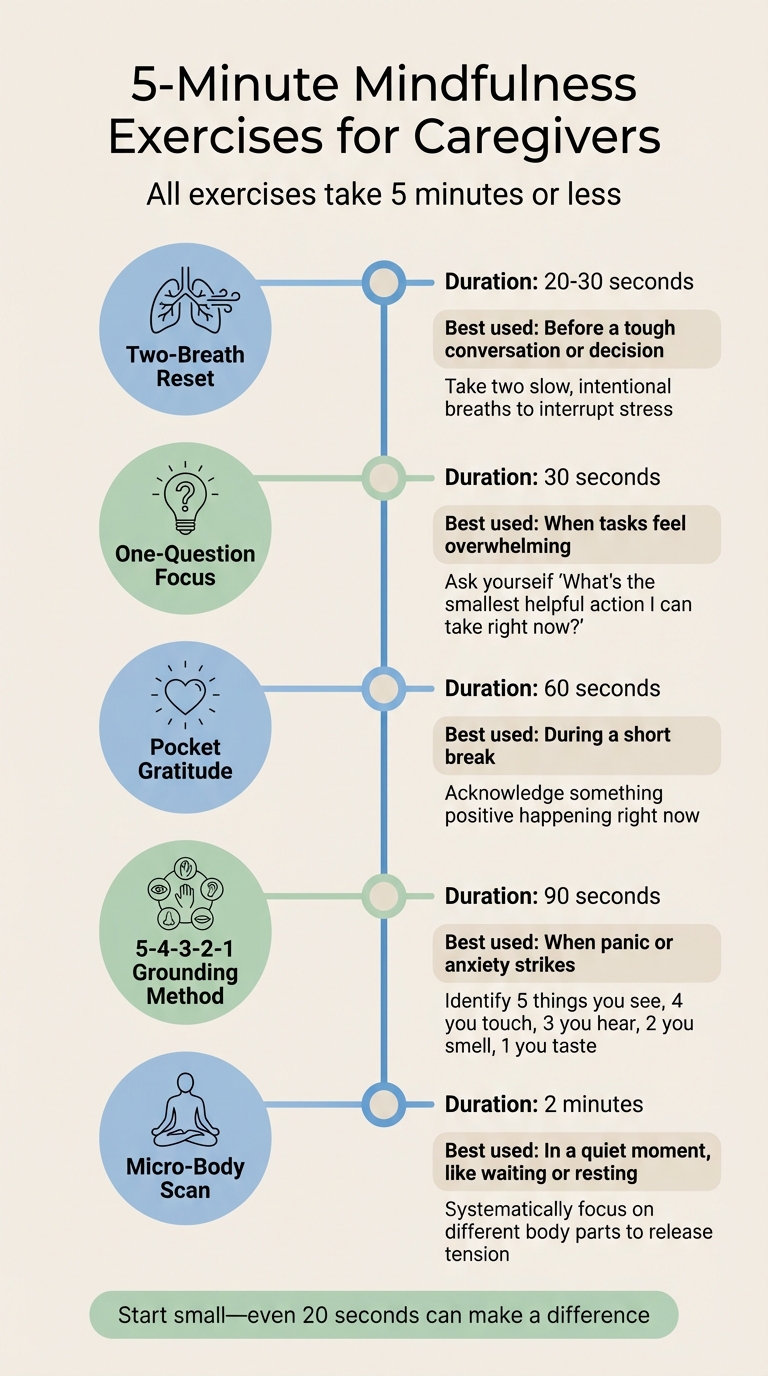
Quick Mindfulness Exercises for Caregivers: 5 Techniques in Under 5 Minutes
These practical exercises can help you weave moments of relaxation into your caregiving routine, even on the busiest days.
5-Minute Mindfulness Exercises
Short, simple mindfulness practices are perfect for caregivers. These exercises, which take just one to five minutes, are easy to fit into your day without disrupting your routine [15].
Techniques like the Two-Breath Reset (20–30 seconds) or the S.T.O.P. Technique (Stop, Take a breath, Observe, and Proceed) provide quick ways to interrupt stress. Another favorite is Box Breathing: inhale for four seconds, hold for four, and exhale for six. These methods are designed to calm your mind and refocus your energy [2][15].
For moments of heightened anxiety, the 5-4-3-2-1 Grounding Method is a lifesaver. In just 90 seconds, it brings you back to the present: identify five things you see, four things you can touch, three you hear, two you smell, and one you taste [15][16].
Physical resets are equally effective. A two-minute body scan or a quick neck roll can ease tension. Even placing a hand on your chest to feel your heartbeat can activate a calming response in your nervous system [15][16].
| Exercise | Duration | Best Used When... |
|---|---|---|
| Two-Breath Reset | 20–30 seconds | Before a tough conversation or decision |
| One-Question Focus | 30 seconds | When tasks feel overwhelming |
| Pocket Gratitude | 60 seconds | During a short break |
| Quick Grounding (5-4-3-2-1) | 90 seconds | When panic or anxiety strikes |
| Micro-Body Scan | 2 minutes | In a quiet moment, like waiting or resting |
These brief exercises help you stay grounded and ready for whatever caregiving throws your way.
Practicing Mindfulness During Caregiving Tasks
Caregiving itself can become a mindfulness practice if you focus on the present moment. For example, while bathing or washing, pay attention to the water’s temperature, the scent of soap, and the sound of splashing water. This shift in focus transforms a routine task into a calming sensory experience [15].
"Mindfulness is about being in the moment. It's about not letting your thoughts race into the future or dwell on the past."
– VNS Health [2]
During feeding, try "mindful sips" by noticing the temperature and flavor of a drink. Or, use Pocket Gratitude to acknowledge something positive happening right then. Even physically demanding tasks like changing bedding can become mindful moments. Feel the floor under your feet, notice the swing of your hips, or tune into the tension in your shoulders and arms as you work [15]. Products like PeelAways simplify bedding changes with a peel-away design, reducing physical strain by eliminating the need for lifting or frequent laundry. Available in all standard sizes across the U.S., they’re a practical solution for caregivers.
When stress builds, pause and ask yourself the One-Question Focus: "What’s the smallest helpful action I can take right now?" This simple question can cut through feelings of overwhelm and help you take intentional steps forward [15].
For those rare moments when you have more time, deeper mindfulness practices can provide even greater relief.
Longer Mindfulness Practices for Downtime
When you can carve out 10 to 30 minutes, these practices can help you recharge on a deeper level. A Full Body Scan lets you relax by systematically focusing on different parts of your body, from your toes to your forehead, observing sensations without judgment [6]. Similarly, Progressive Muscle Relaxation involves tensing and releasing each muscle group, starting with your feet and moving upward [6].
Loving-Kindness (Metta) Meditation is another powerful practice. It involves silently repeating phrases like, "May I be happy. May I be well. May I be free from harm", first for yourself, then for loved ones, and even for people with whom you have conflicts. This practice fosters emotional resilience and compassion [9][17].
Reflective writing can also help process emotions. Use a gratitude journal to note three small things that went well, or keep a "worry notebook" where you jot down concerns and the next small step to address them [6][15]. Establishing a digital curfew by silencing non-urgent notifications 30–60 minutes before bedtime can also help your body and mind wind down for better sleep [6].
For something more physical, consider a mindful walk lasting 20–30 minutes. Walk at a slower pace, focusing on the sensation of your feet hitting the ground and the rhythm of your movements [6].
"Scientific studies have shown that the practice of mindfulness can in fact help our members improve their total health - body, mind, and spirit. Individuals who practice mindfulness techniques report better mental and physical health, and quality of life compared to those who do not practice mindfulness."
– Michael Kanter, MD, Medical Director of Quality and Clinical Analysis, Southern California Permanente Medical Group [18]
sbb-itb-45288fe
Solving Common Mindfulness Obstacles
Even when caregivers understand the importance of mindfulness, it’s not always easy to put into practice. Challenges like packed schedules, chaotic surroundings, and internal resistance can make it feel out of reach. But these obstacles aren’t insurmountable - here are ways to address them.
Finding Time in Packed Schedules
Mindfulness doesn’t have to mean carving out hours of your day. Practices as brief as 20 seconds to 5 minutes can make a difference [15][3]. For instance, Rachel, a caregiver in New York, started doing a 60-second "breath reset" every two hours. This small change helped her experience less nighttime overthinking and more patience during the day [15].
The trick is to blend mindfulness into your daily routine. You can practice awareness while brushing your teeth, washing dishes, drinking tea, or even walking to the mailbox [3][5]. Ahmed, a caregiver in Birmingham, UK, found relief by doing 2-minute body scans while waiting in hospital lobbies. This simple habit reduced his muscle tension and improved his sleep, even during stressful periods [15].
Short practices like these can add up. A few mindful moments throughout the day - totaling just 8–12 minutes - can significantly lower stress levels [15]. And when stress starts to build, having a go-to mindfulness technique can help you regain your balance.
Once you’ve found ways to fit mindfulness into your day, creating the right environment can make it even more effective.
Setting Up Your Space for Mindfulness
You don’t need a fancy setup or a dedicated meditation room. Any quiet spot where you won’t be interrupted for a few minutes will do [3][1]. Set a five-minute timer to create a brief window of calm [3][1]. Simple cues, like dimming the lights or lighting a candle, can signal your brain that it’s time to shift into a mindful state [1].
Using sensory anchors can also help. Pay attention to the warmth of a shower, the rhythm of your breath, or the feeling of your feet on the floor [3][5]. If distractions are an issue, mindfulness apps like Headspace, Calm, or Insight Timer can provide guided sessions to help you stay focused [5].
Time-saving tools can also free up moments for mindfulness. For example, PeelAways simplifies bedding changes with a peel-away design, saving caregivers from heavy lifting and frequent laundry. Available in all standard sizes across the U.S., it’s a practical option for caregiving households.
To protect your mindfulness time, try using ready-made phrases like, "I need a 15-minute break so I can continue to help properly" [15]. Setting boundaries like this can help you prioritize self-care without feeling guilty.
Working Through Guilt and Doubt
Adjusting your schedule and environment is helpful, but tackling internal guilt is just as important. 70% of family caregivers report feeling guilty [20]. Many believe taking time for themselves is selfish, but in reality, self-care is critical for providing long-term support [19][3].
"Self-care is not selfish; it's essential. One cannot pour from an empty cup."
– Health Concepts [19]
Feelings of guilt often stem from rigid expectations - like thinking you should be providing care 24/7 - or from confusing guilt with regret [20][21]. Guilt implies you’ve done something wrong, while regret reflects a wish for different circumstances. Most caregiving guilt is actually regret over situations outside your control [21].
To combat these feelings, try the 60-Second Compassionate Pause: place a hand on your heart, take a deep breath, and silently say, "This is hard. May I be kind to myself" [12]. Keeping an accomplishment log can also shift your focus. Write down small caregiving wins each day to remind yourself of what you’re doing well [19][22]. Replace thoughts like "I should be doing more" with "I’m doing my best, and that’s enough" [22].
If you’re skeptical, start small. Just 2–5 minutes of guided mindfulness can quickly demonstrate its stress-reducing effects [3]. A May 2023 study in the journal Mindfulness found that online mindfulness training significantly improved caregiver depression, anxiety, and stress levels [13]. The key is giving yourself permission to try - it really can make a difference.
Creating a Sustainable Mindfulness Practice
Once you've tackled common challenges, the next step is building a mindfulness routine that sticks. Start small, track your progress, and consider using supportive programs. A consistent practice not only helps manage stress but also builds the resilience needed for caregiving.
Starting with Small Steps
Small, manageable practices can be a great way to ease into mindfulness. Micro-practices lasting just 20 seconds to 5 minutes are a good starting point [15][12]. For example, try the Two-Breath Reset: pause and take two slow, intentional breaths before beginning a task. Or, practice the 60-Second Compassionate Pause by placing a hand on your heart and silently saying, "This is hard. May I be kind to myself" [3][12].
A helpful way to kick things off is with a 7-Day Starter Challenge. Each day, focus on one small practice - like the Two-Breath Reset on Day 1 or jotting down something you're grateful for on Day 2. By the end of the week, review which practices felt the most beneficial [15][12]. You can also try habit stacking: pair a 5-minute mindfulness practice with something you already do, like sipping your morning coffee or brushing your teeth at night [14].
"Mindfulness is not an occasional hobby; it infiltrates life experience. Brushing your teeth, eating your breakfast, or walking the dog - all activities can be imbued with mindfulness." – Learn2Care [3]
Short, consistent sessions are more effective than infrequent, longer ones [14]. Use physical anchors like your breath or a calming word - such as "peace" or "soften" - to refocus when your mind starts to wander [3][14]. These simple techniques create a foundation for a lasting mindfulness habit and prepare you to track your progress.
Monitoring Your Progress
Once you've started a routine, it’s important to measure how it’s impacting your well-being. A brief symptom log can help you track your mood and stress levels over 48–72 hours, making it easier to identify patterns of burnout [12]. For example, caregivers like Claire in Southampton and Daniel in Chicago reported better sleep and less irritability after just a few weeks of integrating mindfulness breaks and journaling [12].
Another effective tool is a worry notebook. Spend 60–90 seconds each night jotting down one worry and the next small action you can take. Then, close the notebook as a way of signaling the end of your day [12]. This simple exercise can help reduce mental overthinking and improve sleep quality. Studies show that with consistent mindfulness, improvements in sleep, energy, and mood can occur within 2 to 6 weeks [12].
End your day by reflecting on one meaningful caregiving moment, like a shared smile or a heartfelt conversation. This practice can help shift your focus from feeling overwhelmed to appreciating the connection in your caregiving role [14]. These small habits not only track your growth but also remind you why mindfulness matters.
Using Mindfulness Programs and Apps
Structured programs and digital tools can further strengthen your mindfulness routine. Programs like Mindfulness-Based Stress Reduction (MBSR) and the Zen Caregiving Project provide practical techniques and community support [23][14]. The Zen Caregiving Project, for instance, offers specialized caregiver training, including courses like "Essentials of Mindful Caregiving" and "CAREgiving: Live & Online", which focus on building resilience and setting boundaries [14].
A 2023 study published in Mindfulness highlighted the benefits of these programs, showing that caregivers who participated in Zen Caregiving Project's online training experienced noticeable reductions in stress, anxiety, and depression [14]. They also offer free resources, such as weekly "Tuesday Morning Meditation" sessions and guided meditations available on Vimeo [14].
"Meditation for caregivers is not a luxury, it's a form of necessary maintenance." – Zen Caregiving Project [14]
Digital tools like Beaver Health and Learn2Care can also be valuable. Beaver Health offers wellness activities and five-minute daily reflections tailored for family caregivers [8]. Learn2Care provides a 14-day free trial of state-specific caregiver training courses [3].
Incorporating mindfulness into physical breaks can make your practice even more effective. Experts suggest scheduling at least one 90-minute block of respite each week to recharge [12]. By combining structured programs, digital tools, and regular breaks, you create a system that naturally weaves mindfulness into your caregiving routine.
Conclusion: Making Mindfulness Part of Your Caregiving
Mindfulness isn’t just another item on your to-do list - it’s a way to transform even the most routine moments of caregiving. Washing dishes, waiting in a lobby, or helping your loved one get dressed can all become chances to pause, reset, and recharge. This practice encourages you to move away from automatic reactions and instead approach situations with intention and thoughtfulness [3][4].
The benefits go far beyond simply reducing stress. Studies show that mindfulness can lower rates of depression and boost overall well-being. For the person you’re caring for, having a mindful caregiver means experiencing more patience, deeper connection, and fewer misunderstandings [1][5].
Even in the busiest of days, it’s possible to weave mindfulness into your routine. Start small. Practice a Two-Breath Reset before a tough conversation or take a 60-second Compassionate Pause when you feel overwhelmed [15]. Perfection isn’t the goal - starting is. Every mindful moment not only reduces stress but also strengthens the bond between you and your loved one.
"The beauty of mindfulness is that each moment is an opportunity to begin again, to begin anew." – Johns Hopkins Medicine [7]
Each moment offers the chance to begin again, and that’s the real gift of mindfulness.
FAQs
What are some simple ways caregivers can practice mindfulness daily?
Caregivers can bring mindfulness into their daily routines by setting aside small, intentional moments to focus on the present. Simple practices like concentrating on your breath for a few minutes or doing a quick body scan can help ease stress and create a sense of calm. These moments of awareness can even be woven into caregiving tasks - whether it’s while preparing meals, assisting with routines, or changing bedding.
Mindfulness doesn’t have to be complicated. It can be as straightforward as paying attention to the act of eating, taking a mindful walk, or observing your surroundings with curiosity. By staying present without judgment, caregivers can carve out brief moments of peace, build emotional strength, and navigate the demands of caregiving more effectively. Even small, regular efforts can go a long way in maintaining balance and supporting overall well-being.
What are the benefits of mindfulness for caregivers besides reducing stress?
Mindfulness provides caregivers with more than just a way to handle stress - it can reshape their entire caregiving experience. By incorporating mindfulness into their daily lives, caregivers gain a better understanding of their emotions and reactions. This awareness helps them approach challenging feelings like frustration, fear, or guilt with a sense of clarity and acceptance.
With this deeper emotional insight, caregivers can focus more on the present moment, discovering joy in small, positive experiences. Mindfulness also nurtures patience and compassion, which not only enhances decision-making but also strengthens their bond with the person they’re caring for. In the end, mindfulness benefits both the caregiver’s mental health and the quality of care they’re able to offer.
How can caregivers let go of guilt when taking time for mindfulness?
Feeling guilty about making time for self-care is something many caregivers experience. But here's the truth: taking care of yourself is crucial if you want to provide the best care for others. Even small mindfulness practices, like a few deep breaths or a quiet moment of stillness, can work wonders for your emotional and mental well-being.
The first step to letting go of guilt is understanding that self-care isn’t selfish - it’s a way to stay healthy and capable in your caregiving role. Showing yourself kindness and acknowledging your feelings can help you see things differently. When you take time for mindfulness, you’re not just helping yourself - you’re also ensuring you have the patience and energy to care for your loved ones in the best way possible.
Comments
0



SAVE MONEY & WATER
Professionals & Institutions save a fortune on labor/laundry.

SUPERIOR COMFORT
The first thing our customers notice is how soft our sheets are.

100% WATERPROOF
Each layer is 100% Waterproof, perfect for spills and accidents

SAVE TIME
Change the sheet in under 1 minute without stripping the bed.

Leave a comment