
Study: Emotional Impact of Incontinence on Seniors

Urinary incontinence affects millions of seniors in the U.S., yet nearly half of cases go unreported due to embarrassment. This condition brings more than physical challenges - it deeply impacts emotional well-being. Research shows:
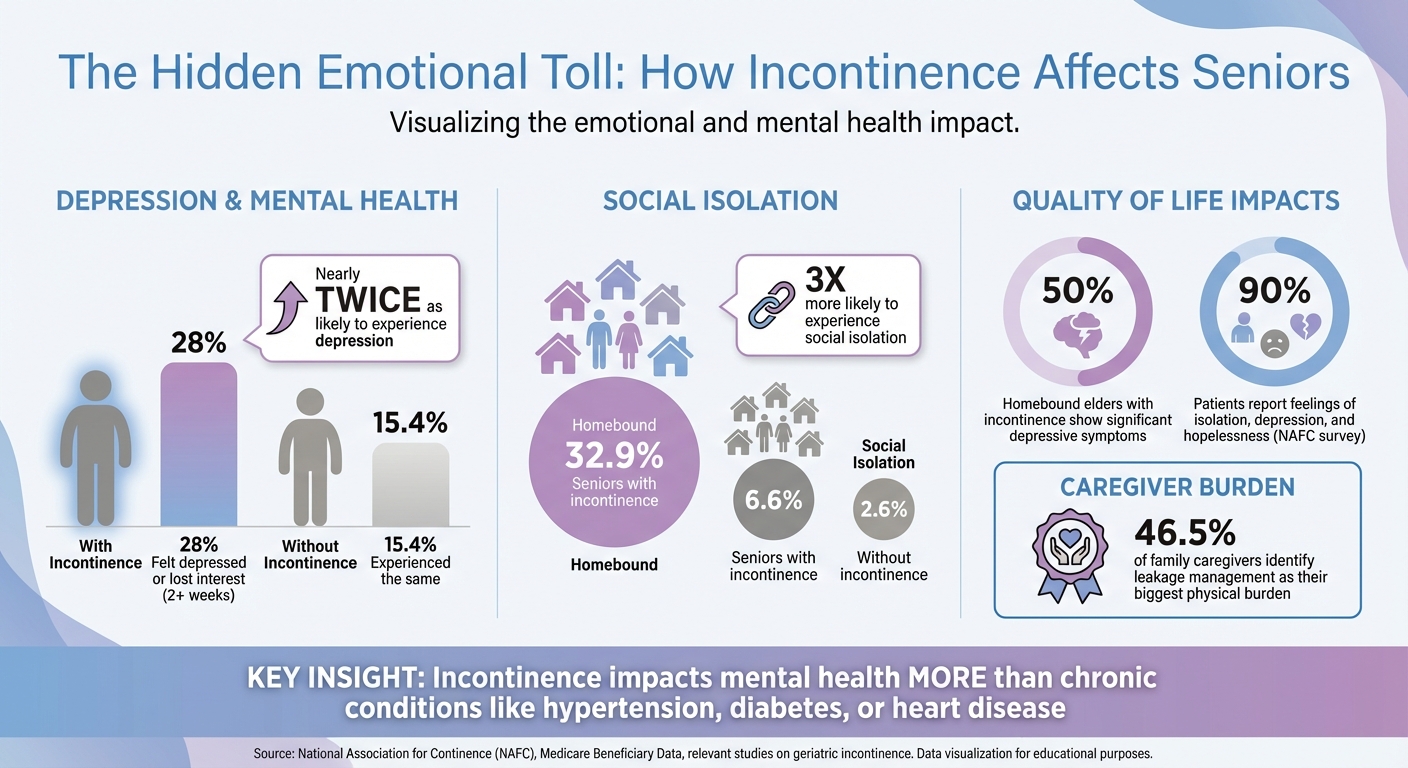
- Seniors with incontinence are twice as likely to experience depression compared to their peers.
- 28% of Medicare beneficiaries with incontinence report losing interest in activities, versus 15.4% of those without it.
- Fear of accidents leads to social withdrawal, with 32.9% of affected seniors becoming homebound.
Practical solutions like disposable vs. washable bed sheets and bathroom modifications can ease physical burdens, while open conversations and mental health support address emotional challenges. Caregivers play a key role in helping seniors regain confidence and dignity.
Emotional Impact of Incontinence on Seniors: Key Statistics
The Voices Of Incontinence: The Social Impact
sbb-itb-45288fe
How Incontinence Affects Seniors Emotionally: What Research Shows
Incontinence isn't just a physical condition - it brings a host of emotional challenges that can deeply affect mental health and disrupt daily life for seniors.
Social Withdrawal and Shame
The constant fear of accidents can push seniors into isolation. Many avoid social activities, religious gatherings, and even family events to escape the potential embarrassment of an accident. This fear of stigma often leads to self-imposed seclusion.
The numbers paint a clear picture. Seniors dealing with daily urinary incontinence are three times more likely to report social isolation compared to those without the condition - 6.6% versus 2.6%. Additionally, about 32.9% of older adults with incontinence are considered homebound. One participant in a study expressed this fear vividly:
"I am afraid of changes in others' behaviors, not being accepted by others. They may not be willing to have relationships with me. I am afraid of being rejected."
- Participant (Older Woman, Frontiers in Psychology Study)
A lack of accessible public restrooms only adds to the problem. Many seniors limit their outings because they can't find safe places to manage their condition, reinforcing feelings of shame and isolation. Over time, this isolation often leads to depression and anxiety. Providing emotional support for caregivers and seniors is a vital part of managing these mental health challenges.
Depression and Anxiety
The connection between incontinence and mental health struggles is well-documented. Research among Medicare beneficiaries shows that 28% of those with urinary incontinence reported feeling depressed or losing interest in activities for two weeks or more, compared to just 15.4% of their continent peers. This emotional toll is often described as a "mental impasse", characterized by self-blame, constant worry, and fear of worsening symptoms.
| Psychological Impact | UI Group | Non-UI Group |
|---|---|---|
| Felt depressed/lost interest (2+ weeks) | 28.0% | 15.4% |
| Felt depressed/sad much of the time | 18.0% | <10.0% |
| Experienced depression for 2+ years | 17.7% | 9.7% |
| Reported declining health compared to the previous year | 25.0% | 13.0% |
Women with stress and urge incontinence are twice as likely to experience moderate to severe mental distress. Among homebound elders with incontinence, up to 50% show significant depressive symptoms. For many seniors, the emotional weight of incontinence is even harder to bear than the physical discomfort.
Reduced Quality of Life
The emotional and social strain caused by incontinence also takes a toll on seniors' ability to enjoy everyday life. Simple activities like shopping or attending religious services can become daunting. In some traditions, the inability to maintain physical "purity" can exclude individuals from participating in important spiritual or communal practices.
Studies show that urinary incontinence negatively impacts vitality, social functioning, and mental health more than chronic conditions like hypertension, diabetes, or heart disease.
Gender also plays a role in how seniors experience this condition. For men, the onset of incontinence often leads to a sharp drop in life satisfaction, likely due to the stigma associated with a condition that is less common among their peers. While some women may see incontinence as a normal part of aging, this perspective doesn't erase the emotional burden. One older woman described the experience plainly:
"When you get wet in front of your family, friends, and even children, you feel ashamed."
- Participant (Older Woman, Frontiers in Psychology Study)
Across all eight domains of standard health surveys - physical functioning, mental health, and overall vitality - seniors with incontinence consistently score lower than the general population. It's clear that addressing the emotional effects of incontinence is just as important as choosing bedding for incontinence care to manage the physical symptoms.
Practical Solutions That Reduce Emotional Stress
Addressing physical challenges can significantly ease the emotional strain experienced by seniors and their caregivers. For example, 46.5% of caregivers report that managing leakage is their biggest source of stress, highlighting the need for practical ways to reduce both physical and emotional burdens.
Simplifying Bedding Changes with PeelAways

Changing bedding the traditional way can take 10 to 20 minutes - removing sheets, washing them, and remaking the bed. For caregivers, doing this multiple times a day or night can lead to burnout, while seniors often feel shame over the accidents that cause these disruptions.
PeelAways disposable bed sheets offer a quicker, easier solution. These sheets come with 5–7 waterproof layers, so when an accident happens, you simply peel off the top layer to reveal a clean sheet underneath. The process takes less than a minute. There’s no need to lift the mattress, rush to do laundry, or deal with lingering odors.
PeelAways protect mattresses completely, preventing leaks from soaking through and eliminating the hassle of scrubbing or dealing with persistent smells. Available in all standard sizes, these sheets are well-loved by caregivers, earning an average rating of 4.8 out of 5 stars from more than 8,000 reviews.
One customer, Ronda, shared how PeelAways improved her father’s quality of life:
"When he has an accident he now can take care of it himself and put a new top sheet on his bed. No more scrubbing, no more smell, and no more embarrassment."
Another caregiver, Jalene Stanger, highlighted the stress relief they provide:
"These have saved my sanity! With 2 incontinent special needs teenagers... these have relieved a lot of stress. They hold a LOT of liquid and are easy to use and tear away."
Because these sheets can be discreetly placed under regular bedding, seniors often gain the ability to handle accidents on their own. This independence helps preserve their dignity, reduce embarrassment, and give them a sense of control. For seniors, this is particularly important since those with incontinence are nearly twice as likely to experience depression compared to their peers without incontinence.
While bedding solutions are a great start, adjustments to bathroom setups can also make a big difference.
Making Bathrooms More Accessible
Modifying the bathroom environment can help reduce the anxiety seniors feel about reaching the toilet in time. For instance, bedside commodes, used by about 25.4% of home-care patients, bring the toilet closer, eliminating the stress of navigating hallways or stairs during urgent moments. For men, external collection devices, such as condom catheters, can channel urine into a leg bag. This reduces the need for nighttime bathroom trips, lowering the risk of falls and improving sleep.
Simple changes in the bathroom can also have a profound impact. Storing incontinence products, like pads and wipes, inside cabinets instead of leaving them out in the open helps maintain privacy. Adding effective room deodorizers and promptly disposing of used products can prevent odors that might otherwise heighten social anxiety and feelings of shame. As the Family Caregiver Alliance puts it:
"It's not 'giving up' to use a product. Using a product can help keep you maintain dignity and independence."
Experts also advise against "double-padding", which involves placing a urinary pad inside a diaper. This common mistake can actually lead to more leaks because the pad’s plastic layer interferes with the diaper’s proper fit. Instead, consulting a Nurse Continence Specialist can help ensure the right size and type of absorbent product is used, as improper fitting is a leading cause of leaks.
These small adjustments can make a big difference, both physically and emotionally:
| Modification/Product | Physical Benefit | Emotional Benefit |
|---|---|---|
| Bedside Commode | Reduces the distance to the toilet | Eases anxiety about accidents |
| Room Deodorizers | Neutralizes odors | Lessens shame and social discomfort |
| External Catheters | Reduces nighttime falls | Improves sleep and sense of independence |
| Cabinet Storage | Keeps supplies out of sight | Protects privacy and dignity |
How Caregivers Can Support Emotional Health
Caring for someone with incontinence goes beyond managing physical needs. Emotional challenges like isolation, depression, and hopelessness are common, as highlighted by a National Association for Continence survey where 90% of patients reported feeling these emotions. By addressing these emotional hurdles, caregivers can help restore confidence and reduce feelings of loneliness.
Creating Space for Honest Conversations
Talking about incontinence can be uncomfortable for many seniors, often due to embarrassment or fear. Caregivers can help by initiating private, respectful conversations. Using direct but compassionate language encourages openness. Sometimes, simply listening without jumping in to offer solutions can provide immense relief.
The words you choose matter. Avoid using infantilizing terms like "diapers" or "ca-ca", which can feel demeaning. Instead, opt for neutral and respectful terms such as "protective underwear" or "absorbent pads." As the Family Caregiver Alliance explains:
"Using language that is appropriate can also raise the conversation to a more mature level, for example not using indirect terms such as 'ca-ca,' or 'diapers,' but rather directly discussing a bowel problem."
This approach helps maintain the senior’s dignity and sets the tone for mature, constructive discussions.
Tackling Shame with Empathy
Incontinence is more common than people realize - affecting about 1 in 15 Americans, with 25% of women and 15% of men experiencing it during their lives. Reframing it as a manageable condition can ease feelings of shame and isolation.
Empathy is key. Phrases like "I know this can feel overwhelming" or "It’s understandable to worry about accidents" acknowledge their emotions without judgment. As TENA Professional points out:
"By trying to be mindful of expressing some kind words that show real empathy, you could really help change the behavior or the mindset of someone struggling."
When addressing the issue, avoid starting with comments about odors or soiled furniture or bedding, as these can lead to embarrassment or defensiveness. Instead, calmly focus on solutions that preserve dignity and confidence.
Connecting Seniors with Mental Health Resources
While daily empathy goes a long way, professional mental health support can be crucial for those struggling with severe emotional distress. Cognitive Behavioral Therapy (CBT) is particularly effective in addressing anxiety and social fears tied to incontinence. Caregivers can start by consulting the senior’s primary care doctor for referrals to specialized counselors.
Support groups also provide a safe space for sharing experiences and learning coping strategies. Organizations like the National Association for Continence (NAFC), Family Caregiver Alliance, and Beyondblue offer resources tailored to the emotional challenges of incontinence. For example, the Family Caregiver Alliance’s "CareNav" tool helps locate local mental health services.
Some seniors may feel more comfortable discussing their concerns with a Nurse Continence Specialist or a counselor who specializes in chronic health issues. Relaxation techniques, such as meditation or deep breathing exercises, can also help reduce anxiety and provide emotional relief.
Conclusion
Incontinence places a heavy emotional burden on individuals, often leading to depression, social withdrawal, and a loss of self-esteem. Studies reveal that seniors dealing with incontinence face an increased risk of depression, yet many suffer in silence due to feelings of shame.
To address this, caregivers must focus on both practical and emotional aspects. On the practical side, managing issues like leakage is a significant challenge, with 46.5% of family caregivers identifying it as their most frequent physical burden. Tools such as PeelAways provide practical solutions by eliminating the need for constant laundry and minimizing disruptions with nighttime incontinence care strategies, helping preserve dignity and promote restful sleep. However, practical adjustments alone aren't enough. Empathetic communication and emotional support are equally essential in restoring a sense of dignity.
As Nancy H. Fultz, PhD, from the Institute for Social Research, puts it:
"UI cannot be adequately evaluated or treated without consideration of the patient's overall quality of life".
FAQs
When should incontinence-related depression be treated?
Incontinence-related depression needs prompt attention as soon as signs of depression are identified. Studies indicate a clear connection between severe incontinence and depression, highlighting the importance of managing both conditions simultaneously to support emotional health.
How can I talk about incontinence without causing shame?
Incontinence is a topic that can feel uncomfortable to bring up, but approaching it with honesty and empathy can make all the difference. It’s important to recognize that this is a common health issue, especially for older adults, and it’s nothing to be ashamed of. By normalizing the conversation, we can help reduce the stigma around it.
Using supportive and positive language is crucial. Instead of framing incontinence as a problem, focus on how it’s something that can be managed effectively. Remind individuals that seeking help is a sign of strength, not weakness. This perspective can empower people to open up and feel less alone in their experience.
Ultimately, sensitivity and understanding are essential. By creating a safe and non-judgmental space, we can encourage meaningful discussions that lead to solutions and better quality of life.
What home changes help seniors feel less anxious about accidents?
Creating a safe and comfortable home environment can help ease anxiety about accidents. Start by making the bathroom more accessible - ensure it’s well-lit and install grab bars for added support. A consistent bathroom routine can also bring a sense of predictability and control. For added reassurance, consider discreet, absorbent solutions like waterproof bed sheets (for example, PeelAways). These products simplify cleanup while preserving dignity, helping seniors feel more secure and confident in their daily routines.
Related Blog Posts
Comments
0



SAVE MONEY & WATER
Professionals & Institutions save a fortune on labor/laundry.

SUPERIOR COMFORT
The first thing our customers notice is how soft our sheets are.

100% WATERPROOF
Each layer is 100% Waterproof, perfect for spills and accidents

SAVE TIME
Change the sheet in under 1 minute without stripping the bed.

Leave a comment