
Ultimate Guide to DIY Sensory Bedding for Autism

Struggling with sleep issues tied to autism? Sensory-friendly bedding can help. About 50-80% of autistic children face sleep challenges, often due to sensitivities to touch, temperature, or pressure. DIY solutions like weighted blankets, compression sheets, and customized pillowcases offer a cost-effective way to address these needs while tailoring comfort to the individual.
Key Insights:
- Weighted Blankets: Use soft fabrics like cotton or fleece and fill with washable materials like poly pellets or glass beads. Aim for 10% of body weight + 1–2 lbs.
- Compression Sheets: Lycra or ponte knit provides gentle pressure, aiding relaxation. Ensure a snug fit for best results.
- Fabric Choices: Opt for breathable, hypoallergenic materials like bamboo, silk, or Tencel.
- Room Setup: Use blackout curtains, white noise machines, and calming scents like lavender to create a soothing sleep environment.
These DIY projects can save money (weighted blankets cost $50–$80 DIY vs. $100–$300 store-bought) and improve sleep for both the individual and their caregivers. Always involve the user in fabric and design choices, and consult an occupational therapist for safety tips. Whether it’s reducing sensory overload or creating a calming space, these solutions can make a real difference.
Sensory Blankets for Kids with Autism
How to Make a Weighted Blanket
Step-by-Step Guide to Making a DIY Weighted Blanket for Autism
What You'll Need
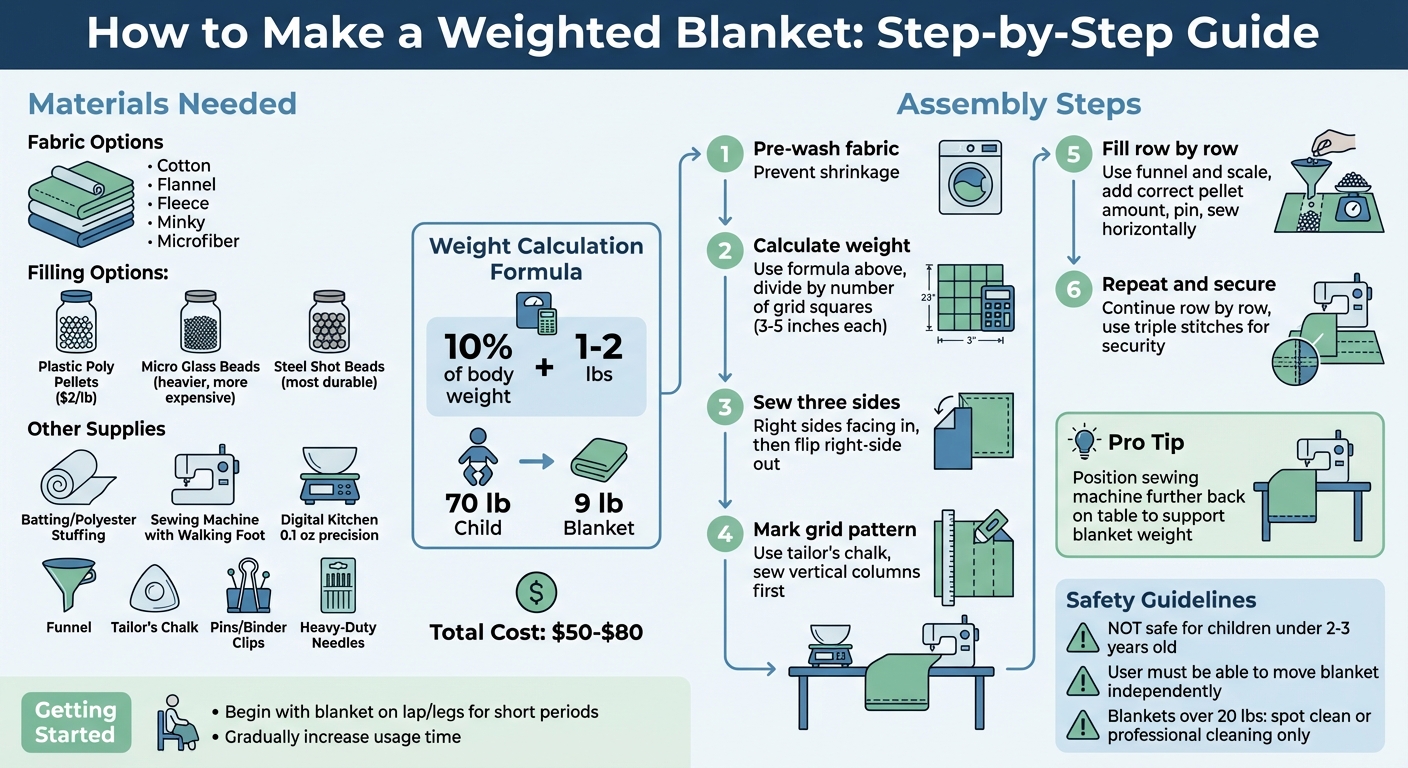
Start by picking a fabric that's both soft and sturdy enough to handle extra weight. Popular choices include cotton, flannel, fleece, minky, or microfiber. Let the person who will use the blanket test different fabrics to find the one that feels best for them.
For the filling material, you’ve got a few options:
- Plastic poly pellets: Affordable (around $2 per pound), machine washable, and widely available.
- Micro glass beads: Heavier and denser, making for a thinner blanket, but they cost more.
- Steel shot beads: Extremely durable and heavy.
Avoid organic fillers like rice or beans - they can’t be washed, may attract pests, and could develop mildew over time.
Other supplies you'll need include batting or polyester stuffing to cushion the weights, a sewing machine (preferably with a walking foot attachment), a kitchen scale that measures to 0.1 oz, a funnel or an empty wrapping paper roll, tailor’s chalk, pins or binder clips, and heavy-duty needles like denim needles. Expect the total cost to range between $50 and $80.
Assembly Instructions
Start by pre-washing your fabric to prevent shrinkage later. Then calculate the blanket's weight: use the guideline of 10% of the user’s body weight plus 1–2 pounds. For example, for a 70-pound child, aim for a total weight of about 9 pounds. Divide that weight by the number of grid squares you plan to sew (each square is typically 3 to 5 inches) to figure out how much weight goes into each pocket.
To assemble:
- Sew two fabric pieces together on three sides, with the right sides facing in. Then flip the fabric right-side out.
- Use tailor’s chalk to mark a grid pattern. Start by sewing vertical columns to create long channels.
- Fill the first row using a funnel and your scale. Add the correct amount of pellets to each pocket, pin it closed, and sew horizontally to seal that row.
- Repeat this process row by row, using small or triple stitches to ensure everything stays secure.
"Getting closer to the last few rows I stitched almost all of the way across each of the pockets leaving only enough room for the bottom of a funnel to fit in. This kept most of the pellets from cascading out as the last stitches were placed."
– Linda Schmidt, DIYer
To make sewing easier, position your machine further back on the table. This way, the table can support the blanket’s weight, reducing strain on the needle.
Once your blanket is fully assembled, it’s time to focus on safe usage.
Getting Started with Weighted Blankets
Ease into using the blanket by placing it on the lap or legs for short periods. This helps the user get used to the pressure. Keep in mind:
- Weighted blankets are not safe for children under 2 or 3 years old due to suffocation risks.
- The user should have enough strength to move the blanket themselves.
For blankets weighing more than 20 pounds, avoid using a standard home washing machine. Stick to spot cleaning or take the blanket to a professional cleaner to prevent damage.
Making Stretchy Compression Sheets
Picking the Right Lycra Fabric
Lycra, also known as nylon spandex, is a top choice for compression sheets because it stretches easily and snaps back to its original shape without losing elasticity [10]. If you're searching for alternatives, stretchy jersey can work, but it tends to lose tension over time. For a firmer, more supportive option, ponte knit is a great choice - it's thicker and offers stronger compression [9].
When selecting fabric, it's a good idea to test how it feels. The material should be breathable and soft against the skin, especially since these sheets are often used overnight.
How to Make the Sheets
Compression sheets are essentially a large fabric tube that fits snugly over a mattress. To make one, drape the fabric over the mattress, flip it over, and pull the edges tightly together underneath until they meet. The key is to create a snug fit. Use clips or pins to hold the fabric in place while it's under tension [9].
"I trimmed the fabric until I could barely yank the two sides together in the middle. Tightness is essential." – Heather Laura Clarke, DIY Creator [9]
For sewing, use a zigzag or stretch stitch to secure the seam down the center of the mattress's underside. Avoid straight stitches - they can break when the fabric stretches. If you have a serger, that's even better, but a regular sewing machine with a stretch setting works just fine. Keep the seam on the bottom of the mattress to keep it hidden and to avoid irritating sensitive skin [9].
Using Compression Sheets
The snug fit of compression sheets creates a calming effect, similar to a gentle bear hug. As the user moves during sleep, the fabric's resistance provides proprioceptive input, helping to calm the nervous system and enhance body awareness. This can make it easier to relax and fall asleep [10].
To get the most out of compression sheets, introduce them gradually as part of a soothing bedtime routine. It's also wise to consult an occupational therapist before using them with children who have specific medical or movement-related needs. This ensures the compression is safe and appropriate for their situation [10]. Compression sheets can be a helpful addition to other sensory bedding solutions, offering extra comfort for individuals with autism.
Choosing Soft and Comfortable Fabrics
Recommended Fabrics
Picking the right fabric can make a world of difference when creating autism-friendly bedding. Look for materials like 100% cotton (organic, Supima, or Egyptian), bamboo rayon, silk, Tencel, or linen. These fabrics are known for being breathable, hypoallergenic, and moisture-wicking, making them ideal for sensitive sleepers [11][13][14]. Supima cotton, for instance, is both soft and durable, even though it represents less than 1% of the global cotton market [14].
Bamboo rayon stands out for its cooling and antimicrobial properties [11][13][14]. Meanwhile, silk offers an ultra-soft texture and a natural barrier against dust mites and pet dander, making it a great pick for those with sensory sensitivities [11]. If overheating at night is a concern, Tencel (lyocell) is a smooth, soft option that naturally resists bacteria and dust [13][14]. Linen, though initially stiff, becomes softer with every wash and is both durable and hypoallergenic [13][14].
"Because of their breathability, these natural materials will help keep you and your bed sheets dry, preventing the spread of dust mites, which prefer humid environments." – Tanya Slavin [11]
When choosing cotton sheets, aim for a thread count between 200 and 700 for the best balance of softness and breathability [11]. For silk, look for a momme weight of 17 to 22 to ensure both comfort and durability [13][14]. If you prefer flannel, select one with at least 170 GSM (grams per square meter) to achieve a warm and cozy feel [13][14].
Avoid synthetic fabrics like polyester or nylon, as they can trap heat and moisture, potentially irritating sensitive skin [11]. Similarly, rough materials like denim, corduroy, or coarse wool are often described as "torturous" for those with heightened tactile sensitivities [12][17]. To find the perfect fabric, consider ordering swatches so the individual can feel them first. Checking the tags of favorite clothing can also reveal preferred fibers [15].
These fabric choices lay the groundwork for creating custom sensory-friendly pillowcases and quilts.
DIY Pillowcases and Quilts
Once you've chosen the right fabrics, crafting pillowcases and quilts becomes much easier. Making them yourself allows you to avoid common irritants like tags and rough seams. Start by pre-washing the fabric to remove any residues and give it a soft, "broken-in" feel [15][16][17].
For pillowcases, an envelope-style design works well. Use closures like elastic, Velcro, or self-ties, and ensure seams are flat by using a serger or flipping the seam inside [15]. If you're sewing by hand or with a basic machine, consider placing seams on the outside initially, then flipping the pillowcase inside out so the smooth side touches the skin [12][16].
When it comes to quilts, think about the individual's sensory needs. Those who are hypersensitive generally prefer smooth, lightweight fabrics like silk or thin cotton. On the other hand, individuals who are hyposensitive might benefit from heavier textures, such as velvet or thick flannel, as these can provide a comforting sense of deep pressure [12]. To avoid triggering discomfort, try the "cheek test" - rub the fabric against your cheek, neck, or wrist. If it feels even slightly rough or clingy, it’s likely to be much worse for someone with sensory sensitivities [17].
Customizing pillowcases and quilts in this way complements other sensory-friendly bedding options, like weighted blankets and compression sheets, creating a more comfortable and supportive sleep environment.
sbb-itb-45288fe
Setting Up a Sensory-Friendly Bedroom
Controlling Light and Sound
Switch out fluorescent bulbs for warm-toned LED bulbs (2700–3000K) to avoid flickering and buzzing sounds that can be overstimulating [19]. Adding dimmer switches allows you to adjust the light intensity to suit different needs and times of day [21]. For nighttime, opt for red-hued night lights, as they are less likely to disrupt sleep cycles compared to blue light [5].
"Light is the fastest lever for nervous system regulation. Target 50–150 lux for deep relaxation and 150–300 lux for quiet focus." – Sarah Thompson, Designer [21]
To block out streetlights and early morning sun, blackout curtains are a great choice. They also help reduce outside noise [5]. Pair these with a white noise machine to mask disruptive sounds and maintain a consistent sound level between 35–45 dBA [21]. If you don't have a white noise machine, free apps on your smartphone can work just as well [22]. To further reduce echoes and reverberation, incorporate soft elements like area rugs, wall hangings, and heavy curtains into the space [21].
Creating a sensory-friendly environment also means paying attention to the room's climate.
Temperature Control
Set the room temperature to 65°F (18.3°C), which supports the body’s natural cooling process and promotes better sleep [18]. This is especially critical since about 80% of children with autism experience sleep challenges due to heightened sensitivity to their surroundings [20]. A ceiling fan on low speed is a quieter option for air circulation compared to a floor fan [23]. For bedding, choose breathable materials like cotton or bamboo to prevent overheating [1]. Position the bed against a solid wall and away from windows and doors to minimize drafts and external noise [19]. Also, avoid exposing the room to artificial light sources with a lux level of 10 or higher late in the day, as this can disrupt sleep and reduce the quality of restorative slow-wave sleep [18].
Adding Calming Scents and Safe Spaces
A sensory-friendly bedroom isn’t complete without touches that soothe the senses. Scents like lavender and chamomile can help improve sleep quality and boost alertness in the morning [18]. Use passive diffusers with low intensity, or simply place a few drops of essential oil on a cotton ball near the bed [21]. For a more personal touch, you can sew small sachets of calming scents into plush toys [23].
Having a dedicated safe space within the bedroom is essential for relaxation and decompression. Items like bean bag chairs, floor cushions, pop-up tents, or bed canopies can create a cozy retreat [24]. Keep ear defenders nearby to provide quick relief from auditory overload [5]. If the bedroom doubles as a play area, use the SPEL framework - Sleep, Play, Enjoy, and Learn - to define zones and maintain order [19].
"The space a child awakens to and drifts off to sleep in at night should be calm, safe, and always welcoming. It should be a place of peace and sensory replenishment, never a place of discomfort or isolation." – Carolyn Feder, Licensed Interior Designer and Founder, Sensory Interior Design [19]
Saving Money on DIY Projects
Where to Find Affordable Materials
Start by looking around your home. Items like king-size flat sheets, tablecloths, or old duvet covers can be transformed into sensory bedding without spending much [25]. For more options, check out thrift stores, garage sales, or estate sales. These places often have fabric remnants or durable vintage quilts that work well as weighted blankets [26].
"Instead of buying new fabric, upcycle flat sheets. For my weighted blanket, I'm using two cotton twin‑sized flat sheets." – Julie Finn, Author [25]
Discount stores such as Dollar Tree are another great option. You can find king-sized pillowcases and tablecloths for as little as $1.25, perfect for repurposing into sensory items [27]. Craft stores like Hobby Lobby and JOANN often have clearance bins filled with inexpensive fabric or oversized clothing priced between $1–$3. When browsing clearance racks, look for the largest sizes (XXL to 5X) to maximize usable material. For heavier-duty projects, home improvement stores sell drop cloths and moving blankets, which are both sturdy and budget-friendly.
If you're making a weighted blanket, avoid buying poly pellets from local craft stores - they tend to be overpriced. Instead, check online marketplaces like Etsy or eBay, where they typically cost around $2 per pound [7]. You can also save on sewing notions by using a seam ripper to reclaim zippers, buttons, and elastics from old clothing. Joining community groups like "Buy Nothing" or "Freecycle" on Facebook can lead to free fabric or linens [26].
These resources make DIY projects affordable, but there are times when buying ready-made options might be the smarter choice.
When to Buy Ready-Made Solutions
If you don’t have a sewing machine or necessary tools like a walking foot, DIY projects can become more expensive than buying pre-made items [6] [7]. Commercial weighted blankets, for example, are designed for durability and can handle regular use, whereas a DIY version might require frequent repairs, adding to the overall cost [6].
"The cost to purchase a weighted blanket can be quite steep, with some models costing up to $300. Considering the high potential price‑point, some people might find it more feasible to make one." – Sleep Foundation [6]
For bedding protection, ready-made solutions like PeelAways disposable sheets offer convenience and time savings. These sheets come with 5 to 7 waterproof layers - just peel away the soiled layer to reveal a fresh one underneath. No sewing, no laundry, and no risk of cross-contamination. This is especially useful for families dealing with nighttime accidents or fabric sensitivities. PeelAways are available in various sizes, from Crib ($30.99) to King ($53.99), with free shipping on orders over $100 and a 15% discount for subscriptions.
Safety is another important factor to consider. Ready-made solutions for infants and babies are rigorously tested to meet suffocation risk standards - something DIY projects can't guarantee [6] [8]. Additionally, creating a DIY weighted blanket is a labor-intensive process that requires precise measurements and careful assembly [6] [28].
Conclusion
Designing sensory-friendly bedding for individuals with autism can make a huge difference in both sleep quality and overall well-being. Thoughtfully chosen bedding can help improve focus, ease irritability, and even reduce repetitive behaviors.
A peaceful, soothing sleep environment becomes a place of comfort and recovery, rather than a source of stress.
From weighted blankets to compression sheets or blackout curtains, every adjustment matters. It's important to remember that autism exists on a spectrum - what brings comfort to one person might not work for another. For example, while some individuals benefit from the calming pressure of a weighted blanket, those with tactile sensitivities might find it uncomfortable. Always involve the individual in selecting fabrics, textures, and colors, and consult an occupational therapist before introducing new sensory tools [2][4]. These personalized choices come together to create a space that truly supports restorative sleep.
For those on a budget, DIY projects can help cut costs while still delivering thoughtful solutions. Pairing homemade items with ready-made options - like PeelAways for easy maintenance and hygiene - can strike the perfect balance between affordability and convenience. The ultimate goal is to build a sensory-friendly sanctuary that reduces stress, prevents meltdowns, and ensures everyone in the household gets the rest they need.
Improved sleep doesn’t just benefit the individual with autism. With 82% of caregivers of autistic children sleeping fewer than seven hours a night [3], these changes can positively impact the entire family’s daily life.
FAQs
How can I tell if my child will like a weighted blanket or compression sheet?
When choosing materials for your child, pay attention to their sensory preferences and sensitivities. Many children with autism are drawn to soft, breathable fabrics like cotton or flannel, as these can provide a calming sensation. Notice how they respond to different textures and levels of pressure - some may find the gentle, consistent pressure of a weighted blanket comforting because it feels similar to a hug. Experiment with various fabrics and weights gradually, and consider consulting a therapist or observing their reactions during sensory play to better understand what suits them best.
What safety checks should I do before letting my child sleep with sensory bedding?
Before letting your child use sensory bedding, take a moment to ensure it’s safe and hazard-free. Start by checking for any loose or bulky materials that might pose a suffocation risk or cause injury. Make sure the bedding fits snugly on the mattress without any loose parts or sharp edges. Proper ventilation is also key - this helps prevent overheating during sleep. To keep things safe and comfortable, inspect the materials regularly for wear and tear, and keep the sleep area uncluttered. Safety always comes first!
How can I make bedtime cleanup easier with sensory-friendly bedding?
Simplify bedtime cleanup with disposable, waterproof bed sheets like PeelAways. These sheets feature a multi-layer design, allowing you to peel off the top layer when it gets soiled. Beneath, you’ll find a fresh, clean sheet - no need for lifting the mattress, doing laundry, or worrying about cross-contamination.
For a calming touch, consider sensory sheets such as DIY lycra compression sheets. They not only provide gentle, soothing resistance but can also help minimize mess, making bedtime more relaxing and manageable.
Comments
0



SAVE MONEY & WATER
Professionals & Institutions save a fortune on labor/laundry.

SUPERIOR COMFORT
The first thing our customers notice is how soft our sheets are.

100% WATERPROOF
Each layer is 100% Waterproof, perfect for spills and accidents

SAVE TIME
Change the sheet in under 1 minute without stripping the bed.

Leave a comment