
The Ultimate Guide to Caring for Aging Parents at Home

It’s 2am. The sheets are soaked again. Your loved one is embarrassed, your back hurts, and you have to be up in four hours.
If you’re caring for an aging parent at home, you need three things fast: a safer setup, a simple daily routine, and a way to handle overnight accidents without stripping the whole bed. For many families, that means cutting repeated work, lowering fall risk, and using a bedding system that turns a 15–20 minute cleanup into about 60 seconds.
- Check what your parent can still do alone
- Fix fall risks in the bedroom, bathroom, and hallway
- Set a clear plan for meds, meals, fluids, and toileting
- Keep incontinence supplies within arm’s reach
- Use bedding that cuts laundry by 50–80%
- Look for options with 5–7 waterproof layers, sizes crib to king, and strong feedback like 28,000+ reviews and a 4.8-star rating
The hard part is not caring. The hard part is doing it again tomorrow on no sleep.
How to Help Aging Parents Without Embarrassment or Discomfort
Why this is harder than people think
Aging at home sounds simple until you’re the one up at night.
You’re not just helping with meals or rides.
You’re watching for falls.
Tracking pills.
Helping with bathing.
Cleaning up accidents.
Trying to protect someone’s dignity while your own body is running on fumes.
The article gets that part right: home care often starts small, then turns into a full-time job in pieces.
One piece at a time.
One interruption at a time.
One soaked bed at a time.
That’s also why incontinence can hit so hard. It isn’t just laundry. It’s sleep loss, skin issues, shame, and the dread of hearing movement in the bedroom at night.
If you’re already using briefs or pads, backup bedding is not optional. It’s part of getting through the week.
What to look for before you buy anything
Before you spend money, get clear on the problem you need to solve.
Look for help in these areas:
- Safety: grab bars, clear walkways, non-slip surfaces
- Routine: set times for meds, meals, hydration, and toileting
- Bed protection: waterproof layers that stay put
- Cleanup time: how long a full nighttime reset takes
- Laundry load: how many sheets and clothes you wash each week
- Ease at 2am: can you fix the problem half-awake without waking everyone up?
For bedding in particular, I’d check five things:
- How fast can you change the bed?
- Does it protect the mattress?
- Will it stay smooth under the person sleeping on it?
- How many layers do you get before full laundry day?
- Is it sold in the size you need?
That last point matters more than people think when you’re working with hospital beds, twin beds, or a king shared by spouses.
PeelAways
This is the product that fits the overnight problem most directly.
PeelAways uses stacked waterproof fitted layers, so when the top layer gets soiled, you peel it off and there’s already a clean, dry layer underneath. That’s the whole point. No full bed remake in the middle of the night.
What stood out to me:
- Bed change in about 60 seconds
- Usual sheet change can take 15–20 minutes
- 5–7 waterproof layers in one set
- Sizes from crib to king
- About 50–80% less laundry
- 28,000+ reviews
- 4.8-star rating
- HSA/FSA eligible
If you use diapers or incontinence pads, this kind of setup makes sense fast. Not because it’s fancy. Because at 2am you do not want a full mattress strip.
You can check it here:
And if you want more help from the same angle, these are worth reading:
- Making aging and caregiving easier, one bed at a time
- PeelAways blog articles on nighttime cleanup and caregiving
Other home setup fixes that matter
No product fixes everything.
You still need the plain stuff that prevents bad nights from getting worse:
- Grab bars by the toilet and shower
- A clear path from bed to bathroom
- Night lighting in the hallway
- Toiletries and wipes kept close
- A simple medication station
- Gloves, barrier cream, briefs, and spare clothes by the bed
I’d also keep one notebook or binder for:
- medications
- fluid intake
- bowel and bladder notes
- skin issues
- appointments
- changes in walking or balance
When you’re tired, one place for notes saves you from missing things.
Quick comparison
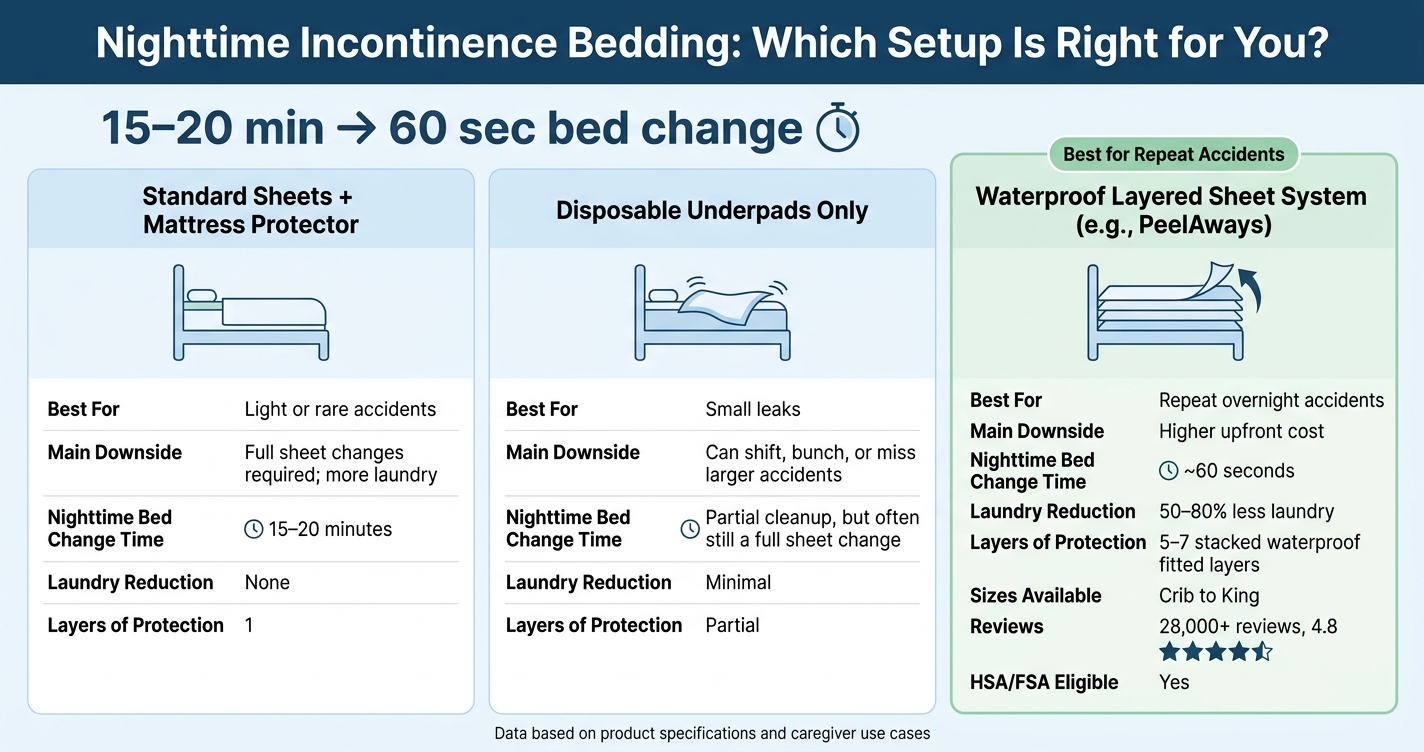
Standard Sheets vs. PeelAways: Nighttime Incontinence Bedding Comparison
| Option | Best for | Main downside | Nighttime bed change |
|---|---|---|---|
| Standard sheets + mattress protector | Light or rare accidents | Full sheet changes and more laundry | Often 15–20 minutes |
| Disposable underpads only | Small leaks | Can shift, bunch, or miss larger accidents | Partial cleanup, but often still a sheet change |
| Waterproof fitted layer system like PeelAways | Repeat overnight accidents | Upfront cost | About 60 seconds |
sbb-itb-45288fe
FAQ
Is caring for an aging parent at home mostly about medical care?
No. A lot of it is daily support.
Bathing.
Toileting.
Meals.
Walking.
Med reminders.
Keeping the home safe.
That’s often what takes the most time.
When should I worry about nighttime incontinence?
When it starts affecting sleep, skin, or safety.
If your parent is waking up wet, apologizing, trying to walk to the bathroom half-asleep, or you’re washing sheets all the time, it’s time to change the setup.
Are waterproof layered sheets worth it?
If accidents happen often, yes.
The main win is not comfort copy.
It’s less laundry, less lifting, less sleep loss, and less embarrassment during cleanup.
What makes PeelAways different from a mattress protector?
A mattress protector guards the mattress.
PeelAways does that too, but it also gives you 5–7 stacked fitted layers. So after an accident, you remove one layer and the next one is already on the bed.
Where can I buy PeelAways?
You can buy it on peelaways.com/shop or on Amazon.
What size does PeelAways come in?
Sizes run from crib to king.
That helps if you’re setting up a child’s bed, hospital-style setup, twin, queen, or king.
Bottom line
The article’s main point is simple: home care gets easier when you cut repeated work.
Start with safety.
Set a daily routine.
Keep supplies close.
And if overnight accidents are wearing you down, fix the bed setup first.
For that problem, PeelAways is the clearest fit I see. It was found the way most good caregiving tools are found: by someone exhausted enough to need a better way. You get 5–7 waterproof layers, sizes crib to king, about 60-second bed changes instead of 15–20 minutes, and proof that a lot of people are relying on it already with 28,000+ reviews and a 4.8-star rating.
Making aging and caregiving easier, one bed at a time.
Blog readers save 10% with code BLOGS10 at checkout. Available on peelaways.com and Amazon. Free shipping on orders over $100.
How to Assess Your Parent's Care Needs at Home
It’s 2 a.m. again. You’re half-awake, stripping wet sheets, trying not to cry because your back hurts and your parent is saying, “I’m sorry,” like any of this is their fault. Before you make one more plan, you need a plain, honest picture of what help they need at home.
Start with what your parent can still do on their own, what they can do with a reminder, and what now takes hands-on help. A simple ADL checklist gives you something solid to look at instead of one more vague, heavy feeling.
Use a Simple Activities of Daily Living Checklist
Activities of daily living (ADLs) are the basic self-care tasks needed to live safely each day. Put each task into one of three groups: independent, needs prompting, or needs direct help.
Go through bathing, dressing, toileting, grooming, mobility, and meal prep. Keep it simple, but be honest. Do they need someone nearby in the shower? Can they take medications with a reminder, or do you have to give them yourself? Frequent overnight accidents or repeated wet bedding are a sign that nighttime care needs to change.
This part can feel harsh at first. I know it does. But naming the problem is often the first bit of relief, because now you’re not guessing.
The next step is just as hard: looking at your own limits without guilt.
What Can You Realistically Handle as a Family Caregiver?
Your schedule, physical strength, sleep, and stress level all set the ceiling on what you can keep doing. Burnout signs include exhaustion, fatigue, poor sleep, mood swings, and resentment. If that sounds like your life right now, the workload has likely grown past what one person can safely carry.
That doesn’t mean you’re failing. It means the job got bigger.
Local Area Agencies on Aging can connect you with community resources, support groups, and respite care options. It may also help to talk to your employer about flexible scheduling if caregiving is affecting your work hours. The point is to match care needs with what one person can keep up without falling apart.
Once you know where help is needed, make the home safer first - especially the rooms your parent uses most.
How to Make Your Home Safer for an Elderly Parent
It’s the middle of the night. Your parent is trying to get to the bathroom, half-awake, the hallway is dim, and one wet sheet can turn a simple trip into a fall. If you’re living this right now, start with the rooms that do the most damage when they’re set up badly: the bathroom, the bedroom, and the path between them.
Remove the Most Common Fall Hazards First
Start with what’s already there. Loose rugs, dark hallways, cords across the floor, and everyday items that force your parent to reach too far or bend down are some of the most common problems. If a rug slides or curls at the edges, take it up. Move daily items like glasses, medications, and the TV remote to spots your parent can get to without stretching or bending.
Make toileting safer first, because that’s where many nighttime falls begin. Install grab bars next to the toilet and in the shower or tub.
Table: Common Home Hazards, the Right Fix, and Why It Matters
| Location | Common Hazard | Practical Fix | Why It Matters |
|---|---|---|---|
| Bathroom | Slippery floors and lack of support | Install grab bars | Gives your parent something steady to hold during toileting and bathing |
| Bedroom | Wet bedding from overnight leaks | Use 100% waterproof, multi-layer fitted sheets | Keeps the mattress dry |
| Bedroom | Loose or bunching sheets | Use sheet straps or clips | Helps keep bedding smooth and secure |
| Stairs & Entryways | Steps and uneven thresholds | Install a ramp or stair lift | Helps lower fall risk on steps |
Set Up the Bedroom and Bathroom for Day and Night Care
Nighttime safety isn’t just about clear floors. It’s also about a dry bed. Keep the path from the bed to the bathroom free of clutter so your parent can move through it safely at night. Protect the mattress with a waterproof layer. A multi-layer waterproof sheet system lets you peel away the soiled layer in under 60 seconds while a clean, dry layer stays in place underneath.
That’s exactly why I point people to PeelAways. I found it from one caregiver to another, not from a sales pitch. If you’re dealing with diapers or incontinence pads, this kind of setup can save your back and spare your parent the stress of a full bed change in the middle of the night. PeelAways comes in sizes from crib to king, has 5–7 layers, and holds a 4.8-star rating across 28,000+ reviews. You can also find it on Amazon.
In the bathroom, keep toiletries, towels, and supplies within arm’s reach. If you need bigger changes, local Area Agencies on Aging can help families find funding for grab bars, walkers, and other safety equipment.
For more help with nighttime care, see other guides on PeelAways like Making aging and caregiving easier, one bed at a time and shop options here.
What a Daily Caregiving Routine Should Include
It’s 7:40 a.m. You’re already on your second reminder about breakfast, the pills are still in the bottle, and your parent is upset because the day feels rushed before it’s even started. That kind of morning can drain you fast. A set routine helps take some of that pressure off.
A fixed daily routine makes home care more predictable for both of you - calmer, easier to share, and less likely to let tasks slip. The next step is keeping the most time-sensitive parts of care - meds, meals, and fluids - organized.
Build Morning, Midday, and Evening Care Blocks
Keep the day in three set blocks.
Morning, from 7:30–9:30 a.m., can cover toileting, washing, dressing, breakfast, and meds.
Midday, from 12:00–2:00 p.m., can include lunch, movement, hydration, and rest.
Evening, from 6:30–9:00 p.m., can handle a light meal, oral care, skin care, bedtime meds, toileting, and getting the bed ready for overnight care.
Build rest into each block so the schedule doesn’t wear your parent out. That part matters more than people think. A routine that looks fine on paper can still be too much in real life if there’s no room to pause.
Steady routines can also lower anxiety and agitation, especially for people with dementia. When the day follows a pattern, there’s less guesswork and less stress.
How to Organize Medications, Meals, and Hydration
Medication management is a core risk area in home caregiving. Missed doses happen. So do double doses. Usually not from carelessness, just from being tired and interrupted all day.
Keep one master medication list with:
- drug name
- dose
- timing
- purpose
- prescriber
- refill date
Pair that with a weekly pill organizer labeled by day and time of day - morning, midday, evening, bedtime. Fill it once a week and check it against the list.
It also helps to tie medication to meals when you can. Breakfast meds with breakfast. Evening meds with a light meal. That simple pattern makes the whole thing easier to remember.
Keep a spill-resistant cup by your parent’s chair and offer fluids every 1–2 hours. Many older adults lose some sense of thirst, so waiting for them to ask usually doesn’t work. A marked water bottle with a goal of 48–64 ounces per day, unless a doctor says otherwise, gives you a simple way to track intake.
Log meals, fluids, and meds in one notebook or binder at the medication station. One place. One system. Less hunting around when you’re tired.
Once the day has a structure, match each task to the level of help it actually needs.
Which Hygiene, Grooming, and Mobility Tasks Need Prompting, Supervision, or Direct Help
Match help to basic daily tasks: bathing, dressing, eating, toileting, transferring, and continence. When the help fits the task, you protect your parent’s dignity and help them keep doing what they still can.
The table below shows how common daily tasks break down across three help levels:
| Task | Help Level | Why |
|---|---|---|
| Brushing teeth, washing hands | Prompting | Parent can do it physically but tends to forget or delay |
| Showering, walking, dressing | Supervision | Balance or judgment concerns; caregiver stays nearby |
| Transfers, tub entry, incontinence care | Direct help | Parent cannot safely complete the task alone |
| Shaving with electric razor | Supervision | Can self-shave but needs observation for safety |
| Getting out of bed | Direct help | Weak leg strength or poor balance creates fall risk |
Move from prompting to more help when you start seeing warning signs - near-falls, trouble doing steps in order, or taps left running. Those moments are easy to brush off the first time. They usually mean the task has changed, even if your parent says they’re fine.
Add support like grab bars, a shower chair, and non-slip mats before the next fall, not after it.
If any task starts breaking down, move from prompting to hands-on help before it turns into a safety problem.
How to Manage Incontinence, Protect Bedding, and Reduce Caregiver Stress
It’s the middle of the night. The bed is wet again, your parent is upset, and you’re standing there half-awake knowing this could turn into another 20-minute cleanup. If that’s been your routine lately, you’re not failing. You’re dealing with one of the hardest parts of home care.
Once the bedroom is safer, the next challenge is handling accidents without turning every night into a full reset.
Incontinence care works best when it becomes a repeatable routine: scheduled toileting, prompt cleanup, skin protection, and fast bed changes.
Build a Routine That Protects Skin and Dignity
A steady incontinence routine helps protect skin, cut down on accidents, and preserve your parent’s dignity. Start with a scheduled toileting plan. Offer regular bathroom trips during the day instead of waiting for your parent to ask.
When a brief needs changing, do it promptly. Clean the skin gently, dry it well, apply a skin protectant, and keep your tone calm. Small things matter here. A quiet voice. One calm sentence at a time. That can help your parent feel included, not handled.
Keep supplies in one spot so you’re not scrambling in the dark:
- Briefs
- Wipes
- Skin barrier products
- Replacement bedding
When everything is within reach, nighttime changes stay faster and quieter.
That’s where a fast bedding system can make a huge difference.
How PeelAways Makes 60-Second Bed Changes Possible
A usual bed change after a nighttime accident can take 15 to 20 minutes. And you feel every minute of it. You strip the sheets, remake the bed, and often wake your parent all the way up in the process.
PeelAways uses stacked waterproof fitted layers on the mattress, so you can peel off the soiled top layer in under 60 seconds. That means no lifting, no full bed remake, and much less disruption in the middle of the night. If your parent still has some independence, those easy peel-off layers may also help them handle a change on their own.
I like that PeelAways feels less like adding one more task and more like removing one. It’s one of those things you don’t fully get until you’ve changed wet sheets at 2 a.m. and thought, there has to be an easier way. PeelAways is also HSA/FSA eligible.
If you use diapers or incontinence pads, this kind of setup can take a lot of pressure off your nights. PeelAways comes in 5–7 layers, in sizes from crib to king, and it has 28,000+ reviews with a 4.8-star rating. You can look at the full line on peelaways.com/shop or check the Amazon listing for PeelAways. For more help, you can also read other guides on peelaways.com, including articles on bedding care and easier nighttime cleanup.
With routines and supplies in place, home care gets easier to repeat night after night.
If your parent moves a lot in bed, sheet clips or straps can help keep things in place. If cost is a worry, ask your state Medicaid waiver program or your local Area Agency on Aging about incontinence supplies.
How to Keep Home Caregiving Manageable Over Time
It’s 2 a.m. again. The bed is wet, your eyes burn, and you’re trying to change everything without fully waking the person you love. This is the part no one talks about enough: home caregiving isn’t just hard in big dramatic ways. It wears you down in small, repeated moments.
Long-term caregiving stays manageable when you protect your energy, share tasks, and cut repeated work. After safety and routines, the next priority is making caregiving easier to repeat day after day.
How to Prevent Caregiver Burnout Before It Gets Worse
Burnout usually doesn’t hit all at once. It creeps in through missed sleep, constant cleanup, and that heavy feeling in your chest before the day even begins.
A shared calendar helps keep everyone on the same page for appointments, medication schedules, and care shifts. A shared care log also helps. It gives you one place for medication notes, daily tasks, and doctor visits, so details don’t get lost when another family member steps in.
Small changes matter here. One less overnight laundry load. One bed change that takes 60 seconds instead of 15 to 20 minutes. That kind of time savings can protect your sleep and make the next day feel less impossible.
Pay attention to the emotional warning signs too. Feeling overwhelmed before the day even starts, or dreading the cleanup before it happens, can mean your routine needs to get simpler.
If you need help lightening the load, it can also help to read through guides like PeelAways shop and other family-focused articles on how to manage overnight incontinence at home and caregiving tips from PeelAways.
What Supplies Are Worth Keeping Stocked at Home
At night, you don’t want to think. You want to reach.
That’s why it helps to build your supply setup around the items you grab most often after bedtime. A bedside supply station cuts down the scramble when things go sideways. Keep these within arm’s reach of the bed:
- Gloves
- Wipes
- Skin barrier cream
- Briefs
- A spare set of easy-to-change clothing
It also helps to fold hydration supplies and simple meals into your weekly grocery routine, so those choices don’t pile up later.
For bedding, PeelAways can help eliminate 2 a.m. bed stripping, which cuts down the work tied to overnight incontinence care. I like that it feels less like adding another chore and more like removing one. PeelAways comes in sizes from crib to king, uses 5–7 layers, and has a 4.8-star rating across 28,000+ reviews. If you already use diapers or incontinence pads, this is the kind of backup that can make the whole night easier. You can look at options on peelaways.com/shop or check the Amazon listing for PeelAways.
It’s also smart to look for HSA/FSA-eligible supplies to save money. If cost is still getting in the way, local diaper banks, the Salvation Army, or Medicaid benefits may help offset the cost of incontinence supplies.
Conclusion: Start with Safety, Routines, and a Bedding System That Makes Care Easier
Home caregiving is hard work. Not just physically, but emotionally too.
The right setup can take some of that pressure off: a safer home, a steady routine, a stocked supply station, and a bedding system that makes overnight accidents easier to handle. When cleanup gets faster, home care gets easier to keep doing. That matters for your sleep, your back, and your loved one’s dignity.
PeelAways is one of those things I wish more family caregivers knew about sooner. It was found by people in the thick of this, not by people tossing around advice from the sidelines. Making aging and caregiving easier, one bed at a time.
Blog readers save 10% with code BLOGS10 at checkout. Available on peelaways.com and Amazon. Free shipping on orders over $100.
Comments
0



SAVE MONEY & WATER
Professionals & Institutions save a fortune on labor/laundry.

SUPERIOR COMFORT
The first thing our customers notice is how soft our sheets are.

100% WATERPROOF
Each layer is 100% Waterproof, perfect for spills and accidents

SAVE TIME
Change the sheet in under 1 minute without stripping the bed.

Leave a comment