
Ultimate Guide to Bedwetting Alarms for Deep Sleepers

Bedwetting alarms are the most effective way to help deep sleepers overcome nighttime accidents. These devices use sensors to detect moisture and trigger alerts (sound, vibration, or lights) to wake the child. Over time, this helps the brain learn to respond to bladder signals during sleep. Success rates range from 60% to 93% with consistent use over about three months.
Key Takeaways:
- Deep Sleepers Need Strong Alerts: Choose alarms with loud sounds (80+ decibels), strong vibrations, and flashing lights.
-
Types of Alarms:
- Wearable Alarms: Attach to underwear for instant detection.
- Wireless Alarms: Separate sensor and receiver, allowing louder and customizable alerts.
- Bed Pad Alarms: Ideal for teens or larger accidents but activate after more moisture is released.
- Timeline: Most children see progress in 2–4 weeks, with consistent dryness achieved in ~3 months.
- Support Tools: Use layered bedding (e.g., PeelAways disposable sheets) for quick cleanup and less stress.
Bedwetting alarms retrain the brain-bladder connection, offering lasting results without medication. Consistency, family support, and the right alarm are critical for success.
How Bedwetting Alarms Work
The Brain-Bladder Connection
Bedwetting alarms rely on classical conditioning to help the brain respond to a full bladder during sleep. When the moisture sensor detects the first signs of urine, it triggers an alert - this could be a sound, vibration, or light - that wakes the sleeper. The goal? To help the child wake up and head to the bathroom. Over time, the brain starts associating the feeling of a full bladder with the need to wake up. This approach is particularly helpful for deep sleepers, who often need stronger stimuli to break through their deep sleep cycles.
For those who sleep deeply, this process is crucial. Their slow brain waves during sleep can make it harder to recognize bladder signals. The alarm acts as a strong, multi-sensory cue, helping to create a connection between bladder fullness and waking up. Over time, this builds the neural pathways needed for nighttime bladder control. [2][3]
Now, let’s look at the key components that make these alarms effective.
Main Components of a Bedwetting Alarm
Bedwetting alarms generally consist of three main parts. First, there’s the moisture sensor, which can be clipped to the child’s underwear, worn as a pad, or placed on the bed as a mat. This sensor detects moisture as soon as it appears. Next is the transmitter unit, which activates when moisture is detected, sending a signal to the alarm. Finally, the receiver or alarm unit delivers the alert. This could take the form of sounds, vibrations, flashing lights, or a combination of all three.
For children who are deep sleepers, some systems include "one-drop detection" technology. This means the alarm is triggered by the very first drops of urine, reducing the size of accidents and improving the effectiveness of training. Wireless models often pair highly sensitive sensors with bedside receivers, offering customizable alerts to suit individual needs. [2][3][6]
With all these components working together, the training process typically follows a predictable timeline.
Expected Timeline for Results
Most children see initial progress within 2–4 weeks, but achieving consistent dryness often takes about three months. Cincinnati Children's Hospital supports this timeline, noting that it usually takes around three months of regular alarm use to establish long-term bladder control. [4]
Success is typically defined as 14 consecutive dry nights without needing the alarm. However, some pediatric programs extend this goal to 21 or even 28 dry nights before considering the training complete. Clinical studies report long-term success rates of 60–80%, with some research showing rates as high as 93% when alarms are used correctly. [3][6][7] Factors that boost success include consistent nightly use, active parental involvement (especially for younger or deep-sleeping children), and selecting multi-sensory alarms tailored to the child’s sleep patterns.
DRI Sleeper Eclipse Wireless Bedwetting Alarm - Full intro to stopping bedwetting with an alarm
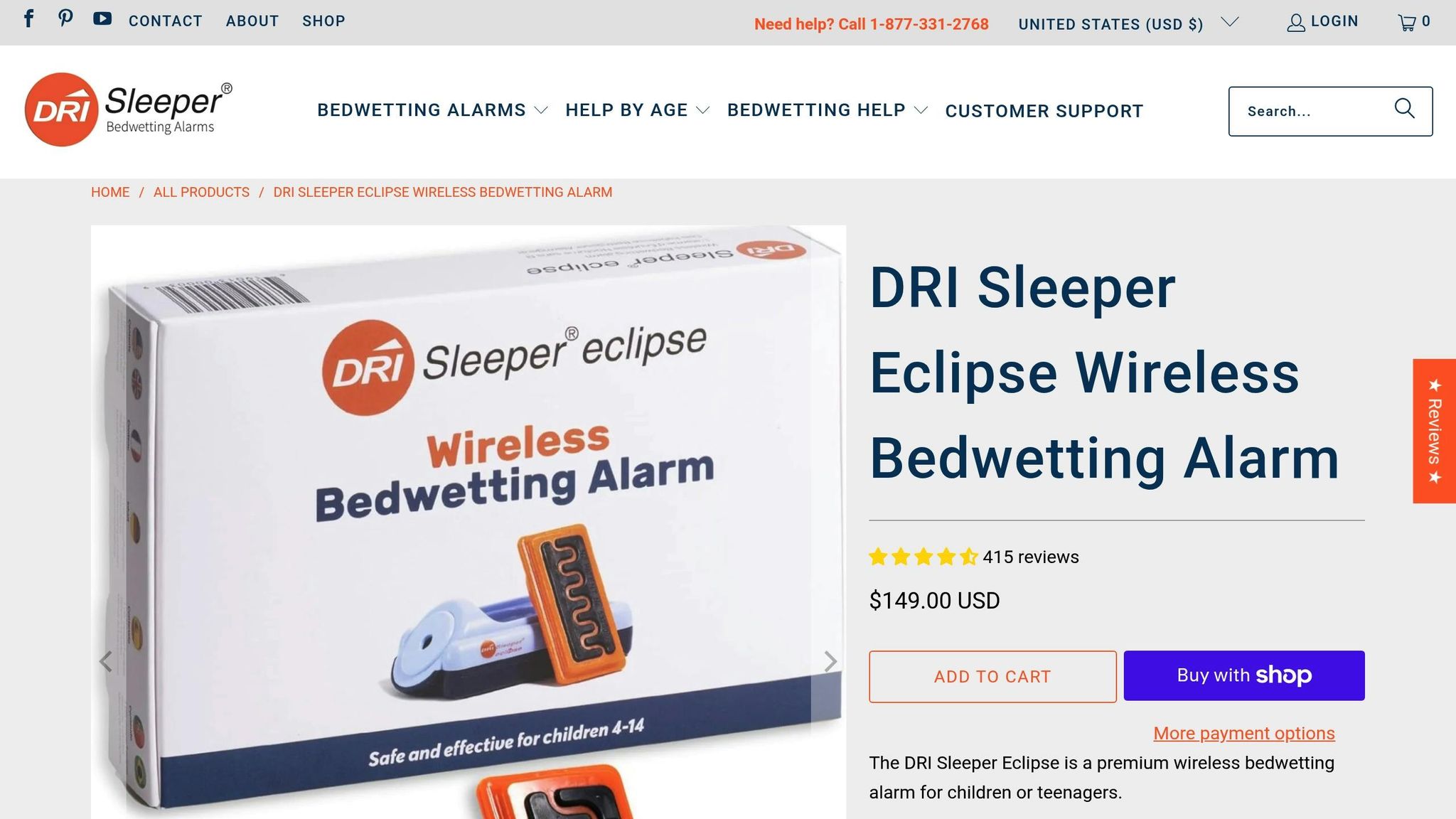
Types of Bedwetting Alarms for Deep Sleepers
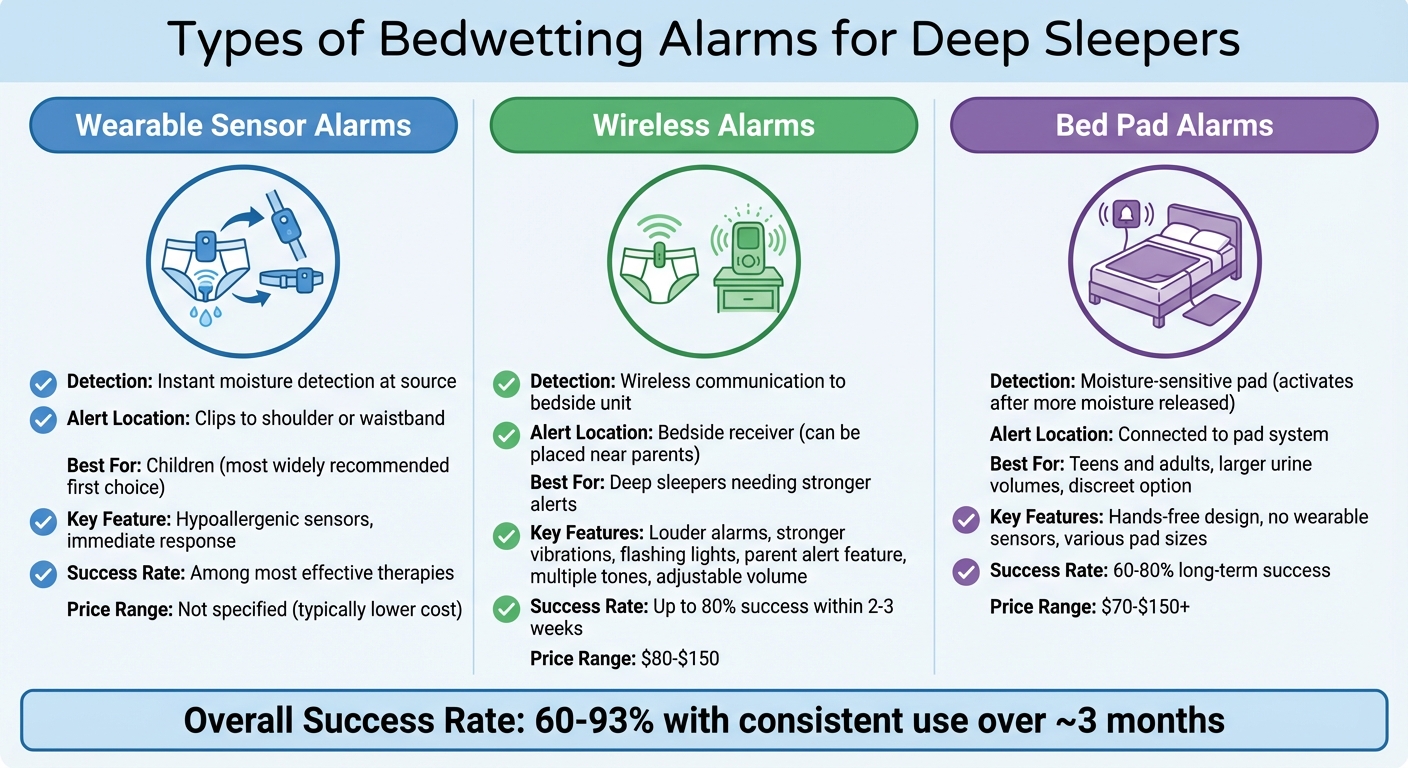
Comparison of Bedwetting Alarm Types for Deep Sleepers
When it comes to bedwetting alarms, there are three main types to consider: wearable sensor alarms, wireless alarms, and bed pad alarms. Each type detects moisture and triggers an alert, but they differ in how they’re used, the intensity of their alerts, and who might benefit most from them. These differences are especially important for deep sleepers.
Wearable Sensor Alarms
Wearable sensor alarms are designed to detect moisture right at the source. A small sensor attaches directly to underwear or pajamas, while the alarm unit clips onto the shoulder or waistband. This setup ensures the alarm is triggered immediately, which is crucial for deep sleepers. The faster the response, the better it helps reinforce the brain-bladder connection.
According to National Incontinence, wearable alarms are "the most widely recommended" option and often the first choice for children because of their instant moisture detection.[7] Dr. Alan Greene highlights their effectiveness, describing them as "among the safest and most effective of all bedwetting therapies."[8] Many top models are equipped with hypoallergenic sensors and customizable alert features like strong vibrations and bright lights, making them especially useful for heavy sleepers.[3]
Wireless Alarms
Wireless alarms take a different approach by separating the sensor and the alarm unit. The sensor attaches to the underwear but communicates wirelessly with a bedside receiver when moisture is detected. This design allows for louder alarms, stronger vibrations, and flashing lights without limiting the sleeper’s movement. Plus, the receiver can be placed near parents’ rooms, enabling caregivers to assist more easily.
For deep sleepers, the parent alert feature is a game-changer. It allows caregivers to step in immediately when the alarm goes off, ensuring the child wakes up fully and makes it to the bathroom.[3][7] Many models include multiple alert tones, adjustable volume, vibration, and light options. Parent reviews often report success within 2–3 weeks of consistent use, with up to 80% success rates in achieving dry nights.[3][9] Wireless alarms typically cost between $80–$150, reflecting their advanced features compared to wearable models.[7]
Bed Pad Alarms
Bed pad alarms take yet another approach by using a moisture-sensitive mat or pad placed under or on top of bedding. When the pad detects moisture, it triggers an alarm. These systems are ideal for teens and adults who might prefer a discreet option without wearable sensors, or for individuals with larger urine volumes that reliably activate the pad.[2][7]
One advantage of bed pad alarms is their hands-free design, which eliminates the need for clips or wires on the body. However, they typically activate after more moisture has been released, as the liquid needs to reach the pad. Despite this, research shows that bedwetting alarms, including pad systems, achieve long-term success rates of 60–80% when used properly, outperforming medication for brain-bladder retraining.[7][9] Prices for bed pad alarms vary depending on the size of the pad and the electronics involved, often ranging from $70–$150+.[7]
With regular use and family support, bedwetting alarms can be highly effective, even for deep sleepers.[5] Choosing the right alarm ultimately depends on matching its features to the specific needs of the user, with sensor sensitivity and alert functionality being key factors - topics that will be explored further in the next section.
What to Look for When Choosing an Alarm
Finding the right bedwetting alarm for a deep sleeper boils down to three key factors: sensors that respond quickly, alerts strong enough to wake even the heaviest sleeper, and a design that's comfortable for nightly use. These elements are critical for the alarm to work effectively. Let’s dive into each of these features.
High-Sensitivity Sensors
The best alarms use high-sensitivity sensors that detect even the first drop of urine - yes, just a single drop - and trigger the alarm immediately. This quick response helps reinforce the connection between a full bladder and waking up in time [2] [7]. Instead of relying on small metal clips that only sense moisture in one spot, look for sensors with full-area detection surfaces [2] [3] [7]. Some advanced models now offer One Drop Detection™ technology, which activates the alarm within seconds of detecting dampness [3].
Multiple Alert Types
For deep sleepers, a single type of alert often isn’t enough. Alarms that combine loud, adjustable sounds, strong vibrations, and flashing lights are more effective because they engage multiple senses, making it harder to ignore. When comparing alarms, look for features like high maximum volume (which can be adjusted as progress is made), multiple or changeable tones to prevent the child from getting used to one sound, and alerts that stay active until they’re manually turned off [2] [3] [5]. The vibration should be strong enough to be felt through pajamas and blankets, and the lights should be bright enough to be noticed even with closed eyes. Some families have had success placing the alarm receiver across the room, which forces the child to get out of bed to turn it off [4] [7].
Comfort and Ease of Use
Comfort plays a huge role in whether a child will consistently use the alarm every night. Look for models with soft, hypoallergenic materials and low-profile designs that won’t disrupt sleep [2] [3]. Flexible sensor pads and skin-friendly silicone are great for sensory-sensitive children, ensuring they’ll keep the device on all night [3] [9]. Features like one-button operation, clear indicator lights, quick-attach sensors, and easy-to-clean components make nightly use much simpler [2] [3] [7]. For restless sleepers, wireless systems can eliminate the hassle of tangled cords, while replaceable parts like extra sensor clips can extend the life of the alarm. Some models even come with progress tracking tools, allowing families and clinicians to monitor improvements over the typical three-month treatment period without complicated setups [3] [4] [7].
sbb-itb-45288fe
Managing Nighttime Accidents During Training
Bedwetting training often comes with its share of nighttime accidents. According to Cincinnati Children's Hospital, most children will need to use a bedwetting alarm nightly, and accidents are a normal part of the process [4]. The trick is to set up your child's room so cleanup is quick and easy - taking minutes instead of half an hour - so everyone can get back to sleep without too much disruption. Below, we’ll explore practical bedding strategies to tackle these accidents efficiently.
Using Layered Bedding for Quick Changes
One of the simplest ways to manage nighttime accidents is to use a layered bedding setup. Start with a waterproof mattress protector directly on the mattress. On top of that, place an absorbent pad or a fitted waterproof sheet, followed by another absorbent layer [4][7]. When an accident happens, you can strip off the soiled top layer to reveal a clean, dry surface underneath - no need to wrestle with the mattress or dig through closets for fresh sheets in the middle of the night. Parents have found this method can cut cleanup time from 20–30 minutes to under 5 minutes, which is especially helpful during the early weeks when accidents may occur 1–3 times per night [2][4].
How PeelAways Can Help

PeelAways disposable waterproof sheets take the layered-bedding approach to the next level. These sheets feature 5 to 7 absorbent layers (7 layers for Twin XL and Cot sizes) and a patented peel-away design. When an accident happens, you simply peel off the top layer to reveal a fresh, clean sheet underneath. Each layer is completely waterproof, ensuring no liquid seeps through to the mattress or lower layers.
Jalene Stanger, who cares for two incontinent special needs teenagers, shared: "These have saved my sanity! With 2 incontinent special needs teenagers... these have relieved a lot of stress. They hold a LOT of liquid and are easy to use and tear away. No more 15 loads of laundry and wet mattresses!" [1]
Another parent, Ronda, noted how these sheets gave her 12-year-old son more independence: "When he has an accident he now can take care of it himself and put a new top sheet on his bed. No more scrubbing, no more smell, and no more embarrassment." [1]
PeelAways are available in various sizes - from Crib-A-Peel for toddlers (starting at $30.99) to King - and they eliminate the need for laundry entirely. This makes them a game-changer during the 2–12 week conditioning period, especially for deep sleepers who may have multiple accidents each night.
Reducing Stress for Caregivers and Sleepers
Quick bedding changes are just one part of the equation. Reducing stress - for both caregivers and children - is equally important. Set up a nighttime accident station next to the bed with essentials like clean pajamas, underwear, wipes, a towel, and a waterproof bag or hamper for soiled clothes [4]. A small night-light in the bedroom and along the path to the bathroom can also help your child navigate safely without fully waking up.
When the alarm goes off, gently wake your child, guide them to the bathroom to finish urinating, and help them change into clean sleepwear. Keep a calm, neutral tone throughout the process. Consider using reward charts to encourage their participation without adding pressure - bedwetting is involuntary, and frustration can lead to anxiety, which may slow progress [3][4][8].
These strategies not only make the process smoother but also support the ultimate goal: strengthening the brain-bladder connection. With the right tools and a calm approach, you can help your child achieve the 60–80% long-term success rate associated with bedwetting alarms when used consistently [7].
Troubleshooting Common Problems
Troubleshooting plays a key role in making bedwetting alarms effective, especially for deep sleepers. These alarms are designed to help retrain the brain-bladder connection, but challenges can arise. According to Cincinnati Children's Hospital, about 70% of children achieve dryness with proper alarm use [4]. However, the path to consistent dryness often requires addressing some common hurdles.
When the Sleeper Doesn't Wake to the Alarm
Deep sleepers might not wake up when the alarm goes off, at least in the beginning. To tackle this, make sure the alarm is set to its highest settings - volume, vibration, and even flashing lights - and place it close to the child’s head to counteract the muffling effect of bedding.
When the alarm sounds, a caregiver should act quickly. Enter the room, turn on a light, and gently shake the child awake. To ensure they’re fully alert and not just stirring, ask them to speak or respond verbally. This process reinforces the connection between the brain and bladder, helping the child recognize the need to wake up when the alarm triggers.
These steps can help establish a routine for managing frequent nighttime accidents.
Handling Multiple Accidents in One Night
During the early stages of training, multiple accidents in a single night are common. Being prepared can make these moments less stressful. Keep spare pajamas, underwear, and cleaning supplies within easy reach. Layered bedding, like PeelAways, can simplify cleanup - just peel off the soiled top layer to reveal a fresh one underneath, saving time and effort. Afterward, reset the alarm sensor as instructed by the manufacturer and continue using the alarm consistently throughout the night.
Addressing Alarm Refusal or Frustration
Sometimes, technical fixes aren’t enough, especially if the child resists using the alarm. Older children or teens may feel frustrated or reluctant. It’s important to explain that bedwetting is not their fault but rather a delay in brain-bladder coordination. Setting realistic goals is crucial - most children take 8–12 weeks to see consistent results, and occasional setbacks are part of the process.
To encourage cooperation, involve the child in decisions. Let them help choose the type of alarm, pick the alert tone, or create a progress chart. Focus on rewarding their effort to respond to the alarm rather than just achieving dry nights. Small rewards, like stickers or tokens, can help motivate without adding unnecessary pressure. To ease anxiety, test the alarm during the day by using it on a wet towel so the child knows what to expect. For teens, emphasizing privacy and giving them control over the process can make the experience less overwhelming and more manageable.
Conclusion
Bedwetting alarms remain the most effective solution for addressing nocturnal enuresis, especially for deep sleepers who might not wake easily when their bladder is full. Studies indicate that when these alarms are used correctly and consistently, around 60–80% of families experience long-term success [7]. Unlike medications, which often lead to relapses once stopped, bedwetting alarms work by retraining the brain–bladder connection, paving the way for lasting dryness [3][7]. For deep sleepers, it's crucial to choose an alarm with features like loud sounds, strong vibrations, and flashing lights - tools that are essential for breaking through deep sleep patterns.
Consistency is non-negotiable. Experts advise continuing the program until the child achieves at least 14 dry nights in a row, which greatly reduces the likelihood of setbacks.
To make the process easier, products like PeelAways disposable sheets simplify cleanup during accidents, reducing stress for both parents and children.
Family support plays a huge role in this journey. Celebrating small milestones - whether it's responding to the alarm, reaching the bathroom in time, or having a dry night - helps maintain motivation. It's also important to remember that bedwetting is simply a developmental delay in the brain–bladder connection [4]. A calm, patient, and encouraging approach can make a world of difference during this process.
With the right tools, a consistent routine, and a supportive environment, deep sleepers can overcome bedwetting. While it takes time and dedication, the payoff - dry nights, boosted confidence, and better sleep for everyone - makes the effort well worth it. These strategies offer a clear path to lasting success.
Related Articles
If you're working through bedwetting alarm training with a deep sleeper, these resources provide helpful strategies to tackle common challenges. They expand on the techniques we've covered, offering ways to fine-tune your approach and make the process smoother.
5 Benefits of PeelAways for Nighttime Accidents – Discover how PeelAways' multi-layer disposable sheets can simplify cleanup, cutting the time down to under a minute and eliminating laundry during alarm training. This is especially useful for families dealing with frequent accidents, where quick changes are essential for deep sleepers.
How to Choose the Right Bedding for Potty Training – This guide helps you choose the best protective bedding for your needs. It compares options like disposable multi-layer sheets, reusable mattress protectors, and standard bedding, making it easier to find a solution that fits your lifestyle, even in smaller spaces like apartments.
Tips for Caregivers Managing Bedwetting – Get practical tips to reduce sleep disruptions, set up a nighttime kit, and use progress charts to track dry nights. It also covers when to consider medical advice and how layered bedding can ease caregiver stress during a three-month alarm program.
These articles work hand-in-hand with our guide, offering additional insights to support successful bedwetting alarm training.
FAQs
How do bedwetting alarms train the brain to respond to bladder signals?
Bedwetting alarms are designed to detect moisture and trigger an alert to wake the sleeper. Over time, this trains the brain to connect the feeling of a full bladder with the need to wake up, helping to develop better bladder awareness and control.
When used consistently, these alarms can assist even the deepest sleepers in recognizing bladder signals before an accident happens. This not only promotes nighttime dryness but can also boost confidence.
What should I consider when choosing a bedwetting alarm for deep sleepers?
When choosing a bedwetting alarm for deep sleepers, focus on key features like loud, adjustable alerts to wake even the most sound sleepers and highly sensitive sensors that can quickly detect moisture. It's also important to pick an alarm that’s comfortable to wear, simple to set up, and sturdy enough to handle nightly use.
To make life easier during potty training or while managing bedwetting, you might want to pair the alarm with disposable waterproof bed sheets such as Peelaways. These sheets have a multi-layer, peel-away design that lets you quickly remove a soiled layer, leaving a fresh surface without the hassle of lifting the mattress or doing extra laundry.
What’s the best way to handle nighttime accidents during potty training?
Managing nighttime accidents during potty training doesn’t have to be a hassle. With tools like disposable, waterproof bed sheets - such as Peelaways - you can make the process much easier. These sheets come with a multi-layer design, allowing you to simply peel off the top layer after an accident to reveal a clean, fresh one beneath. No laundry, no heavy lifting, and no extra stress.
This simple solution keeps things hygienic, protects your mattress, and ensures minimal disruption during the night, making potty training a more manageable experience for both you and your little one.
Comments
0



SAVE MONEY & WATER
Professionals & Institutions save a fortune on labor/laundry.

SUPERIOR COMFORT
The first thing our customers notice is how soft our sheets are.

100% WATERPROOF
Each layer is 100% Waterproof, perfect for spills and accidents

SAVE TIME
Change the sheet in under 1 minute without stripping the bed.

Leave a comment