
The Ultimate Guide to Adult Incontinence Care at Home

It’s 2 a.m. The sheets are soaked again. Your loved one is embarrassed, your back hurts, and you have to be up in four hours. If this is your night, you do not need more theory. You need a setup that keeps skin safer, cuts bed changes to about 60 seconds, and slashes sheet laundry by 50% to 80%.
If you’re handling adult incontinence at home, focus on four things first: track the pattern, clean skin fast, protect the bed, and make nighttime changes easier. The product I wish I had found sooner is PeelAways: disposable waterproof fitted sheets with 5–7 layers, sizes crib to king, 28,000+ verified reviews, and a 4.8-star rating. If you already use briefs or pads, this can turn a 15–20 minute bed remake into a short layer peel instead.
- Watch for triggers like fluids, meds, mobility problems, and timing
- Clean after each accident with a mild no-rinse cleanser and barrier cream
- Keep a waterproof mattress cover under your sleep surface
- Use a layered sheet setup to cut lifting, laundry, and sleep loss
- Call a clinician fast for blood in urine, fever, new confusion, or sudden loss of control
Here’s the short version of what matters most when you’re tired and need something that works.
Why this problem is harder than people realize
Adult incontinence is not just a leak problem.
It’s a sleep problem. A skin problem. A laundry problem. A dignity problem.
And if you are the one doing cleanup, it becomes a back and burnout problem too.
The hardest part is often the chain reaction.
One wet brief turns into wet pajamas.
Then wet sheets.
Then a mattress check.
Then a full room reset when all you want is sleep.
That is why the best home setup does two jobs at once:
- It keeps the person clean and dry sooner
- It cuts the work you have to do at 2 a.m.
A few facts from the article make that plain:
- About 54% of women age 20 and older had urinary leakage in the past year
- In one U.S. multicenter study, 45.7% of incontinent patients had incontinence-associated dermatitis
- Full nighttime sheet changes can take 15–20 minutes
- A peel-away layer change can take about 60 seconds
That gap matters when you are half-awake and lifting someone in bed.
sbb-itb-45288fe
What to look for before buying
Before you buy anything, match the product to the problem you are seeing.
If leaks are light and rare, you may only need waterproof bedding for incontinence and a washable pad.
If leaks are heavy, nightly, or happen with stool, you need more than a backup pad. You need something that protects the mattress, limits skin contact with moisture, and keeps bed changes short.
What I would check first:
- Absorbency level: light leaks vs full overnight accidents
- Waterproof protection: the mattress needs a barrier under everything
- Change time: at night, every extra minute feels long
- Noise and comfort: crinkly bedding can disturb sleep
- Fit: sheets should stay in place if the person moves
- Laundry load: if you are washing full sheets all week, your setup is not working for you
- Skin needs: stool exposure and frequent wetness call for stronger skin protection
- Bed size: make sure your product comes in the size you need
I’d also think about the person, not just the product.
Can they turn in bed? Do they have dementia? Do they fight changes at night? Do they wake fully during a sheet change?
Those answers shape what will help.
PeelAways
This is the product I would put at the top of the list for frequent nighttime accidents.
PeelAways are disposable waterproof fitted sheets with 5–7 layers. When the top layer gets soiled, you peel it away and the clean layer underneath is ready to go.
That means:
- no full strip-and-remake
- less lifting
- less pulling and rolling
- less time lying in a wet bed
- less embarrassment in the middle of the night while managing the emotional challenges of incontinence
The number that stands out is simple: about 60 seconds for a bed change instead of 15–20 minutes the old way.
That is not small when you are exhausted.
What also stands out:
- 28,000+ verified reviews
- 4.8-star rating
- sizes from crib to king
If you want to look at them, here’s the main shop link: peelaways.com/shop
And here’s the Amazon option: Amazon
For more help, I’d also read other posts on the site, including the main blog at peelaways.com and more guides there if you are setting up a bed for repeat accidents.
Best fit for:
- frequent overnight urine leaks
- stool accidents in bed
- dementia care
- post-hospital or limited mobility care
- homes where laundry has become nonstop
Waterproof mattress cover
A waterproof mattress cover is your base layer.
It does not solve cleanup by itself.
But it keeps the mattress from being ruined.
That matters because once urine gets into the mattress, odor can linger and cleanup gets harder.
A mattress cover works best when you leave it in place and build on top of it with either:
Best fit for:
- every home bed used for incontinence care
- both light and heavy accidents
- anyone trying to protect a costly mattress
Disposable underpads
Disposable underpads can help, but they are usually a backup, not a full answer.
They are fine for:
- lighter leaks
- chair protection
- extra coverage under the hips
- short-term care needs
The downside is that they can shift.
And when they shift, the leak goes where you did not want it to go. This makes it harder to keep beds dry consistently.
If your nights are rough and repeat often, underpads alone may not be enough.
Washable bed pads
Washable pads can work if accidents are less frequent.
They are softer than many disposable pads and can save money over time. But they also add more laundry, and that is often the very thing wearing you down. This extra washing makes it harder to remove odors from incontinence bedding effectively.
They make more sense for:
- lower-volume leaks
- daytime naps
- occasional accidents
- homes where washing bedding is not the main problem
If your real issue is too many sheet changes, a reusable pad may not fix it.
Skin-cleaning products
The best bed setup still fails if skin stays wet too long.
For cleanup after urine or stool, the article’s main point is simple:
Clean promptly, dry gently, protect the barrier, inspect daily.
Use a checklist for streamlining incontinence care tasks to keep these supplies within reach:
- disposable gloves
- soft incontinence wipes
- a mild pH-balanced no-rinse cleanser
- barrier cream with zinc oxide, petrolatum, or dimethicone
- lined disposal bags
- clean brief or pad
- spare pajamas
A few reminders matter a lot:
- wipe front to back for a vulva
- pat dry, do not scrub
- use a thin layer of barrier cream
- watch for redness, warmth, pain, or open skin
If redness does not improve in 24–48 hours, or skin opens up, call a clinician.
Quick comparison
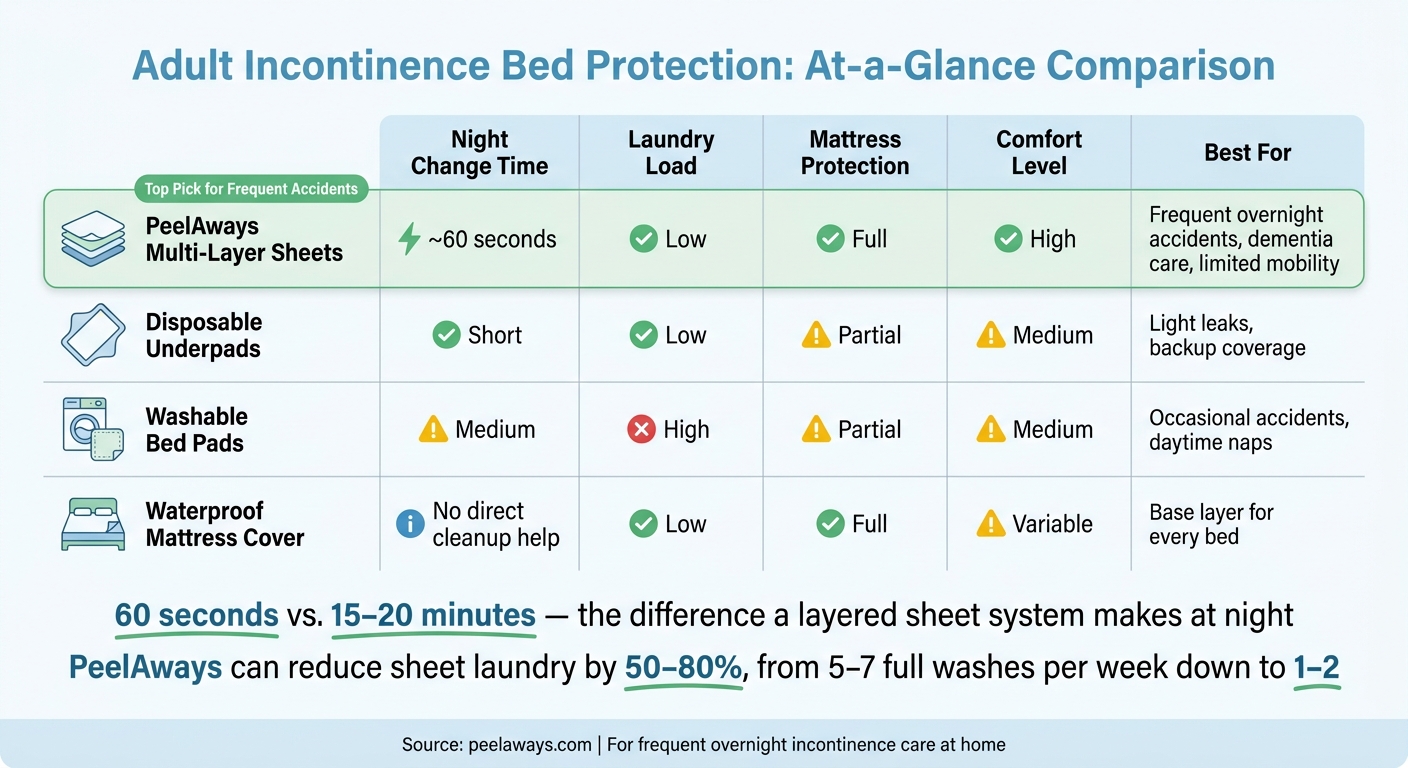
Adult Incontinence Bed Protection: Product Comparison Guide
| Option | Change time at night | Laundry load | Mattress protection | Best for |
|---|---|---|---|---|
| PeelAways | About 60 seconds | Low | Yes | Frequent overnight accidents |
| Disposable underpads | Short | Low | Partial | Light leaks, backup coverage |
| Washable bed pads | Medium | High | Partial | Occasional accidents |
| Bedding solutions for incontinence | No direct cleanup help | Low | Yes | Base layer for every bed |
FAQ
What is the first thing I should do for adult incontinence at home?
Start by tracking the pattern for 3–7 days. Write down when accidents happen, how much, what the person drank, and what was going on. That gives you a clearer picture and helps with product choice and doctor visits.
When should I call a doctor?
Call the same day for blood in urine, fever with urinary symptoms or back pain, inability to urinate, or sudden new incontinence. Also call for repeated UTIs, new stool accidents, skin breakdown, falls on the way to the bathroom, or new confusion with urinary changes.
What helps most with overnight bedwetting in adults?
A bedtime toilet trip, lower evening fluids if allowed, a clear path to the bathroom, and a bed setup with a waterproof base plus a layered top surface. For repeat accidents, PeelAways can help most because the bed change takes about 60 seconds.
How do I cut the smell in the room?
Change soiled briefs and linens right away. Use a lined trash bin with a lid. Wash or remove soiled items from the room fast. For spots on fabric or furniture, use an enzymatic cleaner instead of heavy fragrance sprays.
Do I need PeelAways if we already use briefs or pads?
If briefs or
How to Assess Adult Incontinence at Home and Know When to Call a Doctor
It’s 2am. There’s that damp spot again, the rushed walk to the bathroom, the scramble to clean up before anyone gets too upset or too tired. When this keeps happening, you don’t just need more supplies. You need a clear read on what kind of problem you’re dealing with.
Matching the care step to the pattern prevents wasted effort, and family incontinence training can help caregivers manage these routines effectively. Tracking patterns at home shapes bathroom schedules, product choices, and conversations with a clinician.
Types of Adult Incontinence Caregivers Should Know
Each type looks different at home, and each points to a different care response.
Stress incontinence causes small leaks with coughing, sneezing, laughing, or lifting. It often shows up out of nowhere. A pad during high-effort moments can help, and it also helps to plan bathroom trips around activity that tends to set it off.
Urge incontinence is that sudden, strong need to urinate, followed by leakage if the bathroom isn’t reached in time. Sometimes the trigger is weirdly specific, like hearing running water or getting a key in the front door. In this case, faster bathroom access matters. Clear the path. Cut down extra steps.
Overflow incontinence can look like constant dribbling, a weak stream, trouble getting started, or that nagging feeling that the bladder didn’t empty. It’s more common in men with an enlarged prostate. This one needs a clinician to look at it.
Functional incontinence happens when the urinary system is working as it should, but the person can’t get to the toilet in time because of slow movement, dementia, or clothes that are too hard to remove. Sometimes the fix is less about the bladder and more about the setup. Easier clothing and fewer obstacles can cut accidents fast.
Mixed incontinence is a mix of stress and urge symptoms. That can make the pattern harder to spot because more than one thing is going on. You’ll want to watch for both sets of triggers.
Fecal incontinence - involuntary loss of stool or gas - may show up as staining between bowel movements, sudden accidents, or trouble controlling gas. This is one area where steady tracking matters a lot.
How to Track Symptoms and Triggers at Home
A 3–7 day bladder and bowel diary is one of the most useful caregiver tools. It doesn’t need to be fancy. A notebook, notes app, or printed chart all work.
Track:
- Time and approximate amount each time: small, medium, or large
- What the person drank and how much
- When accidents happened and what was going on at the time
- How saturated the pad or brief was
- At night: how many times the person woke up, whether there was bedwetting, and whether they needed help getting to the bathroom or had falls or near-falls
- For bowel habits: frequency, consistency, and any leakage between movements
This kind of log helps you spot patterns you might miss in the moment. Maybe accidents bunch up after a diuretic dose. Maybe bedwetting gets worse after big evening drinks. Maybe the hardest stretch is right before morning. That gives a clinician something concrete to work with instead of a foggy, exhausted summary.
Bringing 3–7 days of steady tracking to an appointment can improve diagnostic accuracy and treatment planning.
Use the log to shape the hygiene routine, product choices, and bedtime schedule that follow.
When to Seek Medical Evaluation for Adult Incontinence
Contact a healthcare provider the same day if you notice blood in the urine, fever with urinary symptoms or back pain, inability to pass urine, or sudden new incontinence in someone who was previously continent. These can point to infection, obstruction, or a neurologic event.
Other signs need prompt - though not always same-day - evaluation. These include repeated UTIs, foul-smelling or cloudy urine, burning or pain with urination, severe constipation with no bowel movement for several days, new fecal incontinence, skin breakdown in the perineal or buttock area, and falls or near-falls during nighttime bathroom trips.
Worsening confusion at night along with urinary changes is also worth flagging, especially in older adults. If home care starts to feel unsafe or too hard to manage, call a clinician.
That information makes the daily cleaning and skin-protection routine much easier to tailor.
How to Build a Daily Hygiene and Skin Protection Routine
It's 2am. The brief leaked again, the skin is damp, and you can already tell morning is going to come too fast. In moments like this, a simple routine matters because it cuts down the mess, protects skin, and helps you move with less stress.
Once you know the pattern, the next step is a routine that protects skin after every accident. A good routine lowers odor, irritation, infection, and skin breakdown. The goal is prompt, gentle cleanup that protects skin and becomes second nature. The core sequence is simple: clean promptly, dry gently, protect the barrier, and inspect daily.
How to Clean After Urinary or Fecal Accidents
Clean the skin as soon as possible after every accident. A U.S. multicenter study of 5,342 adults found that 45.7% of incontinent patients had incontinence-associated dermatitis (IAD), which shows how often skin damage happens when urine or stool sits on the skin too long.
Start with hand hygiene, then put on disposable gloves. Close the door or draw the curtain before you begin so the person's privacy stays protected the whole time. Remove the soiled brief or pad by folding it inward to contain the mess, then set it aside for disposal.
Use a mild, pH-balanced no-rinse cleanser on a soft disposable cloth. Standard soap can dry the skin, throw off pH, and make irritation worse. For a vulva, wipe front to back to cut down bacterial transfer. For everyone, wipe from clean to dirty areas, using a fresh section of cloth with each pass. Then pat the skin dry - don't rub. When skin is already irritated, rubbing can wear it down fast.
After cleaning, barrier protection helps keep the next episode from causing the same damage.
How to Prevent Skin Irritation and Incontinence-Associated Dermatitis
Once the skin is clean and dry, apply a thin layer of barrier product to the perineum, buttocks, and any skin folds that often come into contact with urine or stool. Common ingredients that work well include zinc oxide, petrolatum, and dimethicone. Match the product to the type of exposure. Dimethicone-based creams are a good fit for frequent liquid urine exposure. Thicker zinc oxide pastes or petrolatum ointments tend to hold up better against loose stool and digestive enzymes.
Apply sparingly. Too much barrier cream can cut into the absorbency of briefs and pads. At the next cleaning, soften the old layer and wipe gently instead of scrubbing. Scrubbing off barrier product can injure the skin.
Check the skin every day, and check more often if there are frequent accidents, loose stools, or limited mobility. Early IAD often looks like diffuse redness over the perineum, buttocks, or inner thighs, sometimes with a shiny, overhydrated look. The skin may feel warm or tender. If redness doesn't improve within 24–48 hours of steady cleansing and barrier use, or if you see open areas, more pain, or signs of infection, escalate to a clinician.
Hygiene and Skin-Care Products Most Useful at Home
Keep these supplies together so cleanup stays fast. When you're tired, not having to hunt for gloves or cream helps more than people think.
| Product | Best Use Case | Key Consideration |
|---|---|---|
| pH-balanced/no-rinse foam cleanser | Routine perineal cleansing after every episode | Gentler on the skin barrier than standard soap |
| Soft disposable incontinence wipes | Quick cleanup in bed or tight spaces | Use wipes made for incontinence; avoid perfumed or alcohol-based wipes |
| Zinc oxide paste or ointment | Frequent loose stool or severe exposure | Strong barrier; apply sparingly to avoid pad absorbency loss |
| Dimethicone or petrolatum cream | Frequent liquid urine, intact but at-risk skin | Good for daily maintenance |
| Spray-on barrier film | Fragile or very sensitive skin | Cuts down friction during application |
| Disposable gloves | Every cleansing episode involving stool | Protects both caregiver and care recipient |
| Lined disposal bags | Soiled briefs, wipes, and gloves | Helps contain odor and keeps disposal tidy |
Use soap and water for regular bathing, but for repeated perineal cleansing, specialized products are usually the better choice. Keep these items in a bedside or bathroom caddy so you're not scrambling when another cleanup hits.
How to Manage Nighttime Incontinence, Protect the Bed, and Change Sheets Fast
It’s 2 a.m. The bed is wet again. You’re half-awake, your loved one is upset, and all you can think is, please don’t let this turn into a full sheet change.
Nighttime incontinence is hard because it breaks sleep, piles up laundry, and makes falls more likely. Once skin care is handled, the next job is simple: keep the bed dry and make the night feel less chaotic.
Bedtime Routine Steps That Help Reduce Overnight Accidents and Fall Risk
A steady bedtime routine can help cut down overnight accidents and make nighttime bathroom trips safer. Start with a toilet or commode visit right before bed. Then wait a few minutes and try again. That “double voiding” step can help empty the bladder more fully. If there’s no fluid restriction, it also helps to cut back on extra fluids in the last 2 to 3 hours before bed, especially caffeine and alcohol, since both can irritate the bladder and make nighttime urgency worse.
The path from bed to bathroom matters more than people think. Clear out loose rugs, cords, and low furniture. Add motion-activated night-lights so the person can see without flipping on a harsh overhead light. If the bathroom setup allows it, grab bars and a raised toilet seat can make transfers safer. If walking is hard, a bedside commode or urinal can shorten the trip and lower fall risk even more.
Before lights out, set up a small nighttime kit within arm’s reach:
- Gloves
- Wipes
- A clean brief or pad
- A spare set of pajamas
That little bit of prep can save you from fumbling around in the dark when an accident happens.
If accidents still happen, the next thing that helps is speeding up the bed change.
How PeelAways Makes Bed Changes Faster at Night
This is where I wish someone had helped me sooner. PeelAways lets you peel off the soiled top layer instead of stripping the whole bed. That means less noise, less movement, and a much shorter cleanup. It also keeps things more private, which matters more than people realize at 2 a.m.
Instead of a full strip-and-remake, the soiled layer comes off and you’re done in about 60 seconds. Compare that with the usual 15 to 20 minutes it can take to change regular bedding in the middle of the night. If your loved one uses briefs or incontinence pads, this kind of setup can make the whole night easier.
A couple of small tricks help even more. Pre-rip the top two corners before bed so the layer comes off faster. If the person moves a lot in sleep, use clips or straps to keep the sheet snug.
PeelAways comes in 5-7 layers, with sizes from crib to king. It’s one of those things many families find after hitting a wall with laundry and sleep loss. It also has 28,000+ reviews and a 4.8-star rating. You can find it on peelaways.com/shop or on Amazon. For more tips, see other articles on PeelAways blog and peelaways.com.
Choose the level of protection based on how often accidents happen and how hard it is to reposition the person.
Bedding Protection Options for Adult Incontinence Care at Home
The goal is to protect the mattress even if one layer fails. Start with a waterproof mattress protector or encasement to shield the mattress itself. Add a fitted sheet for comfort. Then place an absorbent pad or multi-layer disposable sheet over that, under the hips, so you only need to change the top layer after an accident.
| Product | Mattress Protection | Comfort | Caregiver effort | Laundry Impact | Best For |
|---|---|---|---|---|---|
| PeelAways Multi-Layer Sheets | Built-in waterproof barrier | Soft, breathable, quiet | Very fast; peel away the soiled layer in about 60 seconds | No laundry for the disposable sheet layer | Frequent overnight accidents, difficult repositioning, dementia care |
| Disposable underpads | Backup surface protection | Moderate | Quick cleanup, but they can shift if not positioned well | No laundry | Light leaks or an extra layer under briefs |
| Washable bed pads | Surface protection | Comfortable and reusable | Moderate; needs repositioning | Yes | Occasional accidents and lower-volume leaks |
| Traditional fitted sheets | No waterproof protection by themselves | Comfortable and familiar | Slow; usually requires a full strip-and-remake | Yes | Everyday bedding base layer only |
| Waterproof mattress cover/encasement | Strong base barrier, but not absorbent | Hidden under the fitted sheet | Low once installed | Rarely | Mattress protection for all situations |
For occasional light leaks, a waterproof mattress cover plus a washable pad may be enough. If overnight accidents happen often, a layered quick-change setup over a waterproof encasement usually makes the night much easier.
How to Cut Laundry, Control Odor, and Protect Dignity Every Day
It’s the middle of the night. The bed is wet, the room smells off, and you’re already thinking about one more load of laundry before morning. That kind of exhaustion adds up fast. A setup that makes cleanup quicker can take a real weight off your shoulders.
Prompt cleanup is the base of odor control and a lighter workload. When soiled items are removed right away, the room stays fresher, skin spends less time against moisture, and the whole routine feels less overwhelming.
How Caregivers Can Cut Laundry and Physical Workload
After overnight cleanup, the next job is simple: keep the laundry pile from taking over and make the room easy to reset.
The easiest way to cut laundry is to stop accidents at the bed surface. Use a waterproof mattress encasement and a peel-away top layer. When there’s an accident, you remove the top layer and keep the sheet underneath in place.
That’s why so many families turn to PeelAways. It’s one of those things you find after doing too much laundry for too long. PeelAways can cut sheet-related laundry by 50% to 80%, dropping weekly full sheet washes from 5–7 to 1–2. The soiled layer peels off in about 60 seconds and is thrown away, so the bed is ready with a clean layer without doing a full sheet change.
If you use diapers or incontinence pads, this kind of setup can make nights much easier. PeelAways comes in 5–7 layers, sizes crib to king, and has 28,000+ reviews with a 4.8-star rating. The big win is simple: about 60 seconds instead of the 15–20 minutes a full strip-and-remake can take. You can see them at peelaways.com/shop or on Amazon. For more help, it also makes sense to read other guides on peelaways.com, especially if you’re trying to make nighttime care less draining.
For washable linens, rinse in cool water first and skip fabric softener on waterproof items.
What Works Best for Urine and Fecal Odor Control at Home
Once soiled items are contained, the next step is stopping odor at the source. Change soiled briefs or pads as soon as possible.
Don’t let soiled laundry sit in the bedroom. Get it out right away instead of leaving it in a hamper near the bed. Keep a lidded, lined trash bin with odor-control bags near the changing area, then tie off the bag each day.
For sheets, mattress protectors, or furniture that need spot-cleaning, an enzymatic cleaner usually works best. It breaks down the uric acid and proteins that cause that lingering smell. Heavy sprays can hide odor for a few minutes, but they don’t remove what’s causing it and can make a small room feel worse.
A little airflow helps too. Open a window, run a fan, or use a HEPA air purifier.
How to Protect Comfort, Privacy, and Dignity During Incontinence Care
Fast, low-key cleanup helps the room, but it also helps the person in the bed.
Dignity in continence care depends on privacy, respect, and communication, not only on hygiene products. Knock before you enter. Close the door. Keep non-involved body areas covered with a towel or light blanket during cleanup so the person doesn’t feel fully exposed.
Before you start, explain what you’re about to do. Then offer one small choice if you can, like which pajamas to put on or whether they’d rather use a wipe or a warm washcloth. Those small choices matter more than people think. They give a person a bit of control back.
Use calm, neutral language. "Let's get you cleaned up" lands very differently than anything that calls attention to the smell or the accident.
It also helps to keep supplies close by but out of sight. Store gloves, wipes, a spare brief, and a fresh peel-away layer in a covered basket or drawer near the bed. That way you’re not scrambling in the moment, and the change feels quicker, quieter, and less upsetting. Less time in soiled linens also means less embarrassment and less stress for both of you.
Making aging and caregiving easier, one bed at a time.
Comments
0



SAVE MONEY & WATER
Professionals & Institutions save a fortune on labor/laundry.

SUPERIOR COMFORT
The first thing our customers notice is how soft our sheets are.

100% WATERPROOF
Each layer is 100% Waterproof, perfect for spills and accidents

SAVE TIME
Change the sheet in under 1 minute without stripping the bed.

Leave a comment