
Summer Camp Packing List for Kids Who Wet the Bed

Your child is mortified. You’re exhausted. And you’re both pretending this isn’t happening three times a week. Then camp gets close, and now you’re not just packing socks and sunscreen - you’re trying to pack privacy.
A smart summer camp packing list for kids who wet the bed should cover four things: nighttime protection, backup clothes, quiet cleanup, and a bed setup your child can handle alone. If you want less laundry, less stress, and a bed reset in about 60 seconds instead of 15–20 minutes, I’d put PeelAways at the top of the list. It has 5–7 waterproof layers, comes in sizes crib to king, and has 28,000+ reviews with a 4.8-star rating. For many families, it can cut laundry by 50–80%.
What I’d pack first:
- Overnight absorbent underwear for every night, plus extras
- Dark pajamas and one backup set near the bed
- A waterproof bed layer like PeelAways
- Opaque bags, wipes, and a small flashlight
- A simple night kit your child can grab half-asleep
Here’s the short version: keep the plan private, keep the supplies close, and make each step easy enough to do in the dark.
Why this feels harder than people think
Bedwetting at camp is not just a packing issue.
It’s a shame issue.
A sleep issue.
A privacy issue.
Your child is not worried about the mattress.
They’re worried someone will find out.
That’s why the best packing list is not the biggest one. It’s the one that helps your child change fast, stay calm, and get back to bed without turning it into a scene.
I’d also keep this in mind: bedwetting is common in kids. The article notes that about 20% of 5-year-olds and 10% of 7-year-olds still wet the bed. So if this is your home right now, your kid is not the only one.
sbb-itb-45288fe
What I’d check before buying anything
Before I packed a single sheet, I’d call the camp.
I’d ask:
- What size is the bed: twin, Twin XL, or cot?
- Is there laundry access?
- Where can wet clothes go until wash day?
- Can my child have a bottom bunk near the door?
- Which counselor should know the plan?
That one call can stop a lot of guesswork.
It also helps you avoid sending bedding that does not fit.
And I’d do one more thing: I’d walk my child through the plan at home once. Not a big talk. Just a quiet practice run.
The bed protection I’d pack first
If your child uses absorbent underwear or pads at night, I’d still protect the bed.
Leaks happen.
Camp mattresses are not yours.
And middle-of-the-night sheet changes in a cabin are rough.
That’s why I’d pack PeelAways. I found it the same way a lot of tired people do - after too many wet sheet changes and too much laundry. The whole point is simple: when one layer gets wet, you peel it off and there’s a dry layer already underneath.
That means:
- About 60 seconds to reset the bed
- Not 15–20 minutes stripping and remaking it
- Less noise
- Less mess
- More dignity for your child
PeelAways has:
- 5–7 waterproof layers
- Sizes from crib to king
- 28,000+ reviews
- A 4.8-star rating
You can check it on PeelAways shop or the Amazon listing for PeelAways.
If you want more on setup and bed changes, I’d also look at:
The clothing and cleanup items I would not skip
After bed protection, I’d build a small night-change kit.
Not a huge bag.
Not a pile of backups.
Just the things your child can find fast.
I’d pack:
- Absorbent underwear for each night, plus 3–4 extra pairs
- 2–3 pajama sets, plus one more if laundry is limited
- Dark pajama bottoms
- 2–4 opaque zip bags
- One mesh laundry bag
- Travel wipes
- Mild soap
- A small odor spray
- A small flashlight
Then I’d make one kit per night if possible.
Each kit would have:
- One pair of nighttime underwear
- One pajama set
- Wipes
- One disposal bag
That way, your child is not digging through a duffel bag at 2 a.m.
Quick comparison
| Item | What it does | Why I’d pack it |
|---|---|---|
| Absorbent underwear | Helps keep your child dry | First line of nighttime protection |
| Dark pajamas | Makes changes less obvious | Helps with privacy in a shared cabin |
| PeelAways | Gives a dry bed layer under the wet one | Bed reset in about 60 seconds |
| Opaque bags | Holds used items | Cuts down on stress during cleanup |
| Mesh laundry bag | Stores damp clothes | Keeps wet items in one place |
| Flashlight | Helps your child move in the dark | No need to switch on cabin lights |
FAQ
How many nighttime underwear pairs should I send for one week?
I’d send one for every night, plus 3–4 extra pairs. For a one-week stay, that usually means 10–11 total.
Do I need backup bedding if I’m sending PeelAways?
For a one-week camp, I’d send one PeelAways sheet and one blanket or sleeping bag. For a longer stay, I’d send a second PeelAways set as backup.
Will standard twin sheets fit a Twin XL bunk?
No. A standard twin does not fit Twin XL well. I’d confirm the bed size with camp first.
Should I tell the counselor?
Yes, but I’d keep it private. One trusted counselor is usually enough. I’d show them where the supplies are packed and what the plan is.
What if my child is too embarrassed to change in the cabin?
That’s why I like the night-kit idea. Your child can grab one pouch and go to the bathroom stall to change.
Bottom line
If I were packing for camp with bedwetting in the mix, I’d focus on one thing: helping my child stay dry, private, and calm.
That means:
- A simple plan
- Easy-to-find night supplies
- Dark pajamas
- Quiet cleanup
- A bed setup that does not turn into a full sheet change in the middle of the night
For me, that’s where PeelAways fits in. If you use diapers or incontinence pads, you need PeelAways. It cuts the laundry load, helps protect dignity, and gets the bed back in order in about 60 seconds instead of 15–20 minutes. With 5–7 waterproof layers, sizes crib to king, and 28,000+ reviews at 4.8 stars, it’s one of those things I wish I had found sooner.
Making aging and caregiving easier, one bed at a time.
Blog readers save 10% with code BLOGS10 at checkout. Available on peelaways.com and Amazon. Free shipping on orders over $100.
What to Ask the Camp Before You Start Packing
It’s the night before camp. You’re staring at the bed, the extra clothes, the stack of “just in case” stuff, and wondering what you’re forgetting. One phone call to camp can save you from packing the wrong sheets, not enough backups, or a setup your child can’t manage alone.
Before you buy anything, call the camp director. A few short questions can shape your packing list fast. Ask about the exact bed size, laundry access, and what happens to wet or soiled items. Those details affect how much bedding and backup clothing you send.
Ask About Bunk Type, Mattress Size, and Laundry Access
Check the bed size before you buy a thing. Camps often use twin, Twin XL, or cot beds. And yes, that small difference matters. Standard twin bedding does not fit Twin XL.
| Bed Type | Common Setting | What to Pack |
|---|---|---|
| Twin | Standard cabins, dorms | Standard twin fitted sheets or PeelAways |
| Twin XL | Modern cabins, dorm-style bunks | Extra-long twin sheets (standard twin won't fit) |
| Cot | Tents, rustic cabins | Narrower pads or sleeping bag liners |
Also ask how laundry works. Can wet or soiled items stay in a mesh bag until laundry day? Is there a spare sleeping bag if something goes wrong in the middle of the night? If your child gets up often, ask for a bottom bunk near the door. That can make bathroom trips easier and a lot less stressful.
Once you know the bed and laundry setup, you can pack the right protection.
Talk With Your Child About Their Bedwetting Plan
A plan only works if your child can follow it half asleep, in the dark, without panicking. Keep it simple. Decide together who they can quietly tell if there’s an accident. Usually, one trusted counselor is enough. Not the whole cabin.
Go over where supplies will be stored. Show them where used items should go. Practice it once or twice at home so it feels normal, not scary.
At drop-off, have a short private chat with the cabin counselor. Confirm they know the plan and where the supplies are packed.
With that part settled, you can move on to the bed setup itself.
Pick Your Main Bedwetting Protection Setup
Start with three basics:
- Overnight absorbent underwear
- Extra pajamas
- Waterproof bed protection
PeelAways handles the bedding part of that setup. If you’ve ever stripped a wet bed at 2 a.m., you already get why that matters. Instead of changing everything the old way, PeelAways gives you a clean dry layer in about 60 seconds, not 15 to 20 minutes. It comes in 5–7 layers, sizes from crib to king, and it’s built for nights when laundry is the last thing you can deal with. That’s a big reason so many families turn to it, with 28,000+ reviews and a 4.8-star rating. You can see it at peelaways.com/shop or on Amazon.
That bedding layer leads straight into the packing list below.
What Bed Protection and Bedding to Pack
It’s the end of a long camp day. Lights are out, the cabin is quiet, and then there it is - damp sheets, a tired kid, and that sinking feeling that this is about to turn into a whole thing. The right bed setup can spare a lot of stress and keep the moment more private.
Once you’ve confirmed the bed size, pack the bedding layer first. Bed protection matters more than most people think. It helps protect the camp mattress, keeps cleanup simple, and makes nighttime accidents much easier to handle without drawing attention. Start with a PeelAways fitted sheet sized for the camp bed.
Pack PeelAways Disposable Fitted Sheets for Twin, Twin XL, or Cot Beds

PeelAways are disposable fitted sheets with 5 to 7 waterproof layers. For U.S. camp beds, choose the size that matches the bunk: Cot, Twin, or Twin XL. Before you pack, check the camp’s bunk or cot size so you don’t end up guessing at the last minute.
This is one of those things that sounds small until you’re standing in a cabin at night wishing you’d checked first.
PeelAways comes in sizes from crib to king, and it’s one of those caregiver finds that can make a hard job feel a little less heavy. The big draw is simple: less laundry, less mess, and a bed change that takes about a minute instead of 15 to 20 minutes the old-fashioned way. That’s a big deal when someone is tired, embarrassed, or just wants the moment over with. It’s also worth noting that PeelAways has 28,000+ reviews and a 4.8-star rating on Amazon.
If you want to see current options, you can check the PeelAways shop or the Amazon listing for PeelAways.
How the 60-Second PeelAways Bed Change Works
If an accident happens, peel off the wet layer and throw it away. A clean layer is already underneath, so the bed is ready again in about 60 seconds.
That speed is the whole point. No stripping the full bed. No digging for spare sheets in the dark. No long cleanup while everyone else is asleep.
If you want more tips on making bed changes less stressful, these guides on PeelAways may help:
How Many Bedding Items to Pack for One Week or Longer
For longer camp stays, pack a backup bedding layer. For a one-week camp stay, pack one PeelAways sheet and one lightweight sleeping bag or blanket. For two- to three-week sessions, pack a second PeelAways sheet as backup and an extra blanket so there’s always a dry layer ready if bedding gets damp.
| Stay Length | PeelAways Sheets | Blankets/Sleeping Bags |
|---|---|---|
| 1 week | 1 sheet (5–7 layers) | 1 sleeping bag or blanket |
| 2–3 weeks | 2 sheets (1 on bed, 1 backup) | 2 blankets (1 extra for dampness) |
Pack dark pajama bottoms or a dark towel to hide dampness better in a shared cabin.
Clothing, Cleanup, and Privacy Supplies to Pack
It’s the middle of the night. Your child wakes up wet, half-asleep, trying not to make noise in a cabin full of other kids. In that moment, the right setup matters more than people think.
With the bed covered, the next step is simple: pack a small clothing-and-cleanup kit that makes nighttime changes faster and more private.
Pack Overnight Absorbent Underwear and Extra Pajamas
For a one-week camp stay, pack enough absorbent underwear for every night, plus 3 to 4 extra pairs. That usually means 10 to 11 total so your child is covered if there’s a leak or more than one change in a night.
Pack 2 to 3 full pajama sets, plus one extra set if laundry may be limited. Dark, loose-fitting pajamas help a lot in a shared cabin. They’re less noticeable during changes and often feel less stressful for a child who just wants to get back to bed.
Bring Disposal Bags, Wipes, Soap, and Odor-Control Supplies
A few small cleanup items can save your child a lot of stress.
Pack:
- 2 to 4 opaque zip-top bags for used pairs
- 1 mesh laundry bag for damp clothes
- Travel-size unscented wipes for quick morning cleanup
- A small bar of mild soap
- A small bottle of odor-neutralizing spray for bedding if a leak gets through
Keep all of it in one small pouch so your child can find everything fast, even when they’re tired and it’s dark.
Put Together Simple Night Kits for Faster, More Discreet Changes
This is one of those small things that can make a hard night feel more doable.
Set up a night kit in a small pouch with:
- One pair of absorbent underwear
- One pajama set
- Travel-size wipes
- One disposal bag
That way, your child can grab one pouch, go to the bathroom stall, and take care of the whole change without digging through a duffel bag.
Keep each kit within arm’s reach of the bed. Add a small flashlight too, so your child can move through a dark cabin without flipping on overhead lights.
And if you can, do one practice run at home with the exact same supplies. That little rehearsal helps your child know what to do before camp even starts.
How to Make Bedwetting at Camp Easier, More Private, and Less Stressful
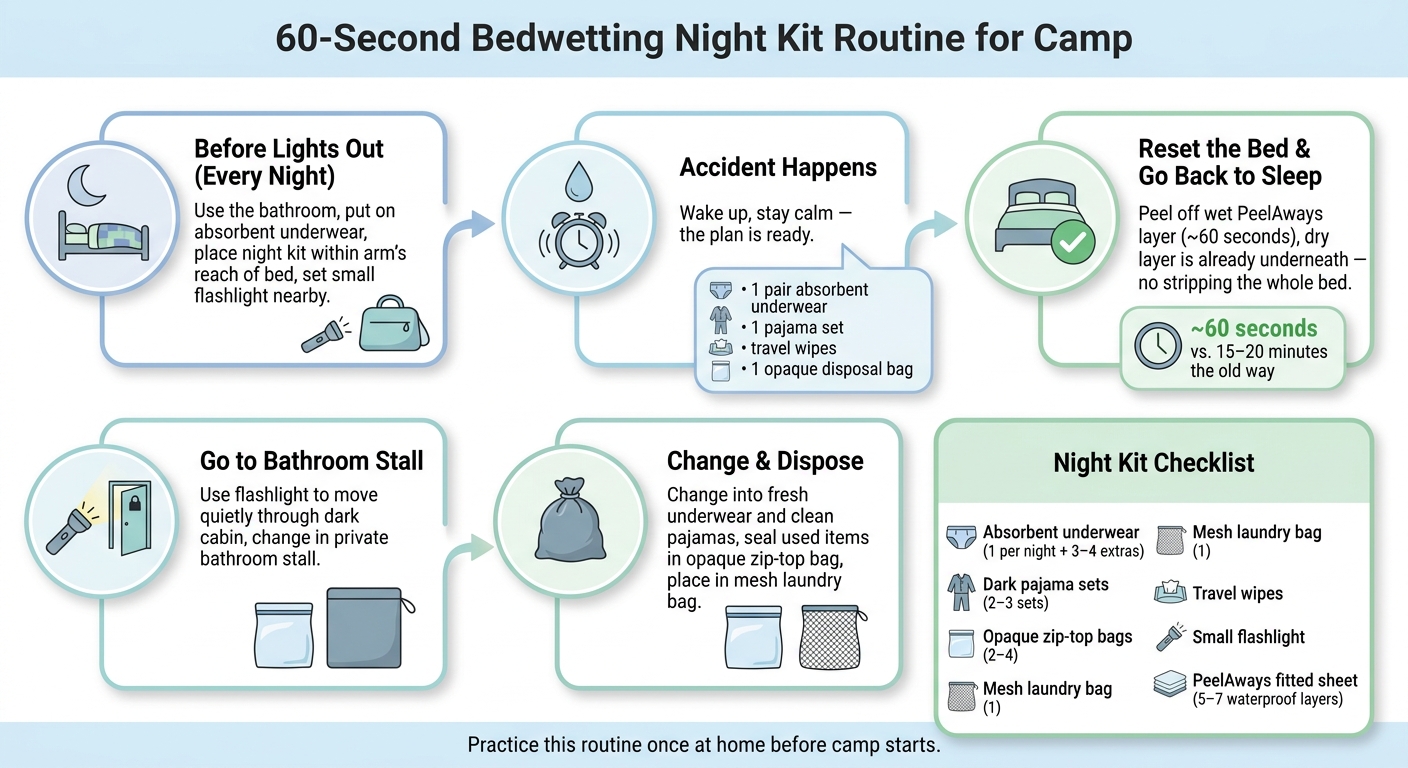
60-Second Bedwetting Accident Plan for Camp: Step-by-Step Night Kit Routine
It’s dark. The cabin is quiet. Your child wakes up, realizes what happened, and for one second that wave of panic hits - please don’t let anyone notice. That moment is hard enough. A simple routine can make it a lot less overwhelming.
With the supplies packed, the last piece is a plan your child can follow half-asleep. The gear helps. The routine is what keeps the change quiet, fast, and low-drama.
Set Up a Simple Bedtime and Accident Plan
A steady routine helps your child stay calm when they’re tired and embarrassed.
Before lights-out, keep the steps the same every night: use the bathroom, put on absorbent underwear, and place the night kit near the bed. Put a small flashlight there too. That way, your child can move through a dark cabin without flipping on overhead lights and drawing attention.
If an accident happens, stick to the same order every time. Your child grabs the night kit, goes to the bathroom stall, changes into fresh underwear and clean pajamas, seals the used items in an opaque zip-top bag, and heads back to bed quietly. It helps to practice that exact routine at home once before camp, so it feels familiar when it matters.
Tell the counselor where the supplies are stored and how wet items should be handled. That small heads-up can save your child a lot of stress in the middle of the night.
Keep the Camp System Simple
Don’t overpack. Don’t make the plan hard to remember. Keep it simple:
- Overnight absorbent underwear
- PeelAways disposable fitted sheets
- Spare pajamas
- Opaque zip-top wet bags
- A small flashlight
Conclusion: Build a Camp Packing List That Protects Comfort and Dignity
Sending a child to camp when they wet the bed takes prep - but it doesn’t have to take over the whole trip. With the right supplies, a clear routine, and a little practice at home, your child can deal with nighttime accidents quietly, quickly, and without missing the heart of camp life.
That’s not a small win. That’s the whole point.
Comments
0



SAVE MONEY & WATER
Professionals & Institutions save a fortune on labor/laundry.

SUPERIOR COMFORT
The first thing our customers notice is how soft our sheets are.

100% WATERPROOF
Each layer is 100% Waterproof, perfect for spills and accidents

SAVE TIME
Change the sheet in under 1 minute without stripping the bed.

Leave a comment