
How to Protect Mattresses from Incontinence

Protecting your mattress from incontinence is crucial to avoid permanent damage, odors, and health issues. Without proper protection, urine can seep into the mattress core, leading to stains, bacteria growth, and shortened lifespan. Caregivers often face the challenge of frequent laundry and cleaning, which can be both time-consuming and exhausting. Here’s a simple solution:
- Start with a zippered waterproof mattress encasement for full coverage and long-term protection.
- Add absorbent layers like reusable waterproof bed pads or PeelAways disposable sheets for quick cleanup.
- Use a layered approach to create a reliable barrier, manage moisture, and ensure comfort.
For quick and easy changes, disposable options like PeelAways sheets are highly effective, while reusable pads are eco-friendly and cost-efficient. Combining these methods helps keep your mattress clean, reduces stress, and makes nighttime accidents easier to manage.
Bedwetting - How to make the bed. Protect the bedding, mattress & your sleep!
Common Problems with Mattress Protection
Protecting mattresses from incontinence can be a tough challenge, especially for caregivers. Traditional solutions often don’t get the job done, leading to damaged mattresses and a less-than-ideal sleeping environment. Let’s break down the key issues.
Liquid Penetration and Permanent Stains
When mattresses aren’t properly protected, urine can seep in quickly, leaving behind stains that are nearly impossible to remove. The foam core absorbs liquid, making the damage permanent. The National Association for Continence highlights the importance of prevention:
"Replacing a mattress is expensive, and getting lingering odors out of them is very hard. If you do nothing else, [use a zippered mattress cover]" [2].
Once the damage is done, it often leads to lingering odors and adds to the workload of cleaning.
Odor and Bacteria Growth
Excess moisture isn’t just an inconvenience - it’s a breeding ground for bacteria and mold. This creates unpleasant odors and can even pose health risks. High-absorbency products are often necessary to tackle these moisture-related problems, but they can still leave caregivers grappling with daily challenges.
Time-Consuming Cleaning and Laundry
Without effective mattress protection, caregivers face an endless cycle of cleaning and laundering. This constant upkeep takes time and energy, leaving less room for other critical caregiving tasks [2]. It’s a frustrating routine that underscores why proper protection is so essential.
Best Solutions for Protecting Mattresses
Using layered protection not only creates a reliable moisture barrier but also makes cleanup easier and helps extend the life of your mattress [2].
Zippered Waterproof Mattress Encasements
A zippered encasement completely wraps around your mattress, offering 360-degree protection against spills, leaks, and odors. Unlike fitted protectors that only cover the top, these encasements seal all sides of the mattress. The National Association for Continence highlights this as a must-have:
"If you do nothing else, do this [install a zippered vinyl mattress cover]. This should go on the bed first and will help keep any moisture from getting on the mattress." [2]
These encasements are machine-washable and feature a waterproof barrier that keeps liquids from seeping into the mattress core. Many modern options use breathable, non-irritating materials that don't trap heat, ensuring comfort for sensitive skin [1][3].
For added protection, consider layering with reusable waterproof bed pads.
Reusable Waterproof Bed Pads
After securing the mattress with an encasement, quilted bed pads with waterproof backing act as a secondary layer. These pads quickly absorb liquids while providing a soft surface for sleep. They're ideal for moderate incontinence and can be washed and reused multiple times. In cases of heavy incontinence, you can layer a large washable pad on the flat sheet and top it with a disposable pad for quicker cleanup [2]. However, frequent laundering is necessary to maintain hygiene.
PeelAways Multi-Layer Disposable Sheets

For those who want to avoid laundry altogether, PeelAways offers a patented multi-layer design that simplifies cleanup. Each sheet includes 5–7 waterproof layers. When a layer is soiled, simply peel it off in under 60 seconds - no need to lift the mattress [3]. PeelAways has received a 4.61/5 rating from over 12,000 customers [3].
Brooklyn Shields, a caregiver, shares her experience:
"As a mom and a caregiver, these sheets have been a great addition to make my day easier. faster changes with zero laundry. WIN" [3]
PeelAways sheets are available in sizes ranging from Crib ($30.99) to King ($53.99). Twin XL options include 5-layer ($34.99) and 7-layer ($41.99) varieties. They are free from vinyl, PVC, phthalates, and fire retardants [3]. Subscriptions offer a 15% discount, and bundle purchases provide an additional 5–10% savings [3].
| Feature | Zippered Encasements | Reusable Bed Pads | PeelAways Disposable Sheets |
|---|---|---|---|
| Coverage | Full 360° mattress seal | Targeted area or top of bed | Full fitted sheet coverage |
| Maintenance | Requires machine washing | Requires frequent laundering | 100% disposable; no laundry |
| Change Speed | Slow (requires bed stripping) | Moderate (replace pad) | Fast (<60 seconds) |
| Best For | Long-term mattress preservation | Moderate leaks; eco-friendly use | Heavy incontinence; quick night changes |
sbb-itb-45288fe
How to Set Up Mattress Protection
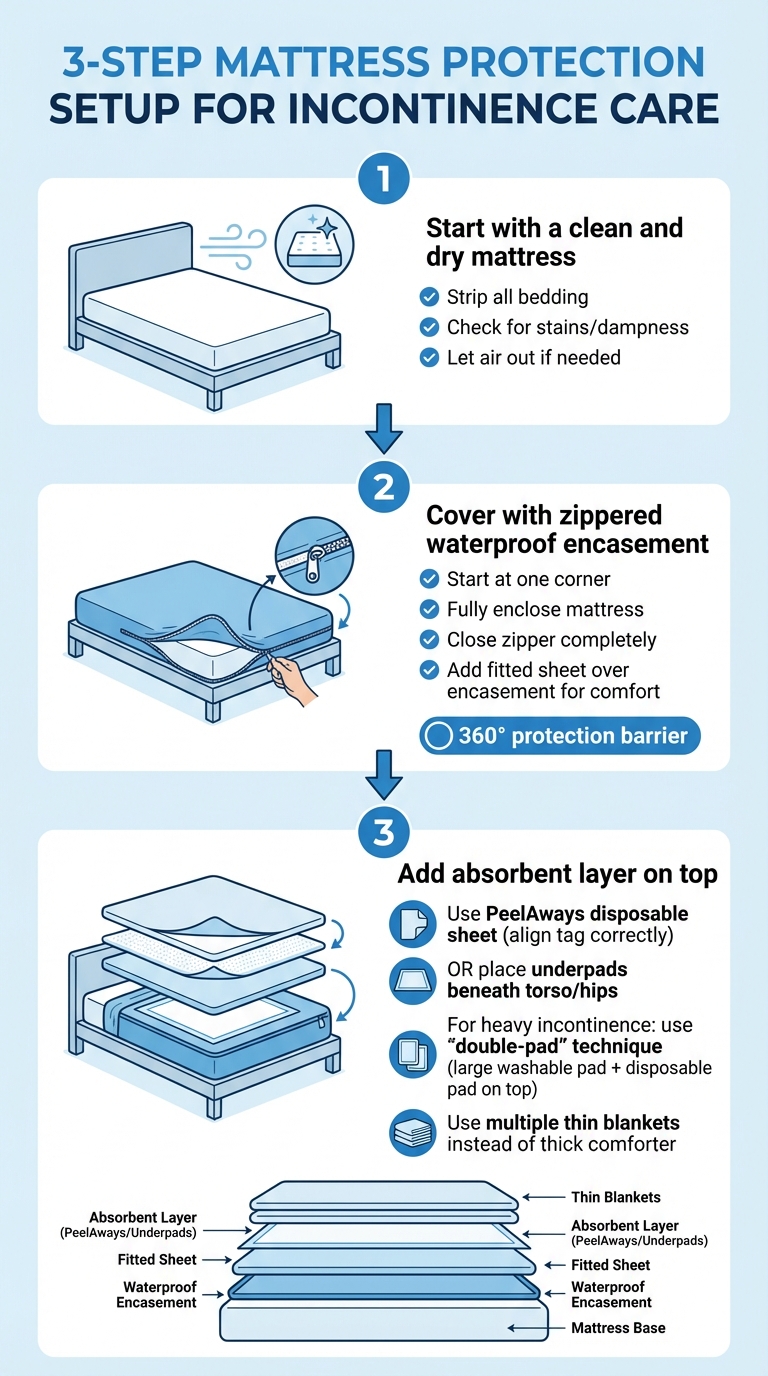
3-Step Mattress Protection Setup Guide for Incontinence Care
Creating layers is the key to building a strong barrier against liquids, making cleanup much easier. The National Association for Continence highlights this as the most crucial first step:
"If you do nothing else, do this [install a zippered, vinyl waterproof mattress cover]." [2]
Here’s how you can set up complete mattress protection step by step.
Step 1: Prepare the Mattress
Start with a clean and dry mattress [4]. Strip off all bedding, check for any stains or dampness, and let it air out if necessary. This ensures you’re not trapping bacteria or mold underneath the protective layers.
Step 2: Install the Waterproof Encasement
Once the mattress is ready, cover it with a zippered waterproof encasement. Begin at one corner and fully enclose the mattress, making sure the zipper is completely closed [2]. This encasement provides a full barrier, keeping moisture and odors out of the mattress core. For added comfort, place a standard fitted sheet over the encasement to maintain a familiar feel while preserving the waterproof protection.
Step 3: Add Absorbent Layers
Next, add an absorbent layer on top of the encasement. Use a PeelAways disposable sheet, ensuring the tag is aligned correctly. These disposable sheets are especially convenient for caregivers, allowing for quick and easy changes. You can also add a fitted sheet over this layer for additional comfort.
For targeted protection, especially in high-risk zones, place underpads beneath the torso and hips. Adjust their position for individuals who move frequently during sleep [4]. To keep the underpads secure, use adhesive strips or tuck the edges under the mattress [4].
For heavier incontinence, the "double-pad" technique is highly effective. Lay a large washable pad over your flat sheet, then place a disposable pad on top. This setup makes it easy to remove and replace the soiled layer, while the washable pad provides backup protection [2][4]. Lastly, opt for multiple thin blankets instead of a single thick comforter - they’re much easier to clean [2].
Cleaning and Maintenance
Keeping your mattress protector in good shape ensures it works effectively and lasts longer. A little regular upkeep goes a long way in preventing bacteria, odors, and allergens from taking hold.
Daily Spot Cleaning
Quick action is crucial when accidents happen. According to BedMart, "Immediate washing can prevent stains and potential growth of bacteria or mold" [5]. Start by blotting the affected area with a clean cloth - don’t scrub, as this can damage the waterproof layer and spread the stain. For urine stains, soak the spot with a mix of cool water and enzyme detergent for 30 minutes, or use a 1:1 vinegar-water solution to neutralize odors. For blood stains, stick to cold water; warm or hot water will permanently set the stain.
After cleaning, sprinkle baking soda over the area and let it sit for about 8 hours before vacuuming. To speed up drying, use a portable fan or dehumidifier, ensuring the protector is completely dry before putting the bed back together. For an extra layer of cleanliness, lightly mist the surface with hydrogen peroxide (if it’s safe for the fabric) or an alcohol-free antibacterial spray.
Disposing of PeelAways Layers
PeelAways sheets make cleanup fast and easy. When a layer gets soiled, simply peel it off from the top corner across the mattress to reveal a clean layer underneath - this takes less than a minute [3]. Dispose of the used layer immediately in a trash bin to avoid odors and bacteria. As one user, Kalahiki Jr Samuel, shared, "They said it is more convenient to use than sheets, less washing, just peel off soiled layer and throw out" [1]. If not soiled, each layer can last 7–10 days [3]. Regularly check the top layer and remove it as soon as it’s dirty.
Weekly Maintenance
In addition to daily care, weekly upkeep helps maintain long-term performance. Vacuum your waterproof encasement every time you change your bed linens - about every 1 to 1.5 weeks [7]. This removes dust mites, skin flakes, and allergens that can sneak past your sheets. Each morning, air out your bed covers to let moisture and sweat from the night evaporate [7]. Washing your bed sheets weekly also prevents the buildup of bacteria, dust, and body oils on your mattress protector [6].
Conclusion
Protecting your mattress from incontinence doesn’t just save you from endless laundry - it also prevents permanent damage. The best strategy combines a zippered waterproof encasement as your base layer with absorbent pads and disposable sheets. As the National Association for Continence explains, "The key to managing this problem is prevention... And remember, layers are your friend. They will help keep any leaks to a minimum and make clean up so much easier" [2].
Among the available options, PeelAways stands out for its quick and efficient cleanup process. These sheets feature 5–7 waterproof layers that peel away in less than a minute, eliminating the need for late-night laundry or heavy lifting. Caregiver Stephanie Jackson praised the product, saying, "After clean up and I [peeled] away the top layer, nothing. I mean nothing soaked, seeped through, not even smell" [1]. With a 4.6/5 rating from over 12,000 customers, PeelAways has earned its reputation [3].
While disposable sheets may have an upfront cost, they offer invaluable protection against permanent stains and odors. Waterproof encasements ensure long-term mattress hygiene with minimal maintenance, and reusable pads provide targeted absorption where it’s needed most. Together, these layers form a reliable system that prioritizes hygiene, convenience, and comfort - helping caregivers and care recipients enjoy better sleep and peace of mind.
Start with a waterproof encasement as your foundation [2]. This simple step ensures your mattress remains protected, cleanup stays manageable, and your nights are more restful.
FAQs
How many layers should I use to protect a mattress?
Peelaways suggests using 5 layers of their disposable, waterproof sheets to keep your mattress well-protected. When a layer gets dirty, you can simply peel it off to reveal a fresh one underneath. This eliminates the hassle of washing or lifting the entire sheet, making it a convenient and hygienic solution.
What’s the fastest way to change the bed after an accident?
The fastest way to handle bed changes after an accident is by using disposable, waterproof sheets such as PeelAways. These sheets are designed with multiple layers - simply peel off the soiled top layer to uncover a fresh, clean sheet below. This approach saves time by eliminating the hassle of lifting the mattress or dealing with laundry, offering a practical solution for caregivers and families managing incontinence.
How do I prevent urine odors from soaking into the mattress?
To keep urine odors at bay, consider using a high-quality waterproof mattress protector. It creates a barrier to block liquids, helping to prevent odors from setting in. Another option is disposable waterproof sheets, such as PeelAways. These come with multiple peel-away layers, making it easy to keep the mattress dry and odor-free without the hassle of frequent laundry.
Regularly washing bedding and applying odor-neutralizing sprays can also help maintain a fresh sleeping environment. The trick is to act quickly - address spills and accidents as soon as possible to stop odors from becoming a long-term problem.
Comments
0



SAVE MONEY & WATER
Professionals & Institutions save a fortune on labor/laundry.

SUPERIOR COMFORT
The first thing our customers notice is how soft our sheets are.

100% WATERPROOF
Each layer is 100% Waterproof, perfect for spills and accidents

SAVE TIME
Change the sheet in under 1 minute without stripping the bed.

Leave a comment