
Everything You Need to Know About Overnight Bed Protection

It’s 2 a.m. The sheets are soaked again. Your loved one is embarrassed, your back hurts, and you have to be up in four hours.
A setup that works can turn a 15–20 minute bed change into about 60 seconds, cut laundry by 50%–80%, and keep the mattress dry. For most people, overnight bed protection means three parts: a waterproof mattress cover, an absorbent backup layer, and a top layer you can change fast. If leaks happen often, a multi-layer sheet setup is usually the easiest path.
- Best base: waterproof mattress protector
- Best for light leaks: absorbent bed pad
- Best for frequent accidents: multi-layer disposable sheet system
- Best if you need fewer night changes: PeelAways, with 5–7 waterproof layers per set
- Sizes: crib to king
- Social proof: 28,000+ reviews and a 4.8-star rating
If you are standing in the dark asking how to keep the bed dry without remaking the whole thing, this is the setup I’d start with.
Layering Incontinence Pads Works Best - Here's How!
sbb-itb-45288fe
Why this problem is harder than people think
A wet bed is not just a wet bed.
It is sleep loss.
Laundry.
Lifting.
Skin sitting in moisture too long.
And that awful moment when someone you love feels ashamed over something they did not choose.
I learned fast that protecting the mattress is only half the job. The other half is making cleanup less brutal at 2 a.m.
If the setup takes too long to change, it fails when you need it most.
What to look for before buying
Before you buy bedding solutions for incontinence care, keep it simple.
Look for:
- A waterproof barrier that stops leaks from hitting the mattress (compare waterproof mattress pads vs. disposable sheets to see which barrier fits your needs)
- A soft top layer that does not feel stiff or loud
- Breathable fabric so the bed does not feel hot
- A snug fit that stays put overnight
- Fast change time if accidents happen more than once a week
- Enough coverage for the leak level you deal with
If you already use diapers or incontinence pads, I would not stop there. You still need bed protection under them.
Waterproof mattress protectors
This is the base layer.
A waterproof mattress protector keeps urine and other fluids out of the mattress. That matters because once liquid gets into a mattress, the smell can stay there.
What I like about this option:
- It guards the mattress every night
- It works under any sheet setup
- It helps with stains and odor as part of a broader bedwetting hygiene routine.
What it does not do:
- It does not save you from changing wet top bedding
- It does not cut much time during a nighttime accident
So yes, you need one.
No, it is usually not enough on its own.
Washable bed pads
Washable pads work best for light to moderate leaks.
You place them over the area most likely to get wet. They can help if accidents are not heavy and do not happen often.
The trade-off is simple:
- They can bunch up
- They add laundry
- They often still lead to a partial bed change
For some homes, that is fine. However, choosing bedding for incontinence care requires balancing comfort with cleanup time.
For rough nights, it gets old fast.
Standard bedding alone
Regular sheets feel good until they are wet.
If you are relying on standard bedding without a waterproof layer underneath, you are taking a risk with the mattress. And if an accident happens, you are back to the full routine:
- Strip the bed
- Clean the sleeper
- Find dry linens
- Remake the bed
- Try to get everyone back to sleep
That can take 15–20 minutes.
At 2 a.m., that feels like forever.
Multi-layer sheet systems
This is the setup that made the biggest difference for me.
A multi-layer sheet system puts several waterproof bed protection layers into one fitted sheet. When the top layer gets wet, you remove it, and a clean layer is already underneath.
That means:
- Less lifting
- Less laundry
- Less sleep loss
- Less stress for the person in bed
If accidents happen often, this kind of setup is hard to ignore.
PeelAways
PeelAways is the one I’d point you to if your nights keep getting wrecked by sheet changes.
It is a disposable fitted sheet with 5–7 built-in waterproof layers. When the top layer is soiled, you peel it off and keep going. The clean layer underneath is already in place.
That is the whole point.
No full sheet change.
No wrestling mattress corners.
No hunting for clean linens half asleep.
Here is why it stands out:
- About 60-second changes
- 50%–80% less laundry
- Soft, quiet fabric
- No vinyl, PVC, or phthalates
- Sizes from crib to king
- 28,000+ reviews
- 4.8 stars
- HSA/FSA eligible
If you want to look at it, you can find it on peelaways.com/shop and on Amazon.
If you want setup ideas, I’d also read more on the PeelAways blog, including guides on nighttime incontinence care and nighttime cleanup and layered bed setups.
Making aging and caregiving easier, one bed at a time.
Comparison table
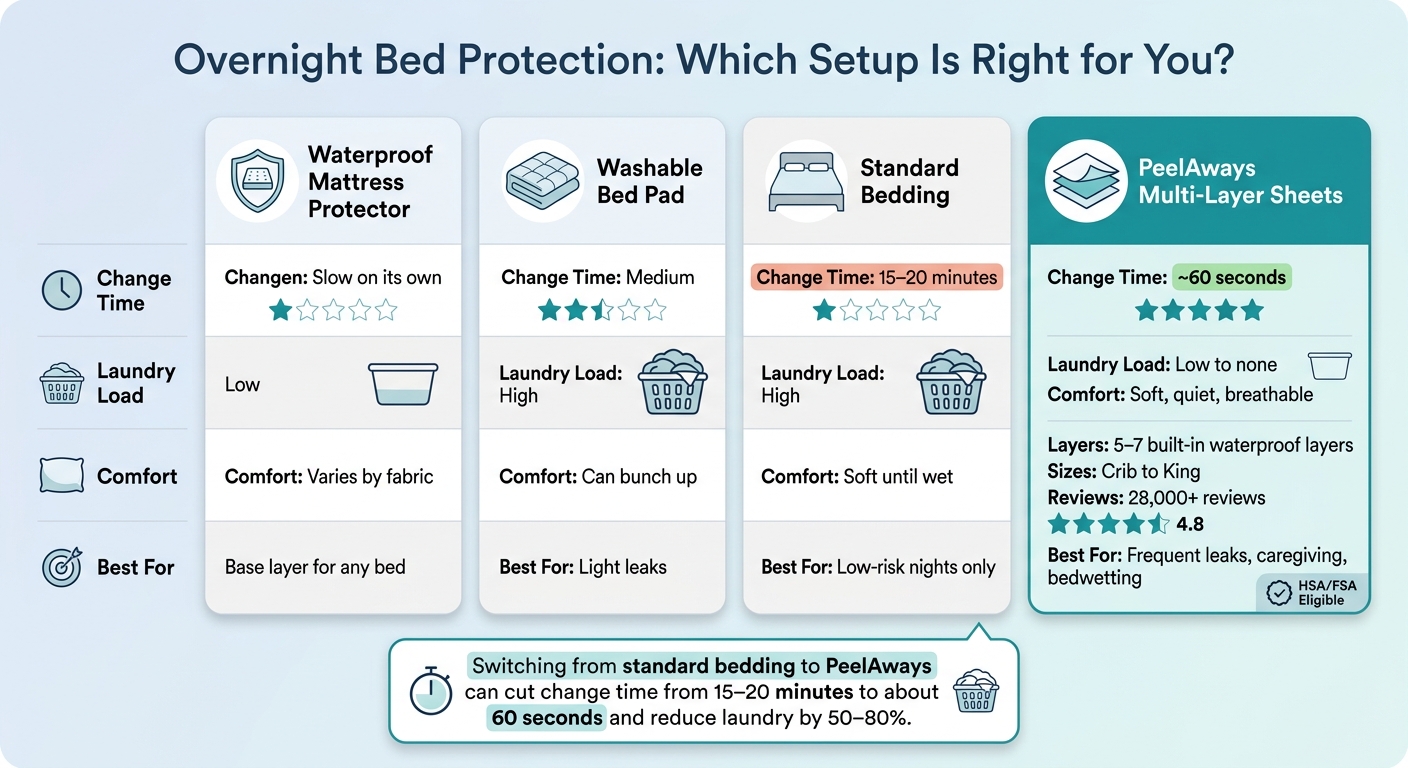
Overnight Bed Protection: Which Setup Is Right for You?
| Option | Change time | Laundry | Feel | Best fit |
|---|---|---|---|---|
| Waterproof mattress protector | Slow on its own | Low | Varies by fabric | Base layer for any bed |
| Washable bed pad | Medium | High | Can bunch up | Light leaks |
| Standard bedding | 15–20 minutes | High | Soft until wet | Low-risk nights only |
| PeelAways | About 60 seconds | Low to none | Soft, quiet | Frequent leaks, caregiving, bedwetting |
FAQ
Do I need a mattress protector if I use PeelAways?
Yes. I would still use a waterproof mattress protector under any sheet system. It gives you backup protection.
Are washable pads enough for heavy overnight leaks?
Usually not. They can help with spot coverage, but heavy leaks often soak past them or lead to more cleanup.
How many layers does PeelAways have?
Each set has 5–7 layers, depending on the product size and type.
Is PeelAways only for older adults?
No. It can help with adult incontinence, child bedwetting, potty training accidents, post-surgery cleanup, and home care.
Where can I buy PeelAways?
You can buy it at peelaways.com/shop or on Amazon.
Bottom line
If leaks are rare, a mattress protector and pad may be enough.
If leaks happen often, I would skip the long nightly cleanup cycle and keep beds dry with a layered sheet system. That is where PeelAways makes the most sense. The jump from 15–20 minutes to about 60 seconds is not small when you are exhausted. Neither is cutting down the laundry and keeping the bed feeling more normal.
If you use diapers or incontinence pads, you need bed protection that can keep up. For me, that means PeelAways.
Blog readers save 10% with code BLOGS10 at checkout. Available on peelaways.com and Amazon. Free shipping on orders over $100.
The Main Types of Overnight Bed Protection
It’s 2am. The bed is wet, your loved one is upset, and you’re standing there half-awake trying to figure out whether to strip the whole bed or just patch the problem and hope for the best. In that moment, the setup on the bed matters more than anything.
Most people do best with layers: a waterproof base, absorbent backup, and bedding you can change fast. Each piece does a different job. Put two or more together, and you get better protection with less chaos in the middle of the night.
Waterproof Mattress Covers: The Base Layer That Protects the Bed
A waterproof mattress cover is the starting point for overnight bed protection. It goes right on the mattress and stops liquid from soaking in.
Fit matters here. A cover that slides around or bunches up can make a long night feel even longer. Pick the right size and make sure it stays put.
The fabric matters too. Look for breathable, quiet fabric. You want something quiet, breathable, and low-profile - not stiff, crinkly, or hot.
Pads and layered sheets come in on top of that base layer, right where leaks tend to happen.
Absorbent Bed Pads and Spare Pajamas for Leak-Prone Areas
Absorbent bed pads give you a second line of defense in the spots most likely to get wet. They’re a good pick when you want more coverage without redoing the whole bed.
And here’s one of those small things that helps more than people expect: keep a spare set of pajamas close by. Not in another room. Not buried in a drawer. Right there.
For managing overnight accidents in children or adults dealing with repeat overnight leaks, that simple step can make changes feel calmer and a lot less drawn out.
Disposable and Multi-Layer Sheet Systems for Fast Nighttime Changes
Disposable sheet systems handle the problem in a different way. Instead of washing and remaking the bed after a leak, you remove the soiled layer and keep going. They can work as the main fitted sheet.
PeelAways makes those nighttime changes much easier. It uses 5 to 7 built-in layers, so when one layer gets soiled, you peel it away and the bed is still made underneath.
That’s the kind of thing you don’t fully get until you’ve done a full sheet change in the dark with a tired back and someone waiting on you. A change that takes about 60 seconds feels very different from the old 15 to 20 minute routine. This efficiency is a key way disposable sheets reduce caregiver stress during difficult nights.
The setup that works best depends on how much leakage you’re dealing with, where care is happening, and what feels okay on the skin.
How to Choose the Right Overnight Bed Protection Setup
It’s 2am. The top layer is wet, your loved one is half-awake, and you’re trying to fix the bed without fully waking them up. In that moment, the “right setup” isn’t about bells and whistles. It’s about what keeps the bed dry, feels decent against the skin, and lets you change things fast.
Choose the setup by leakage level, mobility, care setting, skin comfort, and change speed. Once the main options are clear, match the setup to the level of leakage and the care setting.
Match Your Setup to Leakage Level: Light, Moderate, or Heavy
Start with the amount of leakage. That’s the piece that shapes everything else.
Heavy leakage calls for a multi-layer system so a dry layer is ready underneath when the top one is soiled. That matters when you don’t have 15 to 20 minutes for a full strip-and-remake. You need the next dry layer there, ready to go.
Lighter leakage may only need a waterproof base and an absorbent pad over the most vulnerable area. Sometimes that simple setup is enough, especially if the goal is just to protect one part of the bed instead of rebuilding the whole thing.
Leakage sets the baseline; the next question is who needs the bed change and how fast it has to happen.
Match Your Setup to the Care Situation: Children, Adults at Home, or Facility Residents
The same setup does not fit every bed or every night.
For a child in potty training, the best setup feels normal and private. Multi-layer sheets let older children handle accidents privately and keep the bed feeling normal. That can make a big difference. Kids notice when bedtime starts to feel like a hospital routine.
For an adult at home, the main goals are less laundry, less disruption, and faster overnight changes. If you’ve ever stood there in the dark pulling off wet sheets while someone waits, cold and embarrassed, you know how much this matters. For restless sleepers, choose fitted layers that stay in place overnight.
For a facility resident, speed and hygiene are the biggest priorities. Facilities need changes that are fast, hygienic, and easy to repeat. Staff may be doing this many times a night, so the setup has to work the same way every time without extra steps.
Choose materials that prevent skin irritation and support dignity
Materials matter more than people think.
Choose materials without vinyl, PVC, or phthalates. A setup that feels soft, quiet, and breathable helps the bed feel normal rather than medical, which supports dignity and makes overnight care easier for everyone involved.
That “quiet” part counts too. Crinkly layers can make someone feel self-conscious fast. Softer materials help the bed feel like a bed, not a reminder of what’s going wrong.
How to Make Nighttime Bed Changes Faster and Less Stressful
It’s 2:07 a.m.
The bed is wet again.
You’re half awake, your loved one feels awful, and the thought of stripping the whole bed makes your stomach drop.
Once the right protection setup is in place, the next goal is simple: make the change calm and FAST. Once the bed is layered, the job can take seconds instead of minutes.
How to Build a Layered Bed Before Bedtime
Start by placing a multi-layer fitted sheet directly on the mattress. Put the tag at the head or foot so the sheet fits the way it should. If the sleeper moves around a lot, use corner straps to help keep the sheet from shifting.
If you want the bed to look more like a regular made bed, add a standard decorative sheet on top. Then, if there’s an accident, both the top sheet and the soiled layer come off together, and a clean layer is already there underneath.
That part matters more than people think. The speed of the change depends on what’s already in place before anyone falls asleep.
What a 60-Second Bed Change Looks Like With PeelAways
This is where PeelAways feels like something another exhausted caregiver would whisper to you and say, try this tonight.
With regular sheets, you’re stripping the bed and making it again from scratch. With PeelAways, you peel off one soiled layer and keep moving.
Start at one corner. Peel the soiled layer away, fold it inward before tossing it, then smooth the clean layer underneath. That’s it. The bed is ready in under 60 seconds. No full bed remake. No lifting. No digging through a linen closet in the dark.
Its soft, quiet material also helps the bed feel more normal at night.
If you already use diapers or incontinence pads, this kind of setup just makes sense. PeelAways comes in 5-7 layers, in sizes from crib to king, and it has 28,000+ reviews with a 4.8-star rating. The whole idea is simple: Making aging and caregiving easier, one bed at a time.
You can find it on peelaways.com/shop and on Amazon. If you want to read more from people living this every day, it also helps to look through other guides on peelaways.com, like their blog articles on nighttime cleanup and layered bed setups.
How to Cut Laundry Without Losing Hygiene
Laundry is one of those jobs that quietly wears you down. Not just the washing. The drying, folding, remaking, and doing it all over again the next night.
A layered disposable setup cuts that load because you remove only the soiled layer. Each used layer gets thrown away, so cleanup stays contained. The waterproof layer also keeps liquid from soaking through to the next sheet. This barrier is also essential for preventing odors from setting into the mattress.
Here’s what that difference looks like in plain English:
| Factor | Standard Bedding Change | PeelAways Change |
|---|---|---|
| Time | 15–20 minutes | Under 60 seconds |
| Laundry | Full wash/dry cycle for sheets and pads | Zero laundry; layer is disposable |
| Sleep disruption | High - requires leaving room for supplies | Low - supplies are already on the bed |
With that routine in place, the next step is matching the setup to the home or care setting.
Which Overnight Bed Protection Setup Is Right for Your Home or Care Setting?
It’s 2 a.m. again. The bed is wet, your loved one is upset, and you’re standing there half-awake, already thinking about the sheets, the mattress, and the laundry waiting for you. If this keeps happening, the setup on the bed matters more than most people think.
The right choice comes down to three things: how heavy the leaks are, how fast you need to change the bed, and how much laundry you can deal with. A waterproof mattress protector is the starting point for most beds. For light leaks, washable bed pads can help with spot protection. But when accidents happen often or soak through, a fast top-layer system like PeelAways can make the night much easier.
Comparison Table: Mattress Protectors vs. Washable Pads vs. Standard Bedding vs. PeelAways
| Solution | Cleanup Time | Laundry Load | Comfort | Best For |
|---|---|---|---|---|
| PeelAways Multi-Layer Sheets | Fast | Zero | Soft, breathable, noiseless | Heavy leaks, caregiving, bedwetting |
| Washable Bed Pads | Moderate | High | Bulky and can bunch up | Light to moderate leaks, zonal protection |
| Standard Bedding | Slow | High | Soft but can feel damp | Standard bedding only; needs a protector underneath |
| Waterproof Mattress Protector | Base layer only | Low | Can be less breathable or noisier | Base layer protection |
When leaks are heavier and happen more often, a fast top-layer system starts to make a lot more sense. A mattress protector helps guard the mattress underneath, but it won’t save you from a full bed change when the top bedding is soaked.
If you want a shorter path to the right setup, the chart above helps narrow it down. Then it’s easier to match the bed to the care situation in front of you.
Recommended Setups for Common Overnight Scenarios
Occasional child bedwetting or potty training:
For child bedwetting, PeelAways keeps things more discreet and lets you remove the top layer fast after an accident. That matters when you’re trying not to fully wake a child in the middle of the night. You can also check the PeelAways Amazon listing if that’s where you prefer to shop.
Adult incontinence at home:
Use a waterproof mattress protector as the base, then PeelAways as the fitted sheet. The soft, noiseless material helps the bed feel normal instead of medical, and the 60-second change means less disruption at 2 a.m. If you’ve ever had to do a full strip-and-remake while someone waits in damp sheets, you know how big that time gap feels. PeelAways has 28,000+ reviews, a 4.8-star rating, comes with 5-7 layers, and is sold in sizes from crib to king. More details are on peelaways.com/shop.
Elderly or immobile care:
PeelAways can cut down the need to strip the whole bed, reduce mattress lifting, and lower the laundry pile in nightly care. That’s a big deal when every turn, lift, and sheet change takes effort from both of you. If this is your day-to-day, it may also help to read more on the PeelAways blog at peelaways.com and browse other articles there for setup tips and care ideas.
Next Step: Protect the Mattress, Simplify Care, and Try PeelAways
Start with a waterproof mattress protector as the base layer. Then add PeelAways for fast overnight changes.
It’s one of those things I wish I had found sooner. 60 seconds instead of 15-20 minutes can change the feel of a whole night. If you use diapers or incontinence pads, PeelAways is worth a close look. Making aging and caregiving easier, one bed at a time.
Blog readers save 10% with code BLOGS10 at checkout. Available on peelaways.com and Amazon. Free shipping on orders over $100.
Comments
0



SAVE MONEY & WATER
Professionals & Institutions save a fortune on labor/laundry.

SUPERIOR COMFORT
The first thing our customers notice is how soft our sheets are.

100% WATERPROOF
Each layer is 100% Waterproof, perfect for spills and accidents

SAVE TIME
Change the sheet in under 1 minute without stripping the bed.

Leave a comment