What Happens During a Nursing Home Inspection? Prepare Your Facility for Survey Success

Nursing home inspections are unannounced and occur every 9 to 15 months, with an average interval of 12 months. These reviews assess safety, resident care, and compliance with federal standards, directly impacting your facility’s reputation and funding. To succeed, maintain year-round readiness by training staff, adhering to hygiene protocols, and ensuring documentation is always up-to-date.
Surveyors evaluate infection control, medication management, and resident dignity by observing daily operations, reviewing records, and interviewing staff and residents. Common deficiencies include hygiene lapses, staffing issues, and cleanliness problems. Addressing these proactively minimizes risks of fines or penalties while ensuring quality care.
You can prepare by organizing key documents, training staff to handle surveyor questions, and implementing solutions like disposable sheets to reduce cross-contamination and meet hygiene standards. Consistent preparation ensures your facility is inspection-ready at all times.
Getting Your Long Term Care Facility Ready for Survey
sbb-itb-45288fe
The CMS Survey Process Explained
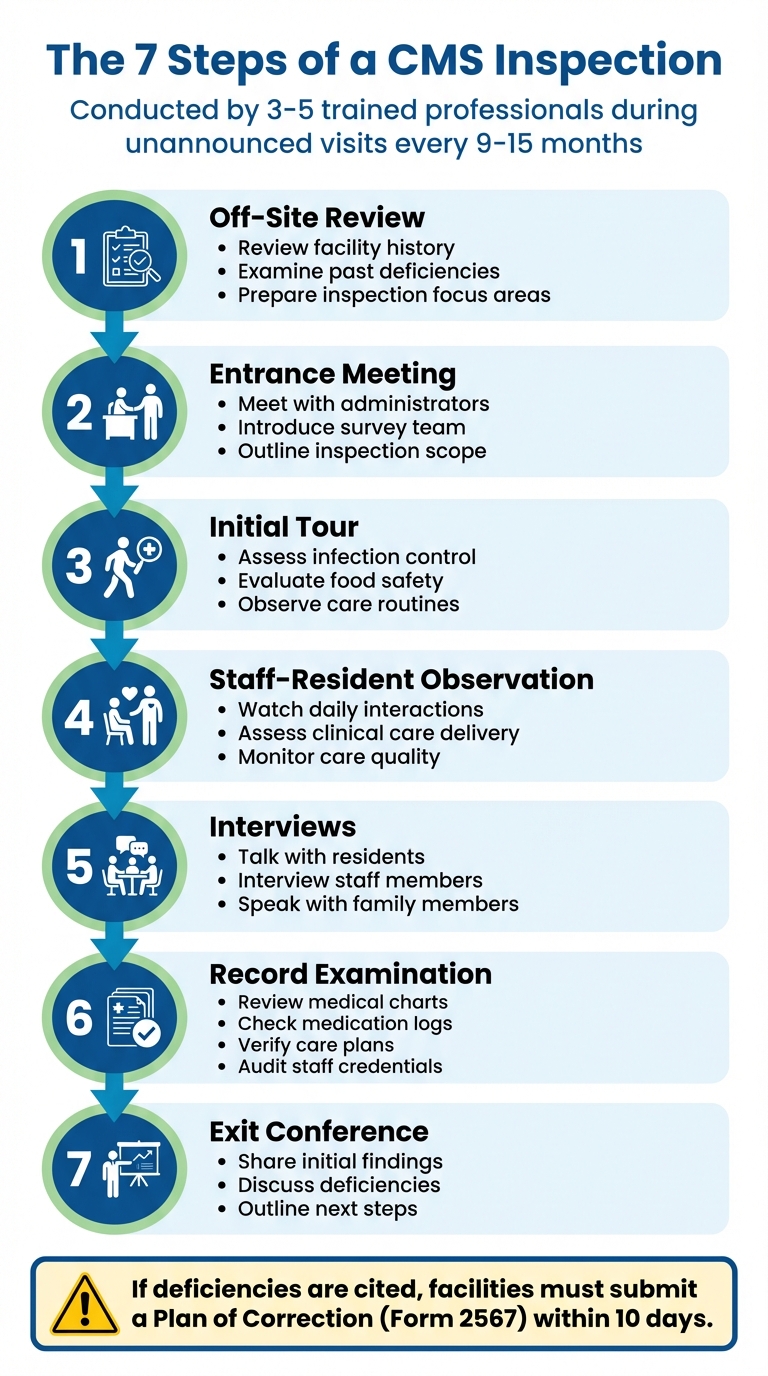
The 7 Steps of a CMS Nursing Home Inspection Process
Understanding the CMS survey process is key to ensuring your facility stays compliant with federal standards. These inspections, carried out by state survey agencies on behalf of CMS, focus on evaluating your facility's everyday operations. CMS nursing home inspections follow a structured seven-step process and are unannounced. Typically, a team of 3 to 5 trained professionals conducts the survey, examining everything from clinical care to environmental safety.
The 7 Steps of a CMS Inspection
The survey process begins with an off-site review of your facility’s history, including any past deficiencies. Once on-site, the team holds an entrance meeting with administrators, followed by an initial tour to assess areas like infection control, food safety, and care routines. Surveyors observe staff-resident interactions, assess clinical care delivery, and conduct interviews with residents, staff, and family members. They also examine records such as medical charts, medication logs, care plans, and staff credentials. Finally, the process concludes with an exit conference where initial findings are shared.
Who Performs the Inspections?
CMS inspections are conducted by employees of state survey agencies acting as federal representatives. Surveyors undergo extensive federal training and must pass the Surveyor Minimum Qualifications Test (SMQT) before they can lead inspections. At least one team member is required to be a Registered Nurse, and teams often include professionals like social workers, registered dietitians, and environmental health specialists. This multidisciplinary approach ensures a thorough evaluation of resident care and facility operations, whether it’s a routine survey or one prompted by a complaint.
Inspection Frequency and Timing
Facilities must always be prepared, as standard surveys are conducted every 9 to 15 months, with the average interval being 12 months. Additional unannounced inspections may occur if formal complaints are filed by residents, families, or staff. Follow-up surveys are also conducted to confirm that corrective actions have been implemented after deficiencies are identified. If your facility is cited for deficiencies, you’ll need to submit a plan of correction (Form 2567) within just 10 days.
What Inspectors Evaluate: Resident Care and Hygiene Standards
Surveyors assess infection control, resident dignity during care, and medication safety by observing daily operations, reviewing documents, and inspecting critical facility areas. Their focus goes beyond processes - they evaluate how these standards actively protect residents' well-being. Facilities must adhere to federal regulations outlined in 42 CFR part 483, subpart B, which took effect on November 28, 2016. Here's a closer look at how these areas are evaluated.
Hygiene and Infection Control Requirements
Strong infection control practices are non-negotiable for protecting residents' health. Inspectors look for proper hand hygiene and correct use of personal protective equipment (PPE) as staff move between tasks. They also check that medical and general waste are separated and disposed of in designated areas. Kitchens are closely inspected for compliance with food safety standards, including proper storage temperatures, cleanliness during meal prep, and overall sanitation. Additionally, the Centers for Medicare & Medicaid Services (CMS) requires facilities to employ trained infection preventionists, so be ready to present staff credentials and evidence of ongoing training.
Resident Dignity During Care
Ensuring residents' privacy and autonomy during care is a fundamental requirement. Surveyors expect staff to explain care procedures clearly and maintain privacy during personal care. Residents have the right to decline adult diapers and should never be forced to use them unless they choose to. Inspectors also check that call lights are always within a resident's reach. Facilities must show evidence of individualized care plans that prioritize scheduled toileting every 2–3 hours during the day and at least once overnight, instead of relying on diapers as a default.
Safety and Medication Management Standards
Medication safety and environmental standards demand precise documentation and quick access to critical records. Facilities must provide medication schedules and storage details within one hour and produce abuse policies or dialysis/hospice agreements within four hours. Inspectors review electronic health records for documentation of falls, medications, hospitalizations, and changes in residents' conditions. They also confirm that the Director of Nursing maintains full-time coverage and check for any nurse staffing waivers. Environmental safety evaluations include verifying emergency water sources, designated smoking areas and times, and an up-to-date facility floor plan.
Frequent Inspection Deficiencies
Recurring issues in infection control, incontinence care, and cleanliness can undermine survey results and impact facility ratings. One of the most commonly cited deficiencies is F880 (Infection Prevention and Control), which covers hand hygiene, proper use of PPE, isolation protocols, and linen handling. These violations often arise from staff fatigue, high turnover leading to training gaps, and a lack of real-time supervision. Addressing these vulnerabilities before inspections can protect your facility's ratings and resident care quality. Below, we’ll explore specific problem areas and their effects on survey outcomes.
Hygiene and Incontinence Care Problems
F315 (Incontinence Care) is frequently cited when facilities fail to prevent urinary tract infections, manage catheters correctly, or provide bladder retraining programs. Similarly, F312 (ADL Care for Dependent Residents) violations occur when basic hygiene and grooming needs for residents who rely on staff are neglected. Common examples include staff not changing gloves between residents or delays in providing baths and perineal care. These gaps in care can harm quality ratings and lead to expensive corrective action plans.
Staffing Problems and Their Impact
Staffing shortages often result in delayed or incomplete care for residents needing incontinence support. According to the Nursing Home Reform Act (OBRA-87), facilities must maintain "sufficient staffing levels" to deliver safe, high-quality care. The Centers for Medicare & Medicaid Services (CMS) also considers staffing one of the three primary components of its Five-Star Quality Rating System. During inspections, staff interviews often reveal uncertainty or inconsistency in care practices, which can erode surveyors' confidence in the facility’s capabilities. As noted by Janet Mackenzie, MD, Chief Medical Officer at Vohra Wound Physicians:
Citations can lead to fines, costly corrective action, and lost business due to damaged reputation.
Staffing challenges can also extend to cleanliness, as discussed in the next section.
Environmental Cleanliness Issues
Environmental cleanliness is another area where deficiencies are common. Violations related to F253 (Housekeeping) and F812 (Food Safety) often highlight problems beyond direct resident care. Inspectors frequently focus on high-touch surfaces like bed rails, nurse call buttons, light switches, and door knobs that may be missed during routine cleaning. In kitchen areas, issues such as improper food storage temperatures, cross-contamination, unclean equipment, and poor waste disposal practices are frequently cited. Additionally, inadequate facility maintenance and sanitation noncompliance point to broader systemic issues that require thorough corrective measures.
Preparing Your Facility for Inspection Success
Staying ready for inspections requires daily vigilance, well-organized records, and a proactive staff. Make sure every team member knows their responsibilities during the survey process. As Qsource emphasizes:
Maintaining survey readiness is essential for ensuring compliance, avoiding citations, and delivering quality care.
To align with the detailed CMS inspection process, focus on staff training, consistent daily procedures, and thorough documentation. This approach ensures your facility meets the standards discussed earlier.
Staff Training Requirements
Effective staff training is the foundation of inspection readiness. Every team member should be well-versed in CMS regulations, resident care protocols, and emergency procedures. Training should also emphasize how to balance dignity and care during sensitive daily tasks. Regular training sessions and mock interviews with residents - particularly those with high cognitive function or who serve on the Resident Council - can prepare staff for surveyor questions. Use CMS Critical Element Pathways as a guide and assign management to specific areas to ensure compliance the moment surveyors arrive.
Practice sessions should also focus on how staff interact with surveyors, teaching them to answer confidently without offering unnecessary details. MyFieldAudits notes:
If your team cannot explain procedures, surveyors may question readiness.
Emergency drills are equally important. These should cover fires, severe weather, and power outages, ensuring staff can confidently explain evacuation plans and communication protocols during an inspection.
Daily Hygiene Protocols
Daily hygiene and safety checks are crucial for maintaining compliance. Conduct regular rounds to ensure resident safety and facility cleanliness. Update key forms like the 802 Matrix Form (used to identify care categories) and Form 672 (census and condition details) on a daily or weekly basis during the survey window. Pay close attention to high-risk resident charts, reviewing them for issues like pressure injuries, dehydration, or streamlining incontinence care.
Another simple yet important step is ensuring that all direct care staff wear clearly visible nametags - a detail surveyors often check. Also, monitor adherence to your Infection Prevention and Control Program, which includes surveillance plans and antibiotic stewardship protocols.
Required Documentation and Records
Surveyors will request specific documents within strict timeframes. Be prepared to provide the following:
- Immediately upon arrival: Census numbers, an alphabetical resident list, and a list of COVID-19 cases.
- Within one hour: Staff schedules, meal times, and medication administration schedules.
- Within four hours: Your QAPI plan, facility assessment, and infection control policies.
- Within 24 hours: CMS-671 and CMS-672 forms.
To streamline this process, create a survey readiness binder with essential documents such as updated floor plans, Hospice/Dialysis agreements, and Abuse/Neglect/Exploitation policies. As Qsource advises:
The absolute best practice is to be prepared for the nursing home survey with a checklist and survey readiness binder covering all your bases and touching on everything a surveyor might ask for during their visit.
Always provide copies - not originals - and limit the information you share to what surveyors specifically request. This ensures your facility remains organized and compliant throughout the inspection process.
How PeelAways Supports Inspection Readiness

PeelAways offers a practical solution to simplify compliance with daily hygiene protocols, especially during inspections. These disposable bed sheets meet CMS hygiene standards with a multi-layer waterproof design, allowing bed changes in under 60 seconds. They help prevent cross-contamination and reduce laundry needs by 50–80%. This approach tackles common inspection challenges, including infection control, staffing shortages, and maintaining a clean environment, ensuring facilities are prepared for unannounced visits.
Better Hygiene with Multi-Layer Design
PeelAways' patented system incorporates 5 to 7 waterproof sheets stacked on each mattress. After an incontinence incident, staff simply peel away the top layer to reveal a clean, waterproof sheet beneath. Each layer is completely waterproof, blocking fluids, odors, and bacteria from penetrating to the mattress or other layers. This design minimizes cross-contamination risks during bedding changes - an essential factor since surveyors often assess "Bowel/Bladder" care and "Infections" in electronic health records.
Time Savings for Caregiving Staff
Changing beds the traditional way can take as long as 15 minutes. PeelAways cut this process down to less than 60 seconds, easing the burden on caregiving staff, especially during busy periods. The fitted design ensures the sheets remain secure throughout the day, letting caregivers spend more time on direct resident care. By streamlining bed changes, PeelAways not only save time but also contribute to better overall care, reinforcing readiness for inspections.
Meeting Infection Control Standards
Infection control is a critical focus during CMS inspections. PeelAways support compliance by offering a disposable solution that lowers the risk of laundry-related contamination. Facilities can document the use of these waterproof barriers as part of their "Infection Prevention and Control Program Standards, Policies and Procedures", which must be presented to surveyors within four hours of their arrival. Additionally, by protecting mattresses from damage, odors, and bacterial buildup, PeelAways contribute to the cleanliness standards inspectors expect. Alongside staff training and routine hygiene checks, this system ensures facilities are well-prepared for inspections.
Conclusion
Achieving inspection success requires consistent training, thorough documentation, and dependable practices. With CMS surveyors increasingly conducting inspections during off-hours, it’s critical for facilities to uphold high standards even outside regular business hours. Stephanie Fitzgerald, Clinical Reimbursement Consultant and Manager at Blue & Co, emphasizes:
Practically, providers should expect more consistent use of non‑business‑hour starts to observe real‑world staffing and care patterns.
Preparation must be a daily priority. Conducting regular mock surveys and ensuring staff are confident in their responses can help prevent citations. Keep essential materials, like updated infection control policies, vaccination records, and floor plans, readily accessible for immediate review.
Pairing effective tools with strong training enhances your inspection readiness. Addressing common deficiencies, such as F880 and F812, requires targeted efforts. For example, PeelAways simplifies hygiene by reducing bed-changing time from 15 minutes to under 60 seconds while providing a waterproof barrier that meets infection control standards. This efficiency allows caregivers to focus more on direct resident care.
FAQs
What triggers an extra nursing home inspection?
Unannounced surveys can lead to additional nursing home inspections. These inspections are often prompted by issues such as serious deficiencies, complaints, or breaches of federal and state regulations. They also serve as a way to strengthen oversight and confirm that facilities are meeting the necessary standards.
What should staff say (and not say) to surveyors?
Staff interactions with surveyors should be clear, respectful, and straightforward. When answering questions, keep responses brief and to the point, ensuring you fully understand what’s being asked before replying. Avoid giving answers that are overly vague or too detailed, as both can lead to confusion. It’s also important not to come across as defensive or evasive, as this could create unnecessary concerns. Aim to maintain a tone that is open, cooperative, and professional throughout the inspection process to build trust and ensure effective communication.
How can we prevent repeat citations like F880?
To steer clear of repeated citations like F880 for infection prevention and control, it’s crucial to consistently apply and oversee infection control policies in your facility. Problems often stem from policies not being properly followed or routinely reviewed. Prioritize regular staff training, compliance audits, and detailed documentation to keep everything on track. Additionally, performing proactive self-assessments and addressing any identified shortcomings quickly can help ensure your facility stays in line with regulatory standards and minimizes the chances of repeat citations.
Related Blog Posts
Comments
0



SAVE MONEY & WATER
Professionals & Institutions save a fortune on labor/laundry.

SUPERIOR COMFORT
The first thing our customers notice is how soft our sheets are.

100% WATERPROOF
Each layer is 100% Waterproof, perfect for spills and accidents

SAVE TIME
Change the sheet in under 1 minute without stripping the bed.

Leave a comment