
Incontinence and Sleep Anxiety: Solutions

Struggling with nighttime incontinence and sleep anxiety? You’re not alone. These challenges disrupt sleep, increase stress, and impact overall well-being for millions. Here’s what you need to know:
- Anxiety and mental health: Over 50% of women with urinary incontinence report anxiety, while 45% experience depressive symptoms.
- Sleep quality: 76% of women over 60 with incontinence struggle with poor sleep.
- Caregiver strain: Managing nighttime accidents can lead to exhaustion and emotional fatigue for caregivers.
Solutions exist to ease these challenges:
- Nighttime routines: Limit fluids after 6 PM, double-void before bed, and avoid bladder-irritating foods.
- Strengthen control: Practice Kegel exercises and use tools like bedwetting alarms.
- Simplify cleanup: Waterproof, disposable bedding like PeelAways sheets make mid-night changes quick and easy.
- Emotional support: Open conversations, mindfulness, and calming activities reduce stress and embarrassment.
Products like PeelAways disposable sheets offer a practical way to manage incontinence while improving sleep for both users and caregivers. Combining these tools with consistent routines can break the cycle of anxiety and restore restful nights.
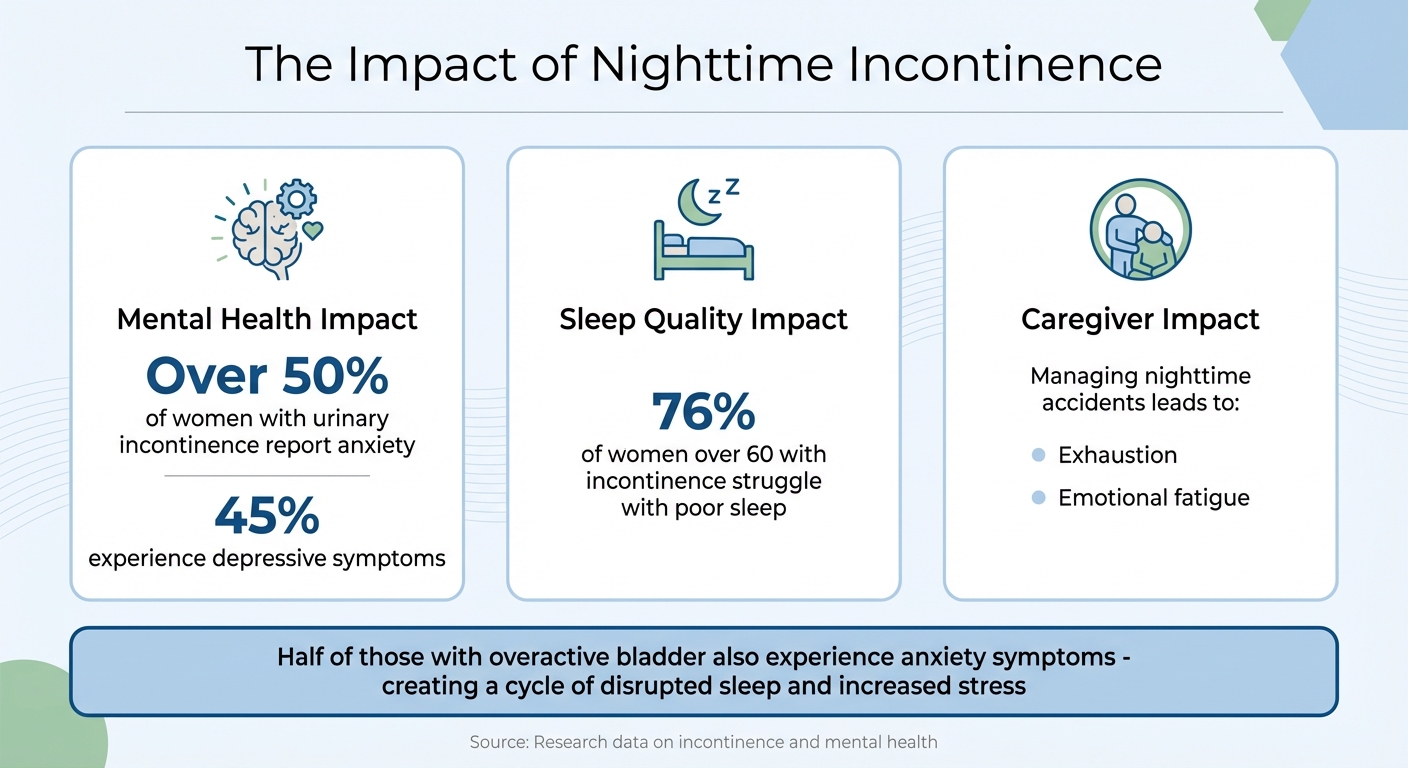
Incontinence Impact Statistics: Sleep, Anxiety, and Caregiver Strain
Ways to Manage Incontinence and Reduce Nighttime Anxiety
Building a Consistent Nighttime Routine
Creating a steady nighttime routine can help manage accidents and reduce anxiety. Start by limiting fluid intake after 5–6 PM to decrease nighttime urine production while still staying hydrated.
Double-voiding is another effective strategy. Empty your bladder at the start of your bedtime routine and again right before lying down to ensure it's as empty as possible. Pair this with a Kegel contraction before and after voiding to calm bladder spasms. As Dr. Melody Denson, MD, a board-certified urologist, explains:
"If you feel a tremendous urge to urinate, doing a Kegel before you run to the bathroom will help settle down the bladder spasm and help you hold it until you get there."
Avoiding certain foods and drinks in the evening - like caffeine, alcohol, citrus, spicy foods, chocolate, and artificial sweeteners - can also help. Regular Kegel exercises (3 sets of 8–12 contractions) strengthen the muscles responsible for bladder control, while tools like bedwetting alarms with moisture-detecting sensors can train the brain to respond to a full bladder.
A consistent routine not only improves physical control but also simplifies the process of managing bedding after accidents.
Choosing Waterproof and Disposable Bedding
Simplify nighttime cleanup by opting for bedding that minimizes effort. Traditional mattress protectors often require washing and lifting the mattress, which can be exhausting if accidents happen frequently. A more efficient option is disposable bedding, such as PeelAways disposable sheets.
PeelAways sheets feature a patented multi-layer system with 5 to 7 soft, absorbent layers (depending on the size). When an accident occurs, you simply peel away the soiled layer to reveal a clean sheet underneath - no heavy lifting, no laundry, and minimal mess. This quick process takes less than 60 seconds.
These sheets have garnered high praise, with an average rating of 4.61 out of 5 stars from over 12,000 customers. They are made without Vinyl, PVC, phthalates, or harsh fire retardants, making them a safe choice for sensitive skin and respiratory health. Available in sizes ranging from Crib ($30.99) to King (up to $53.99), PeelAways also offer free shipping on orders over $100 and a 15% discount for subscriptions.
By simplifying mid-night changes, these bedding solutions help reduce the emotional stress of managing accidents.
Addressing the Emotional Side of Incontinence
Managing the emotional impact of incontinence is just as important as addressing the physical aspects. Talking openly with family or trusted individuals can help reduce feelings of embarrassment and isolation. Studies show that many people avoid seeking help for incontinence due to shame - about one-third of women and half of men choose to stay silent.
Dr. John S. Young, Associate Professor in Urology, highlights the psychological toll:
"Night-time incontinence can be embarrassing, bringing back memories of bedwetting as a child... it can be really impactful: reducing quality of life, causing depression and anxiety."
Caregivers play a key role in maintaining dignity. Using respectful language - like "bowel problem" or "protective underwear" - avoids infantilization. Keeping supplies discreetly stored and using room deodorizers can preserve privacy, while reassuring the individual that incontinence is not their fault can help normalize the experience.
Incorporating calming activities such as deep breathing, journaling, or mindfulness exercises into the evening routine can bolster self-esteem and ease stress. Having an emergency kit (with wipes, spare clothes, and disposal bags) nearby can reduce anxiety about unexpected accidents. Additionally, making sure call bells or a urinal are easily accessible can prevent falls and skin irritation while providing peace of mind.
sbb-itb-45288fe
How Peelaways Makes Nighttime Incontinence Easier to Handle

What Peelaways Offers
Peelaways disposable sheets feature a patented multi-layer design with 5 to 7 waterproof, absorbent layers. When an accident happens, you simply peel away the soiled layer to reveal a fresh one in under a minute.
Each layer is equipped with a 100% waterproof HydroShield barrier that traps moisture and odors, keeping the sleeper dry and comfortable. Made from a soft blend of bamboo, rayon, and polyester, these sheets feel like traditional bedding while being free of Vinyl, PVC, phthalates, and fire retardants. Under typical use, each layer lasts 7–10 days, providing up to 50 days of coverage per set. This minimizes the need for extra sheet sets and cuts down on laundry costs and time.
By simplifying nighttime bedding changes, Peelaways help reduce stress and improve sleep quality for both users and caregivers. These practical features translate into real-world comfort and convenience, as highlighted below.
Why Caregivers Choose Peelaways
Caregivers often turn to Peelaways to ease the challenges of nighttime care while maintaining dignity and comfort. Carol Suchman, the creator of Peelaways, shares:
"I have 95 year old parents as well as two little grandchildren and it's perfect for every single use. My parents can change their sheet in the middle of the night on their own without any aid and go back to bed."
Jalene Stanger, a caregiver for two special needs teenagers, praises the product:
"These have saved my sanity! With 2 incontinent special needs teenagers... these have relieved a lot of stress. They hold a LOT of liquid and are easy to use and tear away. No more 15 loads of laundry and wet mattresses!"
Chris Clark, Co-founder of AgingToday.com, highlights their convenience for caregivers:
"Peelaways are soft, multi-layered, disposable bed sheets designed to simplify changing one's bed sheets. I could see the Peelaways being especially useful at night when the caregiver is tired and just needs to make it to the next day."
In professional care settings like assisted living or memory care facilities, Peelaways save time by reducing laundry and streamlining bedding changes. The peel-away design allows changes without moving or fully waking the person, preserving sleep and minimizing distress for those with mobility or cognitive issues.
With a variety of sizes and pricing options, Peelaways adapt to a range of care needs.
Sizes and Prices
Peelaways are available in seven sizes, accommodating various bed types and care requirements. The Twin XL, with its 9-inch pocket depth, is especially suited for hospital beds, making it ideal for home care setups. For Split King beds, two Twin XL sets are recommended to cover both mattresses.
| Size | Dimensions | Layers | Price | Best For |
|---|---|---|---|---|
| Crib | 52" x 28" x 6" | 5 | $30.99 | Potty training and toddlers |
| Cot | 75" x 30" x 6" | 7 | $34.99 | RVs, travel, camping |
| Twin | 75" x 39" x 6" | 5 | $34.99 | Standard twin beds, kids |
| Twin XL | 80" x 39" x 9" | 5 or 7 | $34.99–$41.99 | Hospital beds, Split King |
| Full | 75" x 54" x 12" | 5 | $43.99 | Standard home mattresses |
| Queen | 80" x 60" x 12" | 5 | $47.99 | Standard home mattresses |
| King | 80" x 78" x 12" | 5 | $53.99 | Standard home mattresses |
Peelaways also offer free shipping for orders over $100, a 15% discount for subscription purchases, and bulk savings (5% off for 3-packs, 10% off for 6-packs). With an average rating of 4.6 out of 5 stars from more than 12,000 reviews, these sheets have proven to be a reliable solution for elder care, special needs, and medical recovery situations.
Better Sleep Habits for People Managing Incontinence
Setting Up a Better Sleep Space
Creating a comfortable and functional sleep environment can make managing nighttime incontinence easier. Dr. Melody Denson, a board-certified urologist, underscores the importance of being prepared:
"Preparation is everything. You might consider sleeping on a towel and keeping a box of baby wipes near the bed in case of accidents." Using disposable waterproof bed sheets can also simplify cleanup.
Keep your bedroom temperature between 63°F and 82°F to support melatonin production and help prevent night sweats. A dark, quiet room signals your body that it’s time to sleep, while having hygiene supplies - like baby wipes, barrier creams, and extra clothing - within easy reach can help you quickly manage any incidents without fully waking up.
To make nighttime trips to the bathroom safer and less disruptive, use motion-sensor lights that softly illuminate the path without jolting you awake. This is especially important for reducing fall risks, as studies show that over a third of falls among hospitalized patients over 60 are related to toileting, with nearly half happening at night.
Choosing the right bedding for incontinence care is most effective when combined with a consistent sleep routine.
Keeping a Regular Sleep Schedule
Once your sleep environment is set, sticking to a consistent sleep schedule can further enhance your rest. Going to bed and waking up at the same time every day - even on weekends - helps regulate your body’s natural release of melatonin and cortisol, making it easier to fall asleep and wake up refreshed. Wendy Troxel, Senior Behavioral Sleep Scientist at RAND Corporation, explains:
"Maintaining a consistent sleep-wake schedule may serve as one of the simplest, most overlooked ways to protect long-term health."
Incorporate a calming 30- to 60-minute wind-down routine before bed. Activities like reading a physical book, taking a warm bath, or meditating can help shift your focus away from stress and prepare your mind for sleep. Avoid electronic devices during this time, as the blue light they emit can suppress melatonin production and interfere with your ability to fall asleep.
6 Ways to STOP NOCTURIA For a Good Night's Sleep | Overactive Bladder 101
Understanding how incontinence disrupts sleep patterns is the first step toward finding the right management strategy.
Conclusion
Managing nighttime incontinence and sleep anxiety has become more manageable with strategies that address both practical needs and emotional well-being. Nighttime incontinence disrupts sleep and heightens anxiety, creating a vicious cycle. Research from Washington University highlights that half of those with overactive bladder also experience anxiety symptoms, showing how bladder issues and mental health challenges feed into each other. By focusing on how to keep beds dry and reducing caregiver stress, these solutions help rebuild confidence and improve overall quality of life.
Products like waterproof, disposable bedding - such as PeelAways - offer immediate relief. Their peel-away design simplifies cleanup, eliminates the need to lift mattresses, and reduces the risk of cross-contamination. Caregivers value the convenience, with one user noting that these sheets hold a significant amount of liquid and drastically cut down on laundry. These practical tools work hand-in-hand with broader sleep improvement strategies.
Combining protective bedding with consistent sleep routines and stress management can significantly enhance sleep quality. Studies show that effective incontinence management reduces anxiety and improves sleep, as seen in PROMIS-sleep scores dropping from 54.3 to 43.8.
The key isn’t finding a single solution - it’s about blending practical tools with confidence-boosting habits. By addressing both the physical challenges and emotional toll, you create an environment where restful sleep becomes achievable. Pairing simple, effective products with steady routines breaks the cycle of anxiety and restores the possibility of better nights.
FAQs
When should I talk to a doctor about nighttime incontinence?
Consult a doctor if nighttime incontinence starts suddenly, gets worse over time, or doesn’t improve. It's especially important to seek medical advice if it comes with symptoms like pain, trouble urinating, or anything that might suggest an underlying health problem. A professional evaluation can help pinpoint the cause and recommend the right treatment.
How can I stop worrying about having an accident in my sleep?
To manage nighttime anxiety related to incontinence, consider practical tools like disposable, waterproof bed sheets - for example, PeelAways. These sheets come with multiple peel-away layers, so you can quickly remove a soiled layer without the hassle of lifting the mattress or doing laundry. Beyond that, building a consistent bedtime routine, reducing fluid intake in the evening, and practicing bladder training can make a big difference.
If the anxiety persists, it’s a good idea to consult a healthcare professional for personalized guidance. And remember, incontinence is a common issue, and there are plenty of effective solutions to help.
How many PeelAways layers do I need for one night?
PeelAways sheets are designed to simplify your nights. Each set comes with 5 to 7 layers, and you’ll typically use 1 to 2 layers per night, depending on how dirty they get. If the layers stay clean, a single set can last up to 7–10 nights. When a layer gets soiled, just peel it off to reveal a fresh, clean sheet underneath - quick and hassle-free!
Related Blog Posts
Comments
0



SAVE MONEY & WATER
Professionals & Institutions save a fortune on labor/laundry.

SUPERIOR COMFORT
The first thing our customers notice is how soft our sheets are.

100% WATERPROOF
Each layer is 100% Waterproof, perfect for spills and accidents

SAVE TIME
Change the sheet in under 1 minute without stripping the bed.

Leave a comment