
FAQs on Home Care Setup for Incontinence

Managing incontinence at home can feel overwhelming, but a structured care setup can make the process easier for caregivers and more comfortable for loved ones. Here's a quick summary of key strategies:
- Bedroom Setup: Use waterproof mattress covers, pads, and disposable sheets like Peelaways® to simplify cleanup and protect surfaces. Add underpads for extra protection.
- Bathroom Safety: Install grab bars, raised toilet seats, and non-slip mats. Use motion-sensor nightlights for nighttime visibility.
- Skin Care: Clean skin immediately after accidents with pH-balanced cleansers, apply barrier creams, and monitor for irritation.
- Incontinence Products: Choose items based on leakage levels, such as pads, pull-ons, or briefs. Use booster pads for extra absorbency.
- Organization: Store supplies in accessible areas, use rolling carts for mobility, and maintain a one-week safety stock.
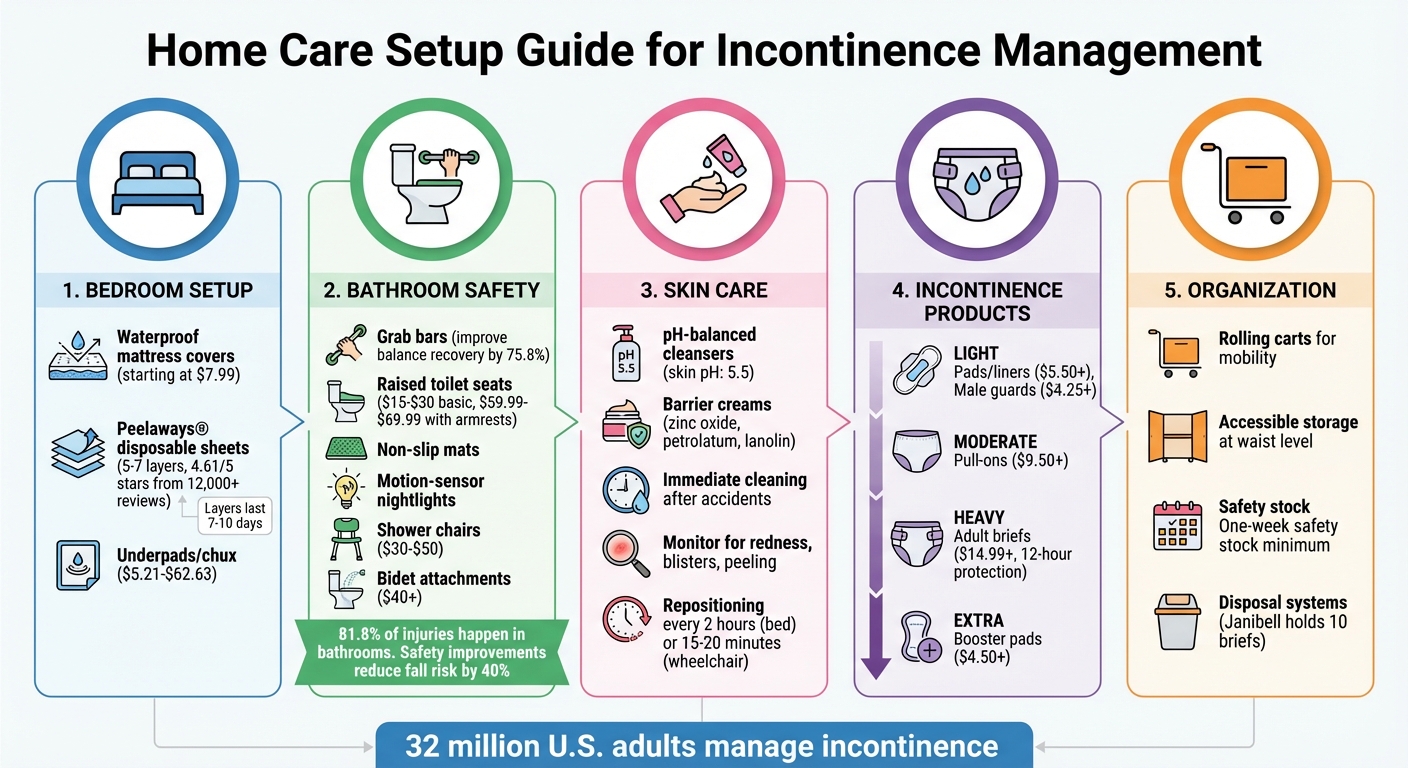
Home Care Setup Guide for Incontinence Management
Tips for managing incontinence at home
Setting Up the Bedroom for Incontinence Care
The bedroom is often where incontinence challenges arise, making a thoughtful setup essential. With the right tools, you can protect your mattress, minimize laundry hassles, and create a more restful environment. A mix of waterproof layers and breathable materials not only simplifies cleanup but also ensures comfort. Let’s dive into the best bedding solutions to safeguard your space and improve sleep quality.
Waterproof Bedding Options
Start with a zippered vinyl mattress encasement to fully seal your mattress. This barrier keeps moisture out and prevents lingering odors. At around $7.99, it’s an affordable way to protect your investment [7].
Layer a waterproof mattress pad on top of the vinyl cover. This adds a soft, quilted surface that’s comfortable to sleep on while offering an extra shield against leaks [3].
For added convenience, consider Peelaways® disposable sheets. These sheets feature 5–7 waterproof layers with a soft bamboo-blend surface. When one layer is soiled, simply peel it off in under a minute. With over 12,000 reviews and an average rating of 4.61 out of 5 stars, many users highlight how these sheets reduce "2 AM laundry" stress [4].
"The key to managing this problem is prevention. Having the right tools at your disposal will do wonders to help keep the bed dry and your loved one comfortable. And remember, layers are your friend." – National Association for Continence [3]
Another handy option is underpads, also called "chux." These pads, available in disposable or washable versions, can be placed directly under the individual to catch leaks before they reach the sheets. Prices for disposable underpads vary, ranging from $5.21 to $62.63 depending on the quantity [7].
Protecting Furniture and Mattresses
Don’t stop with the mattress - extend these protective measures to other frequently used furniture. Swap out thick comforters for multiple thin blankets, which are easier to wash. Use washable or disposable underpads on chairs and sofas to prevent costly cleaning bills [3][8].
If a mattress does get wet, act quickly. Clean it with a solution of equal parts white vinegar and water, then sprinkle baking soda on the area once it’s dry. Vacuum up the baking soda to neutralize any lingering odors [2][6]. These steps can help maintain a fresh and hygienic sleeping space.
Maintaining Comfort During Sleep
Protection doesn’t have to come at the expense of comfort. Modern waterproof materials often feature breathable membranes that block liquids while allowing airflow, reducing heat buildup that can disrupt sleep [4][8].
Opt for soft, breathable fabrics like bamboo, rayon, or polyester blends. These materials not only feel great but also avoid the crinkling noise often associated with waterproof bedding [4][8]. High-quality disposable sheets can last 7 to 10 days per layer, making them a practical and budget-friendly choice [4].
For mattresses over 12 inches thick, use straps or clips to secure waterproof fitted sheets and prevent them from bunching or shifting [4]. This ensures a snug fit and uninterrupted comfort throughout the night.
Making the Bathroom Safer and More Accessible
Bathrooms are one of the most accident-prone areas in the home. In fact, 81.8% of injuries happen here, making it twice as likely for accidents to occur compared to other spaces in the house [11][9]. By making some thoughtful adjustments, you can reduce the risk of falls by 40% [10].
Adding Safety Equipment
Start by installing grab bars near the toilet and inside the shower. These bars should be securely anchored into wall studs, either vertically or horizontally - never diagonally or attached to items like towel racks, which aren’t designed to hold weight [14][15]. Properly installed grab bars can improve balance recovery by 75.8% [10].
Consider adding a raised toilet seat to make sitting and standing easier. Ideally, the toilet should be positioned so the hips are slightly higher than the knees. Basic seat risers are budget-friendly, costing between $15 and $30, while commode chairs with armrests are priced around $59.99 to $69.99 [18][17].
For the bathtub or shower, use non-slip suction mats or rubber silicone decals on the floor to prevent slipping. Place a non-skid mat just outside the shower or tub to absorb drips [14][15]. A shower chair or bench with non-slip rubber tips is another great addition, offering a safe option for seated bathing. These typically cost between $30 and $50 [18].
To further reduce risks, remove throw rugs, loose towels, and any electrical cords that could cause tripping [14][15]. Installing motion-sensor nightlights along the route from the bedroom to the bathroom can also improve visibility during nighttime trips [13][15].
"Anyone at any time can have something happen that prevents them from fully using their bathroom if it's not designed accessibly. You should do it regardless of your age or athleticism. It's life-proofing your home." – Jamie Gold, Certified Aging in Place Specialist [12]
These adjustments make daily hygiene routines safer and more manageable.
Handling Hygiene and Cleanup
A handheld showerhead is a practical addition, especially for safe, seated bathing. Adding a bidet attachment - available for as little as $40 - can provide hands-free warm water cleaning [12][14]. To avoid accidental burns, set your water heater to a safe temperature of 120°F (49°C) [14].
Keep a cleanup caddy in the bathroom stocked with essentials like rubber gloves, disinfectant, enzyme-based cleaners for odors, vinegar, and baking soda [7]. For personal care, use pH-balanced, no-rinse cleansers to clean the skin immediately after an accident, helping to prevent irritation or infection [2][1]. Place frequently used items such as soap, towels, and incontinence products at waist level for easy access, minimizing the need to bend or stretch [15].
Having a bedside commode as a backup can also be helpful. Additionally, installing a single-lever faucet makes adjusting water temperature easier - perfect for anyone dealing with arthritis or joint pain [14].
Selecting and Organizing Incontinence Products
Enhance your care setup by selecting and arranging incontinence products that suit specific leakage needs.
Picking the Right Products
Choose products based on absorbency levels to match the type and amount of leakage. For light drips, adhesive absorbent pads and liners are a good option, starting at $5.50 per pack [20]. Male guards, designed specifically for men, are available from $4.25 per pack [20].
For moderate leakage, protective pull-ons with elastic waists are practical and cost around $9.50 per pack. For heavy leakage, adult briefs with re-fastenable tabs provide up to 12 hours of protection and start at $14.99 per pack [20].
Before purchasing in bulk, consider using a bladder diary to track leakage patterns over 24 to 72 hours [21]. This helps you understand the type, frequency, and volume of output. Also, measure both hips and waist, and consult sizing charts provided by manufacturers to ensure a proper fit [19][20]. For nighttime use, look for products labeled "overnight", as urine output tends to increase during sleep [19].
Booster pads are another useful option. These stackable inserts add absorbency to existing products without requiring a full change. They start at about $4.50 per pack [20]. These products align well with the bedroom and bathroom setups discussed earlier.
Organizing Your Supplies
Keep daily-use items like pads, gloves, and wipes stored in bathroom cabinets within easy reach of the toilet. Wicker baskets with lids can help keep these supplies discreet [22][23][25]. For homes with frequent visitors, consider using a low-use bathroom cabinet secured with a discreet combination lock for bulk supplies [23].
Mobile storage solutions, such as rolling carts, allow you to move supplies between rooms with ease [23]. Store a small, readily accessible supply in the bathroom and keep bulk items in a separate location [28]. For nighttime safety, place a portable commode or handheld urinal near the bedside to minimize the risk of falls [22][24][26].
When traveling or attending social events, use small, discreet bags to carry items like catheters or liners [23][25]. Seal used products in small, opaque disposal bags before placing them in the trash [23][25]. For odor control, a dedicated disposal system with a rubber seal - like the Janibell system - can hold up to 10 used briefs between trash pickups [27].
To keep track of inventory, arrange supplies in clear containers inside cabinets. This makes it easy to monitor stock levels and reorder on time [25]. A well-organized system reduces stress, saves time, and supports a smoother care routine. Additionally, maintain at least a one-week safety stock beyond your subscription delivery date to prepare for unexpected heavy-use days or shipping delays.
sbb-itb-45288fe
Protecting Skin and Preventing Irritation
Taking care of the skin is essential to avoid irritation caused by incontinence. Healthy skin usually has a slightly acidic pH of about 5.5 [29]. However, because urine is alkaline, frequent contact can disrupt the skin's natural barrier, making it more prone to irritation and infection. Acting quickly with proper skin care after exposure is critical to preventing damage.
Cleaning and Moisturizing Skin
The first step in protecting vulnerable skin is proper cleansing. Clean and dry the affected area immediately to prevent breakdown. Instead of bar soap, opt for a soap-free cleanser to preserve the skin's natural oils and pH balance. Another option is a no-rinse cleanser applied with a soft cloth, gently patting the area dry to minimize friction.
Once the skin is clean, apply a barrier cream containing zinc oxide, petrolatum, or lanolin to maintain its integrity. For areas with persistent moisture, consider using an antifungal powder instead of baby powder. Always choose alcohol-free moisturizers and cleansers to avoid drying out sensitive skin further.
Staying hydrated and maintaining a nutritious diet also play an important role in supporting skin health and repair.
Spotting and Treating Skin Problems
Preventive care works best when paired with regular monitoring to catch potential issues early. Check the skin daily for signs of irritation. Watch for redness that doesn’t fade when pressed, warmth, sponginess, blisters, peeling, or raw areas. Incontinence-associated dermatitis often appears as redness, inflammation, itching, and burning in areas exposed to constant moisture, like the buttocks, pelvis, hips, and genitals. Yeast infections may show up as itchy, red, pimple-like rashes with a raw sensation.
For those who are bedridden, pay special attention to high-risk pressure points, including the heels, ankles, hips, tailbone, spine, elbows, shoulders, and the back of the head. To relieve pressure, reposition the individual at least every two hours if they’re in bed. If using a wheelchair, encourage shifting weight every 15 to 20 minutes. Foam or gel cushions and properly placed pillows can help distribute pressure more evenly.
If the skin becomes raw, tender, starts peeling, or shows signs of purulent drainage, it’s time to consult a healthcare provider. Any foul-smelling drainage from a sore is an urgent sign that medical attention is needed.
Conclusion
Creating a home care setup for incontinence doesn’t have to be overwhelming. By focusing on three main priorities - protecting surfaces, maintaining skin health, and upholding dignity - you can make the process much smoother. Start with a layered bedding system: a zippered vinyl waterproof mattress cover as the base, topped with waterproof pads and sheets. This setup not only protects your mattress from stains and odors but also simplifies cleanup [3].
Outside the bedroom, ensure the bathroom is safe and accessible. Simple adjustments like installing grab bars, keeping pathways clear and well-lit, or adding a raised toilet seat or bedside commode can encourage independence [1]. Pair these modifications with consistent routines, such as scheduled voiding every 2–4 hours, and reduce bladder irritants like caffeine, alcohol, and artificial sweeteners [1][2]. Combined with thoughtful product choices and attentive skin care, these strategies create a well-rounded approach to incontinence care.
Choosing the right products can significantly ease caregiver stress. For example, multi-layer disposable sheets like Peelaways simplify bed changes and help protect the mattress over time [4][5].
Equally important is compassionate communication. Involving the individual in decisions about products and making changes discreetly helps preserve their dignity [1].
With around 32 million adults in the U.S. managing incontinence, it’s clear that many share this experience [16]. By combining protective products, consistent care routines, and respectful communication, you can create a home environment that supports comfort, cleanliness, and peace of mind for everyone involved.
Related Articles
Dive into these resources to gain a better understanding of how Peelaways can transform caregiving, especially in scenarios where managing incontinence is a challenge. Each article offers practical advice tailored to specific caregiving situations.
How Peelaways Simplifies Elder Care

Caring for aging parents can feel overwhelming, especially when incontinence leads to frequent accidents. This article highlights how Peelaways' innovative multi-layer design eliminates the need for late-night laundry runs and eases the physical demands on caregivers. Discover how quick, under-60-second sheet changes can make a world of difference. Read more
Top Tips for Mattress Protection in Medical Recovery
Recovering from surgery often comes with its own set of challenges, from managing wounds to handling unexpected fluid leaks. This guide shares layering techniques to shield mattresses during recovery and offers tips on maintaining hygiene while minimizing physical strain for both patients and caregivers. Read more
The Role of Disposable Bedding in Special Needs Care
For families caring for children or teenagers with special needs, ensuring dignity and reducing caregiver burnout are top priorities. This article explores how disposable bedding can help older kids handle accidents discreetly, easing stress for everyone involved. Parents share how cutting out up to 15 loads of laundry per week has transformed their routines. Read more
FAQs
How do I choose the best incontinence products for different levels of leakage?
Choosing the right incontinence product comes down to the level of leakage and individual preferences. For light incontinence, such as small, occasional leaks, thin pads or liners that fit discreetly inside regular underwear are a practical choice. If someone experiences moderate incontinence, protective underwear, pull-on briefs, or guard-style pads with extra absorbency and a secure fit are more suitable options. For those dealing with heavy or overnight incontinence, high-capacity adult diapers or pull-ups with leak guards and elastic edges offer better protection, as they’re designed to handle larger volumes and provide extended coverage.
Beyond absorbency, factors like fit, comfort, and skin health are just as important. A snug fit helps minimize leaks and reduces skin irritation. Consider products made with breathable materials, moisture-wicking layers, and soft elastic edges to keep skin dry and comfortable. For individuals with limited mobility or those who need caregiver support, tab-style briefs or pull-ons with resealable fasteners can make application and removal much easier.
To protect bedding, disposable waterproof bed sheets like PeelAways offer a simple cleanup solution. These sheets feature a multi-layer peel-away design - just remove the top layer to reveal a fresh one underneath. This eliminates the need for heavy lifting or washing, making life easier for caregivers and care recipients alike.
How can I maintain healthy skin for someone with incontinence?
Maintaining healthy skin for individuals with incontinence requires a thoughtful approach to cleanliness, moisture control, and protection. Start by gently cleaning the affected area with a mild, soap-free cleanser after each episode. This helps avoid stripping the skin of its natural oils. Instead of rubbing, pat the skin dry to prevent irritation, and follow up with a fragrance-free, alcohol-free moisturizer to help restore the skin's natural barrier. Steer clear of products containing harsh chemicals that might cause further irritation.
Frequent changes of absorbent products are crucial to minimize prolonged exposure to moisture, which can lead to redness, irritation, or even infections. Using pH-neutral cleansers is another way to help maintain the skin's natural balance. For individuals with limited mobility, regular repositioning and careful monitoring for any signs of skin irritation are key steps to prevent complications.
To further protect the skin and bedding, consider disposable, waterproof bed sheets like PeelAways. These sheets feature a multi-layer peel-away design, allowing you to remove a soiled layer quickly and reveal a fresh one without the hassle of lifting the mattress or doing laundry. This not only keeps the skin dry but also reduces the risk of cross-contamination, promoting better overall skin health.
What are the best ways to make a bathroom safer and more accessible for someone with incontinence?
Creating a bathroom that's safer and easier to use for someone with incontinence can go a long way in helping them maintain independence and avoid accidents. Start by adding grab bars near the toilet, shower, and sink. These provide reliable support for sitting, standing, or moving around. To minimize the risk of slips, use non-slip mats or textured flooring, and clear out any tripping hazards like loose rugs or stray cords.
You might also want to install a raised toilet seat or one with built-in handrails to make sitting and standing more manageable. A handheld bidet or showerhead is another practical addition, offering a more comfortable and hygienic way to clean without requiring awkward bending. Brighten up the space with motion-activated lights or nightlights to improve visibility, especially during nighttime trips to the bathroom.
Keep essentials like toilet paper, wipes, and incontinence supplies within easy reach, either on a shelf or in a low cabinet. Having a waterproof towel nearby is also helpful for quick cleanups. If stepping into the shower or tub is a challenge, consider a walk-in shower or one with a low-threshold entry to make access simpler. These thoughtful updates can transform the bathroom into a safer and more functional space, while also supporting comfort and dignity.
Comments
0



SAVE MONEY & WATER
Professionals & Institutions save a fortune on labor/laundry.

SUPERIOR COMFORT
The first thing our customers notice is how soft our sheets are.

100% WATERPROOF
Each layer is 100% Waterproof, perfect for spills and accidents

SAVE TIME
Change the sheet in under 1 minute without stripping the bed.

Leave a comment