
DIY Bedding Hacks for Autism Sensory Comfort

For individuals with autism, bedding can impact sleep quality by addressing sensory sensitivities and temperature regulation challenges. Simple DIY adjustments can make a big difference in creating a calm, comfortable sleep environment. Here’s what you need to know:
- Weighted Blankets: Provide calming pressure. DIY by sewing fabric pockets filled with plastic poly pellets or glass beads (10% of body weight recommended).
- Breathable Fabrics: Use cotton, bamboo, or silk for soft, temperature-regulating layers. Avoid synthetic materials like polyester that trap heat and irritate skin.
- Temperature Control: Cool pillowcases in the freezer, use ice + fan setups, or sew cooling blankets with gel inserts. Maintain a room temperature between 61°F–68°F.
- Hygiene Solutions: Try PeelAways disposable sheets for quick cleanup or layer waterproof and soft materials for comfort and protection.
These practical steps help address sensory needs, reduce sleep disruptions, and promote a more restful night for both individuals and caregivers.
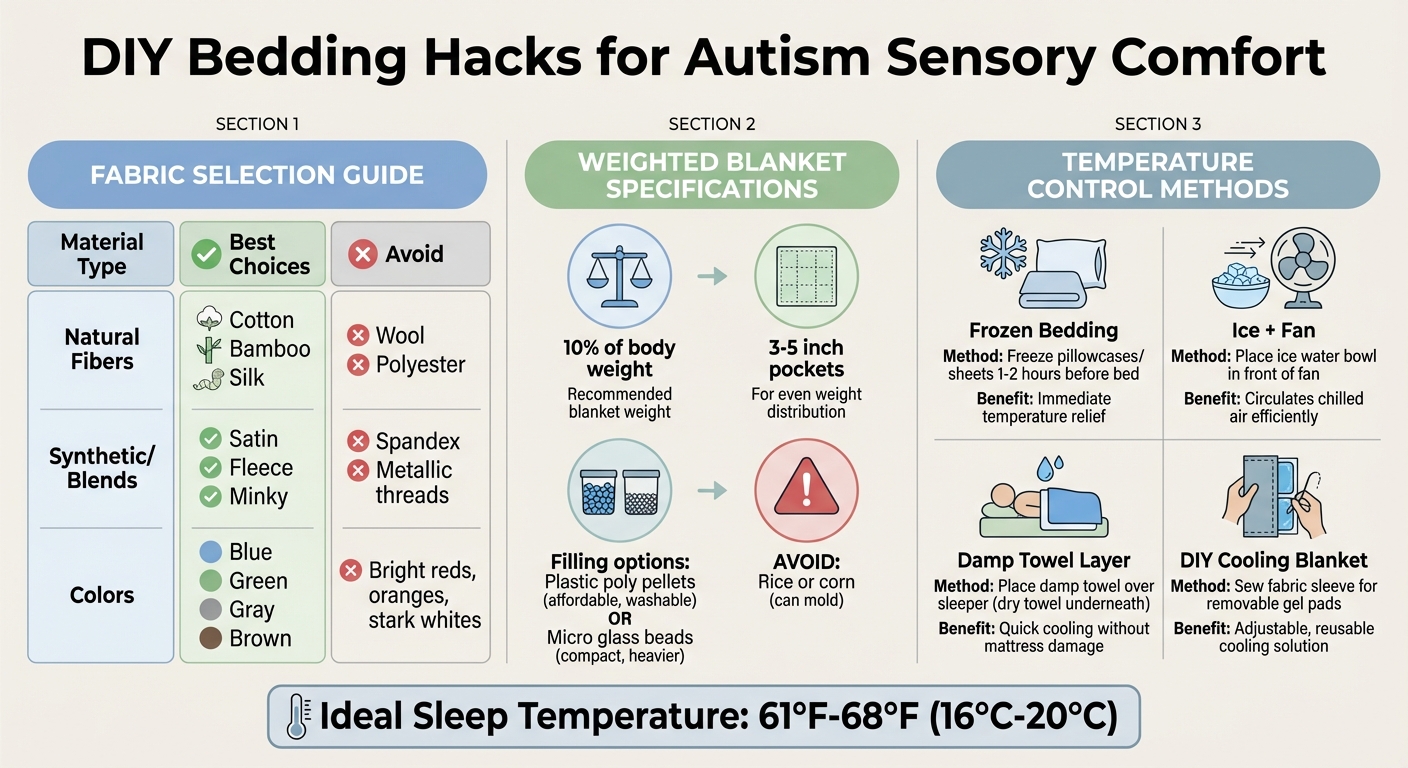
DIY Autism Sensory Bedding Guide: Fabrics, Weighted Blankets & Temperature Control
Sensory Blankets for Kids with Autism
DIY Bedding Modifications for Sensory Comfort
You don’t need to spend a fortune or hunt down specialized gear to create sensory-friendly bedding. With some thoughtful choices and simple techniques, you can turn ordinary bedding into a personalized sleep haven that meets specific sensory needs. These DIY ideas focus on fabric texture, weight distribution, and temperature control to craft a soothing sleep environment.
Adding Soft, Breathable Fabric Layers
The right fabric can make a world of difference for individuals with sensory sensitivities. Natural fibers like cotton, bamboo, and silk are excellent options because they’re soft, breathable, and help regulate temperature - perfect for avoiding the discomfort of overheating. As the Autism Response Team highlights:
The texture of fabrics has the power to soothe or irritate. That power is only enhanced for many children and adults with autism spectrum disorder (ASD) and who have heightened sensitivities [4].
When choosing fabrics for your bedding projects, opt for high-quality cotton or bamboo for the outer layers. Pre-wash these materials on a gentle, cold cycle and remove any tags to prevent scratchy edges. Avoid synthetic fabrics like polyester or spandex, as they can irritate the skin and trap heat.
Color and pattern also play a role in sensory comfort. Muted tones like blue, green, gray, and brown are calming, while busy patterns or bright colors can overstimulate. Licensed Interior Designer Carolyn Feder explains:
Whether lights are on or off, colors and patterns emit vibrations that affect brain waves in a positive or negative fashion. Because of that, heavy patterns or bright-colored bedding can be overstimulating [2].
| Material Type | Best Choices | Avoid |
|---|---|---|
| Natural Fibers | Cotton, Bamboo, Silk | Wool, Polyester |
| Synthetic/Blends | Satin, Fleece, Minky | Spandex, Metallic threads |
| Colors | Blue, Green, Gray, Brown | Bright reds, oranges, stark whites |
Making Weighted Blankets at Home
Weighted blankets are another excellent way to enhance sensory comfort, offering deep pressure touch stimulation that can help reduce anxiety and improve sleep. As a general rule, the blanket should weigh about 10% of the user’s body weight, with an additional 1–2 pounds for children [8][10].
Start by choosing a soft fabric like cotton or flannel. Pre-wash and dry the material to account for any shrinkage. Next, sew a grid of 3–5-inch pockets to ensure the weight is evenly distributed.
For the filling, plastic poly pellets are a practical choice - they’re affordable, non-toxic, and machine washable. Micro glass beads are another option, offering more weight in a smaller volume, though they tend to cost more. Avoid organic fillers like rice or corn, as they can mold or rot when washed [9][6]. To calculate the amount of filler needed, divide the total weight of the pellets (in ounces) by the number of grid squares.
To fill the pockets, use a large-mouth funnel and an empty wrapping paper tube to guide the pellets into the channels without spilling. Pin the fabric to keep the pellets in place while sewing the horizontal rows to close each pocket. As noted by the Missouri Star Blog:
A weighted blanket is often used by children and adults with autism and other sensory-related disorders... It helps a person to relax and to find comfort in a similar way deep pressure works [10].
Keep in mind that weighted blankets are not recommended for young children who cannot adjust the blanket themselves or for individuals with respiratory issues.
DIY Temperature Control Methods
Temperature control is crucial for sensory comfort, with an ideal sleep range being 61°F–68°F (16°C to 20°C) [1]. Thankfully, there are plenty of simple ways to regulate temperature without investing in expensive gadgets.
One quick fix is the freezer hack: place pillowcases or sheets in the freezer for 1–2 hours before bedtime [11]. For ongoing cooling, try setting a bowl of ice water in front of a fan to circulate chilled air - a low-cost alternative to air conditioning [11].
A warm bath 60 to 90 minutes before bed can also help. The rise in body temperature during the bath, followed by a rapid drop afterward, signals the brain that it’s time to sleep [1]. For instant cooling during the night, lay a damp towel over the sleeper with a dry towel underneath to protect the mattress.
If you’re up for a project, you can make a DIY cooling blanket by sewing two layers of breathable fabric together, leaving a gap or adding a zipper for removable gel packs or cooling inserts [7]. During the day, keep the bedroom cool by using blackout curtains to block sunlight. If you live in a multi-story home, consider sleeping on the ground floor during hot weather, as heat rises.
| Cooling Method | Implementation | Benefit |
|---|---|---|
| Frozen Bedding | Freeze pillowcases/sheets 1–2 hours before bed | Immediate temperature relief |
| Ice + Fan | Place ice water bowl in front of fan | Circulates chilled air efficiently |
| Damp Towel Layer | Place damp towel over sleeper (dry towel underneath) | Quick cooling without mattress damage |
| DIY Cooling Blanket | Sew fabric sleeve for removable gel pads | Adjustable, reusable cooling solution |
Managing Accidents and Maintaining Hygiene
Beyond creating a sensory-friendly environment, addressing hygiene and accident management is just as important. For individuals with autism, incontinence can present unique challenges, making quick and efficient cleanups essential. Traditional bedding setups often require lifting the mattress and removing multiple layers, which can be overwhelming for caregivers and disruptive to routines. Streamlined solutions not only prevent sleep interruptions but also help maintain sensory comfort. Let’s look at ways to simplify accident management while keeping comfort a priority.
Using PeelAways for Quick Sheet Changes

PeelAways disposable sheets are a game-changer for managing accidents. These sheets come with 5 to 7 waterproof layers, allowing you to peel off the soiled top layer and reveal a clean one in less than a minute[5]. Made from a breathable blend of bamboo, rayon, and polyester, they are 100% waterproof and noiseless - eliminating the crinkly sounds and heat buildup of traditional plastic protectors. Plus, they’re free from vinyl, PVC, phthalates, and fire retardants, making them safe for sensitive skin.
One caregiver shared their experience:
"With 2 incontinent special needs teenagers... these have relieved a lot of stress. They hold a LOT of liquid and are easy to use and tear away. No more 15 loads of laundry and wet mattresses!"
- Jalene Stanger
PeelAways are available in various sizes, from Crib-A-Peel at $30.99 to King at $53.99, with Twin XL and Cot sizes offering 7 layers for extended use. A subscription option provides a 15% discount, and with over 12,000 customer reviews averaging a 4.61/5 rating, 95% of users recommend them for managing incontinence while preserving both dignity and comfort[5].
Adding Waterproof Layers to Bedding
For a more hands-on approach, consider building a waterproof layering system. Start with a waterproof mattress protector as the base layer. On top of that, add a soft fitted sheet, followed by a breathable waterproof fabric liner, and finish with another soft sheet. This layering method keeps the waterproof materials in the middle, ensuring the sleeper’s skin only touches soft, breathable fabrics.
To avoid sensory discomfort, opt for materials that allow air circulation instead of plastic or vinyl, which can trap heat. For those who move around a lot during sleep, sheet straps or clips can help keep everything in place. Wash the soft layers after each accident or at least weekly, and check the waterproof components monthly to ensure they remain effective. This layered strategy not only improves hygiene but also supports a sensory-friendly sleep experience, creating a safe and comfortable environment for all.
sbb-itb-45288fe
Creating a Sensory-Friendly Sleep Environment
Once bedding and hygiene are addressed, the next step is to focus on the overall sleep environment. For many children with autism, sleep challenges can stem from sensory sensitivities, making it essential to create a calming bedroom that reduces sensory input. The aim? A peaceful retreat that supports restful sleep, not one that overstimulates or causes discomfort.
Reducing Noise and Light
Light and noise are two of the most common culprits when it comes to disrupted sleep. Start by blocking out external light with blackout curtains or shades. If light seeps in through door gaps, a simple rolled-up towel can do the trick. Also, keep electronic displays out of the bedroom or turn them off at least 30 minutes before bed.
The type of lighting in the room is just as important. Fluorescent bulbs, for instance, can buzz or strobe, which may be distracting. Swap them out for warm-toned LED or dimmable smart bulbs. For nighttime navigation, choose red-hued night lights instead of white or blue ones, as red light is less likely to interfere with sleep cycles. Studies show that exposure to light above 10 lux in the evening can disrupt deep sleep and lead to awakenings[3].
To reduce noise, consider adding sound-absorbing elements like heavy curtains, rugs, tapestries, or even acoustic tiles. If your child is comfortable with them, foam or wax earplugs and noise-canceling headphones can help further. For kids who need a sense of containment, bed tents or canopies can create a cozy "safe zone" that naturally blocks out light and noise. By managing these sensory inputs, you can set the stage for a more restful environment.
Adding Preferred Textures and Patterns
Let your child take part in designing their space - it can make the room feel more personal and calming. Interior designer Carolyn Feder emphasizes the importance of color:
Colors affect our mood, how we process information, how we function and perform tasks. It's one of the most important elements in an autism-friendly bedroom.[2]
Stick to soft, cool tones for walls and bedding, as these promote relaxation. Avoid busy patterns, stripes, or high-contrast designs, which can feel overwhelming. Interior designer Haley Beckham Shetty explains:
Layered patterns can present as visual clutter to a person who is easily overstimulated by their environment.[12]
Instead, choose solid-colored bedding and keep themed patterns to a minimum - perhaps just one or two accent pillows.
When it comes to materials, natural fabrics like cotton or bamboo are ideal. They’re gentle on the skin and help regulate temperature. Add layers of soft textures - blankets, pillows, or rugs - to enhance tactile comfort and reduce noise. A DIY sensory wall with swatches of materials like sandpaper, silk, sequins, or carpet can give your child the chance to discover textures they find soothing.
Finally, position the bed against a solid wall, away from windows and doors, to minimize noise and light distractions. Keep toys and bright objects out of sight during bedtime to reduce visual clutter and help your child wind down more easily.
Conclusion
Transforming a bedroom into a calming sleep space doesn’t require a massive overhaul - simple DIY tweaks can make a big difference. Using breathable fabrics like cotton or bamboo, creating homemade weighted blankets, and layering bedding for temperature control are all practical ways to address the sensory needs of individuals with autism. Studies highlight how common sensory sensitivities are among autistic children, making these adjustments even more meaningful[13].
Managing hygiene is another key factor. For families dealing with nighttime accidents, PeelAways disposable sheets offer a practical solution. These sheets feature 5 to 7 waterproof layers that peel off in seconds, making cleanup quick and hassle-free. At a starting price of $29.74 and with a 4.61/5 star rating from over 12,000 customers, they are a breathable, silent alternative to traditional plastic protectors[5]. This product pairs seamlessly with other DIY adjustments to create a more comfortable and hygienic sleep setup.
Personalizing the space with sensory-friendly choices is essential. As Christina Kozlowski, MS, OTR/L, explains:
Finding what helps your child self-regulate often involves trial and error, as well as a bit of exploration[14].
Let your child take part in selecting textures, colors, and materials, and pay attention to what they naturally gravitate toward.
Start small - introduce a few changes and build from there. Keep the room cool (around 61°F–68°F), use breathable fabrics, and layer bedding to suit individual preferences. The aim is to create a space that feels safe, soothing, and entirely their own - a haven that encourages peaceful, restorative sleep.
FAQs
What fabrics are best for creating sensory-friendly bedding?
Choosing the right fabric for sensory-friendly bedding can make a big difference in how a child experiences touch, temperature, and moisture during sleep. Opt for materials that are soft, breathable, and moisture-wicking to help keep their skin dry and comfortable throughout the night. Families will also appreciate fabrics that are durable and easy to clean, especially for quick bedding changes.
Here are some fabric choices worth considering:
- 100% Cotton (long-staple or Egyptian): Known for its softness and breathability, cotton is easy to wash and provides a cool, natural feel.
- Linen: Highly breathable and excellent at wicking moisture, linen gets softer with every wash, making it a great long-term option.
- Bamboo-derived rayon: Silky and hypoallergenic, this fabric is ideal for kids who are sensitive to static or synthetic materials.
- Polyester blends: Durable and smooth, though they may retain heat, making them a better fit for cooler climates.
For extra protection, consider layering your chosen fabric over a PeelAways disposable waterproof sheet. This multi-layer design not only keeps the mattress dry but also eliminates the need for frequent laundry. It’s especially handy for children who may have accidents or require added hygiene. Just pick the right size for your mattress - whether it’s Twin, Full, or Crib - and enjoy a clean, hassle-free sleep setup.
What weight should a DIY weighted blanket be for sensory comfort?
When making your own weighted blanket, it's important to get the weight just right for maximum comfort. Generally, the blanket should weigh between 5 and 30 pounds, depending on the user. A good rule of thumb is to choose a weight that's roughly 10% of the person's body weight, with a little flexibility - adding or subtracting a pound or two based on personal preference.
The right weight can create a soothing, gentle pressure that’s especially beneficial for those with sensory sensitivities or autism. Just make sure the blanket feels cozy and safe to use.
What are some tips for keeping the bedroom cool for better sleep?
Maintaining a cool and comfortable bedroom can make a big difference in sleep quality, particularly for individuals on the autism spectrum who may be more sensitive to temperature changes. Experts suggest keeping the room temperature between 60–67°F, with 65°F often being the sweet spot for most people. This range helps the body cool down naturally, setting the stage for restful sleep. Additionally, maintaining a relative humidity of 40–60% prevents the air from feeling too dry or overly humid.
Here are some practical ways to create a cooler sleep environment:
- Turn down the thermostat a few degrees about an hour before bedtime.
- Use a fan to improve airflow or open windows if the outdoor air is cooler at night.
- Keep blinds or curtains closed during the day to block out heat from the sun.
- Limit the use of heat-producing electronics or bright lights in the bedroom.
When it comes to bedding, breathable and moisture-wicking fabrics can help you stay cool and comfortable throughout the night. Products like PeelAways disposable waterproof sheets are also a convenient option, simplifying nighttime changes without affecting the room's temperature. By making these adjustments, you can create a calming space that encourages deeper, more refreshing sleep.
Comments
0



SAVE MONEY & WATER
Professionals & Institutions save a fortune on labor/laundry.

SUPERIOR COMFORT
The first thing our customers notice is how soft our sheets are.

100% WATERPROOF
Each layer is 100% Waterproof, perfect for spills and accidents

SAVE TIME
Change the sheet in under 1 minute without stripping the bed.

Leave a comment