
Disposable Bed Sheets vs. Washable Underpads - Which Is Actually Better?

It’s 2am. The sheets are soaked again. Your loved one is embarrassed, your back hurts, and you have to be up in four hours.
A 60-second bed reset can change the whole night. If you’re dealing with heavy or repeat overnight leaks, disposable bed sheets are usually the better pick because they give you full-bed protection, cut laundry by 50% to 80%, and reset fast. Washable underpads usually fit lighter, more predictable leaks when you can keep up with washing and drying.
- Pick disposable bed sheets if leaks are heavy, spread, or happen more than once a night
- Pick washable underpads if leaks are light, stay in one spot, and laundry is easy at your house
- PeelAways gives you 5–7 waterproof layers per set
- Bed changes can take about 60 seconds instead of 15–20 minutes
- Available in sizes crib to king
- Backed by 28,000+ reviews and a 4.8-star rating
| Option | Best for | Main trade-off |
|---|---|---|
| Disposable bed sheets | Heavy, frequent, or messy overnight leaks | Higher per-use spend |
| Washable underpads | Light, contained, less frequent leaks | More washing, drying, and bed checks |
If you’re tired of middle-of-the-night sheet changes, this is the split that matters most.
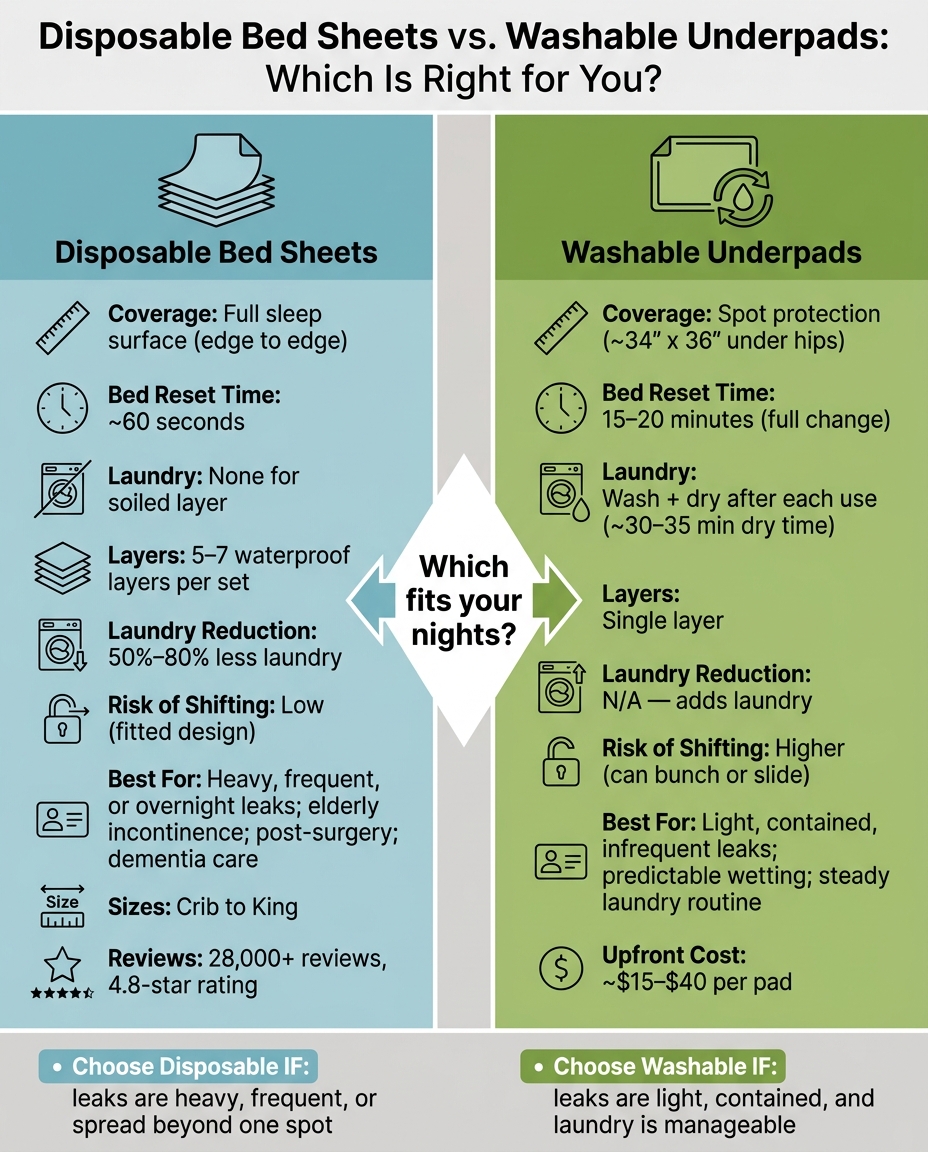
Disposable Bed Sheets vs. Washable Underpads: Side-by-Side Comparison
Washable vs Disposable Bedpads
Why this problem is harder than people realize
A wet bed is not just a wet bed.
It’s lost sleep.
More lifting.
More laundry.
More skin contact with moisture.
More embarrassment for the person in the bed.
That’s the part people miss.
On paper, both products sound like they do the same job. They don’t.
A washable underpad covers one zone, usually under the hips. That can work when leaks are small and the sleeper stays put. But if your loved one rolls, slides down, or the leak spreads, the bed can still get hit outside the pad.
A disposable fitted sheet covers the whole sleep surface. That means less guesswork when you’re tired and trying to fix the bed in the dark.
If you’ve ever done a full sheet change at 2am, you already know the problem is not just absorbency. It’s how much of the mess you can stop before it turns into 20 minutes of work.
What to look for before buying
Before you buy anything, I’d keep it simple.
Look at these five things:
- Coverage: Does it protect one spot or the full bed?
- Change time: Can you reset the bed fast?
- Laundry load: Are you adding one more wash cycle every day?
- Skin dryness: How long does moisture stay against the skin?
- Fit for your nights: Is this for rare accidents or repeat overnight leaks?
If leaks move past one area, I’d put coverage first.
If accidents happen often, I’d put change time first.
If your laundry room already feels like a second job, I’d be honest about that too.
Disposable bed sheets
Disposable bed sheets make more sense when your nights are rough.
I mean heavy leaks.
Repeat leaks.
Leaks that do not stay where you hoped they would.
The biggest reason is simple: full-bed protection.
A fitted disposable sheet stays in place better than an underpad. You are not relying on one pad staying lined up under the body all night. The mattress is covered, edge to edge.
That matters when someone moves a lot. It also matters when you are caring for an older adult, someone with dementia, someone healing after surgery, or anyone who cannot help much during a bed change.
The other reason is speed.
I wish I had found PeelAways sooner. It’s a multi-layer disposable waterproof fitted sheet with 5–7 layers already on the bed. When the top layer gets wet, you peel it off and there’s a clean one under it.
No starting a wash.
No lifting the mattress.
No stripping everything off.
That drop from 15–20 minutes to about 60 seconds is not a small thing when you’re exhausted.
PeelAways is sold in sizes crib to king, has 28,000+ reviews, and a 4.8-star rating. You can check it on peelaways.com/shop or on Amazon.
If leaks still get through diapers or pads, this is usually the point where a layered fitted sheet starts to make a lot more sense.
You can also read more on the PeelAways blog and their posts on incontinence bed protection for more help with setup.
Washable underpads
Washable underpads still have a place.
If leaks are light, happen once in a while, and stay under the hips, they can do the job.
They also cost less to buy at first. A few reusable pads at about $15 to $40 each may be enough if accidents are rare.
And yes, many of them feel softer right away.
But the trade-off is work.
You still have to wash them.
Dry them.
Store extras.
Check whether the fitted sheet stayed dry.
Hope the pad did not bunch up or shift.
That can be fine when your routine is steady.
It gets old fast when accidents happen night after night.
If your loved one moves a lot in sleep, I would be careful with underpads as the only layer of protection. The pad may absorb well, but it cannot catch what lands outside it.
Comparison table
| Feature | Disposable bed sheets | Washable underpads |
|---|---|---|
| Coverage | Full bed | One section of the bed |
| Bed reset time | About 60 seconds with PeelAways | Often much longer if sheets are wet |
| Laundry | None for the soiled layer | Wash and dry after use |
| Best for | Heavy, repeat overnight leaks | Light, contained leaks |
| Risk of shifting | Low with fitted design | Higher |
| Skin dryness | Better when wet layers come off fast | Depends on pad position and leak size |
| Typical fit | Older adults, adult incontinence, post-surgery, repeat bedwetting | Light bedwetting, naps, spot protection |
sbb-itb-45288fe
FAQ
Are disposable bed sheets better for elderly incontinence?
Usually, yes, when leaks are heavy or happen often. Full-bed coverage and a fast reset help a lot when mobility is low and bed changes are hard.
Are washable underpads cheaper?
They are often cheaper at the start. But the full cost includes detergent, water, power, drying time, and your time.
Do underpads work for bedwetting?
Yes, for some kids. If bedwetting is light and the child stays in place, an underpad may be enough. If the bed is getting soaked or wet more than once a night, full-bed layered sheets are often easier.
What makes PeelAways different from a standard disposable sheet?
PeelAways gives you 5–7 waterproof layers in one fitted setup. Instead of replacing the whole thing after one accident, you peel off the top wet layer and keep going.
Can PeelAways help if someone already wears briefs or pads?
Yes. If leaks still reach the bed, PeelAways adds full-bed backup. That is one big reason people switch.
Bottom line
If leaks are light and laundry is not a problem, washable underpads can work.
If leaks are heavy, frequent, or messy, I would pick disposable bed sheets every time.
That is why I keep coming back to PeelAways. It cuts bed changes to about 60 seconds, can cut laundry by 50% to 80%, gives you 5–7 layers, comes in sizes crib to king, and has 28,000+ reviews with a 4.8-star rating.
When you’re already running on fumes, the best bedding is the one that gets the bed dry fast and gives your loved one a little more dignity.
Making aging and caregiving easier, one bed at a time.
Blog readers save 10% with code BLOGS10 at checkout. Available on peelaways.com and Amazon. Free shipping on orders over $100.
Which Option Handles Absorbency and Leak Protection Better?
It’s 2am. The bed is wet again, and the leak didn’t stay where you hoped it would. You’re not just dealing with moisture now - you’re dealing with sheets, mattress edges, and one more load of laundry you did not need.
For heavy nighttime incontinence, disposable bed sheets usually give you more steady protection. They cover the full sleep surface and put a waterproof barrier across the whole bed. Washable underpads can absorb well in the area they cover - usually about 34" x 36" under the hips - but the rest of the bed stays exposed. That’s the big difference. An underpad protects one zone. A disposable fitted sheet protects the whole surface. Once a leak spreads or your loved one shifts in bed, that gap starts to matter.
When Does Full-Bed Coverage Matter More Than Spot Protection?
Full-bed coverage matters most when leaks are heavy, hard to predict, or happen more than once in the same night. If someone tosses, turns, or slides down in bed, a pad that started in the right place can end up off to the side. Then the next leak lands on the part of the bed with no protection at all.
For lighter, more contained leaks, underpads can still make sense - if the sleeper stays still. That’s the catch. The problem often isn’t that the pad can’t absorb. It’s that the leak doesn’t always stay where the pad is.
Ask yourself one plain question:
Could this leak spread beyond one spot?
If the answer is yes, full-bed coverage usually gives you more peace of mind.
Here’s the practical difference at a glance:
| Feature | Disposable Bed Sheets | Washable Underpads |
|---|---|---|
| Coverage Area | Full sleep surface (fitted sheet style) | Spot protection - typically under hips (~34" x 36") |
| Stability During Sleep | Stays in place (fitted design) | Prone to shifting or bunching |
| Repeated Wetting | Can stay in use through multiple changes before replacement | Single layer; must be laundered between uses |
| Edge Protection | Full perimeter covered | Edges of bed left exposed |
| Best For | Heavy overnight incontinence, frequent accidents | Light leakage, daytime rest, predictable wetting |
The main leak-control risk with underpads is movement, not absorbency. A pad can have a polyurethane waterproof backing and still fail in the moment that counts if it slides out of place. Disposable fitted sheets stay aligned because they wrap around the mattress the same way a regular fitted sheet does. And when you’re half-awake, exhausted, and trying to avoid a full bed change, that staying power means a lot.
Once protection is covered, the next thing that matters is speed. Because absorbency only helps so much if resetting the bed turns into a 15- to 20-minute chore.
What Makes Cleanup, Laundry, and Nighttime Changes Easier?
It’s 2 a.m. again. The bed is wet, the room is cold, and you’re standing there half-awake trying to figure out if this will take one minute or the next twenty.
Once leak protection is handled, this is the next thing that matters: how fast can you get the bed dry and settled again? Disposable bed sheets make cleanup easier because there’s no wash to start and no full bed remake. With a washable underpad, one accident can still mean laundry, plus a check of the bottom sheet or even the mattress.
Why 60-Second Bed Changes Matter in Real Caregiving
A standard bedding change takes about 15 to 20 minutes. And when it happens in the middle of the night, those minutes feel long.
With a multi-layer disposable sheet like PeelAways, that same job drops to under 60 seconds. You peel off the wet top layer, and there’s already a clean, dry one underneath. No stripping the bed. No lifting the mattress. No wrestling with corners while someone waits.
That kind of time savings hits hard in real life. It means less strain on your back. Less time your loved one spends wet, exposed, or embarrassed. And a much faster shot at getting both of you back to sleep. For family caregivers in the U.S. already balancing jobs, kids, and elder care, cutting a 20-minute overnight mess down to one minute is a big deal.
If you want to see the product many families turn to for this, you can check PeelAways on Amazon or shop directly at peelaways.com/shop. It’s one of those things I wish more people knew about sooner: 5–7 layers, sizes from crib to king, 28,000+ reviews, and a 4.8-star rating. The whole point is simple: Making aging and caregiving easier, one bed at a time.
Washable underpads can still help, especially when you place one over the fitted sheet. You pull off the wet pad, put down a dry one, and toss the used one in the hamper. That can spare you from changing the whole bed. But the work isn’t over. You still have laundry to do, and thick absorbent pads take around 30 to 35 minutes to dry in a dryer.
If accidents happen every night, that drying time stacks up fast. Then you’re not just doing care. You’re managing inventory. Do you have enough clean pads for tonight? What about tomorrow? What if two accidents happen before morning? That’s where the difference starts to feel less like a product detail and more like your whole week.
If you’re comparing options, these two reads may help too:
- PeelAways blog
- PeelAways shop
Decision Table: Speed, Laundry Volume, and Overnight Reset
| Pain Point | Disposable Bed Sheets (PeelAways) | Washable Underpads |
|---|---|---|
| Time to reset the bed | Under 60 seconds - peel top layer, done | About 15–20 min for a full bedding change |
| Laundry generated per accident | No laundry - soiled layer is tossed | At least one pad to wash, and sometimes the bottom sheet too |
| Drying time required | None | ~30–35 min per dryer load |
| Lifting required | No mattress lifting | Pad removal plus potential sheet change |
| Overnight reset difficulty | Low - one motion, back to sleep | Moderate to high - wet items need immediate handling to reduce odor risk |
| Best for | Nightly accidents and low caregiver bandwidth | Occasional accidents, strong laundry routine |
Speed matters. But when you’re the one changing sheets in the dark, speed also feels like relief.
How Do Comfort, Skin Hygiene, Dignity, and Cost Compare?
It’s the middle of the night. The bed is wet again, your loved one is upset, and you’re trying to change everything without making the moment feel worse than it already does. At that point, comfort and cost stop being abstract. They become the whole job.
Once leak control and overnight changes are clear, these are usually the tiebreakers. Washable underpads often feel softer at first touch. Disposable sheets, on the other hand, tend to keep more of the bed dry. And that matters more than people think. Less time on a wet bed also means less exposure during changes. Disposable bed sheets cut down the time moisture sits against skin, which can help support skin health and dignity during heavy or frequent leaks. A drier bed can also mean less embarrassment during a late-night change.
Which Option Feels More Comfortable and Skin-Friendly Overnight?
Skin does best when it stays dry. When moisture sits against skin too long, maceration can weaken it and increase the risk of irritation, rashes, and pressure injury.
Washable underpads with brushed polyester or cotton-blend tops can feel more like normal bedding. That can matter if you’re trying hard to keep the bedroom from feeling clinical. Sometimes that small detail helps protect dignity too. But there’s a trade-off. Quilted pads can feel bulky, hold heat, and shift or bunch if the person moves off the pad.
Soft fabric helps. But fewer wet hours and less skin exposure matter more.
That’s where PeelAways stands out. It uses a soft bamboo/rayon blend, and the wet layer can be removed fast, so moisture is dealt with sooner. If you’re caring for someone with fragile skin, limited mobility, or a past history of skin breakdown, that mix of a drier surface, full-bed coverage, and a fast change can be a better fit. You can see the product details at peelaways.com/shop or on Amazon. For more on overnight care, it also helps to read other guides on peelaways.com, like their blog articles on bedding and incontinence care.
What Does the Real Cost Look Like Over Time in the U.S.?
For light leaks or the occasional accident, washable underpads usually cost less to start. A set of three good reusable underpads at about $20 each comes to around $60 upfront. But that’s not the whole picture. You still have washing, drying, detergent, utility costs, and your own time. And when you’re already worn out, time counts.
PeelAways multi-layer sheets start at $34.99 for Twin and go up to $53.99 for King. Each sheet includes 5 to 7 layers, so one sheet covers several changes before you need a full replacement. No laundry in between. No stripping the whole bed at 2 a.m.
If accidents happen often, the difference shows up less in sticker price and more in what your nights look like. Less laundry. Less disruption. Less mattress wear. A bed change in under 60 seconds instead of 15 to 20 minutes can feel like getting part of your life back.
PeelAways is one of those things many families find after they’ve already tried pads, extra linens, and too much middle-of-the-night washing. It’s built to make aging and caregiving easier, one bed at a time. It also comes in sizes from crib to king, with 28,000+ reviews and a 4.8-star rating.
The real difference shows up when you compare repeated use, not just the first purchase.
| Cost Factor | Washable Underpads | PeelAways Disposable Sheets |
|---|---|---|
| Upfront product cost | About $15–$40 per pad, often sold in sets of 2–4 | About $34.99–$53.99 per multi-layer sheet |
| Laundry cost | Ongoing water, detergent, and electricity | None |
| Caregiver time per change | About 15–20 minutes | Under 60 seconds |
| Mattress protection | Localized to the pad area | Full-bed coverage |
| Best value scenario | Light or occasional leaks | Nightly or heavy leaks |
Which Bedding Solution Works Best for Elderly Incontinence, Adult Incontinence, Bedwetting, and Post-Surgery Recovery?
It’s 2am. The bed is wet again, your loved one is half-awake and upset, and you’re standing there knowing this is about to cost you another chunk of sleep. When nights keep going like this, the bedding choice stops being a small detail and starts feeling like survival.
Heavy, frequent leaks usually point to disposable bed sheets. Lighter, more predictable leaks often work fine with washable underpads.
When Disposable Bed Sheets Are the Better Fit
Use disposable sheets when fast resets, full coverage, and less overnight disruption matter most.
Disposable bed sheets make the most sense when care is hard and time matters. Picture an elderly parent with nighttime incontinence and more than one accident in a single night. Every slow bed change means less sleep, more lifting, more cleanup, and more strain on both of you. That same problem shows up during post-surgery recovery, when limited movement can turn a full bed change into a long, painful process.
They also help in dementia care, where nighttime confusion can make slow, multi-step changes feel upsetting and disorienting. A faster reset can help keep skin drier and spare your loved one some of that embarrassment no one talks about enough.
If accidents are frequent, unpredictable, or heavy, disposable bed sheets can:
- Cut down the time your loved one stays in wet bedding
- Help protect the mattress
- Limit moisture sitting against skin and sheets
- Reduce the laundry pile waiting for you in the morning
If you use diapers or incontinence pads and leaks still reach the bed, this is usually where PeelAways starts to make a lot of sense. It’s a multi-layer fitted sheet setup with 5-7 layers, so instead of stripping the whole bed, you peel off the top layer and move on. That can mean about 60 seconds instead of 15-20 minutes for a full bed reset.
You can shop PeelAways at peelaways.com/shop or on Amazon. If you want more context first, read PeelAways reviews and another article on the PeelAways blog.
When Washable Underpads Make More Sense
Use washable underpads when leaks are lighter, more predictable, and laundry is easy to manage.
Washable underpads are a good fit when the need is smaller and more contained. A child with occasional bedwetting who doesn’t move much overnight may not need full-bed disposable coverage. In that case, a well-placed washable underpad can do the job without much fuss.
They also work well when leakage is light, easy to anticipate, and your household already handles frequent laundry without it becoming one more thing on your back. For lower-demand situations, reusables can be a sensible pick.
Final Takeaway and Next Step for Caregivers
Once the care need turns frequent or unpredictable, the faster-reset option usually becomes the simpler one.
Neither option fits every situation. But the pattern is pretty clear: the more frequent and severe the accidents, the more likely disposable bed sheets are to save time, protect skin, and lower stress. Washable underpads make sense for lighter needs. Disposables are built for the rougher nights.
Caregiving is hard enough already. Your bedding setup shouldn’t make it harder. If you’re dealing with nightly accidents or heavy leakage, PeelAways multi-layer disposable sheets are made for fast, full-bed changes. They come in sizes from crib to king, have a 4.8-star rating, and more than 28,000+ reviews. Making aging and caregiving easier, one bed at a time.
Blog readers save 10% with code BLOGS10 at checkout. Available on peelaways.com and Amazon. Free shipping on orders over $100.
Comments
0



SAVE MONEY & WATER
Professionals & Institutions save a fortune on labor/laundry.

SUPERIOR COMFORT
The first thing our customers notice is how soft our sheets are.

100% WATERPROOF
Each layer is 100% Waterproof, perfect for spills and accidents

SAVE TIME
Change the sheet in under 1 minute without stripping the bed.

Leave a comment