
Daily Hygiene Tips for Incontinence Care

Managing incontinence can feel overwhelming, but a consistent hygiene routine can make a big difference in protecting your skin and maintaining comfort. Here’s the key takeaway: cleaning, drying, and protecting the skin regularly prevents irritation, infections, and other complications. Using the right supplies - like pH-balanced cleansers, barrier creams, and absorbent bedding - makes care easier and more effective.
Key Tips:
- Skin Care: Clean with no-rinse cleansers, pat dry, and apply barrier creams (zinc oxide, lanolin, or petroleum jelly) to prevent irritation.
- Bedding Protection: Use absorbent bed pads or PeelAways disposable sheets to simplify cleanup and reduce laundry.
- Health Monitoring: Check skin daily for redness or irritation, and address any signs of infection early.
- Lifestyle Adjustments: Stay hydrated, avoid bladder irritants (coffee, alcohol), and incorporate pelvic floor exercises to improve bladder control.
By following these steps, you can reduce the risk of skin issues, manage accidents more easily, and improve overall comfort.
sbb-itb-45288fe
Managing odour and skin care when living with incontinence
Supplies You Need for Incontinence Hygiene
Having the right tools on hand can streamline incontinence care, protect the skin, and reduce caregiver strain. The focus is on thorough cleaning, skin protection, and cross-contamination prevention, all while keeping laundry manageable.
Basic Hygiene Products and Tools
Start with disposable gloves to maintain hygiene and prevent germ transfer. Opt for no-rinse cleansers specially designed for incontinence care - they clean effectively without drying out the skin. After cleaning, apply a barrier cream with ingredients like petroleum jelly, zinc oxide, or lanolin to shield the skin from moisture and irritants.
To protect bedding and furniture, use absorbent bed pads and waterproof mattress protectors. These items help catch fluids before they seep into surfaces, reducing the risk of bacterial growth and lingering odors. For added protection, consider waterproof covers for duvets and pillows.
For a more convenient solution, PeelAways disposable waterproof bed sheets offer a unique approach. Unlike traditional absorbent pads that can shift and bunch, PeelAways act as fitted sheets with multiple waterproof layers. This innovative product simplifies cleanup and enhances mattress protection.
How PeelAways Bed Sheets Work
PeelAways are designed to fit seamlessly into your hygiene routine, cutting down on laundry and helping prevent cross-contamination. When choosing supplies, it helps to compare disposable vs. washable bed sheets to see which fits your lifestyle. Each sheet includes 5 to 7 waterproof layers, depending on the size. Made from a breathable bamboo blend, they are hypoallergenic and free from harsh chemicals like PVC or vinyl. The sheets are quiet, comfortable, and offer complete mattress protection.
When the top layer gets soiled, simply peel it away to reveal a fresh, clean layer underneath - no need to lift the mattress or immediately do laundry. This can reduce laundry loads by up to 90%, saving time, water, and energy. PeelAways are available in various sizes and prices:
- Crib-A-Peel: $30.99 (5 layers)
- Cot: $34.99 (7 layers)
- Twin: $34.99 (5 layers)
- Twin XL: $34.99 or $41.99 (5 or 7 layers)
- Full: $43.99 (5 layers)
- Queen: $47.99 (5 layers)
- King: $53.99 (5 layers)
Orders over $100 qualify for free shipping, and subscriptions come with a 15% discount. Plus, there's a 30-day money-back guarantee for added peace of mind.
Daily Hygiene Routine: Step-by-Step Instructions
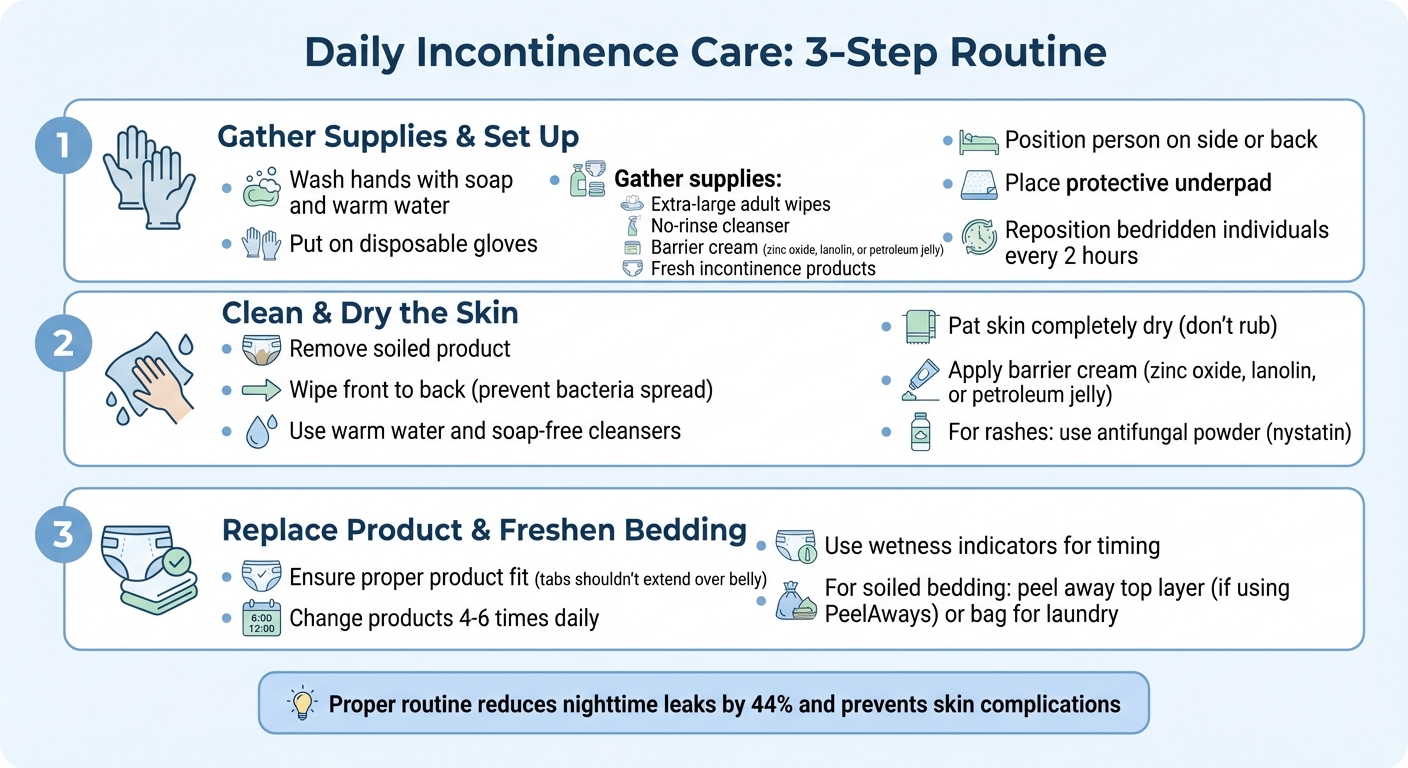
Daily Incontinence Care Routine: 3-Step Hygiene Process
Step 1: Gather Your Supplies and Set Up
Start by washing your hands thoroughly with soap and warm water, then dry them and put on disposable gloves. As Brianna Maguire, Caregiving Specialist at Carewell, explains:
gloves are an essential tool for ensuring safety and cleanliness during every adult diaper change.
Make sure all your supplies are within easy reach. You’ll need items like extra-large adult wipes (these are much larger than baby wipes), a no-rinse cleanser, a barrier cream (with ingredients like zinc oxide, lanolin, or petroleum jelly), fresh incontinence products, and disposal bags. Having everything ready ensures a smooth process and reduces interruptions.
Position the person on their side or back, depending on their mobility, and place a disposable underpad or a PeelAways sheet underneath to protect the surface. If the individual is bedridden, keep pillows or foam padding handy to reposition them every two hours to help prevent pressure sores. Once your setup is complete, you’re ready to move on to cleaning and drying the skin.
Step 2: Clean and Dry the Skin
Carefully remove the soiled product and clean the skin using adult wipes or a no-rinse cleanser. Always wipe from front to back to reduce the risk of spreading bacteria. Be gentle - scrubbing too harshly can damage the skin. Opt for warm water and soap-free cleansers to help maintain the skin’s natural moisture barrier.
After cleaning, pat the skin dry. Moisture left on the skin can lead to irritation, redness, and even peeling. Once the area is fully dry, apply a barrier cream with ingredients like zinc oxide, lanolin, or petroleum jelly. Mary Osborne, an Occupational Therapist, emphasizes:
a well-thought-out plan can make these incidents less disruptive to your daily routine and help maintain a calm, nurturing environment at home.
Even if there’s no visible redness, it’s a good idea to apply the cream each time you change the product. If you notice a rash that’s red, itchy, or looks like small pimples, switch to an antifungal powder like nystatin instead of baby powder.
Step 3: Replace the Product and Freshen Up the Bedding
Once the skin is clean and protected, it’s time to replace the incontinence product and check the bedding. Make sure the new product fits properly - if the tabs extend over the belly, it’s likely too large and could cause leaks. Most products should be changed 4–6 times a day to keep the skin healthy. Look for modern briefs with wetness indicators that change color to signal when it’s time for a change.
If the bedding is soiled, PeelAways sheets make cleanup easier - just peel off the top layer to reveal a clean, waterproof layer without lifting the mattress or rushing to do laundry. For traditional bedding, place soiled items in disposal bags or a designated diaper bin to control odors. Finally, dispose of your gloves and wash your hands thoroughly.
Keeping the Area Clean and Monitoring Health
Proper Disposal and Disinfection
Once you've completed your hygiene routine, keeping the area clean is key to avoiding cross-contamination. Start by rolling the used brief tightly, using the side tabs to secure it into a compact bundle. Place any used wipes inside the rolled brief to contain the mess before disposing of it in a designated bin or sealable bag.
Next, clean any affected surfaces immediately. Gently blot moisture instead of rubbing to prevent fluids from soaking deeper into surfaces. Use a disinfectant solution for hard surfaces, while enzymatic cleaners are your go-to for carpets and upholstery since they break down urine and stool proteins. For mattresses, a mix of equal parts white vinegar and water works well. Once it dries, sprinkle baking soda on the spot to neutralize lingering odors.
After cleaning, remove your gloves and wash your hands thoroughly with soap and water to ensure no germs are transferred.
Track Patterns and Check Skin Regularly
Taking care of the immediate mess is important, but keeping an eye on patterns and skin health is just as crucial for long-term care. Wetness indicators on modern briefs can help; these change color when it’s time for a change, giving you a clear visual cue to act before leaks happen. Tracking the timing of accidents can also help you create a toileting schedule, encouraging regular bathroom visits every 2 to 4 hours to minimize exposure to moisture. As Carewell explains:
Incontinence is a very manageable condition. If you're struggling more than you think you should be, don't hesitate to discuss it with your doctor.
Daily skin checks are essential. Pay close attention to areas like the buttocks, hips, and genitals for early signs of irritation, such as redness that doesn’t fade when pressed, blisters, peeling, or foul-smelling drainage. If you notice persistent irritation or rashes, it’s time to consult a healthcare professional for guidance. Quick cleanup is non-negotiable - prolonged contact with urine or feces can lead to skin breakdown, diaper rash, and infections.
Tips for Better Skin Health Over Time
Drink Enough Water and Adjust Diet
Staying hydrated is essential - not just for overall health, but also for maintaining healthy skin and bladder function. Aim for 6 to 8 cups of water daily to dilute urine acidity, which can irritate both the bladder lining and the skin. Concentrated urine can cause significant discomfort and even lead to skin issues over time. As UF Health highlights:
Drinking enough water will help keep odors away. Drinking more water may even help reduce leakage.
Be mindful of what you drink. Avoid bladder irritants like coffee, alcohol, and carbonated drinks, as they can exacerbate irritation. Instead, try alternatives like herbal teas or water infused with cucumber or mint. Similarly, cutting back on acidic foods - such as citrus fruits and tomatoes - can make a difference.
Focus on adding nutrient-rich foods to your diet to support both bladder and skin health. These include:
- Fiber-rich foods to aid digestion and reduce strain on the bladder.
- Magnesium sources like pumpkin seeds, almonds, and avocados.
- Omega-3 fatty acids from salmon, walnuts, and flaxseed oil.
- Antioxidant-packed options like blueberries and spinach.
These dietary changes can help reduce leaks and protect your skin from prolonged exposure to moisture. To further minimize nighttime accidents, try limiting fluid intake 2 to 4 hours before bed.
Beyond diet and hydration, incorporating exercises to strengthen your pelvic muscles can also play a key role in maintaining both bladder control and skin health.
Try Pelvic Floor Exercises
Building stronger pelvic floor muscles through Kegel exercises is a simple yet effective way to improve bladder control. This reduces the likelihood of leaks, which means less exposure of your skin to irritating moisture. These exercises target the muscles responsible for controlling both the bladder and bowel. Harvard Health Publishing explains:
Exercises can help strengthen the muscles of the pelvic floor, shoring up those that control both bladder and bowel.
Performing Kegels is straightforward. Tighten the muscles you’d use to stop urine flow, hold for 3–5 seconds, and then relax for the same duration. Repeat this 10–15 times, three times a day.
To enhance the benefits, pair Kegels with gradual bladder training. Start by delaying bathroom visits by 10-minute intervals, and work your way up to a goal of 4 hours between trips. If you’re unsure whether you’re doing the exercises correctly, consider seeking guidance through biofeedback or pelvic floor physical therapy.
Conclusion
Managing incontinence effectively doesn't have to be complicated. By sticking to a consistent routine built on three key practices - regular cleaning, using the right protective products, and managing bedding properly - you can safeguard health and comfort. Here's a quick recap of how these steps work together.
Daily skin care is crucial. Cleaning, drying, and applying barrier creams like zinc oxide or petroleum jelly help protect against issues like Incontinence Associated Dermatitis (IAD), urinary tract infections (UTIs), and pressure sores. Always remember to wipe from front to back to minimize the risk of bacterial spread.
Beyond skin care, bedding management plays an important role in overall care. Products like PeelAways disposable sheets make this easier by eliminating the need to lift mattresses and cutting down on laundry. Their bamboo and rayon blend not only keeps the skin dry but also helps regulate temperature, which can prevent skin irritation.
Long-term strategies, including staying hydrated, avoiding bladder irritants, and practicing pelvic floor exercises, can also improve bladder health and reduce leakage over time.
With around 25 million Americans experiencing urinary incontinence annually, adopting proper hygiene routines has been shown to reduce nighttime leaks by 44%. The right combination of care, products, and lifestyle changes can help preserve dignity, ensure comfort, and keep skin healthy every day.
FAQs
How do I prevent diaper rash and skin breakdown?
Maintaining healthy skin is key to preventing diaper rash and skin irritation. Start by keeping the skin clean and dry. Change incontinence products regularly and clean the skin thoroughly but gently after each change. Make sure to dry the area completely before applying a barrier cream, such as one containing zinc oxide, which helps shield the skin from moisture and irritation.
Letting the skin breathe is also important. Avoid tight clothing that can trap moisture and cause friction. Waterproof bed sheets, like PeelAways, can be a helpful solution to manage moisture buildup and protect bedding. These small adjustments can go a long way in keeping the skin protected and ensuring greater comfort.
When should I call a doctor about irritation or infection?
If you notice ongoing irritation, redness, peeling, or any signs of infection - like swelling, warmth, or pus - in areas affected by incontinence, it’s important to reach out to a doctor. You should also seek medical attention if you experience pain, an unpleasant odor, or if skin problems persist despite maintaining good hygiene and care. Addressing these issues early can help avoid more serious complications.
How can I reduce nighttime leaks and laundry?
To cut down on nighttime leaks and make laundry less of a hassle, opt for high-absorbency overnight products specifically made for nighttime use. Adding booster pads can offer extra protection, while ensuring the product fits well - snug leg elastics and leak guards are key to avoiding gaps. Picking the right size is also crucial to prevent leaks and keep the bedding dry. For easier cleanup, disposable multi-layer bed sheets like Peelaways can be a game-changer, simplifying the process and helping prevent cross-contamination.
Related Blog Posts
Comments
0



SAVE MONEY & WATER
Professionals & Institutions save a fortune on labor/laundry.

SUPERIOR COMFORT
The first thing our customers notice is how soft our sheets are.

100% WATERPROOF
Each layer is 100% Waterproof, perfect for spills and accidents

SAVE TIME
Change the sheet in under 1 minute without stripping the bed.

Leave a comment