
The Complete Guide to Dementia and Alzheimer's Home Care

It’s 2 a.m. The bed is wet again. Your loved one is confused, your back hurts, and you’re trying to keep them calm while changing sheets in the dark.
A bed change can take under 60 seconds instead of 15–20 minutes with PeelAways. That means 50%–80% less laundry, 5–7 waterproof layers per set, and sizes from crib to king. With 28,000+ reviews and a 4.8-star rating, it’s one of the few things I’ve found that cuts the mess without making a hard night harder.
- Dementia home care works best with a steady routine
- Short, calm communication helps lower distress
- Scheduled toileting can cut down accidents
- Safer bedrooms and bathrooms can lower fall risk
- PeelAways can make overnight bed changes much easier
If you’re caring for someone with dementia at home, the hard part is not just memory loss. It’s the nights, the cleanup, the stress, and the way one accident can throw off the next day.
Caregiver Training: Home Safety | UCLA Alzheimer's and Dementia Care Program
sbb-itb-45288fe
Why this problem hits so hard
Dementia home care is not only about reminders and medication.
It’s also about:
- getting someone to the bathroom on time
- handling wet sheets at 2 a.m. (and knowing how to replace sheets on an occupied bed)
- keeping them safe when they wake up confused
- trying not to snap when you’re dead tired
That part wears you down fast.
And when incontinence gets added to confusion, sleep loss, and mobility issues, every night can feel like a reset button you never asked for.
What hit me hardest was this: the cleanup was not the whole problem.
The full bed strip.
The laundry.
The lifting.
The way my loved one looked embarrassed while I tried to move fast and maintain comfort and dignity.
What to look for before you buy any bedding for dementia care
If nighttime accidents are part of your routine now, the bedding matters more than most people think.
I’d look for:
- Waterproof protection that does not shift around
- Layered design so you are not remaking the whole bed
- Less lifting during changes
- Sizes that fit your bed from twin to king, or even crib for special cases
- Good reviews from people who have used it at home
The main question is simple:
Can you fix the bed fast without turning a bad moment into a bigger one?
If the answer is no, it’s probably not the right setup.
PeelAways
PeelAways is the one product in this space that felt like it was made by someone who had done this before.
It’s a layered disposable sheet system.
When the top layer gets soiled, you peel it off and there’s a clean layer underneath.
That’s it.
No full sheet change.
No late-night laundry run.
No pulling the mattress around.
The biggest difference is time.
A full sheet change often takes 15–20 minutes.
PeelAways can cut that to under 60 seconds.
At 2 a.m., that gap matters.
It also helps with dignity. Your loved one stays more covered. The room stays calmer. You’re not dragging out a moment they already feel bad about.
PeelAways comes with:
- 5–7 waterproof layers
- sizes from crib to king
- 28,000+ reviews
- a 4.8-star rating
You can find it on peelaways.com/shop and on the Amazon listing for PeelAways.
If you want more detail, these are worth reading too:
- PeelAways blog
- How to keep beds dry
Making aging and caregiving easier, one bed at a time.
Other home care steps that help
Bedding is one piece.
The rest is the daily setup.
A few things from the article stand out:
- Keep the same daily rhythm for meals, meds, fluids, and sleep
- Use short instructions and a calm tone
- Offer small choices like which shirt to wear
- Try scheduled bathroom trips every 2–3 hours
- Add night-lights, door alarms, and clear walkways
- Watch for pain, fear, cold, or wet clothing when agitation starts
Those steps do not fix everything.
But they can lower the chaos.
Quick comparison
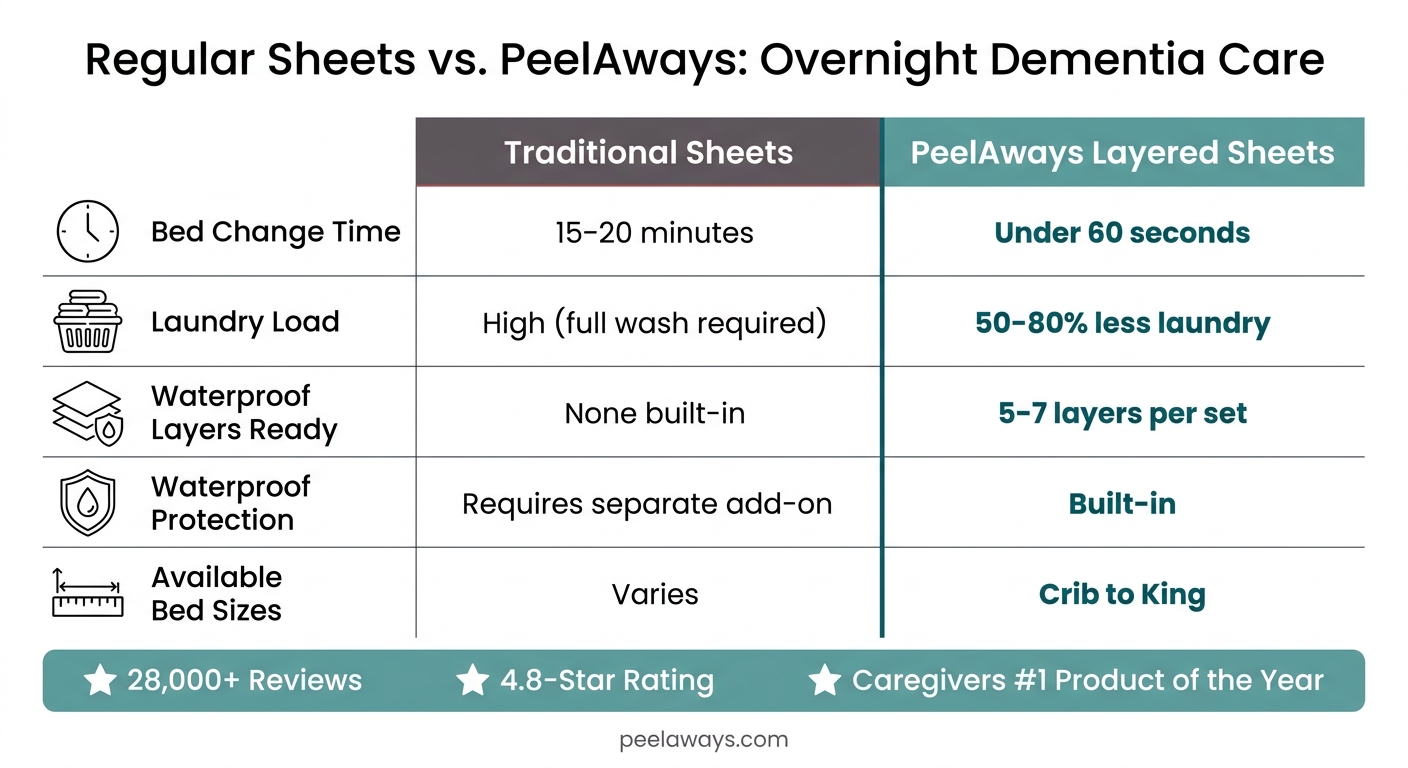
Regular Sheets vs. PeelAways: Dementia Night Care at a Glance
| Factor | Regular sheets | Bedding for caregivers |
|---|---|---|
| Bed change time | 15–20 minutes | Under 60 seconds |
| Laundry load | High | 50%–80% less |
| Layers ready to go | No | 5–7 |
| Waterproof protection | Separate add-on | Built in |
| Bed sizes | Varies | Crib to king |
FAQ
Does dementia often lead to nighttime accidents?
Yes. Memory loss, poor mobility, sleep changes, and medication timing can all play a part. That’s why nights often get harder before families expect them to.
How often should I take someone with dementia to the bathroom?
A set schedule every 2–3 hours can help cut down accidents. It often works better than waiting for them to ask.
Why are bed changes so hard at night?
Because it’s not just the sheets. It’s the lifting, the confusion, the cold room, the broken sleep, and the stress of trying not to upset someone who may not understand what’s happening.
Is PeelAways only for severe incontinence?
No. It can help with any repeat nighttime accidents, leaks from briefs or pads, or times when full sheet changes are happening too often. Managing these accidents often involves addressing the emotional challenges of incontinence for both the caregiver and the individual.
Where can I buy PeelAways?
You can get it at peelaways.com/shop or on the Amazon listing for PeelAways.
Bottom line
If you’re caring for someone with dementia at home, you do not need more fluff. You need fewer middle-of-the-night disasters.
The article’s main point is simple: routines, calm communication, safer rooms, and scheduled toileting all help. But if overnight accidents are what keep breaking you, PeelAways is the part that can take the most pressure off.
I’d look at it this way:
If you use diapers or incontinence pads, and you’re still doing full sheet changes at 2 a.m., PeelAways is worth a hard look.
You can shop here: peelaways.com/shop
Or here: Amazon listing for PeelAways
More reading:
- PeelAways blog
- How to change a bed fast
Blog readers save 10% with code BLOGS10 at checkout. Available on peelaways.com and Amazon. Free shipping on orders over $100.
How to Make Daily Routines Easier for Someone Living with Dementia
It’s 6:30 a.m. and the day already feels shaky. Your loved one is confused, you’re trying to stay calm, and even simple tasks can turn into a struggle before breakfast.
A steady routine can help more than people expect. When the day follows a familiar pattern, confusion often eases, agitation may settle, and care tasks can go more smoothly. It also helps you spot changes in mood, energy, or behavior sooner.
What a Dementia-Friendly Daily Routine Looks Like
A dementia-friendly routine works best when the day follows the same basic flow: waking up, meals, fluids, medication, activity, and bedtime. Try to keep meals and medication at the same time each day. Just as important, keep the order of the day familiar.
One shared schedule helps a lot. If family members, home aides, or other helpers are involved, everyone should follow the same plan. That cuts down on mixed signals and makes the day feel steadier.
Toileting often becomes more predictable with a routine too, and that matters even more as dementia moves forward. Scheduled bathroom visits every two to three hours - instead of waiting for your loved one to ask or signal - can help cut down on accidents and the stress that comes with them.
How to Help with Bathing, Grooming, and Dressing Without Causing Distress
Personal care can be the hardest part of the day. Bathing and dressing resistance happens a lot, and it usually doesn’t mean your loved one is being difficult. More often, it means they feel confused, exposed, cold, rushed, or unsure of what’s about to happen.
A few small shifts can help:
- Get everything ready before you begin, including the towel, soap, and clothes.
- Make sure the bathroom is warm and well lit.
- If a full shower feels like too much, use a sponge bath instead.
- Offer simple choices, like: “Do you want the blue shirt or the gray one?”
That small bit of control can ease tension. And when someone feels less cornered, the task often goes better for both of you.
The goal is dignity. Always. You’re not just getting through a task. You’re helping someone feel safe while you do it.
If a task starts to trigger resistance, slow down. Use fewer words. Give one step at a time and leave room to breathe.
How to Communicate When Memory Loss Affects Cooperation
Clear, calm communication sits underneath every care task. It’s not only about the words. It’s the tone, the pace, the look on your face, and whether the other person feels safe with you in that moment.
Use a calm voice. Make eye contact. Give one short instruction at a time. If your loved one is upset, validate the feeling instead of correcting the facts. Resistance is often a sign of discomfort or confusion, so it helps to pause, reset, and try again more gently.
Your stress matters too. A person living with dementia may not follow every word, but they can still feel tension in the room. When you’re able to stay calmer, the whole interaction often settles with you. That same gentle approach can make toileting and overnight care easier too.
How to Manage Toileting, Incontinence, and Nighttime Bed Changes at Home
It’s 2am. The bed is wet again, your loved one is confused, and you’re trying to change everything without fully waking them up. Your body is tired, your mind is foggy, and one mess can feel like the last straw.
Toileting accidents and nighttime incontinence are some of the hardest parts of dementia care at home. They wear you down physically and emotionally. A layered bed setup can protect the mattress, cut laundry, and make overnight cleanup much faster. And when sleep, mobility, and confusion all hit at once, nights get harder in a hurry.
Why Dementia and Alzheimer's Often Lead to Toileting and Incontinence Problems
At night, briefs can leak and pads can bunch up during sleep. So even when you’ve done everything “right,” one rough night can still throw the whole routine off.
With dementia care, incontinence is usually not about one mistake. It often comes from several things happening at once: mobility limits, confusion, medication timing, and broken sleep. That mix is what makes nighttime care so draining. It’s not just the cleanup. It’s the stop-and-start sleep, the lifting, the worry, and the way one accident can turn into a full bedtime reset.
Repeated overnight disruptions can also add to caregiver fatigue and burnout. If you’ve ever changed sheets in the dark while trying not to upset someone you love, you already know this isn’t a small issue.
The hard part is finding a way to make overnight care faster, cleaner, and less upsetting for both people.
How PeelAways Makes Bed Changes Faster and More Dignified
This is where PeelAways can make a big difference. I didn’t see it as some fancy product. I saw it as one less middle-of-the-night disaster.
A standard sheet change usually takes 15 to 20 minutes, while a layered disposable sheet can be changed in under 60 seconds. In the middle of the night, that gap matters. A fast cleanup means less strain on your back, less disruption, and a better shot at keeping your loved one calm and covered.
PeelAways multi-layer disposable sheets let you peel away the soiled top layer and reveal a clean one underneath, with no mattress lifting and no laundry. That can cut laundry by 50% to 80% and make cleanup feel a lot less chaotic.
If you use diapers or incontinence pads, this kind of setup just makes sense.
PeelAways comes in 5-7 layers, in sizes from crib to king, and it has a 4.8-star rating across 28,000+ reviews. It has also been recognized as Caregivers' #1 Product of the Year. You can see it on peelaways.com/shop or check the Amazon listing for PeelAways. For more help, these articles are worth reading too: PeelAways blog and another PeelAways article.
Making aging and caregiving easier, one bed at a time.
Bedding and Cleanup Tools That Help Most with Overnight Accidents
The best overnight setup is simple: each layer should do one job well. The top layer handles the immediate mess. Then bedding solutions for incontinence protects the mattress if that first layer fails.
A few small details can help more than people think:
- Use sheet clips or straps to keep layers from shifting.
- Place the sheet with the tag at the head or foot so it’s set up the right way.
- Keep cleanup supplies close by so you’re not leaving the room half-awake and scrambling.
That kind of setup can turn a stressful bed change into something much more manageable.
| Factor | Traditional Fitted Sheets | PeelAways Layered Sheets |
|---|---|---|
| Change time | 15–20 minutes | Under 60 seconds |
| Laundry required | Yes | No |
| Repositioning required | Requires lifting or repositioning | No lifting required |
| Protection | Depends on separate protector | Built-in waterproof protection |
| Caregiver effort | Higher | Lower |
When accidents happen a lot, a layered bed setup can make nighttime cleanup faster and calmer. Once that piece gets easier, the next thing to tackle is safety around wandering, agitation, and broken sleep.
Blog readers save 10% with code BLOGS10 at checkout. Available on peelaways.com and Amazon. Free shipping on orders over $100.
How to Make the Home Safer and Handle Behavior Changes and Sleep Problems
It’s the middle of the night. The hallway is dark, your loved one is trying to get up, and you’re half awake, bracing for the sound of a stumble or a soaked bed. This is where nights can go sideways fast.
A safer home cuts down some of the biggest reasons nights fall apart: confusion, falls, and constant wake-ups. Start with the bathroom, bedroom, hallways, and exits. That’s where most nighttime trouble happens. Once cleanup is less of an ordeal, the next job is lowering the risk of falls, wandering, and agitation.
The Home Safety Changes That Matter Most for Dementia Care
The first changes to make are the ones that lower fall risk and make nighttime movement less risky. Bathrooms and bedrooms need the most attention. Hallways should be easy to move through after dark.
In the bathroom, a shower chair can help your loved one avoid standing on a slippery surface. Bed rails can give physical support when getting in or out of bed. Small things like that matter at 2 a.m., when balance is off and confusion hits harder.
Door alarms are one of the most useful tools for wandering. A basic chime or alert on an outside door gives you a warning before someone gets out unsupervised. Motion-activated night-lights in the hallway and bathroom can also help. Waking up in a pitch-dark room is disorienting for anyone. For someone with dementia, it can be enough to start panic or send them in the wrong direction.
What to Do When a Loved One Becomes Agitated, Confused, or Resistant to Care
Agitation and resistance usually mean something is wrong. It may be discomfort, fear, pain, or confusion. Wet bedding can also set it off. Before you say much, check the basics. Are they in pain? Are they cold? Are they wet? Are they scared?
Your tone matters more than most people realize. Speak slowly. Keep your voice calm. Move gently. When someone feels confused or cornered, a rushed voice can make things worse in seconds.
It helps to look at agitation as a signal, not a battle. The behavior is usually pointing to a need. When you answer the need behind it, things often settle faster than if you try to push through the resistance.
These moments often get worse after sunset, when the room gets darker and everyone is more tired.
How to Limit Sundowning, Wandering, and Overnight Wake-Ups
Nights usually go better when the evening feels the same every day. Keep the bedroom cool, dark, and quiet. Cut off caffeine after noon. Follow the same wind-down steps each night. It doesn’t have to be fancy. It just has to be steady.
For wandering at night, door alarms and motion-sensor lights work well together. The light helps with confusion. The alarm gives you time to step in before your loved one reaches the door.
Nighttime incontinence is one of the biggest reasons sleep keeps getting broken for both of you. And when it keeps happening, the cost adds up fast. As Fatai-Olalere Fatimo notes, "When the same preventable disruptions happen night after night, they don't just affect one shift; they contribute to fatigue, burnout, and ultimately the consistency of care."
This is one place where PeelAways can take a huge load off. I didn’t come to it as a product pitch. I came to it as someone desperate to stop doing full bed changes in the dark. PeelAways layered bedding uses 5-7 waterproof layers, so when there’s a nighttime accident, you peel off the top soiled layer and there’s a clean one underneath. The whole bed change can take under 60 seconds instead of the usual 15-20 minutes with a full strip, remake, and laundry run. No lifting. No middle-of-the-night wash. A lot less disruption to fragile sleep.
If you’re dealing with diapers or incontinence pads, this kind of setup can make home care feel more doable. PeelAways has 28,000+ reviews, a 4.8-star rating, and sizes from crib to king. You can see it on peelaways.com/shop or on Amazon. For more help, these guides on PeelAways are worth reading too: How to Manage Overnight Incontinence and Tips for Easier Bed Changes at Night.
If these changes still don’t make nights safe or manageable, the next step is extra support.
When to Get Extra Help and What to Do Next
It’s 2am. The bed is wet again, the lights are on, and you’re trying to stay calm while your loved one looks embarrassed and tired. You tell yourself you can handle it, but deep down, you know something has to give.
Home care often changes like that. Slowly at first. Then all at once, the plan that used to work just doesn’t anymore.
Warning Signs That the Current Home Care Setup Needs to Change
There comes a point when daily care no longer matches what your loved one needs. And usually, the signs show up before anyone says them out loud.
A few red flags matter more than others:
- Medication mistakes. Missed doses or double doses can send someone to the hospital fast.
- Repeated overnight leaks or bed changes. If this keeps happening, the current setup isn’t working.
- Hygiene decline. Changes in grooming or personal cleanliness often mean your loved one needs more hands-on help.
- Caregiver exhaustion. Burnout doesn’t only come from lifting, bathing, or cleanup. A lot of it comes from the invisible load - scheduling, insurance calls, and trying to remember everything for everyone.
If you’re seeing those signs, don’t wait for a full-blown crisis. Start by putting the main care details in one place. A one-page care snapshot can help more than people think. Include contacts, medications, side effects, appointments, and insurance notes.
Support Options That Can Help Families Stay Safe and Avoid Burnout
Bring in help before things fall apart. The best kind of support depends on what’s becoming unsafe, stressful, or too much to carry alone.
| Support Option | Best For |
|---|---|
| Family task-sharing | Administrative and errand relief |
| Adult day programs | Daytime structure and socialization |
| Respite care | Short-term caregiver breaks |
| Home health visits | Medical needs, therapy, or wound care |
| Paid in-home caregiver | Daily personal care and supervision |
Sometimes the first help you need isn’t medical at all. It might just be someone else taking the insurance calls, handling errands, or sitting with your loved one so you can breathe for an hour.
Conclusion: How to Build a Safer, Calmer, and More Dignified Home Care Routine
When nighttime accidents are the thing wearing everyone down, a faster cleanup routine can take a lot of pressure off. That’s where PeelAways can make a hard night more bearable. I found them as a caregiver, not as some shiny sales pitch, and the difference was simple: less laundry, less disruption, and more dignity when accidents happen overnight.
PeelAways disposable layered sheets are made for moments like this. They can turn a full bed change into something that takes about 60 seconds instead of 15 to 20 minutes. They come in 5-7 layers, sizes from crib to king, and they’ve earned 28,000+ reviews with a 4.8-star rating.
If you use diapers or incontinence pads, PeelAways are worth a look. You can find them on peelaways.com/shop and on Amazon. You may also want to read more on the PeelAways blog, including related posts at peelaways.com and another article on peelaways.com.
Making aging and caregiving easier, one bed at a time.
Blog readers save 10% with code BLOGS10 at checkout. Available on peelaways.com and Amazon. Free shipping on orders over $100.
Comments
0



SAVE MONEY & WATER
Professionals & Institutions save a fortune on labor/laundry.

SUPERIOR COMFORT
The first thing our customers notice is how soft our sheets are.

100% WATERPROOF
Each layer is 100% Waterproof, perfect for spills and accidents

SAVE TIME
Change the sheet in under 1 minute without stripping the bed.

Leave a comment