
How to Choose Waterproof Bedding for Special Needs

When selecting waterproof bedding for special needs, focus on comfort, protection, and ease of use. Here's what you need to know:
- Comfort Matters: Choose materials like bamboo or rayon blends for softness and breathability. Avoid vinyl, which can trap heat and make noise.
- Hygiene and Protection: Look for bedding that absorbs up to 6 cups of liquid and has hypoallergenic, chemical-free layers to prevent irritation.
- Convenience for Caregivers: Multi-layer disposable sheets (e.g., PeelAways) simplify changes - just peel off a layer in under 60 seconds, reducing laundry and effort.
- Size and Fit: Ensure bedding matches mattress dimensions, including depth. Use sheet clips for extra security on deeper mattresses.
Quick Overview:
- Materials: Bamboo blends > Polyurethane > Vinyl (least comfortable)
- Ease of Use: Disposable multi-layer > Washable bedding
- Fit: Measure mattress depth; use snug-fitted designs.
This guide simplifies the selection process, balancing user comfort with caregiver convenience.
Step 1: Identify Your Needs and Bed Size
Determine the User's Requirements
Start by evaluating the specific care needs of the user. For example, if incontinence is a concern, look for bedding that can handle up to 6 cups of liquid [3]. For individuals with limited mobility, it’s essential to choose bedding that can be changed quickly - ideally in under 60 seconds - without the hassle of lifting the mattress [1].
Sensory preferences matter too. Traditional vinyl sheets can be noisy and uncomfortable, especially for those sensitive to sound or texture. Instead, consider materials like bamboo blends or polyurethane barriers, which are quieter and more comfortable [1]. Breathable options, such as polyurethane membranes, are ideal for maintaining airflow and dispersing heat. This helps keep the user cool while reducing the likelihood of skin irritation [3].
If the user has specific medical conditions, take those into account. For instance, bedding that can be changed discreetly is crucial for post-surgery recovery or dementia care, as it minimizes distress [2]. Additionally, for individuals with respiratory issues or sensitive skin, opt for bedding free of harsh chemicals, vinyl, PVC, and phthalates to ensure safety and comfort [1]. These considerations will guide you in choosing bedding that balances practicality and comfort.
Once you've identified the user's needs, the next step is ensuring the bedding fits the mattress dimensions correctly.
Select the Correct Bed Size
Getting the right size bedding is just as important as meeting care requirements. Start by measuring your mattress - its length, width, and depth. This ensures a snug and secure fit. For reference, crib sheets typically fit mattresses up to 6 inches deep, while larger sizes like Queen or King often need to accommodate depths of up to 12 inches [1]. If you’re working with a specialized setup, such as a Split King, you’ll need two Twin XL sheets instead of a single King-sized sheet [1].
PeelAways offers a variety of sizes to suit different needs. Crib and Cot sizes include 5 layers, while Twin XL sheets come with 7 layers for added convenience. Standard sizes like Twin, Full, Queen, and King also feature multiple layers, allowing you to peel away the soiled top layer to reveal a fresh, clean one underneath [1]. For extra-deep mattresses or users who tend to move around a lot during sleep, you might want to use sheet clips or straps to keep the fitted sheet securely in place [1].
Step 2: Compare Materials and Protection Levels
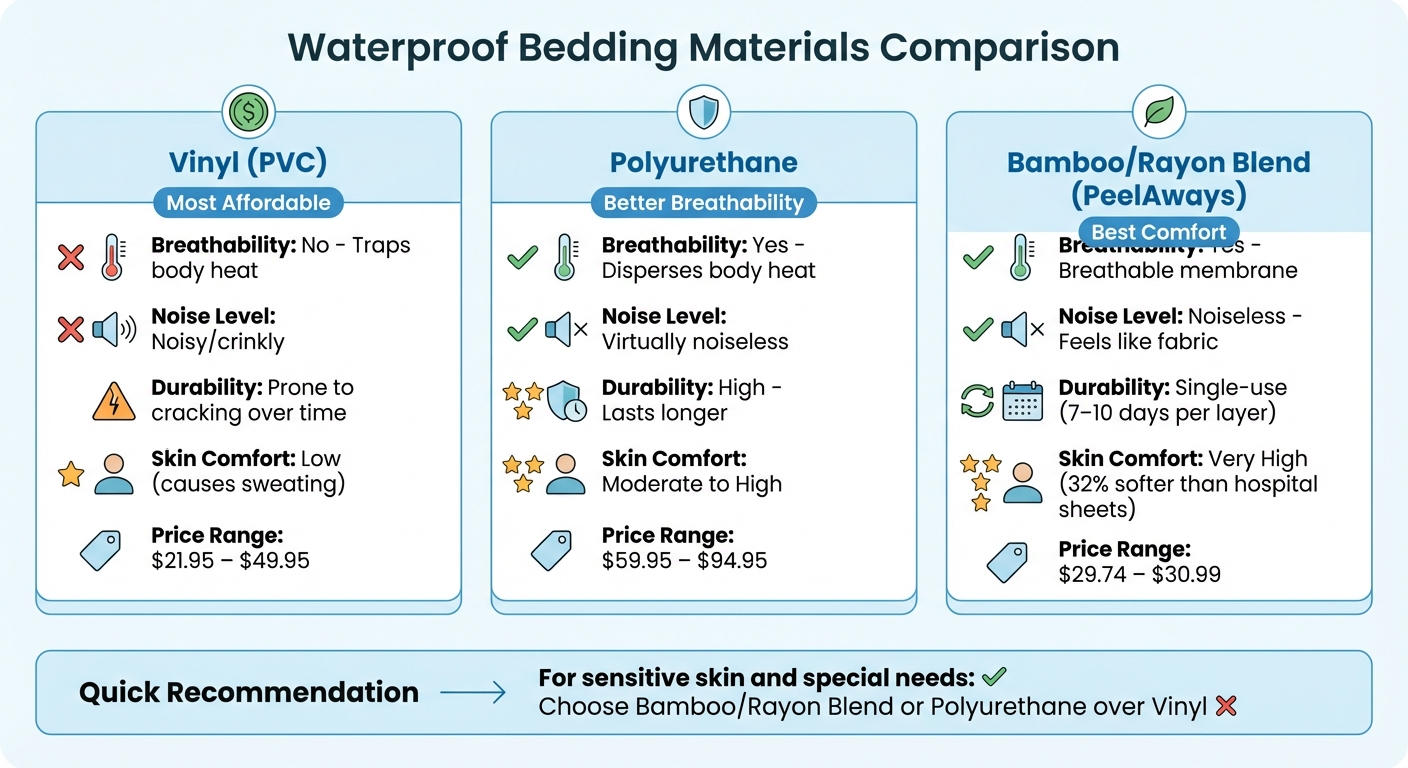
Waterproof Bedding Materials Comparison: Vinyl vs Polyurethane vs Bamboo Blend
Waterproof Material Options
When choosing waterproof materials, it’s all about finding the right balance between protection, breathability, and comfort. Let’s break it down:
- Vinyl (PVC): This is the most budget-friendly option and offers 100% waterproof protection. But here’s the catch - it doesn’t breathe. Vinyl traps body heat, reflecting it back to the sleeper, which can make for a sweaty and uncomfortable night’s rest. To top it off, vinyl tends to be noisy and crinkly, which can be especially bothersome for those with sensory sensitivities [5].
- Polyurethane (also called urethane or PUL): If you’re after better breathability, polyurethane is a great alternative. Unlike vinyl, it disperses body heat instead of trapping it. It’s also quieter and more durable, making it a solid choice for anyone who values a cooler, more peaceful sleep environment [5].
- Bamboo, rayon, and polyester blends: These materials combine a waterproof membrane with a soft, fabric-like surface. For example, PeelAways uses this blend to craft sheets that are 32% softer than standard hospital sheets [4]. This option provides the waterproof protection you need while feeling as comfortable and breathable as regular bedding.
Here’s a quick comparison of these materials:
| Property | Vinyl (PVC) | Polyurethane | Bamboo/Rayon Blend (PeelAways) |
|---|---|---|---|
| Breathability | No; traps body heat | Yes; allows heat transfer | Yes; breathable membrane |
| Noise Level | Can be noisy/crinkly | Virtually noiseless | Noiseless; feels like fabric |
| Durability | Prone to cracking over time | High; lasts longer | Single-use (7–10 days per layer) |
| Skin Comfort | Low (can cause sweating) | Moderate to High | Very High |
| Price Range | $21.95 – $49.95 | $59.95 – $94.95 | $29.74 – $30.99 |
With this overview, you can weigh the pros and cons to find the material that works best for your needs.
Consider Comfort and Skin Sensitivity
For those with special needs or sensitive skin, comfort and safety are just as important as waterproofing. Vinyl barriers, while effective, can lead to sweating and irritation for long-term users. To avoid these issues, opt for bedding that disperses heat and is free from harsh chemicals like vinyl, PVC, phthalates, or fire retardants [4].
“Peelaways contain no Vinyl, PVC, Phthalates or fire retardants, making our products breathable, odorless and chemical-free” [1].
This hypoallergenic approach ensures a healthier sleeping environment without sacrificing waterproof protection.
Another factor to keep in mind is noise. For individuals with sensory processing challenges, the crinkling sound of traditional plastic covers can be disruptive. Modern waterproof bedding incorporates the protective barrier between fabric layers, eliminating that annoying plastic sound and creating a quiet, restful sleep environment [1].
Step 3: Focus on Hygiene and Caregiver Convenience
Disposable vs. Washable Bedding
Deciding between disposable and washable bedding can make a big difference in your daily caregiving routine. Washable sheets require removing the bedding, lifting the patient, and running multiple laundry cycles - a time-consuming and physically demanding process. On the other hand, disposable bedding eliminates these extra steps.
Here’s a quick comparison to show how disposable bedding stacks up against traditional washable options:
| Feature | Disposable Multi-Layer (PeelAways) | Traditional Washable Bedding |
|---|---|---|
| Reusability | Single-use layers; discard after soiling | Needs washing and drying after every incident |
| Caregiver Effort | Minimal; peel and toss in under 60 seconds | High; involves stripping, lifting, laundering, and remaking the bed |
| Hygiene | Excellent; fresh, sterile layer every time, no cross-contamination | Depends on how thoroughly it's washed and the detergent used |
| Cost | $30.99–$53.99 per multi-layer set | Lower upfront cost but higher ongoing expenses for water, electricity, and labor |
| Comfort | Soft bamboo/rayon blend | Varies; some materials may feel bulky or noisy, especially with vinyl layers |
Caregivers managing incontinence often face up to 15 loads of laundry per week when using traditional bedding. Switching to disposable options like PeelAways can eliminate this exhausting chore entirely [2]. The multi-layer design adds even more convenience.
Benefits of Multi-Layer Bedding
PeelAways’ patented multi-layer system simplifies the process of changing sheets. Instead of removing and replacing the entire bed covering, you just peel off the soiled layer to reveal a fresh, clean one underneath [6]. No heavy lifting, no struggling with fitted corners.
Each layer is equipped with a 100% waterproof barrier, preventing fluids from leaking through to the next layer or the mattress. This ensures there’s no cross-contamination [1]. With 5 to 7 layers available on the bed at once (depending on the size), PeelAways provides weeks of ready-to-use bedding. This design allows caregivers to change sheets without disturbing the patient, reducing physical strain and lowering the risk of back injuries.
"PeelAways maintains sanitation for urinary conditions, conserves resources, and keeps the room odorless." – LaVora B., Verified Buyer [6]
The product has earned a 4.8/5 average rating from over 8,000 customers, with 95% of users recommending it [2][6]. One caregiver, Jalene Stanger, shared her experience:
"These have saved my sanity! With 2 incontinent special needs teenagers... No more 15 loads of laundry and wet mattresses!" [2]
This combination of hygiene, ease of use, and time savings makes multi-layer disposable bedding a game-changer for caregivers.
sbb-itb-45288fe
Step 4: Choose Features That Fit Your Situation
Features for Special Needs
When selecting waterproof bedding for special needs, look for materials that go beyond basic functionality. Opt for bedding made with innovative fiber blends or polyurethane barriers instead of noisy vinyl - this ensures a softer, quieter experience. Materials like bamboo-blend fibers or breathable membranes are excellent choices as they allow airflow while effectively blocking liquids. To prevent bedding from bunching or slipping, choose fitted designs or sheets with straps.
If sensitive skin or allergies are a concern, prioritize hypoallergenic options. Steer clear of bedding that contains vinyl, PVC, phthalates, or harsh fire retardants. Matching these thoughtful material choices with the correct size ensures both comfort and performance, making them ideal for special needs scenarios. These features not only improve comfort for users but also make routine changes much easier for caregivers.
PeelAways Sizes and Layer Options

PeelAways provides bedding in a variety of sizes to suit different needs: Crib (52" x 28"), Cot (75" x 30"), Twin (75" x 39"), Twin XL (80" x 39"), Full (75" x 54"), Queen (80" x 60"), and King (80" x 78"). Each size is tailored to specific mattress depths - Crib and Cot fit up to 6 inches, Twin XL fits up to 9 inches, and Full, Queen, and King fit up to 12 inches.
The number of layers varies by size to accommodate different usage needs. Most sizes come with 5 layers, but Cot and Twin XL options include 7 layers. These 7-layer versions are particularly useful, as they can extend the time between full bedding replacements - each layer can last 7 to 10 days if it remains unsoiled [1]. The Twin XL size is especially versatile, fitting standard hospital beds and working in pairs for Split King mattresses. For deeper mattresses, combining PeelAways with simple sheet clips or straps ensures a snug and secure fit, making them even more practical for caregivers.
Checklist for Choosing Waterproof Bedding
Here’s a quick rundown to help you pick the right waterproof bedding that suits your needs.
1. Confirm the mattress size and depth: Make sure the bedding fits your mattress snugly. Crib and cot mattresses typically fit up to 6 inches deep, Twin XL mattresses up to 9 inches, and full, queen, and king sizes up to 12 inches deep [1]. A proper fit prevents issues like bunching, slipping, or irritation.
2. Evaluate the material: Comfort and breathability matter. Choose a bamboo-blend barrier instead of vinyl for a cooler, quieter sleep. Look for bedding free of vinyl, PVC, phthalates, and fire retardants - especially important for those with sensitive skin. Also, consider absorbency; a high-quality pad that can hold up to 6 cups of liquid [3] offers excellent overnight protection.
3. Consider caregiver convenience: Products like disposable multi-layer sheets (e.g., PeelAways) make life easier. They allow you to change bedding in under 60 seconds without lifting the mattress or disturbing the sleeper [1]. Each layer can last 7–10 days if unsoiled, cutting down on laundry and simplifying daily care routines.
4. Check for secure fit features: Bedding with deep pockets or fitted designs works best. For deeper mattresses, sheet straps or clips can help keep everything in place. To ensure reliability, look for products with ratings of 4.5 stars or higher from verified buyers.
Related Articles
Looking for more advanced caregiving tips? Check out these resources:
- How to Simplify Caregiving with Multi-Layer Bedding: Learn how multi-layer bedding can make life easier by simplifying sheet changes and cutting down on laundry. This guide also shares techniques to avoid lifting patients during bedding changes.
- Top Benefits of PeelAways for Incontinence Management: Discover how waterproof, disposable bedding helps manage incontinence effectively, control odors, protect skin health, and reduce nighttime stress.
- A Caregiver's Guide to Maintaining Hygiene with Ease: Get practical hygiene tips using waterproof bedding, including advice on disposal, proper sheet placement, and avoiding common problems like bunching or slipping.
FAQs
What makes bamboo-blend waterproof bedding better than vinyl?
Bamboo-blend waterproof bedding brings together comfort, durability, and reliable protection in one package. Crafted from fibers sourced from the fast-growing bamboo plant, these sheets are an eco-conscious choice. They’re not just soft and luxurious but also naturally hypoallergenic - making them an excellent option for anyone with sensitive skin or allergies. Plus, bamboo's moisture-wicking abilities help keep you cool and dry throughout the night, offering a silky-smooth feel that enhances your sleeping experience.
On the other hand, while vinyl protectors are effective at keeping liquids at bay, they often fall short in comfort. They can feel stiff, trap heat, and lack proper breathability, which might lead to discomfort during extended use. Opting for bamboo-blend bedding gives you the best of both worlds - dependable leak protection paired with temperature regulation, softness, and a skin-friendly touch that vinyl just can’t match.
How can multi-layer disposable bedding make caregiving easier for individuals with special needs?
Multi-layer disposable bedding offers a convenient way to make caregiving less demanding. With its peel-away layers, caregivers can simply remove a soiled top sheet to reveal a fresh, waterproof layer underneath. This eliminates the hassle of lifting heavy mattresses or constantly washing bedding, saving both time and energy.
Beyond convenience, this design also promotes better hygiene. By reducing the chance of cross-contamination, it provides a cleaner and safer environment for individuals dealing with bedwetting, incontinence, or other special care needs. It's a straightforward and efficient option for managing these challenges with less stress.
How do I choose the right size waterproof bedding?
To find the right size waterproof bedding, start by measuring your mattress. Match the fitted sheet or protector to your mattress's exact length and width. Standard U.S. mattress sizes are:
- Twin: 38 × 75 inches
- Full: 54 × 75 inches
- Queen: 60 × 80 inches
- King: 76 × 80 inches
Also, don’t overlook the mattress depth. Many mattresses range between 10–14 inches, so you might need a deep-pocket option to ensure a snug and secure fit.
Getting the right fit matters for both comfort and protection. Bedding that’s too small can leave parts of the mattress exposed, while oversized bedding may bunch up or shift during sleep. If you have a thicker mattress, like a pillow-top or an adjustable bed, look for protectors designed with extra depth. For caregivers or those managing special needs, disposable peel-away bedding systems, such as Peelaways, offer a practical solution. These systems are available in all major U.S. sizes and allow you to maintain cleanliness without the hassle of lifting the mattress or doing loads of laundry.
Comments
0



SAVE MONEY & WATER
Professionals & Institutions save a fortune on labor/laundry.

SUPERIOR COMFORT
The first thing our customers notice is how soft our sheets are.

100% WATERPROOF
Each layer is 100% Waterproof, perfect for spills and accidents

SAVE TIME
Change the sheet in under 1 minute without stripping the bed.

Leave a comment