
How to Choose the Right Incontinence Product: Step-by-Step Decision Framework

Picking the right incontinence product is essential for staying comfortable, protecting your skin, and managing leaks effectively. With 25 million Americans experiencing incontinence, the process can feel overwhelming. Most people try seven products before finding the right fit. This guide simplifies the decision into six actionable steps: assess your needs, match absorbency, ensure proper fit, select skin-friendly materials, choose caregiver-friendly options, and test before buying in bulk. By following these steps, you can minimize trial-and-error, save time, and maintain confidence.
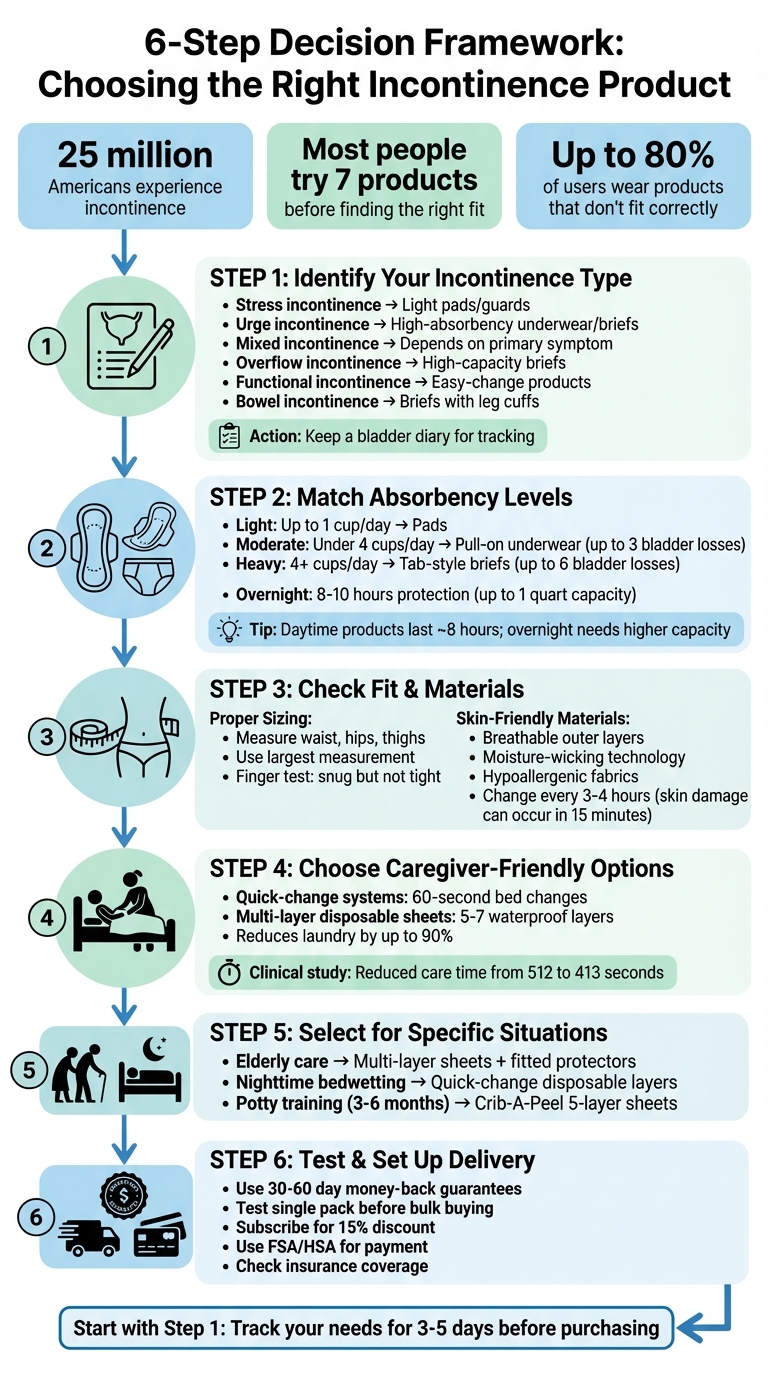
6-Step Framework for Choosing the Right Incontinence Product
Part 1 of 4 - How to choose the right continence product
sbb-itb-45288fe
Step 1: Identify Your Incontinence Type and Daily Needs
Before choosing a product, it’s important to understand your leakage pattern and how it impacts your daily life. In the United States, around 25 million people experience some form of urinary incontinence. Knowing whether you deal with stress, urge, overflow, functional, or bowel incontinence can help narrow down your options.
What are the different types of incontinence?
Different types of incontinence require different approaches. Here’s a quick breakdown:
- Stress incontinence: This type causes small leaks during activities like coughing, sneezing, or lifting. Light products, such as bladder control pads or male guards, are typically enough to manage it.
- Urge incontinence: Also known as overactive bladder, this involves a sudden, intense need to urinate, often leading to large leaks or full voids. Products with higher absorbency, like protective underwear or adult briefs, are ideal here.
- Mixed incontinence: A combination of stress and urge symptoms. Your product choice will depend on which symptom is more frequent or troublesome.
- Overflow incontinence: When the bladder doesn’t empty completely, causing dribbling. High-capacity briefs or specialized devices are usually required.
- Functional incontinence: Physical or cognitive challenges, such as arthritis or dementia, make it difficult to reach the bathroom in time. Products that are easy for caregivers to change work best.
- Bowel incontinence: This involves involuntary stool leakage. Look for adult briefs with features like leg cuffs and channel guards to prevent leaks.
Keeping a bladder diary for a few days can help you track the timing, amount, and triggers of leaks. This simple tool provides valuable insight into your specific needs, making it easier to find the right product.
How do daily activities affect product choice?
After identifying your incontinence type, think about how your daily routine impacts product performance. Mobility and lifestyle play a big role in finding the right fit:
- If you’re active, pull-ups (protective underwear) are a great option. They resemble regular underwear, offering comfort, discretion, and freedom to move.
- For work or social settings, look for slim, quiet products with odor-neutralizing features to maintain confidence.
- If you have limited mobility or are bed-bound, tabbed adult briefs are more practical. They allow for easier changes without needing to remove clothing.
Many people find that combining products works best. For example, you might use discreet pull-ups or pads during the day and switch to high-absorbency tabbed briefs with leak guards for overnight protection. For long trips or outings, disposable products are convenient, and supplemental underpads can protect car seats or furniture.
"The right product should fit your daily routine without getting in the way." – APA Medical
It’s also important to consider skin health. If you spend extended periods seated or lying down, choose products with moisture-wicking properties and use barrier creams to prevent skin irritation. Skin can become compromised in as little as 15 minutes after exposure to moisture from incontinence. Testing different products based on your routine can help you find the most effective option before committing to a bulk purchase.
Step 2: Match Absorbency Levels to Your Needs
Finding the right absorbency level is all about aligning your product choice with the amount of leakage and the duration of protection you require. Light incontinence typically involves up to 1 cup of urine per day, moderate incontinence ranges under 4 cups, and heavy incontinence exceeds 4 cups daily. Choosing the wrong absorbency level can lead to frustration - research shows many people select products that don't fully meet their needs.
How do you determine the right absorbency level?
Start by observing and tracking your leakage patterns over a few days. For smaller leaks, minimal absorbency products will suffice, while heavier leaks require products designed for sustained absorption. If you experience full bladder voids or frequent accidents, heavy-absorbency tab-style briefs are your best bet, as they can handle up to six full bladder losses.
The style of the product is just as important as its absorbency. Here’s a quick breakdown:
- Pads: Ideal for light to moderate leakage.
- Pull-on underwear: Suitable for moderate to heavy leakage, managing up to three full bladder losses.
- Tab-style briefs: Offer maximum protection, covering both urinary and fecal incontinence needs.
If you find that your current product doesn’t last as long as needed, booster pads can be added to increase capacity without switching products. However, keep in mind that product design can influence how much liquid it can handle.
"Modern incontinence products (regardless of size) have wicking technology that draws moisture away from the skin. If there's a choice between fit and absorbency level, always choose fit." – Chad Birt, Medical Writer
For daytime use, heavy-absorbency products are typically designed to last up to 8 hours. Look for super-absorbent polymers in the product description - these not only lock away liquid but also neutralize odors. To avoid bulk purchases of ineffective products, start with sample packs to test what works best for your needs and use a checklist for streamlining incontinence care tasks to stay organized..
Once you’ve identified your daily needs, it’s time to think about how nighttime protection may require an even higher level of absorbency.
What protection do you need for overnight use?
Nighttime protection goes beyond daytime requirements, as it needs to last longer and handle larger volumes. Overnight products are specifically designed for extended use, offering absorbency levels that support 8 to 10 hours of sleep. Some overnight briefs can hold up to one quart of liquid. If you typically change products every 5 hours during the day but sleep for 8 hours, you’ll need a product with greater capacity to avoid nighttime disruptions.
Tab-style briefs are a popular choice for overnight use, especially for individuals with heavy incontinence or limited mobility. These briefs allow for a customizable fit, reducing the risk of leaks caused by gaps. For those who are more mobile and prefer the feel of regular underwear, pull-ups are another option, though they may not offer the same absorbency as briefs. Additionally, active sleepers may benefit from the secure fit of briefs or protective underwear, as adhesive elements on other products can shift during sleep.
"Needing fewer changes in the middle of the night can also lead to improved quality of life, as you will have more nights of uninterrupted sleep." – Tranquility Products
If you wake up to wet sheets, the problem might be more about fit than absorbency. A snug but comfortable fit is crucial to prevent leaks and skin irritation. As with daytime products, testing overnight options in small quantities can help you find the right balance of absorption and comfort. For added protection, pair high-absorbency overnight briefs with waterproof bedding solutions like PeelAways disposable bed sheets. This combination safeguards both you and your mattress while making cleanup simpler.
Step 3: Check for Proper Fit and Skin-Friendly Materials
Once you've matched absorbency to your needs, the next step is ensuring the product fits properly and is made from materials that are gentle on your skin.
The right fit and materials work hand in hand to prevent leaks and protect your skin during extended use. Surprisingly, up to 80% of users may be wearing products that don't fit correctly or are made from unsuitable materials, leading to discomfort, skin issues, and wasted money.
Why does proper sizing matter?
Even the most absorbent products can fail if they don’t fit well. Liquids tend to follow the path of least resistance, so gaps around the leg openings can result in leaks. To find the right size, measure your waist (just below the belly button), hips, and thighs using a flexible tape measure. Use the largest measurement to determine your size from the product's size chart. When wearing the product, slide a finger under the elastic at the legs - it should feel snug but not overly tight.
Avoid relying on your clothing size, as absorbent briefs tend to sit higher on the body, and sizing can vary between brands. Check for red marks or indentations after use, as these can indicate that the product is too tight. If you're between sizes, start with the smaller size, as oversized products often lead to leakage around the legs. For tab-style briefs, the tabs should fasten near your hips; if they meet in the center, the product is likely too large.
"A simple way to ensure a secure fit is to run a finger lightly underneath the elastic around both legs. If the opening is snug – not too loose or overly tight – it usually indicates a comfortable and leak-free fit." – NorthShore Care Supply
When testing for overnight use, lie down to ensure no gaps form, as leaks can occur when you're horizontal. Also, keep your muscles relaxed while measuring to avoid inaccuracies; tense muscles can throw off measurements by up to an inch. Once you've nailed the fit, it’s time to focus on the materials that will keep your skin healthy.
What materials help prevent skin irritation?
Breathable and skin-friendly fabrics are essential for avoiding incontinence-associated dermatitis (IAD), which affects 18% to 45.7% of people dealing with incontinence. Look for products with breathable outer layers or membranes that promote airflow while preventing leaks . These materials help regulate the microclimate - the temperature and humidity between your skin and the product - which is crucial for reducing irritation and pressure-related injuries.
For those with sensitive skin, hypoallergenic or natural fabrics are great options to minimize the risk of rashes or other skin issues. Moisture-wicking technologies, like Multi-Void Protection (MVP™), can pull liquid away from the skin and keep you dry even after multiple wettings . Soft fabrics also help reduce chafing and skin abrasion .
To further protect your skin, pair absorbent products with pH-balanced cleansers and barrier creams containing zinc oxide, lanolin, or petrolatum. These products help maintain your skin's natural acidity, which is especially important since ammonia in urine can weaken your skin's protective barrier . Always pat your skin dry with a soft cloth instead of rubbing, as friction can cause additional damage . Zinc oxide is particularly helpful for soothing irritated or red skin . Change products immediately after they become soiled or every three to four hours to avoid prolonged exposure to moisture. For added mattress protection, PeelAways disposable bed sheets offer an easy-to-use waterproof solution.
Step 4: Choose Products That Save Time and Effort
Once you've ensured a proper fit and skin-friendly materials, the next step is finding products that make caregiving easier. Products with quick-change designs and multi-layer disposable systems can significantly reduce the physical demands of care. They save time on bed changes, cut down laundry by up to 90%, and help caregivers work more efficiently - all while maintaining the care recipient's comfort and dignity.
How do quick-change products ease the workload for caregivers?
Quick-change systems are designed to address spills and accidents immediately, removing some of the toughest parts of incontinence care. For example, products like multi-layer disposable sheets eliminate the need to lift heavy mattresses. PeelAways, for instance, feature 5–7 waterproof layers that can be peeled back in under 60 seconds to reveal a clean surface. This "no-lift" design is a game-changer for caregivers dealing with back pain or physical challenges, as it reduces repetitive strain.
"My parents can change their sheet in the middle of the night on their own without any aid and go back to bed."
Carol Suchman, the creator of PeelAways, highlights how these products empower individuals to handle nighttime accidents independently. This quick-change setup allows the bed to be restored swiftly, ensuring the care recipient can return to sleep without prolonged interruptions. Beyond convenience, these products also enhance infection control by reducing cross-contamination risks in both home and clinical environments.
Why choose multi-layer disposable systems?
Multi-layer systems offer a fully waterproof barrier and allow each layer to be used for several days (typically 7–10 days under normal conditions) before peeling it away. Studies show these systems can make caregiving more efficient. For example, one clinical study found that using an integrated incontinence management system reduced average care episode time from 512.2 seconds to 413.1 seconds. It also improved proper skin cleansing with wipes to 97% of episodes, compared to 77% with standard care.
For caregivers handling heavy incontinence, these systems minimize trips to grab forgotten supplies or extra bedding.
"They said it is more convenient to use than sheets, less washing, just peel off soiled layer and throw out."
Kalahiki Jr. Samuel shared this perspective, emphasizing the ease of use. By combining quick-change features with multi-layer designs, caregivers can handle both routine and unexpected situations more efficiently. These products are especially helpful during travel or in temporary care settings where laundry access may be limited or unavailable.
Step 5: Select Products for Your Specific Situation
Choosing the right products can make all the difference when addressing specific needs like elderly care, nighttime bedwetting, or potty training. Each situation calls for tailored solutions to ensure comfort, convenience, and hygiene. Here's how to approach each scenario.
What products work for elderly incontinence care?
When caring for elderly individuals, it’s essential to prioritize ease of use and skin health. Products that simplify bed changes without lifting the patient are especially helpful. Multi-layer disposable sheets, such as PeelAways, offer a practical solution. These sheets include 5–7 waterproof layers that can be peeled away in under a minute, revealing a fresh, clean layer. Made from a bamboo-blend fabric, they provide a soft, breathable surface that’s gentler on the skin compared to traditional waterproof bedding.
For comprehensive protection, pair a waterproof and hypoallergenic bedding with a disposable top layer. If the individual spends prolonged periods in bed, quilted mattress covers can add cushioning and breathability while maintaining a waterproof barrier. Look for products free from PVC, vinyl, and phthalates to minimize heat retention and reduce the risk of skin irritation. PeelAways, with over 12,000 satisfied customers and a 4.61/5 rating, has become a trusted choice for families managing elderly incontinence care.
How do you handle nighttime bedwetting?
Nighttime bedwetting requires products that offer waterproof protection and quick-change convenience. Multi-layer disposable sheets are ideal for this purpose. Instead of dealing with middle-of-the-night laundry, you can simply remove the soiled layer to reveal a clean, dry surface underneath. This method allows everyone to get back to sleep faster without the hassle of stripping and remaking the bed.
"As a mom and a caregiver, these sheets have been a great addition to make my day easier. quicker bed changes and less laundry. WIN"
Brooklyn Shields, a mom and caregiver, highlights how these sheets simplify her routine. When selecting sheets, use size finder tools to ensure a snug fit. For Split King beds, for example, two Twin XL multi-layer sheets work perfectly. These sheets not only protect the mattress with their waterproof barrier but also ensure the sleeper stays comfortable with their breathable fabric.
What works best for potty training accidents?
Potty training often involves frequent accidents, so having the right products can ease the process. Crib-A-Peel multi-layer sheets are an excellent choice for cribs and toddler beds. Designed with 5 waterproof layers, these sheets allow parents to quickly tear away the soiled layer without removing all the bedding. This feature is particularly useful during the 3 to 6 months it typically takes for toilet training.
"Best product I've ever used! ... They were so easy to use, comfy, and never leaked! Highly recommend!"
Diana L. Magda shared her positive experience with these sheets. The soft, breathable material helps protect a child’s skin, while the waterproof layers safeguard the mattress. For added protection, consider placing a plastic sheet or waterproof protector beneath the bed sheet. This extra layer helps keep the mattress clean during the transition to underwear.
Step 6: Test Products and Set Up Regular Delivery
Before committing to bulk purchases, it’s smart to test products to ensure they meet your needs in terms of fit, absorbency, and convenience. Using money-back guarantees and subscription services can save you time and money while reducing the stress of maintaining a consistent supply. This step helps ensure that the products you choose work well for you and remain accessible.
How Can You Test Products Before Buying in Bulk?
Money-back guarantees are an excellent way to try products without financial risk. Many brands offer trial periods - some as long as 60 days - allowing you to test a product’s performance. To qualify for a refund, keep your original store receipt and the UPC barcode from the packaging.
For example, PeelAways offers a 30-day money-back guarantee, giving you the chance to test their multi-layer disposable sheets under everyday conditions. This trial lets you confirm key features like proper mattress fit, waterproof protection, and the convenience of 60-second bed changes. Start with a single pack to ensure the sheets meet your needs before ordering in bulk. This method minimizes risk while helping you find the right bedding solutions for incontinence care.
Once you’ve confirmed that a product works for you, setting up a subscription can make managing your supply much easier.
How Do Subscriptions Save Money and Time?
Subscriptions take the hassle out of reordering by ensuring that essential products are delivered to your door on a regular schedule. PeelAways, for instance, offers a 15% discount on subscription orders, which can lead to substantial savings over time. Products arrive in plain, unmarked packaging, maintaining your privacy and eliminating the need for in-person shopping.
"With APA's program, you never have to worry about making extra trips or explaining your needs in public. Supplies are shipped in plain, unmarked packaging, refilled on a regular schedule, and delivered right to your door".
Most subscription services allow flexibility, letting you adjust delivery frequency, product quantity, or type as your needs evolve. Additionally, check if your insurance covers incontinence supplies; many providers collaborate with doctors to determine eligibility, often at little to no cost. PeelAways subscriptions are also eligible for payment through Flexible Spending Accounts (FSA) or Health Savings Accounts (HSA), making them even more affordable. Subscriptions ensure a steady, hassle-free supply, making it easier to manage your daily care routine.
Conclusion
Finding the right incontinence product doesn’t have to be overwhelming. By carefully evaluating your needs - considering the type of leakage, absorbency requirements, fit, and specific lifestyle factors - you can take control and manage incontinence effectively. This approach transforms a potentially daunting task into a clear, step-by-step process tailored to your care.
The importance of this choice can’t be overstated. Studies show that up to 80% of people are using products that don’t fully meet their needs. This can result in discomfort, skin issues, and a sense of frustration. Starting with an accurate assessment - like keeping a bladder diary for a few days - can help you decide whether you need something as light as a pad or as absorbent as briefs. Measuring your waist and hips ensures you get the right size, which is crucial for both effectiveness and comfort.
For protecting bedding, PeelAways disposable sheets offer a practical solution. They allow for quick, 60-second bed changes, provide full waterproof protection, and can cut laundry efforts by up to 80%. Plus, with a 30-day money-back guarantee and a 15% subscription discount, they’re an affordable way to simplify care while maintaining dignity.
It’s always smart to test with a single pack before committing to larger purchases. This lets you confirm that the product meets your comfort and performance expectations without unnecessary expense.
The right products can make a noticeable difference in your daily life. By combining thoughtful product selection with solutions tailored to your needs, you can manage incontinence with confidence. This not only protects your skin and reduces caregiver stress but also helps you maintain dignity and independence that are so important.
FAQs
How do I know if leaks are a fit issue or an absorbency issue?
When dealing with leaks, the first step is to examine the product's fit. Gaps around the legs or bunching can lead to leaks, even if the absorbency is adequate. If the fit seems correct but leaks continue, the issue might be related to absorbency. Make sure the product isn’t too tight or too loose - either can interfere with its ability to contain leaks properly, no matter how absorbent it is.
What should I do if I’m between sizes for briefs or pull-ups?
If you’re stuck between sizes, take the time to measure your waist, hips, or thighs accurately. This will help you find the best fit. Refer to the manufacturer's sizing chart for guidance - don’t rely on guesswork. A proper fit is key to avoiding leaks, irritation, and discomfort. If you’re still unsure, start with the size closest to your measurements and adjust as needed for comfort.
How can I protect my skin if I have to wear products for hours?
To keep your skin healthy while using incontinence products for long periods, it's important to take a few key steps. Change the products often to prevent moisture from building up, as this can lead to irritation. After any incidents, gently clean and dry the area right away using mild soap and a soft cloth or gentle wipes. You can also apply a skin barrier cream, like petroleum jelly or zinc oxide, to create a protective layer. This helps guard your skin against moisture and irritants while minimizing friction and potential damage.
Related Blog Posts
Comments
0



SAVE MONEY & WATER
Professionals & Institutions save a fortune on labor/laundry.

SUPERIOR COMFORT
The first thing our customers notice is how soft our sheets are.

100% WATERPROOF
Each layer is 100% Waterproof, perfect for spills and accidents

SAVE TIME
Change the sheet in under 1 minute without stripping the bed.

Leave a comment