
Caregiver Guide to Incontinence Conversations

It’s 2 a.m. The sheets are soaked again. Your loved one is embarrassed, your back hurts, and you have to be up in four hours. If that scene feels familiar, you do not need more fluff. You need a calmer way to talk about what is happening before the next wet bed forces the issue.
A 60-second bed change can replace the 15–20 minutes a full sheet change often takes. For many families, the right talk starts with three things: less shame, a simple overnight plan, and backup bedding that cuts laundry by 50–80%. That is why products like PeelAways stand out: 5–7 waterproof layers per set, sizes from crib to king, and 28,000+ verified reviews with a 4.8-star rating.
- Talk in private, during the day, not during a 2 a.m. cleanup
- Use plain words like sleep, comfort, bathroom trips, and leaks
- Focus on one next step, not a full overhaul
- If you use diapers or incontinence pads, add bed protection too
- Look for bedding that saves time, cuts laundry, and protects dignity
This is the short version I wish someone had given me sooner.
Moving Beyond the Leakages: Practical Strategies to Manage Incontinence
Why this problem hits harder than people expect
Night leaks are not just about wet sheets.
They steal sleep.
They add laundry.
They wear down your back.
And they can make the person you love feel ashamed in their own bed.
That is why the conversation matters.
Not to point out a problem.
To lower the stress around it.
When I think about these talks going well, I think about tone first. If you sound frustrated, they hear blame. If you sound calm, they hear care.
A few lines that usually land better:
- “I want us both to sleep better.”
- “Can we make nights easier?”
- “I think we need something that makes cleanup less stressful.”
Short. Plain. No lecture.
What to look for before buying
If nighttime leaks keep getting through pads or briefs, bedding backup matters. A lot.
I would look for five things:
- Fast changes
- Waterproof protection
- Less lifting and mattress stripping
- Lower laundry load
- Sizes that fit your bed
That last one matters more than it sounds. If it does not fit well, it shifts. And if it shifts, you are back to a full bed change.
PeelAways
This is the product I would point to if you are trying to make one hard talk easier.
PeelAways is a layered waterproof fitted sheet. When the top layer gets wet or soiled, you peel it away and there is a clean layer under it.
That means:
- about 60 seconds for a bed change
- 5–7 waterproof layers
- sizes from crib to king
- 50–80% less laundry for many homes
- 28,000+ verified reviews
- 4.8-star rating
And the part that matters most at 2 a.m.?
You are not remaking the whole bed in the dark.
You are not dragging out another full sheet set.
You are not turning one accident into a 20-minute ordeal.
You can also check the Amazon listing for PeelAways if that is easier.
If you want more detail, these pages help:
Tagline: Making aging and caregiving easier, one bed at a time
Quick comparison
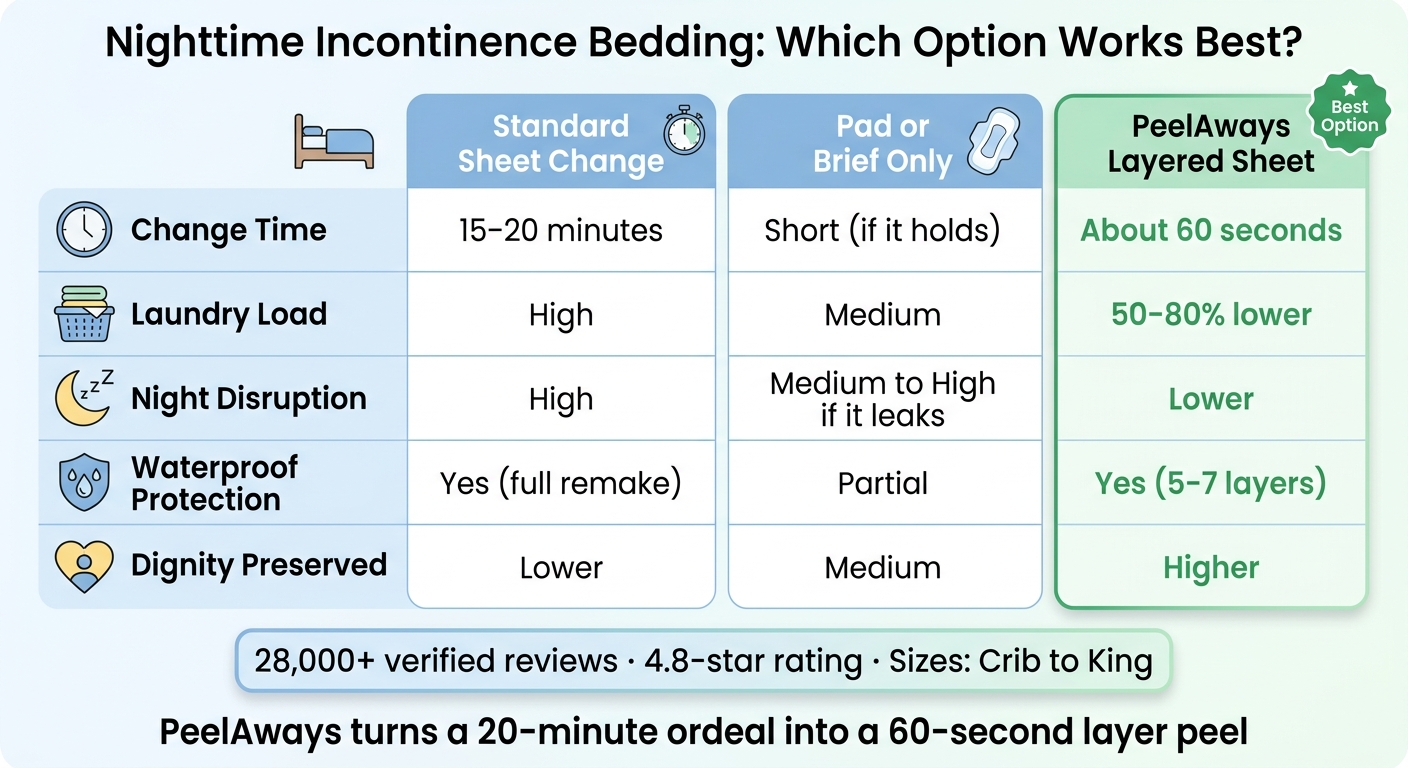
Standard Sheet Change vs. PeelAways: Nighttime Incontinence Bedding Comparison
| Option | Change time | Laundry load | Night disruption | Dignity |
|---|---|---|---|---|
| Standard sheet change | 15–20 minutes | High | High | Lower |
| Pad or brief only | Short if it holds | Medium | Medium to high if it leaks | Medium |
| PeelAways layered sheet | About 60 seconds | Lower | Lower | Higher |
sbb-itb-45288fe
FAQ
When should I bring up incontinence?
During a quiet daytime moment. Not while changing wet sheets. Privacy helps. So does rest.
What should I say first?
Start with sleep and comfort. Try: “I want us both to sleep better. Can we talk about what might help at night?”
What if my loved one denies there is a problem?
Do not argue. Stick to what you see. “I’ve noticed nights have been harder lately.” Then stop there and give it room.
Should I talk about bedding right away?
Yes, if leaks are already reaching the bed. If you use diapers or incontinence pads, bed backup should be part of the plan.
Why does PeelAways help so much at night?
Because it turns a full bed remake into a fast layer change. About 60 seconds instead of 15–20 minutes.
Where can I buy PeelAways?
You can buy it on the shop page or through the Amazon listing.
Bottom line
The hardest part is often not the cleanup.
It is starting the talk without making someone feel small.
Keep the conversation about sleep, comfort, and easier nights. Then back it up with something that cuts the work when leaks happen anyway.
For me, that is where PeelAways earns its place. 5–7 waterproof layers. About 60-second changes. Sizes crib to king. 28,000+ reviews and 4.8 stars. If you use diapers or incontinence pads, you need bed protection too.
Blog readers save 10% with code BLOGS10 at checkout. Available on peelaways.com and Amazon. Free shipping on orders over $100.
How to Prepare for a Sensitive Incontinence Conversation
It’s late. The bed needs changing again. Your loved one looks away, and you can feel that mix of shame, stress, and pure exhaustion hanging in the room. If you’re trying to talk about incontinence, timing matters more than most people think.
This conversation usually goes better before a hard moment forces it. Pick a calm, private time. Dignity matters just as much as fixing the mess. When the moment feels right, use words that help the other person stay at ease.
When and Where Should You Bring It Up?
Bring it up in a quiet daytime moment, not in the middle of a 2:00 a.m. bed change. Talk in a private space where neither of you feels rushed or exposed. It helps to frame the conversation around safety, sleep, and whether the current routine is still working.
"Talk before exhaustion or embarrassment takes over."
That kind of early conversation gives both of you room to think straight and make choices together. And honestly, that makes the next part a lot easier.
What Words Should Caregivers Use?
Keep your language neutral. Say bathroom, leaks, and sleep quality. Focus on what’s happening and what might help, not on fault or shame.
Lead with comfort.
Lead with sleep.
Lead with dignity.
Not the accident.
A small shift in wording can change the whole tone. Instead of making it feel like a problem caused by someone, make it feel like a shared issue you can handle side by side.
How to Plan the Conversation Without Sounding Controlling
Before you talk, get clear on one or two practical goals. Maybe you want to track nighttime leaks. Maybe you want to check whether the bedding setup still works. Keep it simple.
Stay collaborative. You’re not there to take over. You’re there to solve a hard problem together, with as much calm and respect as possible.
How to Handle Denial, Embarrassment, and Pushback
It’s late. You’re tired. The bed needs changing again, and the last thing your loved one wants is another hard conversation. In moments like this, pushing harder usually backfires.
When a conversation stalls, don’t argue. Ease the tension first, then come back to what happens next. Lead with empathy, not a pile of facts, and keep the focus on making care easier and more dignified. You do not need full agreement in one talk. That’s often what keeps it from turning into a fight.
What to Say When a Loved One Denies There Is a Problem
When someone says nothing is wrong, begin with what you’ve seen. A simple, “I’ve noticed nights have been harder lately,” keeps the door open. It sounds like care, not blame.
Then shift to the day-to-day burden. Talk about repeated night changes, less laundry, and a faster cleanup. That helps move the conversation from a tense, general worry to plain routines you can solve together.
How to Stay Honest While Protecting Dignity
Keep your tone calm and even. Talk in private, where neither of you feels put on display. Incontinence is common, and many people put off asking for help because of shame. Clear honesty, paired with reassurance, keeps the conversation centered on care instead of embarrassment.
When to Pause and Come Back to the Conversation Later
If your loved one shuts down, gets angry, or looks humiliated, stop. Pausing is not giving up. It’s a smart move.
Come back later, during a calm moment when no one feels rushed. As Gregory Amend, M.D., Assistant Professor of Urology, Icahn School of Medicine at Mount Sinai, suggests:
"Asking questions that allow them to explain, in their own words, their life experience and concerns can help them to open up." - Gregory Amend, M.D., Assistant Professor of Urology, Icahn School of Medicine at Mount Sinai
A low-pressure opener like, “Can we talk about what’s working and what isn’t?” gives them some control. Once things settle, you can move into nighttime patterns, bathroom routines, and bedding needs.
What to Say About Nighttime Bedwetting, Bathroom Routines, and Bedding
It’s 2 a.m. again. The sheets are wet, your loved one is upset, and you’re standing there half-awake trying to fix everything without making them feel worse.
Once the conversation is open, move from feelings to the actual nighttime routine. Keep it practical. Focus on better sleep, easier mornings, and more dignity. Frame each idea around what helps both of you rest, not around accidents or cleanup.
How to Bring Up Nighttime Bedwetting Without Causing Shame
Start with what you’ve both already lived through: broken sleep, rushed mornings, and the stress of wet sheets in the middle of the night. That shared moment gives you a gentler way in. Instead of saying, "You wet the bed again," try:
"I want us both to sleep better. Can we talk about what might help at night?"
That lands very differently. It turns the talk into a shared problem, not a blame session.
From there, shift to the habits that shape the night.
Which Bathroom Routines Are Worth Discussing First?
Start with the bedtime routine you already have and look for one small change. Not five. Not a total overhaul. Just one thing to test for a week. Saying, "Want to try this for a week and see if it helps?" gives your loved one some control. It also keeps the change from feeling like independence is slipping away.
If mobility is limited, talk about ways to make overnight care easier without turning the whole night upside down. The goal is to help them stay in bed when possible and avoid a stressful full cleanup if a pad or brief leaks.
If leaks still happen, then bedding has to be part of the plan.
How PeelAways Makes 60-Second Bed Changes Possible
Even with a solid bedtime routine, leaks still happen. And that’s the part people outside caregiving often don’t see. A full 2 a.m. bed change the old way can wake your loved one up all the way and take 15 to 20 minutes.
PeelAways gives you another option. As Maxwell C., Founder of PeelAways, puts it:
"Peelaways is a disposable fitted sheet with 5 waterproof layers that can be changed in seconds - even while someone is still in bed."
That’s why so many tired families swear by it. You peel off the top wet layer and move on. No stripping the whole bed. No long reset in the dark. Just a fast, more private change that makes a rough moment easier.
How to Build a Long-Term Plan and Choose the Right Bedding Support
It’s 2am. The bed is wet again. Your shoulders are tight, your loved one is half-awake, and you’re trying to change everything without turning the whole night into a full-blown ordeal.
That’s why a long-term incontinence care plan needs to be simple. Not fancy. Not long. Just shared, clear, and easy to change when the routine stops working.
Start by tracking patterns. Notice when leaks happen. Look at what’s going on before bed. Pay attention to how often you’re doing overnight changes and how much laundry each night creates. Once you can see the pattern, you can turn it into a plain, usable care plan.
What to Include in a Simple Incontinence Care Plan
A good care plan doesn’t need pages of notes. It should cover bathroom timing, nighttime habits, and the bedding setup you’re relying on.
Keep a short log with the basics:
- How often leaks happen
- What seems to set them off
- How many overnight bed changes you’re doing
That small record can help when you talk with a doctor or when you need to change the routine because what used to work suddenly doesn’t.
Go back to the plan when nighttime disruptions start happening more often, or when bed changes begin to feel too hard to do safely. And if leaks keep breaking everyone’s sleep, the plan should include a faster way to change the bed.
The Next Best Step for Caregivers Today
If your nights still mean repeat wakeups or heavy lifting, the bedding matters more than most people realize. You need something that cuts down the work in the moment, not after the fact.
PeelAways multi-layer disposable sheets give you a clean layer in seconds, without stripping the whole bed or waking your loved one all the way up. I wish I had found something like this sooner. A full bed change can eat up 15 to 20 minutes when you’re exhausted. A peel-away layer changes that whole rhythm.
If you use diapers or incontinence pads, this kind of backup on the bed can make a hard night feel a little less impossible.
Write down the bedtime routine, the leak pattern, and the fastest change method you have. Then check the plan again after one week.
Comments
0



SAVE MONEY & WATER
Professionals & Institutions save a fortune on labor/laundry.

SUPERIOR COMFORT
The first thing our customers notice is how soft our sheets are.

100% WATERPROOF
Each layer is 100% Waterproof, perfect for spills and accidents

SAVE TIME
Change the sheet in under 1 minute without stripping the bed.

Leave a comment