
Caregiver Burnout: 15 Warning Signs & Practical Prevention Strategies

Caregiver burnout affects over 60% of caregivers, leaving them physically and emotionally drained. Symptoms include constant fatigue, irritability, and emotional detachment. Ignoring these signs can lead to serious health issues like depression and heart disease. Recognizing burnout early is key to protecting your well-being while ensuring you can continue providing care.
Quick Overview of Warning Signs:
- Persistent tiredness despite rest
- Increased irritability or anger
- Avoiding social activities
- Appetite or weight changes
- Sleep disturbances
- Frequent illnesses
- Emotional numbness or feelings of resentment
Preventing burnout starts with self-care. Simple steps like prioritizing rest, setting boundaries, and seeking support can make caregiving more manageable. Tools like PeelAways disposable bed sheets can also reduce physical strain, cutting laundry time by 50–80%. Remember, your health is essential for providing compassionate care.
Preventing Caregiver Burnout: Creating Your Self-Care Plan
sbb-itb-45288fe
15 Warning Signs of Caregiver Burnout
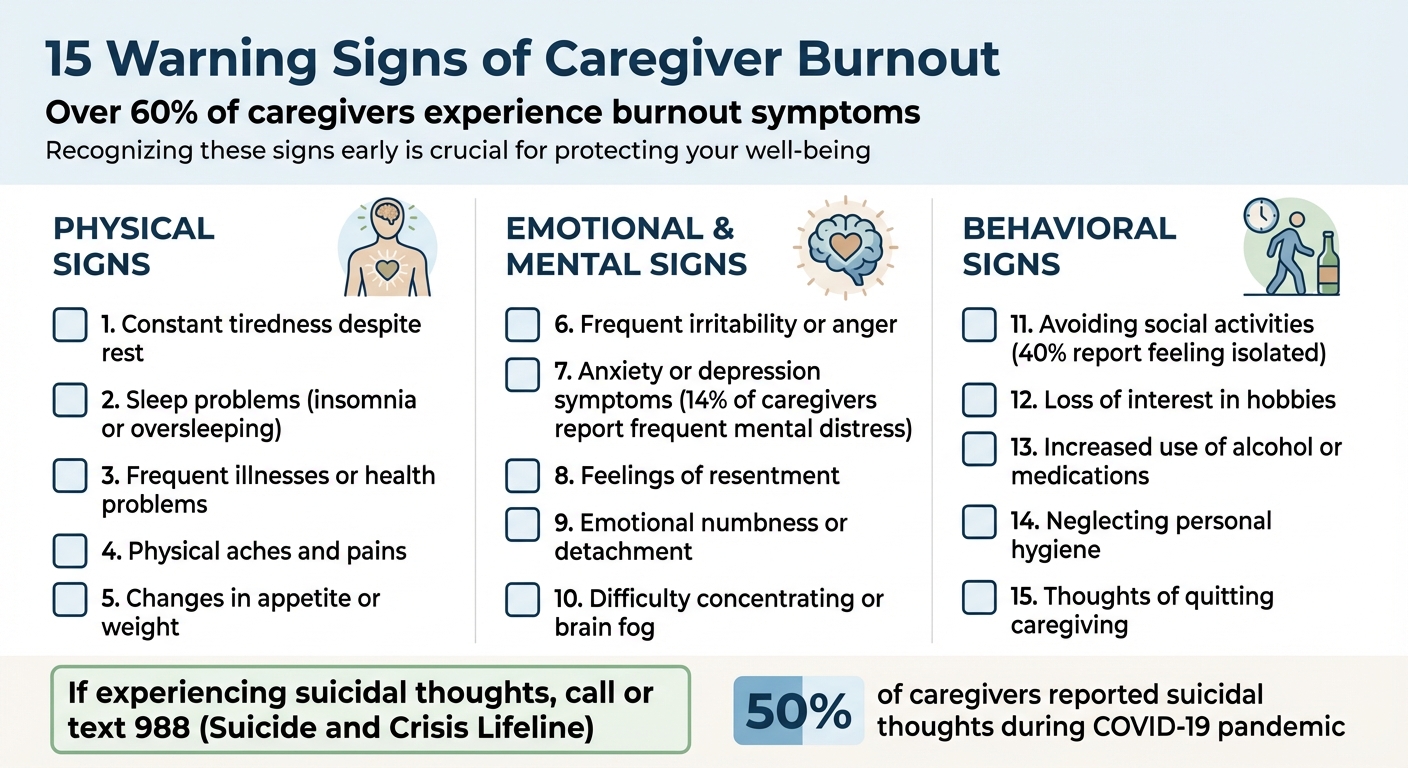
15 Warning Signs of Caregiver Burnout Checklist
Caregiver burnout can creep up on you, showing itself through constant exhaustion, emotional strain, and a mental fog that even rest can’t shake. These signs don’t appear overnight - they often build slowly, starting with occasional fatigue and growing into something much more serious. Spotting these warning signs early is crucial for protecting your well-being and ensuring you can continue to provide the care your loved one needs.
Burnout shows up in different ways. Physically, it might look like chronic tiredness, frequent headaches, or even catching colds more often because your immune system is taking a hit. Emotionally, you might feel persistently sad, anxious, or irritable, even snapping at others or feeling resentful about caregiving. Mentally, you might struggle to focus, forget things, or feel like your brain is in a fog, making everyday tasks harder. Utilizing specialized bedding solutions can help simplify these daily chores.
Your behavior can also change. You might start avoiding friends, neglecting your own hygiene, or turning to alcohol or medication as a way to cope. As Cynthia Epstein-Smith, a Licensed Clinical Social Worker at NYU Langone, puts it:
"There's no blood test for burnout. It's a chameleon - it shows up as depression, or apathy, or acting out, or being irritable, or abusing alcohol or any number of symptoms".
In severe cases, you might feel emotionally numb - what some call compassion fatigue - or even trapped in your role as a caregiver. Some caregivers report thoughts of quitting altogether. Alarmingly, during the COVID-19 pandemic, 50% of caregivers said they had experienced suicidal thoughts, showing how serious untreated burnout can become. If you’re feeling overwhelmed or thinking about self-harm, you can call or text 988 (Suicide and Crisis Lifeline) for help, anytime.
Here are the key signs of caregiver burnout you should watch for:
Constant Tiredness Despite Rest
Feeling drained all the time, even after a full night’s sleep, is a major red flag. Unlike regular tiredness, this kind of fatigue doesn’t go away with rest. Interruptions during the night for caregiving duties or just the constant vigilance can leave you in a never-ending cycle of exhaustion.
Frequent Irritability or Anger
If you find yourself snapping at your loved one or getting upset over small things, it’s a sign that caregiving is taking an emotional toll. This irritability often comes with guilt, making the emotional strain even harder to manage.
Avoiding Social Activities
Skipping social events, ignoring texts, or finding reasons to stay home are common signs of withdrawal. Isolation can leave you feeling even more alone, which is especially concerning given that nearly 40% of caregivers report feeling isolated in their role.
Changes in Appetite or Weight
Stress can mess with your eating habits. You might skip meals altogether or turn to comfort foods for relief. Over time, this can lead to noticeable weight loss or gain.
Sleep Problems
Whether it’s trouble falling asleep, waking up multiple times during the night, or oversleeping yet still feeling tired, sleep issues are a common sign of burnout. Nighttime caregiving duties often make it difficult to get the restorative sleep your body needs.
Increased Use of Alcohol or Medications
If you find yourself relying more on alcohol or medications to get through the day, it’s a sign that your usual coping methods may not be enough anymore.
Frequent Illnesses or Health Problems
Chronic stress can wear down your immune system, making you more vulnerable to illnesses like colds, headaches, or stomach issues.
Anxiety or Depression Symptoms
Feelings of constant worry, sadness, or hopelessness that linger beyond the occasional bad day are signs of deeper emotional distress. In fact, 14% of caregivers report experiencing frequent mental distress.
Loss of Interest in Hobbies
When activities you used to love - like gardening, reading, or watching TV - no longer bring you joy, it’s often a sign that caregiving has taken over your life and overshadowed your personal identity.
Feelings of Resentment
Feeling bitter or frustrated toward your loved one, even though you know they need your help, is a clear sign of emotional exhaustion. This resentment can add to feelings of guilt, creating a vicious cycle.
Difficulty Concentrating
Struggling to focus, misplacing items, or missing appointments are signs of mental fatigue. This brain fog can make caregiving tasks feel even more overwhelming.
Physical Aches and Pains
Caregiving can be physically demanding, leading to back pain, muscle tension, or frequent headaches as your body bears the strain.
Emotional Numbness
Feeling detached or indifferent toward your caregiving responsibilities or relationships is a sign of compassion fatigue, a more severe form of burnout.
Neglecting Personal Hygiene
If you’re skipping showers, wearing the same clothes for days, or letting basic grooming slide, it’s often because caregiving has left you with no time or energy for yourself.
Thoughts of Quitting Caregiving
Fantasizing about walking away from your responsibilities or feeling like you just can’t do it anymore is a sign of critical burnout that needs immediate attention.
Recognizing these signs early can help you take steps to address burnout before it becomes overwhelming. Remember, seeking help isn’t a sign of failure - it’s a way to ensure you can keep providing the care your loved one depends on.
How to Prevent Caregiver Burnout
Preventing caregiver burnout starts with making your well-being a priority each day. Small changes - like a quick breathing exercise, delegating tasks, or using tools that save time - can help. The goal is to make self-care non-negotiable, not something you squeeze in "when there's time."
Make Time for Daily Self-Care
Taking care of yourself is not selfish - it’s essential. Start with simple, manageable activities that fit into your day: take a 10-minute walk, write in a journal, or try a 5-5-5 breathing exercise. Physical activities like stretching or using resistance bands can ease muscle tension, while practices like yoga or progressive relaxation may help reduce stress.
Focus on balanced meals, staying hydrated, and maintaining a consistent sleep schedule. Aim for 7–8 hours of sleep by setting a fixed wake time and creating a calming bedtime routine. As Harvard Health explains:
"Practicing self-care allows the caregiver to remain more balanced, focused, and effective, which helps everyone involved."
Yet, nearly 4 in 10 caregivers admit they rarely take time to relax.
Use Time Management Techniques
Good time management can ease the overwhelming mental load of caregiving. Start by creating a one-page care sheet with key details like diagnoses, medications, and emergency contacts. Automate tasks such as prescription refills or grocery deliveries to reduce decision fatigue. A short, 15-minute weekly check-in with family members or your care team can help review schedules and share responsibilities.
Break larger tasks into smaller, manageable steps. Adopting a "good enough" mindset - like settling for a tidy-enough house or a simple meal - can free up energy for rest. Digital tools to coordinate schedules and blocking off "off-duty" hours can also help you guard your personal time.
When things feel overwhelming, seeking extra support is crucial.
Get Support and Respite Care
Caregiving doesn’t have to be a solo effort. Join a caregiver support group - online or in person - to connect with others who understand the challenges. Be specific when asking family members for help; assigning clear tasks is more effective than vague offers to "let me know if you need anything." If possible, look into professional respite care options like in-home aides or adult day care programs for extended breaks.
Getting help is about preserving your own health so you can continue to provide care. As Eduard Takhunts, CEO of Eldercare Robotics, bluntly states:
"Caregiving is literally killing you".
Use PeelAways Disposable Bed Sheets

For caregivers managing incontinence care, reducing physical strain is a game-changer. It is also vital to balance dignity and care to reduce the emotional strain on both the caregiver and the loved one. PeelAways disposable bed sheets feature a patented multi-layer design (5–7 layers) that allows you to peel off a soiled layer in seconds, revealing a clean sheet underneath. No more lifting mattresses, late-night laundry, or wrestling with heavy bedding.
These sheets can cut laundry loads by 50–80%, saving caregivers from hours of physical work. They also protect mattresses from damage and odors thanks to a waterproof barrier. Made from a soft bamboo/rayon blend, they feel like regular sheets - quiet, breathable, and comfortable. Lou Leibhaber, Director of Nursing at a skilled nursing facility, shared that PeelAways freed up staff time for more direct patient care. For families, they save money by reducing water, detergent, and electricity costs while prolonging mattress life. Starting at $30.99, they’re available at peelaways.com with free shipping on orders over $100 and a 15% subscription discount.
Practice Stress-Reduction Techniques
Chronic stress keeps your body in overdrive, making burnout inevitable. Incorporate relaxation techniques like deep breathing, mindfulness meditation, or tai chi into your day. The 3x3 Rule is a simple way to reset: take three deep breaths every hour, spend three minutes outside in natural light, and think three kind thoughts about yourself before bed.
Create mini-recovery moments, like listening to a favorite playlist or enjoying a cup of tea, to bring calm into your day. As the Calm Editorial Team puts it:
"Rest doesn't need to be earned. It's essential for sustaining your energy long-term".
Along with stress management, setting clear boundaries can make a huge difference.
Set Boundaries and Realistic Expectations
Saying no can be one of the most powerful tools to prevent burnout. Define specific caregiving hours and practice turning down extra requests that stretch you too thin. Accepting your limits and letting go of perfection can save energy. Celebrate small victories - a smooth doctor’s visit, a quiet afternoon, or simply getting through a tough day.
Consider creating a "Non-Negotiable List" of 3–5 daily self-care tasks, like a short walk, a refreshing shower, or sticking to a set bedtime. These small acts can anchor you, no matter how chaotic caregiving gets. It’s worth noting that over 60% of caregivers experience burnout symptoms, and 18% of those caring for spouses with Alzheimer’s pass away before their loved ones due to the stress . Protecting your health isn’t optional - it’s the foundation for providing consistent, compassionate care.
Conclusion
Spotting burnout early can help prevent both physical and emotional exhaustion. Statistics show that over 60% of caregivers experience burnout symptoms, with 40% citing emotional stress as their biggest hurdle. Addressing burnout before it worsens not only protects your well-being but also ensures you can continue providing the care your loved one depends on. As HopeBridge Home Health wisely puts it, "Burnout isn't a badge of honor - it's a signal that something needs to change".
Awareness is just the first step. Small, manageable changes - like a 10-minute walk, setting boundaries in caregiving, or using tools like PeelAways disposable bed sheets to simplify incontinence care - can make a big difference. PeelAways, for instance, cut down on laundry time and effort, offering a practical way to ease daily responsibilities.
Self-care isn't optional. With nearly one in three Americans currently serving as caregivers, it's crucial to remember that you can't give your best to someone else if you're running on empty. Your presence and health are among the most valuable gifts you can offer your loved one.
Whether it's joining a support group, arranging for respite care, or using practical tools to simplify your routine, every small step you take to care for yourself strengthens your ability to care for others. Prioritizing your well-being today ensures you can continue providing compassionate, dignified care tomorrow. Your health isn't just important - it's the foundation that supports everything else.
FAQs
Is caregiver burnout the same as depression?
Caregiver burnout and depression might overlap in some ways, but they are distinct challenges. Burnout stems from prolonged caregiving stress and often shows up as extreme fatigue, irritability, or feeling emotionally detached. On the other hand, depression is a diagnosable mental health condition, characterized by ongoing feelings of sadness, hopelessness, or a loss of interest in activities.
One key difference is how each is managed. Burnout can often improve with proper rest, self-care, and external support. Depression, however, usually requires professional intervention, like therapy or medication. Understanding these differences is essential to addressing the right problem with the right approach.
When should I get professional help for burnout?
If you’re dealing with persistent exhaustion, feeling emotionally detached, getting sick often, struggling with chronic pain, or noticing changes like pulling away from others or mood swings, it might be time to seek professional help. Addressing these concerns early can make a big difference in protecting your health and overall well-being.
How can I get more sleep while caregiving?
Caring for someone else can take a toll on your sleep, but there are ways to protect your well-being. The first step is recognizing the signs of burnout early and addressing them head-on. Start by establishing a consistent sleep routine - going to bed and waking up at the same time every day can make a big difference. Don’t hesitate to ask for help; sharing caregiving responsibilities with others can lighten the load and give you the rest you need.
Another key is prioritizing self-care. Create a calming environment before bedtime by cutting out caffeine and putting away screens at least an hour before you sleep. Taking regular breaks during the day and leaning on support from friends, family, or caregiving resources can help you recharge and maintain your energy. These small changes can ensure you get the rest you need to continue being there for your loved one.
Related Blog Posts
Comments
0



SAVE MONEY & WATER
Professionals & Institutions save a fortune on labor/laundry.

SUPERIOR COMFORT
The first thing our customers notice is how soft our sheets are.

100% WATERPROOF
Each layer is 100% Waterproof, perfect for spills and accidents

SAVE TIME
Change the sheet in under 1 minute without stripping the bed.

Leave a comment