
Burnout Prevention: Routines That Work for Caregivers

Caregiving is rewarding but often exhausting, with over 60% of caregivers experiencing burnout and many reporting symptoms like chronic fatigue, irritability, and sleep issues. The key to managing this stress? Structured routines. These can simplify daily tasks, reduce decision fatigue, and ensure self-care isn’t neglected. Here’s how to make caregiving more manageable:
- Morning Routines: Prepare the night before, start the day with small wins (e.g., making the bed), and use tools like calendars to organize tasks.
- Evening Routines: Plan ahead by prepping meals and organizing for the next day. Prioritize relaxation and sleep hygiene for better rest.
- Self-Care: Incorporate 22 minutes of exercise, eat nutritious meals, and aim for 7–9 hours of sleep. Use mindfulness techniques and gratitude journaling to support mental health.
- Support Systems: Delegate tasks to family and friends, and schedule respite care - whether through in-home help, day centers, or short-term stays.
Tools like PeelAways sheets can save time and physical effort, making bedding changes faster and less stressful. By building routines and using practical solutions, caregivers can protect their well-being while providing effective care.
Daily Caregiving Routines to Reduce Stress
Morning Routines for an Organized Start
Set yourself up for success by preparing the night before: lay out outfits, plan meals, and map out your schedule to avoid the chaos of morning decision-making [5][8]. Resist the temptation to hit snooze - getting up on time helps you feel more alert and ready to tackle the day [5].
Within the first 20 minutes of waking, make your bed to score a quick accomplishment. Then, dedicate 5–20 minutes to activities like meditation, journaling, yoga, or a peaceful walk. These practices can help you feel centered and grounded [5][6][7].
A visual daily care plan can make a world of difference. Use tools like a whiteboard or a large calendar to outline appointments, medication schedules, and meals. This provides a clear reference for both you and your loved one, easing stress and creating a sense of routine [6]. If possible, involve your care recipient in simple household tasks. This not only keeps their motor skills engaged but also fosters a sense of purpose while lightening your workload [6].
Starting your day with these habits lays the groundwork for smoother caregiving and sets a positive tone for the rest of your routine.
Time-Saving Evening Routines
Evening routines are the perfect complement to a well-structured morning. They help you wind down and prepare for the next day with less hassle.
Get ahead by organizing clothes, prepping breakfast or snacks, and arranging medical supplies for the following day [5][8]. If you can, batch cook on your days off - soups, chilis, and other freezer-friendly meals can save you from last-minute cooking stress during the week [8].
Consider writing a short to-do list before bed to clear your mind and help you relax [10]. Limit screen time by turning off electronics 30–60 minutes before sleep to support melatonin production [10][8]. Keep your bedroom cool - between 65 and 68 degrees Fahrenheit - use blackout curtains, and stick to a consistent bedtime routine [10]. Aim for 7 to 9 hours of sleep each night to maintain the energy and resilience caregiving demands [4].
Burnout prevention for those who have no time
Self-Care Routines for Caregivers
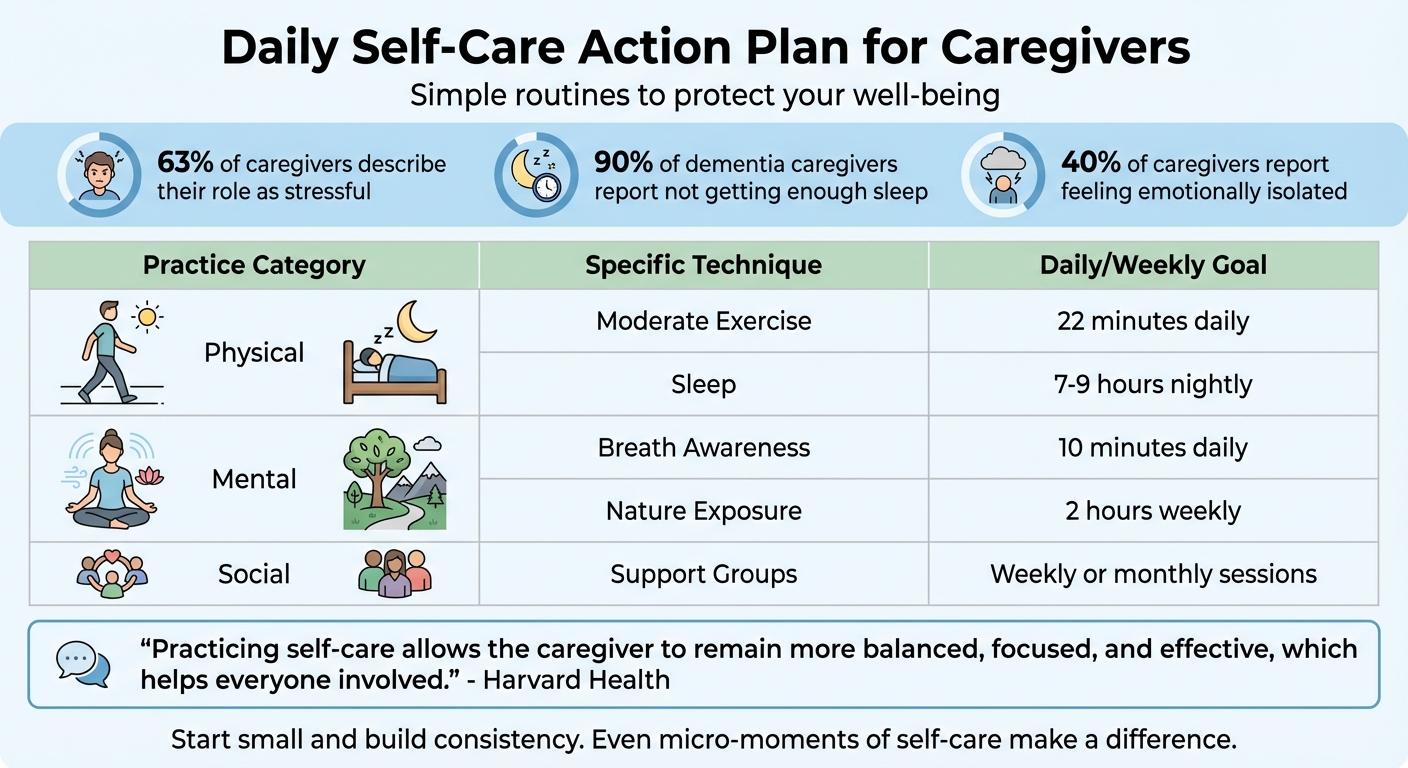
Daily Self-Care Routines for Caregivers: Physical and Mental Health Practices
Taking care of yourself is essential when you're a caregiver. With caregiving often demanding upwards of 24 hours per week [9], it's easy to neglect your own well-being. But here's the catch: 63% of caregivers describe their role as stressful [9]. Chronic stress doesn't just drain you mentally - it can weaken your immune system, trigger headaches, and even lead to weight gain [3].
"Practicing self-care allows the caregiver to remain more balanced, focused, and effective, which helps everyone involved." - Harvard Health [3]
Self-care doesn’t have to mean carving out extra hours in the day. It’s about making deliberate choices to protect your health - both physical and mental - so you can continue to care for your loved one effectively.
Physical Health Practices
Your body needs proper fuel, movement, and rest to keep up with caregiving demands. Start small: 22 minutes of daily exercise is all it takes to meet the recommended 150 minutes per week [8]. You don’t need fancy equipment or a gym membership. A brisk walk around the neighborhood, a short yoga session, or even a pedal exerciser can do the trick [13][14].
Nutrition is just as important. Preparing healthy meals in advance can save you time and ensure you’re eating well during busier periods. Focus on whole foods and steer clear of processed snacks and refined sugars, which can worsen inflammation caused by stress [3][8]. And don’t forget your own doctor’s visits - let them know you’re a caregiver so they can watch for signs of caregiver-related health concerns [4][8].
Sleep is another cornerstone of health. Unfortunately, 90% of dementia caregivers report not getting enough sleep [11]. Aim for 7–9 hours each night. To improve your sleep quality, stick to a consistent bedtime, avoid screens for at least 30 minutes before bed, and create a cool, dark sleeping environment [4][8][14].
While physical health is crucial, caring for your mental well-being is just as vital.
Mental Health and Relaxation Techniques
Building mental resilience requires intentional effort, just like maintaining physical health. Stress doesn’t fade away on its own - you have to actively manage it. A simple 10-minute breath awareness exercise can help trigger your body’s relaxation response. Try this: inhale for five counts, hold for five, and exhale for five [3]. This technique works by activating your parasympathetic nervous system, helping to counteract the effects of stress hormones.
You don’t need to set aside hours for meditation. Instead, practice "micro-mindfulness" during everyday moments - take deep breaths while washing dishes, waiting at a traffic light, or standing in line at the store [9][7]. Even these brief pauses can ease emotional tension.
Gratitude journaling is another powerful way to shift your mindset. Each evening, jot down three to five things you’re thankful for. This simple practice can help redirect your focus from stress to the positive aspects of your life [7]. Feeling isolated? Join a support group. 40% of caregivers report feeling emotionally isolated, but connecting with others who understand your experience can make a big difference. Many hospitals and Area Agencies on Aging offer free or low-cost resources to help [11][12].
To keep these practices manageable, create a simple daily and weekly action plan.
| Practice Category | Specific Technique | Daily/Weekly Goal |
|---|---|---|
| Physical | Moderate Exercise | 22 minutes daily [8] |
| Physical | Sleep | 7–9 hours nightly [11][14] |
| Mental | Breath Awareness | 10 minutes daily [3] |
| Mental | Nature Exposure | 2 hours weekly [8] |
| Social | Support Groups | Weekly or monthly sessions [12][11] |
Building a Support System and Respite Routines
Caring for someone isn’t something you should - or can - do alone. Nearly 20% of Americans provide unpaid care for an adult with health or functional needs [2], yet a staggering 85% never take advantage of respite care [9]. This lack of support often leads to burnout. Building a network of help isn’t about showing weakness; it’s about ensuring you can continue to provide the care your loved one needs over the long haul.
"To be an effective caregiver, you must take care of yourself. The person you are caring for is counting on you." – CDC [15]
Family and friends are often the bedrock of caregiving at home [15]. When someone offers to help, don’t brush it off with, “I’m fine.” Instead, be specific: “Could you pick up groceries on Tuesday?” or “Can you stay with Mom for a couple of hours on Thursday afternoon?” A solid support system allows you to delegate tasks and focus on what matters most.
Involving Family and Friends
Start by identifying tasks that others can easily take on. Errands like grocery shopping, meal prep, dog walking, or picking up prescriptions are simple ways for your support network to pitch in. For more specialized needs, consider delegating responsibilities like managing finances or scheduling medical appointments.
To stay organized, use a shared online calendar to coordinate caregiving duties and errands. Be clear about what you need, and don’t hesitate to accept help when it’s offered. Learning to say “yes” to support and “no” to tasks outside your capacity can make a world of difference [1].
Also, make time for regular social interactions. With 40% of caregivers reporting emotional stress [11], carving out time for a coffee date, a movie night, or a hobby class - even just once a week - can help you maintain connections and avoid feeling isolated.
Scheduling Respite Care
Once you’ve built a solid support network, make scheduling breaks a priority. Respite care isn’t a luxury - it’s a necessity. Whether it’s a few hours weekly or a full day each month, these breaks are vital to preventing burnout.
There are several options for respite care:
- In-home care: This keeps your loved one in a familiar environment, with a professional caregiver stepping in for a few hours or more.
- Adult day centers: These provide supervision, social activities, and meals during the day, which can be especially helpful if you work or need consistent breaks.
- Short-term residential stays: Nursing homes or assisted living facilities can offer care for several days or weeks, giving you extended relief [15][1].
Finding respite resources is easier than it might seem. Start with your local Area Agency on Aging or the Eldercare Locator at 800-677-1116 to explore community-specific services and financial assistance options [17]. Organizations like the United Way or faith-based groups often provide free or low-cost respite care, and some insurance plans or government programs may help cover costs [15][18].
Treat respite care as a non-negotiable part of your routine. Plan ahead, and always have a backup for emergencies - know who to call if you’re sick or face an unexpected situation [16]. Taking breaks doesn’t diminish your dedication; it strengthens your ability to care effectively. Incorporating these strategies into your daily caregiving routine can help you maintain balance and well-being over the long term.
sbb-itb-45288fe
Simplifying Bedding Routines with PeelAways

Finding ways to simplify everyday tasks can make a big difference, especially for caregivers juggling multiple responsibilities. Changing bedding, for instance, can be one of the more physically taxing chores - particularly when dealing with incontinence or medical recovery. Late-night accidents, heavy lifting, and endless laundry cycles can take a toll. PeelAways offers a practical solution, making bedding changes quicker and less stressful while ensuring comfort and dignity for your loved one.
How PeelAways Work
PeelAways are fitted sheets with a clever multi-layer design, offering either 5 or 7 layers stacked directly on the mattress. When a layer gets soiled, you simply peel it away to reveal a fresh, clean sheet underneath - no lifting, no tugging, and no disturbing the person in bed. The entire process takes less than a minute.
Each layer is 100% waterproof, protecting the mattress from spills and leaks while keeping the user dry. The sheets are crafted from a soft, breathable blend of bamboo, rayon, and polyester, making them 32% softer than standard hospital sheets [20]. This thoughtful combination of waterproofing and softness reduces laundry while ensuring maximum comfort. If a layer remains clean, it can last 7–10 days, allowing you to stack weeks of fresh bedding in one go.
"When he wets through one sheet, I just peel that layer off and toss it into the garbage! No more washing bed linens every morning!" – Kari E., Caregiver for parent with dementia [19]
Benefits of PeelAways for Caregivers
PeelAways can be a game-changer for caregivers. Traditional sheet changes often take 5–10 minutes and require significant physical effort, which can lead to back strain or fatigue. With PeelAways, the task is done in under a minute, eliminating the need for washing, heavy lifting, or worrying about cross-contamination. For caregivers already dedicating an average of 24 hours per week to care [9], even small time savings can feel like a big relief.
Brooklyn Shields, a caregiver, shared her experience:
"As a mom and a caregiver, these sheets have been a great addition to make my day easier. quicker bed changes and less laundry. WIN" [19]
Beyond the convenience, PeelAways allow you to change sheets without disturbing your loved one. This is especially helpful for individuals with limited mobility, dementia, or chronic incontinence, as it helps maintain their comfort and dignity during an already challenging time.
Available Sizes and Features
PeelAways come in a variety of sizes to suit different needs. The Crib size (52" x 28") is perfect for toddlers and potty training, while the Cot (75" x 30") and Twin XL (80" x 39") options feature 7 layers for extended use. Standard home sizes - Twin (75" x 39"), Full (75" x 54"), Queen (80" x 60"), and King (80" x 78") - offer 5 layers and accommodate mattresses up to 12 inches deep.
Individual packs start at $29.74, with discounts available for bundles and subscriptions [19]. The sheets are free from vinyl, PVC, phthalates, and fire retardants, making them safe for sensitive skin. For extra-deep mattresses, standard sheet clips can help achieve a snug fit. Green stitching at the head of the sheet ensures proper orientation during setup [19][20].
If you need to change a layer while someone is still in bed, there's a simple method: pre-rip the top two corners, have them roll to one side, peel the layer toward the center, and repeat on the other side [20]. With PeelAways, bedding changes become a quick, hassle-free task, leaving you with more energy for the moments that matter most in caregiving.
Conclusion: Making Routines Work for Caregiver Well-Being
Being a caregiver doesn’t mean putting your own health and happiness on the back burner. Establishing consistent routines can help combat burnout by offering a sense of stability and control in an otherwise unpredictable role.
Taking care of yourself isn’t optional - it’s a must. As Steve Gale, Business Development Coordinator at The Option Group, emphasizes:
"Practicing self-care is not just important; it's essential for maintaining your well-being and providing the best care possible" [22].
Even small changes can make a big difference. Whether it’s 22 minutes of exercise, 7 hours of sleep, or taking 5–10 minutes to meditate, these simple habits can recharge your energy. With 85% of caregivers skipping respite care [9], these small routines can act as lifelines. Simplifying daily tasks can also help preserve your energy and create space for tools that lighten the load.
For example, tools like PeelAways can make a noticeable impact. By cutting bedding changes from 10 minutes to under 60 seconds, caregivers save time and physical effort, leaving more room for self-care and meaningful connections. Rated 4.8/5 by over 12,000 caregivers, PeelAways significantly reduce the strain of laundry and heavy lifting [21]. These practical solutions work hand-in-hand with broader self-care routines.
Routines provide a steady foundation for both your well-being and your caregiving responsibilities. Start small, lean on your support network, and remember that looking after yourself enhances the care you can give. As Roseanne E. Scammahorn, PhD, wisely points out:
"Self-care for caregivers is not a luxury or a waste of time, it is a necessity" [23].
When you’re rested and healthy, you’re better equipped to handle the challenges that come your way. By embracing structured routines and practical tools, you can protect your well-being while delivering the best care possible.
Related Articles
Looking for ways to make caregiving a little easier? Check out these articles packed with practical tips and strategies to help simplify your daily routine.
5 Tips for Stress-Free Caregiving offers straightforward methods to save time and reduce stress. From micro-self-care to mindful breathing techniques, these tips are designed to tackle the everyday pressures caregivers face.
For a more hands-on approach, How PeelAways Simplify Elder Care highlights how innovative bedding solutions can ease physical strain and cut down on repetitive chores, giving you more moments to recharge.
If you’re focused on maintaining your own well-being, Practical Self-Care Strategies for Caregivers dives into essential self-care practices. Learn about improving sleep hygiene, planning nutritious meals with batch cooking, and finding balance through outdoor activities - all tailored to help you stay energized for the long haul.
FAQs
What are some practical morning routines caregivers can follow to avoid burnout?
Starting your day with an intentional routine can make a big difference in preventing caregiver burnout and setting a positive tone. It all starts the night before - focus on getting quality sleep by sticking to a consistent bedtime, keeping your room dark and quiet, and steering clear of caffeine or heavy meals before bed. When morning comes, wake up at the same time each day and start with a glass of water to rehydrate and get your circulation going. A few minutes of gentle movement, like stretching or a quick walk, can help release tension and sharpen your focus.
Adding a mindfulness practice to your morning can also work wonders. Whether it’s deep breathing, meditating, or jotting down a few things you’re grateful for, these moments of reflection can help you feel grounded before diving into your responsibilities. To save time and reduce stress, prep the night before - lay out your clothes, plan meals, or use time-saving tools like PeelAways disposable bed sheets. These sheets are designed with multiple layers, so you can simply peel away a soiled layer without the hassle of lifting the mattress or doing laundry.
By blending consistent sleep habits, light physical activity, mindfulness, and smart tools into your routine, you can better support your well-being and manage stress more effectively.
What are simple ways caregivers can include self-care in their daily routines?
Caregivers can make self-care a priority by viewing it as an essential part of their routine, not something optional. Even carving out 5–10 minutes a day for yourself - whether it’s practicing deep breathing, meditating, or doing some light stretching - can help ease stress and ward off burnout. Small actions, like focusing on your breath while waiting in line, can have a surprisingly calming effect.
Don’t overlook the basics: getting enough sleep, eating balanced meals, and staying socially connected. Simple steps, like taking a short walk, prepping a healthy snack in advance, or catching up with a friend over the phone, can help replenish your energy. Time-saving tools, such as PeelAways’ disposable bed sheets, can also lighten your load by cutting down on chores, leaving you with more time to rest or unwind.
Setting boundaries and creating a routine tailored to your needs is equally important. Block out time for activities you enjoy, whether it’s a hobby, exercise, or simply some quiet reflection. By weaving self-care into your daily life, it becomes a natural, sustainable habit that supports your well-being as you care for others.
How can support systems and respite care help caregivers manage stress?
Support systems play a crucial role in providing caregivers with both emotional comfort and practical help, easing the burden of isolation and stress. Whether it’s leaning on family and friends or joining caregiver groups, these connections offer a chance to share experiences, seek advice, and feel less alone. Professional resources, such as counseling or caregiver education programs, can also equip caregivers with strategies and tools to face challenges more effectively.
Respite care is another lifeline for caregivers, offering much-needed time to recharge by temporarily stepping away from their responsibilities. This can take many forms - like in-home aides, adult day programs, or short-term care facilities. These breaks are essential for preventing burnout, maintaining physical health, and making space for self-care activities like rest or exercise. Together, a strong support network and regular respite care ensure caregivers can stay healthy and continue providing the best care possible.
Comments
0



SAVE MONEY & WATER
Professionals & Institutions save a fortune on labor/laundry.

SUPERIOR COMFORT
The first thing our customers notice is how soft our sheets are.

100% WATERPROOF
Each layer is 100% Waterproof, perfect for spills and accidents

SAVE TIME
Change the sheet in under 1 minute without stripping the bed.

Leave a comment