
Best Waterproof Fitted Sheets That Stay Put All Night

It’s 2am. The sheets are soaked again. Your loved one is embarrassed, your back hurts, and you have to be up in four hours. If this is your night right now, I want to make this simple.
The best waterproof fitted sheets for overnight leaks and maintaining proper bedwetting hygiene are the ones that stay on, keep the mattress dry, and cut change time at 2am. From what I’ve seen, PeelAways is the best fit for frequent wet nights because it gives you 5–7 waterproof layers, cuts bed changes to about 60 seconds instead of 15–20 minutes, and can reduce laundry by 50%–80%. It also has 28,000+ reviews and a 4.8-star rating, with sizes from crib to king.
Best options at a glance:
- PeelAways - best for fast overnight changes and less laundry
- Waterproof fitted protectors - best for basic mattress protection
- Zippered encasements - best for full mattress coverage
- Disposable vs. washable waterproof fitted sheets - best if you want a reusable sheet
- Underpad systems - best for light to moderate spot changes
| Option | Best for | Change time | Main drawback |
|---|---|---|---|
| PeelAways | Frequent overnight leaks | ~60 seconds | Disposable, so you restock |
| Fitted protector | Simple mattress barrier | 10–15+ minutes | Full sheet reset |
| Zippered encasement | Full mattress coverage | Slowest | Hard to change at night |
| Washable fitted sheet | Reuse and regular bedding feel | 15–20 minutes | More laundry |
| Underpad system | Spot protection | ~30 seconds | Can slide or bunch |
If you’re tired of full bed changes in the dark, this is the part that matters most: pick the option that stays put and saves your back.
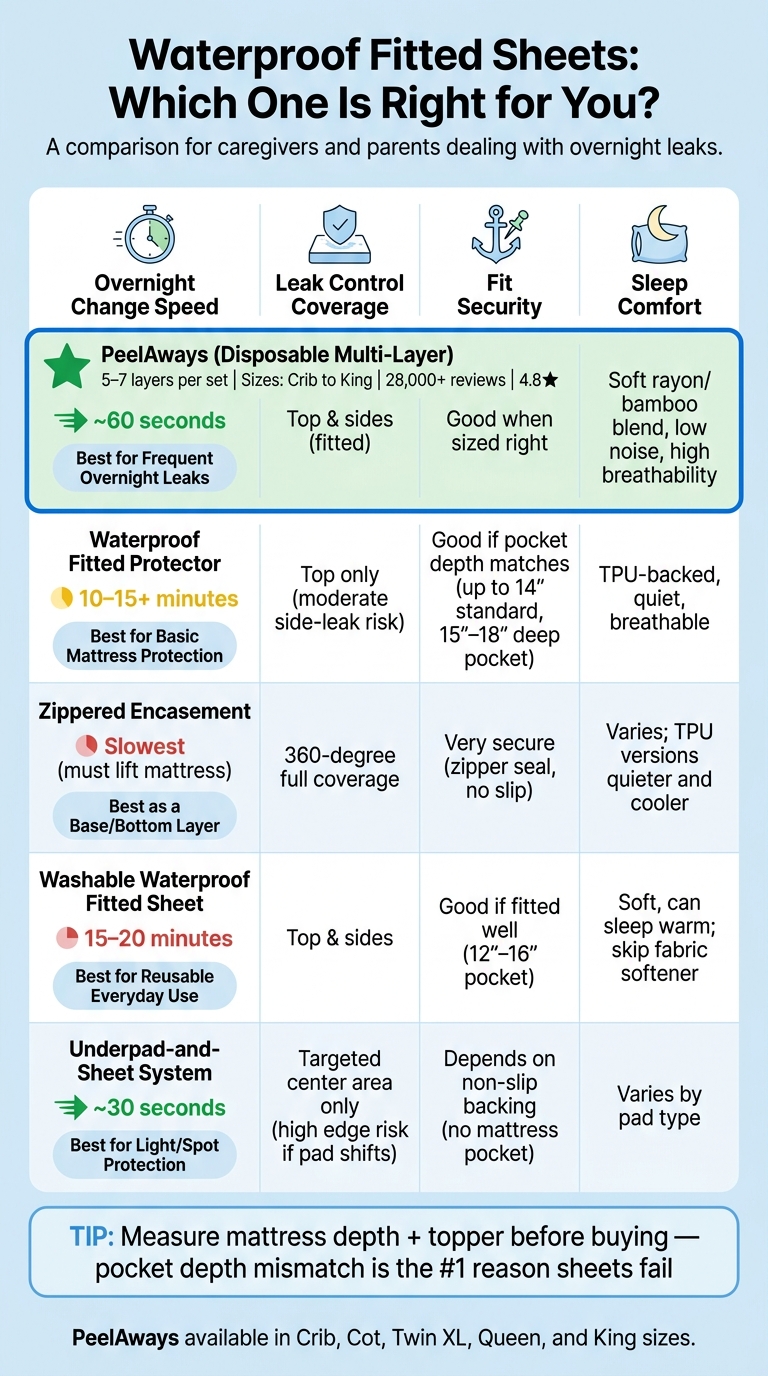
Waterproof Fitted Sheets Compared: Speed, Fit, Leak Control & Comfort
Why this problem feels worse than people expect
A wet bed is not just a laundry problem.
It’s a sleep problem.
A dignity problem.
A back pain problem.
A how-am-I-still-doing-this-at-2am problem.
The wrong sheet makes everything harder. Especially when comparing Peelaways vs. traditional waterproof sheets, the difference in ease of use is clear. Corners pop off. Pads slide. Moisture pools on top. Then one leak turns into a full mattress check, a full strip, and a full restart.
That’s why I stop looking at waterproof bedding like “just a cover.” I look at:
- How fast I can change it
- Whether it stays in place
- Whether it keeps the mattress dry
- Whether it feels soft enough to sleep on
If you’re doing this night after night, those four things matter more than fancy claims on a package.
sbb-itb-45288fe
What I check before I buy anything
Before I buy any bedding solutions for incontinence care, I check the bed first.
Not the label.
The actual bed.
Here’s what I mean:
- Mattress size: Twin, Twin XL, Full, Queen, King
- Mattress depth: include any topper
- Pocket depth: the sheet has to match the full height
- Top layer feel: quiet and soft matters at night
- Barrier type: TPU is usually less noisy than vinyl
- Change process: can I swap it fast without lifting the mattress?
A lot of “stays put” claims fall apart because the pocket is too shallow. This is a common issue when choosing between waterproof mattress pads vs. disposable sheets.
If your mattress is 12 inches deep and your topper adds 3 inches, you need a sheet that fits at least 15 inches. If not, the corners can ride up.
PeelAways multi-layer disposable fitted sheets
This is the one I’d point you to first if leaks happen often.
PeelAways works like a stack of fitted sheets in one set. You put it on once, and when the top layer gets wet, you peel it off. Under it, there’s another clean, dry layer ready to go.
That’s the part that changes the night.
Instead of a full bed reset that takes 15–20 minutes, you can do a change in about 60 seconds. No mattress lifting. No hunting for another clean fitted sheet. No standing there half awake trying to remake a bed in the dark.
What stood out to me:
- 5–7 waterproof layers per set
- Sizes from crib to king
- Soft top layer, not loud plastic
- Less overnight laundry
- Good fit for many home-care setups, including Twin XL hospital-style beds
If you already use briefs or pads, this setup makes even more sense. The mattress still gets a fitted waterproof layer, but the cleanup gets a lot easier.
You can shop here: peelaways.com/shop
Or check the Amazon listing for PeelAways
If you want more details, I’d also read:
Why I like it: it cuts the hardest part of the night down to one peel and one toss.
Waterproof fitted mattress protectors
These are the waterproof bed protection that goes on like a fitted sheet.
They do one job well: they block liquid from reaching the mattress. Most use a TPU backing and an elastic skirt.
That said, they don’t solve the whole 2am problem.
If there’s a leak, you still have to pull the protector off and put a new one on. That means more movement, more time, and often more disruption.
They work best if you want:
- A simple waterproof barrier
- A reusable base layer
- A sheet-style fit around the mattress
But there are limits:
- They often do not absorb much on top
- They can pull loose if the pocket depth is wrong
- You still need washing after accidents
For lighter leaks, they’re fine. However, managing heavier accidents requires more comprehensive strategies for keeping beds dry.
For repeated overnight wetting, they can feel like one more step instead of a full answer.
Zippered waterproof mattress encasements
If your main goal is full mattress coverage, zippered encasements do that best.
They cover the whole mattress, not just the top. That means better protection from edge leaks and shifting.
But I would not count on this as the layer you want to change in the middle of the night.
It’s slow.
It takes effort.
And at 2am, that matters.
I think of an encasement as the bottom protection layer. It stays on the mattress. Then you put something easier on top that you can swap out when needed.
Best use:
- Long-term mattress protection
- Restless sleepers who shift a lot
- Backup coverage under another system
Big drawback:
- It’s a pain to remove and replace during nighttime incontinence care
Washable waterproof fitted sheets
These are close to regular bedding in feel, which is why many people start here.
They usually have a fabric top with a waterproof layer underneath, similar to other waterproof hypoallergenic bedding options. Some feel soft and quiet. Some sleep a bit warm.
The upside is simple:
- Reusable
- Familiar fitted-sheet style
- Less “medical” feel
The downside is just as simple:
- If it gets wet, you still strip the bed
- You still do the laundry
- You need spares ready
That last part matters more than people think.
If one is in the wash and you get another leak, you need another clean one right away. In active care, that can mean washing these daily or every other day. This is a common challenge covered in our guide to bedding for caregivers.
For some homes, that’s fine.
For others, it becomes one more pile waiting by morning.
Underpad-and-sheet layering systems
This setup puts an absorbent pad on top of a waterproof fitted layer.
It can work well for lighter leaks because you can swap the top pad instead of changing the whole bed. Bedding changes can take about 30 seconds if the pad stays put.
That “if” matters.
Pads can slide.
They can bunch.
They can leave edges exposed.
If the person in bed moves a lot, this setup can fail in the exact spot you were trying to protect. This is especially challenging when you need to replace sheets on an occupied bed without disturbing the sleeper.
I’d look for:
- Non-slip backing
- Tuck-in wings or tails
- Adult size 30" x 36" or larger
- A waterproof base layer under the pad
This system is often a decent middle ground.
It’s faster than a full fitted-sheet change.
But it still leaves you with washing and occasional leaks past the pad.
Quick comparison
| Option | Fit security | Leak control | Overnight change speed | Comfort |
|---|---|---|---|---|
| PeelAways | Good when sized right | Top and sides | Fast | Soft and quiet |
| Fitted protector | Good if pocket depth matches | Good, but often top-focused | Slow | Usually quiet |
| Zippered encasement | Very secure | Full coverage | Very slow | Varies |
| Washable fitted sheet | Good if fitted well | Good | Slow | Soft, can sleep warm |
| Underpad system | Depends on pad grip | Targeted area only | Fast | Varies |
If I had to boil it down:
- For frequent overnight leaks, I’d pick PeelAways
- For **basic mattress backup
1. PeelAways Multi-Layer Disposable Waterproof Fitted Sheets
It’s 2am. The bed is wet again, your loved one is half-awake, and you’re standing there trying to change everything without turning the whole night into a full-blown ordeal.
That’s where PeelAways can feel like a lifeline.
PeelAways stacks disposable fitted layers right on the mattress, so overnight changes are fast. Each set keeps 5–7 waterproof layers in place. When one layer gets soiled, you peel it off in under 60 seconds, and there’s already a clean, dry sheet underneath - no lifting the mattress and no getting the person out of bed. If your main goal is streamlining incontinence care tasks with as little sleep disruption as possible, that matters a lot.
The corners are elastic, so each layer stays put. Every layer has a waterproof, breathable barrier that keeps liquid from reaching the mattress while still letting air move through. The top feels soft and quiet, not like crinkly plastic. It’s made from a bamboo/rayon/polyester blend, so it feels more like normal bedding, which can be easier on sensitive skin.
This setup works best when you need changes to be quick and low-drama, especially for overnight incontinence or bedwetting. The Twin XL size fits many standard home-care hospital beds. And because you remove the soiled top layer and expose a clean one underneath, the disposable design can help cut down cross-contamination between changes. PeelAways are also free from vinyl, PVC, phthalates, and fire retardants, and they’re odorless.
If you’ve ever spent 15–20 minutes doing a full middle-of-the-night bed reset, the difference here is obvious. Peel it. Toss it. Try to get back to sleep. Following proper incontinence bedding disposal methods also helps keep the room fresh and hygienic.
You can shop PeelAways at peelaways.com/shop or check the Amazon listing for PeelAways. If you want more details from people who’ve been in the thick of this, it also helps to read other guides on PeelAways, like posts on overnight incontinence care and bedwetting help.
Use the table below to match size, layer count, and mattress depth to the bed.
| Size | Layers | Price (USD) | Max Mattress Depth |
|---|---|---|---|
| Crib-A-Peel | 5 | $30.99 | 6" |
| Cot | 7 | $34.99 | 6" |
| Twin XL | 7 | $41.99 | 9" |
| Queen | 5 | $47.99 | 12" |
| King | 5 | $53.99 | 12" |
PeelAways carry a 4.61/5-star rating across 260+ verified reviews.
That mix of speed, comfort, and less laundry is exactly why so many tired families end up sticking with it.
2. Waterproof Fitted Mattress Protectors
It’s 2am. You feel the wet spot before you even turn on the light, and your stomach drops because you already know what comes next. The mattress has to stay dry, your loved one needs help now, and every extra minute feels heavy.
Waterproof fitted mattress protectors are the kind that go on like a sheet. They use a TPU membrane to stop leaks and an all-around elastic skirt to hold tight around the mattress. They usually stay put through the night, which helps. The hard part? They take more time to pull off and put back on during an overnight change.
That’s the trade-off in plain English: strong leak protection, slower bed changes.
Fit matters more than most people think. If the protector is even a little loose, liquid can sneak in at the corners or edges. That’s usually where the trouble starts. And if your mattress has a memory foam topper, this gets even more annoying. A pocket that’s too shallow can pull up at the corners and leave a gap.
Standard fitted protectors usually fit mattresses up to 14 inches deep. Deep-pocket versions are made for 15 to 18 inches or more.
There’s another thing worth knowing. Most fitted protectors stop liquid from reaching the mattress, but they don’t absorb much on top. So if you’re dealing with overnight incontinence or post-surgery care, you’ll still want an absorbent layer over the protector. That helps prevent pooling and may lower the risk of skin irritation.
For home care, TPU is usually the better pick than vinyl. It’s thinner, quieter, and more breathable. That may not sound like a big deal on paper, but in a bedroom at night, it is. Choosing cooling bedding options that are less noisy and less sweaty can make a rough night feel a little more bearable.
One last note: wash and dry on low heat. High heat can damage the membrane over time.
If you need more complete coverage, move next to zippered encasements.
3. Zippered Waterproof Mattress Encasements
It’s 2am. The bed is wet again. You’re tired, your loved one is uncomfortable, and the last thing you want to do is wrestle a mattress in the dark.
A zippered waterproof mattress encasement covers the whole mattress and zips all the way shut. That full wrap makes it one of the safest mattress-level options for keeping the mattress clean and dry, especially if your loved one shifts a lot in sleep.
But here’s the hard part: this is not the layer you want to change in the middle of the night. Taking it off means lifting the mattress, unzipping the cover, and pulling the whole thing free. That takes time and energy most people just don’t have at 2am.
Think of an encasement as the base layer. It protects the mattress itself. Then you place an absorbent top layer over it for the part you may need to change fast during the night.
TPU versions tend to feel thinner and quieter, and they usually sleep cooler than bulkier options. That can help cut down on heat and trapped moisture. Still, if wetness stays on the sleep surface and there’s no absorbent layer on top, skin irritation and rewetting become more likely.
If you’re using an adjustable bed, look for an encasement that bends and moves with the mattress instead of fighting against it.
If your main goal is faster overnight bed changes, this type of protection may feel a little too far down in the system. It guards the mattress well, but it doesn’t solve the midnight laundry problem on its own.
4. Washable Waterproof Fitted Sheets
It’s the middle of the night. The bed is wet again, and you already know what comes next: pull everything off, try not to wake them too much, and start over while your body begs for a break.
Washable waterproof fitted sheets are often the first thing people try. I get why. They look and feel close to regular bedding, and they put a waterproof TPU layer under a fabric top - usually cotton terry, bamboo, or microfiber - so liquid doesn’t reach the mattress. If you wash them the right way, they can hold up through repeat laundry cycles.
What matters most here is fit.
A sheet can sound good on the package and still fail by morning if the corners won’t stay put. A 360-degree elastic skirt helps keep it in place through the night, but pocket depth is the part that trips people up. If your mattress and topper together are more than 14 inches deep, you’ll need a deep-pocket sheet rated for 18–21 inches. If not, the corners can pop off before sunrise.
For heavier nights, this kind of sheet often isn’t enough on its own. You may still need an absorbent layer on top.
The hard part is the laundry. In active care, these sheets may need to be washed every day or every other day. This is a common challenge when managing incontinence in elderly family members. That adds up fast when you’re already tired. Dry them on low heat because high heat can wear out the elastic and crack the waterproof membrane over time. And skip fabric softener. It can break down the TPU barrier.
A spare sheet isn’t optional. It saves you when one is in the wash and the bed can’t wait.
Compared with vinyl-backed sheets, washable fitted sheets are usually quieter and cooler. That’s a relief. Still, they can sleep a little warm for someone who overheats at night. And the biggest downside doesn’t change: when there’s a leak, you still have to strip the bed. At 2 a.m., that’s the part that drains you.
If you need bed changes to happen in about 60 seconds instead of 15–20 minutes, that’s where layered options like PeelAways start to make a lot more sense - especially if you’re already using pads or briefs and just need the cleanup to be less of an ordeal.
5. Underpad-and-Sheet Layering Systems
It’s the middle of the night. The top layer is wet, your loved one is tired, and you’re trying to change the bed without turning it into a whole production. You don’t want to strip everything off. You just want a clean, dry surface FAST.
An underpad-and-sheet layering system can help with that. You place an absorbent pad over a waterproof fitted sheet, so when the top layer gets wet, you can swap it out without changing the whole bed. That change can take about 30 seconds, which is a lot better than doing a full bed reset in the dark. This works best when the fitted sheet underneath stays tight and secure.
The trouble starts when things move. If the underpad is loose, it can bunch up, slide around, or shift overnight. That’s even more of a problem if your loved one tosses and turns. Once the pad moves, the mattress edges can end up exposed, and that’s when leaks start sneaking through.
For adults, use at least a 30" x 36" pad. Smaller pads leave less room for error, and leaks can creep past the edges more easily. The whole setup also depends on that base fitted sheet staying anchored under everything else. If you’re dealing with a restless sleeper, look for pads with:
- Non-slip dots
- Adhesive backing
- Tuck-in tails
On heavier nights, a three-layer setup usually makes more sense. Use a waterproof fitted sheet on the bottom, a reusable underpad in the middle, and a disposable pad on top as the part you change out. When the disposable layer gets wet, throw it away and leave the protected layers underneath in place. Pads with SAP help here because SAP turns liquid into gel, which helps pull moisture away from the skin and cuts down on rewetting.
Material matters too. TPU-backed layers are quieter and cooler than vinyl, so they don’t have that loud, crinkly plastic feel. That can make the bed feel less harsh at night.
Still, this setup has limits. Reusable pads need washing. And if the leak is heavy enough, you may still end up changing the fitted sheet too. So yes, it can make nighttime changes faster, but it doesn’t fully get you out of laundry.
Next, compare these options by fit, leak control, change speed, and comfort.
Fit, Leak Control, Overnight Changes, and Comfort: How Each Option Compares
It’s the middle of the night. The bed is wet, the top layer is twisted, and you’re trying to fix everything without fully waking the person you love. In that moment, fit and leak control stop being “features” and start being the whole night.
After looking at each option by itself, here’s the part that matters most in real life. Every option handles fit, leaks, change time, and comfort a little differently. The best one is the one that cuts leaks, laundry, and those brutal overnight bed changes all at once.
Secure Fit
Most bedding problems start at the corners. If the pocket depth doesn’t match the mattress height, the sheet lifts, bunches, or slides. That’s why you need to measure the full depth before you buy - mattress plus topper. A 12-inch mattress with a 3-inch topper needs at least a 15-inch pocket.
Zippered encasements go all the way around the mattress, so they don’t move once they’re on. The downside? They’re a pain to change. Waterproof protectors and washable fitted sheets use elastic around the full edge, which works well when the depth is right. Underpad systems don’t grip the mattress at all. They sit on top, so they stay put only if the backing has enough grip.
| Option | Pocket Depth | Elastic Style | Slip/Bunch Risk |
|---|---|---|---|
| PeelAways (Disposable) | Standard | Corner elastic | Moderate |
| Waterproof Protectors | 14" standard; 15"–18" deep pocket | Elastic all the way around | Low if depth matches |
| Zippered Encasements | 6"–18"+ | N/A (zipper) | None (fully enclosed) |
| Washable Fitted Sheets | 12"–16" | Elastic all the way around | Low to moderate |
| Underpad Systems | No pocket | Non-slip dots | High (unless non-slip) |
A snug fit helps. But if the barrier fails at the edges, you’re still changing sheets at 2 a.m.
Leak Containment
Leak control comes down to how much of the mattress gets covered. Zippered encasements cover all six sides, so there’s no exposed edge. Washable fitted sheets cover the top and sides, which helps a lot if the sleeper moves around. Most standard waterproof protectors cover only the top, so liquid can run off the side if the sheet starts lifting or the pocket is too shallow. Underpad systems protect one area in the middle. If the pad shifts, the edges are left open.
| Option | Barrier Coverage | Side-Leak Risk | Needs Lifting |
|---|---|---|---|
| PeelAways (Disposable) | Top & sides (fitted) | Low (if fitted correctly) | None |
| Waterproof Protectors | Top only (usually) | Moderate | Moderate (corner lifting) |
| Zippered Encasements | 360-degree | None | High (must lift mattress) |
| Washable Fitted Sheets | Top & sides | Low | Moderate (corner lifting) |
| Underpad Systems | Targeted (center) | High (if pad shifts) | Low (no lifting) |
This is where PeelAways stand out for me. If you already rely on diapers or incontinence pads, having a fitted top-and-side barrier you can strip away fast can make a rough night feel less impossible.
Overnight Change Speed
This is where the gap between options gets big.
Zippered encasements are the slowest by far. Changing one overnight can mean lifting the mattress or pulling it off the frame. Waterproof protectors and washable fitted sheets are better than that, but they still call for a full bed strip. That’s not small when you’re tired, your back hurts, and the person in bed is upset.
Underpad systems make things easier. Swapping a soiled pad takes about 30 seconds, with no full sheet change and very little lifting.
PeelAways are faster still. Each set has 5–7 layers, so you peel off the soiled top layer and move on. The change takes about 60 seconds, and the person can stay in bed while you do it. That’s the kind of detail that sounds small until you’ve done a 15- to 20-minute overnight bed change the old way. Then it feels huge.
PeelAways also come in sizes from crib to king, which matters more than people think. If the bed in your house isn’t standard, that can save you from settling for something that almost fits but never stays right.
Sleep Comfort
Fast changes don’t help much if the bed feels loud, sweaty, or stiff.
Comfort usually comes down to three things: noise, heat, and fabric feel. TPU membranes are thinner, quieter, and more breathable than vinyl/PVC options. Terry-cloth and brushed microfiber tops feel more like normal bedding. If the person in bed gets hot easily, bamboo or cotton-terry tends to breathe better than polyester blends.
| Option | Fabric Feel | Noise Level | Heat Retention | Breathability |
|---|---|---|---|---|
| PeelAways (Disposable) | Soft rayon/bamboo blend | Low | Low | High |
| TPU-Backed Protectors | Terry/cotton | Silent | Low to moderate | High |
| Vinyl/PVC Protectors | Plastic/stiff | High (crinkly plastic sound) | High | Low |
| Washable Fitted Sheets | Quilted/soft | Silent | Moderate | Moderate |
| Underpad Systems | Varies by pad type | Low to moderate | Moderate | Moderate |
If dignity matters to you - and I know it does - comfort matters too. No one wants to lie on something that feels like a shower curtain. That’s part of why so many families stick with PeelAways once they try them. It doesn’t just save laundry. It helps the bed still feel like a bed.
And when you’re changing it night after night, that matters.
Pros and Cons for Each Care Situation
It’s 2 a.m. again. The bed is wet, your loved one is tired and embarrassed, and you’re standing there doing the mental math: full sheet change now, or try to patch things up and hope everyone gets back to sleep.
That’s why this choice matters more than people think. No single sheet type wins in every situation. The right pick depends on how often leaks happen, how much laundry you can handle, and how much broken sleep you can survive. Match the sheet to the job: the fastest changes for frequent leaks, quiet comfort for light sleepers, and the strongest containment when mattress protection matters most.
Adult Nightly Incontinence
This is the hardest setup. If leaks happen often at night, focus on three things: fast changes, low noise, and a secure fit.
PeelAways make a lot of sense here. The 60-second layer peel means you’re not stripping the whole bed at 2 a.m. The soft rayon/bamboo blend also helps avoid the heat and crinkly noise that often come with vinyl.
If you’ve ever tried to do a full sheet change while someone is half-awake and uncomfortable, you already know why that matters.
Zippered encasements protect the mattress all the way around, which is a big plus. But they’re tough to change in the middle of the night. They work better as a base layer than as your first move when a leak happens.
Child or Teen Bedwetting
Sleep can be fragile here. One weird sound, one sweaty layer, and the whole night can go sideways.
Comfort and quiet matter more than maximum coverage in many cases. Go with quiet, breathable sheets that feel like normal bedding and establish effective bedwetting routines. Skip vinyl-backed options if your child or teen is a light sleeper, since the noise and heat can wake them up.
That “just let them stay asleep” factor is bigger than it sounds when you’re dealing with bedwetting night after night.
Potty Training
With crib and toddler beds, speed is everything. Accidents happen fast, and no one wants a long cleanup in the dark.
PeelAways Crib-A-Peel gives you the fastest cleanup in this setup. Peel a layer, smooth the bed, and keep moving.
Underpad systems can work, but only if the pad stays in place. If it shifts, bunches up, or gets kicked loose, you’re back to more mess and more laundry.
Post-Surgery Recovery
When someone can’t move much, every bed change feels harder than it should. You’re not just changing sheets. You’re trying not to cause pain, strain, or one more rough moment in a long day.
The best option here is the one that cuts down handling and shortens the change. PeelAways help by reducing lifting and mattress handling for the person giving care. They also cut down how much soiled bedding you have to deal with between changes.
Zippered encasements give the strongest mattress protection, but they’re the hardest to change when mobility is limited.
Conclusion
It’s 2am. The bed is wet again. You’re half-awake, your loved one is upset, and the last thing you need is a full sheet change in the dark.
For frequent overnight leaks, speed and a secure fit matter most. When accidents keep happening, you need something that changes fast and stays put through the night.
Across fit, leak control, overnight changes, and comfort, PeelAways stands out when broken sleep needs to stay low. The layered design lets you peel off a soiled sheet in about 60 seconds instead of stripping and remaking the whole bed for 15–20 minutes. That alone can make a hard night feel a little less brutal. The soft rayon/bamboo blend also stays quiet and breathable, which matters more than people think when someone is already restless.
Before ordering, check your mattress depth and bed size. That part matters. A proper match helps the elastic skirt stay anchored, so the edges don’t ride up during the night.
When overnight leakage is frequent, organic waterproof bedding stops being a “nice extra” and becomes part of core care. It affects sleep. It affects dignity. And it absolutely affects how much work lands on your shoulders before morning. PeelAways comes in sizes from crib to king, with 5- or 7-layer options, so you can match the bed to the amount of overnight protection you need.
You can buy PeelAways at PeelAways.com or on Amazon. If you want more help, take a look at other guides on PeelAways.com, including articles like How PeelAways Work and care tips from the blog.
With 28,000+ reviews and a 4.8-star rating, PeelAways has become the one I point people to when nights are getting harder than they should be.
Making aging and caregiving easier, one bed at a time
Blog readers save 10% with code BLOGS10 at checkout. Available on peelaways.com and Amazon. Free shipping on orders over $100.
FAQs
How do I measure mattress depth correctly?
Use a tape measure and check the full height of the mattress from top to bottom edge. Include any extra layers, like a pressure-relief topper or memory foam pad. Those add-ons can push the depth from 6–9 inches to 12–16 inches fast.
Then match that total height to the sheet’s listed pocket depth. That gives the elastic skirt enough room to stay anchored around the mattress and helps stop corner lift and leaks.
Will waterproof fitted sheets feel hot or noisy?
It’s the middle of the night. You shift in bed, hear that stiff plastic sound, and instantly know this sheet isn’t helping anyone sleep. When you’re already worn out, even that little rustle can feel like too much.
It depends on what the sheet is made from.
Older waterproof sheets made with vinyl or PVC tend to trap heat. They can also make that crinkly, rustling noise every time someone moves. If you’ve used one before, you know the feeling. It doesn’t feel much like a normal bed.
Newer options are usually a lot easier to live with. Sheets made with a thin TPU layer or breathable fabric blends are built to stay quieter and let more air through. That means they feel closer to a regular sheet, not a plastic cover you can hear all night.
How many spare sheets do I need at home?
A leak never seems to happen when you have time for it. It happens when you're half asleep, your loved one is upset, and the last thing you want to do is wrestle with a full bed change.
Keep at least one spare waterproof sheet at home so you can swap out a soiled sheet right away.
That sounds simple. But if you're using standard waterproof bedding, you already know the hard part: one accident can mean stripping the whole bed, finding clean layers, and starting over from scratch.
That's why a lot of families end up keeping extra backup sets on hand. Not because they want to. Because they feel like they have to.
Multi-layer sheets change that routine. Instead of replacing everything at once, you can peel away the top soiled layer and keep moving. Some stack weeks of protection right on the mattress, which means less laundry, less stress, and fewer spare sets taking up space in the closet.
Comments
0



SAVE MONEY & WATER
Professionals & Institutions save a fortune on labor/laundry.

SUPERIOR COMFORT
The first thing our customers notice is how soft our sheets are.

100% WATERPROOF
Each layer is 100% Waterproof, perfect for spills and accidents

SAVE TIME
Change the sheet in under 1 minute without stripping the bed.

Leave a comment