
Best Waterproof Bedding for Bedridden Adults (2026 Caregiver Guide)

It’s 2am. The sheets are soaked again. Your loved one is embarrassed, your back hurts, and you have to be up in four hours.
If you need the best waterproof bedding for a bedridden adult, the setup that usually works best is a waterproof mattress layer underneath and a fast-change absorbent layer on top. For frequent leaks, PeelAways stands out because you can change one wet layer in about 60 seconds instead of doing a 15–20 minute full bed reset.
What this guide covers:
- PeelAways multi-layer disposable fitted sheets
- Waterproof mattress encasements and protectors
- Reusable underpads
- Disposable underpads
- Single-layer waterproof fitted sheets
| Option | Best for | Main tradeoff |
|---|---|---|
| PeelAways | Frequent overnight leaks | Higher per-set cost |
| Mattress encasement | Protecting the mattress | Slow to remove |
| Reusable underpad | Cutting pad costs over time | More washing |
| Disposable underpad | Fast pad swaps | More trash and repeat cost |
| Waterproof fitted sheet | Light leaks | Full sheet change after accidents |
I wrote this for the person doing the cleanup, not the person reading specs for fun.
Reusable Bed Pads with Transfer Handles - Close Look at AGOOLIIU
sbb-itb-45288fe
1. PeelAways Multi-Layer Disposable Waterproof Fitted Sheets
It’s 2am. The bed is wet again, your loved one is half-awake, and you’re standing there doing the mental math on one more full sheet change before morning. Your back already hurts. The last thing you need is 15 to 20 minutes of stripping, remaking, and starting laundry.
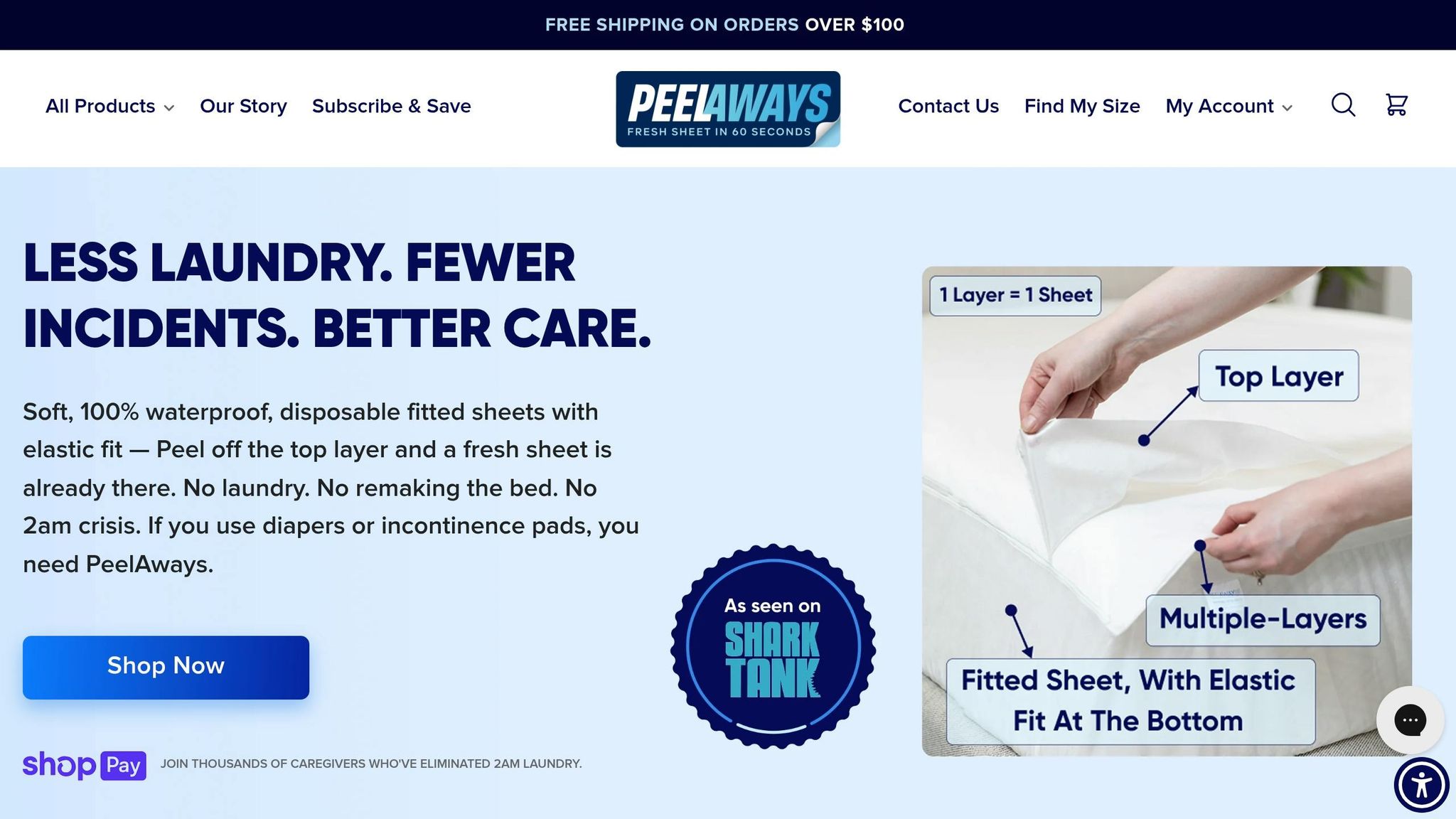
For frequent overnight leaks, the appeal here is simple: fast changes, less disruption, and way less laundry. PeelAways use 5 to 7 waterproof layers and fit like a fitted sheet. When a leak happens, you peel off the soiled top layer in under 60 seconds, so the mess turns into a one-layer change instead of a full-bed ordeal.
That speed is the whole point. If you’ve ever changed sheets in the dark while trying not to fully wake someone, you know how much that matters.
The waterproof base protects the full mattress surface, while the absorbent layers hold moisture and odor to help keep skin drier. The fabric is a soft, breathable blend of bamboo, rayon, and polyester. It’s also free of vinyl, PVC, phthalates, and fire retardants.
One thing I like about this setup is that one person can handle it. You don’t have to strip the whole bed. You don’t have to wrestle corners back into place. You remove the top layer, toss it, and move on.
And that laundry pile? Much smaller. Soiled layers go straight into the trash, and the clean layers underneath can stay on the bed for 7 to 10 days.
This fits best when leaks happen often and sleep disruption is already a problem. That can mean dementia care, post-surgery recovery, or any setup where repeated full sheet changes wear everyone down. Twin XL fits most standard hospital beds and homecare mattresses.
| Feature | PeelAways Performance |
|---|---|
| Fast change | Under 60 seconds |
| Laundry burden | None for peeled layers |
| Skin protection | Soft, breathable, moisture-wicking blend |
| Mattress protection | 100% waterproof base |
| Layers per pack | 5–7 waterproof layers |
| Best fit | Overnight incontinence, dementia, post-surgery recovery |
If you use diapers or incontinence pads and still deal with wet sheets, this is the kind of product that can take a brutal nightly task and make it bearable. PeelAways has 28,000+ reviews and a 4.8-star rating, and it comes in sizes from crib to king. It’s one of those things I wish I’d found sooner: Making aging and caregiving easier, one bed at a time.
You can see the full range at peelaways.com/shop, check the Amazon listing for PeelAways, or read more on the PeelAways blog, like how PeelAways work and tips for easier overnight bed changes.
Next, compare waterproof mattress pads vs. disposable sheets, which solve a different part of bed protection.
2. Waterproof Mattress Encasements and Protectors
It’s the middle of the night. The bed is wet, your loved one is upset, and you’re standing there knowing the mattress can’t take many more nights like this. That’s the part nobody talks about enough. Once a mattress is ruined, the whole problem gets more expensive fast.
A waterproof mattress encasement is a zippered cover that wraps around all six sides of the mattress and seals it shut. A fitted-style protector covers the top and sides only. Both help protect the mattress itself, but neither one replaces an absorbent layer on top, such as disposable or washable bed sheets.
That matters.
These products stop the mattress from getting soaked, but you still need strategies for keeping beds dry during incontinence care as they do not handle active leaks on their own.
A decent mattress protection system usually runs about $50 to $150, which is a lot less than buying a new mattress. Still, an encasement by itself won’t do much in the moment when a leak happens.
The biggest downside is change time. An encasement works best as your base layer under absorbent bedding. It’s slow to take off, often means lifting the mattress, and usually only needs washing every 2 to 3 months if it stays dry. Since it doesn’t absorb liquid, you’ll want an absorbent top layer over it.
| Feature | Fitted Protector | Zippered Encasement |
|---|---|---|
| Coverage | Top and sides | All 6 sides |
| Change speed | Fast | Slow; may require lifting mattress |
| Best use | Light incontinence | Severe incontinence |
| Skin dryness | No absorption | No absorption |
| Laundry | Easy to remove and wash | Difficult; every 2–3 months if it stays dry |
| Price | $18–$35 | $35–$90 |
When it comes to material, polyurethane (PU) backing is usually the better pick than vinyl. It’s breathable and quiet, which makes a big difference when someone is already struggling to sleep. Vinyl may last longer and can be easier to wipe down, but it can trap heat and make that crinkly rustling sound.
A few details are worth checking before you buy:
- A protected zipper flap helps keep the seal watertight.
- A zipper placed at the foot of the bed is easier to reach.
If your goal is faster cleanup and better leak control, this layer should sit under an absorbent pad, not replace it. The mattress barrier protects the bed. The absorbent layer on top handles the mess.
3. Reusable Bed Pads and Underpads
It’s 2am. The top layer is wet, your loved one is half-awake, and you’re standing there trying to fix the bed without turning on every light in the room. This is where reusable bed pads earn their place.
Reusable bed pads sit on top of the fitted sheet and act as the washable absorbent layer most people reach for first. They help with quick cleanup, cut down on full bed changes, and can mean less broken sleep. Using a checklist for streamlining incontinence care can further simplify these nighttime routines. If the mattress protector is your base layer, this is the layer you swap and wash most often. Some heavy-duty pads can hold up to 10 cups (2,400 cc) of liquid before they saturate. Overnight, that can make a big difference.
When choosing bedding for incontinence care, a good reusable pad usually has 4 layers: a soft quilted top to pull moisture away from skin, a dense absorbent core, a waterproof backing, and a non-slip bottom to help keep it from sliding around. That last part matters more than people think. When a pad bunches up, it can create pressure points and let liquid slip past the absorbent core.
Size matters too, especially for someone who moves in bed. For bedridden adults who shift at night, larger pads like 34" x 52" or 44" x 52" give better coverage and are less likely to move out of place . Put the pad under the hips and buttocks. If your loved one sleeps on their side, go with a wider pad to catch leaks that move sideways.
The tradeoff is laundry. Wash soiled pads on a gentle cycle, dry them on low, and make sure they are fully dry before you use them again . A good rule is to keep four pads per person:
- one in use
- one clean
- one in the wash
- one backup
That way, you’re not stuck waiting on the dryer during a middle-of-the-night reset . Better reusable pads are often rated for 300 to 500 wash cycles before the waterproof backing starts to break down . If that amount of washing becomes too much, disposable pads may be the next step.
Reusable pads can save money over time if you can keep up with the washing. The upfront cost is higher, but for frequent use, the long-term cost is lower. You buy less often, throw away less, and still get steady protection over and over again.
| Feature | Reusable Bed Pads |
|---|---|
| Mattress protection | Excellent - waterproof backing blocks fluids |
| Absorbency | Up to 10 cups (2,400 cc) |
| Change speed | Slower - requires laundering and drying |
| Skin dryness | Good - wicking top layer pulls moisture away |
| Laundry burden | High - usually requires a rotation of about 4 pads |
| Durability | Up to 500 wash cycles |
| Annual cost vs. disposables | Lower long-term; higher upfront |
One last thing: avoid bleach. It can damage the waterproof backing and shorten the life of the pad. Follow the manufacturer’s washing instructions if you want each one to last as long as it should.
4. Disposable Bed Pads and Underpads
It’s 2am. The pad is soaked, the sheet underneath might be wet too, and you do not have the energy for a full strip-and-wash routine. You need something fast, clean, and done.
When laundry is the problem, disposable underpads are the fastest option. You pull the used pad away, put down a new one, and move on. No washing. No drying. No waiting. They sit on top of the fitted sheet and get thrown away after one use.
Most disposable pads have three parts: a soft top layer, an absorbent core, and a waterproof backing. That setup is built to trap liquid one time and keep it from reaching the mattress. Better pads use super-absorbent polymer, or SAP, which turns liquid into gel fast. That matters for large voids. It also helps a lot with heavy overnight incontinence, restless sleepers, or bowel accidents. In those cases, disposables tend to work best as the top layer, with a waterproof mattress protector underneath .
One thing that trips people up: disposable pads move around more than reusable ones. If your loved one shifts a lot in bed, size matters. So do adhesive strips. A larger pad, like 30" x 36" or 36" x 40", gives you more coverage and less drift during the night. Adhesive strips can help keep the pad anchored against the bottom sheet .
The downside is the cost. If you rely on disposables all year, the total can land between $500 and $1,000 just for the pads. That adds up fast, even if the nightly cleanup is easier.
| Feature | Disposable Bed Pads |
|---|---|
| Mattress protection | High with SAP core; risk of shifting if unsecured |
| Change speed | Fastest - toss and replace, no laundry needed |
| Skin dryness | Excellent with SAP models; basic pads less effective |
| Laundry burden | Zero for the pad; increases household trash volume |
| Annual cost | $500–$1,000 for consistent use |
A couple of things matter here more than people think:
- Don’t leave a wet pad against skin for more than 2 hours. Too much moisture can lead to skin breakdown and infection.
- If your loved one sleeps hot, look for a pad with a breathable backing. Standard plastic-backed pads can trap heat and make an already rough night feel even worse.
If you need the bed itself to handle more of the protection, the next option is a single-layer waterproof fitted sheet.
5. Single-Layer Waterproof Fitted Sheets
It’s 2am. The bed is wet again, and now you’re wrestling a fitted sheet off the mattress while trying not to wake the whole house. Your arms are tired, your loved one feels awful, and all you can think is: there has to be an easier way.
A single-layer waterproof fitted sheet covers the top and sides of the mattress and stays put with deep pockets. For light to moderate leaks, it can do the job. But if accidents are heavy or happen often, this sheet alone usually isn’t enough. You’ll still want an absorbent layer on top.
That’s the hard part with this option. It helps protect the mattress better than a plain sheet, but it doesn’t save much time when cleanup starts. And when you’re already worn out, time matters.
Most of these sheets use a TPU or polyurethane backing. That tends to feel quieter and more like regular bedding than vinyl. Vinyl still blocks moisture, but it can feel hotter and make more noise. If your loved one shifts around a lot or sleeps lightly, that difference can matter more than people think.
The biggest downside is change speed. After a leak, you usually have to strip the whole bed and lift the mattress to pull the sheet off. That’s a lot at any hour, but it feels especially brutal in the middle of the night.
If you go this route, look for pockets that fit 15–18 inch mattresses so the corners stay put overnight. And when it’s time to wash, tumble dry on low heat to help protect the waterproof layer.
Queen-size prices usually run from about $18 to $100.
| Feature | Single-Layer Waterproof Fitted Sheet |
|---|---|
| Mattress protection | Top and sides only; underside stays uncovered |
| Change speed | Moderate - requires full bed strip and mattress lifting |
| Skin dryness | Good with TPU/PU backing; poor with vinyl |
| Laundry burden | High when accidents occur - the full sheet must be washed |
| Cost (Queen) | About $18–$100 depending on material and design |
This works best for light leaks or as a layer under an absorbent pad. For heavier incontinence, it’s better used as the last barrier under something absorbent.
Next, compare all five options by cleanup time, comfort, and mattress protection.
How the 5 Bedding Types Compare on Key Caregiver Needs
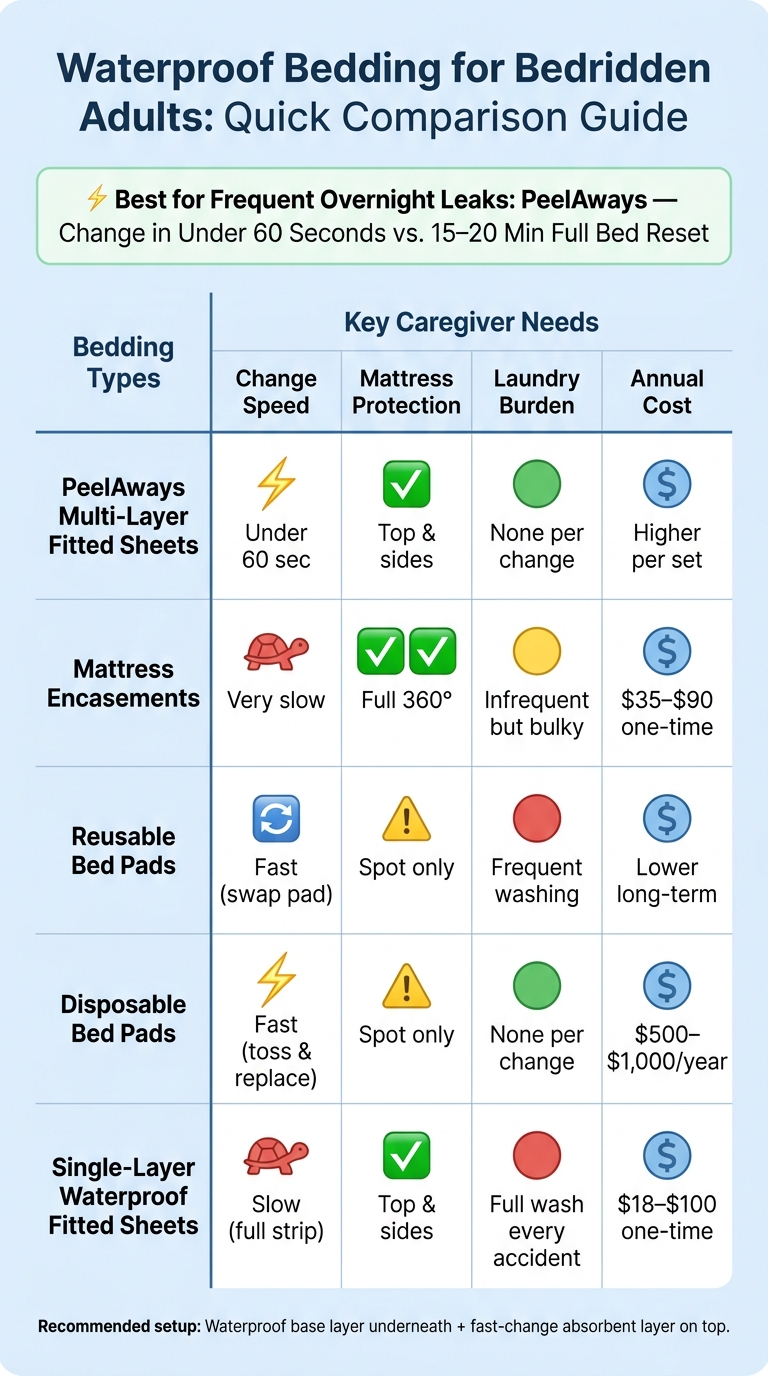
Waterproof Bedding for Bedridden Adults: Quick Comparison Guide
It’s the middle of the night. The bed is wet again, your loved one is half-awake, and you’re standing there doing tired math in your head: What protects the mattress best? What changes fastest? What creates the least extra work by morning?
That’s where these bedding types split apart in a very real way. Each one helps with a different part of the job: faster changes, better mattress coverage, less laundry, or keeping skin drier.
Mattress Protection
If your main fear is mattress damage, mattress encasements do the most. They wrap the full mattress, so you get 360-degree coverage. The tradeoff is simple: they’re a pain to change.
PeelAways and single-layer waterproof fitted sheets protect the top and sides, which handles most leaks well. Bed pads - both reusable and disposable - only protect the spot under the person. That can work fine for some sleepers, but if your loved one moves a lot, shifts in bed, or sleeps near the edge, those pads can slide or leave part of the mattress exposed.
| Bedding Type | Coverage Area | Shifting Risk | Weakest Point |
|---|---|---|---|
| PeelAways (Multi-Layer Fitted) | Top and sides | Low | Leaks can reach the sides if the fit is loose |
| Mattress Encasements | Full 360-degree | None | Zipper or seam area only |
| Reusable Bed Pads | Covers only the area under the person | High | Edges and bunching under saturation |
| Disposable Bed Pads | Covers only the area under the person | High | Edges can shift or tear during repositioning |
| Single-Layer Fitted Sheets | Top and sides | Low | Side-wall exposure if the sheet does not fully encase the mattress |
So yes, encasements do the most for raw mattress coverage. But if cleanup speed matters more than full wraparound protection, the absorbent layer on top starts to matter a lot more.
Change Speed
At 2:00 a.m., speed isn’t some small detail. It’s the whole game.
PeelAways are the fastest by a mile. You peel off the soiled top layer and the clean, dry layer underneath is already in place. That takes under 60 seconds. No lifting the mattress. No fighting with corners. No tossing sheets straight into the wash.
Disposable and reusable bed pads are also fast if the leak stays in one spot. You swap the pad and move on. But once the wetness spreads beyond the pad, the job gets bigger.
Single-layer fitted sheets and mattress encasements are the slowest. Both mean a full bed strip before anything else can happen, and when someone is tired, sore, confused, or embarrassed, that extra time feels long.
| Bedding Type | Overnight Change Speed | Requires Full Bed Strip? |
|---|---|---|
| PeelAways | Under 60 seconds | No |
| Disposable Bed Pads | Fast (swap pad) | No |
| Reusable Bed Pads | Fast (swap pad) | No |
| Single-Layer Fitted Sheets | Slow | Yes |
| Mattress Encasements | Very slow | Yes |
This matters most when you’re trying to reset the bed without fully waking the person in it. Every extra minute means more turning, more lifting, and more stress for both of you.
Skin Dryness
Skin care is one of those things people talk about in a calm voice during the day. At night, it feels a lot less calm.
Disposable pads with SAP pull moisture away the fastest, which helps the skin stay drier. PeelAways also do well here because once you remove the wet layer, the next layer underneath is dry right away. That can make a rough moment feel a little more manageable.
Reusable pads wick moisture, but once they hit their limit, they can start to feel damp. Single-layer waterproof fitted sheets give moderate protection, but after each accident, you still need to do a full sheet change.
Laundry Burden
This is where the hidden workload shows up.
PeelAways and disposable bed pads create no laundry for each change, and that’s a huge relief when accidents are frequent. If you’ve ever stared at a pile of wet sheets before sunrise, you already know why this matters.
Reusable bed pads mean steady washing, though they can save money over time. Encasements don’t need washing often, but when they do, they’re bulky and awkward. Single-layer waterproof fitted sheets have the heaviest day-to-day laundry burden because every accident means the whole sheet has to be washed.
| Bedding Type | Laundry Required? | Laundry Impact |
|---|---|---|
| PeelAways | No | None for each change |
| Disposable Bed Pads | No | None for each change |
| Reusable Bed Pads | Yes | Frequent washing |
| Single-Layer Fitted Sheets | Yes | Full wash after every accident |
| Mattress Encasements | Yes | Infrequent but bulky washing |
Next, weigh the tradeoffs of each option in plain terms.
Pros and Cons of Each Waterproof Bedding Option
It’s 2am. The bed is wet again. You’re tired, your loved one feels awful, and the last thing you want is a full sheet change that turns into a 20-minute ordeal.
This is where the right bedding setup matters.
Use this table to match each bedding type to the job it does best.
| Bedding Type | Best For | Pros | Cons | Not Ideal For |
|---|---|---|---|---|
| PeelAways Multi-Layer Disposable Fitted Sheets | Frequent accidents, overnight leaks, laundry reduction | Bed change in under one minute; 5–7 layers per sheet; no laundry; soft, breathable fabric blend | Higher upfront cost per unit; not cost-effective when accidents are rare | Situations where leaks happen only occasionally |
| Mattress Encasements and Protectors | Long-term mattress preservation; routine daily use | Full waterproof barrier for the entire mattress; reusable; cost-effective over time | Hard to remove at night; hard to remove and wash after a wetting event | Heavy incontinence or frequent nightly leaks |
| Reusable Bed Pads | Targeted spot protection on the bed | Easy to reposition on the bed; machine washable for repeated use; lower long-term cost | Can shift or bunch during sleep; limited coverage area; requires a rotation of 2–4 pads to manage laundry cycles | Restless sleepers who move across the full bed |
| Disposable Bed Pads | Quick bed cleanup; supplemental protection | No laundry; easy to discard; lower upfront cost | Often shifts; crinkly and noisy; high recurring cost; environmental waste | Permanent overnight solution for restless adults |
| Single-Layer Waterproof Fitted Sheets | Daily use for occasional light leaks | Breathable; fits like a standard sheet; fits like a standard sheet; protects the mattress surface | Requires a full-bed strip after every leak | Caregivers needing to minimize physical strain or time |
For most people doing this work at home, the best setup is simple: a waterproof base underneath and the fastest-change layer on top.
That’s why many families land on a layered setup. A mattress protector stays below to guard the mattress. Then a fast-change top layer handles the part that wrecks your night: cleanup.
If leaks are frequent, PeelAways Multi-Layer Disposable Fitted Sheets stand out because they cut bed changes down to about 60 seconds instead of the usual 15–20 minutes. That kind of time savings hits different when you’re half-awake and your back is already screaming. PeelAways comes in sizes from crib to king, uses 5–7 peel-away layers, and has 28,000+ reviews with a 4.8-star rating. You can see them on peelaways.com/shop or on Amazon.
There’s also a skin health piece here that’s easy to miss when you’re just trying to survive the night. Wet pads should never be left in contact with skin for more than 2 hours. Faster changes mean less time in wet bedding, and that can make a hard night a little easier on the person in the bed.
If you want the short version, it’s this: match the setup to the leak pattern and to what you can handle at 2am. If laundry is crushing you, a peel-away top layer can change the whole routine. For more help sorting through options, you can also read our guide to family incontinence training and more caregiver tips here.
Conclusion
It’s 2am. The bed is wet, your loved one is upset, and you’re trying to change everything without waking them all the way up. In that moment, the question isn’t fancy. It’s simple: what gets the bed clean FAST and keeps this from turning into a 20-minute ordeal?
After looking at protection, cleanup, and laundry, that’s what this comes down to. The right setup cuts nighttime mess and helps protect dignity.
For most people, the best setup is a waterproof base underneath and a fast-change layer on top.
When leaks happen often and speed matters most, PeelAways stands out. It changes in under 60 seconds, which can make a long night feel a little less brutal. PeelAways starts at $34.99, with a 15% subscription discount and 10% off with code BLOGS10.
If you want to take a look, you can shop here: peelaways.com/shop or find PeelAways on Amazon. You can also read more on the PeelAways blog for tips that come from the day-to-day reality of bed care and cleanup.
When frequent leaks wear down your time and energy, fast-change bedding can make home care easier to handle.
Blog readers save 10% with code BLOGS10 at checkout. Available on peelaways.com and Amazon. Free shipping on orders over $100.
FAQs
What bedding setup works best for heavy overnight leaks?
It’s 2am. The bed is wet again, your loved one is upset, and you’re standing there knowing a full sheet change could take 15 to 20 minutes you just do not have.
For heavy overnight leaks, a multi-layer disposable fitted sheet system is often the setup that helps the most. It gives you stacked absorbent, waterproof layers, so you can peel off the soiled top layer and get back to a clean, dry bed in under 60 seconds.
For extra backup, add a waterproof mattress encasement or a base fitted protector underneath. That extra layer helps keep the mattress clean and makes one more part of this mess easier to deal with.
How many bed pads should I keep on hand?
It depends on how often the bed gets wet and how often you can wash and dry bedding.
If you're using reusable pads, you'll want enough on hand to keep a rotation going while some are in the wash and others are still drying. That extra set matters more than people think, especially after a rough night.
For heavier incontinence, some people put a large washable pad under a disposable one. That can make cleanup less messy and a lot faster.
And if laundry is piling up or bed changes are hard on your back, multi-layer options can make a tough job easier. PeelAways is one of those products I wish I'd found sooner. It gives you 5-7 layers in one setup, so instead of stripping the whole bed, you peel off one layer and you're done in about 60 seconds. That's a huge shift from the usual 15-20 minutes. It's made in sizes from crib to king, and it has a 4.8-star rating from 28,000+ reviews.
You can see it on PeelAways.com/shop or find the PeelAways Amazon listing. For more help, read how PeelAways works and more caregiving tips on the PeelAways blog.
What helps protect skin during frequent bed changes?
Choose bedding that keeps wetness away from the skin.
When fluid sits on the surface, skin breaks down fast. That's when irritation starts. That's also when pressure sores become a lot more likely. Bedding with moisture-wicking layers pulls fluid down into an absorbent core, so the top feels drier against your loved one's body.
Soft, breathable, hypoallergenic fabrics matter too. If you've ever dealt with red, fragile skin after a long night, you know this isn't a small detail. Bamboo or rayon blends tend to feel gentler on sensitive skin and less harsh during long hours in bed.
Quick-change systems help in a different way. They let you remove a soiled layer fast, with less pulling, less turning, and less time with skin exposed to moisture or mess. When you're tired and trying to change the bed without upsetting someone who's already uncomfortable, that kind of setup can make a hard moment a little easier.
Comments
0



SAVE MONEY & WATER
Professionals & Institutions save a fortune on labor/laundry.

SUPERIOR COMFORT
The first thing our customers notice is how soft our sheets are.

100% WATERPROOF
Each layer is 100% Waterproof, perfect for spills and accidents

SAVE TIME
Change the sheet in under 1 minute without stripping the bed.

Leave a comment