
Best Fitted Sheets for Incontinence That Stay Put All Night

It’s 2am. The sheets are soaked again. Your loved one is embarrassed, which is why emotional care is so vital, your back hurts, and you have to be up in four hours.
A 60-second layer change can mean the difference between getting back to bed and losing the rest of the night. For overnight incontinence, the best fitted sheets are the ones that stay on the mattress, block leaks, and cut laundry. From what I’ve seen, PeelAways stands out when leaks happen often because you peel off one wet layer and the clean one is already there. Each set has 5–7 waterproof layers, comes in sizes crib to king, has 28,000+ verified reviews with a 4.8-star rating, and can cut laundry by 50–80% compared with the old strip-the-bed routine.
What I’d look at first:
- PeelAways multi-layer fitted sheets for the least night work
- Deep-pocket waterproof protectors for thicker mattresses
- Zippered encasements for full mattress coverage
- Absorbent waterproof fitted sheets for lighter leaks
- Layered systems with pads for heavier wetting with backup coverage
| Option | Best for | Night change time | Laundry load |
|---|---|---|---|
| PeelAways | Frequent overnight leaks | About 60 seconds | Low |
| Deep-pocket protector | Mild to moderate leaks | 15–20 minutes | Medium |
| Zippered encasement + top sheet | Mattress protection | 15–20 minutes | Medium |
| Absorbent waterproof fitted sheet | Light to moderate wetting | 15–20 minutes | Medium |
| Fitted sheet + pads | Heavier leaks with backup | 2–10 minutes | Medium to high |
If you’re tired of corners popping loose and full bed changes in the dark, that’s the part to fix first.
You can check PeelAways on the main shop, find them on Amazon, and read more on the PeelAways blog and caregiving articles here.
Making aging and caregiving easier, one bed at a time
Blog readers save 10% with code BLOGS10 at checkout. Available on peelaways.com and Amazon. Free shipping on orders over $100.
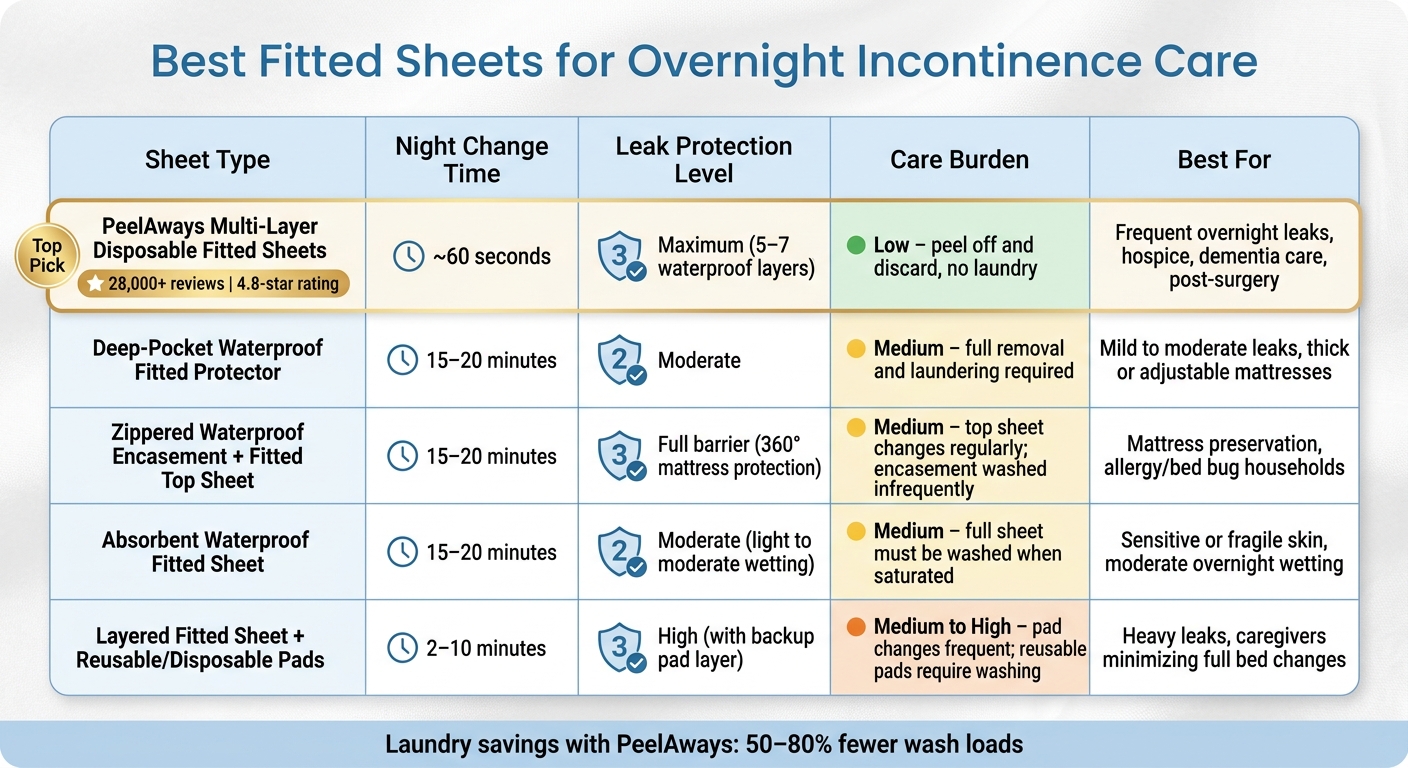
Best Fitted Sheets for Incontinence: Quick Comparison Guide
The Mattress Protector You'll Actually Want To Sleep On
sbb-itb-45288fe
1. PeelAways Multi-Layer Disposable Waterproof Fitted Sheets

It’s 2am. The bed is wet, your loved one is upset, and you’re already thinking about the sheets, the mattress, and the load of laundry waiting for you. That’s the moment PeelAways changed things for me.
PeelAways make nighttime incontinence care much easier. Instead of stripping the whole bed, you peel off the soiled top layer and a clean one is already there underneath. Each set stacks 5 to 7 disposable waterproof layers onto one fitted sheet, so a layer change takes under a minute and cuts out washing a soiled sheet altogether.
Mattress Fit and Elastic Hold
Fit matters more than people think. If the sheet shifts in the middle of the night, everything gets harder.
PeelAways comes in seven U.S. sizes, from crib to king. Twin XL fits standard hospital and long-term care beds. Full and Queen fit mattresses up to 12 inches deep. Full-perimeter elastic helps keep the sheet in place at each corner, and straps or clips can add extra hold for restless sleepers.
Moisture Protection
Nobody wants a bed protector that feels like a tarp.
Each layer is fully waterproof and breathable, with a soft rayon-polyester surface that feels closer to a regular sheet than plastic. That small detail matters when someone is already uncomfortable and tired.
Care Burden
This is the part that hits hardest when you’re running on fumes.
A layer change takes under a minute and gets rid of the whole wash-the-sheet routine after each accident. That means less lifting, less laundry, and less chaos in the middle of the night.
Pricing
Pricing starts at $41.99 for a Twin XL 7-layer set and $47.99 for a Queen 5-layer set.
On thicker mattresses, pocket depth becomes the next fit issue to check.
2. Deep-Pocket Waterproof Fitted Mattress Protectors
It’s 2am. The bed is wet again. You’re tugging at a soaked protector, trying not to wake your loved one any more than they already are, and all you can think is how heavy a wet bed feels when you’re running on no sleep.
Deep-pocket waterproof fitted mattress protectors are made for mattress depths from 8 to 21 inches. They use a waterproof membrane to keep urine and moisture from reaching the mattress. If you’re dealing with a thicker mattress, they can stay in place better when corners keep popping loose. With these, fit comes first. After that, it’s all about whether the elastic still holds when there’s movement in the night.
Mattress Fit
A lot of standard protectors come with 10–12 inch pockets. On thicker home mattresses, pillow-tops, or adjustable beds, that often isn’t enough. The protector may go on at first, then start slipping once the bed is used.
Deep-pocket styles wrap fully around taller mattresses, so the elastic sits farther underneath the base. That extra depth matters most when you’ve got a pillow-top, a mattress topper, or an adjustable bed that shifts position.
Elastic Hold
Full-perimeter elastic usually holds better than corner-only elastic. Instead of gripping at just a few points, it runs around the entire bottom edge. That gives it a better shot at staying put for someone who tosses, turns, or needs repositioning during the night.
It also helps when the stitching is reinforced where the elastic meets the fabric. That spot takes a beating in the wash. If movement is a big issue, sheet straps can help lock the corners down as backup.
Moisture Protection
Most of these protectors use a TPU waterproof membrane bonded to a soft fabric top. That tends to be quieter and more breathable than older vinyl covers, which is a relief if you’ve ever heard that stiff plastic crinkle every time someone shifts in bed.
The fitted shape covers the full top of the mattress and wraps down the sides. That helps cut down on moisture reaching the mattress near the edges. The hard part is what happens after a heavy leak: even if the mattress stays dry, the whole protector still has to come off and go in the wash.
Care Burden
This is where the work adds up. Once it’s soaked, you’re not just peeling off one layer. You’re removing the whole protector, lifting corners, and remaking the bed after laundry. That means more handling, more waiting, and more interruptions in the middle of the night.
Some people keep extras on hand so there’s always a clean one ready. That helps, but it also means more loads of laundry.
If fit and washability matter more to you than a layered setup, this can still be a bedding solution. But if you’re worn out by full bed changes after every accident, the next option solves a different part of the problem.
3. Zippered Waterproof Mattress Encasements with a Fitted Top Sheet
It’s the middle of the night. The bed is wet again, and that sinking feeling hits before your feet even touch the floor. You’re not just dealing with laundry. You’re trying to protect the mattress, keep your loved one comfortable, and get through this with as little stress as possible. Knowing how to keep beds dry is the first step to reducing that stress.
When a fitted protector isn’t enough, a full encasement adds one more layer between the mattress and the mess. A zippered waterproof mattress encasement wraps the whole mattress - top, bottom, and sides - in a waterproof shell. Then you put a regular fitted top sheet over it. Because the encasement covers all sides, it stays put better than a basic protector.
Mattress Fit
This setup adds bulk, so choosing bedding for incontinence care means sheet fit matters more than usual. Use a deep-pocket fitted top sheet, ideally 15 to 18 inches, with elastic all the way around. If the pocket depth is too shallow, the sheet can pop loose when you’re already dealing with enough.
Elastic Hold
The encasement does the hard job of staying locked onto the mattress. The fitted top sheet is the part that tends to slide or bunch. That’s why full-perimeter elastic matters here. It helps the sheet stay in place instead of fighting you every time someone moves.
Moisture Protection
Waterproof encasements are often made from vinyl or TPU. Vinyl gives the strongest barrier. TPU is quieter and lets in more airflow. If you’ve ever dealt with a crinkly bed setup that feels harsh and noisy, you know why that difference matters.
Cleanup
Cleanup is easier for the mattress, but not for the top sheet. After a heavy accident, a vinyl encasement can be wiped down with a damp cloth and mild soap. That part helps. The fitted top sheet still has to come off and go in the wash.
A couple of care details matter here too. Avoid high heat when drying, and skip bleach and fabric softener. Both can wear down the waterproof layer over time. So yes, this setup does a good job protecting the mattress. But after an accident, you’re still doing a full sheet change.
4. Absorbent Waterproof Fitted Sheets
It’s the middle of the night. You feel that damp spot, then the sinking feeling right after it. Now you’re stripping the bed half-awake, hoping the mattress didn’t get hit again.
An absorbent waterproof fitted sheet can help with that. It gives you absorbency in the shape of a fitted sheet and keeps moisture off the mattress. So instead of stacking yet another layer on the bed, you get one sheet doing both jobs.
Mattress Fit
This part matters more than it seems.
Measure the full height of the mattress, including any topper, then match that number to the pocket depth. If the pocket is too shallow, the corners can pop loose during the night. And once that starts, the whole bed feels messy and harder to manage.
Elastic Hold
A sheet like this has to stay put.
Full-perimeter elastic and reinforced corners help it stay snug through tossing, turning, and repeated washing. That tighter hold can make a rough night feel a little less chaotic.
Moisture Protection
Most absorbent waterproof fitted sheets use a soft, moisture-wicking fabric on top and a polyurethane membrane underneath to block liquid. That setup works well if you want one secure sheet with moderate overnight protection.
This is a moderate-capacity option. It usually works well for light-to-moderate overnight leakage. But if wetting is heavy or happens often, one absorbent fitted sheet may be soaked before morning.
Care Burden
Here’s the hard part: when it’s saturated, the whole sheet has to be washed.
That means it helps to keep two in rotation:
- one on the bed
- one in the wash
Skip fabric softener, since it can cut down absorbency over time. Also check the care label. Some sheets can go in the dryer, while others need to air dry so the waterproof backing lasts longer.
If wetting is heavier, the next option gives you more room for overflow and less all-or-nothing cleanup.
5. Layered Fitted Sheet Systems with Reusable or Disposable Pads
It’s the middle of the night. The bed is wet again, and you’re standing there half-awake, trying to figure out if you need to strip everything or if you can get by with one small change. When leaks are heavier or happen more often, that question matters more than people think.
For this kind of overnight mess, a layered setup can make life a lot easier. Instead of changing the whole bed, you add a removable absorbent surface on top. A layered fitted sheet system uses a waterproof mattress protector, a fitted sheet, and one or more absorbent pads placed under the hips and upper thighs. That way, after a leak, you can swap the pad instead of starting from scratch with the whole bed.
Mattress Fit
Start with a fitted sheet underneath that fits the mattress snugly, including any topper. If the base layer shifts, everything above it gets harder to manage.
The pads themselves usually stay put because of their size and where you place them, not because of elastic. Bigger pads that cover the center of the bed work best. Place them from the waist down through the upper thighs. That gives you more room for error and less chance that moisture sneaks onto the sheet below.
Elastic Hold
Pads need to stay flat. If they slide, fold, or bunch up, you’re back to doing more laundry than you planned.
Look for pads with non-slip backing, tuck-in wings, or both. Quilted construction also helps because it keeps the pad flatter and makes bunching less likely.
Moisture Protection
This part is where the setup either helps or lets you down.
A solid pad should have:
- a soft, stay-dry top that pulls moisture away from skin
- a thick absorbent core
- a waterproof backing that stops liquid before it reaches the fitted sheet or mattress protector
If overnight wetting is heavier, add a disposable underpad beneath a reusable pad. Think of it as your main layer and your backup layer. If one gets overwhelmed, the second one is there to catch what gets through.
Care Burden
This is the tradeoff. Reusable pads cut down on trash, but they do mean more washing. Most need warm water and should be washed without bleach or fabric softener so the waterproof backing holds up over time. It also helps to keep several on hand, so you’re not stuck waiting on laundry when you need a clean one fast.
Disposable vs. washable bed sheets comparisons show that while disposables skip the wash, they bring extra cost over time and more waste. For frequent overnight wetting, a reusable pad over a disposable underpad often gives the best mix of speed and backup protection. When one-piece fitted protection stops being enough, this kind of layered system is often the next step that makes the night more manageable.
Pros and Cons of Each Sheet Type for Overnight Incontinence Care
It’s 2am. The bed is wet again. You’re tired, your loved one is upset, and the last thing you want is to wrestle with corners, layers, and a full mattress change in the dark. It's even harder when you have to replace sheets on an occupied bed without waking your loved one.
That’s the part people don’t talk about enough. A sheet can look fine on paper and still be a nightmare when you’re half-awake and trying to clean up fast with time-saving bedding tips.
Pros and Cons of Each Sheet Type for Overnight Incontinence Care
Each option fixes a different overnight mess. But none works for every bed, every body, or every care routine. This side-by-side breakdown helps you look at the stuff that matters most: fit, cleanup, and whether the sheet stays put when someone moves around all night.
| Sheet Type | Main Advantages | Main Drawbacks | Best Use Case | Overnight Stability |
|---|---|---|---|---|
| PeelAways Multi-Layer Disposable Fitted Sheets | Strong leak protection; 60-second changes without lifting the mattress; fewer laundry loads; less handling after a leak; soft, quiet surface | Ongoing consumable cost; more waste than reusable options; standard sizes may slip on extra-deep pillow-top mattresses | Nightly incontinence, hospice, post-surgery recovery, dementia care | Strong - elastic corners and deep pockets help keep the sheet in place through overnight movement |
| Deep-Pocket Waterproof Fitted Mattress Protectors | Durable; economical over time; continuous waterproof coverage; deep pockets and full elastic help reduce corner pop-offs | Full removal required for changes; can trap heat with vinyl or polyurethane laminates; some models rustle; longer drying time | Moderate accident frequency; adjustable or thick mattresses | Good - deep pockets and reinforced elastic help the protector stay put during repositioning |
| Zippered Waterproof Mattress Encasements with a Fitted Top Sheet | 360° mattress protection; top sheet can be changed while the encasement remains on the mattress | Harder to install; the whole encasement must be unzipped to wash; vinyl-backed versions can feel hot and noisy | Mattress preservation; households managing both incontinence and allergies or bed bugs | Excellent for the encasement itself; the top sheet still needs a good fit to stay smooth |
| Absorbent Waterproof Fitted Sheets | Wicks moisture away from skin; terry or knit surface is soft and quiet | Bulkier; longer drying time; may feel damp once saturated; costs more than basic protectors | Users with sensitive or fragile skin; moderate overnight wetting | Good - wide elastic bands and deep pockets help them stay smooth, but incorrect sizing can cause bunching |
| Layered Fitted Sheet Systems with Reusable or Disposable Pads | After most leaks, only the pad changes; mix of reusable and disposable pads; reusable pads can lower long-term cost | Pads can bunch or shift without non-slip backing or tuck-in wings; too many layers can add bulk and heat; reusable pads require frequent washing | High-frequency overnight wetting; caregivers who want to minimize full bed changes | Variable - secured pads stay flat, but loose pads may shift with restless sleepers |
A few patterns show up fast.
PeelAways make the most sense when the issue is constant overnight cleanup. If you’ve ever had to strip a wet bed while someone is still in it, the 60-second change is the whole point. That’s why so many families use them for nightly incontinence, hospice, dementia care, and post-surgery recovery. They come in 5-7 layers, fit sizes from crib to king, and they’ve built a following with 28,000+ reviews and a 4.8-star rating. I’d put them in the category of “I wish I had found this sooner.”
Deep-pocket waterproof protectors are more of a long-haul option. They stay on well, especially on thick or adjustable mattresses, and they cost less over time. The tradeoff is simple: once they’re wet, you’re still doing a full change.
Zippered encasements do the best job of guarding the mattress itself. That matters if you’re dealing with both incontinence and things like allergies or bed bugs. But washing them is a hassle, and getting one back on the bed can feel like a workout nobody asked for.
Absorbent waterproof fitted sheets can feel softer against the skin, which matters if your loved one has fragile skin or gets irritated fast. Still, once they’re soaked, they can feel heavy and damp.
Layered systems with pads can cut down on full bed changes, but only if the pad stays where it belongs. If it shifts, bunches, or rides up, you’re back to fixing the bed in the middle of the night.
Two small details make a bigger difference than people expect:
- Noise: Vinyl-backed protectors tend to be louder. Fabric-topped sheets and pads are usually quieter.
- Fit: Most slipping starts with pocket depth that doesn’t match the mattress.
That last one matters more than people think. A sheet doesn’t need to be “bad” to fail overnight. It just needs to be the wrong depth for the bed. Then the corners pop off, the top bunches up, and now you’re dealing with one more problem at 2am.
If you want to see how PeelAways work in daily care, you can check the main shop at peelaways.com/shop or the Amazon listing for PeelAways. It also helps to read through our ultimate guide to bedding for caregivers before you choose a setup for your bed routine.
Making aging and caregiving easier, one bed at a time.
Which Sheet Type Works Best for Your Care Situation
It’s the middle of the night. There’s another leak, the bed is wet, and you’re doing that tired math in your head: Do I change everything now, or try to get through till morning? When you’re this worn out, the best setup is the one that stays put, keeps moisture off the mattress, and cuts down those overnight bed changes.
After weighing the tradeoffs, the next step is simple: pick the sheet setup that fits your bed and your cleanup routine. Think about three things first - how often leaks happen, what kind of mattress you’re working with, and how much time you can spend cleaning up in the dark.
| Care Situation | Recommended Sheet Type | Fit Security | Leak Protection | Care Burden |
|---|---|---|---|---|
| Mild leakage at home | Deep-pocket waterproof fitted protector | High | Moderate | Routine laundering after accidents |
| Moderate to heavy nighttime incontinence | PeelAways multi-layer disposable fitted sheets | High | Maximum - 5 to 7 waterproof layers | Peel off and discard; no laundry |
| Hospital or Twin XL beds | PeelAways Twin XL (7 layers) | High - fits Twin XL hospital frames | Maximum - 5 to 7 waterproof layers | Quick layer swaps |
| Reducing caregiver strain and laundry | PeelAways multi-layer disposable fitted sheets | High - quick peel-off, no full bed strip | High | No full bed stripping; little laundry |
| Mattress-preservation system | Zippered waterproof mattress encasement + fitted top sheet | Excellent for the encasement; top sheet needs correct sizing | Full barrier | Infrequent encasement washing; regular top-sheet changes |
For light leakage, a deep-pocket protector usually does the job. If wetting is heavier, a layered disposable system makes nights much easier. That’s where PeelAways can feel like a lifesaver: 5 to 7 waterproof layers, sizes from crib to king, and a bed change in about 60 seconds instead of 15 to 20 minutes. If you use diapers or incontinence pads, this kind of setup can take a huge load off.
Thicker mattresses and adjustable beds need deeper pockets and stronger elastic. If your main goal is full mattress protection, use a zippered waterproof encasement underneath a fitted top sheet. And if your main goal is less laundry and less lifting, PeelAways is worth a close look - especially with 28,000+ reviews and a 4.8-star rating. You can check them on Amazon or browse more details at peelaways.com/shop.
If you want help sorting out nighttime cleanup and bed protection, these may help too:
- PeelAways blog
- More articles on peelaways.com
FAQs
How do I know if the sheet will fit my mattress?
Measure your mattress length, width, and total depth. That includes any pressure-relief topper too. Most PeelAways fit standard U.S. mattress sizes up to 12 inches deep.
If your mattress is deeper than that, or it tends to slide around when your loved one moves, sheet straps or clips can help keep the corners in place. A lot of home hospital beds, for example, use Twin XL sizing: 39 x 80 inches.
What works best for heavy overnight leaks?
It’s 2am. The bed is wet again. You’re tired, your loved one is mortified, and the last thing you need is a full sheet change in the dark.
For heavy overnight leaks, a multi-layer disposable fitted sheet is the best option. It covers the whole mattress and has built-in waterproof layers, so you can peel off the soiled top layer and get back to a clean, dry bed in under 60 seconds.
That’s why this works better than smaller pads. Pads can slide, bunch up, or leave part of the mattress exposed once your loved one starts moving around. A full fitted sheet stays in place and protects the entire sleep surface.
If you want backup protection too, add a zippered waterproof mattress encasement underneath. That extra layer can save you from dealing with a soaked mattress later.
How can I reduce nighttime bed changes?
A soaked bed in the middle of the night can break you a little. You're tired, your loved one feels awful, and the last thing you need is a full sheet change before sunrise.
That’s why a multi-layer bedding system like PeelAways can make such a difference. When an accident happens, you peel off the soiled top layer and get back to a clean, dry surface in under 60 seconds.
It also helps to choose fitted sheets with deep pockets and 360-degree elastic. They stay snug, cut down on bunching, and help keep that overnight protection in place.
Comments
0



SAVE MONEY & WATER
Professionals & Institutions save a fortune on labor/laundry.

SUPERIOR COMFORT
The first thing our customers notice is how soft our sheets are.

100% WATERPROOF
Each layer is 100% Waterproof, perfect for spills and accidents

SAVE TIME
Change the sheet in under 1 minute without stripping the bed.

Leave a comment