
Best Sheets for Bedridden Adults Who Need Overnight Protection

It’s 2am. The sheets are soaked again. Your loved one is embarrassed, your back hurts, and you have to be up in four hours.
A bed change that takes under 60 seconds instead of 15–20 minutes can change the whole night. For bedridden adults who need overnight protection, the best setup is usually a waterproof base layer plus an absorbent top layer - and for heavy leaks or full immobility, I’d put PeelAways at the top because it cuts laundry by about 50–80%, comes with 5–7 waterproof layers per set, fits crib to king, and has 28,000+ reviews with a 4.8-star rating.
What I’d compare first:
- PeelAways multi-layer disposable fitted sheets for the fastest bed reset
- Reusable waterproof fitted sheets for lower repeat spend
- Disposable underpads for small, contained leaks
- Reusable underpads for extra absorbency with wash-and-reuse
- Waterproof mattress protectors as the bottom backup layer
| Option | Best for | Main tradeoff |
|---|---|---|
| PeelAways | Heavy leaks, limited mobility, less laundry | Repeat cost |
| Reusable waterproof sheets | Light or occasional accidents | Full bed changes and washing |
| Disposable underpads | Spot protection | Can shift at night |
| Reusable underpads | Extra absorbency | More laundry |
| Mattress protectors | Mattress backup | Not absorbent on their own |
If you’re tired of doing sheet math in the dark, this is the part that matters most: pick the setup that cuts wet time, protects skin, and saves your back.
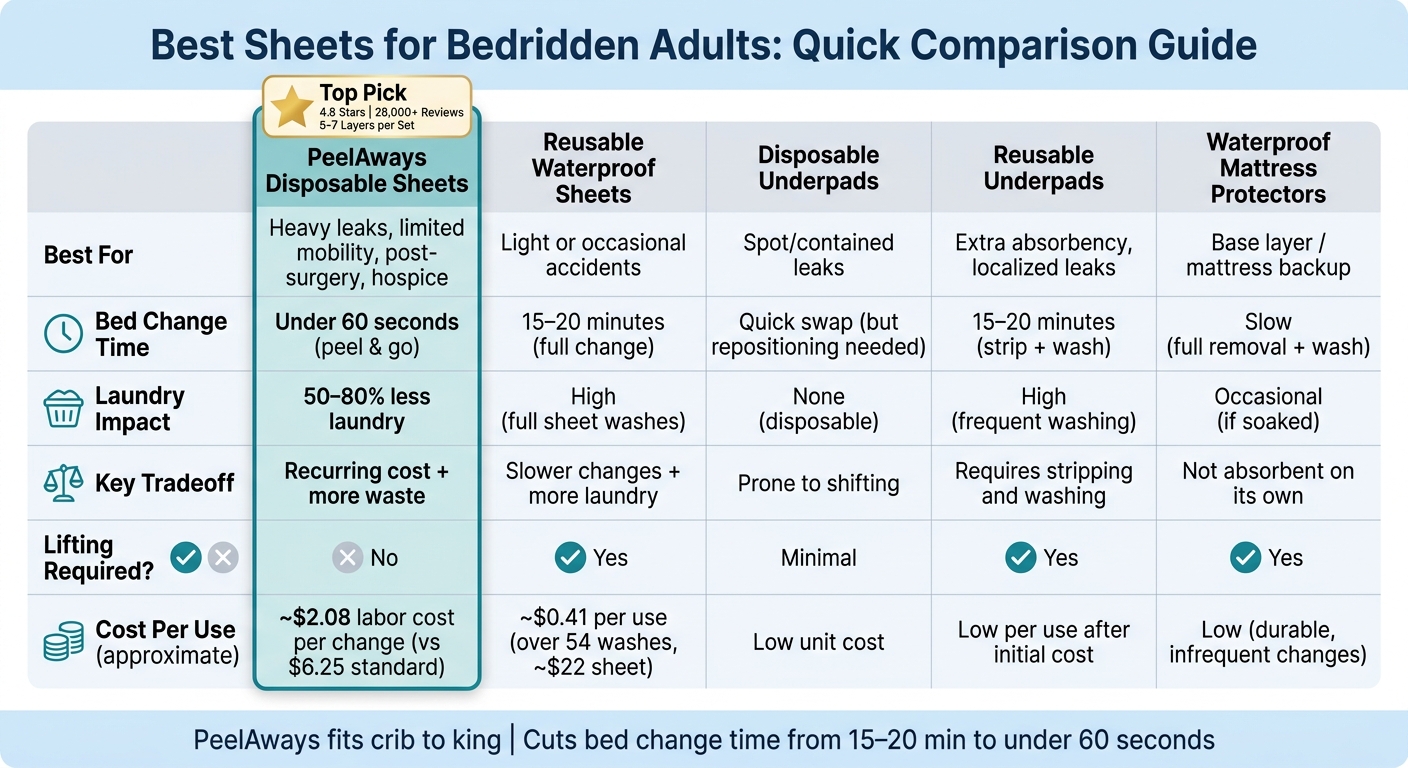
Best Sheets for Bedridden Adults: Quick Comparison Guide
Peelaways Waterproof Disposable Bed Sheets | Absorbent Wellness Sheets for Elderly & Travel
1. PeelAways Multi-Layer Disposable Waterproof Fitted Sheets
It’s 2am. The bed is wet again, your loved one is upset, and you’re staring down another full sheet change when you barely have the energy to stand. That’s the moment PeelAways was made for.
PeelAways make overnight incontinence care much easier. Each pack comes with 5 to 7 pre-stacked waterproof fitted sheets, so when one layer gets soiled, you peel it off and there’s a clean, dry layer already underneath. You can do that in under 60 seconds - no lifting the mattress, no stripping the whole bed, and no late-night laundry.
Overnight Leak Protection
Each layer has a 100% waterproof, breathable barrier that keeps liquid off the mattress. Since it’s a fitted sheet, it stays in place instead of bunching up or sliding around during the night.
Skin Comfort and Breathability
When someone is already uncomfortable, the last thing you want is a sheet that feels stiff or sweaty. PeelAways are made from a soft bamboo, rayon, and polyester blend, and they’re 32% softer than standard hospital sheets.
The waterproof layer is also breathable, which helps cut down on heat and sweat overnight. And if you’re watching out for skin irritation, that matters. They’re also free of vinyl, PVC, and phthalates.
Cleanup and Laundry Burden
This is where PeelAways can feel like a lifeline. A full linen change usually takes about 15 minutes. With PeelAways, you can peel off the top layer in under 60 seconds, and even a full change takes about 5 minutes.
Because you throw away the soiled layer, you skip the laundry from that accident. In care settings, labor cost drops from about $6.25 per change to about $2.08. Less mess. Less movement. Less stress for both you and the person in bed.
Best Fit for Care Situation
PeelAways are a strong option when speed and low handling matter most: heavy incontinence, dementia care, post-surgery recovery, and hospice. In those moments, a slower bed change can feel endless. A 60-second peel-back can spare a lot of discomfort.
For restless sleepers, straps or clips can help keep the corners secure. And if a layer stays dry, it can last 7 to 10 days.
If you use diapers or incontinence pads, PeelAways are worth a hard look. They come in sizes from crib to king, carry a 4.8-star rating, and have 28,000+ reviews. It’s one of those products many of us wish we’d found sooner.
Making aging and caregiving easier, one bed at a time
You can find them on peelaways.com/shop, on Amazon via the PeelAways listing, and in other helpful reads on PeelAways like how multi-layer bed sheets work and tips for easier overnight incontinence care.
2. Reusable Waterproof Fitted Sheets
It’s 2am. The sheet is wet, your loved one is half-awake, and you’re already doing the math in your head: change the whole bed now, or wait and deal with it in the morning. If you’ve been here, you know the hard part isn’t just the leak. It’s the work that comes after.
Reusable waterproof fitted sheets can feel soft and familiar. They’re washable, and for some homes, that sounds like the simpler path. But the catch is hard to ignore: they move the burden to laundry and hands-on bed changes. They tend to make more sense when accidents don’t happen often and you’re not changing the bed all the time. That trade-off matters when you need a bed that stays dry without turning the night into another full chore.
Overnight Leak Protection
Most reusable waterproof fitted sheets use a waterproof membrane or a breathable PU laminate to keep liquid from reaching the mattress. That helps protect the bed itself.
But here’s the part that hits in the middle of the night: once the sheet is wet, it stays wet until you change it. During a long stretch of sleep, that can mean hours on a damp surface if a full bed change can’t happen right away.
Skin Comfort and Breathability
The top fabric can feel soft at first. No issue there. The problem starts after the leak.
Once wet, reusable linens stay damp until changed. For someone already at risk for skin breakdown, that extra moisture overnight can increase the chance of skin irritation. A PU laminate may help spread out heat and perspiration while still blocking leaks, which can help the sleep surface stay cooler and drier through the night. Even so, if the sheet is soaked, someone still has to get up and change it.
Cleanup and Laundry Burden
This is usually where reusable sheets stop feeling simple.
Laundry averages about $0.60 per pound. A reusable fitted sheet costs about $22 and lasts about 54 washes, which comes out to about $0.41 per use. On paper, that may sound fine. In real life, the work around it is what wears you down.
On an occupied bed, changing a fitted sheet often means lifting or rolling the person in bed. That’s tough on your back. It can also feel awkward and uncomfortable for the person lying there. Do that once in a while, and maybe it’s manageable. Do it often, and the labor and laundry pile up fast.
Best Fit for Care Situation
Reusable waterproof fitted sheets usually make the most sense when:
- accidents are occasional
- the person can be moved without much trouble
- cost per use is the main concern
For heavy incontinence or post-surgery recovery with a lot of wound leakage, the laundry and physical work can become too much to keep up with.
If leaks tend to stay in one area instead of soaking the whole bed, the next option is an absorbent underpad.
3. Disposable Underpads
It’s 2am. You feel that damp spot before you even turn on the light. The leak is small, but now you’re stripping layers, checking the mattress, and trying not to wake the person you just got settled.
When leaks stay in one spot, a disposable underpad can help protect the bed without changing the whole sheet.
It adds an absorbent layer under the person. The goal is simple: catch urine and sweat before they soak into the sheet or mattress. But there’s a catch. These pads only do their job when they stay flat through the night.
Overnight Leak Protection
Disposable underpads can use a breathable PU backing to form a waterproof barrier and stop liquid from reaching the sheet and mattress below. For heavier wetting, absorbent fibers like bamboo, viscose, and polyester help pull in and spread urine and perspiration.
That matters more than people think. If the pad bunches up or shifts, the leak can go right around it.
Skin Comfort and Breathability
If someone is in bed for long stretches, heat and moisture can turn a small problem into a skin problem fast.
Breathable membranes can help keep the sleep surface cooler and drier, which may reduce skin irritation over time. When you’re shopping, look for a breathable PU backing instead of a non-breathable one. You still get mattress protection, without trapping as much heat or moisture.
Cleanup and Laundry Burden
This is where disposable underpads make life a little easier.
You can swap one out fast, and there’s no laundry pile waiting for you after. That said, the soiled pad still has to be pulled out from under the person. If you’ve ever tried to do that without fully waking them, you know it’s not always as simple as it sounds.
Best Fit for Care Situation
Disposable underpads work best when leaks stay contained to one area and the pad can stay flat through the night. They can also help during post-surgery recovery, when wound drainage or spills are part of the picture.
For adults who move around in bed, size matters. Use a pad large enough to stay flat overnight.
If you want that same kind of bed protection with less waste, the next option is reusable underpads.
4. Reusable Underpads
It’s 2am. The pad is soaked, the sheets are bunching, and you’re standing there half-awake trying not to fully wake the person in bed. You want to fix it fast, but you already know what comes next: pull it off, start the wash, and make the bed all over again.
When you want the same bed protection without throwing the pad away, reusable underpads are often the next step. They protect the bed and can be washed and used again. But every wet night still means removing the pad, doing laundry, and remaking the bed.
Overnight Leak Protection
Reusable underpads use absorbent fibers to hold urine and perspiration. That part matters. But the backing matters just as much.
Choose a pad with a waterproof backing. Without it, moisture can pass through to the sheet and mattress.
Skin Comfort and Breathability
Reusable underpads are usually soft against the skin, which helps when someone is lying on them for hours. The hard part is what happens after use: they stay damp.
Some materials handle heat a little better than others. Breathable PU laminate blocks liquid without trapping as much heat as vinyl or PVC.
Cleanup and Laundry Burden
This is where reusable underpads can wear you down. One overnight change can take about 15 to 20 minutes, including removing the soiled pad and remaking the bed.
And if you’re doing that more than once a night? It adds up fast. More laundry. More lifting. More time you just don’t have in a home care setting.
If that sounds familiar, this is why so many families start looking for something easier, like PeelAways or the PeelAways Amazon listing. It’s a layered bedding system I wish I had found sooner. You peel off the top layer and the bed is ready again in about 60 seconds, not 15 to 20 minutes. It comes in 5-7 layers, sizes from crib to king, and has 28,000+ reviews with a 4.8-star rating. You can read more in these posts on PeelAways bed pad options and caregiving tips from PeelAways.
Best Fit for Care Situation
Reusable underpads can make sense when nighttime changes don’t happen often and laundry is easy to manage. In that situation, washing and reusing the pad may feel manageable.
But for heavy overnight incontinence or someone with limited mobility, the 15- to 20-minute change time and extra laundry can become a major problem.
Next, waterproof mattress protectors add a final barrier beneath the sheet or pad.
sbb-itb-45288fe
5. Waterproof Mattress Protectors
It’s 2am. You strip the bed, and your hand hits a damp mattress underneath the sheet. That sinking feeling? It’s not just the mess. It’s knowing this is about to take way longer than you have in you.
A waterproof mattress protector goes under the bedding and keeps the mattress dry. That part matters. But here’s the part people learn the hard way: it blocks liquid from soaking through, and it does not absorb it. For a bedridden adult with overnight incontinence, that difference changes everything.
Overnight Leak Protection
A waterproof mattress protector creates a full barrier between the mattress and urine, wound exudate, or perspiration. If your goal is to protect the mattress itself, it does that job.
What it does not do is stop overnight bed changes by itself.
If there isn’t an absorbent layer on top, moisture can stay against the skin and leave the bed feeling damp. And when someone is lying in one spot for hours, that dampness becomes a much bigger problem than people think. The mattress may be safe, but your loved one is still uncomfortable.
For bedridden adults, a protector alone usually isn’t enough. It works best as a backup layer under something absorbent, not as the main overnight setup.
Skin Comfort and Breathability
This is where the top layer matters just as much as the waterproof backing.
Breathable PU can block liquid without holding in as much heat. That can make a big difference during a long night. A soft surface also helps. Bamboo blends or polyester blends can help spread out heat and handle perspiration better.
It also helps to check what’s not in the protector. If skin is already touchy, skip vinyl, PVC, and phthalates when you can. Small details like that matter when someone is spending hour after hour in bed.
Cleanup and Laundry Burden
If the protector gets soaked, you still have to remove it and wash it before using it again. So yes, it protects the mattress. But no, it doesn’t save you from the cleanup cycle on its own.
That’s why this kind of protector makes more sense as one layer in a stacked setup, not the layer doing the heavy lifting overnight.
Best Fit for Care Situation
The best way to use a waterproof mattress protector is simple:
- Put it down as the base layer
- Add an absorbent sheet or pad on top
For heavy overnight incontinence or post-surgery recovery, that top absorbent layer isn’t optional. It’s the part that handles the wetness while the protector underneath saves the mattress.
Think of the protector as the last line of defense. It’s there in case the upper layer fails. It is not the layer that should be dealing with daily wetness by itself.
The next section compares how each option holds up through a full night.
How Each Option Holds Up Through the Night
It’s 2am. The bed is wet again. You’re half awake, your loved one is uncomfortable, and the last thing you want is a full sheet change that turns into a 20-minute ordeal.
This is where the setup you choose starts to matter.
Heavy incontinence is usually the toughest overnight mess to deal with. A reusable underpad can catch some of the leak, but you still have to pull it out from under the person. That’s hard on them, and hard on your back. A 7-layer PeelAways sheet with a disposable underpad on top gives you more protection and makes cleanup much faster.
Post-surgery recovery is a different kind of hard. You may be dealing with wound drainage, sore skin, and someone who needs a soft place to rest. A 5-layer PeelAways sheet paired with a reusable underpad helps manage drainage with less disruption.
For night sweats without major leaks, you usually don’t need much extra. One 5-layer PeelAways sheet is often enough.
For hospital and shared beds, fit matters more than people think. Twin XL PeelAways fit standard hospital mattresses and make bed changes easier when space is tight.
The table below pulls it all together.
| Scenario | Main Layer | Top Layer | Key Benefit |
|---|---|---|---|
| Heavy Incontinence | PeelAways 7-Layer | Disposable Underpad | More protection and faster cleanup |
| Post-Surgery Recovery | PeelAways 5-Layer | Reusable Underpad | Handles drainage with less disruption |
| Sweating, No Major Leaks | PeelAways 5-Layer | None | Breathable membrane keeps the sleeper dry |
| Limited Mobility | PeelAways 7-Layer | None | No-lift changes |
| Shared Bed (Queen/King) | Queen or King PeelAways | None | Full-mattress protection without disturbing a partner |
| Hospital Bed | Twin XL PeelAways | Disposable Underpad | Fits adjustable frames; fast changes in tight spaces |
If you’ve ever stood there in the dark trying not to wake your loved one any more than they already are, you know this isn’t just about bedding. It’s about getting through the night with less stress, less laundry, and a little more dignity intact.
Pros and Cons of Each Bedding Type
It’s 2am. The bed is wet again, and you’re doing that tired math in your head: how fast can I fix this without fully waking them up? In moments like that, the trade-off matters more than the sales pitch.
After all the detail, here’s the plain truth. Each bedding type solves one part of the problem. Very few solve the whole thing.
PeelAways multi-layer disposable sheets: Fastest overnight change. No lifting. No laundry pile waiting for you in the morning. The downside is the repeat cost and extra trash.
Reusable waterproof fitted sheets: Cost less at the start. But bed changes take longer, and you’re still stuck washing sheets after an accident.
Disposable underpads: Cheap and easy to swap. Still, they slide around, and they work better as backup than as your main layer.
Reusable underpads: They hold more than disposable pads. But once they’re wet, you still have to strip them off and wash them.
Waterproof mattress protectors: Good for saving the mattress. Not good as the main overnight fix when you need a fast, clean bed change.
The table below keeps it simple.
| Bedding Type | Pros | Cons | Best Use |
|---|---|---|---|
| PeelAways Disposable Sheets | Fastest change; no lifting; no laundry | Recurring cost; more waste | Bedridden adults; heavy incontinence; post-surgery recovery |
| Reusable Waterproof Sheets | Lower upfront cost | Slower changes; more laundry | Mild incontinence; adults who can reposition themselves |
| Disposable Underpads | Inexpensive; quick to swap | Prone to shifting; limited coverage | Backup protection, not primary coverage for heavy leaks |
| Reusable Underpads | More absorbent than disposables | Requires stripping and washing | Localized leaks; extra absorbency |
| Waterproof Mattress Protectors | Protects the mattress; durable | Not absorbent; harder to change in bed | Base layer for any bedridden setup |
If you’re changing beds for someone who can’t help much - or can’t help at all - the gap between 60 seconds and 15 to 20 minutes is everything. That’s where PeelAways stands apart: 5 to 7 layers, sizes from crib to king, a 4.8-star rating, and 28,000+ reviews. It’s one of those things many people don’t think about until they’re exhausted and desperate for one small part of the night to get easier.
You can see PeelAways at peelaways.com/shop, check the Amazon listing, and read more on the PeelAways blog for other caregiving tips and setup ideas.
Which Bedding Setup Should You Choose?
It’s 2am. The bed is wet again, your loved one is half-asleep, and you’re standing there doing tired math in your head: Can I fix this fast, or am I stripping the whole bed?
That’s the part nobody talks about enough. The right setup isn’t about what sounds nice on paper. It’s about the night you’re actually dealing with.
Match your bedding to four things: how much leaks overnight, how often the bed needs changing, how much your loved one can move, and how much laundry you can keep up with. Start with a waterproof mattress protector. That gives you a base layer you can count on.
If leakage is light and your loved one can reposition themselves, a waterproof mattress protector plus a washable underpad is usually enough. It keeps costs lower and works well for the occasional accident.
If leakage is moderate, go with a layered setup: a waterproof mattress protector, a waterproof fitted sheet, and one or two absorbent underpads you can swap out during the night. That gives you more backup without going all-in on disposables.
When leakage gets frequent, or full-bed changes start feeling like a whole event, speed matters more than reuse. For heavy leakage, repeated overnight changes, or full immobility, use a multi-layer disposable sheet system. A soiled layer peels away in under 60 seconds without lifting or moving your loved one, which can help cut down on friction and sleep disruption after surgery or when mobility is limited.
If laundry is the thing pushing you over the edge, disposable top layers can take a lot off your plate. The fitted-sheet layer stays cleaner, and the protector underneath remains your main base.
For many people at home, the setup that makes life easier is simple: a waterproof mattress protector, a multi-layer disposable sheet system like PeelAways, and a targeted underpad under the hips for heavy leakage.
If you want to compare options, you can also check PeelAways on Amazon. And if you’re in the thick of this right now, these guides may help too: PeelAways blog and more caregiving articles from PeelAways.
FAQs
How many PeelAways layers do I need for overnight leaks?
PeelAways comes with 5 to 7 waterproof layers, depending on the size. Cot and Twin XL have 7 layers. Twin, Full, Queen, and King have 5.
That matters more than it sounds.
When there’s another overnight leak, you don’t have to strip the bed, dig out clean sheets, and start over half-asleep. You just peel off the soiled top layer in under a minute and there’s a clean, dry one underneath.
If a layer isn’t used, it can stay in place for 7 to 10 days.
Can I use PeelAways with an underpad and mattress protector?
Yes. PeelAways can be used with an underpad and mattress protector.
The layers are 100% waterproof, so they handle the main job of keeping the mattress dry. If you're dealing with heavy incontinence or rough nights where leaks happen more often, adding a reusable waterproof mattress protector or an underpad underneath gives you another line of defense.
That extra layer can help with a few things:
- Better mattress protection
- Less cleanup in the middle of the night
- Cleaner, easier bed care
Sometimes you just want backup. That makes sense, especially when you're tired and trying to avoid one more full bed change.
Are PeelAways comfortable for sensitive or fragile skin?
It’s the middle of the night. The bed is damp again. Your loved one is uncomfortable, their skin is already looking angry, and you’re trying to fix it all without making them feel worse.
Yes. PeelAways are made to feel soft against fragile skin. The fabric blend uses bamboo, rayon, and polyester, so it’s gentle, breathable, and hypoallergenic.
That matters more than people think. When someone is in bed for long stretches, even a little moisture can turn into redness, soreness, and one more thing to worry about.
PeelAways are also free from vinyl, PVC, phthalates, fire retardants, and latex. The waterproof top-to-bottom design is still breathable, so it helps pull moisture away and keep the sleeping surface drier. In plain English: less dampness sitting against the skin, and less chance of irritation from a wet bed.
Comments
0



SAVE MONEY & WATER
Professionals & Institutions save a fortune on labor/laundry.

SUPERIOR COMFORT
The first thing our customers notice is how soft our sheets are.

100% WATERPROOF
Each layer is 100% Waterproof, perfect for spills and accidents

SAVE TIME
Change the sheet in under 1 minute without stripping the bed.

Leave a comment