
Best Products for Bedridden Elderly Patients

"It's 2am. The sheets are soaked again. Your loved one is embarrassed, your back hurts, and you have to be up in four hours. If this feels like your reality, you’re not alone - and there’s a way to make it easier."
Caring for a bedridden loved one is exhausting. Between managing incontinence, protecting delicate skin, and juggling endless laundry, it can feel like an uphill battle. But the right products can save you time, energy, and stress. Here’s what you need to know:
- PeelAways Multi-Layer Sheets: Change a bed in 60 seconds without lifting or laundry.
- Waterproof Mattress Protectors: Protect your mattress but require extra effort to clean.
- Adult Briefs: Contain waste and protect skin, but leaks still happen.
- No-Rinse Cleansers & Barrier Creams: Keep skin clean, dry, and protected from irritation.
Each of these products solves a specific problem. But combining them can transform your caregiving routine. Let’s break down what works - and why PeelAways might be the game-changer you didn’t know you needed.
Caring for Someone with Incontinence | Types of Incontinence, Best Products, Caregiver Support
1. PeelAways Multi-Layer Disposable Waterproof Fitted Sheets

PeelAways are disposable fitted sheets with 5–7 waterproof layers, designed to make middle-of-the-night bed changes quick and stress-free. When the top layer gets soiled, you simply peel it off to reveal a clean sheet underneath. The entire process takes about 60 seconds - no heavy lifting, no extra laundry, and minimal disruption to rest.
Hygiene and Infection Control
Each layer is designed to lock in moisture and odors, ensuring that messes stay contained. Peeling away the soiled layer helps prevent cross-contamination, creating a cleaner sleeping environment. Unlike bed pads that only protect a small area, PeelAways cover the entire mattress, giving you peace of mind that every inch is safeguarded during an accident.
Skin Protection and Comfort
Made with a bamboo/rayon blend, PeelAways are 32% softer than standard hospital sheets. The breathable material reduces heat and moisture buildup, which can help protect against pressure sores, especially for those who spend long hours in bed. The sheets are hypoallergenic and free from vinyl, PVC, phthalates, and fire retardants, making them gentle on delicate skin. Plus, they’re designed to be quiet, preserving dignity and normalcy.
Caregiver Convenience
Changing traditional sheets often takes 15–20 minutes and requires heavy lifting. With PeelAways, the job is done in just 60 seconds, without needing to reposition the patient. This efficiency reduces physical strain on caregivers - a benefit highlighted in over 1,100 five-star reviews. For an even smoother experience, place the green stitching at the head of the bed during setup and pre-tear the top two corners to make peeling faster.
Cost and Maintenance
By cutting laundry loads by 50–80%, PeelAways can save families time and money on water, detergent, and electricity. Depending on your needs, the sheets come in various sizes:
| Size | Layers | Best For | Price |
|---|---|---|---|
| Twin XL | 7 | Hospital beds, long-term care | $41.99 |
| Queen | 5 | Home care, assisted living | $47.99 |
| King | 5 | Home care, assisted living | $53.99 |
| Cot | 7 | Medical facilities | $34.99 |
For hospital-style beds at home, the Twin XL with 7 layers ($41.99) is ideal for complete protection. Orders over $100 qualify for free shipping, and you can save 15% with a subscription for recurring deliveries. PeelAways offer a practical way to simplify caregiving while ensuring comfort and cleanliness for your loved one.
2. Standard Waterproof Mattress Protectors
Standard waterproof mattress protectors are fitted covers with a fabric top and a waterproof backing designed to shield the entire mattress from fluids. They offer a reliable barrier against moisture damage but come with their own set of challenges, especially for caregivers juggling multiple responsibilities.
Hygiene and Infection Control
These protectors are effective at keeping fluids from soaking into the mattress, which helps limit bacterial growth. By stopping moisture from seeping in, they also reduce the risk of skin infections caused by prolonged exposure to damp surfaces. Unlike smaller bed pads that only protect specific areas, standard protectors cover the entire mattress, providing broader protection.
However, the main drawback is the time involved. After an accident, the protector must be removed and laundered - a process that can take about 15 minutes. For caregivers, especially at night, this adds to the disruption for both themselves and the person they’re caring for.
Skin Protection and Comfort
Most waterproof protectors are designed with sensitive skin in mind. They’re typically hypoallergenic and free from potentially irritating chemicals like phthalates or fire retardants. Many feature soft materials, such as jersey knit or cotton blends, which feel gentle against the skin during extended use.
It’s crucial to regularly check the protector for signs of wear, like cracking or peeling in the waterproof backing. Once the barrier is compromised, fluids can seep through, increasing the risk of skin issues. Replacing damaged protectors promptly is key to maintaining skin health.
Caregiver Convenience
Changing these protectors can be physically taxing, often taking 15–20 minutes per change. For caregivers, this can feel like a heavy burden, especially in settings with limited staff. As Chris Clark, Co-founder of AgingToday.com, observed:
"Constant sheet washing was exhausting".
In professional care settings, where staffing shortages are common, every bed change takes time away from other residents or tasks, further amplifying the challenge.
Cost and Maintenance
Standard washable protectors are generally budget-friendly. Basic vinyl options cost around $27.78, while higher-end hypoallergenic or bariatric versions can range from $61 to over $100. With proper care, a quality protector can last 2–3 years.
However, the costs don’t stop at the purchase price. Each accident means an additional laundry cycle, which adds to water, electricity, and detergent expenses over time. This ongoing maintenance can become a significant financial and time burden, especially for caregivers dealing with frequent accidents.
The table below highlights how standard protectors stack up against waterproof pads:
| Feature | Standard Washable Protectors | Waterproof Pads |
|---|---|---|
| Coverage | Full mattress protection | Targeted/spot protection |
| Maintenance | Requires immediate washing after accidents | Easier to wash than full covers |
| Durability | Lasts 2–3 years | Varies by material |
| Price Range | $25–$75 | $15–$40 |
| Best For | Routine use, cost-conscious buyers | Travel, wheelchairs, or supplemental use |
For caregivers managing frequent accidents, the time and laundry expenses tied to standard protectors may outweigh the initial cost savings.
3. Adult Briefs and Incontinence Products
Managing incontinence discreetly and effectively is another crucial part of caregiving, especially for those confined to bed. Beyond bedding solutions, the right incontinence products can make a world of difference for both the patient and the caregiver.
Adult briefs are designed to contain moisture, minimize odors, and protect bedding. For bedridden individuals, the right choice can help keep skin dry, prevent contamination, and make caregiving tasks more efficient.
Hygiene and Infection Control
Tab-style adult briefs are ideal for bedridden patients because they allow caregivers to open and refasten the side tabs without repositioning the person. This convenience reduces unnecessary skin exposure to urine or stool, significantly lowering the risk of spreading contamination to bedding, clothing, or nearby surfaces.
To maintain hygiene, briefs should be changed immediately after bowel movements and every 2–4 hours for urine during waking hours. Research from Medline shows that using high-absorbency briefs, along with pH-balanced cleansers and barrier creams, can cut the incidence of incontinence-associated dermatitis (IAD) by 50–60%. With nearly 41% of long-term care residents experiencing IAD, consistent use of these products, combined with proper skin care, can make a measurable difference.
Skin Protection and Comfort
When it comes to protecting the skin during extended periods in bed, breathable and moisture-wicking inner layers are essential. Briefs that trap heat and moisture can soften the skin, making it more prone to friction and pressure injuries - two leading causes of skin breakdown in bedridden patients.
Proper sizing is just as important. Briefs that are too tight or too loose can lead to leaks and create pressure points around the legs and groin. Always measure the hips and waist to find the correct size, rather than relying on general size labels like small, medium, or large. If additional absorbency is needed, use a booster pad inside a single high-quality brief instead of layering multiple briefs, which can lead to leaks and increase skin damage.
Caregiver Convenience
Features like wetness indicators, refastenable tabs, and tear-away sides simplify the changing process. Tear-away sides, in particular, allow for quick removal of soiled briefs without the need to repeatedly roll the patient. Keeping a preassembled bedside kit with gloves, wipes, barrier cream, and a fresh brief ensures each change is efficient and consistent.
For overnight use, maximum absorbency briefs reduce the need for frequent changes, while lighter absorbency paired with scheduled changes works best during the day for added comfort.
Cost and Maintenance
The cost of adult briefs varies depending on their quality and absorbency. Economy disposable briefs typically range from $0.50 to $0.70 per brief when bought in bulk, while premium overnight options cost between $1.00 and $2.00 each. Though the upfront cost of premium briefs is higher, their better fit and absorbency can reduce the number of changes needed, saving money on laundry, wipes, and caregiver time in the long run.
It’s important to note that Medicare does not generally cover routine incontinence supplies, though some Medicare Advantage and Medicaid programs may provide assistance. A practical way to compare products is by calculating the cost per day or per night of protection, rather than focusing solely on the unit price.
| Product Type | Absorbency | Best For Bedridden? | Approx. Cost |
|---|---|---|---|
| Tab-style adult briefs | High / Overnight | Yes – easy to change in bed, strong leak protection | $0.50–$2.00 each |
| Pull-up protective underwear | Moderate to high | No – requires standing to change | $0.70–$1.50 each |
| Booster pads | Light to moderate | Add-on inside briefs | $0.20–$0.60 each |
| Reusable incontinence underwear | Light | Limited – better for mild, mobile users | $15–$30 per garment |
For patients with heavy incontinence, tab-style disposable briefs paired with booster pads offer a practical and cost-effective solution for daily care. In the next section, we’ll explore additional products designed to complement incontinence care and protect the skin.
sbb-itb-45288fe
4. No-Rinse Cleansers and Barrier Creams
No-rinse cleansers are designed to clean bodily fluids without the need for water, while barrier creams act as a shield, protecting clean skin from moisture and friction. Together, they form a simple yet effective "clean, dry, protect" routine that not only helps prevent painful skin issues but also simplifies the caregiver's daily tasks.
Hygiene and Infection Control
These products eliminate the need for basins or reusable washcloths, cutting down the risk of spreading pathogens. Most no-rinse cleansers are pH-balanced (4.5–6.5), which helps maintain the skin's natural acid barrier - a critical defense against bacteria and fungi.
Barrier creams play a crucial role in infection prevention by keeping the skin intact. Healthy, unbroken skin is far less likely to get infected compared to skin that's macerated or damaged. Research shows that up to 50% of incontinent adults in care settings experience incontinence-associated dermatitis (IAD), which leaves the skin more vulnerable to infections and pressure sores. Using a no-rinse cleanser after every incontinence episode, followed by a barrier cream, minimizes contact with irritants like fecal enzymes and keeps the skin protected.
Skin Protection and Comfort
Barrier creams with zinc oxide, dimethicone, or petrolatum create a thin protective layer that reduces friction from briefs and bedding. This is especially important for areas like the sacrum, buttocks, inner thighs, and perineal region, which endure the most pressure and moisture in bedridden patients.
No-rinse cleansers also reduce the need for scrubbing, which can irritate sensitive skin. Many of these cleansers include soothing ingredients like glycerin or aloe, leaving the skin hydrated and comfortable. Patients often report less burning and itching when caregivers switch from traditional soap and water to no-rinse cleansers and barrier creams. Combined with high-absorbency briefs and specialized bedding, these products form a comprehensive approach to skin care.
Caregiver Convenience
One of the biggest advantages of no-rinse cleansers is the elimination of water. There's no need to fill basins, deal with splashing, or make trips to the bathroom. A caregiver can complete a full perineal cleaning right at the bedside using gloves, no-rinse cleansers, and disposable wipes. Foam or spray cleansers are particularly handy, as they require minimal patient repositioning, reducing physical strain on the caregiver.
Keeping a bedside care caddy stocked with essentials like no-rinse cleanser, barrier cream, gloves, and wipes makes the process quicker and more consistent. Regular use of barrier creams also means fewer skin issues, which translates to less time spent on wound care and a smoother daily routine for both the caregiver and the patient.
Cost and Maintenance
The cost of these products is relatively affordable:
- No-rinse cleansers: $8–$15 for an 8–16 oz bottle
- Foam cleansers: $10–$20 per bottle
- Barrier creams and ointments: $6–$20 for a 2–8 oz tube or tub
- Disposable wipes: $5–$15 per pack
To avoid waste, apply a thin, even layer of barrier cream - just enough to lightly coat the skin. Overapplying can cause buildup, making it harder to clean and reducing the absorbency of adult briefs. At the next change, only wipe away the soiled top layer and reapply fresh cream. Scrubbing hard to remove old cream is a sign you're using too much. Some Medicare Advantage and Medicaid plans may cover these products with a prescription, but many caregivers purchase them out of pocket.
| Product Type | Typical Cost | Optimal for Bedridden Care |
|---|---|---|
| No-rinse perineal cleanser | $8–$15 per 8–16 oz | Liquid or foam; apply to cloth or directly to skin |
| No-rinse foam cleanser | $10–$20 per 8–9 oz | Foam spray; minimal lifting required |
| Disposable perineal wipes | $5–$15 per pack | Pre-moistened; single-use for hygiene |
| Zinc oxide barrier cream | $6–$20 per 2–8 oz | Best for active dermatitis or heavy moisture |
| Dimethicone/petrolatum barrier | $6–$18 per 2–8 oz | Everyday prevention; easier to remove |
Pros and Cons at a Glance
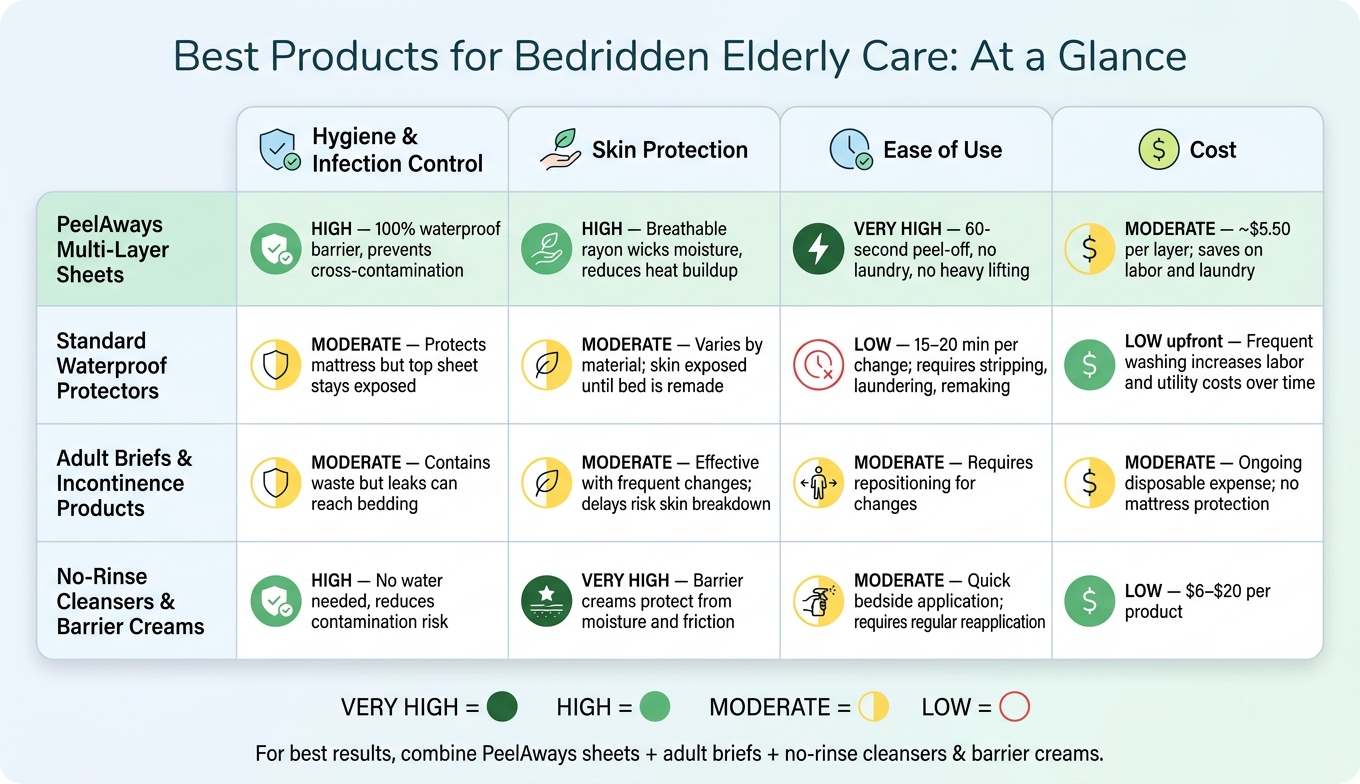
Best Products for Bedridden Elderly Patients: Side-by-Side Comparison
Caring for bedridden patients demands a mix of products tailored to different needs. Each category has its strengths and limitations, and combining the right tools can make caregiving more manageable. Here's a quick comparison of key product categories to help you decide what works best in your care routine.
| Product Category | Hygiene & Infection Control | Skin Protection | Ease of Use | Cost |
|---|---|---|---|---|
| PeelAways Multi-Layer Sheets | High – 100% waterproof barrier prevents cross-contamination between layers | High – Breathable rayon fabric wicks moisture and reduces heat buildup | Very High – 60-second peel-off changes eliminate laundry and heavy lifting | Moderate – About $5.50 per layer, saving on labor and laundry |
| Standard Waterproof Protectors | Moderate – Protects the mattress but leaves the top sheet vulnerable to soiling | Moderate – Varies by material; skin stays exposed until the bed is fully remade | Low – Requires stripping, laundering, and remaking, taking about 15 minutes per change | Low upfront, but frequent washing increases labor and utility costs |
| Adult Briefs & Incontinence Products | Moderate – Contains waste but may allow leaks to reach bedding | Moderate – Effective with frequent changes, but delays risk skin breakdown | Moderate – Requires repositioning for changes | Moderate – Ongoing disposable expense with no mattress protection |
| No-Rinse Cleansers & Barrier Creams | High – Cleans without needing water, reducing contamination risks | Very High – Barrier creams protect skin from moisture and friction | Moderate – Quick bedside application but requires regular reapplication | Low – Costs range from $6 to $20 per product |
Each product serves a specific purpose, but none can address every caregiving challenge alone. For instance, standard waterproof protectors may cost less upfront, but they demand significant time and effort from caregivers. Adult briefs help contain waste but can still leave bedding exposed to leaks. Meanwhile, no-rinse cleansers and barrier creams are excellent for protecting the skin but require consistent application.
PeelAways sheets stand out for their ease of use and superior hygiene protection. Their design streamlines care by cutting out heavy lifting and laundry. As Carol Suchman, the creator of PeelAways, explains:
"My parents can change their sheet in the middle of the night on their own without any aid and go back to bed."
This kind of independence is a game-changer for both patients and caregivers.
For the best results, consider combining these products. Use PeelAways sheets to maintain a clean sleeping surface, pair them with adult briefs to manage incontinence directly, and rely on no-rinse cleansers and barrier creams for skin health. In situations requiring extra protection, standard waterproof protectors can serve as a backup layer, offering an added safeguard for the mattress. Together, these tools can help simplify care routines and enhance comfort for bedridden patients.
Conclusion
Caring for a bedridden elderly loved one is a round-the-clock responsibility that requires thoughtful solutions. The right products can ease the workload while maintaining hygiene, comfort, and - most importantly - the dignity of the person you’re caring for.
Start with a waterproof mattress protector as your foundation. Then, layer on PeelAways multi-layer disposable sheets. These sheets make bed changes quick and stress-free, keeping the bed clean and dry without the hassle of constant laundry.
To complete the care routine, incorporate adult briefs, no-rinse cleansers, and barrier creams. Together, these products help protect the skin, manage incontinence effectively, and ensure comfort for your loved one while simplifying your caregiving tasks.
PeelAways doesn’t just save time - it saves money too. Use code BLOGS10 at checkout to get 10% off PeelAways multi-layer disposable sheets. Combine this with subscription options or bundle deals for even more savings.
You can purchase PeelAways directly on Amazon or through Peelaways.com.
FAQs
How many PeelAways layers should I use at once?
PeelAways take the guesswork out of bed changes. Each sheet comes with 5 or 7 layers (depending on the size), all stacked into one fitted sheet. When the top layer gets dirty, just peel it away to uncover a fresh, clean layer beneath. No stripping, no remaking - just a quick fix to keep the bed spotless.
What’s the best setup to prevent overnight leaks?
To keep overnight leaks under control, try a layered approach that works hard while you rest:
- Begin with a waterproof mattress protector as your first line of defense.
- Add PeelAways, which come with five stacked, waterproof layers - just peel off a used layer to instantly reveal a fresh, clean one.
- For heavier incontinence, include extra-large bed pads for an extra layer of security.
Make sure your setup allows for breathability and wicks away moisture to keep things hygienic and to protect the skin.
How do I protect skin from rashes and pressure sores?
To help prevent rashes and pressure sores, it’s crucial to keep the skin dry and minimize friction. Repositioning the patient every two hours can alleviate pressure on sensitive areas such as the heels, hips, and tailbone. Opt for specialized bedding made with moisture-wicking, breathable materials to maintain a comfortable temperature and prevent moisture from collecting. Products like PeelAways are a great option - they feature a waterproof, breathable multi-layer design that allows for fast, hygienic changes without exposing the skin to harsh chemicals like vinyl or phthalates.
Comments
0



SAVE MONEY & WATER
Professionals & Institutions save a fortune on labor/laundry.

SUPERIOR COMFORT
The first thing our customers notice is how soft our sheets are.

100% WATERPROOF
Each layer is 100% Waterproof, perfect for spills and accidents

SAVE TIME
Change the sheet in under 1 minute without stripping the bed.

Leave a comment