Best Practices for Laundry in Healthcare Facilities

Healthcare laundry is a critical part of infection control. Each year, U.S. healthcare facilities handle 5 billion pounds of laundry, with soiled linens often carrying pathogens from bodily fluids. Proper laundry hygiene practices are essential to prevent the spread of infections. Here's what you need to know:
- Soiled linens: Must be treated as infectious and handled using gloves, gowns, and leak-proof bags to prevent contamination.
- Washing standards: Use hot water (≥160°F for 25 minutes) or low-temperature cycles with EPA-approved disinfectants.
- Storage: Clean linens should be stored in separate, positive-pressure areas, away from soiled laundry.
- Transport: Use designated carts and leak-proof containers to avoid cross-contamination.
- Disposable options: Products like PeelAways simplify linen changes, reducing handling risks and saving time. Facilities can also implement a checklist for reducing laundry to further optimize efficiency.
Infection Control Basics for Healthcare Laundry Services: Part 1
sbb-itb-45288fe
Safety Protocols for Handling Healthcare Linens
When dealing with contaminated healthcare linens, strict safety measures are non-negotiable. All healthcare laundry is treated as potentially infectious, adhering to Standard Precautions to safeguard staff and patients from exposure to bloodborne pathogens and other harmful microorganisms [3].
Personal Protective Equipment (PPE) and Hand Hygiene
PPE acts as the first line of defense for workers handling soiled linens. OSHA requires specific protective gear for anyone coming into contact with contaminated laundry:
"Employers must ensure that employees who have contact with contaminated laundry wear protective gloves and other appropriate personal protective equipment, such as gowns, face shields, and masks when they handle, sort, or otherwise have contact with contaminated laundry." - OSHA [4]
Thick utility gloves are a must during sorting operations. Unlike standard disposable gloves, these heavy-duty gloves protect against sharps injuries, like accidental needle sticks, that may occur while handling soiled linens [4]. Reusable utility gloves should be decontaminated if intact but discarded immediately if they show any signs of damage, such as cracks, tears, or punctures. Disposable gloves should never be washed or reused [4].
Gowns or aprons protect workers from fluids seeping through to their skin or clothing, while face shields, goggles, or masks are essential when splashing is a concern - especially during manual rinsing or washing [2][4].
Hand hygiene is another critical element. The CDC highlights the importance of washing hands before putting on PPE and immediately after removing it [2]. Handwashing stations should be easily accessible in all laundry handling areas, ensuring this simple yet vital practice becomes second nature for staff.
With proper PPE and hand hygiene in place, the focus shifts to careful handling and sorting of contaminated linens.
Sorting and Handling Contaminated Linens
How soiled linens are handled can make a big difference in controlling contamination risks. Shaking or flapping linens is a big no-no, as it can release airborne pathogens [2][4]. Instead, linens should be rolled up to contain any contaminants.
Never press soiled linens against your body. Place them directly into designated leak-proof bags at the point of use, without shaking [2][4]. For heavily saturated linens, double-bagging or using leak-proof bags designed for this purpose is essential [2][4].
For linens with solid waste, scrape off the waste into a commode before bagging. This step helps reduce the microbial load and prevents washing equipment from becoming contaminated [2].
Sorting operations should take place in specially designated areas with negative air pressure relative to adjacent clean zones. These spaces should maintain at least 10 air changes per hour, with air exhausted directly outdoors [5]. This setup ensures airborne contaminants don’t spread to clean areas. After sorting, transport carts should be cleaned with EPA-registered disinfectants after every use or at least once daily [2][5].
Another critical safety tip: avoid compressing laundry bags during transport. Hidden sharps, like needles, can cause serious injuries if bags are squeezed [4]. Bags should be securely tied and handled only by their designated grips or ties.
Transport and Containment of Soiled Linens
Once soiled linens are sorted and handled properly, the next step is ensuring their safe transport without spreading contamination. The CDC emphasizes this clearly:
"Place soiled linen into a clearly labeled, leak-proof container (e.g., bag, bucket) in the patient care area. Do not transport soiled linen by hand outside the specific patient care area from where it was removed." - CDC [2]
In simple terms: never carry loose bundles of soiled linens down hallways. Every piece should be placed in a proper container before leaving the room.
Leak-Proof Bags and Designated Carts
Using the right containment tools, such as disposable sheets to reduce cross-contamination, is key to preventing leaks and exposure. OSHA mandates that heavily soiled or wet linens must be placed in bags designed to prevent soak-through and leakage [4]. Standard fabric bags won’t cut it for linens soaked with body fluids - impervious, leak-proof bags are a must.
Containers should be clearly labeled with biohazard symbols or red color coding for easy identification [4]. If a facility uses Universal Precautions for all laundry, alternative labeling systems can work as long as they’re universally understood [4].
Transport carts for soiled linens must be kept entirely separate from those used for clean laundry [2][3]. These carts should be disinfected daily using a neutral detergent and warm water [2][3]. After each use, particularly in high-risk areas, carts should be decontaminated. For carts with drainage holes, an impervious liner or barrier should be added to prevent environmental contamination during transport [5].
Once containment is secured, the focus shifts to efficiently routing these items to avoid contamination risks.
Designated Transport Pathways
Healthcare facilities need dedicated routes for moving soiled linens, ensuring they stay separate from clean storage areas, patient dining spaces, and food preparation zones [2].
These pathways rely on physical barriers, negative air pressure in soiled areas, or positive airflow in clean zones to maintain strict separation [3]. Sandra Hensley, an Infection Control Practitioner at the University of Toledo Medical Center, sums it up well:
"The laundry layout should help eliminate any chance of clean and soiled textiles coming into contact during processing, finishing, storage, and delivery." - Sandra Hensley [3]
The objective is to minimize the time soiled linens spend in high-traffic areas or on receiving docks where they could contaminate other surfaces [5]. With billions of pounds of linens processed annually, following strict transport protocols is non-negotiable [5].
These measures ensure that infection control remains a priority at every stage of the handling process.
Washing and Processing Standards
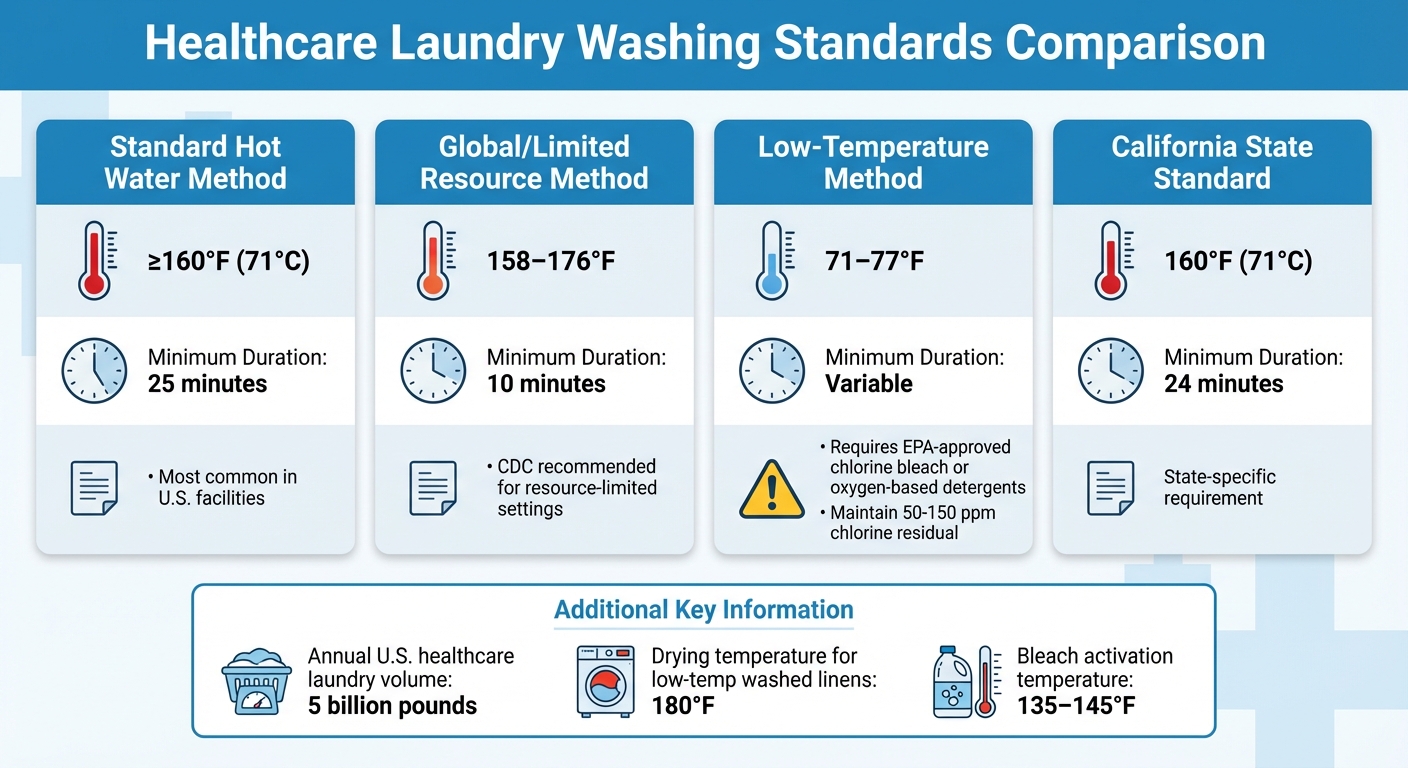
Healthcare Laundry Washing Methods: Temperature and Duration Requirements
Once soiled linens arrive at the laundry facility, the washing process becomes a critical step in preventing infection. According to the CDC, hot water temperatures between 158–176°F for at least 10 minutes are recommended in resource-limited settings. For facilities using traditional hot-water washing, maintaining a temperature of at least 160°F for 25 minutes is essential to properly disinfect washable bed sheets [2][1].
For facilities unable to sustain these higher temperatures, low-temperature washing - between 71–77°F - can still be effective if chlorine or EPA-registered oxygen-based detergents are included in the process and closely monitored. During the bleach cycle, maintaining a chlorine residual of 50–150 ppm is necessary to ensure proper disinfection [1].
Washing Temperatures and Detergent Usage
Heat alone isn’t enough to guarantee effective laundering. The CDC highlights several key factors that influence the process:
"The effectiveness of the laundering process depends on many factors, including: Time and temperature; Mechanical action; Water quality (pH, hardness); Volume of the load; Extent of soiling." – CDC [2]
Detergents play a crucial role by suspending soils, while additives like chlorine bleach enhance disinfection, typically activating at water temperatures between 135–145°F. Many facilities also incorporate a "sour" cycle, which uses a mild acid rinse to neutralize detergent alkalinity. This step lowers the pH from 12 to 5, helping to inactivate microorganisms and reduce skin irritation.
Here’s a quick comparison of washing methods commonly used in healthcare facilities:
| Washing Method | Temperature | Minimum Duration |
|---|---|---|
| Standard Hot Water | ≥ 160°F | 25 minutes [1] |
| Global/Limited Resource | 158–176°F | 10 minutes [2] |
| Low-Temperature | 71–77°F | Requires bleach/additives [1] |
| California State Standard | 160°F | 24 minutes [6] |
Once the washing process is optimized, the next critical step is proper drying and regular equipment maintenance to ensure linens remain hygienic.
Drying and Equipment Maintenance
Thorough drying is just as important as washing. Commercial dryers, operating at high temperatures, provide an additional layer of pathogen control [1][2]. For linens washed at lower temperatures (~140°F), subsequent drying at 180°F is necessary to achieve adequate disinfection [6].
Maintaining laundry equipment is equally vital. The CDC advises:
"Laundry equipment should be used and maintained according to the manufacturer's instructions to prevent microbial contamination of the system." – CDC [1]
Leaving damp linens in washing machines overnight should be avoided, as it can encourage microbial growth. Routine monitoring of washers, dryers, and ventilation systems is essential to minimize pathogen risks. Additionally, soiled linen areas should maintain negative pressure with at least 10 air changes per hour, while clean linen storage should have positive pressure with a minimum of 2 air changes per hour [5].
Transport carts also require daily cleaning and disinfection with EPA-registered disinfectants [5][6]. For carts with drainage holes, using an impervious barrier prevents floor-level contamination of clean linens during transport [5]. These small but crucial steps help reduce the risk of cross-contamination throughout the facility.
Clean Linen Storage and Distribution
Storing clean linens properly is critical to maintaining their disinfection and preventing contamination. After washing, handling, and transporting linens carefully, they must be kept in a dedicated, clean storage area. This ensures the linens remain hygienic and ready for use when needed.
Enclosed Storage and Daily Cleaning
Clean linens should always be stored in a dedicated area on each floor or ward, protecting them from dust, debris, and any contact with soiled items. To maintain hygiene, all storage and transport equipment used for clean linens must be cleaned daily. According to the CDC, carts and containers designated for clean linens should be cleaned at least once daily using a neutral detergent and warm water solution [2]. Additionally, storage rooms should have smooth, easy-to-clean floors and walls, and they should not house any items unrelated to linen storage [2].
For added protection, the bottom shelf of wire racks should be lined with an impervious barrier to prevent contamination [5]. Wooden shelving is not recommended, as it cannot be disinfected effectively and may retain moisture, creating an environment for pathogens.
Separation of Clean and Soiled Areas
Maintaining a clear separation between clean and soiled linens is essential. This can be achieved using walls, separate rooms, or air pressure differentials. Clean areas should be kept under positive air pressure with at least two air changes per hour, while soiled areas should have negative air pressure with a minimum of 10 air changes per hour [5]. These measures help ensure that airborne contaminants do not reach clean linens.
The Healthcare Laundry Accreditation Council emphasizes the importance of this practice:
"Functional separation ensures that any potential airborne contaminants cannot enter the clean textile processing area." – HLAC [3]
To further protect clean linens, they should only be transported in carts specifically designated for clean items, never shared with soiled laundry. If clean and soiled linens must be transported together in the same vehicle, a physical barrier should separate them to shield clean items from dust, soil, and moisture [3]. Lastly, staff must practice proper hand hygiene before handling clean linens to avoid the transfer of pathogens [5].
Using Disposable Bedding Solutions like PeelAways
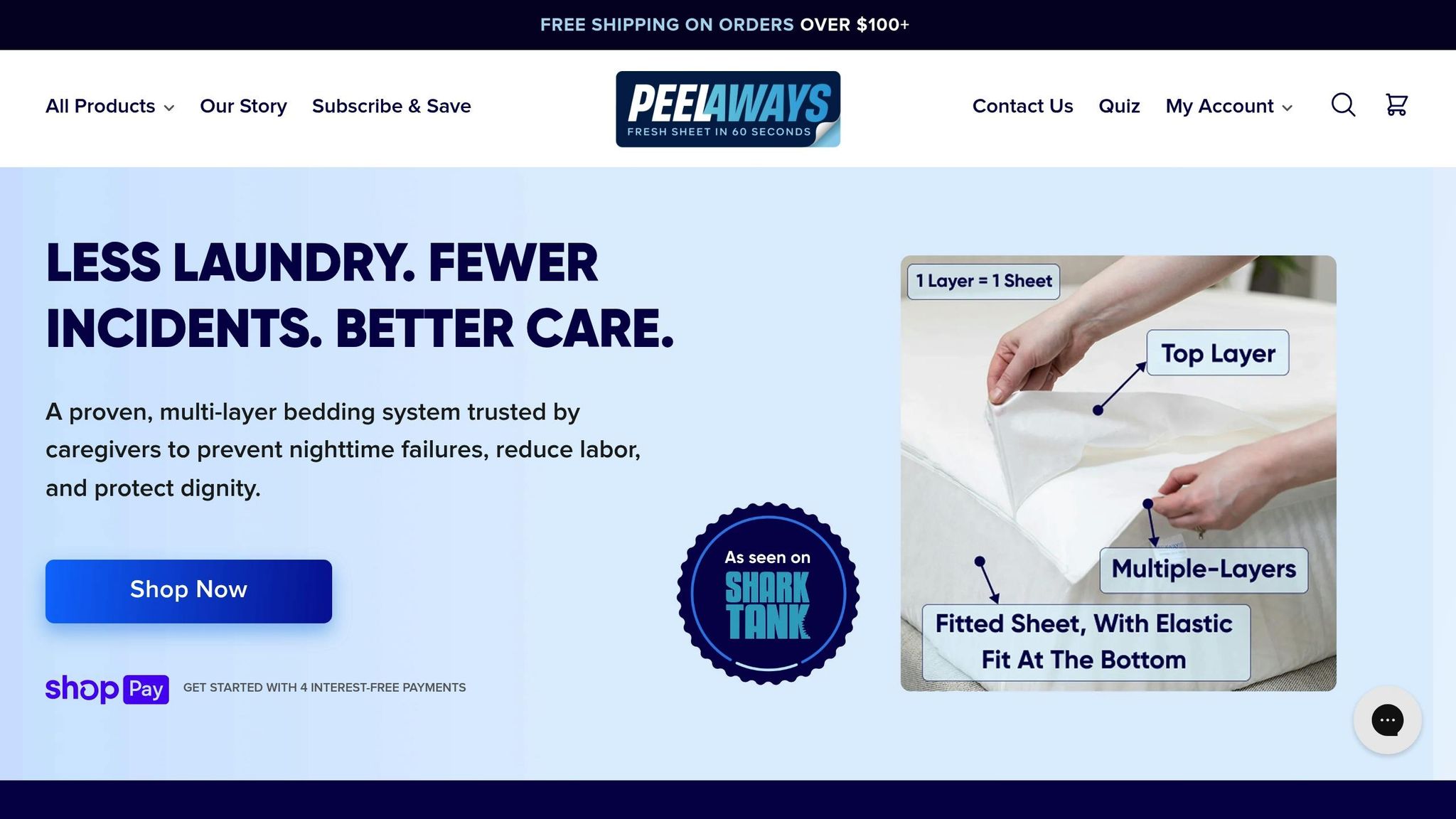
While traditional laundering methods remain a cornerstone of healthcare linen management, disposable bedding offers a practical alternative that can help reduce laundry loads while addressing contamination risks. Even small decreases in laundry volume can lead to operational efficiencies, and this approach also supports better infection control practices.
How PeelAways Simplify Linen Management
PeelAways use a patented 5–7 layer waterproof design that makes linen changes faster and easier. When a layer becomes soiled, staff simply peel it away to reveal a clean, fresh surface - no need for bed stripping, lifting heavy mattresses, or transporting linens. This process takes just 5 minutes compared to the 15 minutes required for a traditional linen change, cutting labor costs significantly - from $6.25 to $2.08 per change [9].
Each layer includes a waterproof barrier, preventing fluids from soaking into the mattress. This is especially important since wet mattresses can harbor harmful pathogens like MRSA and Pseudomonas aeruginosa [1]. Additionally, unlike traditional linens that can release infectious aerosols during handling, PeelAways’ design ensures contamination remains contained [1][2].
Benefits of Disposable Bedding in Healthcare
Disposable bedding solutions help tackle some of the toughest challenges in healthcare linen management. They work alongside existing laundering systems while reducing manual handling. Each fresh layer provides a sterile surface, breaking the chain of microbial transmission between patients [7]. This is particularly crucial for vulnerable patients in areas like neonatal, burn, oncology, and transplant units, where exposure to contaminants can have severe consequences [5].
By reducing the need to handle infectious materials, disposable bedding also improves staff safety. Traditional laundering involves multiple touchpoints - such as sorting, transporting, and processing - where contamination risks are high. Studies show that healthcare textiles can carry bacterial loads ranging from 10^6 to 10^8 CFU per 100 cm² of fabric [1]. Disposable solutions bypass these risks, offering a safer alternative for healthcare workers [8].
| Feature | Traditional Laundering | PeelAways Disposable Bedding |
|---|---|---|
| Time to Change | 15 minutes | 5 minutes |
| Labor Cost per Change | $6.25 | $2.08 |
| Cross-Contamination Risk | High during sorting, shaking, and transport | Minimal; single-use design eliminates shared contact |
| Waterproof Protection | Requires separate mattress protector | Built-in 100% waterproof barrier in every layer |
| Hygiene Level | Risk of residual pathogens after laundering | 100% fresh and sterile for every use |
Disposable bedding is particularly effective in high-turnover areas like emergency departments, surgical recovery units, and rooms with frequent incontinence cases. PeelAways are available in standard healthcare sizes, including Twin XL (fitting about 85% of adjustable hospital beds), as well as Full, Queen, and King sizes [10]. Pricing for the Twin XL options starts at $34.99 for the 5-layer version and $41.99 for the 7-layer version.
"Single-use bed sheets prevent bacterial buildup and cross-contamination between patients, maintaining a sterile environment in every room." – ProtectMed Healthcare [7]
Conclusion
Healthcare laundry management demands an unwavering commitment to strict protocols, from the moment linens are soiled to when they are clean, stored, and ready for reuse. Proper handling, washing at temperatures of at least 160°F (71°C) for 25 minutes, and secure storage play a key role in ensuring patient safety[1].
The ultimate goal is to deliver hygienically clean textiles - free of vegetative pathogens and safe for patient care. As the CDC explains:
"Hygienically clean laundry carries negligible risk to health-care workers and patients, provided that the clean textiles, fabric, and clothing are not inadvertently contaminated before use"[1].
Achieving this requires careful attention to critical control points, such as transport pathways, air pressure, and storage conditions, all of which can pose risks for recontamination[5]. Addressing these points not only safeguards hygiene but also opens the door to enhancing safety through complementary measures.
One practical solution to reduce risks tied to manual handling is the use of disposable bedding like PeelAways. These products minimize the volume of contaminated linens requiring transport and processing, cutting down on handling steps and reducing the chances of cross-contamination. This streamlined approach allows healthcare staff to focus more on patient care.
Janet Glowicz, PhD, RN, from the CDC, underscores the critical role of vigilance in infection prevention:
"Infection preventionists may prevent life-threatening infections by recognizing hazards in the management of laundered HCTs and taking action to prevent contaminated HCTs from reaching patients"[5].
No matter the laundering method, maintaining a clear separation between soiled and clean areas, adhering to FIFO (First In, First Out) stock rotation, and conducting regular oversight are essential practices to protect both patients and staff. Vigilance at every step ensures a safer healthcare environment.
FAQs
How can we verify our laundry process is actually disinfecting linens?
To ensure your laundry process effectively disinfects linens, it's important to carry out microbiological testing and routine evaluations following established standards. Both the CDC and OSHA emphasize the need for regular sampling to confirm that linens are hygienically clean and free from contamination. Critical steps include maintaining appropriate washing temperatures, using effective disinfectants, and providing thorough staff training. Following these practices helps maintain infection control and confirms the disinfection process is working as intended.
What layout changes best prevent clean and soiled linens from crossing paths?
To keep clean and soiled linens separate, it's important to have clearly designated spaces for each. Store clean linens in enclosed areas to minimize the chance of contamination. Key steps to follow include transporting linens in closed bags or carts, ensuring they never touch the floor, and maintaining distinct workflows for handling soiled and clean items. Establishing clear procedures for storage and handling is crucial for effective infection control.
When should a facility use disposable bedding like PeelAways instead of laundering?
Facilities should consider using disposable bedding, like PeelAways, in high-risk areas or situations where quick turnover, infection control, or preventing contamination is a priority. These settings include places like emergency rooms, intensive care units, or other spaces where maintaining hygiene and efficiency is essential. By using disposable bedding, cross-contamination risks are minimized, and the need for laundering is completely removed.
Comments
0



SAVE MONEY & WATER
Professionals & Institutions save a fortune on labor/laundry.

SUPERIOR COMFORT
The first thing our customers notice is how soft our sheets are.

100% WATERPROOF
Each layer is 100% Waterproof, perfect for spills and accidents

SAVE TIME
Change the sheet in under 1 minute without stripping the bed.

Leave a comment