
Best Nighttime Incontinence Solutions for Seniors

"It's 2am. The sheets are soaked again. Your loved one is embarrassed, your back aches, and the thought of stripping the bed - again - makes you want to cry. If this feels like your life right now, keep reading. There’s a faster way to handle this."
Nighttime incontinence is one of the hardest parts of caregiving. It disrupts sleep, piles on laundry, and leaves everyone feeling drained. Traditional bed changes take 15–20 minutes, but PeelAways multi-layer disposable sheets cut that down to just 60 seconds. No lifting heavy mattresses. No rushing to the laundry room. Just peel away the top layer for a clean, dry bed.
With 28,000+ reviews and a 4.8-star rating, PeelAways are trusted by caregivers everywhere. Each set has 5–7 waterproof layers, fits mattresses from crib to king, and reduces laundry by up to 80%. If you’re managing incontinence in elderly loved ones, one of the top bedding solutions for incontinence care will save you time, energy, and stress.
Blog readers save 10% with code BLOGS10 at checkout. Available on peelaways.com/shop and Amazon. Free shipping on orders over $100.
6 Ways to STOP NOCTURIA For a Good Night's Sleep | Overactive Bladder 101
sbb-itb-45288fe
Understanding Nighttime Incontinence in Seniors
Nighttime incontinence in older adults often stems from age-related changes, chronic health issues, or medication side effects. Pinpointing these causes is essential for managing the condition effectively.
Common Causes of Nighttime Incontinence in Seniors
One common culprit is nocturnal polyuria, where the body produces more than 33% of its daily urine output during the night. This condition is frequently linked to a natural decline in Arginine Vasopressin (AVP) as people age and affects up to 88% of seniors dealing with nighttime incontinence. Other contributing factors include chronic conditions like heart failure and peripheral edema, which cause fluids to pool in the legs during the day and shift toward the bladder upon lying down. Obstructive sleep apnea can also play a role by triggering the release of Atrial Natriuretic Peptide (ANP), further increasing nighttime urine production.
Below is a table highlighting additional treatable causes that are often overlooked:
| Cause | What It Means |
|---|---|
| Infection (UTI) | Causes urgency and discomfort, disrupting bladder control |
| Medications | Diuretics, sedatives, or opioids can alter bladder function |
| Limited Mobility | Conditions like arthritis or Parkinson's can delay trips to the bathroom |
| Excessive Urine Output | Linked to issues like heart failure or uncontrolled diabetes |
| Stool Impaction | Constipation can press on the bladder, causing leaks |
Why Nighttime Incontinence Is Harder to Manage
Nighttime incontinence presents unique challenges because the body’s natural defenses are less effective during sleep. Dr. Mallika Anand, a Urogynecologist at Beth Israel Deaconess Medical Center, explains:
"An important hormone that helps you hold on to fluid in the night, called antidiuretic hormone, decreases naturally with age."
Additionally, lying flat while sleeping increases kidney efficiency, which can lead to more urine production. Sleeping positions can also influence where leaks occur. Safety is another concern - about 25% of falls in older adults happen during nighttime bathroom trips, and waking up multiple times to urinate can more than double the risk of fractures and related injuries. If accidents occur without fully waking, prolonged exposure to moisture can lead to skin irritation and breakdown.
When to See a Healthcare Provider
On average, individuals wait about seven years before seeking medical advice for bladder leaks, often leaving treatable conditions unaddressed. It’s important to consult a healthcare provider if a senior experiences any of the following:
- Blood in the urine (hematuria) – could indicate bladder stones, infection, or even bladder cancer
- Painful urination or an intense, sudden urge to urinate
- Frequent urination (8+ times daily)
- New or sudden changes in bladder control, especially after starting a medication
- Signs of infection such as fever, confusion, or cloudy urine
- Difficulty starting or maintaining a urine stream – a possible sign of an enlarged prostate (BPH)
The National Institute of Diabetes and Digestive and Kidney Diseases emphasizes:
"See a health care professional if you have symptoms of a bladder problem, such as trouble urinating, a loss of bladder control, waking to use the bathroom, pelvic pain, or leaking urine."
Before visiting a doctor, try keeping a bladder diary for 48–72 hours. Track fluid intake, the timing of leaks, and any possible triggers. This simple tool can provide your healthcare provider with valuable insights for diagnosing and addressing the issue.
Understanding these factors can help in choosing the right bedding solutions and streamlining incontinence care tasks.
Bedding Solutions for Nighttime Incontinence Care
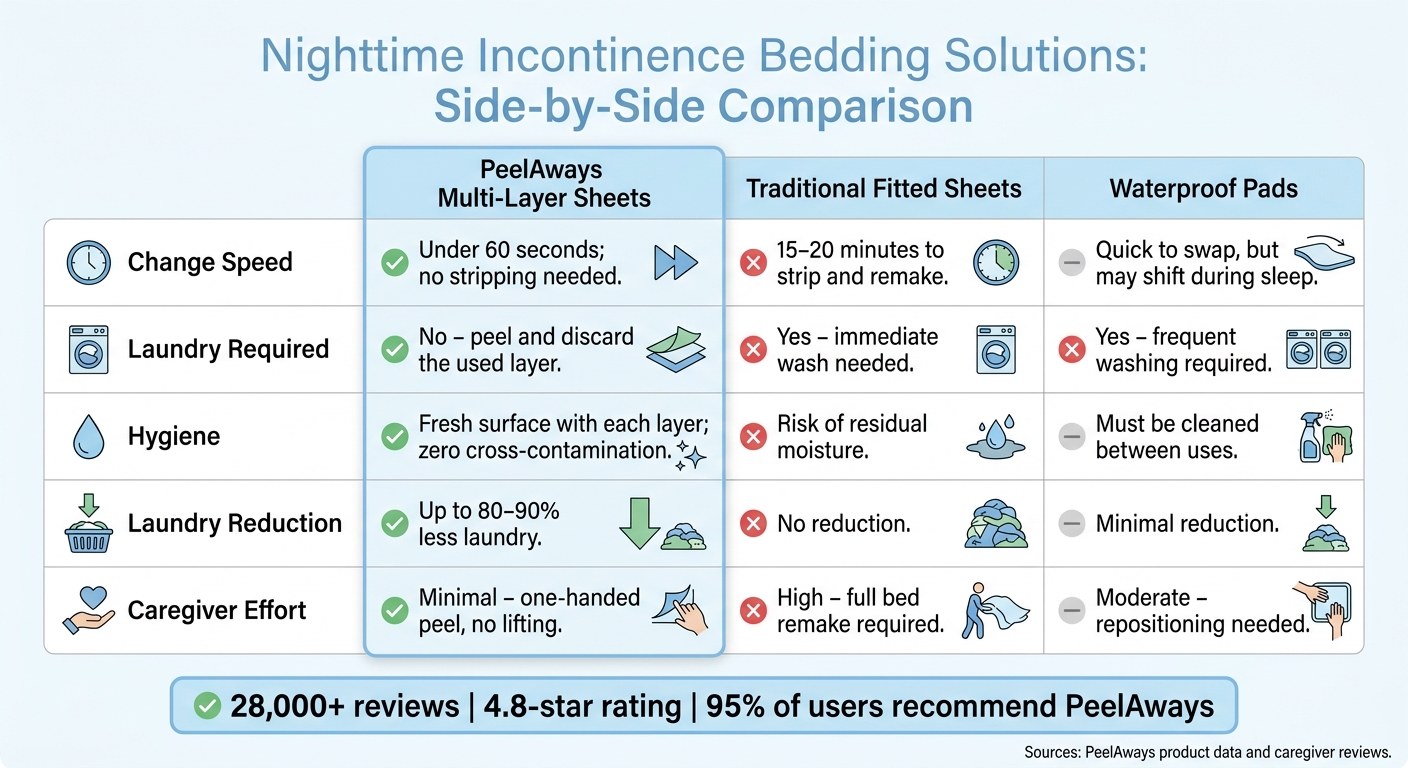
PeelAways vs. Traditional Bedding: Nighttime Incontinence Care at a Glance
Setting up a bed to handle nighttime incontinence can make a world of difference. A thoughtful approach not only protects the mattress but also cuts down on laundry and makes middle-of-the-night changes faster and easier. By layering PeelAways multi-layer disposable sheets with a waterproof mattress protector, you can maintain a clean, fresh sleeping surface in seconds while keeping the mattress safe over time.
How PeelAways Multi-Layer Sheets Work

PeelAways sheets are a game-changer for caregivers and seniors alike. These fitted sheets come with 5 to 7 waterproof layers stacked neatly on top of each other. When one layer is soiled, you simply peel it away to reveal a fresh, clean sheet underneath - no need to remove the entire sheet from the mattress. This means you can complete a bed change in under 60 seconds, saving time and effort.
Since they’re designed as fitted sheets, the corners stay securely in place, eliminating the hassle of constantly adjusting them. The soft bamboo/rayon blend fabric is quiet, breathable, and free from Vinyl, PVC, Phthalates, and fire retardants. There’s no stiff or crinkly plastic feel to disturb sleep, making it a comfortable option for seniors.
Carol Suchman, the creator of PeelAways, highlights their practical impact:
"My parents can change their sheet in the middle of the night on their own without any aid and go back to bed."
This innovative design not only lightens the caregiver's workload but also helps seniors maintain their independence and dignity.
PeelAways has earned a 4.7/5 star rating from 265 reviews on its official site, with 95% of users recommending it. One happy customer, LaVora B., shared: "PeelAways helps with sanitary conditions with urinary conditions, save resources to change sheets for cleanliness and odorless room."
Why Waterproof Mattress Protectors Matter
A waterproof mattress protector is the unsung hero of this setup. Placed beneath the PeelAways stack, it acts as a barrier to stop moisture from seeping into the mattress. This prevents stains, mold, mildew, and those stubborn odors caused by urine soaking into the fibers.
Beyond protecting the mattress, a breathable protector helps regulate temperature overnight - an important feature for seniors who may struggle with overheating. Opting for a fitted, breathable design instead of rigid polyurethane ensures the protector stays in place and avoids causing discomfort or skin irritation. Combining a waterproof protector with disposable layers like PeelAways can reduce laundry loads by as much as 90%.
With these two layers working together, setting up a bed for easy nighttime changes becomes much simpler.
How to Set Up a Bed for Nighttime Incontinence Care
Here’s a simple way to create the ideal setup:
- Start with a snug waterproof mattress protector as the base layer.
- Add the complete PeelAways set on top.
- Use light, breathable blankets and place a pillow within easy reach.
If the senior tends to move a lot during sleep, sheet straps can help keep the PeelAways stack securely in place. For nighttime changes, using a dim light instead of harsh overhead lighting can help minimize sensory disruption. With this setup, you can turn a 15- to 20-minute hassle into a quick, quiet, 60-second solution.
| Feature | PeelAways Multi-Layer Sheets | Traditional Fitted Sheets | Waterproof Pads |
|---|---|---|---|
| Change Speed | Under 60 seconds; no stripping needed | 15–20 minutes to strip and remake | Quick to swap, but may shift during sleep |
| Laundry Required? | No – peel and discard the used layer | Yes – immediate wash needed | Yes – frequent washing required |
| Hygiene | Fresh surface with each layer; zero cross-contamination | Risk of residual moisture | Must be cleaned between uses |
Choosing Incontinence Products for Nighttime Use
Keeping seniors dry and comfortable overnight requires absorbent products and proper hygiene. Look for options rated for up to 12 hours of wear, made with super absorbent polymers (SAP) to lock in moisture, and crafted from breathable materials to reduce heat buildup.
Best Absorbent Products for Seniors at Night
Nighttime products must keep skin dry during long periods in bed. Being flat changes how liquid spreads, increasing the chance of leaks if the product isn’t designed for this position.
| Product Type | Best For | Key Nighttime Benefit |
|---|---|---|
| Tab-Style Briefs | Moderate to heavy leaks; limited mobility | Holds up to 12 hours; adjustable fit; easy for caregivers |
| Pull-On Underwear | Light to moderate leaks; mobile seniors | Feels like regular underwear; promotes independence |
| Booster Pads | Added inside briefs or pull-ups | Extends wear time for heavy overnight leaks |
| Underpads (Chux) | Secondary bedding protection | Captures overflow if wearable products shift |
For heavy overnight leakage, high-capacity tab-style briefs that hold up to 1 liter are ideal. Mobile seniors may prefer pull-on underwear for its underwear-like feel and effective protection.
Proper sizing is critical to prevent leaks. Measure waist, hips, and thighs for the best fit. Many brands offer sample programs, so you can test sizes before buying in bulk.
Once you’ve chosen the right product, focus on protecting fragile skin with a consistent care routine.
How to Protect Skin Health Overnight
Skin health is just as important as managing leaks. Prolonged exposure to moisture can lead to incontinence-associated dermatitis (IAD). Even one overnight episode can cause irritation if not addressed quickly. The goal is to minimize moisture and use a protective barrier before the next sleep cycle.
Follow this four-step routine after each nighttime episode: cleanse, dry, moisturize, and protect. Use a gentle, pH-balanced cleanser instead of soap, which can strip the skin’s natural barrier. Pat the skin dry - don’t rub - and apply a barrier cream to exposed areas before putting on a fresh product.
Breathable materials in incontinence products and bedding help prevent heat and moisture buildup, which are major causes of skin issues. Bedding like PeelAways, made with a soft bamboo/rayon blend, regulates temperature and keeps the environment dry and comfortable.
Managing Nighttime Toileting and Fluid Intake
Reducing accidents is as important as managing them. One effective strategy is limiting fluid intake 2 to 3 hours before bed. This doesn’t mean cutting back on hydration entirely - drinking enough water during the day remains crucial. Instead, encourage drinking more in the morning and early afternoon.
Avoid common bladder irritants in the evening, such as caffeine, alcohol, citrus juices, chocolate, and artificial sweeteners, as these can increase urgency. Encourage double-voiding before bed - urinate, wait a few minutes, and try again - to empty the bladder more completely.
For seniors who wake during the night to use the restroom, creating a safe and easy path reduces fall risks. Add grab bars near the toilet, use a raised toilet seat, and place nightlights along the route from bed to bathroom.
"I could see the Peelaways being especially useful at night when the caregiver is tired and just needs to make it to the next day." - Chris Clark, AgingToday.com
Reducing Caregiver Stress and Supporting Senior Dignity
Caring for nighttime incontinence can feel overwhelming. But with thoughtful routines and the right tools, it’s possible to ease the burden while ensuring seniors maintain their dignity. Let’s dive into practical ways to make nighttime care less stressful and more manageable.
How to Prepare a Senior's Bed for Fast Nighttime Changes
Speed is key when it comes to nighttime bed changes. The less disruption, the better for everyone. A layered bedding system, like PeelAways, allows you to remove only the soiled layer, avoiding the need to remake the entire bed. This simple solution turns what could be a chaotic moment into a quick, calm process, preserving both dignity and sleep for everyone involved.
Keep a dim night-light or low-brightness lamp nearby. It’s a small adjustment that minimizes sensory disruption and helps the senior fall back asleep more easily. A nighttime kit - complete with gloves, wipes, and a disposal bag - placed within reach ensures everything you need is ready and keeps the process efficient and quiet.
If possible, set a brief nighttime alarm based on the senior’s usual patterns. Anticipating their needs reduces unexpected incidents and cuts down on overnight disruptions.
Home Adjustments That Improve Safety and Comfort at Night
Creating a safer nighttime environment supports both independence and safety. For seniors, navigating the bathroom at night can be risky, especially when urgency and drowsiness are involved. Installing grab bars near the toilet and along hallways, using a raised toilet seat, and placing low-level plug-in night-lights along their path can significantly reduce the risk of falls. Clear, obstacle-free pathways also make movement easier and build confidence.
How to Handle the Emotional Side of Incontinence
Incontinence doesn’t just affect the body - it can take an emotional toll, too. Studies reveal that up to 45% of women and 34% of men over 60 experience some level of urinary incontinence, yet many wait an average of seven years before seeking help. Feelings of shame often drive this delay.
A quiet, respectful approach to care can ease these emotions. Using calm, matter-of-fact language and giving seniors choices - like whether they’d prefer a moment of privacy - can help maintain their sense of control. Simple tools, like a bladder diary, can also encourage their involvement in managing the condition.
It’s important to remember that caregiver burnout impacts the quality of care provided. Rested caregivers are more patient, empathetic, and better able to handle tough moments. Tools that reduce nighttime disruptions not only lighten the workload but also help maintain a dignified and supportive care environment.
Conclusion: Making Nighttime Incontinence Care Easier
Caring for nighttime incontinence can feel overwhelming - for both seniors and their caregivers. But with the right tools, thoughtful routines, and a compassionate mindset, it doesn’t have to be. Small adjustments, like managing fluid intake or prioritizing skin protection, can lead to better sleep and less worry. These nighttime incontinence care tips are the foundation of improving care for everyone involved.
The real game-changer is cutting down cleanup time. With PeelAways multi-layer disposable sheets, you can turn a 15–20 minute bed change into a quick 60-second process. No heavy mattress lifting. No emergency laundry piles. Just peel away the top layer to reveal a clean, dry surface - giving seniors the comfort they deserve while preserving their dignity. As PeelAways says: "A faster, quieter bed change is not just a logistical improvement. It is a dignity improvement."
To make your caregiving journey easier, PeelAways is offering blog readers 10% off. Use code BLOGS10 at checkout to save time, reduce stress, and care with confidence.
PeelAways are available on Amazon or directly through PeelAways.com.
FAQs
How many PeelAways layers should I use at night?
Each PeelAways sheet is designed to make your nights easier. They come with 5 or 7 waterproof, absorbent layers, depending on the size you choose. Once installed, you don’t have to think about changing the whole sheet. When an accident happens, just peel off the top layer to reveal a clean one underneath. Smaller sizes like Twin XL and Cot include 7 layers, while larger sizes such as Queen and King usually have 5 layers.
What’s the fastest way to clean and protect skin after an overnight leak?
The fastest way to deal with an overnight leak is by using a multi-layered solution like PeelAways. All you need to do is pull the corner tabs to peel away the soiled layer diagonally, rolling it inward for easy disposal. Beneath it, you'll instantly have a clean, dry layer - ready in under 60 seconds. No need to lift the person or strip the entire bed. Just remember to clean the skin thoroughly, apply a barrier cream, and keep an eye on the area to avoid irritation or infections.
How can I reduce falls during nighttime bathroom trips?
To reduce the chance of nighttime falls, focus on creating a safe and predictable routine. Try cutting back on liquids 2–3 hours before bedtime to minimize the need for late-night trips to the bathroom. Keep essentials like wipes, barrier creams, and a spare set of pajamas in a well-organized bedside caddy, so they're always within reach. For individuals with limited mobility, consider using multi-layer bedding to make changes quicker and easier, and ensure the path to the bathroom is clear and steady.
Comments
0



SAVE MONEY & WATER
Professionals & Institutions save a fortune on labor/laundry.

SUPERIOR COMFORT
The first thing our customers notice is how soft our sheets are.

100% WATERPROOF
Each layer is 100% Waterproof, perfect for spills and accidents

SAVE TIME
Change the sheet in under 1 minute without stripping the bed.

Leave a comment