
Best Gifts for Caregivers (That They'll Actually Use)

"It's 2 a.m. The bed is soaked again. Your loved one is embarrassed, your back aches, and you’re running on fumes. If this sounds familiar, you’re not alone - and there are ways to make it easier."
Caregiving often feels like an endless cycle of tasks, leaving little time for yourself. The best gifts for caregivers are practical tools that save time, reduce physical strain, and offer moments of relief. From PeelAways multi-layer disposable sheets that cut bed changes to 60 seconds, to lumbar cushions and meal delivery gift cards, these solutions make caregiving more manageable.
Here’s a quick look at some of the top options:
- PeelAways Disposable Sheets: 60-second bed changes, 5-7 waterproof layers, reduces laundry by 50-80%.
- Waterproof Mattress Protectors: Quick cleanup and no mattress soaking.
- Ergonomic Transfer Belts: Safer, easier patient transfers.
- Compression Socks: Reduces swelling during long shifts.
- Healthy Snack Boxes: Keeps caregivers nourished on busy days.
Caregiving is tough, but the right tools can make a real difference. Let’s dive into solutions that genuinely help.
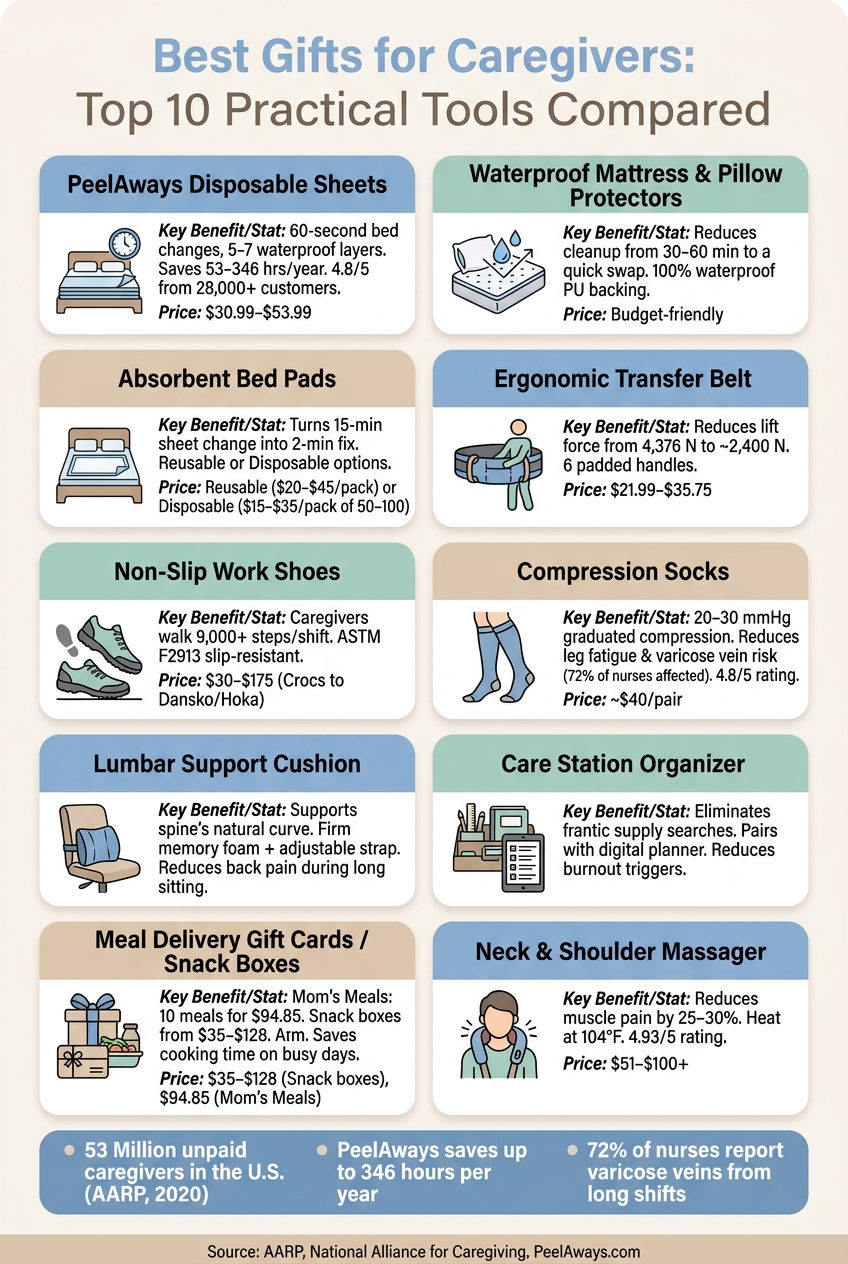
Best Gifts for Caregivers: Top 10 Practical Tools Compared
How To Choose Practical Gifts for Caregivers
The best gifts for caregivers are those that tackle their everyday struggles head-on. Think about saving time, providing physical comfort, maintaining hygiene, and staying within budget. Even addressing just two of these areas can make a real difference in their daily life. This perspective helps steer your choices toward items that simplify caregiving routines.
Start by asking, "What drains their energy the most?" Caregivers often wrestle with repetitive tasks - changing bedding, organizing medications, and sticking to tight schedules. Gifts that help cut down on these tasks can provide immediate relief. As JR Ricker, Head of Care at Paid.care, puts it:
"Meaningful gifts do not need to be expensive. Low-cost ideas include a heartfelt card, a favorite snack basket, coffee or tea, a cozy pair of socks..."
It’s also important to separate tools that make caregiving easier from those that support their personal well-being. Caregiving tools - like waterproof bed sheets, medication organizers, or digital care planners - help lighten the workload. On the other hand, self-care items, such as a massage voucher or a good book, focus on the caregiver’s needs outside their role. A gift that combines both aspects can be even more impactful. For instance, a product that cuts a bedding change from 15 minutes to just one provides extra time the caregiver can use to relax or recharge.
Don’t let budget limit your options. A simple and affordable gift, like a $25.00 digital caregiver planner with over 40 printable pages for tracking medications and routines, can be both thoughtful and practical.
Finally, a key rule to remember: avoid gifts that add complexity. Anything requiring a complicated setup or extra maintenance could unintentionally create more work for the caregiver. Keep it simple to truly make their life easier.
Gifts That Simplify Caregiving Tasks
The best gifts for caregivers are the ones that make their toughest, most repetitive tasks easier. Think about the daily grind: changing soiled bedding, managing incontinence, or scrambling to find supplies at the worst possible moment. These jobs don’t just happen once - they happen over and over. A gift that trims even a few minutes from these tasks gives caregivers something priceless: more time.
In 2020, AARP and the National Alliance for Caregiving reported that about 53 million Americans were providing unpaid care. Personal care and daily assistance took up a huge chunk of their time. For someone dealing with two or three nighttime accidents a week, shaving off 10 minutes per bed change can save hours each month. Experts suggest layered protection - like waterproof mattress covers, absorbent pads, and multi-layer disposable sheets - to make cleanup faster. For instance, peeling away a soiled sheet to reveal a fresh one underneath means no laundry and no complete bed remake. It’s a small change with a big impact.
Beyond bedding, having supplies within arm’s reach can be a game-changer. A well-stocked bedside caddy with essentials like gloves, wipes, barrier cream, and spare briefs ensures everything is ready when needed. The National Institute on Aging stresses the importance of keeping incontinence supplies close and extra linens on hand. An organized care station can turn a frantic search into a smooth, efficient process. These practical solutions not only simplify caregiving but also inspire thoughtful gift ideas that truly make a difference.
Gifts That Reduce Physical Strain
Caregiving takes a toll on the body. From constant bending to heavy lifting and standing for hours, the physical strain can add up fast. Tasks like changing bedding for loved ones with incontinence can lead to exhaustion and even back injuries. This is where PeelAways multi-layer disposable sheets shine. Instead of wrestling with traditional bedding, caregivers can simply peel off a soiled layer in under 60 seconds - no heavy lifting or repositioning required.
The right footwear is another game-changer. Supportive shoes can significantly reduce strain during long shifts. A study on nurses revealed that 72% reported varicose veins, with 78% of female nurses and 57% of male nurses affected. Shoes with a stable heel, wide toe box, and slip-resistant sole ensure even weight distribution and proper alignment from the ankles upward. As Emphasis.life puts it:
"If your shoes make you brace, shuffle, or count the minutes until you can sit down, they are costing you energy every single hour."
Pair those shoes with 20–30 mmHg graduated compression socks, and you’ll see a big difference in swelling and leg fatigue.
For caregivers who frequently assist with patient transfers, an ergonomic transfer belt with padded handles provides a firm grip while protecting wrists and preventing back strain. And when there’s a rare moment to sit, a lumbar support cushion offers much-needed relief, helping caregivers recharge their bodies for the next task. These small adjustments can make a big difference in easing the physical demands of caregiving.
Gifts That Support Caregiver Self-Care
Caregivers often put their own needs on the back burner while focusing on others. This makes self-care gifts not just thoughtful but essential. The best ones are practical and easy to incorporate into a hectic schedule - like relaxation aids, meal delivery gift cards, or tools to lighten the mental load. One simple yet effective self-care approach gaining attention is the concept of micro-rituals.
Micro-rituals are brief, science-backed routines designed to recharge the mind and body in under 10 minutes. As Ava Sinclair, Senior Wellness Editor, puts it:
"A little recovery done regularly beats a dramatic reset attempted too late."
Pairing a 10-minute micro-ritual with a compact wellness kit can make a big difference. Include items like a washcloth, lavender essential oil, earplugs, tea, and a breathing card for a quick and calming reset.
Meal delivery gift cards are another way to provide meaningful relief. For instance, Mom's Meals offers 10 ready-to-heat meals for $94.85 (shipping included) with options tailored to specific dietary needs such as diabetic, renal, or low-sodium menus. If home-cooked comfort is more appealing, Beehive Meals has a "Get Well Soon" gift box featuring five slow-cooker-ready freezer meals for about $109.00. As Beehive Meals describes it:
"Give the gift that brings warmth to the table when it's needed most."
Organizational tools can also ease daily stress. A digital caregiver planner, priced at $25.00, offers over 40 printable pages and works with Google Sheets to help track sleep, hydration, and rest breaks alongside caregiving tasks. By reducing decision fatigue and streamlining responsibilities, it becomes an invaluable aid. As Ava Sinclair wisely notes:
"The best caregiver self-care tools are the ones that remove friction, not add to it."
1. PeelAways Multi-Layer Disposable Waterproof Bed Sheets

It’s 2 a.m., and the bed’s soaked again. You’re exhausted, your loved one feels embarrassed, and the thought of stripping the mattress and starting a load of laundry feels impossible. This is the reality for so many caregivers - until they discover PeelAways.
PeelAways changes everything. In just 60 seconds, you can go from a soiled bed to a fresh, clean surface. Each sheet has 5 to 7 soft, breathable layers stacked together. When the top layer is dirty, you grab the corner tabs, peel it away diagonally, and voilà - a new sheet is ready underneath. No mattress stripping. No late-night laundry. No extra hands needed.
These sheets are made from a blend of bamboo, rayon, and polyester. They’re quiet, free of vinyl, PVC, and phthalates, and 100% waterproof. This means nothing leaks through to the next layer, keeping the surface dry and reducing the risk of rashes or pressure sores for those who are bedbound or dealing with incontinence. One customer, LaVora B., summed it up perfectly:
"PeelAways helps with sanitary conditions with urinary conditions, save resources to change sheets for cleanliness and odorless room. It helps the caregiver to give better care to love one and patients."
PeelAways works in a variety of caregiving situations - whether it’s for an elderly parent, a partner recovering from surgery, or a child with a chronic illness. If you’re dealing with 1–2 nighttime incidents, this product can save caregivers 53 to 346 hours a year compared to traditional sheet changes. It’s no wonder PeelAways has earned a 4.8/5 rating from over 28,000 customers and was named Caregiver Product of the Year.
Available in sizes from Crib ($30.99) to King ($53.99), PeelAways even offers a Twin XL option with 7 layers for $41.99 - perfect for adjustable hospital-style beds often used in home care. Blog readers can save 10% with code BLOGS10 at checkout, and shipping is free on orders over $100.
| Solution | Cleanup Time | Laundry Required? | Preserves Dignity? | Best For |
|---|---|---|---|---|
| PeelAways | ~60 seconds | No | Yes | Incontinence, dementia, post-surgery, bedwetting |
You can order PeelAways multi-layer disposable sheets directly from their website or find them on Amazon. Whether you’re caring for an aging parent, a recovering partner, or a child, PeelAways makes caregiving simpler and less stressful.
2. Waterproof Mattress and Pillow Protectors
Waterproof protectors act as a shield, keeping spills and accidents from soaking into the mattress or pillows. When an incident occurs, you simply remove the protector, toss it in the wash, and replace it with a clean one. No scrubbing, no enzyme sprays, and no waiting for hours while everything air-dries.
For caregivers handling incontinence, this can be a game-changer. Without protection, a soaked mattress can mean 30–60 minutes of cleanup - blotting, treating, and waiting for it to dry. A waterproof protector reduces that to a quick swap and a load of laundry. Keeping an extra set nearby means you can remake the bed immediately, without added stress.
When shopping for a protector, make sure it’s labeled "100% waterproof" - not just water-resistant. Look for options with a polyurethane (PU) backing, which fully blocks liquids but still allows some airflow to avoid overheating. Steer clear of older vinyl protectors; they tend to crack, make crinkling noises, trap heat, and can feel uncomfortable. A soft knit or cotton-terry surface is a better choice, as it feels more like traditional bedding. Don’t forget the pillows - protecting them is equally important.
Pillow protectors are often overlooked but make a big difference. Drooling, nasal drainage, and night sweats can seep into pillow fill, causing odors and bacteria to build up. A zippered pillow encasement completely seals the pillow, making it washable and extending its lifespan while keeping the sleep surface fresh.
| Use Case | Why It Helps Caregivers |
|---|---|
| Incontinence | Prevents urine from soaking into the mattress, saving time and effort |
| Night sweats | Protects against odors and stains on the mattress |
| Drooling/nasal drainage | Keeps pillow fill clean and odor-free |
| Allergy management | Zippered covers reduce exposure to dust mites |
For most caregiving needs, a fitted waterproof mattress protector and a couple of zippered pillow protectors provide an easy, low-maintenance way to keep the bed clean and comfortable.
3. Absorbent and Waterproof Bed Pads
When it comes to tools that make caregiving easier, absorbent and waterproof bed pads are a game-changer. These pads sit on top of the fitted sheet, under your loved one, and work by pulling moisture away from the bedding. If there’s an accident, you simply remove and replace the pad - turning a 15-minute sheet change into a quick two-minute fix.
Bed pads are a focused solution, designed to protect the areas most prone to leaks, such as under the hips or torso. By keeping a few pads in rotation - three or four is a good number - you can handle cleanups immediately without any delays. This small adjustment can make a big difference in your nightly routine.
There are two main types of bed pads to consider: reusable and disposable. Reusable pads, priced between $20 and $45 for a pack of two to four, are ideal for regular use at home. They’re built to last, often holding up through 250–300 or more wash cycles. Disposable pads, costing $15 to $35 for a pack of 50–100, are perfect for travel, hospital stays, or when doing laundry isn’t an option. Many caregivers find it helpful to use both - reusables for everyday use and disposables as a convenient backup.
When selecting a bed pad, size matters. For adults, options like 34″×36″ or 36″×52″ offer enough coverage, even for those who move around during sleep. Look for pads with these key features:
- Non-slip backing to keep the pad in place.
- Soft top layer to protect sensitive skin.
- Waterproof layer that allows airflow while blocking moisture.
Avoid pads that crinkle, as the noise can disturb sleep - something no caregiver or care recipient needs.
Beyond the convenience they offer, bed pads play an important role in maintaining skin health. By keeping moisture away from the body, they help prevent skin issues, reducing the need for additional care. This is especially important for individuals with limited mobility or chronic incontinence. Thoughtful and practical, a quality set of bed pads can ease nightly routines while supporting overall well-being.
4. Ergonomic Transfer Belts with Padded Handles
If you're assisting someone with daily movements or repositioning, an ergonomic transfer belt with padded handles can make a world of difference. These belts are designed to reduce the physical strain on caregivers by offering secure grip points close to the patient’s center of gravity. This allows you to lift using your legs instead of your back, helping to minimize the risk of injury.
Consider this: manual lifts can exert forces up to 4,376 N, but using a transfer belt reduces that to around 2,400 N. For caregivers performing frequent transfers, that reduction is a game-changer.
When choosing a transfer belt, look for multiple padded handles - whether vertical, horizontal, or diagonal. These options allow you to adjust your grip depending on the type of transfer, ensuring a safer posture whether you're moving someone from a bed to a wheelchair or helping them stand from a seated position. Occupational therapist Mike Price emphasizes the importance of these tools:
"Using proper transfer aids is the best way to reduce falling risks for the patient, and overexertion injuries for the caregiver."
Fit is just as important as design. A well-fitted belt enhances both safety and comfort. The belt should be snug enough to allow just two fingers to slide between it and the patient’s body - no more, no less. Always place the belt over clothing, never directly on bare skin, and position it around the lower abdomen near the hips. For patients with delicate skin, placing a thin towel between the belt and their clothing can add extra comfort.
Several options are available to suit different needs and budgets. The Patient Aid Handling Belt, featuring six padded handles, is priced at about $21.99. The Norco Cotton Gait Transfer Belt costs approximately $30.02, while the Posey Quick-Release Gait Belt is available for around $35.75. For bariatric needs, reinforced models with wider straps and extended lengths are also on the market. These belts are a small but impactful investment, offering tools that help ease the daily challenges caregivers face.
sbb-itb-45288fe
5. Comfortable Non-Slip Work Shoes
Long shifts on your feet can feel endless without the right shoes. Caregivers and nurses often walk over 9,000 steps per shift - that’s a lot of wear and tear on your feet if your footwear isn’t up to the task. Just like transfer belts or specialized bedding reduce physical strain, supportive shoes are a must-have tool for anyone in caregiving.
The key feature to prioritize? A slip-resistant outsole tested to the ASTM F2913 standard. Combine that with supportive arches, cushioned footbeds, and a roomy toe box to help prevent fatigue, blisters, and even conditions like plantar fasciitis.
"Phenomenal, unbelievably comfortable and the only thing that saved my feet from pain after 5 12-hour shifts!" - Julia V., Verified Buyer
Some top picks include:
- Dansko XP 2.0 ($80–$170): Recognized by the American Podiatric Medical Association (APMA), these shoes are designed to evenly distribute pressure across your foot.
- Hoka Bondi SR ($150–$175): Known for its plush cushioning, this option is perfect for long-distance walking.
- Crocs At Work ($30–$50): A budget-friendly choice that’s lightweight, easy to clean, and still provides solid support.
One smart tip: rotate between two pairs of shoes to give pressure points a break and extend the life of your footwear. Plan to replace your work shoes every 6–12 months, especially once the tread or support starts to wear down. Taking these steps will help keep your feet protected and comfortable every shift.
6. Compression Socks for Long Shifts
Compression socks work by applying graduated pressure - tightest at the ankle and gradually loosening up toward the knee - to help improve circulation. When you're on your feet for hours, blood tends to pool in your calves, leading to swelling and discomfort. These socks essentially support the "second heart" in your legs, helping to reduce fatigue and minimize the risk of long-term issues like varicose veins. For caregivers tackling 12-hour shifts on hard floors, they can be a game-changer for comfort and health.
For the best results, go for 20–30 mmHg graduated compression. Lower pressure may not provide enough support, and socks without graduated compression can feel uncomfortably tight - like a boa constrictor clinging to your calf. Look for pairs made from moisture-wicking fabric with a seamless toe and cushioned sole to keep your feet dry and comfortable all day.
"I've been wearing these for 4 years and they make a huge difference in leg fatigue and circulation." - Adrianna, Nurse
If you're thinking of gifting compression socks, some excellent choices include PRO Compression Marathon Socks (around $40 per pair, with a 4.8/5 rating from over 8,000 customers) and Apolla Performance Crew Socks ($40 per pair, rated 4.8/5 from 1,794 reviews). Both options are highly rated and come with the APMA Seal of Acceptance, affirming their quality.
Here's a pro tip: put on your compression socks before your shift starts - before any swelling sets in - for maximum benefit.
Next, we'll look at more thoughtful gifts designed to ease physical strain and enhance caregiver well-being.
7. Lumbar Support Cushions
If you’ve ever spent hours sitting at a bedside, in a car, or even at a desk, you know how quickly lower back pain can creep in. For caregivers, this discomfort isn’t just a nuisance - it can lead to exhaustion and even injury over time. A lumbar support cushion offers a simple way to ease the strain by supporting the spine’s natural curve and making long sitting sessions more manageable.
When picking a lumbar support cushion, focus on a few key features: firm memory foam for proper support, an adjustable strap to keep it securely in place, and a removable, washable cover for easy cleaning. These practical touches make the cushion a seamless addition to any caregiver’s routine.
This small yet thoughtful tool isn’t just useful - it’s also an excellent gift idea for anyone who spends long hours caring for others.
8. Pre-Made Care Station Organizers
A messy care space can turn an already tough job into a frantic scramble. When gloves, wipes, creams, or bed protectors are scattered everywhere, even small tasks can feel overwhelming. A care station organizer changes that by keeping everything you need in one place, so you can focus on what really matters - caring for your loved one.
With over 53 million caregivers in the U.S. juggling daily responsibilities, little inefficiencies add up fast. Simple tools like labeled bins or portable caddies can cut down on the frantic searches when time is tight. This kind of organization doesn’t just save minutes - it helps create a calmer, more predictable routine. And that can make a big difference in reducing burnout.
"Reducing caregiver stress often starts with identifying these preventable pain points and addressing them head-on." - PeelAways
An organized care station does more than tidy up your supplies - it also helps with smooth care coordination. Pairing a physical organizer with a digital planner means everything is covered. Supplies are at your fingertips, and critical information - like medication schedules, doctor appointments, or meal plans - is just as accessible.
Much like the time-saving bedding solutions we’ve talked about, a care station organizer simplifies daily routines. Whether you’re supporting someone aging at home or helping a loved one recover from surgery, it creates an efficient, stress-reducing environment without feeling clinical. It’s also a thoughtful gift for caregivers - saving them time and energy every single day.
9. Healthy Snack Boxes and Meal Delivery Gift Cards
Caregivers often run on tight schedules, leaving little time to focus on their own nutrition. That’s where healthy snack boxes and meal delivery gift cards come in - they save time and ensure caregivers stay nourished, even on the busiest days.
Meal delivery gift cards are a thoughtful way to provide ready-to-heat meals that arrive right at the doorstep. For instance, Mom's Meals offers gift certificates starting at $94.85 for 10 meals, which includes flat-rate shipping. These meals are a lifesaver when breaks are short, making it easier for caregivers to enjoy a hot, balanced meal without the hassle of cooking.
"Food never fails. Remember the last time someone made you a meal? It's one of the best (and tastiest) ways to tell someone 'thank you.'" - CareScout
Snack boxes add another layer of convenience, offering quick, energizing options throughout the day. Curated boxes like those from Jenny's Gift Baskets include choices such as the Fruit & Cheese Gift Basket ($128.00) and the Sugar-Free Diabetic Gift Basket ($88.00). For a more affordable option, the Small Welcome Gift Box starts at $35.00.
Look for snack boxes packed with protein and fiber - think nuts, artisan cheeses, and fresh fruit - to deliver lasting energy. Many options cater to specific dietary needs, reducing the number of decisions caregivers have to make each day. These simple yet thoughtful gifts can help lighten the load and support caregivers in maintaining their well-being.
10. Neck and Shoulder Massagers
Neck and shoulder massagers are a lifesaver for caregivers dealing with daily tension. After a grueling 12-hour shift, the strain on your neck and shoulders can feel unbearable. A reliable massager provides a simple, at-home solution to relax and recharge without scheduling a trip to the spa.
These massagers use heated kneading nodes that mimic the feel of a professional massage. With therapeutic heat reaching about 104°F, they can ease muscle pain by as much as 25–30%. The rotating motion of the nodes works through stubborn knots, delivering noticeable relief in just a few minutes.
One standout option is the ReliefWave NeckHalo, which boasts a 4.93/5 rating from over 400 reviews. Its wrap-around design and adjustable straps allow for hands-free relaxation, making it a favorite among caregivers. Here's what some have shared:
"12-hour shifts wreck my shoulders. This melts the knots before bed so I actually sleep. Woke up limber for the first time in years." - Nicole R.
"I'm a nurse, 12 hr shifts on my feet. Used to eat ibuprofen like candy. Now I come home, use this, and my back/feet actually loosen up." - Natalie F.
Think of it this way - just as good shoes and lumbar support protect you during the day, a massager is your recovery tool for the evening. When picking one as a gift, consider features like heat, cordless functionality, and an automatic shut-off (usually after 15 minutes to avoid overstimulation). You’ll find professional-grade handheld massagers for around $100, while mid-range shiatsu wraps typically cost between $51 and $100. For many caregivers, a quick 10-minute session before bed can make all the difference, helping them wake up refreshed and ready to face another demanding day. It’s a thoughtful way to support their well-being with a practical, self-care tool.
Conclusion
Caregiving is one of the toughest roles anyone can take on, often requiring immense physical and emotional effort with little recognition or support. As Brian Dowd, Senior Content Writer at CareScout, aptly said:
"Caregiving takes heart, strength, and more unseen effort than people might realize."
The right gift doesn’t need to be extravagant - it just needs to make life a little easier. From ergonomic shoes that ease long hours on your feet to lumbar cushions and neck massagers that relieve physical strain, every item on this list targets real, everyday challenges caregivers face. Thoughtful gifts like these not only reduce stress but also send a powerful message: their hard work is seen and appreciated.
If you’re searching for a gift that truly combines practicality with time-saving convenience, PeelAways multi-layer disposable sheets are a standout choice. With their 60-second bed-changing design, they save caregivers valuable time and effort while preserving dignity for their loved ones.
Don’t miss out on a 10% discount with code BLOGS10. This offer applies to subscriptions and bundles, making it even easier to simplify caregiving tasks. Whether you're giving or receiving, these solutions lighten the load and honor the incredible work caregivers do every day.
Shop PeelAways on Amazon or visit PeelAways.com.
FAQs
Which PeelAways size fits a hospital-style adjustable bed?
The King-size PeelAways, measuring 80" x 78", are made to perfectly fit hospital-style adjustable beds with mattresses up to 12 inches deep. This ensures they stay securely in place, making life easier for caregivers.
How many extra bedding-protection layers should I keep on hand?
It's a smart idea to have 2–3 sets of disposable bedding layers ready for each bed. This way, you’re always prepared for quick changes, making those hectic moments a little less overwhelming and keeping your caregiving routine more manageable.
What’s the best gift if I don’t know the caregiver’s exact needs?
A gift like PeelAways disposable sheets can be a lifesaver for caregivers, especially when you're not certain about their exact needs. These sheets make bedding changes quick and easy, cut down on physical strain, and free up precious time - offering a thoughtful way to lighten their daily load.
Comments
0



SAVE MONEY & WATER
Professionals & Institutions save a fortune on labor/laundry.

SUPERIOR COMFORT
The first thing our customers notice is how soft our sheets are.

100% WATERPROOF
Each layer is 100% Waterproof, perfect for spills and accidents

SAVE TIME
Change the sheet in under 1 minute without stripping the bed.

Leave a comment