
Best Caregiving Products That Make Home Care Actually Manageable

Caring for loved ones at home can be overwhelming, especially when dealing with tasks like frequent bedding changes due to incontinence. Products like PeelAways disposable bed sheets, waterproof mattress pads vs. disposable sheets, and bedside organization tools can drastically cut cleanup time, reduce laundry, and simplify caregiving routines.
Quick Overview of Top Solutions:
- PeelAways Multi-Layer Bed Sheets: Change bedding in under 60 seconds.
- Waterproof Mattress Protectors: Protect against stains and odors. (See our guide on waterproof bed protection for more details.)
- Incontinence Pads: Easy swaps for quicker cleanups.
- Bedside Carts and Night Lights: Keep essentials accessible and reduce fall risks.
- Laundry Tools: Enzyme detergents tackle tough stains efficiently.
These tools not only make caregiving easier but also help maintain dignity and comfort for those under your care.
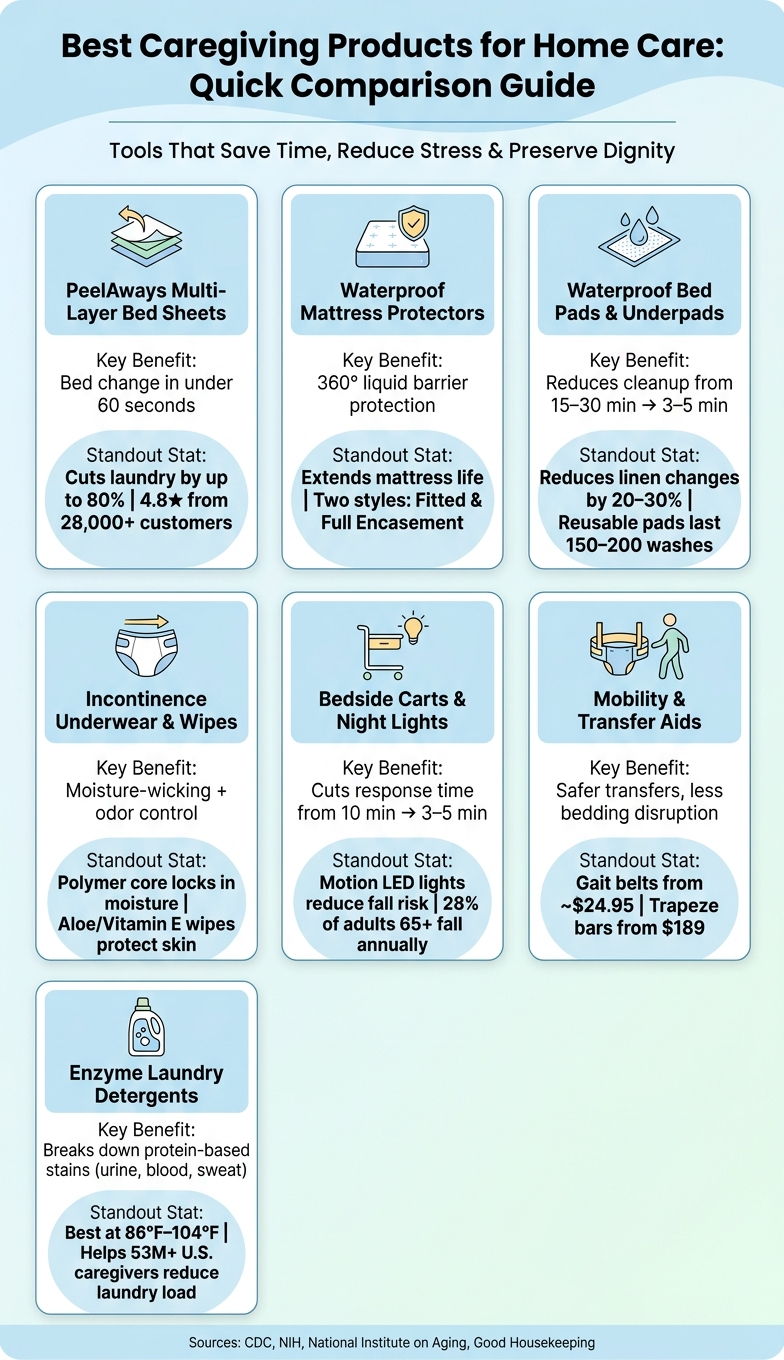
Best Caregiving Products for Home Care: Quick Comparison Guide
Top 15 Must-Have Gadgets to Make Life Easier for Elderly People
sbb-itb-45288fe
1. PeelAways Multi-Layer Disposable Waterproof Bed Sheets

PeelAways are disposable fitted sheets with 5-7 waterproof layers. When the top layer becomes soiled, you simply peel it off to reveal a fresh, clean surface underneath - no need for stripping the bed, washing sheets, or lifting the mattress. The entire process takes less than 60 seconds, making it a game-changer for caregivers who handle these tasks daily.
Traditional bed changes can take up to 15 minutes per incident, but PeelAways streamline this process and can cut laundry loads by as much as 80%. Each layer is completely waterproof, protecting mattresses from fluids, stains, and odors, eliminating the need for an extra mattress protector.
Made from a soft blend of bamboo, rayon, and polyester, PeelAways feel like regular bedding - no crinkly plastic sensation - and are free from harmful chemicals. The peel-away design also eliminates the need to reposition individuals in bed, making it especially useful for those with limited mobility.
Pricing: The Crib-A-Peel (5 layers) starts at $30.99, while Twin, Queen, and King sizes are priced at $34.99, $47.99, and $53.99 respectively. A 15% discount is available for subscription-based deliveries. PeelAways boasts a 4.8-star rating from over 28,000 customers and has been awarded Caregiver Product of the Year.
This innovative product is just one example of how caregiving tasks can be simplified while maintaining comfort and dignity.
2. Waterproof Mattress Protectors and Bed Encasements
waterproof and hypoallergenic bedding options are a great addition to disposable bedding solutions, offering essential defense against spills and accidents. They create a complete liquid barrier, stopping urine, sweat, and other messes from seeping into your mattress. This not only helps avoid permanent stains but also reduces bacterial growth and odors. By adding this layer of protection, you can extend the life of your mattress significantly.
When it comes to styles, you have two main options:
- Fitted protectors: These cover the top and sides of the mattress, much like a regular fitted sheet. They’re easy to remove and wash, making them practical for everyday use.
- Full encasements: These zip around the entire mattress, providing 360° coverage. They’re especially useful for long-term protection against allergens, spills, and other contaminants.
For most caregiving situations, a fitted protector works well for daily use. However, if you’re dealing with allergies or need more robust protection, a full encasement might be the better choice.
Gone are the days of noisy, uncomfortable plastic covers. Modern protectors now feature materials like TPU (thermoplastic polyurethane) or polyurethane backing, which are quieter, softer, and breathable to prevent overheating. Some even include natural fabrics on the surface for added comfort, making them much more user-friendly.
"A waterproof protector covers five or six sides of your mattress to prevent liquids, sweat, grime, and other messes from seeping into your bed, which can ultimately extend the life of your mattress." - Good Housekeeping
To keep your protector in good shape, tumble dry it on low heat to avoid damaging the waterproof membrane. It’s also wise to have an extra protector on hand for quick changes. For those with sensitive skin, look for products certified by OEKO-TEX STANDARD 100.
If heavy incontinence is a concern, consider layering absorbent pads on top of the protector. This setup simplifies cleanup and completes a more comprehensive bedding system.
3. Waterproof Mattress Pads, Underpads, and Bed Pads
Waterproof mattress pads, underpads, and bed pads make managing incontinence much easier by catching leaks before they soak the entire bed. These pads are typically placed under high-risk areas, like the hips and lower back, so you only need to replace the soiled layer instead of stripping the entire bed. This approach can cut nighttime cleanup from 15–30 minutes to just 3–5 minutes. It’s a practical solution that works well with a layered bedding setup.
Here’s how it works: start with a waterproof mattress encasement, add a fitted sheet, and then lay a bed pad over the most vulnerable areas. When an accident happens, you simply swap out the pad. Studies in long-term care settings show that using these targeted pads can reduce linen changes by 20–30% compared to relying solely on briefs.
When comparing reusable and disposable pads, think about your lifestyle and how easy it is to do laundry. Reusable pads are often made with a quilted cotton or polyester top, an absorbent middle layer, and a waterproof backing. They’re cost-effective for nightly use, lasting through about 150–200 washes and holding up to 6–8 cups (48–64 fl oz) of fluid overnight. On the other hand, disposable underpads - often called chux - are perfect for travel, post-surgery recovery, or when laundry isn’t an option. Lighter disposable pads cost around $0.20–$0.40 each when bought in bulk, while heavier absorbency options range from $0.50–$1.00 per pad.
| Type | Best For | Approx. Cost |
|---|---|---|
| Disposable underpads (chux) | Travel, post-surgery, limited laundry access | $0.20–$1.00 per pad |
| Reusable bed pads | Nightly incontinence at home | $15–$30 each; $25–$60 for multi-packs |
| Pads with tuck-in wings | For active or restless sleepers on adjustable beds | Provides secure placement |
Small details can make a big difference in how these pads perform. Look for a non-slip backing to keep the pad in place and prevent it from bunching into uncomfortable ridges. Pads with tuck-in wings are especially useful for active or restless sleepers, as they stay securely in place on adjustable beds. For added comfort and skin health, choose a pad with a soft, breathable top layer like brushed cotton, bamboo, or microfiber instead of one with a stiff, plastic-like surface.
To streamline your routine, keep a stack of clean pads in a bedside basket. This makes quick swaps easy, helping you avoid full bedding changes and minimizing sleep interruptions.
4. Incontinence Underwear, Briefs, and Skin-Friendly Wipes
Incontinence underwear and wipes play an essential role in reducing skin irritation, maintaining dignity, and simplifying personal care routines. The right products can quickly pull moisture away from the skin, prevent leaks from soiling bedding, and make cleanup easier for both caregivers and those receiving care. These features create a solid foundation for ensuring a proper fit and effective skin care.
To get the best fit, use actual waist and hip measurements. A proper fit not only prevents leaks but also eliminates the need for trial-and-error purchases. Modern choices include pull-up styles for active users, tabbed briefs for those with limited mobility, and specialized sizes for bariatric or pediatric needs.
Look for briefs with a super-absorbent polymer core and a cloth-like, breathable backing. These designs trap moisture, control odor, and reduce noise for added discretion. For managing heavier incontinence, caregivers can use booster pads to increase absorbency without making the garment bulkier. Andy, CEO of Tranquility, highlights this commitment to quality:
"Our team combines engineering expertise and clinical best practices to deliver products that provide dignity, freedom and confidence for wearers and caregivers."
These thoughtful features not only improve caregiver efficiency but also help preserve the dignity of those in care.
Equally important is preventing skin irritation from incontinence caused by prolonged moisture exposure. Use unscented, hypoallergenic wipes enriched with aloe or vitamin E for gentle cleaning, and finish with a barrier cream to protect the skin.
| Feature | Why It Matters |
|---|---|
| Polymer core | Locks in moisture and controls odor |
| Cloth-like backing | Reduces noise while improving comfort and discretion |
| Breathable membrane | Keeps liquids out while allowing airflow to dry skin |
| Adhesive strips | Secures pads in place to prevent shifting |
| Aloe/Vitamin E wipes | Soothes and protects the skin after cleanup |
5. Bedside Organization: Caregiving Carts, Caddies, and Night Lights
After addressing bedding solutions, organizing the bedside area is another way to make home care more efficient. Cut response times from 10 minutes to just 3–5 minutes - critical during nighttime emergencies. A well-organized bedside station saves trips to the linen closet, eliminates fumbling in the dark, and reduces stress during long nights.
A 3-tier rolling utility cart is a great option. These carts, typically 16–18 inches wide and priced between $30–$70 at stores like Target, Walmart, or Amazon, provide an easy-to-manage setup. Use the top tier for essentials like gloves and wipes. The middle tier can hold spare incontinence briefs and supplies and an extra PeelAways layer, while the bottom tier is perfect for backup pajamas and a light throw blanket. Home-care nurses often refer to this as creating a "mini hospital room" - everything needed for common situations is in one predictable spot.
If space is tight, a fabric bedside caddy that tucks under the mattress offers a compact solution. These caddies, costing $10–$25, keep items like a spare pad or a call button within arm's reach. This setup allows the care recipient to access essentials without needing to stand. Adding a small touch-lamp or a nightstand switch ensures they can signal for help without shouting across a dark room.
Low-glare night lights are another must-have. Both the CDC and the National Institute on Aging emphasize that poor bedroom lighting is a major, avoidable fall risk. About 28% of U.S. adults aged 65 and older report at least one fall annually. Motion-activated LED night lights, which emit a warm 2,700–3,000K glow, are a simple way to reduce this risk. A pack costs $10–$25, and placing them low along the wall from the bed to the bathroom ensures enough light to handle tasks like changing a pad or checking bedding - without the need for harsh overhead lights.
To keep things running smoothly, establish a quick 5–10 minute pre-bed routine. Restock the cart, check the PeelAways layer, and ensure all night lights are functioning. This consistent setup means any caregiver, even if they're new or rotating in, can find everything they need instantly, no matter the time. These organizational strategies work hand-in-hand with the bedding solutions covered earlier.
6. Mobility and Transfer Aids That Protect Bedding
Mobility and transfer aids like transfer belts, slide sheets, trapeze bars, and bed rails not only make caregiving safer and smoother but also help keep bedding intact and reduce the risk of accidental soiling. These tools can simplify your daily routine while ensuring comfort and protection.
A transfer belt, often called a gait belt, provides a secure grip for assisting with standing and walking. Opt for a padded belt with multiple hand grips for better control during transfers, which also helps protect bedding. For instance, the Easi Care Gait Belt, priced around $24.95, fits waist sizes from 28" to 42". Quick and controlled transfers mean less time spent moving between the bed and bathroom, lowering the chances of accidents on the bedding.
Slide sheets are another essential tool, especially for repositioning someone in bed. Unlike dragging, which can shift waterproof pads and disrupt bedding layers, slide sheets reduce friction and keep everything in place. For individuals who need help sitting up, a trapeze bar can be a game-changer. Freestanding models start at $189, while more comprehensive systems can cost up to $465.29. When someone can lift themselves rather than being pulled upright, it significantly reduces sheet friction.
Bed rails require special consideration. They provide stability for care recipients when sitting up or lying down - moments when leaks are more likely to occur. However, safety is critical. The FDA has reported that over 50% of bed rail-related accidents have resulted in fatalities. To ensure safety, apply the "four-finger rule": if four or more fingers fit between the rail and mattress, the setup is unsafe. Always check that the rail is compatible with your specific bed frame and mattress.
"The risk of falling may be greater in areas where your loved one needs to raise or lower themselves, such as the bed, bath, toilet, and shower." - Healthline
Placing a bedside commode near the bed can also reduce the need for lengthy transfers, minimizing the risk of accidents. Pairing this with a fresh PeelAways layer creates an efficient system that simplifies cleanup and reduces caregiver stress.
7. Laundry and Odor Control Tools for Caregivers
Once you've got bedding for caregivers sorted, the next step is tackling laundry and odor control. Tools like enzyme-based detergents, odor eliminators, and smart laundry techniques can make post-accident cleanups much easier. Enzyme detergents are especially effective because they break down protein-based stains - like urine, blood, and sweat - into water-soluble fragments, making them easier to wash away. Protease detergents, in particular, are great for these types of stains and work best at temperatures between 86°F and 104°F (30°C to 40°C). This temperature range not only protects fabrics but also helps save on energy costs.
For example, Dirty Labs Signature Bio Laundry Detergent is priced at $28.00 for 80 loads and boasts a 4.76-star rating. Pair it with their Bio Enzyme Laundry Booster, available for $20.00, to enhance cleaning power. If you're tight on storage space, the Blueland Laundry Detergent Starter Set, starting at $20.00, offers a plastic-free option and has an impressive 4.7-star rating from over 13,600 reviews.
Here’s a handy tip: for dried or stubborn stains, apply a concentrated enzyme formula directly to the fabric and allow it to sit for 15–30 minutes before washing. However, keep in mind that enzyme detergents aren’t suitable for delicate fabrics like wool or silk, as the enzymes can gradually weaken these natural fibers over time.
Another key to managing laundry is reducing the overall volume of soiled items. Combining these laundry strategies with PeelAways bedding can significantly cut down on the amount of laundry caregivers need to handle. This is a game-changer for the over 53 million caregivers across the U.S., many of whom are already juggling numerous responsibilities. Fewer soiled items mean less odor, reduced laundry time, and more freedom to focus on essential caregiving tasks. These tools not only simplify cleaning but also help create a more respectful and less stressful caregiving environment.
8. Comfort and Sleep Aids for Better Nights
Creating a supportive sleep environment helps both caregivers and care recipients enjoy more restful nights. Tools like body pillows, adjustable bed wedges that elevate the upper body, and white noise machines can reduce interruptions and ease anxiety. These aids work hand-in-hand with other nighttime strategies mentioned earlier.
Safety is another critical factor during sleep. Nighttime falls can lead to severe injuries. The National Institute of Health (NIH) highlights this concern:
"Most falls occur overnight and falls during the evening were likely to result in a more serious injury than daytime falls."
Simple solutions such as bedside rails and nightlights can significantly reduce the risk of falls while also offering a sense of security.
Beyond physical comfort, achieving mental calm is key to better sleep. Caregivers often struggle with mental clutter, which can delay falling asleep. Interestingly, research suggests that spending just five minutes writing a to-do list before bed can help you drift off faster than reflecting on the day's events. To prepare for unexpected nighttime care needs, keeping a "ready bag" with essentials like snacks, a phone charger, and personal items can make a big difference.
Another common sleep disruptor is wet bedding. Traditional bedding solutions for incontinence care can take up to 15 minutes to change, but PeelAways sheets simplify the process, cutting cleanup time to under 60 seconds. These sheets not only save time but also minimize interruptions to sleep. With a 4.8/5-star rating from over 8,000 customers, they’re a practical choice for maintaining a smoother nighttime routine.
Conclusion
Caregiving is no easy task, and having the right tools can make all the difference in managing daily responsibilities. From choosing bedding for incontinence care to improving hygiene, reducing physical strain, enhancing sleep, and keeping your space organized, the products mentioned above are designed to address the unique challenges caregivers face. Together, they can help turn an overwhelming routine into something far more manageable.
One of the quickest ways to ease nighttime incontinence care is by switching to PeelAways multi-layer disposable sheets. These sheets allow for a complete bed change in under 60 seconds - no mattress lifting, no emergency laundry. They take one of the most exhausting parts of caregiving and make it effortless.
To make things even better, PeelAways is offering blog readers an exclusive 10% discount. Use code BLOGS10 at checkout to save on your order. You can combine this discount with subscriptions and bundle deals, helping you save more while simplifying care.
PeelAways are available for purchase on Amazon or directly at PeelAways.com.
FAQs
How do I build a “layered bed” setup for incontinence?
To set up a "layered bed" for incontinence, begin with a waterproof mattress protector to shield the mattress. On top of that, use multi-layer disposable sheets, such as PeelAways. These sheets allow you to peel away soiled layers easily, keeping the bed clean and dry without much hassle. Keep extra layers within reach to make changes quicker and avoid the need for replacing full sheets, saving both time and effort.
What’s the best way to prevent skin irritation from overnight leaks?
To reduce the risk of skin irritation caused by overnight leaks, it's important to let the skin air dry after bathing or changing diapers. This helps get rid of any lingering moisture. Applying moisture barriers containing zinc oxide, lanolin, or petrolatum can provide an extra layer of protection for the skin. Using high-absorbency items, such as disposable multi-layer sheets or waterproof mattress protectors, is another effective way to limit moisture exposure. When cleaning, opt for alcohol-free wipes and make sure the skin is completely dry before applying any barrier creams.
Which mobility aids make nighttime bathroom trips safer?
Mobility aids such as transfer benches and shower chairs play an important role in making nighttime bathroom trips safer for seniors with limited mobility. By offering extra stability, these tools help reduce the risk of falls, providing much-needed support and peace of mind during late-night movements.
Related Blog Posts
Comments
0



SAVE MONEY & WATER
Professionals & Institutions save a fortune on labor/laundry.

SUPERIOR COMFORT
The first thing our customers notice is how soft our sheets are.

100% WATERPROOF
Each layer is 100% Waterproof, perfect for spills and accidents

SAVE TIME
Change the sheet in under 1 minute without stripping the bed.

Leave a comment