
Best Bedding Solutions for Hospice Care at Home

It's 2am. The sheets are wet again. Your loved one looks away, embarrassed. Your back aches as you wrestle with the bedding, knowing you’ll be up again in a few hours. If this feels too familiar, you’re not alone - and there’s a way to make it easier.
Hospice care at home means the bed becomes everything. Comfort. Dignity. Hygiene. But traditional bedding isn’t designed for the realities of caregiving: incontinence, fragile skin, constant repositioning, and endless laundry. That’s why finding the right bedding setup isn’t just helpful - it’s essential for both you and your loved one.
The best bedding for hospice care focuses on three things: keeping the patient dry and comfortable, protecting their skin, and reducing the physical strain on caregivers. Waterproof mattress pads, disposable sheets, and absorbent incontinence layers work together to tackle these challenges. But for a faster, simpler solution, PeelAways disposable bed sheets change the game. With 5–7 waterproof layers, you can refresh the bed in 60 seconds - no lifting, no laundry, no stress.
Caregiving is hard enough. Let’s make the bed the easiest part of your day.
Blog readers save 10% with code BLOGS10 at checkout. Available on PeelAways.com and Amazon. Free shipping on orders over $100.
Palliative Care – Bed Wash And Linen Change
sbb-itb-45288fe
Understanding the Bedding Needs of Hospice Patients
Caring for hospice patients at home involves more than just meeting medical needs; their bedding must address both physical and emotional challenges. Fragile skin, incontinence, fluctuating body temperatures, and a loss of bodily control all play a role in determining what makes bedding effective. The goal is to create a setup that prioritizes comfort, hygiene, and dignity.
Common Bedding Challenges in Hospice Care
Hospice care comes with its own set of bedding challenges, such as moisture management, preventing skin breakdown, maintaining temperature balance, and reducing caregiver strain. When these issues aren’t addressed, they can worsen and create additional complications.
Moisture is a significant concern. Prolonged exposure to moisture weakens the skin, increasing the risk of irritation, infections, and discomfort.
Pressure sores are another major issue, particularly for patients confined to bed. Areas like the heels, tailbone, and hips are especially vulnerable. Repositioning patients every two hours during the day is a common recommendation, but friction and dragging during these movements can further damage the skin.
Temperature regulation can also be tricky. Hospice patients often experience sudden shifts between feeling too hot or too cold. Synthetic fabrics like polyester can trap heat and moisture, while natural materials such as cotton or bamboo promote better airflow and help balance temperature.
Emotional well-being is just as important. Losing control over bodily functions can be deeply distressing, and the use of clinical-looking bedding - such as plastic-backed pads or stiff sheets - can make a home feel more like a hospital. This often heightens feelings of shame and anxiety. For caregivers, the physical demands of frequent sheet changes, especially without proper tools, can lead to back pain and burnout.
Here’s a quick look at the key challenges and how they impact both patients and caregivers:
| Factor | Impact on Patient | Caregiving Priority |
|---|---|---|
| Moisture | Weakens skin; increases risk of dermatitis | Keep skin dry; use barrier creams |
| Friction | Causes skin damage during movement | Use draw sheets; lift instead of drag |
| Pressure | Leads to sores and tissue damage | Reposition regularly; use pressure-relief surfaces |
To meet these challenges, the right bedding must not only protect but also enhance comfort and ease the workload for caregivers.
What Good Hospice Bedding Should Accomplish
Good hospice bedding needs to go beyond basic functionality. It should offer targeted protection, effective moisture control, and a sense of dignity for the patient.
Skin protection starts with choosing the right fabrics. A thread count between 200 and 400 provides the softness needed for sensitive skin while allowing for proper airflow. Sheets that stay securely in place when the bed is adjusted can prevent bunching, which reduces the risk of pressure points.
Moisture management requires more than just waterproofing. The best systems use a layered approach, placing a waterproof barrier beneath the surface while wicking moisture away from the skin. This keeps the patient dry and comfortable.
"Maintaining a clean and sanitary environment is crucial in caregiving, especially for individuals with compromised immune systems or those prone to infections." – PeelAways
Dignity is equally important. Bedding that discreetly manages incontinence helps patients feel more at home rather than in a clinical environment. Effective odor control also contributes to a sense of normalcy and comfort.
Finally, good bedding should make caregiving less physically demanding. Solutions that allow quick, low-effort bed changes - without needing to lift or move the patient - free up caregivers to focus on providing emotional support and connection. Products like PeelAways are designed with this in mind, simplifying care while preserving the patient’s dignity.
The Key Bedding Layers for Comfort, Protection, and Hygiene
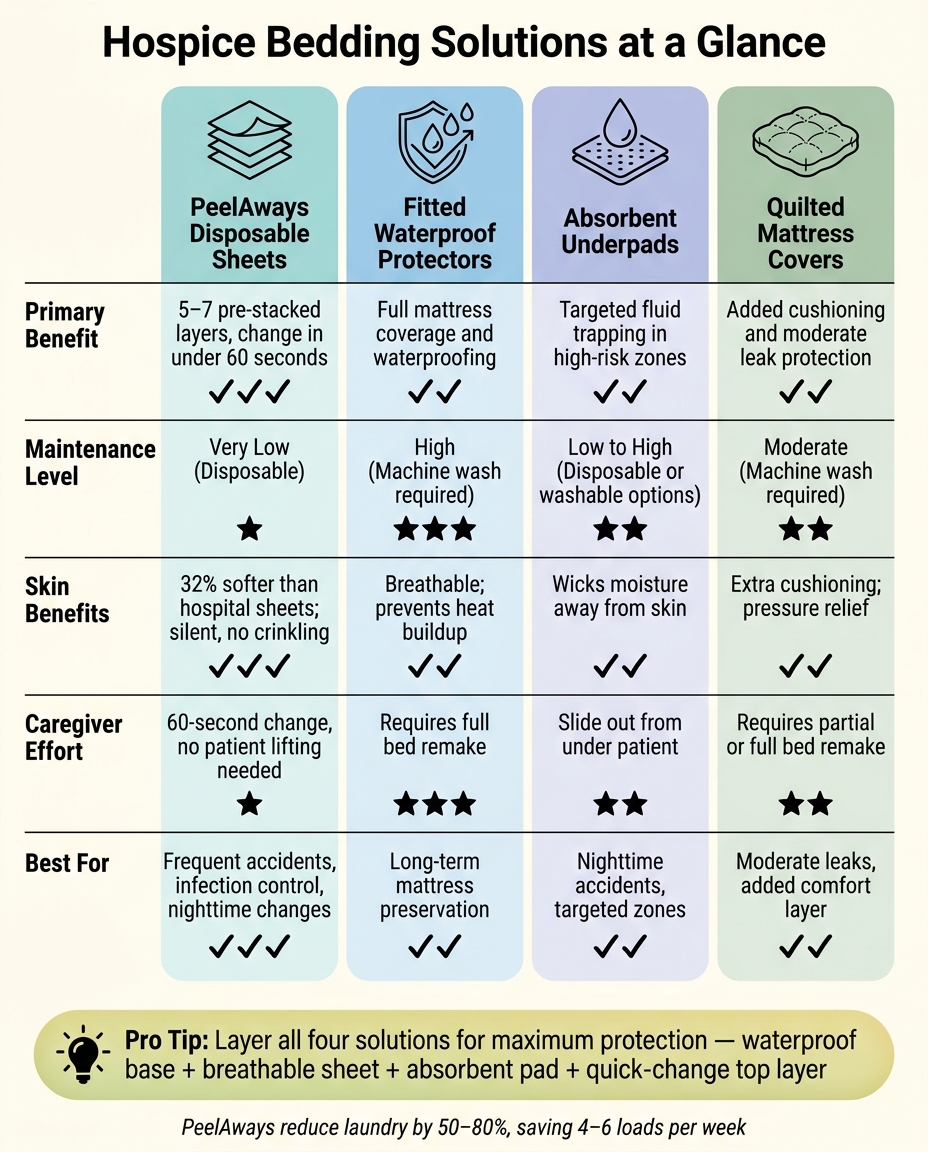
Hospice Bedding Solutions Compared: Features, Benefits & Best Use Cases
When setting up a hospice bed, three essential layers work together to ensure comfort, hygiene, and protection: a waterproof base layer, soft breathable sheets, and an absorbent incontinence layer sandwiched in between. Each layer serves a specific purpose, making daily care easier for caregivers while keeping the patient dry and comfortable.
Mattress Protectors and Waterproof Barriers
The mattress protector acts as the bed's first line of defense. It prevents fluids from soaking into the mattress, which helps avoid odors, bacterial growth, and expensive replacements. A high-quality protector should be both waterproof and breathable, so it blocks liquids while allowing heat to escape. This keeps the patient’s skin cool and reduces the risk of irritation. Many modern protectors also feature a noiseless design and deep pockets to stay securely in place, even when the patient is repositioned.
Sheets and Blankets for Sensitive Skin
Since sheets are in direct contact with the patient’s skin, choosing the right material is critical. Natural or blended fabrics offer softness and reduce friction, which is especially important for patients who are frequently moved. A thread count between 200 and 400 strikes the perfect balance of softness and breathability. Sheets that are too rough or stiff can cause unnecessary friction, increasing the risk of skin breakdown in bedridden patients. Lightweight blankets are also ideal, as they allow caregivers to adjust warmth quickly without disturbing the patient.
Incontinence Management Layers
Managing incontinence effectively is crucial for preserving the patient’s dignity and minimizing caregiver stress. Absorbent underpads, placed between the fitted sheet and the patient, are designed to trap fluids in targeted areas. These pads wick moisture away from the skin, reducing the time it stays wet and lowering the risk of irritation or breakdown. For added protection, pairing absorbent layers with barrier creams can protect against the combined effects of moisture and friction, which are common culprits for skin damage.
For a more streamlined solution, disposable multi-layer systems like PeelAways combine the waterproof barrier and top sheet into a single product. These sheets come pre-stacked with 5 to 7 layers, allowing caregivers to change a layer in under 60 seconds without needing to move the patient - a game-changer for frequent accidents or infection control.
| Bedding Solution | Primary Benefit | Maintenance Level | Best For |
|---|---|---|---|
| PeelAways Sheets | 5–7 layers; change in <60 seconds | Very Low (Disposable) | Frequent accidents, infection control |
| Fitted Protectors | Full mattress coverage | High (Requires washing) | Long-term mattress preservation |
| Absorbent Pads | Targeted fluid trapping | Low to High (Disposable/Washable) | Nighttime accidents |
| Quilted Covers | Added cushioning and comfort | Moderate (Requires washing) | Moderate leaks, pressure relief |
No single layer can handle every challenge by itself. It’s the combination of these elements - a waterproof base, a breathable sheet, and an absorbent layer - that creates a system designed to protect the patient while making life easier for caregivers.
How PeelAways Disposable Bed Sheets Simplify Hospice Care

PeelAways are multi-layer disposable fitted sheets designed to make caregiving easier. With these sheets, caregivers can refresh a bed in under 60 seconds - no need to move the patient, lift the mattress, or deal with laundry. Each sheet is pre-stacked with 5 to 7 waterproof layers. When the top layer gets soiled, you simply peel it away to reveal a clean one underneath.
How PeelAways Work: A 60-Second Bed Change
Setting up PeelAways is as simple as fitting a standard sheet. Align the green stitching at the head of the bed and pre-rip the top two corners to make changes even faster.
When it’s time for a change, help the patient roll to one side. Peel the soiled layer toward the center of the bed, rolling it against the patient’s back. Then, have them roll over the folded edge to finish the removal. Always wear gloves and roll the soiled layer inward to trap any pathogens.
This design tackles common challenges in hospice care by minimizing patient movement and reducing the physical strain on caregivers. Traditional sheet changes can take 15 to 20 minutes and often involve heavy lifting or maneuvering of bedridden patients. PeelAways cut that process down to just one minute, saving time and effort.
Benefits of PeelAways for Patients and Caregivers
PeelAways bring convenience, comfort, and safety. Made from a soft blend of bamboo, rayon, and polyester, they are 32% softer than standard hospital sheets. The nonwoven material helps disperse body heat evenly, reducing skin irritation from moisture, and it’s completely silent - no crinkling sounds.
For caregivers, the time saved is invaluable. With over 53 million caregivers in the U.S. often overwhelmed by repetitive tasks, turning a 15-minute job into a 60-second one can ease some of that burden. Plus, PeelAways can cut household laundry by 50–80%, eliminating 4 to 6 loads per week.
Safety is another priority. PeelAways are free from Vinyl, PVC, Phthalates, and fire retardants, making them a safer option for individuals with chemical sensitivities. It’s no wonder they’ve earned a 4.8-star rating from over 28,000 customers and were named Caregiver Product of the Year.
Choosing the Right PeelAways Size
For hospice care at home, the Twin XL size (80" x 39", 9" depth) is the perfect fit for standard hospital beds. It includes 7 layers, specifically tailored for hospital bed dimensions. For split king adjustable beds, you’ll need two Twin XL sets to cover both sides.
If you’re caring for someone in a regular home bed, PeelAways also come in Full, Queen, and King sizes. These options fit mattresses up to 12 inches deep and include 5 layers. Here’s a quick guide:
| Size | Dimensions | Depth | Layers | Best For |
|---|---|---|---|---|
| Twin XL | 80" x 39" | 9" | 7 | Hospital beds, long-term home care |
| Twin | 75" x 39" | 6" | 5 | Standard twin home beds |
| Full | 75" x 54" | 12" | 5 | Home care, assisted living |
| Queen | 80" x 60" | 12" | 5 | Home care, assisted living |
| King | 80" x 78" | 12" | 5 | Home care, assisted living |
If you’re unsure about your mattress size, PeelAways offers a "Find My Size" quiz on their website. Prices start at $34.99 for the Twin XL (5 layers) and $41.99 for the Twin XL (7 layers). Orders over $100 qualify for free shipping, and blog readers can save 10% with the code BLOGS10 at checkout.
Daily Bed Care Routines and Best Practices for Hospice Settings
Establishing a steady daily routine can help keep bedding clean, protect the patient’s skin, and ease the caregiver’s workload. Start by checking for moisture in the morning, repositioning the patient every two hours, and refreshing the top layer of bedding as needed. Smoothing out wrinkles and keeping essential supplies within reach can make these tasks more manageable.
Morning and Nighttime Bed Care Routines
In the morning, open the windows or air out the room and inspect the top bedding for moisture. If you’re using PeelAways, simply peel off the soiled layer from the corner down to expose a clean one, allowing you to move on with your day quickly and efficiently.
At night, dim the lights to create a calming environment and minimize confusion if the patient wakes. A baby monitor or intercom near the bed can help you respond promptly without needing to stay in the room all night. Keep a bedside caddy stocked with essentials like gloves, wipes, a clean sheet, and hand sanitizer to handle nighttime changes with ease.
After addressing the bedding, turn your attention to repositioning and skin care to ensure the patient’s comfort and safety.
Protecting Skin and Preventing Pressure Injuries
Repositioning the patient every two hours is essential to avoid pressure injuries. Use extra pillows for support, placing them behind the back and hips, and under the lower legs to relieve pressure on the heels.
Prolonged exposure to moisture from urine or sweat can weaken the skin and lead to incontinence-associated dermatitis. After cleaning the skin, gently pat it dry and apply a zinc oxide–based barrier cream to areas prone to irritation. Always smooth out any wrinkles in the bottom sheet before repositioning, as even minor folds can irritate delicate skin.
"Clean skin, hair, and bedding - and even getting dressed - can make your loved one more comfortable and can boost self-esteem." - VNS Health
Creating a Calm, Home-Like Bedroom Environment
The right environment can enhance daily care routines by promoting calmness and preserving dignity. Keep the room temperature between 68°F and 72°F. Position the bed so the patient has a view of the window and can see visitors as they enter. Leave clear access on both sides of the bed for easier caregiving. If the patient is mobile, remove throw rugs and clear cords from walkways to prevent accidents. During bed care, close doors and curtains to maintain privacy, and stick to unscented cleaning products to keep the room feeling fresh and comfortable.
Conclusion: Better Bedding for Better Hospice Care at Home
Caring for someone in hospice at home is no small task, and the right bedding can make a world of difference. Combining a waterproof mattress protector, soft breathable sheets, and a quick-change top layer can ease daily routines. This approach keeps the patient comfortable, the bed dry, and cuts down on the time spent wrestling with laundry and bed changes. For those managing specific challenges, learning how to keep beds dry is essential for skin health.
"PeelAway sheets make life so much easier for patient care and caregivers. Absolutely a must-have." - Sharon A., Verified Buyer
PeelAways multi-layer disposable sheets take these principles and make them effortless to implement. With a simple peel, you can remove a soiled layer in about 60 seconds - no need to move the patient or handle a full bed change. This quick process not only saves time but also ensures the patient remains as comfortable as possible, offering a small but meaningful sense of dignity during tough moments. For hospice care, the Twin XL size fits standard hospital beds perfectly and is priced at $41.99. Other sizes and options are available at PeelAways.com.
Take advantage of an exclusive 10% discount with code BLOGS10 at checkout. This can be combined with subscriptions and bundle offers. With PeelAways, you’ll spend less time managing the logistics of care and more time focusing on what truly matters - providing compassionate and dignified support to your loved one.
You can purchase PeelAways directly on Amazon or at PeelAways.com.
FAQs
What bedding setup works best for incontinence at home hospice?
The ideal setup for managing incontinence in home hospice care includes multi-layer disposable fitted sheets like PeelAways. These sheets come with 5 to 7 waterproof layers, allowing caregivers to simply peel off a soiled layer to reveal a fresh, clean surface underneath. This not only saves time but also cuts down on laundry and heavy lifting. Made from soft, breathable, and waterproof materials, they help reduce the risk of skin irritation. For added protection, consider pairing them with waterproof mattress covers or bed pads.
How do I change sheets without hurting my loved one or my back?
Changing sheets doesn’t have to be a backbreaking chore. With PeelAways multi-layer waterproof sheets, you can skip the heavy lifting and endless laundry. Here’s how simple it is: pre-tear the top two corners, help your loved one roll to one side, and peel the soiled layer toward their back. Then, repeat on the other side. In less than 60 seconds, you’ll uncover a fresh, clean layer - saving time, effort, and ensuring comfort.
How do I pick the right PeelAways size for a hospital bed?
To pick the correct PeelAways size, start by measuring the length, width, and depth of your mattress, including any toppers. Most home hospital beds are 36x80 inches, which means Twin XL sheets are usually the right choice - standard twin sheets won’t be long enough. Make sure the pocket depth matches your mattress, which is generally at least 9 inches. For precise sizing, refer to the company's detailed size guide.
Comments
0



SAVE MONEY & WATER
Professionals & Institutions save a fortune on labor/laundry.

SUPERIOR COMFORT
The first thing our customers notice is how soft our sheets are.

100% WATERPROOF
Each layer is 100% Waterproof, perfect for spills and accidents

SAVE TIME
Change the sheet in under 1 minute without stripping the bed.

Leave a comment