
Best Bedding Solutions for Cerebral Palsy Caregivers

It’s 2am. The sheets are soaked again. Your loved one is embarrassed, your back hurts, and you have to be up in four hours. If this is your life right now, you do not need fluff. You need bedding that makes the next bed change less brutal.
The best bedding setup for cerebral palsy care usually starts with a waterproof base, adds pressure support if skin is at risk, and uses a fast-change top layer to cut nighttime cleanup. For many homes, PeelAways stands out because it can turn a full bed change into about 60 seconds instead of 15–20 minutes, with 5–7 waterproof layers per set, 50%–80% less laundry, and 28,000+ reviews averaging 4.8 stars. It comes in sizes from crib to king.
What I’d compare first:
- PeelAways multi-layer disposable waterproof sheets for the fastest bed resets
- Waterproof mattress protectors or encasements for mattress protection
- Absorbent underpads for small leaks and spot changes
- Pressure-relief mattresses or toppers for skin support
- Easy-wash sheets and pillowcases for comfort and repeat hot washing
| Option | Best for | Main tradeoff |
|---|---|---|
| PeelAways | Fast nighttime changes | Repeat purchase cost |
| Waterproof protector/encasement | Keeping the mattress dry | Slower cleanup after bigger leaks |
| Underpads | Small messes | Can shift or bunch |
| Pressure-relief mattress/topper | Skin and pressure support | Higher upfront cost |
| Easy-wash sheets | Comfort and washability | No waterproofing on their own |
If you are tired of stripping the whole bed in the dark, this is the setup I’d look at first.
1. PeelAways Multi-Layer Disposable Waterproof Bed Sheets
It’s 2am. The bed is wet, your loved one is upset, and you’re standing there half-awake trying to figure out how to change everything without making the whole night worse. If you’ve done this even once, you know how fast a simple accident turns into a full-body chore.
PeelAways Multi-Layer Disposable Waterproof Bed Sheets were made for that exact moment. I’m talking about those nights when you need the bed clean now, not after wrestling with corners, layers, and a heavy mattress. PeelAways help cut down on laundry, shorten the whole cleanup, and keep the disruption as low as possible.
Change Speed
When someone has limited mobility, a middle-of-the-night bed change isn’t just annoying. It’s hard on your back, hard on their dignity, and hard on everyone’s sleep.
PeelAways can cut a bed change down to about 60 seconds. You peel off the used layer and move on. No lifting the mattress. No fighting fitted corners in the dark.
That’s a big shift from the 15 to 20 minutes a standard sheet change can take.
Moisture Protection
Each layer has a 100% waterproof barrier to help keep the mattress dry. The top fabric is a breathable blend of about 55% rayon and 45% polyester.
When one layer gets soiled, you peel it away and toss it. The next layer is already there, clean and dry, which can feel like a small miracle at 2am.
Skin Comfort
A waterproof product doesn’t help much if it feels stiff or loud. PeelAways use a rayon-blend fabric that is soft, quiet, and free of vinyl, PVC, and phthalates.
That matters if your loved one has sensitive skin or already feels uncomfortable enough. The breathable build also helps cut down on heat and moisture sitting against the skin through the night.
Laundry and Ongoing Cost
This is one of the biggest reasons people stick with PeelAways once they try them. They can cut household laundry by 50% to 80%, which may mean fewer loads every week when nighttime accidents are part of daily life.
Used layers are rolled up and thrown away. That does mean a higher upfront cost than plain sheets, but when you compare waterproof mattress pads vs. disposable sheets, the time saved and the drop in laundry make the math feel very different for many families.
PeelAways are also available in 5-7 layers, with sizes from crib to king. They’ve earned 28,000+ reviews and a 4.8-star rating, which is part of why so many tired families end up finding them through word of mouth. If you use diapers or incontinence pads, they’re worth a close look.
You can see them at peelaways.com/shop or on Amazon. For more help, take a look at other posts on peelaways.com, like their blog home and related care articles.
Making aging and caregiving easier, one bed at a time
If you want a permanent mattress layer instead of a disposable top layer, the next option is a waterproof protector or zippered encasement.
sbb-itb-45288fe
2. Waterproof Mattress Protectors and Zippered Encasements
It’s 2am. The top layer is wet, your loved one is tired and upset, and the last thing you want is to wrestle a whole mattress while half-awake. In moments like that, the setup under the sheets matters more than people think.
If PeelAways are the fast-change layer, mattress protectors and encasements are the long-wear base.
Waterproof mattress protectors and zippered encasements keep liquid off the mattress. The right pick comes down to two things: how often accidents happen and how much time you have for cleanup in the middle of the night.
Change Speed
Fitted covers or strap-on covers come off a lot like a regular sheet. You can often remove them without lifting the mattress, which is a big deal when your back is already shot.
Zippered encasements take more time. You have to unzip them around the mattress edge, and that can be a hassle on heavier beds or adjustable beds vs. standard frames.
A setup many people land on is simple: keep the encasement on as the permanent base layer, then add a removable waterproof protector or absorbent pad on top. That way, if there’s an accident overnight, you’re only changing the top layer.
That kind of setup can save you precious minutes. But speed only helps if the protector does its job and stops leaks.
Moisture Protection
Good protectors usually use waterproof TPU, a flexible backing that blocks liquid while still letting some air move through. That matters, because nobody wants a bed that feels hot and clammy after a few hours.
Zippered encasements cover more of the mattress, including the sides and bottom. That extra coverage helps when someone moves around a lot or sleeps on their side.
If accidents happen often, go with waterproof, not water-resistant. That one word makes a big difference. A snug fit also helps, and a covered zipper can cut down on leaks at the seams.
Skin and Pressure Support
Older vinyl or PVC protectors can feel hot, loud, and sticky. If you’ve ever heard that crinkly plastic sound every time someone shifts, you know exactly what I mean.
Newer TPU-backed protectors are usually quieter and let more air through. A smooth protector also helps reduce heat buildup and wrinkles, which can be rough on fragile skin during long hours in bed.
Experts in pressure-injury prevention caution against wrinkles and tight fits, since folds can create pressure points.
Laundry and Ongoing Cost
Basic fitted protectors usually cost $20–$40. Zippered encasements usually run $40–$100.
Fitted protectors are often washed as often as sheets. In some homes, that means every day. Encasements are usually washed monthly or after a major accident, mostly because taking them off and putting them back on is more work.
If you can, choose products rated for high-temperature washing and frequent wash cycles. That can help them last longer and cut down on replacement cost.
For added surface protection and faster cleanup, many caregivers pair this base layer with an absorbent pad.
3. Absorbent Bed Pads and Underpads
It’s the middle of the night. The bed is damp, your loved one is tired, and you’re standing there hoping it’s just the pad and not the whole bed. When that’s the case, absorbent bed pads can spare you a much bigger mess.
Absorbent bed pads catch urine, sweat, and small spills while protecting the layers below. When you use one over a waterproof base, a small leak doesn’t always have to turn into a full sheet change.
Change Speed
This is where underpads help most. You can remove and replace the soiled pad instead of stripping the entire bed.
That said, pad changes aren’t always as fast as people think. A traditional pad change can still take 15 to 20 minutes when lifting or rolling is needed.
Pads can also slide, bunch up, or wrinkle during sleep, especially if your loved one moves a lot or needs repositioning. And once that happens, a small cleanup can snowball. Still, they’re a solid option when you need a faster fix without remaking the whole bed.
Moisture Protection
A good underpad should absorb fast, feel dry on top, and cut down on rewetting. Pads with a superabsorbent core pull moisture away from the skin and lock it into the pad.
For heavier overnight wetting, go with a higher-capacity pad. A lighter pad may work for small leaks, but it can fall short by morning.
Use underpads over a waterproof base for backup. That extra layer can save you from one more 2am sheet change.
Skin and Pressure Support
A solid underpad can help lower moisture-related skin irritation. That matters, because wet bedding can increase friction against the skin and may add to pressure injury risk.
But there’s a catch. If the pad bunches or wrinkles, it can create pressure points of its own.
Look for:
- a low-friction backing
- a soft topsheet
- a design that stays flat during movement
Whenever you check on your loved one, smooth the pad out. It takes a few seconds, and it can help more than you’d think.
Laundry and Ongoing Cost
Reusable underpads can handle 300+ wash cycles, which makes them a good long-term pick if you can keep up with laundry. Disposable pads cut out the washing, but they bring repeat supply costs and more trash.
So the tradeoff is pretty simple. When you compare disposable vs. washable bedding, washable pads can cost less over time, while disposable pads make cleanup easier.
If you’re dealing with frequent nighttime accidents, that choice starts to matter fast.
4. Pressure-Relief Mattresses and Mattress Toppers
It’s 2am. You’re trying to shift someone you love without waking them all the way up, and every inch of the bed seems to fight you. When pain, stiffness, and long hours in one position are part of the night, the mattress under them matters more than most people think.
Pressure-relief mattresses and toppers spread weight across more of the body, which helps take stress off the hips, shoulders, and sacrum. For someone with cerebral palsy who spends long stretches in bed, that can lower the risk of skin breakdown and make nights less painful.
Change Speed
Foam, gel, and many hybrid surfaces are simpler to live with because they don’t need power or constant adjustment. That means turning someone or changing the bed can stay pretty straightforward.
Things get harder with very soft surfaces or systems that use shifting air pressure. Rolling can take more effort. Sheet changes can feel clumsy at first. Alternating-pressure systems cycle on their own and may cut down on overnight turning, which can ease some of the work. Still, there’s usually a short learning period with the controls and settings before it starts to feel routine.
Moisture Protection
A pressure-relief surface is not a moisture barrier by itself. You still need a waterproof cover and an absorbent pad on top.
That part matters. Moisture control helps, but pressure support is what often decides whether skin stays safe through the night.
Skin and Pressure Support
Clinical guidance says a pressure-redistributing foam mattress is the minimum starting point for someone at risk of pressure ulcers. If red marks don’t fade or repositioning isn’t enough, it may be time to move up to a dynamic alternating-pressure surface.
With cerebral palsy, the issue isn’t only pressure. Tight muscles, uneven posture, and unusual sleep positions can all add strain. A surface that supports those positions better can help with pain and sleep. Memory foam and hybrid designs may offer a good middle ground by helping with pressure relief, alignment, and safer transfers.
One simple check: slide your hand under the hip or shoulder. If it barely fits, or if red marks keep showing up, the surface may be bottoming out.
Laundry and Ongoing Cost
Foam mattresses and toppers are often the lower-cost place to start. Dynamic alternating-pressure systems cost more up front, but when skin breakdown is a real concern, that price can make sense. Avoiding a pressure ulcer - and maybe a hospital stay - can outweigh the cost. If you’re looking at a dynamic system, check insurance or Medicaid coverage before you buy.
For laundry, most pressure-relief covers are made to be wiped clean, not tossed in the washer after every accident. That can mean less laundry, as long as you’re using a waterproof layer over the surface. It’s also smart to check foam now and then for bottoming out and replace it once it stops giving enough support.
Once you’ve got the surface right, the top layers still matter. You still need bedding for incontinence care that is easy to strip off, wash, and put back on when you’re exhausted.
5. Easy-Wash Sheet Sets and Pillowcases
It’s 2am. The bed is wet, the pillow smells off, and your hands are moving on pure habit because you’re too tired to think. In that moment, the top layer matters more than people realize. If the sheets fight you, the whole cleanup drags.
After the mattress and middle layers are covered, the top layer should be the easiest part to reset. Easy-wash sheets and pillowcases are part of the top bedding solutions for incontinence care that provide a comfort layer. They come off fast, wash well, and go back on without a wrestling match after a nighttime change. This is the part of the bed you’ll touch most during overnight cleanup. When the top layer is simple to change, the night stays a little calmer.
Change Speed
Fit is what saves time.
Fitted sheets with strong, all-around elastic stay in place and go back on fast. Pillowcases with an envelope closure or zipper are easier to swap than open-end styles. Keep 3–4 complete sets in rotation, and store each full set together near the bed. That way, you’re not digging for a missing pillowcase at 2am.
That kind of speed matters even more when the rest of the bed is already layered for protection.
Moisture Protection
Sheets are there for comfort. The waterproof base does the hard work of blocking moisture.
For pillows, add a washable waterproof pillow protector under the pillowcase. It helps the pillow last longer and can cut down on odor from drooling or reflux.
Skin and Pressure Support
Sheets don’t replace a pressure-relief surface. But rough, pilled, or bunched fabric can add friction and shear, especially when your loved one can’t shift position without help. Guidance on pressure injury prevention points out that smooth, well-tensioned sheets matter, not just the mattress underneath.
Cotton or cotton-blend sheets in percale or sateen tend to stay breathable and hold up well through frequent hot washes. It also helps to skip heavy seams or embroidery where the body bears weight.
Laundry and Ongoing Cost
When linens are heavily soiled, infection-control guidance recommends washing them in hot water at about 160°F for at least 25 minutes, using bleach when the fabric allows. That kind of washing is hard on cheap fabric. Lower-cost sets often pill, thin out, and wear down fast.
Sometimes spending a bit more up front saves money later. Not because fancy sheets matter. Because sheets that survive repeated hot washes spare you one more thing to replace.
Pair sheets with underpads so most accidents stop before you need a full bed change. Used with a waterproof base and an absorbent pad, easy-wash linens help keep overnight resets simple.
How These Bedding Solutions Compare for Nighttime Care
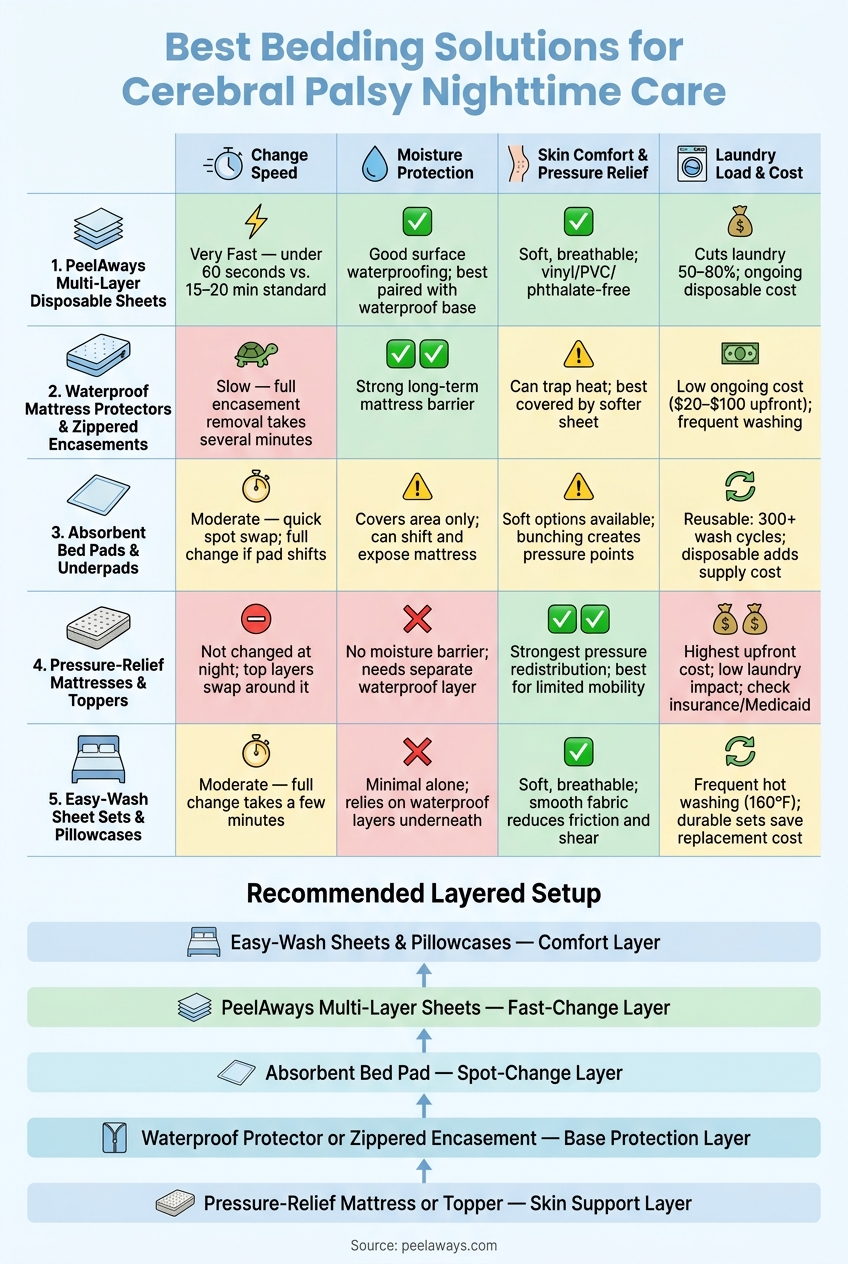
Best Bedding Solutions for Cerebral Palsy Care: Side-by-Side Comparison
It’s 2 a.m. again. The bed is wet, the room is quiet, and you’re trying to fix everything without turning a small accident into a full wake-up.
That’s the part people miss.
At that hour, you’re not looking for perfection.
You’re looking for the fastest path back to sleep.
No single bedding product fixes every nighttime problem. The tradeoff usually comes down to speed, protection, comfort, and laundry. And in the middle of the night, one question matters more than anything else: How fast can you change the bed without fully waking the person?
At a Glance: The Five Solutions Side by Side
| Bedding Type | Change Speed | Moisture Protection | Skin Comfort & Pressure Relief | Laundry Load & Cost |
|---|---|---|---|---|
| PeelAways multi-layer disposable sheets | Very fast - peel away a soiled layer in under a minute | Good surface waterproofing; best paired with a waterproof base | Soft, breathable; minimal direct pressure relief | Greatly cuts laundry, but adds ongoing disposable cost |
| Waterproof mattress protectors & zippered encasements | Slow - removing a soiled encasement takes several minutes | Strong long-term mattress protection | Can feel warm if used directly under the skin; best covered by a softer sheet | Low ongoing cost, but more washing |
| Absorbent bed pads & underpads | Moderate - quick to swap, but larger accidents may still require a full sheet change | Protects the covered area only; shifting pads can leave the mattress exposed | Soft reusable pads available; disposable pads may bunch | Reusable pads add laundry; disposable pads increase supply cost |
| Pressure-relief mattresses & mattress toppers | Not changed at night; top layers are swapped around them | Need separate waterproof protection | Strongest support for pressure relief and comfort, especially for limited mobility | Higher upfront cost, low laundry impact |
| Easy-wash sheet sets & pillowcases | Moderate - a full change takes a few minutes | Minimal on their own; rely on waterproof layers underneath | Soft, breathable; fabric choice affects temperature and moisture-wicking | Frequent washing, but practical with durable linens |
How Layered Setups Change the Equation
This is where layering starts to make sense. One product handles support. Another guards the mattress. A top layer deals with the mess fast.
A pressure-relief surface helps with comfort and time in bed. A waterproof base keeps the mattress safe. Then a quick-change top layer takes care of overnight accidents before they turn into a full bed-strip.
For smaller accidents, a fitted protector plus a reusable pad may be enough.
For heavier wetting, that setup can fall apart fast.
That’s why these differences matter most in actual use, not on a product label. The next section gets into the pros and cons of each option.
Pros and Cons of Each Bedding Solution
It’s 2am. The bed is wet, your loved one is half-awake, and you’re trying to change everything without fully waking them up. In that moment, you don’t need vague advice. You need to know which layer helps with speed, which one protects the mattress, and which one keeps laundry from taking over your life.
This is the quick decision grid for that exact moment.
| Bedding Solution | Best Advantages | Key Limitations | Best-Fit Use Case |
|---|---|---|---|
| PeelAways multi-layer disposable sheets | Bed changes in under 60 seconds; multiple waterproof layers | Ongoing replacement cost; adds disposal waste | Heavy incontinence; solo nighttime caregiving; when full bed changes are hard |
| Waterproof mattress protectors & zippered encasements | Long-term mattress barrier against liquid and surface contamination | Requires full bed stripping after major leaks; some models trap heat or make noise | Permanent base layer under any bedding system |
| Absorbent bed pads & underpads | Easy spot changes when only the pad needs swapping | Can shift or bunch during the night, especially with spastic movement | Mild-to-moderate leakage layered over a waterproof encasement |
| Pressure-relief mattresses & toppers | Redistributes body weight to help protect skin; no moisture barrier needed at the mattress level | Highest upfront cost; does not replace repositioning schedules or skin checks | Long hours in bed; limited ability to reposition independently |
| Easy-wash sheet sets & pillowcases | Survives frequent hot-water washing and tumble drying | No meaningful waterproofing on their own; frequent washing adds laundry volume | Comfort layer over waterproof protection |
Here’s the plain-English version.
PeelAways are for speed. If the hardest part of your night is doing a full bed change while someone is still in the bed, this is the layer built for that job. You peel off the top layer and keep moving. That matters when you’re doing this alone and your back is already shot. You can see options at peelaways.com/shop or on Amazon.
Waterproof mattress protectors and encasements are your base defense. They’re there to save the mattress itself. That’s a big deal, because once moisture gets into the mattress, the problem gets harder, messier, and more expensive. The downside is simple: after a major leak, you’re still doing a full strip and remake.
Absorbent bed pads and underpads help when the leak is smaller and more contained. They can save you from changing the whole bed. But if your loved one moves a lot, has spasms, or shifts in sleep, those pads can slide or bunch up right when you need them to stay put.
Pressure-relief mattresses and toppers do a different job. They help protect skin by spreading out body weight. That matters if someone spends long stretches in bed. But they don’t solve the moisture problem by themselves, and they don’t replace turning schedules or skin checks.
Easy-wash sheets and pillowcases are about comfort and repeat washing. They hold up better when you’re washing in hot water over and over. Still, they don’t stop leaks on their own. They belong on top of a waterproof system, not in place of one.
If you’re building a setup that works in real life, think in layers:
- Base layer: waterproof protector or zippered encasement
- Fastest change layer: PeelAways
- Spot-change layer: absorbent bed pad
- Skin support layer: pressure-relief mattress or topper
- Comfort layer: easy-wash sheets and pillowcases
Speed and protection do trade off. That’s the heart of it. Some layers save the mattress. Some save your time. Some help with skin. The trick is knowing which problem is wrecking your night first.
For more help with bedding setups, see PeelAways blog and other care tips from PeelAways.
Conclusion
It’s the middle of the night. The bed is wet, your loved one is tired, and you’re standing there knowing this is going to take way longer than either of you can handle right now.
Caring for someone with cerebral palsy can wear you down in body and spirit, especially after dark. The best setup comes down to the problem you’re dealing with most: moisture, repositioning, or full-bed changes.
For many people, the simplest setup looks like this:
- a waterproof base
- pressure support where skin is fragile
- a fast-change top layer
That fast-change top layer is where PeelAways can help. You peel off the soiled layer and leave the rest of the bed in place. That means less mess, less washing, and less disruption in the middle of the night.
If you want to look at options, you can find PeelAways at PeelAways.com and on Amazon. You may also want to read more on the PeelAways blog and browse other posts on peelaways.com.
Blog readers save 10% with code BLOGS10 at checkout. Available on peelaways.com and Amazon. Free shipping on orders over $100.
FAQs
How do I layer the bed for faster nighttime changes?
Start with a six-sided waterproof mattress encasement. That gives you a full barrier under everything else.
Next, place a washable absorbent pad over the hips and torso. Then add the PeelAways multi-layer fitted sheet on top, and check the alignment tags so it sits the way it should.
If you're working with a deeper mattress, use straps or clips to keep the sheet from shifting. Right before bed, pre-rip the top two corners. That small step matters more than you'd think. In the middle of the night, when you're tired and the bed is wet, you can peel away a soiled layer in under 60 seconds.
When should I add pressure-relief bedding?
When someone you love can’t shift their weight much, the bed stops feeling like a place to rest. It becomes one more thing you have to watch. One more place where skin can break down fast if the setup isn’t right.
Add pressure-relief bedding when you need help managing skin stress and lowering the risk of pressure ulcers, especially for someone with limited mobility.
Use bedding made for pressure redistribution, like medical-grade foam mattresses, alternating pressure air surfaces, or gel-infused bedding. These products help spread out pressure instead of letting it build in the same spots hour after hour.
Be careful not to pile on extra layers. It seems harmless, but too many pads, blankets, or toppers can create pressure hot spots and make skin injuries worse.
How many sheet and pad sets should I keep on hand?
Because each PeelAways set comes with multiple built-in layers, you can skip the usual pile of sheets and pads by the bed. Depending on the size, each set includes five to seven waterproof layers, so it can get you through several nighttime accidents before you need to do a full bed change.
I learned fast that having a backup matters. Keep at least one extra set on hand so you’re not stuck without protection when you need it most.
Comments
0



SAVE MONEY & WATER
Professionals & Institutions save a fortune on labor/laundry.

SUPERIOR COMFORT
The first thing our customers notice is how soft our sheets are.

100% WATERPROOF
Each layer is 100% Waterproof, perfect for spills and accidents

SAVE TIME
Change the sheet in under 1 minute without stripping the bed.

Leave a comment