
Best Bed Setup for Stroke Recovery at Home: What Caregivers Need

It’s 2 a.m. The sheets are wet again. Your loved one is tired, your back hurts, and you’re trying to fix the bed without pulling on a weak shoulder or turning the whole night into a full laundry cycle.
A stroke recovery bed setup should do four things: make transfers safer, keep skin dry, support the weak side, and make night cleanups shorter. I look for a firm mattress, the right bed height, clear space on the strong side, smooth layers, and a top layer you can change fast instead of remaking the whole bed.
- Bed height: feet flat on the floor when sitting at the edge
- Mattress: firm enough for turning and sit-to-stand
- Layout: clear path to the bathroom or bedside commode
- Skin protection: smooth, dry layers with fewer wrinkles
- Night care: a swap-fast top layer to cut sheet changes
If leaks are part of your routine, the setup matters even more. PeelAways has 5–7 waterproof layers per set, comes in sizes crib to king, has 28,000+ reviews with a 4.8-star rating, and can turn a full bed change from 15–20 minutes into about 60 seconds. For many families, that also means 50–80% less laundry.
The short version: make the bed safe first, then make it easy to keep dry.
Positioning in Bed After Stroke (Right-sided Weakness)
sbb-itb-45288fe
Why this problem is harder than people realize
People talk about stroke rehab like it’s exercises and appointments.
They don’t talk enough about the bed.
That’s where a lot of the hard stuff happens:
- getting up to toilet at night
- turning a heavy, tired body
- protecting heels, hips, and the weak shoulder
- cleaning up leaks without waking someone all the way
- trying not to hurt your own back
And this can go on for months.
The article points out that 80% of stroke survivors alive at 3 and 12 months were still getting unpaid help, and caregivers averaged 8.7 hours a day at 3 months. That tracks with real life. This is not a one-week problem.
Falls are part of it too. One study cited found 73% of stroke survivors fell within six months after discharge. If you’ve ever helped someone stand in the dark while half asleep, that number won’t shock you.
So when I think about the “best bed setup,” I don’t think fancy.
I think:
- Can they sit up without sinking?
- Can I reach them without twisting?
- Can I choose bedding that lets me change one wet layer fast?
- Can I keep their skin dry?
- Can we both get back to sleep?
That’s the standard.
What to look for before buying
Before you buy anything, check the setup you already have.
Here’s what I’d look at first:
- Bed height: when they sit on the edge, both feet should rest flat
- Mattress feel: too soft makes rolling and standing harder
- Open floor space: aim for about 3 feet on the side you help from
- Exit side: if rehab allows, set up for getting out on the stronger side
- Pathway: no rugs, cords, or small furniture in the way
- Night kit: wipes, gloves, cream, briefs, pad, trash bag, water, phone, light
Then check the bed surface.
You want:
- a waterproof protector
- a fitted sheet
- one changeable absorbent or waterproof layer
- a light blanket that’s easy to move
Keep the layers smooth.
Wet fabric, wrinkles, and bunching can rub skin raw fast.
If your loved one has leaks often, don’t just think about absorbency. Think about the time and lifting each cleanup takes. That’s where the top layer matters most.
PeelAways

This is the one I’d put first for night care.
Not because it fixes stroke recovery.
It doesn’t.
But if leaks, bedwetting, or briefs are part of your nights, it can cut one of the hardest jobs down to something you can get through.
What it is:
A fitted sheet system with 5–7 disposable waterproof layers. When the top layer gets wet or soiled, you peel it off and the next clean layer is already there.
Why I’d consider it for stroke recovery at home:
- about 60 seconds to remove a wet layer
- compared with 15–20 minutes for a full remake
- less lifting and turning during cleanup
- less pulling on the weak arm and shoulder
- less disposable vs. washable laundry
- a drier surface for skin
That last part matters. Wet skin plus pressure plus rubbing is a bad mix.
What stands out:
- 28,000+ reviews
- 4.8-star rating
- sizes from crib to king
- sold on peelaways.com/shop
- also on Amazon
I also like that it fits the way nights actually go. You’re not looking for a perfect system at 2 a.m. You’re looking for the shortest path back to a clean, dry bed.
If you want more help around bed changes and cleanup, these are worth a read:
- How to Change a Bed Fast Without Waking Your Loved One
- Tips for Making Nighttime Incontinence Cleanup Easier
Tagline says it well: Making aging and caregiving easier, one bed at a time.
Firm mattress with waterproof protector
This is the base setup.
And it matters more than extra gadgets.
A firm mattress makes it easier to:
- roll
- reposition
- sit up
- push to standing
A mattress that sinks too much can make every move harder.
Over that, I’d put a waterproof protector. Not optional if there are leaks. Once the mattress gets wet, cleanup gets bigger, odor sticks around, making it harder to remove urine odors, and skin risk goes up because the surface never feels fully dry.
This setup uses bedding solutions for incontinence to keep things simple:
- firm mattress
- waterproof protector
- fitted sheet
- changeable top layer
That gives you support underneath and cleanup help on top.
Pillows for positioning and pressure relief
Pillows do more work than people think.
After a stroke, little position problems can turn into pain fast.
I’d use pillows to support:
- head and neck in line with the spine
- affected arm from shoulder to hand
- back in side-lying so they don’t roll
- knees and ankles to cut rubbing
- calves so heels float off the bed
The heel part is a big one.
Heels can break down fast.
If I can get them off the mattress, I do it.
And I never want the weak arm hanging off the bed or trapped under the body. That’s where shoulder pain can start.
Assist rail or grab support
This one needs care.
A partial assist rail on the stronger side can help with turning and pushing up to sit.
But rails are not automatic.
Full rails can be risky, especially if the person is confused at night or tries to climb over them. The article notes home bed rail injuries and deaths linked to trapping and falls.
So I’d only consider a rail if:
- the mattress fits snugly
- the rail is installed right
- the care team agrees
- alertness and behavior make it a safe fit
If not, other supports may be better:
- bedside grab bar
- floor-to-ceiling pole
- lowering the bed
The goal is support.
Not boxing someone in.
Comparison table
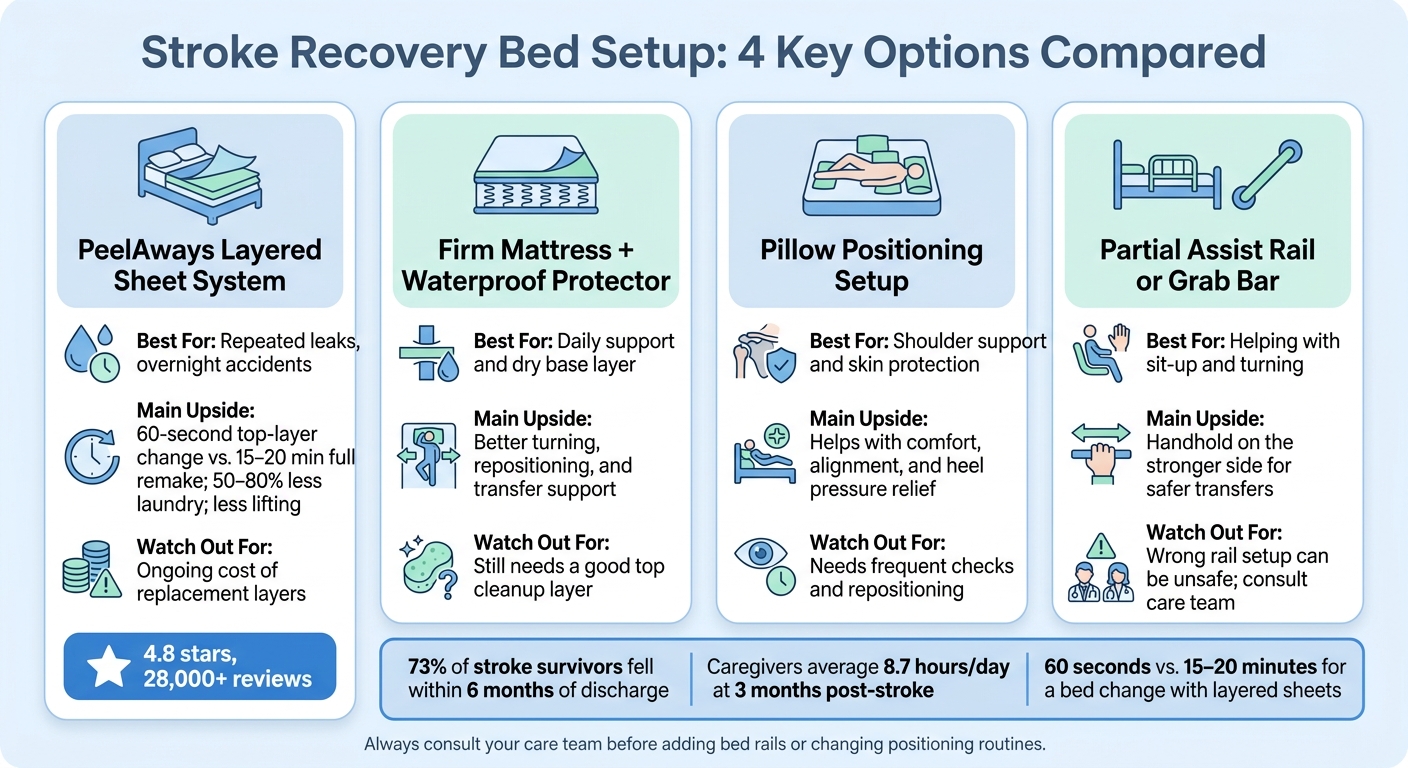
Stroke Recovery Bed Setup: 4 Key Options Compared
| Option | Best for | Main upside | Watch out for |
|---|---|---|---|
| PeelAways | Repeated leaks, overnight accidents | 60-second top-layer change, less laundry, less lifting | Ongoing cost of replacement layers |
| Firm mattress + waterproof protector | Daily support and dry base layer | Better turning and transfer support | Still needs a good top cleanup layer |
| Pillow positioning setup | Shoulder support and skin protection | Helps with comfort, alignment, and heel relief | Needs frequent checks and repositioning |
| Partial assist rail or grab bar | Helping with sit-up and turning | Handhold on the stronger side | Wrong rail setup can be unsafe |
FAQ
What is the best bed height for stroke recovery at home?
I’d aim for a height where your loved one can sit on the edge with both feet flat and knees close to a right angle. That makes standing and pivoting safer.
Is a soft mattress bad after a stroke?
Often, yes. A mattress that’s too soft can make turning, scooting, and sitting up harder. A firmer surface usually gives better support for transfers.
How often should I reposition someone in bed after a stroke?
Follow the care team’s plan. In general, don’t leave someone in one position too long, especially if they have weak movement, skin risk, or moisture from leaks.
Are bed rails safe for stroke survivors?
Sometimes. A short assist rail may help on the stronger side. Full rails can be risky if the person is confused or tries to climb over them. I’d check with the care team first.
**
How to Assess the Bed Space and Choose Safe Support
It’s late. You’re half-awake, trying to help your loved one get out of bed without tripping over a cord or banging a knee on a chair. In moments like that, the setup around the bed matters more than any extra layer or add-on.
Before you add bedding layers or accessories, check three basics first: the bed is stable, you can reach your loved one without twisting or overreaching, and the path to the bathroom is clear. Those things matter more than anything else. A cluttered room or shaky bed can increase fall risk fast, no matter what else you buy.
Choose the Right Bed Height, Firmness, and Room Layout
Start with bed height. The bed should let the person sit on the edge with both feet flat on the floor and knees close to a 90-degree bend. That position makes it safer to stand, pivot, and sit back down. During care, you can lift the bed to save your back. Before you step away, lower it again.
Mattress firmness matters too. A firm, supportive mattress makes turning, repositioning, and sitting up easier. A soft mattress may feel nice at first, but it can sink under the body and make movement harder. When the surface stays steady, your loved one has something solid to push against, and transfers feel less risky.
Room layout matters just as much. Leave enough open space on the side where you give care so you can turn, dress, or help with transfers without getting boxed in. If you can, keep both sides of the bed open. That gives you more room to work and cuts down on those awkward nighttime angles that can strain your back during cleanup or repositioning.
Clear out anything that can get in the way. That includes:
- Loose rugs
- Power cords
- Small furniture blocking the route to the bathroom or bedside commode
Keep Transfer Paths and Bedside Essentials Within Reach
If possible, place the bed so the person gets out on their stronger side, unless the rehab plan says something else.
Then set up the bedside so you’re not scrambling in the dark. Keep the basics close: phone, water, medications, glasses, tissues, a night light, incontinence supplies, wipes, gloves, and a lidded trash can. A motion-activated night light along the path to the bathroom can help both of you see during nighttime toileting without fumbling for a switch.
This part may sound small, but it adds up. In one BMJ study, 73% of stroke survivors fell within six months of hospital discharge, and caregivers of those frequent fallers reported much higher stress levels - 53% versus 18% among caregivers of non-fallers. A clear bed space can’t erase fall risk, but it can cut down on hazards that never should’ve been there in the first place.
Once the bed space is safe, you can start building bedding layers that protect skin and make bed changes much easier.
How to Build the Mattress and Bedding Layers for Stroke Recovery
It’s the middle of the night. The bed is wet, your loved one is tired, and you’re trying to change everything without waking them up all the way. In that moment, the right bed setup matters more than people think.
With the room clear, build the bed from the mattress up.
What Bedding Layers Do You Actually Need?
Start with a firm mattress. Then add a waterproof protector, a fitted sheet, one changeable absorbent pad or waterproof layer, and a light top sheet or blanket.
Here’s the basic setup:
- Waterproof protector directly on the mattress to stop fluids from soaking in
- Fitted sheet over the protector
- One changeable absorbent pad or waterproof layer in the area most likely to get wet
- Light top sheet or blanket for comfort without too much bulk
That middle changeable layer does a lot of the heavy lifting. If there’s an accident, you can swap out the soiled layer instead of remaking the whole bed.
Keep each layer smooth and snug. Wrinkles and damp fabric can increase friction and pressure on fragile skin. Clinical guidance also recommends cutting down the number of linen layers between the person and the mattress to help with moisture control and reduce shear.
How PeelAways Can Make Bed Changes Easier for Caregivers
The top changeable layer is what saves your night.
PeelAways uses 5 to 7 disposable waterproof layers. When one layer gets soiled, you peel it away in about 60 seconds to reveal a clean surface underneath, without stripping the whole bed. That speed matters when your loved one is cold, uncomfortable, or embarrassed.
The sheets are made from a soft, breathable blend of bamboo, rayon, and polyester. Each layer can last 7 to 10 days if it isn’t soiled. So instead of piles of laundry and a full bed remake, you have a clean layer ready to go.
I like this kind of setup because it cuts the hardest part of nighttime care down to something more manageable by reducing caregiver stress. A full bed change after an overnight accident can take 15 to 20 minutes and usually means removing everything and starting over. A layered disposable system makes that job much faster and less disruptive, so you and your loved one can get back to sleep sooner.
If you want to see PeelAways, you can find it on peelaways.com/shop and on Amazon. You may also want to read more on peelaways.com about bedding help and nighttime cleanup.
The best bed setup keeps the sleeping surface dry, smooth, and easy to change without extra lifting. That means less strain on your back, less stress in the middle of the night, and more dignity for the person in the bed.
How to Position a Stroke Survivor in Bed for Comfort and Skin Protection
It’s the middle of the night. You’re trying to help your loved one settle, but their shoulder keeps slipping, their heel is rubbing the sheet, and you can tell they’re not quite comfortable. Small shifts in bed can turn into pain fast, especially after a stroke.
Once the bed surface is ready, pillows do a lot of the heavy lifting. They help keep the body in line, take strain off the shoulder, and ease pressure on bony spots. The most common bed positions are supine, side-lying on the affected side, and side-lying on the unaffected side. Start with the bed layers from the last section, then build support with pillows.
Use Pillows to Support the Head, Affected Arm, Hips, Knees, and Heels
Work from head to heel.
For the head, use one or two pillows to keep the neck lined up with the spine. You don’t want the head pushed too far forward or tilted off to one side.
The affected arm needs support along its full length, from the shoulder blade to the hand. Keep the elbow straight, with the palm facing up or resting in a comfortable position. Don’t let the arm hang off the bed or get trapped under the body. That’s where shoulder pain can start, and in some cases, partial dislocation.
For the hips and legs, aim to keep the hips level. In side-lying, place a pillow between the knees and ankles. That helps cut down pressure where the bones press together and keeps the hips from twisting.
In supine, support the calves with pillows or a rolled towel so the heels lift clear of the mattress. Heels break down faster than many people expect. If you can get them off the surface, do it.
Common Bed Positions After a Stroke
Use the support rules above first. Then choose the position that fits the person’s comfort and care needs.
| Position | When It's Most Useful | Key Pillow Placements |
|---|---|---|
| Supine (back-lying) | Rest, hygiene care, caregiver access to both sides | 1–2 pillows under head; 1 under affected arm; calves supported to float heels |
| Side-lying on affected side | Sensory input to affected side; some therapy positions | 1–2 pillows under head; affected shoulder eased forward, not compressed; 1 pillow behind back; unaffected leg supported forward on pillows |
| Side-lying on unaffected side | Sleep and rest; most comfortable for many people | 1–2 pillows under head; affected arm brought forward on pillow; pillow between knees and ankles; pillow behind back to prevent rolling |
Once the body is supported, stick to a steady routine so pressure doesn’t build in one area. Regular repositioning lowers the risk of pressure injuries, which are much more common at home when no one is keeping a close watch all day and night.
At night, it helps to tie turns to things you’re already doing, like toileting or medication times. A simple turning chart can make a tiring night feel a little less chaotic. It shows the last position change and helps you avoid leaving someone in the same spot for too long.
How to Make Transfers, Night Care, and Rail Safety Easier
It’s 2 a.m. again. You’re half awake, trying to help your loved one sit up without hurting their shoulder, and praying this trip to the commode doesn’t turn into a fall or a full bed change.
A better transfer setup takes some of the strain off both of you. It cuts down on lifting, helps protect the weaker side, and makes night care less chaotic. Once the bed and pillows are in place, the next focus is the stuff that keeps happening over and over: getting up, toileting, and getting back into bed.
Set Up the Bed for Easier Movement and Nighttime Cleanup
Place the bed so you can stand right next to the person’s stronger side. That gives you a better angle to help with rolling, sitting up, and pivoting toward a chair or bedside commode. Try to keep at least 3 feet of open floor space on that side so you can step and turn without getting tangled around furniture.
Before every nighttime transfer, take a second and check the path again. Falls often happen during night toileting or when someone stands too fast. A bedside commode helps cut down the distance, and a 30- to 60-second seated pause before standing can make the move safer.
At 2 a.m., the last thing you want is to dig through drawers looking for wipes or a clean pad. Keep one bedside kit on the side you can reach fast. A simple setup can include:
- disposable gloves
- fragrance-free wipes
- barrier cream
- clean briefs or pads
- a spare absorbent top layer
- a trash bag
- hand sanitizer
That kind of setup makes a hard moment feel a little less hard. You can clean up fast without turning the whole room upside down, and you don’t have to leave the room mid-change.
If bedwetting or leaks are part of your nightly routine, this is where I’d look at PeelAways. I found them the same way most tired family caregivers find anything good: out of pure desperation. They let you peel away the soiled top layer instead of stripping the whole bed, which can turn a 15- to 20-minute cleanup into about 60 seconds. They come in 5-7 layers, sizes from crib to king, and they’ve got 28,000+ reviews with a 4.8-star rating. You can also find them on Amazon. For more help with night care, see other guides on PeelAways and PeelAways blog articles.
When Bed Rails Help and When They Can Be Unsafe
Bed rails can help, but they can also go wrong fast. After a stroke, confusion, weakness, and impulsive movement can change what’s safe from one week to the next. A rail is only helpful if it fits the person’s needs.
A partial-length assist rail on the stronger side may give the person a steady handhold for turning or pushing up to sit. That can make transfers smoother and cut down on the amount of lifting you do.
But full-length rails on both sides can be dangerous, especially if the person has memory issues or gets confused at night. U.S. safety agencies have documented deaths and injuries from bed rails used at home, most involving trapping between the rail and mattress, or falls from climbing over the rail. And that’s the part people don’t talk about enough. If someone wakes up disoriented, they may try to climb over the rail instead of using the open side. That can end badly.
Before using any rail, check three things: the mattress fits snugly, the rail is installed the right way, and the care team agrees it makes sense for this person. If the care team says no rails, there are other ways to add support without boxing someone in. A bedside grab bar, a floor-to-ceiling pole, or simply lowering the bed can help. Then check again anytime mobility, alertness, or nighttime confusion changes.
How to Manage Incontinence, Protect Skin, and Cut Down on Laundry
It’s the middle of the night. The bed is wet, your loved one is uncomfortable, and you’re trying to clean everything up without making them feel worse. This part of caregiving hits hard because it’s not just about mess. It’s about skin, sleep, dignity, and how much energy you have left.
Once the bed is positioned and supported, the next job is protecting skin after leaks.
What Helps Prevent Skin Irritation and Moisture Damage
Change wet skin and bedding right away. Skin can start breaking down fast when urine or stool sits on it. The outer layer softens, and when that mixes with pressure and rubbing, damage can start within hours, especially over the sacrum, hips, and heels. In a 5,342-patient acute-care study, 45.7% of incontinent patients developed IAD.
After each cleanup, use a pH-balanced, soap-free cleanser. Pat the skin dry gently. Don’t rub. Check skin folds and the lower back closely, since moisture likes to hide there. Then apply a barrier cream with zinc oxide, dimethicone, or petrolatum, based on the care team’s directions.
Keep the sleeping surface smooth and flat. Wrinkles, seams, and bunched fabric can rub fragile skin raw, even when moisture isn’t the main issue. Use breathable, absorbent incontinence briefs or pads, and change them as soon as they feel damp, bulky, or warm.
How to Cut Down on Constant Laundry Without Losing Hygiene
Laundry wears you down fast. Not just the washing. The stripping, remaking, lifting, and trying to get someone settled again when all they want is sleep.
A layered sheet system helps because the top layer comes off without remaking the whole bed.
That’s what I found with PeelAways. Each set has 5 to 7 waterproof, breathable fitted layers made from a bamboo, rayon, and polyester blend. When the top layer gets soiled, you peel it away in about 60 seconds and a fresh, dry layer is already there. No mattress stripping. No wrestling corners. No dragging out another full load of laundry at 2 a.m.
If you want another place to check them out, they’re also available on Amazon. PeelAways has 28,000+ reviews and a 4.8-star rating, and the sheets come in sizes from crib to king.
If this has become part of your nightly routine, these may also help:
- How to Change a Bed Fast Without Waking Your Loved One
- Tips for Making Nighttime Incontinence Cleanup Easier
The goal is simple: dry skin, less strain, fewer disruptions.
Conclusion: Build a Bed Setup That Protects Rest, Dignity, and Caregiver Energy
The right mattress height, safer transfer access, better positioning, and a fast cleanup system can protect skin, lower fall risk, support sleep, and help you keep going without burning out. When accidents are handled fast and quietly, without repeated lifting, sheet wrestling, or long interruptions, the person recovering can get back to sleep sooner. And you keep a little more of your own strength for the rest of the day.
PeelAways is one of those things I wish I had found sooner. It helps cut the laundry burden, protects dignity, and turns a 15- to 20-minute bed change into something closer to 60 seconds. Making aging and caregiving easier, one bed at a time.
Blog readers save 10% with code BLOGS10 at checkout. Available on peelaways.com and Amazon. Free shipping on orders over $100.
Comments
0



SAVE MONEY & WATER
Professionals & Institutions save a fortune on labor/laundry.

SUPERIOR COMFORT
The first thing our customers notice is how soft our sheets are.

100% WATERPROOF
Each layer is 100% Waterproof, perfect for spills and accidents

SAVE TIME
Change the sheet in under 1 minute without stripping the bed.

Leave a comment