
Best Bed Setup for Adults With MS Who Need Overnight Protection

It’s 2 a.m. The sheets are soaked again. Your loved one is embarrassed, your back hurts, and you have to be up in four hours.
If this is your night, the best bed setup is a layered bed: a zippered waterproof encasement, a quilted waterproof protector, a PeelAways fitted sheet for the top layer, and absorbent pads where leaks happen. That setup helps you protect the mattress, keep skin drier, and cut bed changes down to about 60 seconds instead of 15–20 minutes. For many families, it can also cut laundry by 50% to 80%.
Here’s the short version:
- PeelAways gives you 5–7 waterproof layers in one fitted sheet
- It comes in sizes from crib to king
- It has 28,000+ reviews and a 4.8-star rating
- A waterproof base layer stops damage to a mattress that can cost $500–$1,500 to replace
- A washable or disposable underpad helps catch leaks before they spread
If you use diapers or incontinence pads at night, this is the kind of setup that saves your back and your sleep.
Layering Incontinence Pads Works Best - Here's How!
Why this problem is harder than people think
Night leaks with MS are not just about wet sheets.
They turn into lifting, rolling, skin checks, and trying to calm someone who is tired and upset. They also mean heat, sweat, stiffness, and more fall risk when someone tries to rush to the bathroom half-awake.
The numbers tell the story.
About 50% to 90% of people with MS deal with bladder problems.
That can mean waking up over and over at night.
And when movement is hard, one leak can turn into a full bed reset.
That’s why one waterproof cover is often not enough.
You need layers that each do one job:
- one to protect the mattress
- one to add backup waterproofing
- one to keep the surface softer
- one to catch leaks fast
- one to make turning easier
That order is what saves time at 2 a.m.
What I’d look for before buying
After too many middle-of-the-night sheet changes, I’d keep this simple.
Look for:
- A full zippered mattress encasement that covers all six sides
- A soft waterproof protector over that
- A top layer you can change fast
- Pads that stay flat and do not bunch
- Breathable materials so the bed does not sleep hot
- A setup that does not force a full strip every time
If the main problem is frequent leaks, I’d put most of my attention on the top layer first.
PeelAways multi-layer disposable fitted sheets

This is the piece I wish I had found sooner.
PeelAways is a fitted sheet with 5–7 waterproof layers stacked together. When the top layer gets wet, you peel it off and there is a clean one already under it. That is why a bed change can take about 60 seconds instead of 15–20 minutes.
For me, that is the whole point.
Less lifting.
Less laundry.
Less disruption.
More dignity.
It also helps that PeelAways does not make the bed feel like plastic. It is made to be soft, quiet, and breathable. That matters when someone with MS is sensitive to heat, texture, or noise.
A few facts worth knowing:
- 28,000+ reviews
- 4.8 stars
- Sizes from crib to king
- Works well if you already use diapers or incontinence pads
You can find it here: peelaways.com/shop
And here: Amazon
If you want more help with nighttime routines, these may help too:
- How to Manage Overnight Incontinence Without Constant Sheet Changes
- Caregiver Sleep Tips for Nighttime Bed Changes
Making aging and caregiving easier, one bed at a time.
Fully encased waterproof mattress cover
This is your bottom defense.
A fully encased waterproof mattress cover wraps the whole mattress and zips shut. If anything gets past the top layers, this is what keeps urine and sweat out of the mattress itself.
That matters because once fluid gets into foam, cleanup gets ugly fast.
And replacing a mattress can cost $500 to $1,500.
What I’d want:
- a secure zipper
- a soft fabric top
- a breathable waterproof backing
- a snug fit with no wrinkles
This is not the layer you want to wash after every leak.
It should stay in place most of the time.
Quilted waterproof mattress protector
This goes over the encasement.
Its job is simple:
- add a second waterproof layer
- soften the feel of the bed
- cut down some of the noise and heat of waterproof bedding
For someone with MS, a bed that feels hot or stiff can make sleep worse. A quilted protector helps the bed feel more like a normal bed and less like a cleanup zone.
I’d keep a spare if you can.
Moisture-wicking fitted sheets
Leaks are one problem.
Sweat and trapped heat are another.
If your loved one wakes up damp even when there is no urine leak, the top sheet matters. Moisture-wicking sheets pull sweat away from skin so the bed feels less sticky.
Look for:
- polyester performance blends
- Tencel or lyocell
- bamboo-viscose
- deep pockets for layered bedding
I would skip flannel for this use.
It can hold heat and moisture.
Washable absorbent underpads
A washable underpad sits on top of the sheet under the hips and pelvis.
This is one of the easiest ways to stop a small leak from turning into a full sheet change.
A good one has:
- a soft top
- an absorbent middle
- a waterproof bottom
Some reusable pads can hold up to 8 cups of fluid.
That is enough for many overnight accidents.
And if one gets wet, you swap the pad, not the whole bed.
If you wash these, skip fabric softener.
It can cut absorbency.
Disposable absorbent underpads
Disposable underpads work the same way, but you throw them away after use.
They make sense when:
- leaks are heavy
- laundry is piling up
- you need the least cleanup in the middle of the night
For overnight use, I’d look for heavy or maximum absorbency pads. Many hold more than 3 cups.
A common setup is:
- washable pad on bottom
- disposable pad on top
That way, you remove the top layer first and keep moving.
Low-friction repositioning sheet
Sometimes the leak is not the hardest part.
Sometimes it is the turning.
A low-friction repositioning sheet goes under the torso and hips and helps you roll or shift someone with less pulling. That can lower strain on the skin and on your back.
If your loved one needs help turning at night, this layer can make pad changes much easier.
I’d look for one that is:
- smooth
- machine washable
- flat with no folds
Wrinkles matter here.
They can add pressure and rubbing.
Bed rail or assist handle
If sitting up, rolling, or getting out of bed is shaky, a bed rail or assist handle can help.
But this is one place to be careful.
The rail has to fit the mattress and frame with no dangerous gaps. A poor fit can create an entrapment risk. If you use one, test it in daylight first.
I’d also make sure sheets and pads do not block the grip.
Quick comparison
| Item | Main job | Best for |
|---|---|---|
| PeelAways | Fast top-layer sheet changes | Frequent overnight leaks |
| Mattress encasement | Protects full mattress | Base waterproof layer |
| Quilted protector | Adds backup protection and softness | Comfort over waterproof layers |
| Moisture-wicking sheet | Helps with sweat and heat | Sleeps hot |
| Washable underpad | Catches leaks in one zone | Lower laundry over time |
| Disposable underpad | Catches leaks with no washing | Heavy leaks or busy nights |
| Repositioning sheet | Helps turning with less pulling | Limited mobility |
| Bed rail / assist handle | Helps rolling and sitting up | Transfer support |
FAQ
Is PeelAways enough on its own?
Usually, no.
I’d still want a waterproof mattress encasement under everything. PeelAways is the top layer that saves time, but the mattress still needs a full barrier under it.
Where should I place the underpad?
Right under the hips and pelvis.
That is where most overnight leaks hit. Make sure it lies flat and extends a few inches past the main leak area.
sbb-itb-45288fe
Should I choose washable or disposable pads?
If you want less trash and can keep up with laundry, start with washable.
If laundry is already too much or leaks are heavy, use disposable.
Why Overnight Protection Matters for Adults With MS
It’s 2 a.m. again. The bed is wet, your loved one is stiff and half-awake, and you’re trying to change everything without hurting them - or your own back. If nights keep going like this, you already know the problem isn’t just moisture. It’s the whole chain reaction that comes after it.
Between 50–90% of people with MS develop bladder problems, and nocturia can mean waking several times a night - sometimes five or six times. When weakness, spasticity, or poor balance make it hard to get up safely, those nighttime bathroom trips can turn dangerous fast. A lot of the time, this does not end with a simple trip to the toilet. It ends with a wet bed.
MS can also bring spasticity that gets worse at night, sudden spasms, and leg weakness that makes transfers risky even during the day. Add 2 a.m. fatigue, poor coordination, and slowed processing, and the odds of a fall during a rushed bathroom trip go up. That’s the part people on the outside often miss. This isn’t just inconvenient. It can be unsafe.
And then there’s the bed itself. One waterproof layer sounds fine in theory, but in real life, one leak can still mean stripping the bed, turning or lifting a dependent person, and starting over in the dark. Repositioning a dependent person in bed is a major cause of caregiver back and shoulder injuries, so every full bed change comes with a physical cost. Not just for the person with MS. For you too.
That’s why the bed needs more than a single waterproof cover. It needs layers.
A layered setup cuts down the chaos because each layer has a clear job:
- A base layer protects the mattress
- A quilted layer adds comfort and backup waterproofing
- A moisture-wicking sheet helps keep skin drier
- A top absorbent layer takes the hit during a leak
When something goes wrong, you change the top layer or pad, not the entire bed. That means less lifting, less exposure, and far less disruption for the person trying to sleep.
It matters for skin too. When skin stays damp too long, it softens and breaks down more easily, which can increase the risk of IAD and pressure injuries. That risk gets worse when someone can’t shift their own position much. A setup that moves moisture away fast - and lets you swap out the wet layer quickly - can make a hard night a little more manageable.
Next, we’ll look at the layers that make that kind of system work.
1. PeelAways Multi-Layer Disposable Waterproof Fitted Sheets
It’s 2am. The bed is wet again, your loved one is half-awake, and you’re trying to fix it all without making the night even harder. That’s the moment PeelAways was made for.
PeelAways are multi-layer disposable waterproof fitted sheets that go right on the mattress as the top layer. When one layer gets soiled, you peel it off in under a minute and there’s a clean sheet already waiting underneath.
That matters more than people think. Using the roll-and-peel method, you can change the sheet while your loved one stays in bed. Less disruption. Less lifting. Less strain on your back during overnight care.
Each PeelAways sheet is 100% waterproof, so the mattress stays protected underneath. The material is breathable, quiet, and soft on sensitive skin, which can help if the person you’re caring for has MS and reacts badly to heat or scratchy fabric.
Each sheet comes stacked with 5 or 7 layers, depending on the size. And each layer can usually last 7 to 10 days before you need to peel it away, depending on soiling and overnight needs. It works best as the top replaceable layer in a more complete protected bed setup.
2. Fully Encased Waterproof Mattress Cover
It’s 2 a.m. again. A leak got past the top layer, and the last thing you need is a soaked mattress, stripped sheets, and one more round of lifting in the dark.
That’s where a fully encased waterproof mattress cover earns its place. It zips around all six sides of the mattress, blocking urine, sweat, and other moisture. Think of it as the base layer that keeps one accident from turning into a full bed disaster. Then you add softness and absorbency on top.
If the upper layer misses a leak, the encasement is what stands between that mess and the mattress itself. That matters more than people think. Fluid doesn’t just stay in one neat spot. It can run to the edges, slip into seams, and sink into places that are hard to clean. And once moisture gets into foam, things can go downhill fast. Mold can start growing within 24–48 hours in dark, damp material.
That’s not a small problem. Replacing a soaked mattress can cost $500–$1,500, while a good encasement usually costs much less. So this one layer can mean fewer full cleanups, less lifting, and less broken sleep.
This is also the layer that stays put long term. In a caregiver setup, you change the PeelAways layer or the underpad above it after an accident. You don’t strip off the encasement every time. You only remove it if liquid has clearly reached it, and with the right layering, that usually doesn’t happen. If it does need washing, many encasements with fabric outer layers are machine washable and can be laundered every 1–3 months. Having a backup on hand helps so the bed is never left unprotected during wash day.
Older vinyl covers can feel hot and make that crinkly, plastic sound every time your loved one shifts. For adults with MS, that can be irritating fast. Newer encasements are a lot easier to live with. Many use breathable polyurethane membranes with soft knit or terry outer layers, which cut down on rustling and help air move better. The bed feels softer, quieter, and less like a hospital setup.
When you’re shopping, look for a few things:
- Stretch-knit fabric
- A secure zipper
- An internal leak flap
- A flat fit with no bunching or wrinkles
That flat fit matters. Wrinkles aren’t just annoying. They can create pressure points and make the bed less comfortable. A smooth, snug encasement keeps the waterproof barrier doing its job without making the bed feel stiff or awkward.
Above this layer is where you add the softness and backup absorbency that make the whole setup easier to live with.
3. Quilted Waterproof Mattress Protector
The bed is finally made. You’ve smoothed out the wrinkles, helped your loved one get settled, and for one second it feels like maybe tonight will be easier. Then that quiet worry creeps back in: If there’s a leak, how much of this bed am I changing before morning?
The next layer adds comfort without giving up waterproof protection.
A quilted waterproof mattress protector is a fitted pad with a soft, padded top layer and a waterproof backing. In the mattress-to-sheet sequence, it sits over the mattress encasement and adds a second waterproof layer beneath the fitted sheet.
That extra layer matters more than people think. The soft top and breathable waterproof backing can cut down on crinkling and heat buildup, which can make a big difference for adults with MS who are sensitive to texture, pressure, or warmth.
It also adds a bit of cushioning. Not a thick pillow-top feel. Just enough to help reduce friction from seams and mattress texture, which gives sensitive skin one more buffer.
When you’re layering the bed, this protector goes between the encasement and the fitted sheet or top layers. After a leak, you usually swap out the top sheet and underpad first, while this layer stays put.
That’s part of what makes it helpful. You’re not tearing the whole bed apart every time something happens.
Upkeep is pretty simple:
- Wash it every 1–2 months during normal use, or sooner if it gets wet or stained.
- Keep a backup ready so the bed stays protected on laundry days.
Above this comes the fitted sheet and absorbent top layer.
4. Moisture-Wicking Fitted Sheets
It’s 2am. The waterproof layers are finally on. But the bed still feels warm, sticky, and off somehow. If you’ve ever changed everything and still had your loved one wake up damp from sweat, you know how draining that is.
Once the waterproof layers are in place, the top sheet has one job: manage heat and sweat. It sits above those layers and helps the sleep surface stay drier and cooler.
For an adult with MS, trapped heat can hit hard. Even a little extra warmth can make fatigue, weakness, and spasticity worse. That’s why this layer matters more than people think. A moisture-wicking sheet pulls sweat away from the skin so it can dry faster. That means less clamminess, less heat building up in the bed, and fewer sleep disruptions.
Not all sheets do this well. Cotton and flannel tend to hold moisture close to the skin. Moisture-wicking fabrics move it away. When you’re shopping for this layer, look for performance polyester blends, bamboo-viscose, Tencel, or lyocell.
In a layered bed setup, this sheet works with the waterproof layers underneath it, not in place of them. The waterproof layers deal with liquid. The moisture-wicking sheet helps stop sweat from making the bed feel damp before a leak even starts.
A few details make a big difference:
- Breathable, quick-drying fabric
- Deep pockets that fit over layered bedding
- Strong elastic so the sheet stays flat and snug
If a sheet bunches up, you feel it fast. It can create pressure points and make repositioning more of a struggle. A smooth, snug sheet also helps absorbent pads and the layers underneath do their job better.
5. Washable Absorbent Underpads
It’s 2 a.m. again. The bed is damp, your loved one is half asleep, and you’re trying to fix the mess without turning it into a full sheet change.
That’s where a washable absorbent underpad helps.
Placed over the fitted sheet, right under the hips and pelvis, it adds one removable layer that catches leaks before they soak into the bed. You can pull it out and replace it without stripping everything off. When you’re tired and your back already hurts, that matters.
A solid pad usually has three parts:
- a soft top layer that pulls moisture away from the skin
- a thick absorbent middle that holds fluid
- a waterproof bottom that keeps the mattress dry
Many well-made reusable pads can hold up to 8 cups (64 fl oz) of fluid. If leaks are heavier, some people place two pads slightly offset. It gives you more coverage and a backup layer if one gets overwhelmed.
For someone living with MS, skin comfort isn’t a small detail. It can make a rough night worse. Look for brushed polyester or a cotton/poly blend with quilting that moves fluid down into the core instead of letting it sit on the surface. A breathable waterproof backing also helps with heat and dampness, which is a big deal when warmth can make MS symptoms flare.
Washing matters too. If you clean the pad the wrong way, it won’t work as well for long. Skip fabric softeners and dryer sheets. They leave a coating on the fibers and cut down absorbency. Use warm water, a mild fragrance-free detergent, and low to medium heat in the dryer so the waterproof layer doesn’t wear out too soon.
The biggest win here is speed. In the middle of the night, you can gently roll your loved one to the side, fold the wet pad inward, slide in a clean one, and move on. No full bed strip. No 15- to 20-minute ordeal.
It helps to keep 4 to 6 pads in rotation: two being used, the rest in the wash. A small waterproof bag near the bed makes cleanup less chaotic and keeps the whole process moving.
Over time, reusable pads can cut yearly laundry and supply costs, especially if you stay on top of the wash cycle.
Disposable underpads fit a different situation when keeping up with laundry is harder.
6. Disposable Absorbent Underpads
It’s the middle of the night. The bed is wet again, and you’re standing there doing the math in your head: full sheet change, fresh blankets, maybe a pajama change too. When you’re that tired, anything that lets you fix the problem without tearing apart the whole bed matters.
When reusable pads just aren’t practical, disposable absorbent underpads help protect the bed without adding more laundry. They’re single-use flat pads with a soft top layer, an absorbent core, and a waterproof backing. You place one on top of the fitted sheet, centered under the hips, so it catches leaks before they soak through to the bedding. Once it’s soiled, you roll it up and throw it away in a lined trash can. No rinsing. No drying. No waiting.
That’s a big help when overnight leaks happen too often for reusable pads alone. Look for overnight, heavy, or maximum-absorbency pads. Many can hold more than 3 cups of fluid. You want enough absorbency to handle one overnight leak without turning it into a full bed change.
Changing one is usually much easier than redoing the whole bed. Gently roll your loved one to one side, fold the soiled pad inward, and slide in a fresh one. That’s the whole point: you’re changing only the wet layer, not stripping everything else off the mattress in the middle of the night.
These pads can be a better fit when leaks are heavy, frequent, or when skin breakdown or irritation makes fast disposal the safer option. A few details matter here:
- A soft top layer that pulls moisture away from the skin fast
- A breathable backing to help cut down heat and dampness
- A soft, low-profile design that lies flat and doesn’t bunch up for comfort
If the bed also needs to make turning and repositioning easier, the next layer can help cut down friction and strain.
7. Low-Friction Repositioning Sheet or Draw Sheet
It’s the middle of the night. You’re trying to turn your loved one without waking them all the way, and the bed is fighting you every inch of the way. That pulling and tugging adds up fast.
A low-friction repositioning sheet, also called a slide sheet, is a smooth fabric layer placed under the torso and hips to make turning and repositioning easier. It can cut the force needed to move someone by up to 50% compared with standard bedding. And when a pad needs changing, it helps you shift the person with less pulling on the skin.
That matters more than people think.
With overnight MS care, dragging the body across the bed can increase shear on the skin, especially over bony spots like the sacrum, hips, and heels. Shear is a known cause of pressure injuries in people with limited mobility. It also takes a toll on you, especially when those nighttime turns keep happening over and over.
If you're shopping for one, skip the standard cotton draw sheet. Cotton still creates a lot of friction. Look for a smooth nylon or polyester sheet made for sliding and repositioning. It should be machine-washable, dry fast, and stay smooth after washing. Keep it flat before your loved one lies down, because wrinkles and folds can create pressure points and increase skin risk, especially for someone with reduced sensation.
For bed setup, place the slide sheet above the moisture-wicking sheet and below the absorbent underpad. That way, pad changes are easier and you don’t have to tear apart the whole bed to get the job done. Once it’s in place, you can guide a turn or small reposition with less strain on your body and less tugging on theirs, which makes the whole pad change faster and easier on both of you.
Once turns are easier, bedside support can help keep those movements safer.
8. Bedside Safety Rail or Assist Handle
It’s late. You’re helping your loved one roll, and for a second their weight shifts the wrong way. Your stomach drops because one bad slide at the edge of the bed can turn into a fall fast.
A bedside safety rail or assist handle gives an adult with MS something solid to hold onto for rolling, sitting up, and getting in or out of bed. When leg weakness, spasticity, or poor balance are part of daily life, that one steady grip can make transfers feel less shaky and a lot more controlled.
The FDA says portable bed rails for adults are meant to help a person move in bed, get in or out of bed, or lower the risk of falling out of bed. The FDA also warns that people with MS may face a higher risk of entrapment with bed rails. That matters. A rail should help, not create a new problem.
When you’re choosing one, check for ASTM F3186-17. Then look closely at how the rail works with the mattress and bed frame. There should be no gap wide enough to trap a head or body. The rail also needs to fit the mattress and frame snugly. If the mattress is soft, sagging, or a little unstable, a frame-mounted rail or floor-to-ceiling transfer pole usually works better than an under-mattress handle.
Placement matters too. Put the rail near the upper third of the mattress, about between the shoulder and hip. After you’ve layered the mattress encasement, quilted protector, PeelAways, and underpads, check the setup again. Make sure the rail still feels firm and that no sheet or pad is covering the grip. It sounds small, but when you’re doing a bed change in the dark, little snags become big headaches.
Test the setup in daylight first. Roll. Sit up. Pivot. See where things bunch up or get in the way before nighttime makes everything harder.
Used with a low-friction repositioning sheet, the rail can help one person steady the upper body while the caregiver shifts the hips and shoulders. That’s often the difference between a clumsy, back-straining move and one that feels smoother and safer. Next, the bed layers need to be set up so the rail stays clear and wet-layer changes stay fast.
How to Layer the Bed for Reliable Overnight Protection
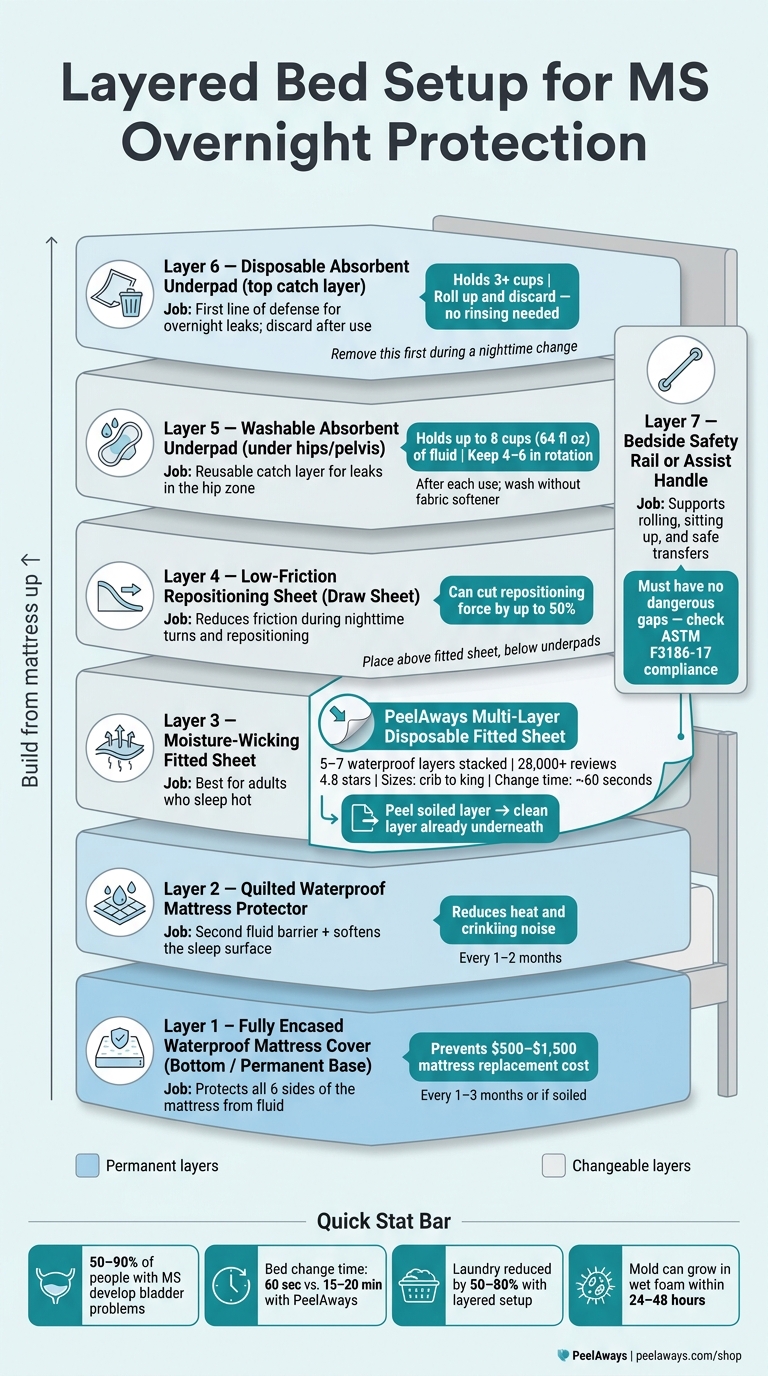
Layered Bed Setup for MS Overnight Protection: Build Order & Each Layer's Job
It’s 2am. The top layer is wet, your loved one is tired, and the last thing you need is to strip the whole bed. In that moment, the way the bed is layered can mean a 60-second change or a long, back-breaking mess.
Build from the mattress up. Put the permanent barriers at the bottom and the easiest-to-swap layers on top. That order matters because the top layer should be the first thing you remove. Once turning and transfers feel safer, this setup helps you change the bed with less hassle.
Start with a fully zippered, six-sided waterproof encasement as the mattress’s last barrier if a leak reaches the mattress. Then add a quilted waterproof mattress protector over it to soften the bed and give you a second fluid barrier across the surface.
Next is the fitted sheet layer. If accidents happen often or you need the fastest possible change, PeelAways multilayer disposable fitted sheets are a strong pick. Each layer peels away and leaves a clean one already in place. I wish I’d found that sooner. When you’re half-awake and trying not to fully wake the person in bed, that kind of setup can feel like a small mercy. PeelAways comes in 5-7 layers, sizes from crib to king, and has 28,000+ reviews with a 4.8-star rating. If you use diapers or incontinence pads, it makes sense to have that extra backup layer ready. Making aging and caregiving easier, one bed at a time.
If fast changes matter less than airflow, use a moisture-wicking fitted sheet instead.
On top of the fitted sheet, place absorbent underpads under the hips and upper thighs. A simple setup works best:
- Put a washable pad down first.
- Place a disposable pad on top as the top catch layer.
After a smaller accident, remove the disposable pad first and leave the washable pad underneath as backup. Keep both pads flat with no wrinkles, and extend them several inches above and below the hips so they stay in place during movement. If you use a repositioning sheet, keep that flat too so it doesn’t get in the way during pad changes. And yes, this part matters more than people think. A bunched-up layer can turn a small cleanup into a full bed reset.
Keep fresh pads, gloves, wipes, and a trash bag within reach. Not across the room. Not in the hall closet. Right there. When you’re doing this in the dark, every extra step feels twice as long.
That layering order keeps most changes at the top of the bed. The table below shows what each layer does.
Quick Comparison Table: What Each Layer Does
It’s the middle of the night. Something leaked, the bed is damp, and you’re standing there half-awake trying to fix it without fully waking the person you love. In that moment, the right layer matters more than any sales pitch ever could.
Use this table to match each layer to its job, from mattress protection to faster overnight changes.
| Layer | Leak Protection | Change Speed | Skin Comfort | Mobility Support | Layer Type |
|---|---|---|---|---|---|
| PeelAways Disposable Fitted Sheets | High - waterproof multilayer barrier | Very fast - peel to a fresh layer | High - soft, breathable, quiet | High - no mattress lifting or full bed strip | Changeable top layer |
| Fully Encased Waterproof Mattress Cover | Maximum - full-bed coverage | Very slow - not for routine changes | Neutral - depends on layers above | Low - base barrier only | Permanent base layer |
| Quilted Waterproof Mattress Protector | High - top surface and partial sides | Moderate - washed less often than pads | High - cushioned, softer than bare encasement | Low | Base layer |
| Moisture-Wicking Fitted Sheets | Low - manages moisture, not leaks | Moderate - changed like a standard sheet | High - keeps skin drier and cooler | Low | Changeable top layer |
| Washable Absorbent Underpads | Moderate - targeted under hips and pelvis | Fast - 1–3 minutes | Good - soft quilted surface | Moderate | Changeable top layer |
| Disposable Absorbent Underpads | Moderate - targeted for quick cleanup | Fast - discard and replace | Moderate - can feel crinkly | High caregiver convenience | Changeable top layer |
| Low-Friction Repositioning Sheet or Draw Sheet | None | Moderate - 2–4 minutes | High - reduces shear | Highest - slides, pivots, lateral turns | Support layer |
| Bedside Safety Rail or Assist Handle | None | - | - | High - sitting up, transfers, fall prevention | Fixed hardware |
Some layers stop leaks. Some save your back. Some help with skin comfort. And some do one job only, which is fine - as long as you know what you’re buying.
Next, see how these layers combine in different bed setups for light leakage, heavier overnight protection, and mobility support.
Bed Setup Examples for Different MS Overnight Needs
It’s 2am. The bed is wet, the room feels stuffy, and your loved one is half-awake while you’re trying not to make the whole night worse. You don’t need a perfect setup. You need one that deals with the main problem fast.
Match the setup to what’s throwing the night off most: leaks, heat, or help with turning. Start with the lightest setup that fixes that one issue. Then add only the layers you need.
Frequent Leaks: Low-Laundry Setup
When leaks are the main issue, the goal is simple: change less, wash less, disturb less.
Use the same waterproof base underneath: an encasement plus a quilted protector. Over that, use PeelAways multi-layer disposable fitted sheets as the main sheet layer. This is the part that can change the whole night. When a leak happens, you peel away the soiled layer in about 60 seconds, and there’s a clean waterproof layer ready underneath.
Then add a washable underpad under a disposable underpad in the hip zone. That way, most overnight messes stay in the top layers instead of spreading through the whole bed. Fewer full bed changes. Less laundry piled up in the morning. Less stress for both of you.
If heat is the bigger problem than laundry, move to the comfort-first setup below.
Sleeps Hot: Comfort-First Setup
Some people don’t just wake from moisture. They wake because the bed feels hot, damp, and heavy.
Keep the same waterproof base. The main switch here is the sleep surface. Put moisture-wicking fitted sheets directly under the person so sweat and light moisture move away from the skin. That can help the bed feel cooler and less sticky through the night.
Instead of putting thick waterproof layers right under the body, use a thin, breathable washable absorbent underpad only under the hips. You still get protection where it counts, without turning the whole bed into a heat trap.
If turning and repositioning are the hardest part of the night, the next layout makes more sense.
Needs Help Turning: Caregiver-Assisted Setup
This setup is for the nights when the hard part isn’t just the leak. It’s the lifting, rolling, adjusting, and trying not to wake someone all the way up.
Start with the same base protection: a fully encased waterproof mattress cover plus a quilted waterproof mattress protector. Above the fitted sheet, place a low-friction repositioning sheet under the torso and hips. On top of that, place a washable absorbent underpad in the hip zone, then a disposable absorbent underpad over it.
During a nighttime change, remove the disposable pad first. Peel a PeelAways layer only if needed. Leave the repositioning sheet where it is. That helps limit rolling, which means less exposure, less strain on your back, and less waking.
A bedside safety rail or assist handle on the caregiver’s working side gives the person a steady grip while shifting position. It also gives the caregiver a safer anchor point during transfers.
| Setup | Best For | Key Layer That Makes It Work |
|---|---|---|
| Low-Laundry | Frequent leaks, minimal washing | PeelAways + disposable underpad |
| Comfort-First | Adults who overheat at night | Moisture-wicking sheets + breathable quilted protector |
| Caregiver-Assisted | Adults needing help turning or repositioning | Low-friction repositioning sheet + PeelAways |
Safety, Skin, and Dignity Considerations
It’s the middle of the night. You’ve just finished another cleanup, your loved one is tired and embarrassed, and all you want is to get them settled without making things worse. At that point, the small details matter more than people think.
Once the layers are in place, the last step is keeping the surface flat, cool, and safe.
Smooth surfaces prevent pressure spots. After every turn or pad change, run your hand across the whole bed. If a pad is folded, don’t just press it down and hope for the best. Replace it.
Dry isn’t the only thing that matters. If the bed feels hot, stiff, or noisy, sleep still suffers. Breathable, quiet materials reduce heat and noise. Go with breathable, polyurethane-backed waterproof layers and soft, cloth-like underpads. Skip anything with that plastic feel or crinkly sound. A quieter setup and faster cleanup can also mean fewer full bed changes, which helps protect dignity right along with comfort.
Check skin every morning and after any overnight leak, then follow the person's turning schedule. Clean gently with a pH-balanced, no-rinse cleanser, apply a barrier cream containing zinc oxide or dimethicone, then reassess for redness or moisture damage.
If transfers are part of your night, don’t overlook the bed itself. Bed rails must fit snugly and be checked regularly. Make sure the mattress fits the frame without major gaps. Check the hardware too - loose bolts or shifting rails are a problem. If spasms or entrapment risk is part of the picture, talk with an occupational therapist about a safer option.
It also helps to look over the whole setup every 1 to 3 months, and any time symptoms or care needs change.
Conclusion
It’s the middle of the night. The bed is wet, your loved one is upset, and you’re standing there half-awake knowing this will take way more time and energy than you have. That kind of night wears you down fast.
Nighttime incontinence with MS is exhausting. The right bed setup can cut down the chaos and help protect skin, sleep, and dignity.
No single layer fixes every night. But the right mix can change the whole routine. A solid overnight setup has a waterproof base, a soft top layer, and fast-change absorbency right where leaks tend to happen. That means fewer full bed changes, less laundry, and less stress for both the person with MS and the one helping them.
When cleanup speed matters most, a layered disposable top sheet can make the hardest part much easier. PeelAways is one of those things I wish more people knew about sooner. It adds a fast-change top layer, so one leak doesn’t mean stripping the whole bed. You peel away the soiled layer and there’s a clean one underneath.
If you’re trying to make nights more manageable, PeelAways is worth a close look. It comes in 5–7 layers, sizes from crib to king, and has 28,000+ reviews with a 4.8-star rating. The big difference is time: a bed change can take about 60 seconds, not the usual 15–20 minutes with the old routine. That’s a big deal at 2 a.m.
You can find PeelAways at peelaways.com/shop and on Amazon. You may also want to read more on the PeelAways blog for related tips and routines: How to Manage Overnight Incontinence Without Constant Sheet Changes and Caregiver Sleep Tips for Nighttime Bed Changes.
Making aging and caregiving easier, one bed at a time.
Blog readers save 10% with code BLOGS10 at checkout. Available on peelaways.com and Amazon. Free shipping on orders over $100.
Comments
0



SAVE MONEY & WATER
Professionals & Institutions save a fortune on labor/laundry.

SUPERIOR COMFORT
The first thing our customers notice is how soft our sheets are.

100% WATERPROOF
Each layer is 100% Waterproof, perfect for spills and accidents

SAVE TIME
Change the sheet in under 1 minute without stripping the bed.

Leave a comment