
5 Bedtime Routines That Cut Caregiver Stress

It’s 2 a.m. The sheets are soaked again. Your loved one is embarrassed, your back hurts, and you have to be up in four hours.
A bed setup that takes about 60 seconds to change instead of 15–20 minutes can cut a huge part of nighttime stress. For me, the biggest help came from a short bedtime routine: layered sheets, timed bathroom checks, safer trips to the toilet, a bedside cleanup kit, and five quiet minutes to reset before sleep.
- Layer the bed so one leak does not mean a full sheet change
- Set evening fluid and bathroom times to cut overnight accidents
- Light the bathroom path to lower fall risk
- Keep wipes, cream, gloves, and sleepwear by the bed
- Take 5 minutes for yourself before lights out
One product that helped me most was PeelAways, which has 5–7 waterproof layers, sizes from crib to king, 28,000+ reviews, and a 4.8-star rating. If you use pads or briefs at night, this kind of setup can mean 50% to 80% less laundry and a lot less chaos when a leak happens. You can also check the Amazon listing for PeelAways.
What wears you down is not one bad night. It’s the same 2 a.m. cleanup over and over.
Most people do not see that part.
They do not see the dark room.
The wet mattress pad.
The cold air on bare skin.
The load of laundry you start half-awake.
That is why bedtime routines matter so much.
When I had a set rhythm, nights felt less out of control. Not perfect. Just less brutal. A few fixed steps before bed can cut panic, shorten cleanup, and help both of you get back to sleep faster.
Before you buy anything, I’d look for a few basic things:
- Fast bed changes without lifting the mattress
- Waterproof layers that stay put through the night
- Less laundry after leaks
- Sizes that fit your bed
- Supplies within arm’s reach at 2 a.m.
For me, the first fix was the bed itself.
A layered bed changes everything.
Instead of stripping soaked sheets in the dark, you remove one wet layer and keep going. That is why I keep coming back to PeelAways. I found them after too many rough nights, and they made the job easier in a way I felt right away.
Here is what stood out to me:
- 5–7 waterproof layers per set
- About 60-second bed changes
- No mattress lifting
- Less washing and fewer full linen changes
- Sizes from crib to king
- 28,000+ reviews and 4.8 stars
If you want more setup ideas, I’d also read the PeelAways blog and their caregiving posts here: caregiving articles.
The other part that helped was keeping the evening simple and repeatable.
I tried to stop guessing.
A loose plan like this worked better for me:
- Cut back drinks after 7:00 p.m.
- Do a bathroom check around 8:30 p.m.
- Do one last brief and bedding check around 10:00 p.m.
Then I made the path to the bathroom easier to use at night.
A small night light.
Non-slip slippers by the bed.
A grab bar if standing and turning were hard.
That step matters because the rushed walk to the bathroom can go bad fast.
After that, I kept a small bedside kit ready before lights out:
- Gloves
- Wipes
- Barrier cream
- Disposal bags
- Clean sleepwear
- Spare pad or brief
When those items are right there, you are not opening drawers at 2 a.m. while your loved one waits in damp clothes.
And yes, I learned the last step matters too.
Take 5 minutes for yourself.
Not a big self-care routine.
Just a pause.
A breath.
A quick supply check.
Then stop.
That small reset does not fix the whole night. But it can lower the dread a little before bed.
Here is the plain difference I noticed:
| Night setup | What usually happens |
|---|---|
| No routine | More laundry, more lifting, more lost sleep |
| Layered bed + set checks | Faster cleanup, less strain, shorter wake-ups |
A few common questions come up with this kind of setup.
Does layered bedding help if I already use briefs or pads?
Yes. Pads and briefs can still leak or shift. A layered sheet setup gives you backup when that happens.
How much time can it save at night?
For me, the big difference was about 60 seconds versus 15–20 minutes for a full bed change.
Can it cut laundry?
Yes. A layered system can mean 50% to 80% less laundry when leaks happen often.
Where can I buy PeelAways?
You can get them at peelaways.com/shop or on Amazon.
My bottom line is simple.
If nights keep falling apart because of leaks, do not start with a perfect plan. Start with one bed setup that cuts the worst part of the job. For me, that was PeelAways. It helped me skip full midnight sheet changes, protect sleep a bit more, and keep some dignity in a hard moment.
Making aging and caregiving easier, one bed at a time.
Blog readers save 10% with code BLOGS10 at checkout. Available on peelaways.com and Amazon. Free shipping on orders over $100.
Why Bedtime Routines Help Caregivers
It’s 2:00 a.m. again. The bed is wet, the room is cold, your back is screaming, and your loved one looks mortified while you strip the sheets in the dark. A lot of nights go sideways because of small things that got missed earlier.
A set evening routine can help stop that spiral. When you build the night around steady check-ins at times like 7:00 p.m., 8:30 p.m., and 10:00 p.m., you can cut overnight accidents, do less laundry, and protect your own sleep. Without that rhythm, a small leak at bedtime can turn into a full bed change by 2:00 a.m.
That’s the part people on the outside don’t see. One diaper leak. One pad that shifts. One rushed bedtime. Then suddenly you’re lifting, wiping, changing sheets, and trying not to wake up all the way because you still have to function in the morning.
When there’s no plan, little problems pile up fast. A diaper leaks. A pad bunches up. The bed gets damp before anyone notices. A set schedule lowers that risk because you’re not guessing. You’re checking at the same times every night.
Maxwell C., founder of Peelaways, says the 2:00 a.m. bed change is what ends home care. That hits hard because it’s often true. Those rushed nighttime cleanups can wreck your sleep, strain your back, and wear everyone down.
A simple routine helps:
- Cut fluids after 7:00 p.m.
- Do a toileting check around 8:30 p.m.
- Do one last bedding and incontinence brief check at 10:00 p.m.
Fewer accidents means less laundry, less broken sleep, and better skin protection. And if you’ve ever stood over a soaked bed in the middle of the night, you know that kind of relief matters.
Start with the bed itself.
1. Layer the Bed for 60-Second Changes
It’s 2 a.m. again. The bed is wet, your back is already barking, and the last thing you have in you is stripping sheets, lifting a mattress, and starting laundry before dawn.
If the goal is to avoid a full bed change in the middle of the night, start with the bed itself.
Layering the bed makes nighttime accidents much easier to handle. Instead of pulling everything off and starting from scratch, you peel away one soiled layer and there’s a clean one right underneath.
PeelAways is the one I wish I’d found sooner. It’s a multi-layer disposable fitted sheet with 5 to 7 waterproof layers, made to reveal a clean surface in seconds.
For nighttime leaks, that means no mattress lifting and no full bed change, even when a diaper leaks or a pad shifts overnight. You cut down on laundry, spare your body some strain, and get both of you back to sleep faster.
2. Set a Simple Evening Fluids and Toileting Plan
It’s late. You’ve finally gotten the bed set, and you’re hoping - just hoping - tonight won’t mean soaked sheets and another full change in the dark. When sleep already feels thin, one overnight accident can tip the whole night over.
Once the bed is layered, the next easiest win is timing.
A simple evening fluids and toileting plan can help cut overnight accidents without stopping fluids too early. That matters. You don’t want to trade one problem for another.
Set one last bathroom trip right before bed. It sounds small, but small things matter at night. Leaks and shifted pads can turn into more laundry and broken sleep, and that kind of strain wears you down fast.
This works even better when you pair it with layered bedding. If there’s a miss, you’re not stuck doing a full bed change. You peel, replace, and move on. That’s the whole point. Less lifting. Less washing. Less chaos at 2 a.m.
If you’ve already found PeelAways, this is where they help take the edge off. A layered setup means a bed change can take about 60 seconds, not 15–20 minutes the old way. PeelAways come in 5–7 layers, sizes from crib to king, and they’ve earned 28,000+ reviews with a 4.8-star rating. You can also find them on Amazon.
And once the schedule is in place, the next step is just as important: make that last trip to the bathroom safer.
For more help, you can also read other tips on peelaways.com and check related blog articles there for setup ideas and nighttime care routines.
3. Make the Path to the Bathroom Safe
It’s 2am. The room is dark, your loved one is trying to get up fast, and you’re already bracing for that split second when a missed step can turn into a fall. This part of the night can go sideways in a hurry.
Once the last bathroom trip is planned, make the walk there safer. Put on a night light or motion light so no one is moving through the dark half-awake. Keep non-slip slippers by the bed. If getting up and turning is hard, add a grab bar or transfer aid.
The biggest risk is often that rushed walk to the bathroom when someone is sleepy, unsteady, and trying not to have an accident. A safer route can cut down on falls and make those nighttime wake-ups feel less frantic.
sbb-itb-45288fe
4. Set Out Skin Care, Sleepwear, and Bedside Supplies Before Bed
It’s the middle of the night. The bed is wet, your loved one is upset, and you’re trying to fix it all without turning one accident into a 20-minute ordeal.
Once the bathroom path is safe, get the bedside ready too. A small setup before bed can save your back, your time, and a lot of stress.
Keep a simple bedside kit within arm’s reach before the lights go out. Put out clean sleepwear, wipes, barrier cream, gloves, and a spare pad. When everything is right there, you’re not digging through drawers at 2 a.m. or leaving your loved one waiting in damp sheets.
With PeelAways, the top layer peels away in seconds to reveal a fresh surface. That means a bed change can take about 60 seconds instead of the usual 15 to 20 minutes. It’s one of those things I wish I’d found sooner. Less laundry. Less disruption. More dignity for the person in the bed.
If you already use pads or briefs, this setup makes even more sense. PeelAways comes with 5-7 layers, sizes from crib to king, and it’s backed by 28,000+ reviews with a 4.8-star rating. You can find it on peelaways.com/shop and Amazon.
With the bedside kit ready, finish the night with one short reset for yourself.
5. Add a Short Wind-Down Step for the Caregiver
It’s the end of the day. The bed is set, the wipes are nearby, and you’re standing there for a second trying to shake off the tension in your shoulders. You still know the night might get interrupted, but even a small pause now can make it feel less crushing.
Once the bed and bedside supplies are ready, give yourself 5 minutes too. Not a long routine. Just a short reset. That little pause can lower stress and make those middle-of-the-night changes easier to deal with.
A ready bed cuts down on panic when a leak happens.
Use those last 5 minutes to do one quick supply check, then stop. Keep the bedtime setup simple and keep everything close at hand.
Bedside Setup and Product Notes
It’s 2am. The bed is wet, the room is dark, and you’re trying not to fully wake the person you love. Your hands know the drill, but that doesn’t make it any less exhausting.
Once the bed is layered, the next step is a bedside station that cuts down cleanup time. When a leak happens, you do not want to dig through drawers or hunt for wipes in the dark. You want everything right there.
Start with the bedding itself. PeelAways are multi-layer disposable waterproof fitted sheets with 5–7 waterproof layers that peel away in 60 seconds without lifting the mattress. You can change the top layer without moving the person out of bed, which matters more than people think when someone is tired, sore, or embarrassed. And with frequent leaks, layered bedding can mean 50% to 80% less laundry than a full sheet-change routine.
I found that part hard to overstate. A full bed change can take 15–20 minutes on a rough night. Peeling away one layer takes about a minute. That gap adds up fast when you’re running on broken sleep.
PeelAways come in sizes from crib to king, so this kind of setup works for most beds. If you’re piecing together a better overnight routine, it’s worth looking at the options on peelaways.com/shop or the Amazon listing for PeelAways. PeelAways has 28,000+ reviews and a 4.8-star rating, which gave me a little peace of mind before trying them myself. Making aging and caregiving easier, one bed at a time.
Beyond the sheets, build a simple cleanup kit. Keep the basics in one caddy on your dominant side so you can grab what you need half-awake:
- Gloves
- Wipes
- Barrier cream
- Disposal bags
- Backup sleepwear
That’s the whole idea. Fewer steps. Less fumbling. Less laundry.
If you want more setup ideas, see other posts on peelaways.com, including https://peelaways.com/blogs/news and https://peelaways.com/blogs/news/tagged/caregiving.
With the bedside station ready, the night routine becomes easier to compare at a glance.
Quick Nighttime Comparison
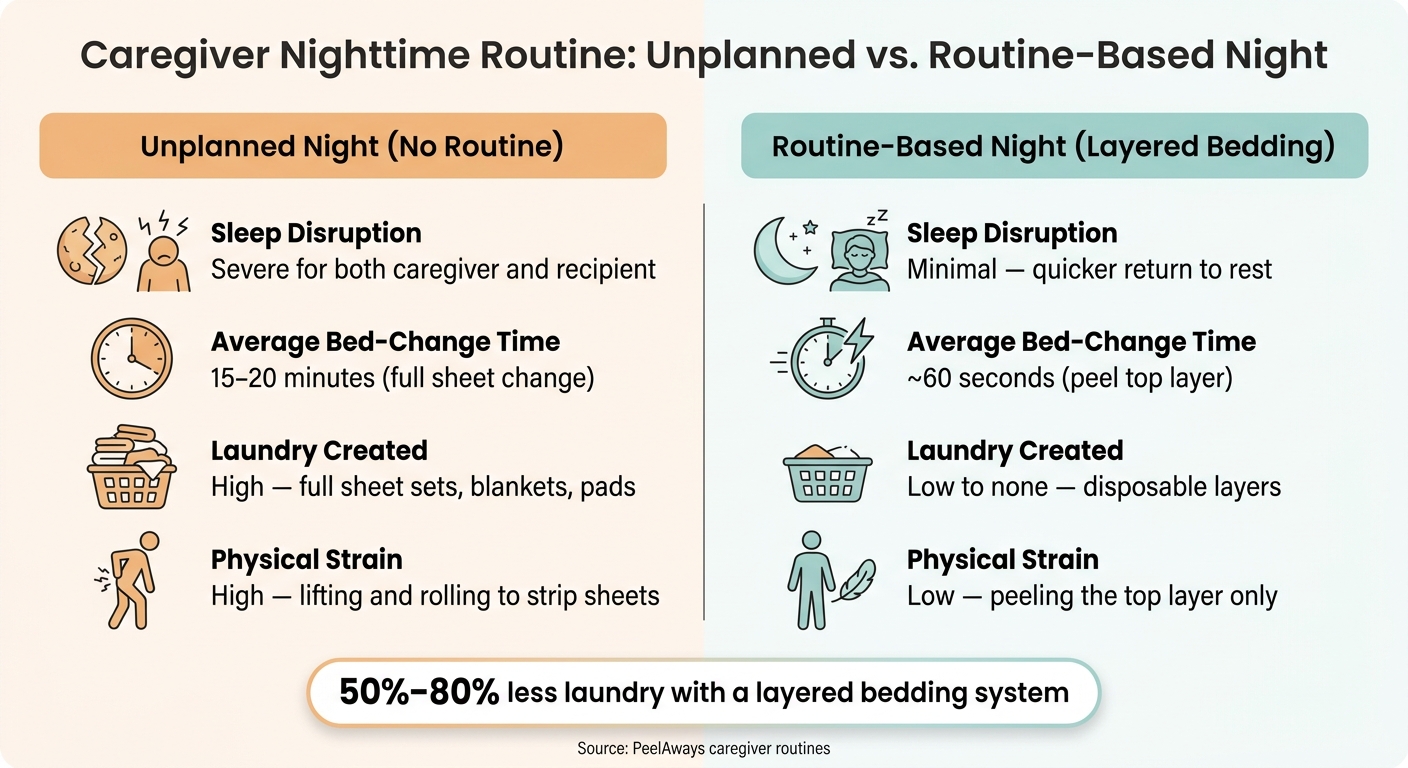
Caregiver Nighttime Routine: Unplanned vs. Routine-Based Night
It’s 2am. The bed is wet, your loved one is upset, and you’re standing there half-awake trying to decide whether you have the energy to strip the whole bed again. In that moment, the gap between “we’ll deal with it as it comes” and having a setup ready feels huge.
With the nighttime setup in place, the difference is easy to see.
Here’s the practical difference between a rough night and a routine night:
| Unplanned Night (No Routine) | Routine-Based Night (Layered Bedding) | |
|---|---|---|
| Sleep Disruption | Severe for both caregiver and recipient | Minimal - quicker return to rest |
| Average Bed-Change Time | 15–20 minutes (full sheet change) | ~60 seconds (peel top layer) |
| Laundry Created | High - full sheet sets, blankets, pads | Low to none - disposable layers |
| Physical Strain | High - lifting and rolling to strip sheets | Low - peeling the top layer only |
That’s the part people don’t always see at first. It’s not just about a dry bed. It’s about skipping the full reset in the middle of the night.
Instead of lifting, rolling, stripping, remaking, and starting laundry, you remove the top layer and keep moving. A layered system cuts cleanup time, reduces lifting, and helps both people get back to sleep faster.
Conclusion
It’s 2 a.m. again. The bed is wet, your eyes burn, and you’re already bracing for the laundry, the sheet change, and the lost sleep. That kind of stress doesn’t come from one big moment. It comes from the same hard interruption, over and over.
That’s why these five routines matter.
They make nighttime care more predictable. They help cut down on accidents, shorten cleanup, and protect sleep. Just as important, they help protect the mattress and your loved one’s skin, so you can both get back to sleep with less chaos.
The goal is simple: fewer 2 a.m. emergencies and a faster return to sleep.
One thing that made a big difference in my own routine was finding PeelAways. Their 5–7-layer disposable sheets peel away in about 60 seconds, which means less laundry and no mattress lifting during overnight leaks.
If you want to take a look, you can find them on PeelAways or on Amazon. You may also want to read more on the PeelAways blog for extra help with nighttime care:
- PeelAways Blog
- PeelAways Shop
Making aging and caregiving easier, one bed at a time.
Blog readers save 10% with code BLOGS10 at checkout. Available on peelaways.com and Amazon. Free shipping on orders over $100.
Comments
0



SAVE MONEY & WATER
Professionals & Institutions save a fortune on labor/laundry.

SUPERIOR COMFORT
The first thing our customers notice is how soft our sheets are.

100% WATERPROOF
Each layer is 100% Waterproof, perfect for spills and accidents

SAVE TIME
Change the sheet in under 1 minute without stripping the bed.

Leave a comment