
Waterproof Sheets vs. Bed Pads: Which Is Better?

When it comes to protecting your mattress from nighttime accidents, you have two main options: waterproof sheets and bed pads. Each serves a different purpose, and the best choice depends on your specific needs.
- Waterproof sheets cover the entire mattress, offering full protection. They're ideal for frequent accidents, as they act as a barrier against liquids. Products like PeelAways even have multiple peel-off layers for quick cleanup.
- Bed pads, also known as underpads, provide targeted protection. They sit on top of your sheets and are easy to replace, making them perfect for quick changes or travel. They come in disposable and reusable options.
Quick Comparison
| Feature | Waterproof Sheets | Bed Pads |
|---|---|---|
| Coverage | Full mattress | Targeted areas |
| Placement | Under fitted sheet | On top of fitted sheet |
| Absorbency | Barrier-focused | High moisture-locking |
| Ease of Change | Requires full bed strip | Quick replacement |
| Cost | Higher upfront cost | Lower initial cost |
| Portability | Not portable | Highly portable |
For the best results, many caregivers combine both: waterproof sheets for long-term mattress protection and bed pads for quick, hassle-free cleanup. This layered approach minimizes stress and ensures a dry, comfortable sleeping environment.
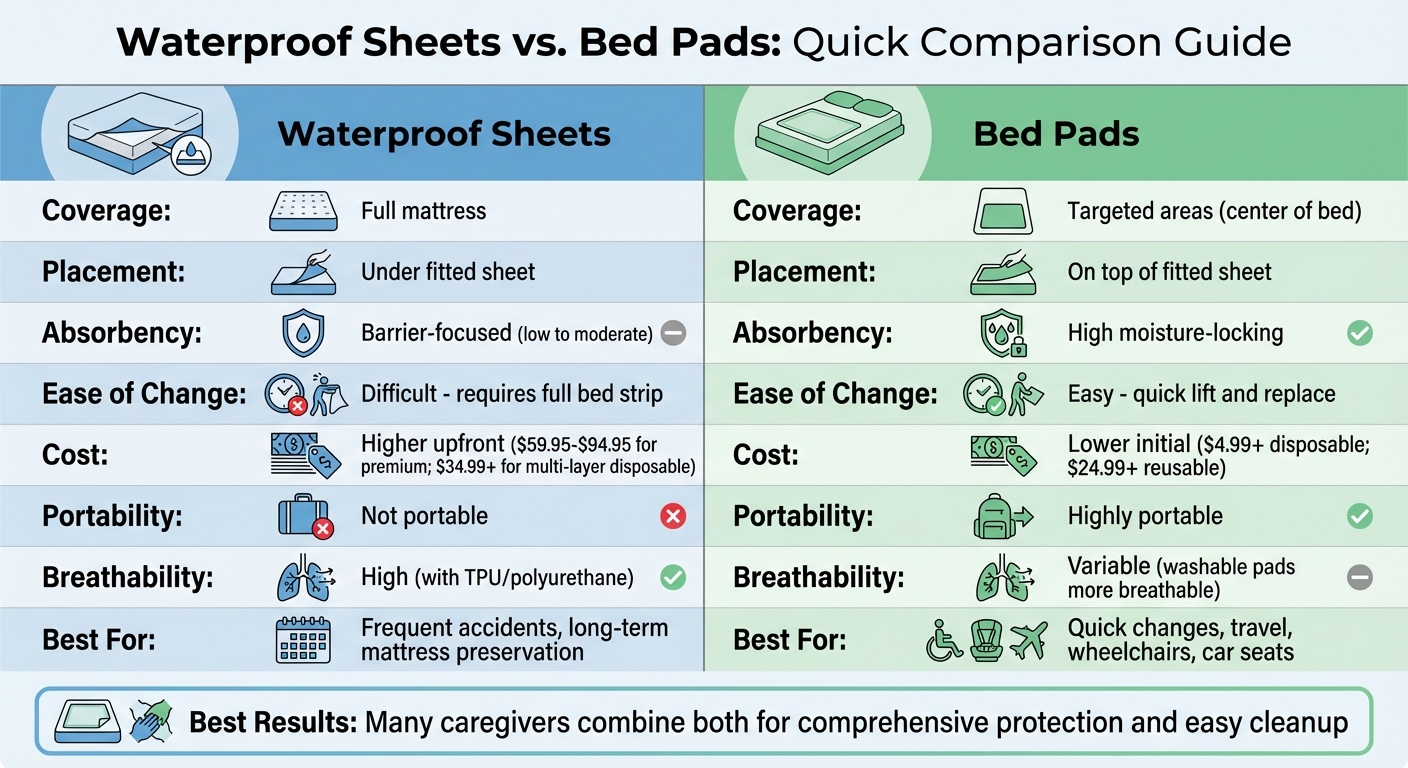
Waterproof Sheets vs Bed Pads Comparison Chart
Testing the Waterproof Effectiveness of Bed Pads
What Are Waterproof Sheets?
Waterproof sheets are fitted coverings designed to replace regular bedding while offering full protection for your mattress. Unlike bed pads, which only shield a specific area, these sheets cover the entire mattress surface, corner to corner. They look and feel like traditional sheets but include a 100% waterproof barrier to prevent liquids from seeping through. Here’s what makes them stand out from other bedding solutions.
These sheets use a mix of breathable materials like bamboo, rayon, and polyester, which block liquids while allowing airflow. This combination ensures both comfort and durability, making them a practical choice. The fitted design, with elastic corners, keeps the sheet securely in place throughout the night. For those managing frequent accidents, products like PeelAways take this concept further with a multi-layer, disposable design. Each PeelAways sheet stack includes 5 to 7 layers, allowing you to peel away the top layer when soiled - quickly and without hassle, no need to lift the mattress or rush to do laundry [1].
Below are some of the standout features that make waterproof sheets a reliable and comfortable option.
Key Features
- Full Mattress Coverage: These sheets protect the entire surface of the mattress, leaving no gaps.
- Secure Fit: Elasticized skirts ensure the sheet stays anchored, even on mattresses up to 12 inches deep.
- Breathable Comfort: Many modern designs use soft bamboo-viscose blends paired with lightweight thermoplastic polyurethane (TPU) barriers, offering protection without the stiff, plastic feel.
- Noiseless Design: The waterproof layer is sandwiched between fabric layers, ensuring quiet movement during sleep.
- Multi-Layer Convenience: Options like PeelAways provide backup layers; each layer can last 7 to 10 days if not soiled, and replacing a soiled layer takes under a minute compared to the 5–10 minutes required for traditional sheets [1].
Pros of Waterproof Sheets
- Comprehensive Protection: These sheets cover the entire mattress, eliminating worries about accidents happening outside a protected area.
- Secure Fit: The fitted design reduces the need for constant adjustments during the night.
- Laundry Relief: Especially helpful for caregivers, products like PeelAways make cleanup easier. Customers rate them highly, with an average score of 4.61 out of 5, praising the quick layer-changing process [1].
Cons of Waterproof Sheets
- Replacement Challenges: Traditional reusable waterproof sheets can be difficult to remove and replace, especially for caregivers assisting individuals with limited mobility.
- Ongoing Costs: Multi-layer disposable options like PeelAways solve some issues but require regular purchases of replacement packs.
- Higher Upfront Costs: Premium waterproof fitted sheets range from $59.95 to $94.95, compared to $21.95 to $49.95 for standard waterproof pads. PeelAways start at $34.99 for a 5-layer pack, averaging around $7 per layer [1][3].
- Fit Limitations: Securing these sheets can be tricky for mattresses over 12 inches deep. Additionally, if the top layer of a multi-layer sheet isn’t removed promptly, leaks may reach the next layer [1].
What Are Bed Pads?
Bed pads, often referred to as underpads or "chux", are absorbent layers placed over bed sheets to protect specific areas from accidents or spills [4][7]. Unlike waterproof sheets that cover the entire mattress, these pads focus on targeted zones, typically where leaks are most likely. Their design makes them easy to swap out, so caregivers can replace just the pad instead of dealing with the entire bed setup [4][8].
These pads are built with multiple layers. The top layer, usually made from materials like bamboo-blend, cotton terry, or non-woven fabric, ensures comfort against the skin [1][2]. Beneath this sits an absorbent core, often made of fluff or polymers, which quickly pulls moisture away from the skin. This core not only traps wetness but also neutralizes urine pH to manage odors and keep things feeling fresh [2]. Many high-quality pads also feature "Leak Lock" edges to prevent any overflow from escaping the sides [6][8].
Bed pads come in two main types: disposable and reusable. Disposable pads are convenient and help with infection control, with prices starting at $4.99 for smaller packs [4]. On the other hand, reusable pads are more economical over time, with heavy-duty options starting at around $24.99 [4]. Some reusable pads are even designed to support individuals weighing up to 400 lbs without tearing, making them a durable choice for various needs [2]. Popular sizes include 23"x36", 30"x30", and 36"x36" [5][6][7].
These pads are portable, making them useful not just for beds but also for furniture, car seats, and wheelchairs [4][7]. To maintain hygiene, experts suggest changing the pads at least every 12 hours [2].
Here’s a closer look at the features, benefits, and drawbacks of bed pads.
Key Features
Bed pads offer focused protection and easy replacement, setting them apart from full waterproof sheets.
- Targeted Placement: Bed pads can be positioned exactly where needed, and many include slip-resistant backings to keep them in place [6][8]. Some even come with elastic anchor bands for added stability.
- Absorbent Core: The super-absorbent core locks in moisture quickly, reduces urine pH to protect the skin, and helps maintain a fresh environment. Premium options may also include "Odor Block" technology to neutralize smells related to incontinence [2][6].
- Portability: Lightweight and foldable, these pads can be used on vehicles, furniture, or wheelchairs, offering flexibility for various situations [4][7].
- Maintenance Options: Disposable pads are hassle-free - just throw them away after use. Reusable pads, on the other hand, are machine washable and can endure over 300 washes, making them a long-lasting and eco-friendly choice [2].
Pros of Bed Pads
- Quick Changes: Swapping out a soiled pad is fast and easy, eliminating the need for middle-of-the-night emergency laundry [4][8].
- Cost-Effective Options: Disposable pads range from $4.89 to $5.59 per pack [7], with some economy options costing as little as $0.30 to $1.00 per use [2]. Reusable pads, while initially more expensive, save money in the long run due to their durability.
- Versatility: Beyond beds, these pads can protect furniture, wheelchairs, and even car seats, making them suitable for various uses [4][7].
Cons of Bed Pads
- Limited Coverage: Since they only protect specific areas, accidents outside the pad’s zone can still reach the mattress or sheets.
- Shifting Issues: Even with slip-resistant backings, some pads may move during the night, especially for restless sleepers [6][8].
- Regular Replacement Needed: To maintain cleanliness, pads should be replaced every 12 hours [2], which can lead to ongoing costs and the need for multiple pads.
- Partial Protection: Unlike full mattress covers, bed pads don’t offer complete coverage, requiring careful placement to ensure the right areas are protected.
sbb-itb-45288fe
Waterproof Sheets vs. Bed Pads: Direct Comparison
Comparison Table
| Feature | Waterproof Sheets/Protectors | Bed Pads |
|---|---|---|
| Coverage | Full (top and sides of mattress) [11] | Targeted (center of bed) [11] |
| Placement | Under the fitted sheet [11] | On top of the fitted sheet [11] |
| Primary Purpose | Long-term mattress preservation [10] | Managing active leaks and quick cleanup [11] |
| Absorbency | Low to moderate (barrier-focused) [11] | High (moisture-locking) [11] |
| Ease of Change | Difficult (requires stripping bed) [11] | Easy (lift and replace) [11] |
| Breathability | High (if using TPU/polyurethane) [3] | Variable (washable pads more breathable) [11] |
Comfort, Absorbency, and Maintenance
The table highlights the main differences, but let’s dive deeper into comfort, absorbency, and maintenance. Waterproof sheets today are designed with comfort in mind. Many use breathable materials like TPU (thermoplastic polyurethane) paired with soft fabrics such as cotton or bamboo [9][11]. These sheets are meant to blend seamlessly into your bedding, staying out of sight and out of mind [12]. Their primary job, however, is to repel liquids rather than soak them up [11].
Bed pads, on the other hand, are built for absorbency. They excel at locking in moisture, preventing leaks from spreading [11]. Washable options are soft to the touch but can shift around if they lack tuck-in flaps [11]. The downside? Bed pads sit on top of your fitted sheet, making them more noticeable compared to waterproof sheets tucked underneath.
When it comes to maintenance, the differences are clear. Waterproof sheets require a full bed strip and wash, which can be time-consuming. In contrast, bed pads are much easier to deal with - just lift and replace. Washable pads need immediate cleaning after use, while disposable ones can be thrown away [12].
For the best results, many caregivers opt to use both. A waterproof sheet provides ongoing mattress protection, while bed pads handle accidents quickly and efficiently. This combination not only safeguards the mattress but also reduces the hassle of middle-of-the-night cleanups.
When to Use Waterproof Sheets vs. Bed Pads
When to Choose Waterproof Sheets
Waterproof sheets are your go-to option for frequent accidents that demand full mattress protection and hassle-free cleanup. Take PeelAways, for example - these innovative sheets let you peel away a soiled top layer in under a minute, no mattress lifting required. Each layer can last 7 to 10 days if not soiled, simplifying routine care significantly. The fitted design keeps the sheets in place, even for active sleepers or toddlers, while maintaining the feel of a regular bed. This feature is particularly appreciated in eldercare, where preserving dignity is crucial. Starting at $29.74, PeelAways boast an impressive 4.61/5 rating from over 12,000 customers who love the convenience of skipping late-night laundry runs.
On the other hand, bed pads might be a better fit when portability and quick changes are your top priorities.
When to Choose Bed Pads
Bed pads are perfect for situations where quick swaps and portability are essential. Placed directly on top of fitted sheets, they can be replaced in seconds, making them ideal for managing unpredictable leaks or for use during travel. Disposable bed pads are especially handy for hotel stays, car seats, or wheelchairs. For caregivers assisting individuals with limited mobility, heavy-duty bed pads are designed to handle repositioning, with some models supporting up to 400 lbs without tearing. For a more cost-effective solution, washable bed pads are a great choice - they can endure up to 250 washes, making them a durable option for long-term use.
Using Both Together
Many caregivers find that combining waterproof sheets with bed pads offers the best of both worlds. This layered approach provides comprehensive protection while keeping maintenance simple. The waterproof sheet ensures the mattress remains protected at all times, while a bed pad offers quick, targeted coverage for high-risk areas. If a minor leak occurs, the bed pad can be removed immediately, while the waterproof sheet continues to shield the mattress. For heavy incontinence or more unpredictable accidents, this dual-layer system minimizes physical effort and reduces laundry loads. Even if the bed pad shifts during the night, the waterproof sheet ensures the mattress stays dry, offering peace of mind and practical convenience.
Conclusion: Which Option Is Right for You?
We've covered how different solutions tackle the challenges of nighttime accidents, helping you decide what works best for your needs. Waterproof sheets offer complete mattress protection, while bed pads are perfect for quick, targeted changes.
Bed pads shine in situations where portability and convenience matter most. They’re great for travel, wheelchairs, car seats, and even heavy-duty needs like repositioning individuals weighing up to 400 lbs [2].
On the other hand, PeelAways provides unmatched mattress protection. With 5 to 7 peel-away waterproof layers, PeelAways makes cleanup simple - just peel off a soiled layer in under 60 seconds, no mattress lifting needed. Each layer can last 7 to 10 days if it stays clean, offering weeks of use from a single setup.
Starting at $29.74 and boasting a 4.61/5 rating from over 12,000 customers, PeelAways has become a go-to for caregivers, families navigating potty training, and anyone seeking an easy, dignified solution for elder care or medical recovery. Made from a soft bamboo-blend material, it’s quiet, breathable, and avoids the heat-trapping, noisy issues of traditional vinyl protectors.
Whether you need the portability of bed pads or the comprehensive coverage of PeelAways, there’s a solution to suit your situation. Many caregivers even combine both for an extra layer of security - ensuring everyone sleeps soundly, caregivers included.
FAQs
Can I use waterproof sheets and bed pads together?
Using waterproof sheets and bed pads together is a smart way to boost both protection and comfort. Waterproof sheets, such as PeelAways, act as a barrier to keep your mattress safe from spills, accidents, or moisture. On the other hand, bed pads provide an extra absorbent layer on top, catching any liquids before they even reach the sheet.
This layered setup is especially helpful in situations like caregiving, potty training, or recovering from medical procedures. It keeps the sleeping area dry and clean while making cleanup much simpler. Plus, it ensures a more hygienic and stress-free environment for everyone involved.
How do I keep a bed pad from sliding at night?
To prevent a bed pad from moving around during the night, choose pads with adhesive backing or wings that can be tucked under the mattress. If the pad doesn’t come with these features, you can use safety pins, duct tape, or masking tape to secure the edges. Adhesive-backed pads are often the simplest and most reliable solution for keeping everything in place.
How many PeelAways layers should I use for frequent accidents?
For frequent accidents, PeelAways with 5 to 7 layers are a great choice. They provide enough layers for proper absorption and maintain hygiene. Once a layer is soiled, you can simply peel it away to reveal a fresh, clean sheet. This not only keeps the bed protected but also cuts down on laundry chores, making life a bit easier.
Comments
0



SAVE MONEY & WATER
Professionals & Institutions save a fortune on labor/laundry.

SUPERIOR COMFORT
The first thing our customers notice is how soft our sheets are.

100% WATERPROOF
Each layer is 100% Waterproof, perfect for spills and accidents

SAVE TIME
Change the sheet in under 1 minute without stripping the bed.

Leave a comment